


Search results
Search for "solubility" in Full Text gives 993 result(s) in Beilstein Journal of Organic Chemistry. Showing first 200.
Synthesis of imidazo[1,2-a]pyridine-containing peptidomimetics by tandem of Groebke–Blackburn–Bienaymé and Ugi reactions
Beilstein J. Org. Chem. 2023, 19, 727–735, doi:10.3762/bjoc.19.53
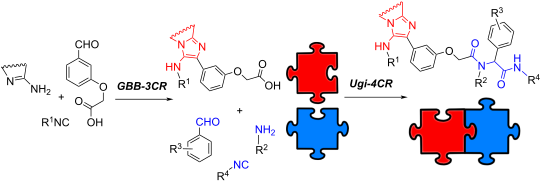
- 24 hours at room temperature in DMF with catalytic amounts of HClO4. The yield of compound 4a in this case was 76%. Then new heterocyclic acids were used as reagents for the Ugi four-component reaction. Due to the rather low solubility of the acids in methanol, it was necessary to increase the
- -chlorobenzaldehyde (5b), 4-methoxyaniline (6a) and tert-butyl isocyanide (3a). It should be especially noted that the solubility of compound 8a is very low (soluble in DMSO and N-methyl-2-pyrrolidone (NMP), slightly soluble in methanol, 1- and 2-propanol, acetone, DMF and insoluble in water, ethanol, acetonitrile
- imidazo[1,2-a]pyridine and peptidomimetic fragments it is better to use acids with a linker between the carboxyl group and aryl ring. This molecular fragment increases the solubility of the whole molecule, which leads to an improvement in the reactivity of the acids, whereas the reactivity of acids 8a and


Nucleophile-induced ring contraction in pyrrolo[2,1-c][1,4]benzothiazines: access to pyrrolo[2,1-b][1,3]benzothiazoles
Beilstein J. Org. Chem. 2023, 19, 646–657, doi:10.3762/bjoc.19.46
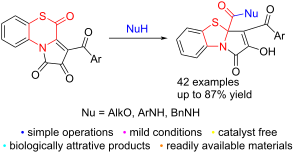
- due to the solubility of the starting amine 11d and the corresponding products 12. In addition, in the reaction of APBTT 1a with mesidine (11b), we succeeded to isolate a side-product 14ab (Scheme 19). Similar side-products 14 were observed in all reactions of APBTTs 1 with arylamines 11 (UPLC–UV–MS




pH-Responsive fluorescent supramolecular nanoparticles based on tetraphenylethylene-labelled chitosan and a six-fold carboxylated tribenzotriquinacene
Beilstein J. Org. Chem. 2023, 19, 635–645, doi:10.3762/bjoc.19.45
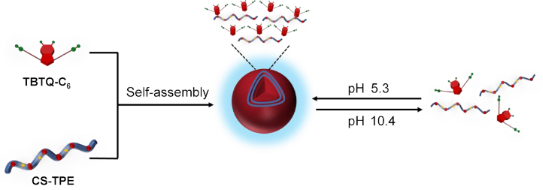
- solution was increased to 10.4, the nanoparticles collapsed and aggregated (Figure 3d–f), which could be attributed to the poor solubility of the samples bearing neutral amino groups of CS-TPE under alkaline conditions, leading to the accumulation of molecular chains. The pH-responsive behavior of CS-TPE
- solubility of CS-TPS-10% after combining with TBTQ-C6. Furthermore, the complex reassembled into spherical nanoparticles when the pH of the solution was restored to 5.3 (Figure 6c). These results are consistent with the transmittance measurements, and similar phenomena were observed for the TBTQ-C6/CS-TPE-2
- improved water solubility of the supra-amphiphile due to the highly water-soluble behavior of TBTQ-C6 under alkaline conditions in its carboxyl anion form. As a result, the polymer chains were extended, releasing the entanglement and wrapping of the TPE fluorogens, thereby reducing the emission of the



C3-Alkylation of furfural derivatives by continuous flow homogeneous catalysis
Beilstein J. Org. Chem. 2023, 19, 582–592, doi:10.3762/bjoc.19.43
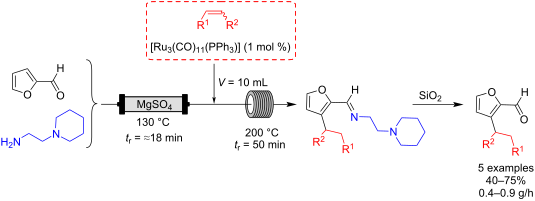
- . Unfortunately, with this catalyst, repeatability problems were detected (yield fluctuation of approximately 20%) which could be assigned to the low solubility of this catalyst in toluene. In order to overcome these problems, we synthesized triruthenium carbonyl complexes with phosphine ligand(s), namely
- (L1)3] (comp3) catalysts allowed to show, on the one hand, the absence of solubility problems, and to discover, on the other hand, that the presence of three L1 ligands (comp3) leads to a reaction rate clearly lower than that of a catalyst carrying one or two ligands (see p. S7 of Supporting
- compared to [Ru3(CO)12] at 200 °C (Table 1, entries 3 and 4). This can be attributed, as mentioned above, to the slightly faster reaction kinetics of the [Ru3(CO)12] catalyst compared to that of comp1. Nevertheless, the better solubility of comp1 in toluene allows to get around the problems of


A new oxidatively stable ligand for the chiral functionalization of amino acids in Ni(II)–Schiff base complexes
Beilstein J. Org. Chem. 2023, 19, 566–574, doi:10.3762/bjoc.19.41
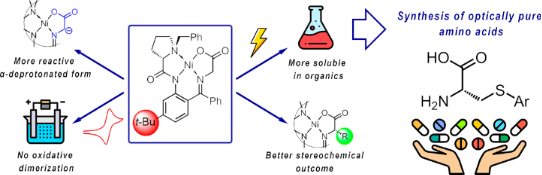
- complex. Solubility of the t-Bu-containing ligand and its Schiff base complexes is increased, facilitating scaling-up the reaction procedure and isolation of the functionalized amino acid. Keywords: asymmetric synthesis; chiral auxiliaries; cysteine derivatives; Ni–Schiff base complexes; voltammetry
- the modification of the chiral auxiliaries as well as of the other fragments of the tridentate ligand have been made to improve stereocontrolling efficiency and to modify physicochemical properties of the template (such as solubility, lipophilicity, etc). Thus, various substituents (4,5-di-CH3 [21], 2
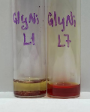
- stereoselectivity level. Additionally, Schiff base derivatives of L7 have a considerably higher solubility in acetonitrile as compared to the L4-based complexes (see Table 3 and Supporting Information File 1); this makes it easier to scale-up the synthesis (e.g., for the SN2 alkylations or nucleophilic addition



Dipeptide analogues of fluorinated aminophosphonic acid sodium salts as moderate competitive inhibitors of cathepsin C
Beilstein J. Org. Chem. 2023, 19, 434–439, doi:10.3762/bjoc.19.33
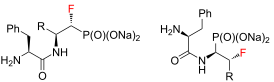
- result of the reactions carried out, the dipeptide analogues of α- and β-fluorinated aminophosphonic acids 8 and 10 were obtained. All the samples were solids, with very poor solubility in water and organic solvents such as DMSO and MeOH. The final step of the synthesis was the reaction of the resulting


Combretastatins D series and analogues: from isolation, synthetic challenges and biological activities
Beilstein J. Org. Chem. 2023, 19, 399–427, doi:10.3762/bjoc.19.31
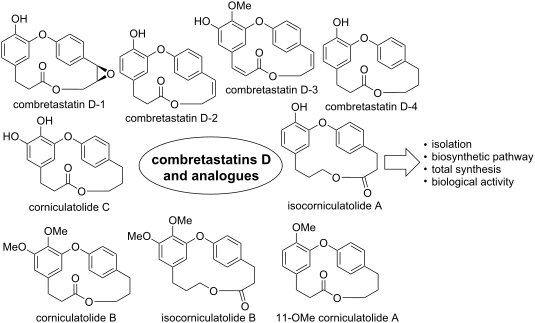
- bond of 28 leads to compounds of increasing activity, being the more polar hydroxy-substituted derivatives the most active (Table 2) [73]. One of the major obstacles in the development of highly potent drugs is the water solubility. Pettit and co-workers [55] conducted an extensive study in an attempt
- to improve the water solubility of combretastatin D-2 (2) by converting it into a series of phosphate salts and other prodrugs. Thus, phosphorylation of combretastatin D-2 (2) using dibenzyl phosphite gave derivative 183. Further cleavage of the benzyl groups using TMSBr followed by the reaction of
- the obtained phosphoric acid derivative with a series of bases led to the formation of different phosphate salts 184–187 (Scheme 35) [55]. The authors observed that the prodrug salts had substantially improved solubility in water, an important feature for transport to metastatic cancer (Table 3) [75




Discrimination of β-cyclodextrin/hazelnut (Corylus avellana L.) oil/flavonoid glycoside and flavonolignan ternary complexes by Fourier-transform infrared spectroscopy coupled with principal component analysis
Beilstein J. Org. Chem. 2023, 19, 380–398, doi:10.3762/bjoc.19.30
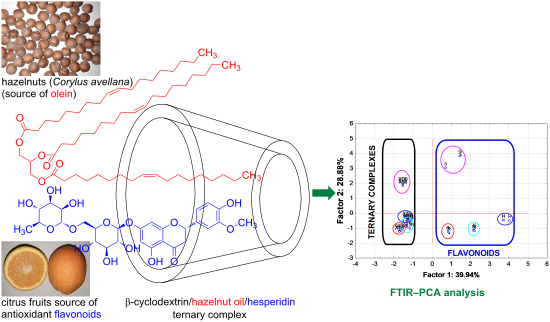
- solubility and bioaccessibility of the hazelnut oil components and antioxidants can be increased, as well as the controlled release of bioactive compounds (fatty acid glycerides and antioxidant flavonoids, namely hesperidin, naringin, rutin, and silymarin). The appropriate method for obtaining the ternary
- , leading to high water solubility. On the other hand, the tetrahydropyran moieties of the Glcp units provide the hydrophobic property of the CD cavity [4]. As a consequence of their unique structure, CDs can encapsulate hydrophobic molecules or hydrophobic moieties of geometrically compatible bioactive
- compounds [5]. The resulting supramolecular inclusion complexes provide enhanced water solubility and bioavailability/bioaccessibility of the nanoencapsulated bioactive compounds, higher oxidative and thermal stability or photostability of labile compounds, and their controlled release [6][7]. Vegetable oil



CuAAC-inspired synthesis of 1,2,3-triazole-bridged porphyrin conjugates: an overview
Beilstein J. Org. Chem. 2023, 19, 349–379, doi:10.3762/bjoc.19.29
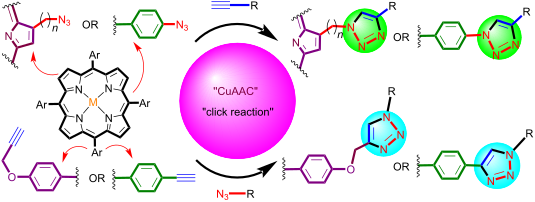
- -base analogues 41a,b were also obtained by the treatment with HCl in dioxane. The conjugation of carbohydrate with porphyrin improves the solubility of porphyrin in aqueous medium and also improves the optical and medicinal properties of porphyrins [30]. Considering these properties of glycoporphyrins
- porphyrin 174 and stirred at room temperature for 24 h, solubilization occurred, resulting in a homogeneous solution. This is due to the formation of a supramolecular assembly in which the hydrophobic adamantane arms of 176b are sequestered by the β-CD arms of porphyrin 174, resulting in water solubility




Synthesis and reactivity of azole-based iodazinium salts
Beilstein J. Org. Chem. 2023, 19, 317–324, doi:10.3762/bjoc.19.27
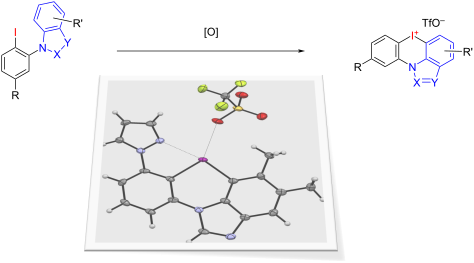
- , the reaction of 4aa in DCE at 50 °C gave the product 5aa in 23% yield (Table 1, entries 1 and 2). A larger amount of TfOH turned out to increase the solubility of the product and therefore impeded the purification process. However, an excess of acid is required for the electrophilic aromatic




Continuous flow synthesis of 6-monoamino-6-monodeoxy-β-cyclodextrin
Beilstein J. Org. Chem. 2023, 19, 294–302, doi:10.3762/bjoc.19.25
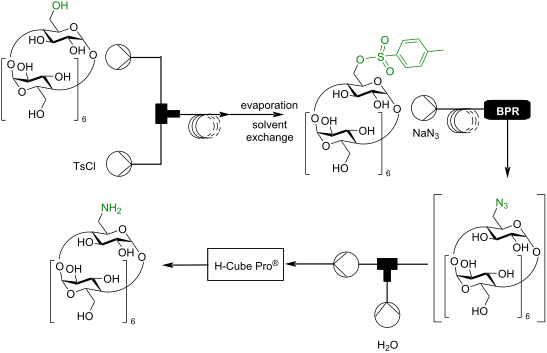
- complexation can lead to a significant solubility enhancement of poorly water-soluble molecules, and therefore it can enable the biological testing of drugs, which would otherwise not be possible by any other means [2][3]. Monosubstituted CDs contain only one hydroxy group modified with a functional group. In
- -toluenesulfonyl)-β-CD (Ts-β-CD, 2) There are three standard methods for the preparation of this general and functional CD derivative. Two of them take advantage of the lower aqueous solubility of β-CD (1) and Ts-β-CD (2) compared to α- and γ-CD analogs. The third method is mainly used for Ts-α-CD and Ts-γ-CD


Investigation of cationic ring-opening polymerization of 2-oxazolines in the “green” solvent dihydrolevoglucosenone
Beilstein J. Org. Chem. 2023, 19, 217–230, doi:10.3762/bjoc.19.21
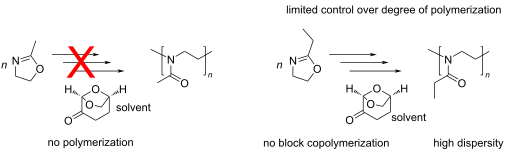
- biomedical applications, in particular as an alternative to the hydrophilic poly(ethylene glycol) (PEG), which is the polymer of choice for many biomedical applications due to its high solubility, low cytotoxicity and biocompatibility [3][4][5][6][7][8][9]. However, an ongoing discussion about pre-existing
- /or initiator did not yield considerable improvements. It is known that MeOx polymerization can be challenging due to the poor solubility of PMeOx in some solvents [30][31][34]. However, no precipitation was observed during polymerization, which rules out the solubility as an issue. Therefore, we


Sequential hydrozirconation/Pd-catalyzed cross coupling of acyl chlorides towards conjugated (2E,4E)-dienones
Beilstein J. Org. Chem. 2023, 19, 176–185, doi:10.3762/bjoc.19.17
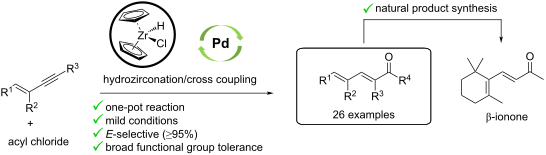
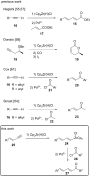
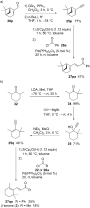
- ). Accordingly, the internal double bond in 25a stayed unaffected whereas the triple bond, as expected, selectively formed the double bond with (E)-configuration. Note that a reaction temperature of 50 °C is required in the first step of the sequence to obtain rapid solubility of the Schwartz reagent in the



Synthesis and characterisation of new antimalarial fluorinated triazolopyrazine compounds
Beilstein J. Org. Chem. 2023, 19, 107–114, doi:10.3762/bjoc.19.11
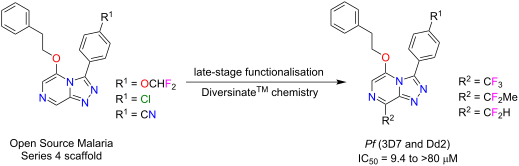
- improve solubility and metabolic stability while retaining potency [5]. Late-stage functionalisation (LSF) is a strategy involving the use of C–H bonds as chemical handles for the introduction of various functional groups, which has been widely employed by medicinal chemists to generate new analogues of


Catalytic aza-Nazarov cyclization reactions to access α-methylene-γ-lactam heterocycles
Beilstein J. Org. Chem. 2023, 19, 66–77, doi:10.3762/bjoc.19.6

- the reactivity of a thiophene-fused dihydropyridine as a cyclic imine. The tricyclic α-methylene-γ-lactam product 19k was obtained in 40% yield and as single diastereomer. It should be noted that due to the low solubility of the imine substrate in CH3CN, this reaction was carried out in CH2Cl2 at 23


Two-step continuous-flow synthesis of 6-membered cyclic iodonium salts via anodic oxidation
Beilstein J. Org. Chem. 2023, 19, 27–32, doi:10.3762/bjoc.19.2
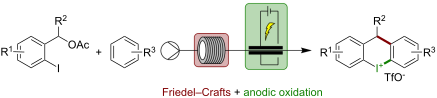
- further by increasing the charge (Table 2, entry 5). For a final combination of the two reaction steps, benzyl acetate 3a was chosen as a model substrate due to its high solubility and good reactivity as was previously demonstrated by us (Table 3) [28]. We determined an optimal reaction time of 20 min for


Inclusion complexes of the steroid hormones 17β-estradiol and progesterone with β- and γ-cyclodextrin hosts: syntheses, X-ray structures, thermal analyses and API solubility enhancements
Beilstein J. Org. Chem. 2022, 18, 1749–1762, doi:10.3762/bjoc.18.184
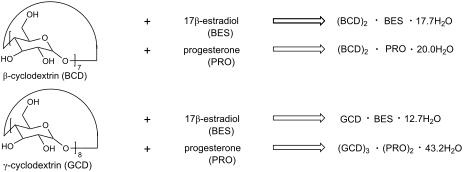
- Alexios I. Vicatos Zakiena Hoossen Mino R. Caira Centre for Supramolecular Chemistry Research (CSCR), Department of Chemistry, University of Cape Town, Rondebosch 7701, South Africa 10.3762/bjoc.18.184 Abstract Overcoming the challenges of poor aqueous solubility of active pharmaceutical
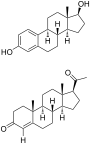
- ingredients (APIs) is necessary to render them bioavailable. This study addresses the poor solubility of two potent steroid hormones, 17β-estradiol (BES) and progesterone (PRO), via their complexation with two water-soluble native cyclodextrins (CDs) namely β-CD and γ-CD. The hydrated inclusion complexes β
- 1H NMR spectroscopy. Subsequent measurements of the aqueous solubilities of the four complexes confirmed significant solubility improvements effected by encapsulation of the steroids within the CDs, yielding solubility enhancement factors for BES and PRO in the approximate range 5–20. Keywords



Synthesis of (−)-halichonic acid and (−)-halichonic acid B
Beilstein J. Org. Chem. 2022, 18, 1629–1635, doi:10.3762/bjoc.18.174
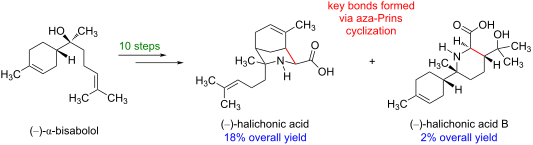
- reducing agent sodium bis(2-methoxyethoxy)aluminum hydride (Red-Al®), which is a convenient alternative to LiAlH4 that exhibits high solubility in organic solvents and is also known to reduce amides [17]. When a solution of amide 5 in toluene was treated with an excess of Red-Al® at 0 °C, rapid gas


A new route for the synthesis of 1-deazaguanine and 1-deazahypoxanthine
Beilstein J. Org. Chem. 2022, 18, 1617–1624, doi:10.3762/bjoc.18.172
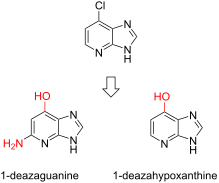
- alcohol. We build on a commercially available imidazopyridine derivative and conceived a protecting group strategy to enhance solubility and selectivity to orchestrate the installation of the exocyclic amino and hydroxy groups. Results and Discussion 1-Deazaguanine Previously described syntheses for 1
- be easily prepared from its commercially available 6-chloro derivative [16]. To enable C–O coupling with benzyl alcohol, protection of the N9 with a tetrahydropyranyl group was necessary due to limited solubility of the aryl iodide. Therefore, 6-iodo-1-deazapurine was treated with tosylic acid and
- the cross coupling reaction. We also mention that we did not decide for a direct transformation [27][28] of 6-iodo-1-deazapurine into 6-hydroxy-1-deazapurine for reasons of solubility and desired regioselectivity of the subsequent nitration reaction. 1-Deazahypoxanthine Synthesis of 1


Preparation of β-cyclodextrin-based dimers with selectively methylated rims and their use for solubilization of tetracene
Beilstein J. Org. Chem. 2022, 18, 1596–1606, doi:10.3762/bjoc.18.170
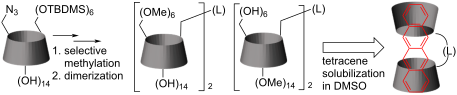
- 1H NMR and NOESY NMR imply the dependence of molecular symmetry on the type of spacer. The ability of synthesized dimers to increase the solubility of tetracene in DMSO was evaluated and compared to native cyclodextrins and their methylated derivatives. The newly synthesized compounds expressed
- substituted rims are partially methylated CDs. Methylation reduces the formation of intramolecular hydrogen bonds, enhancing CDs water solubility, and also extends the hydrophobic cavity, thus improving its binding potential. A substantial increase of binding constant (K) for per-6-methylated CD compared to
- native CD was described, but an order of magnitude decrease of K was found for permethylated CD [2]. Also, methylation changes the solubility of CDs in organic solvents, expanding their potential field of application. CDs form the most stable complexes with hydrophobic compounds in polar solvents such as


Microelectrode arrays, electrosynthesis, and the optimization of signaling on an inert, stable surface
Beilstein J. Org. Chem. 2022, 18, 1488–1498, doi:10.3762/bjoc.18.156
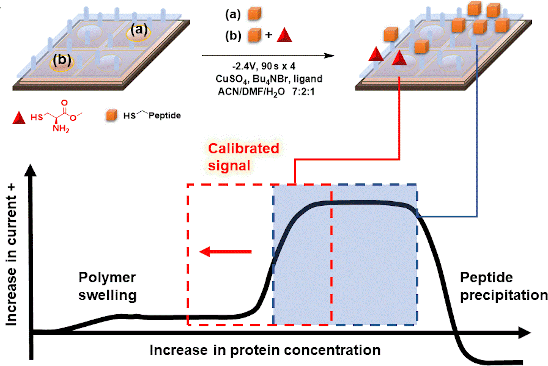
- diblock copolymer. Binding between the integrin receptor and the RGD peptide on the polymer increased the solubility of the polymer above the associated electrodes and in so doing increased the current associated with the mediator. This change in current relative to the concentration of integrin in


One-pot synthesis of 2-arylated and 2-alkylated benzoxazoles and benzimidazoles based on triphenylbismuth dichloride-promoted desulfurization of thioamides
Beilstein J. Org. Chem. 2022, 18, 1479–1487, doi:10.3762/bjoc.18.155

- furnished the tricyclic compound 8v in 84% yield. In contrast, the reaction with 3-amino-2-anthracenol resulted in a low yield of the tetracyclic compound 8w due to the low solubility of aminoanthracenol. The reaction of 2a with 2-aminothiophenol instead of 2-aminophenol proceeded smoothly, and the


Mechanochemical synthesis of unsymmetrical salens for the preparation of Co–salen complexes and their evaluation as catalysts for the synthesis of α-aryloxy alcohols via asymmetric phenolic kinetic resolution of terminal epoxides
Beilstein J. Org. Chem. 2022, 18, 1416–1423, doi:10.3762/bjoc.18.147
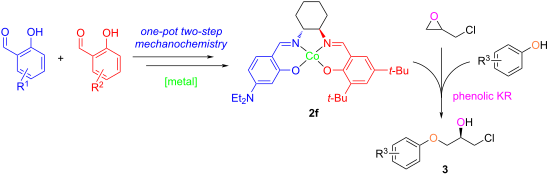
- due to the strong electron-withdrawing effect of bromine, enhancing the electrophilic property of bromo-substituted salicylaldehyde. Because of the poor solubility in the eluent, the yield of dichloro-containing 1c (88%) was lower than 1a after isolating by column chromatography. This was also found


On drug discovery against infectious diseases and academic medicinal chemistry contributions
Beilstein J. Org. Chem. 2022, 18, 1355–1378, doi:10.3762/bjoc.18.141

- , current trends are found in reports from the industry. A paper from Novartis describes that solubility and cell permeability are, for phenotype-based screenings, the favorite criteria along with structural diversity in regard with previously observed biological effects [86]. Along with such parameters, a







Cyclodextrin-based Schiff base pro-fragrances: Synthesis and release studies
Beilstein J. Org. Chem. 2022, 18, 1346–1354, doi:10.3762/bjoc.18.140
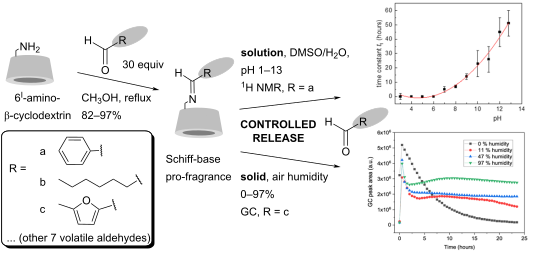
- various organic molecules have been described so far. It was proved that the complexation of volatile organic compounds, such as aldehydes, into the CD’s cavity reduces the volatility and increases the solubility and bioavailability of these compounds [5][6][7][8][9][10][11][12][13][14]. The release of
- phosphate buffer solutions of pH 1.08, 2.00, 3.00, 4.00, 5.00, 6.00, 7.00, 8.00, 9.00, 10.00 11.00, 12.00, and 12.80 were prepared (see Experimental section) using deuterium oxide instead of water to facilitate NMR spectroscopy experiments. Because of the low solubility of the pro-fragrance in water, it had
- of a pH meter. Because of the poor solubility of the pro-fragrance in water, it had to be dissolved in 0.5 mL of deuterated dimethyl sulfoxide. Then, the buffer solutions (0.5 mL) were added and mixed just before starting the measurements. The samples were kept at ambient temperature (20–25 °C



