Search results
Search for "tetrahydrofuran" in Full Text gives 327 result(s) in Beilstein Journal of Organic Chemistry. Showing first 200.
Studies directed toward the exploitation of vicinal diols in the synthesis of (+)-nebivolol intermediates
Beilstein J. Org. Chem. 2017, 13, 571–578, doi:10.3762/bjoc.13.56
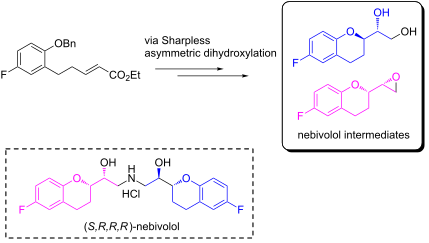
- investigate other cyclization approaches towards these chroman derivatives. In 2005, Borhan and co-workers described the construction of tetrahydrofuran and tetrahydropyran structures from 1,2,n-triols via an elegant cyclization involving Lewis acid-mediated cyclization of in situ generated cyclic orthoesters


Fast and efficient synthesis of microporous polymer nanomembranes via light-induced click reaction
Beilstein J. Org. Chem. 2017, 13, 558–563, doi:10.3762/bjoc.13.54
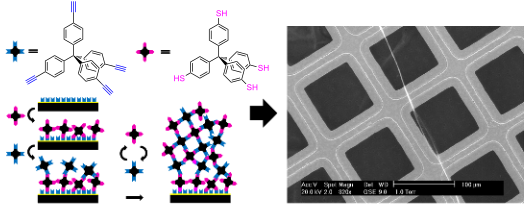
- otherwise. Cyclohexane, dichloromethane and dry tetrahydrofuran (THF) were purchased from Merck Millipore; acetone was purchased from VWR Chemicals. Dry THF was degassed three times via freeze-pump-thaw prior to use. PMMA average Mw ≈120.000, PS average Mw ≈170.000, 2-hydroxy-1-[4-(2-hydroxyethoxy)phenyl]-2


Dimerization reactions of aryl selenophen-2-yl-substituted thiocarbonyl S-methanides as diradical processes: a computational study
Beilstein J. Org. Chem. 2017, 13, 410–416, doi:10.3762/bjoc.13.44

- exchange/correlation functional [19] was used with the 6-31G(d) basis set for optimization. Single-point calculations were made at the M06-2X/6-311+G(2df,p) level with the SMD implicit solvation model [14] using the standard parameters for tetrahydrofuran. Zero-point and thermal corrections were combined
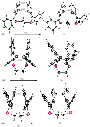
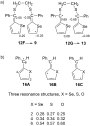
- course of the dimerization of a reactive diaryl thiocarbonyl S-methanides. Potential 1,3-dipolar electrocyclization of thiocabonyl S-methanide 8A. Computed enthalpies (free energies in parentheses) at 298 K at the SMD(tetrahydrofuran)/M06-2X/6-311+G(2df,p)//M06-2X/6-31G(d) level of theory. Stepwise
- radical dimerization of the reactive thiocarbonyl S-methanide 8. Computed enthalpies (free energies in parentheses) at 298 K at the SMD(tetrahydrofuran)/M06-2X/6-311+G(2df,p)//M06-2X/6-31G(d) level of theory. The species 12E–I are all biradical intermediates in the reaction mechanism and should be able to


A chemoselective and continuous synthesis of m-sulfamoylbenzamide analogues
Beilstein J. Org. Chem. 2017, 13, 303–312, doi:10.3762/bjoc.13.33
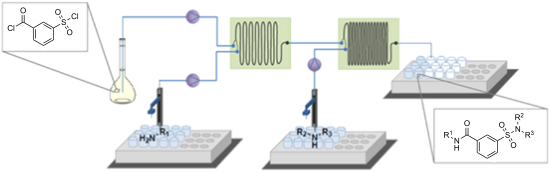
- LC–MS analysis. In the initial screening, tetrahydrofuran (THF) was chosen as solvent (cfinal = 100 mM), however, precipitation of the ammonium salts was unavoidable. The results of this screening did show that the use of catalysts, such as pyridine or dimethylaminopyridine (DMAP), is unnecessary in


Regiochemistry of cyclocondensation reactions in the synthesis of polyazaheterocycles
Beilstein J. Org. Chem. 2017, 13, 257–266, doi:10.3762/bjoc.13.29
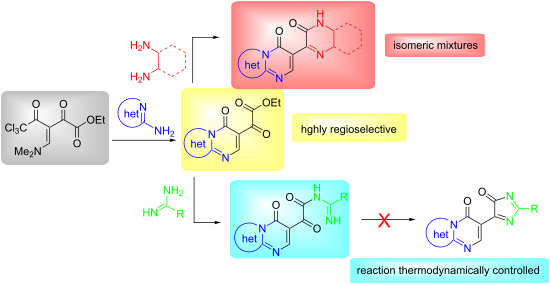
- isolated in a yield of 74%. When the reaction was repeated under reflux conditions, the time to reach conversion was reduced to 30 min and product 5 was isolated in 80% yield (Table 1). Other solvents such as ethanol, tetrahydrofuran, acetone, or ethyl acetate were also tested under reflux conditions but
- were not as efficient as acetonitrile. Generally refluxing 1 and 2 in either solvent needed longer reaction times in most cases (0.5, 3, 1, and 1 h, respectively for ethanol, tetrahydrofuran, acetone, and ethyl acetate) and throughout lower yields of 5 were obtained (54, 74, 77, and 75%, respectively


Total synthesis of a Streptococcus pneumoniae serotype 12F CPS repeating unit hexasaccharide
Beilstein J. Org. Chem. 2017, 13, 164–173, doi:10.3762/bjoc.13.19
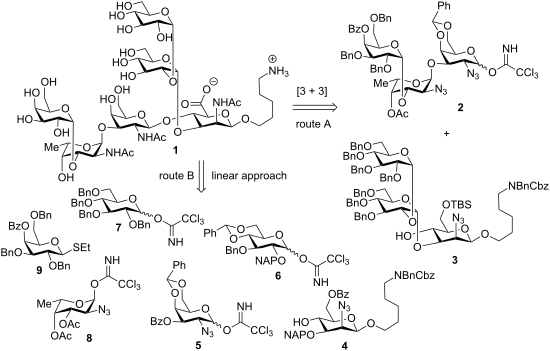
- -dimethylformamide; EtOAc: ethyl acetate; GlcA: glucouronic acid; HPLC: high-performance liquid chromatography; Lev: levulinoyl; MALDI–TOF MS: matrix-assisted laser desorption/ionization–time of flight mass spectrometry; NAP: 2-naphthylmethyl; TBS: tert-butyldimethylsilyl; THF: tetrahydrofuran; TMSOTf


Diels–Alder reactions of myrcene using intensified continuous-flow reactors
Beilstein J. Org. Chem. 2017, 13, 120–126, doi:10.3762/bjoc.13.15
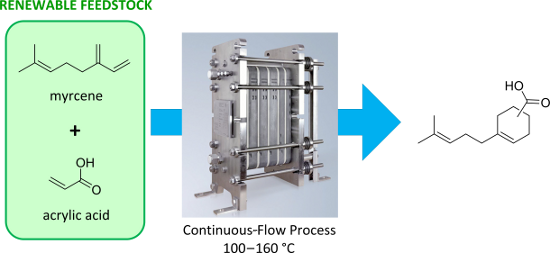
- tetrahydrofuran (THF), ethyl acetate (EtOAc), toluene, dichloromethane (DCM) and isopropanol (iPrOH) were obtained from Merck KGaA. All reagents and solvents were used without further purification. Reaction conversions were calculated from 1H NMR spectra, which were recorded on a Bruker AC-400 spectrometer in


Benzothiadiazole oligoene fatty acids: fluorescent dyes with large Stokes shifts
Beilstein J. Org. Chem. 2016, 12, 2739–2747, doi:10.3762/bjoc.12.270
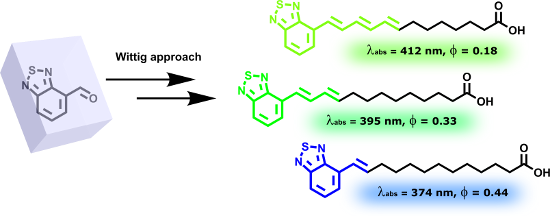
- were distilled before use unless otherwise stated. Tetrahydrofuran (THF) and diethyl ether (Et2O) were distilled from sodium/benzophenone under an argon atmosphere. Dichloromethane (CH2Cl2) and tetrachloromethane (CCl4) were distilled from CaCl2 under an argon atmosphere. All other solvents were used


Isosorbide and dimethyl carbonate: a green match
Beilstein J. Org. Chem. 2016, 12, 2256–2266, doi:10.3762/bjoc.12.218
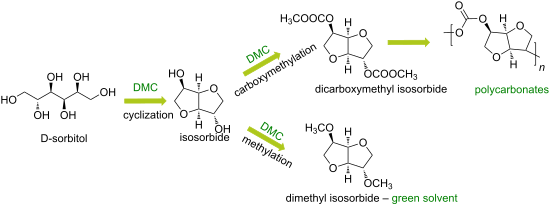
- double cyclisation reaction that requires 2 equiv of base for each tetrahydrofuran formed. The reaction mechanism is quite complex (Scheme 2) since it encompasses two carboxymethylation reactions (via BAc2) followed by two intramolecular cyclisations (via BAl2). In order to avoid the use of excess base
- applications, but also by its high reactivity and peculiar molecular structure [89]. Isosorbide has an open-book V-shaped configuration formed by two cis-connected tetrahydrofuran rings with an opening angle of 120°. The four oxygen atoms incorporated in the structure are in β-position to each other [61][62


Hydroxy-functionalized hyper-cross-linked ultra-microporous organic polymers for selective CO2 capture at room temperature
Beilstein J. Org. Chem. 2016, 12, 1981–1986, doi:10.3762/bjoc.12.185
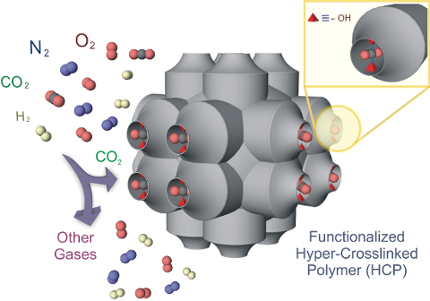
- -(hydroxymethyl)anthracene, respectively (Figure 1). HCP-91 and HCP-94 have been synthesized by using a Friedel–Crafts alkylation reaction. The thus obtained as-synthesized compounds were washed repeatedly with dimethylformamide (DMF), methanol, water, chloroform, dichloromethane and tetrahydrofuran (THF) to


Synthesis and characterization of fluorinated azadipyrromethene complexes as acceptors for organic photovoltaics
Beilstein J. Org. Chem. 2016, 12, 1925–1938, doi:10.3762/bjoc.12.182
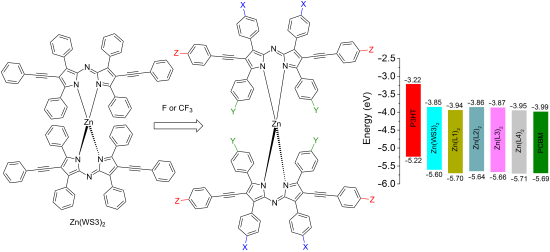
- using Zn(OAc)2 to a 2-step, one pot reaction with sodium hydride in tetrahydrofuran, followed by the addition of zinc(II) chloride. Zinc(II) and BF2+ chelates were purified by silica gel column chromatography to isolate the chelates as blue solids and the identity and purity was confirmed by NMR
- solvents were used as received unless otherwise specified. Xylenes and tetrahydrofuran were distilled over sodium and benzophenone, degassed and stored under nitrogen. ADP, ADPI2, WS3, BF2(WS3), and Zn(WS3)2 were synthesized and purified according to literature procedures with minor modifications [2][5][9
- reflux condenser, L1 (100 mg, 0.146 mmol) was dissolved in anhydrous tetrahydrofuran (10 mL) under N2. To this dark blue solution, anhydrous NaH (4.00 mg, 0.161 mmol) was added and the mixture was heated to 60 °C. The solution turned to bright blue. After 24 h of heating, anhydrous ZnCl2 (11.5 mg, 0.084




Experimental and theoretical investigations on the high-electron donor character of pyrido-annelated N-heterocyclic carbenes
Beilstein J. Org. Chem. 2016, 12, 1884–1896, doi:10.3762/bjoc.12.178
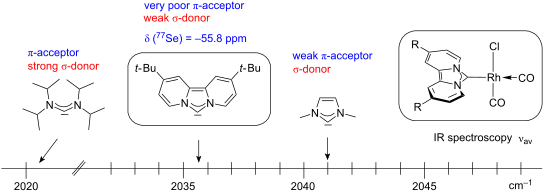
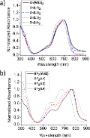
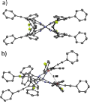
- mL of tetrahydrofuran was cooled to −35 °C and a solution of potassium tert-butoxide (14.9 mg, 133 μmol) in 1 mL tetraydrofuran was added. After 30 min the deep red suspension was warmed up to room temperature and stirred overnight. The solvent was removed in vacuo and the residue suspended in 7 mL


TMSBr-mediated solvent- and work-up-free synthesis of α-2-deoxyglycosides from glycals
Beilstein J. Org. Chem. 2016, 12, 1758–1764, doi:10.3762/bjoc.12.164
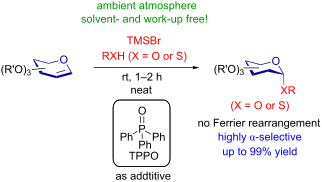
- , dimethylformamide (DMF) (64%, Table 2, entry 2) [76], acetonitrile (ACN) [74] (44%, Table 2, entry 3), tetrahydrofuran (THF) (56%, Table 2, entry 4), and dioxane [75] (50%, Table 2, entry 5) were tested as glycosylation modulators and similar yields of 25 were obtained, but their α-selectivities dramatically


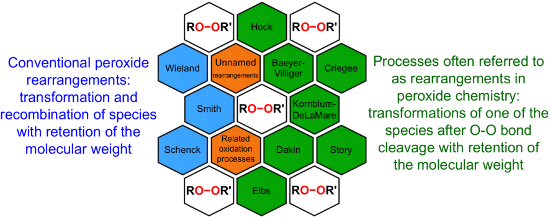
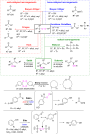
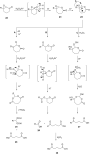
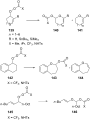
Rearrangements of organic peroxides and related processes
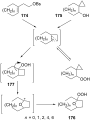
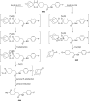
Beilstein J. Org. Chem. 2016, 12, 1647–1748, doi:10.3762/bjoc.12.162











Rh-Catalyzed reductive Mannich-type reaction and its application towards the synthesis of (±)-ezetimibe
Beilstein J. Org. Chem. 2016, 12, 1608–1615, doi:10.3762/bjoc.12.157
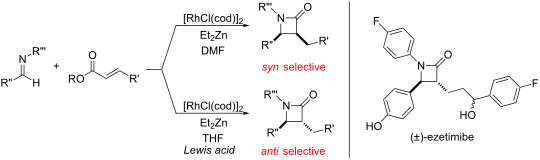
- 0.25 mm × 15 m, carrier; He). Peak areas were calculated on a Hitachi D-2500 Chromato-Integrator. Materials Tetrahydrofuran (THF) was purchased from Kanto Chemical Co. Inc. (Tokyo, Japan) in the dehydrated form. N,N-Dimethylformamide (DMF) and dichloromethane (CH2Cl2) were distilled over CaH2 and


Dinuclear thiazolylidene copper complex as highly active catalyst for azid–alkyne cycloadditions
Beilstein J. Org. Chem. 2016, 12, 1566–1572, doi:10.3762/bjoc.12.151
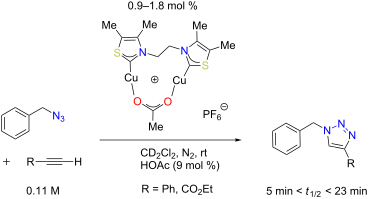
- mixture was stirred under reduced pressure overnight. In a glove box, copper(I) acetate (0.05 g, 0.40 mmol, 2.20 equiv) and dichloromethane or tetrahydrofuran (3 mL) were added. The suspension was stirred at room temperature for 5 d. a) Procedure for the reaction in dichloromethane: The suspension was
- reaction in tetrahydrofuran: The solvent was removed under reduced pressure and dichloromethane (4 mL) was added in the glove box. The suspension was filtered over a frit and the solution was concentrated by reducing the solvent in vacuo to 2 mL. Diethyl ether (4 mL) was added and the formed precipitate


Enantioselective addition of diphenyl phosphonate to ketimines derived from isatins catalyzed by binaphthyl-modified organocatalysts
Beilstein J. Org. Chem. 2016, 12, 1551–1556, doi:10.3762/bjoc.12.149
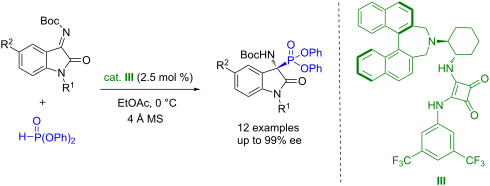
- presence of 10 mol % of catalyst III together with ketimine 1a and diphenyl phosphonate (2). We obtained excellent results in ethyl acetate (85% yield, 90% ee, Table 1, entry 3), while a slight decrease in enationselectivities was observed when dichloromethane, chloroform, tetrahydrofuran, toluene, and


Biosynthesis of oxygen and nitrogen-containing heterocycles in polyketides
Beilstein J. Org. Chem. 2016, 12, 1512–1550, doi:10.3762/bjoc.12.148
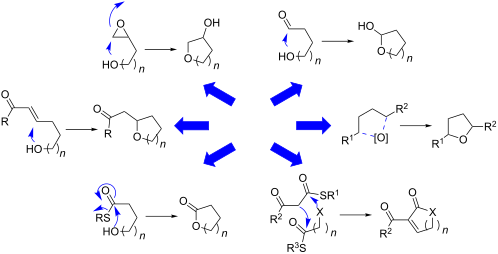
- tetrahydrofuran formation during biosynthesis. As the enzyme must act on biosynthetic intermediates of strongly varying size, this attributes a remarkably broad substrate tolerance to PamS. No detailed characterisation of PamS has been carried out yet. Oocydin. Homologs of trans-AT-PKS-characteristic pyran




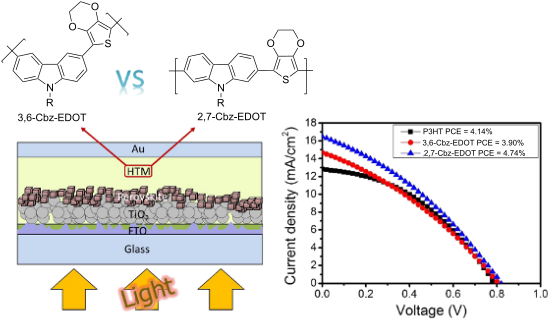
3,6-Carbazole vs 2,7-carbazole: A comparative study of hole-transporting polymeric materials for inorganic–organic hybrid perovskite solar cells
Beilstein J. Org. Chem. 2016, 12, 1401–1409, doi:10.3762/bjoc.12.134
- GULLIVER 1500 equipped with a pump (PU-2080 Plus), an absorbance detector (RI-2031 Plus), and two Shodex GPC KF-803 columns (8.0 mm I.D. × 300 mm L) based on a conventional calibration curve using polystyrene standards. Tetrahydrofuran (40 °C) was used as a carrier solvent at the flow rate of 1.0 mL min−1


Synergistic chiral iminium and palladium catalysis: Highly regio- and enantioselective [3 + 2] annulation reaction of 2-vinylcyclopropanes with enals
Beilstein J. Org. Chem. 2016, 12, 1340–1347, doi:10.3762/bjoc.12.127
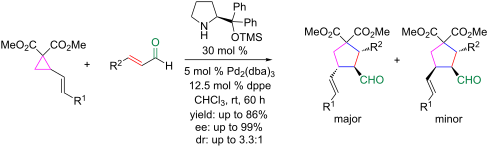
- amine I in CH2Cl2 at rt for 48 h (Table 1). A series of Lewis acids were initially screened. FeCl3 and Cu(OTf)2 gave the 1,2-cycloaddition product tetrahydrofuran 4a (Table 1, entries 1 and 2). It is also disappointing that others Lewis acids, such as CuCl2, MgI2, ZnBr2, ZnCl2 and FeCl2 failed to


On the mechanism of imine elimination from Fischer tungsten carbene complexes
Beilstein J. Org. Chem. 2016, 12, 1322–1333, doi:10.3762/bjoc.12.125
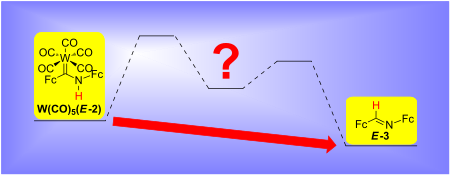
- obtained by treating W(CO)5(1Et) [20][21] with aminoferrocene (Fc-NH2) [40][41] in the presence of potassium hexamethyldisilazide (KHMDS) in tetrahydrofuran at room temperature (Scheme 2). In an analogous reactivity to Cr(CO)5(E-2) (Scheme 1a) [27], the formation of the imine E-3 is observed as a side




Synthesis of 2-oxindoles via 'transition-metal-free' intramolecular dehydrogenative coupling (IDC) of sp2 C–H and sp3 C–H bonds
Beilstein J. Org. Chem. 2016, 12, 1153–1169, doi:10.3762/bjoc.12.111
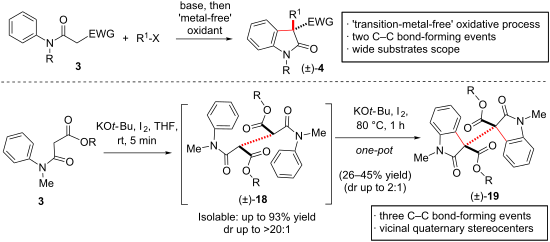
- elaboration and functionalization. A few substrates were treated under decarboxylative allylation (DcA) conditions in the presence of 10 mol % of Pd(PPh3)4 in refluxing tetrahydrofuran (7–8 h), which afforded products 26a–d in up to 99% yield (Scheme 11). Interestingly, oxidative coupling products with


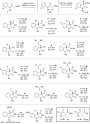

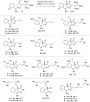
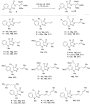


Chiral cyclopentadienylruthenium sulfoxide catalysts for asymmetric redox bicycloisomerization
Beilstein J. Org. Chem. 2016, 12, 1136–1152, doi:10.3762/bjoc.12.110
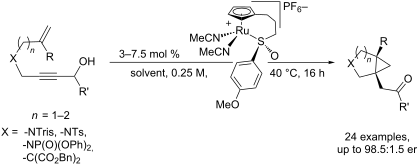
- transition metals to affect asymmetric enyne cycloisomerization [13][14][15][16][17][18][19][20][21][22][23]..In particular, Mikami has disclosed a palladium-catalyzed asymmetric enyne cycloisomerization where a tetrahydrofuran containing a quaternary, all-carbon stereocenter is created in excellent yield


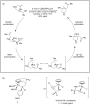


Stimuli-responsive HBPS-g-PDMAEMA and its application as nanocarrier in loading hydrophobic molecules
Beilstein J. Org. Chem. 2016, 12, 939–949, doi:10.3762/bjoc.12.92
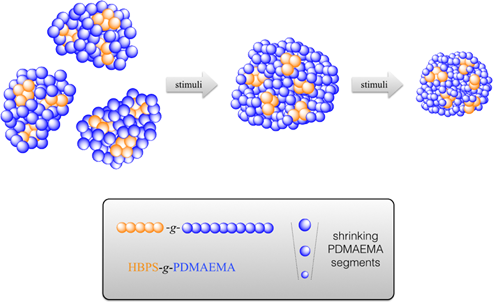
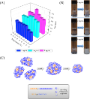
- 400M spectrometer. The molecular weight of polymer was determined by gel permeation chromatography (GPC) (Waters-Wyatt) equipped with RI, UV, viscosity and LS detectors using tetrahydrofuran (THF) as eluent. The UV–vis spectra were recorded on a UV3802 (UNICO) ultraviolet spectrophotometer. The size




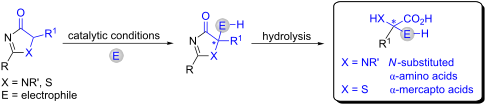
1H-Imidazol-4(5H)-ones and thiazol-4(5H)-ones as emerging pronucleophiles in asymmetric catalysis
Beilstein J. Org. Chem. 2016, 12, 918–936, doi:10.3762/bjoc.12.90
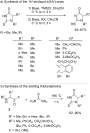
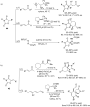
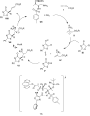
- ureidopeptide-like bifunctional Brønsted base catalyst C5 [85]. Ureidopeptide-like Brønsted base bifunctional catalyst preparation. NMM = N-methylmorpholine, THF = tetrahydrofuran [85]. Selected examples of the Michael addition of thiazolones to different nitroolefins promoted by catalyst C5 [85]. Elaboration