


Search results
Search for "thiophene" in Full Text gives 267 result(s) in Beilstein Journal of Organic Chemistry. Showing first 200.
Carbon–carbon bond cleavage for Cu-mediated aromatic trifluoromethylations and pentafluoroethylations
Beilstein J. Org. Chem. 2015, 11, 2661–2670, doi:10.3762/bjoc.11.286
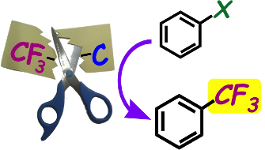
- reaction conditions of copper-catalyzed nucleophilic trifluoromethylation. Electron-rich iodoarenes underwent the nucleophilic trifluoromethylation to afford the corresponding trifluoromethylated benzenes. Furthermore, the trifluoromethyl group was introduced into naphthalenes and thiophene with hemiaminal


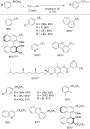


Copper-catalyzed asymmetric conjugate addition of organometallic reagents to extended Michael acceptors
Beilstein J. Org. Chem. 2015, 11, 2418–2434, doi:10.3762/bjoc.11.263
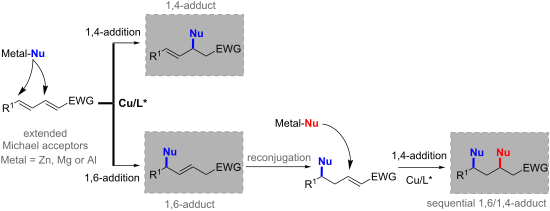
- were reported. In order to fully demonstrate the synthetic significance of such a methodology, compounds 27 were reconjugated in the presence of DBU and subsequently reacted in the 1,4-ACA (Scheme 5). The optimized conditions for the conversion of 28 to 29 involved copper(I) thiophene-2-carboxylate
- system, a combination of Josiphos L9 as chiral ligand and copper thiophene 2-carboxylate (CuTC) afforded the desired 1,6-adducts 43 with very good regioselectivity (up to 5/95) and enantioselectivities (up to 91% ee). Enantioselective 1,4-addition to extended Michael acceptors With dialkylzinc reagents


Molecular-oxygen-promoted Cu-catalyzed oxidative direct amidation of nonactivated carboxylic acids with azoles
Beilstein J. Org. Chem. 2015, 11, 2158–2165, doi:10.3762/bjoc.11.233
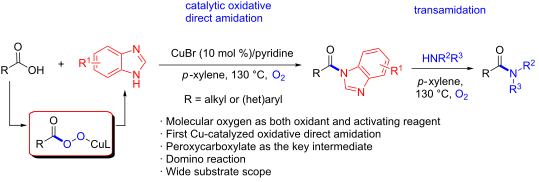
- conditions, providing the desired products 20 and 21 in 59% and 88% yield, respectively. Additionally, heterocyclic acids, such as thiophene- and furan-3-carboxylic acid were well tolerated, providing the amides 22 and 23 in acceptable yields. Gratifyingly, aliphatic carboxylic acids, such as


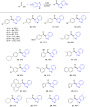


C–H bond halogenation catalyzed or mediated by copper: an overview
Beilstein J. Org. Chem. 2015, 11, 2132–2144, doi:10.3762/bjoc.11.230
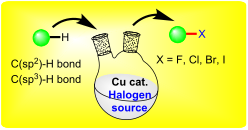
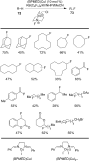
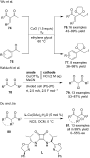
- , I) and a proper additive promoted smoothly the synthesis of various o-haloaryl-2-carboxamides 11. This synthetic protocol tolerated not only carbon aryls, but also various heteroaryls such as thiophene, furan and pyridine in the amide component. Interestingly, in an earlier example studying the


Efficient synthesis of π-conjugated molecules incorporating fluorinated phenylene units through palladium-catalyzed iterative C(sp2)–H bond arylations
Beilstein J. Org. Chem. 2015, 11, 2012–2020, doi:10.3762/bjoc.11.218
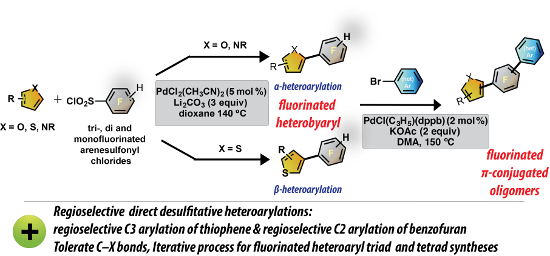
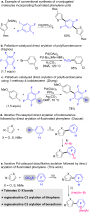
- -coupling reactions are one of the most powerful technologies for the efficient synthesis of π-conjugated oligomers. As example, a π-conjugated thiophene triad incorporating a difluorinated phenylene unit has been previously synthesized in 60% yield using the Stille reaction of trimethyl(thiophen-2-yl
- , respectively. Notably, the thiophene derivative was regioselectively arylated at the C4 position and the benzothiophene at the C3 position, which are challenging positions to functionalize using aryl bromides as the coupling partners [58]. Substrates 1–6 contain several reactive C–H bonds in palladium
- -bromopyridine as coupling partners, a C–H arylation on the trifluorobenzene moiety of 14 did not proceed. We surveyed next the reactivity of 3-(2,3,4-trifluorophenyl)thiophene derivatives 5 and 6 in palladium catalyzed direct arylation using the same reaction conditions (Scheme 4). As expected, with 2-pentyl-4



Polythiophene and oligothiophene systems modified by TTF electroactive units for organic electronics
Beilstein J. Org. Chem. 2015, 11, 1749–1766, doi:10.3762/bjoc.11.191
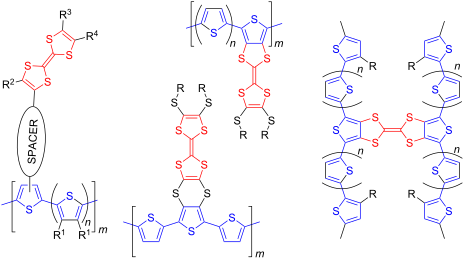
- Abstract The aim of this review is to give an update on current progress in the synthesis, properties and applications of thiophene-based conjugated systems bearing tetrathiafulvalene (TTF) units. We focus mostly on the synthesis of poly- and oligothiophenes with TTF moieties fused to the thiophene units
- PT conjugated systems with TTF units within the polymer backbone or as pendant units The most straightforward way to modify PT conjugated systems is to incorporate the TTF unit into the polymer backbone or attach it as a pendant unit, as only minor modifications to the synthesis of the TTF/thiophene
- potentiodynamic and potentiostatic electrodeposition. Nevertheless, the labile ester bond and its potential cleavage remain an issue due to formation of acid upon electropolymerisation. Roncali and co-workers used more reliable ether bonds to anchor a TTF moiety to a thiophene monomer via a long aliphatic spacer




An efficient synthesis of N-substituted 3-nitrothiophen-2-amines
Beilstein J. Org. Chem. 2015, 11, 1707–1712, doi:10.3762/bjoc.11.185
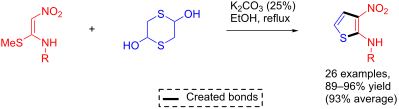
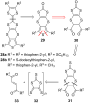
- . Regarding aryl substituents, the thiophene synthesis was compatible with the presence of unsubstituted phenyl rings (compound 3e) and phenyl substituents bearing moderately electron-withdrawing groups such as m- and p-halogens and m-trifluoroalkyl substituents (compounds 3a–d and 3l–n), although substrates



Pyridinoacridine alkaloids of marine origin: NMR and MS spectral data, synthesis, biosynthesis and biological activity
Beilstein J. Org. Chem. 2015, 11, 1667–1699, doi:10.3762/bjoc.11.183
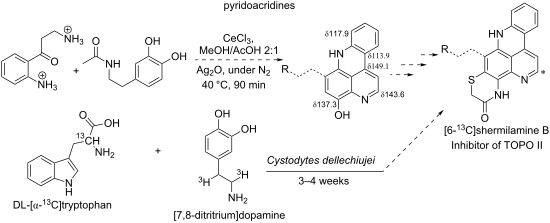
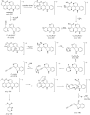
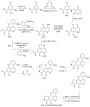
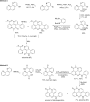
- the synthesis of derivatives 43–49, which imitate the ascididemin (42) structure. Compounds 43–45 have one pyridine ring less and do not contain the quinolinophenanthroline core as ascididemin. The pyridine ring missing in the structures of 43–45 has been replaced in 48 and 49, by a thiophene and a










Design and synthesis of hybrid cyclophanes containing thiophene and indole units via Grignard reaction, Fischer indolization and ring-closing metathesis as key steps
Beilstein J. Org. Chem. 2015, 11, 1514–1519, doi:10.3762/bjoc.11.165

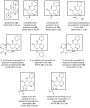
- Sambasivarao Kotha Ajay Kumar Chinnam Mukesh E. Shirbhate Department of Chemistry, Indian Institute of Technology-Bombay, Powai, Mumbai-400 076, India, Fax: 022-2572 7152 10.3762/bjoc.11.165 Abstract We demonstrate a new synthetic strategy to cyclophanes containing thiophene and indole moieties
- cyclophanes the development of powerful and general synthetic methods is highly desirable. Herein, we report a new approach to thiophene- and indole-containing hybrid cyclophane derivatives via Grignard addition, Fischer indolization and RCM as key steps. Strategy The retrosynthetic strategy to the target
- cyclophane 1 containing the thiophene and indole moieties is shown in Figure 1. Here, we conceived thiophene-containing diolefin 3 as a possible synthon to assemble the target molecule 1 via 2. Route A involves an RCM of 3 followed by Fischer indolization of 2 (Figure 1). Alternatively, Fischer indolization


Deproto-metallation of N-arylated pyrroles and indoles using a mixed lithium–zinc base and regioselectivity-computed CH acidity relationship
Beilstein J. Org. Chem. 2015, 11, 1475–1485, doi:10.3762/bjoc.11.160
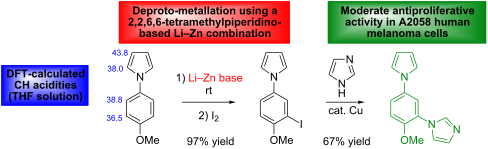
- thiophene ring took place. After subsequent interception with iodine, N-(5-iodo-2-thienyl)pyrrole (3a) was isolated in nearly quantitative yield. Under the same reaction conditions, the corresponding indole substrate 2a was similarly converted into N-(5-iodo-2-thienyl)indole (4a) (Scheme 3). Starting from
- (it is delocalized within the aromatic π-electron ring system), a coordination by the sulfur atom of the thiophene substituent could take place with a possible decrease of neighbouring pKa values. As for 1a and 2a, deproto-metallation has not yet been reported for 1b and 2b (Scheme 4 and Figure 5). In
- in A2058 melanoma cells (Figure 6). The best result was obtained with 1f at 10−5 M, which induced 31.9 ± 0.1% growth inhibition in cells treated for 72 h. The linear N-arylated pyrroles 1b and 1e were poorly active. Arylation by a thiophene moiety (1a and 2a) moderately increased the




A new and efficient procedure for the synthesis of hexahydropyrimidine-fused 1,4-naphthoquinones
Beilstein J. Org. Chem. 2015, 11, 1235–1240, doi:10.3762/bjoc.11.137
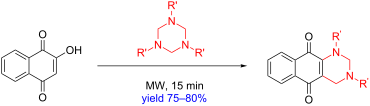
- naphthoquinones (Figure 1) such as naphtho[2,3-b]furan [5][6][7][8][9][10][11][12][13][14], naphtho-pyran [15][16][17][18], benzo[f]indole [19][20][21][22][23][24], benzo[g]quinolone [25], benzo[b]carbazole [26], naphtho[2,3-b]thiophene [27][28][29][30][31][32][33] and naphtho[2,3-b]]oxazole [34] have been
- pyrrole-, furan- and thiophene-fused naphthoquinones [36]. For several years, our group has been interested in developing new synthetic methods for the preparation of heterocycle-fused 1,4-naphthoquinones or heterocycle-tethered 1,4-naphthoquinones. 1,3-Quinazolines are nitrogenated heterocycles that are


Thiazole-induced rigidification in substituted dithieno-tetrathiafulvalene: the effect of planarisation on charge transport properties
Beilstein J. Org. Chem. 2015, 11, 1148–1154, doi:10.3762/bjoc.11.129
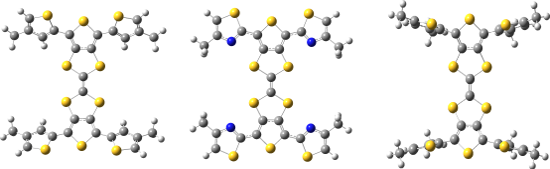
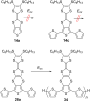
- Physical-Organic Chemistry and Coal Chemistry, 02160 Kyiv, Ukraine 10.3762/bjoc.11.129 Abstract Two novel tetrathiafulvalene (TTF) containing compounds 1 and 2 have been synthesised via a four-fold Stille coupling between a tetrabromo-dithienoTTF 5 and stannylated thiophene 6 or thiazole 4. The optical
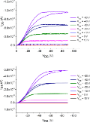
- demonstrated that the substitution of thiophene units for thiazoles was found to increase the observed charge transport, which is attributed to induced planarity through S–N interactions of adjacent thiazole nitrogen atoms and TTF sulfur atoms and better packing in the bulk. Keywords: non-covalent
- crystal devices. Similarly, oligothiophenes have demonstrated excellent properties for use in both light-emitting [12] and light-harvesting devices [11][13]. Previously, our group reported a series of molecules containing various oligothiophenes fused to a TTF moiety through the central thiophene [11][14



New tris- and pentakis-fused donors containing extended tetrathiafulvalenes: New positive electrode materials for rechargeable batteries
Beilstein J. Org. Chem. 2015, 11, 1136–1147, doi:10.3762/bjoc.11.128
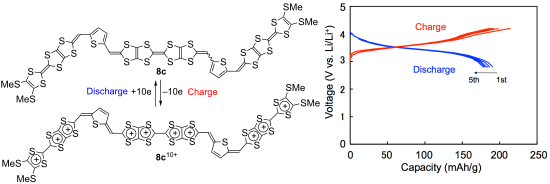
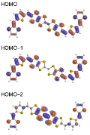
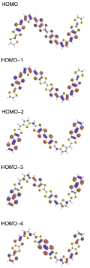
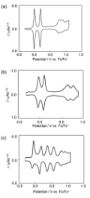
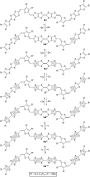
- Strategy Initiative for Catalysts and Batteries (ESICB), Kyoto University, Katsura, Kyoto 615-8520, Japan 10.3762/bjoc.11.128 Abstract Derivatives of tris-fused TTF extended with two ethanediylidenes (5), tris- and pentakis-fused TTFs extended with two thiophene-2,5-diylidenes (6–9) were successfully
- extended-TTF unit, (iii) increase of the number of (extended) TTF units. As for the modification (ii), insertion of a π-spacer is sometimes useful. A vinylogous TTF (3, Figure 1) [14][15][16] shows lower solubility in ordinary organic solvents than TTF, although the thiophene-containing analog (4, Figure 1
- ) [17][18][19] is more soluble than TTF. Increase of the TTF units might be the best way; however, the preparation of tetrakis- and/or pentakis-fused TTFs is not easy because of the low solubility of the precursor molecules. Insertion of thiophene spacers is a possible strategy for synthesizing fused






Single-molecule conductance of a chemically modified, π-extended tetrathiafulvalene and its charge-transfer complex with F4TCNQ
Beilstein J. Org. Chem. 2015, 11, 1068–1078, doi:10.3762/bjoc.11.120
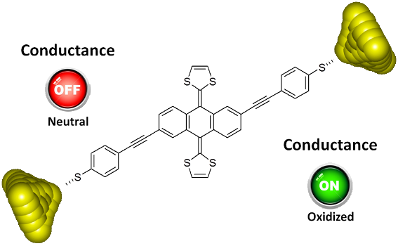
- viologen [5][6], aniline [7][8], thiophene [9], anthraquinone [10] and ferrocene [11] have been previously studied. However, a particularly suitable redox-active molecule for molecular electronics is the well-known electron donor tetrathiafulvalene (TTF) molecule. Pristine TTF, as well as the




Thiazole formation through a modified Gewald reaction
Beilstein J. Org. Chem. 2015, 11, 875–883, doi:10.3762/bjoc.11.98
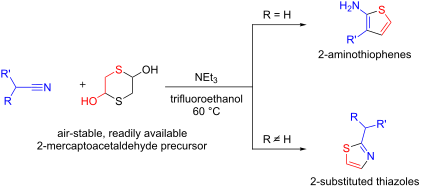
- substitution of the α-carbon to the cyano group. Keywords: design of experiment (DOE); 1,4-dithiane-2,5-diol; Gewald reaction; thiazole; thiophene; Introduction Thiazoles are privileged motifs which are encountered in many naturally occurring bioactive compounds and pharmaceuticals with indications in a
- facile formation of 2-substituted thiazole compounds as core building blocks. Results and Discussion Screening for the bifurcation conditions Initially, the reaction of several nitriles was screened with aldehyde precursor 10 to determine the selectivity between thiophene and thiazole products. In
- original pathway for the thiophene formation (Scheme 1) follows the Gewald mechanism and has already been described [31]. However, the alternative mechanism for the thiazole formation as described herein has not previously been reported and initially presented some queries. We envisaged two putative


TTFs nonsymmetrically fused with alkylthiophenic moieties
Beilstein J. Org. Chem. 2015, 11, 628–637, doi:10.3762/bjoc.11.71
- ; supramolecular chemistry; tetrathiafulvalene (TTF); thiophene; Introduction Since the discovery of the first organic metals and superconductors the field of electronic molecular materials has been largely dominated by derivatives of the organic donor tetrathiafulvalene (TTF) [1]. More than one thousand TTF
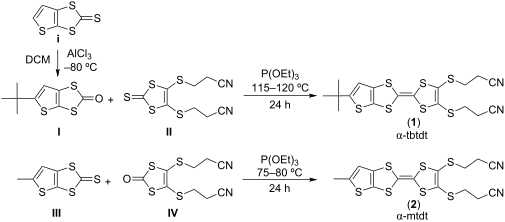
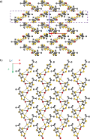
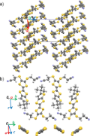
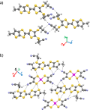
- converted to transition metal complexes based on extended thiophene/TTF-fused dithiolene ligands. They were obtained by cross-coupling reactions between alkylated thio and oxo compounds. The incorporation of these alkyl groups in the thiophenic ring is expected to increase the solubility of these TTFs and
- analogous transition metals complexes, enabling their processing from solutions. Results and Discussion Synthesis The TTF donors fused non-symetrically with substituted thiophene moieties 1 and 2 were obtained by the cross coupling, in the presence of trimethyl phosphite, between compounds I and II and





Hetero-Diels–Alder reactions of hetaryl and aryl thioketones with acetylenic dienophiles
Beilstein J. Org. Chem. 2015, 11, 576–582, doi:10.3762/bjoc.11.63

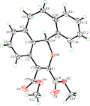
- of the products were determined based on the spectroscopic data. Thus, similar to hetero-Diels–Alder reactions with maleic anhydride [14], the C=C bond of the thiophene ring of 1h is part of the reactive heterodiene system. The reactions of 2b with thiobenzosuberone 1b and thiobenzosuberenone 1c were




Ruthenium-catalyzed C–H activation of thioxanthones
Beilstein J. Org. Chem. 2015, 11, 431–436, doi:10.3762/bjoc.11.49

- already in the pioneering work there are also examples using sulfur heterocycles such as thiophene derivatives [19]. Gratifyingly, the reaction of dimethyl-substituted thioxanthone 1b with the model olefin neohexene (3,3-dimethyl-1-butene, 4a) was successful and the product 1ba was obtained in 65% yield


Bis(vinylenedithio)tetrathiafulvalene analogues of BEDT-TTF
Beilstein J. Org. Chem. 2015, 11, 403–415, doi:10.3762/bjoc.11.46
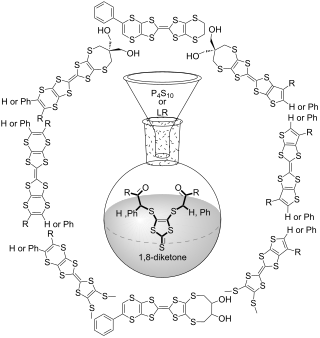
- charge transfer salts. The physical and electronic properties of their solid states were investigated [13][25][47][48][49]. We attempt here to provide a summary of the synthesis of differently functionalized and extensively π-electron delocalized conjugated TTF core dithiin- and thiophene-fused donor
- (LR) [50] or tetraphosphorus decasulfide (P4S10) [51] Although, in most cases, formation of 1,4-dithiins is the only result, or the major one, a thiophene formation can also take place [46]. So far, eighteen BVDT-TTF analogues have been synthesized (Figure 3). In 1996, we reported a convenient method
- of synthesizing fused 1,4-dithiin and thiophene ring systems, possessing functional groups such as Ph 4-MeOC6H4 and 4-O2NC6H4 (Scheme 1) [46]. The synthesis involved treatment of the diketone 6, produced through the reaction of the readily available dianion 5 [52] with α-haloketones, with Lawesson’s


IR and electrochemical synthesis and characterization of thin films of PEDOT grown on platinum single crystal electrodes in [EMMIM]Tf2N ionic liquid
Beilstein J. Org. Chem. 2015, 11, 348–357, doi:10.3762/bjoc.11.40
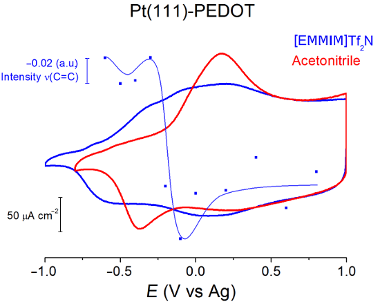
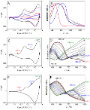
- listed in Table 2. The absorption bands at 1339 cm−1 and 1415 cm−1 can be assigned to the asymmetric stretching, νas, of the SO2 moiety and the stretching of the thiophene ring in the oxidized state, respectively. Figure 7b shows that there are two potential regions where significant changes of the IR
- Figure 2. Also, the bands associated with the C=C bonds in the thiophene ring (1437 and 1469 cm−1) are negative. The trend of the IR intensity at 1437 cm−1 (Figure 7c) shows a slight decrease from −0.7 to −0.3V and an abrupt fall at higher potentials. This trend closely resembles the currents observed
- during the p-doping of PEDOT (Figure 3a), suggesting that the disappearance of the ν(C=C) stretching signal of the thiophene ring upon oxidation can be used to quantify the charge carriers inside the polymer. It seems that with increasing potential, the concentration of charge carriers (polarons




Functionalized branched EDOT-terthiophene copolymer films by electropolymerization and post-polymerization “click”-reactions
Beilstein J. Org. Chem. 2015, 11, 335–347, doi:10.3762/bjoc.11.39
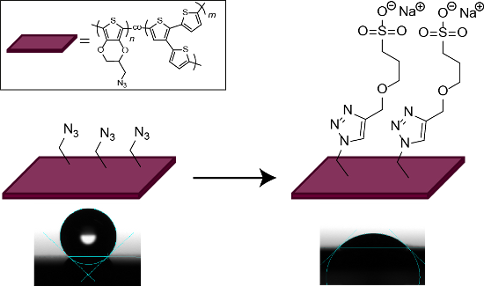
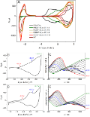
- Thermo Fisher Scientific GmbH, Im Steingrund 4-6, 63303 Dreieich, Germany Department of Physical Chemistry, University of Málaga, 29071 Málaga, Spain 10.3762/bjoc.11.39 Abstract The electrocopolymerization of 3,4-ethylenedioxythiophene (EDOT) with the branched thiophene building block 2,2′:3′,2
- modification of the monomers. In addition to electropolymerization of simple conjugated monomers [15] more complex monomers which include different building blocks were presented. Roncali et al. used for example EDOT containing branched thiophene monomers [16][17]. In some of the more complex monomer systems
- the electropolymerization can be regarded as a crosslinking step [17][18]. Electropolymerization of monomer mixtures is another powerful tool to modify material properties. Among a variety of monomer mixtures including pyrrole and thiophene [19][20], 2,2’-bithiophene and pyrrole [21][22] and





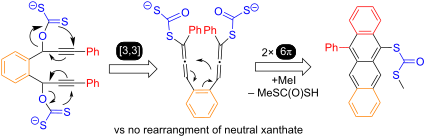
Anionic sigmatropic-electrocyclic-Chugaev cascades: accessing 12-aryl-5-(methylthiocarbonylthio)tetracenes and a related anthra[2,3-b]thiophene
Beilstein J. Org. Chem. 2015, 11, 273–279, doi:10.3762/bjoc.11.31


Sequential decarboxylative azide–alkyne cycloaddition and dehydrogenative coupling reactions: one-pot synthesis of polycyclic fused triazoles
Beilstein J. Org. Chem. 2014, 10, 3031–3037, doi:10.3762/bjoc.10.321
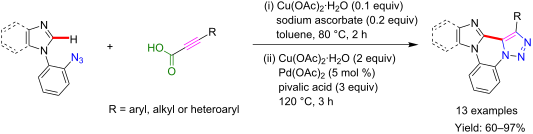
- versatile synthetic functionality for further derivatization reactions. The thiophene-derived alkynoic acid, 2d, provided the corresponding triazole analogs 4d and 4j in 79% and 73%, respectively. Likewise, the alkynoic acid derived from short and long linear alkyl chains also provided good yields (75–88


Palladium-catalyzed 2,5-diheteroarylation of 2,5-dibromothiophene derivatives
Beilstein J. Org. Chem. 2014, 10, 2912–2919, doi:10.3762/bjoc.10.309
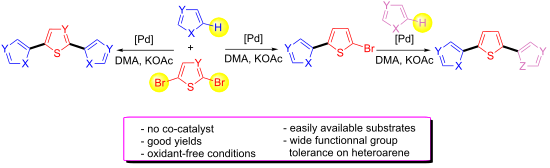
- -diheteroarylated thiophenes bearing two different heteroaryl units. Keywords: aryl halides; catalysis; C–H bond activation; direct arylation; heteroarenes; palladium; Introduction 2,2':5',2"-Terthiophene (or 2,5-di(2-thienyl)thiophene) (Figure 1) and many of its derivatives are important structures due to their
- et al. reported the Pd-catalyzed coupling of 2,5-dibromothiophene with 3-methoxythiophene to afford the corresponding terthiophene in 29% yield [37]. From 2,5-diiodothiophene and benzoxazole, using 5 mol % Pd(phen)2(PF6)2 catalyst, the 2,5-diheteroarylated thiophene was obtained in 89% yield by Murai
- et al. [38]. A fluorescent π-conjugate thiophene derivative bearing spiro[fluorene-9,4’-[4H]indeno[1,2-b]furan] substituents at C2 and C5 has been prepared in 46% yield by this reaction using Pd(OAc)2 (5 mol %) associated to PPh3 (10 mol %) as catalytic system [39]. A pyrrole derivative was coupled


Copper-promoted hydration and annulation of 2-fluorophenylacetylene derivatives: from alkynes to benzo[b]furans and benzo[b]thiophenes
Beilstein J. Org. Chem. 2014, 10, 2886–2891, doi:10.3762/bjoc.10.305
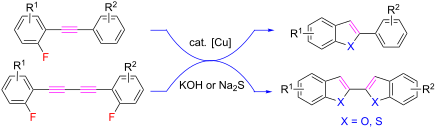
- reaction and its application in the synthesis of benzo[b]furan and benzo[b]thiophene derivatives is presented starting from readily available 2-fluorophenylacetylene derivatives. The key annulation step involves the hydration of the C–F bond of 2-fluorophenylacetylene derivatives followed by an
- intramolecular annulation to afford benzo[b]furan and benzo[b]thiophene derivatives. Moreover, structurally important 2,2'-bisbenzofuran scaffolds are provided in good yields. Keywords: annulation; benzo[b]furan; C–F activation; copper-promoted; heterocycle; Introduction The development of general and
- efficient methodologies for the synthesis of complex heterocycle skeletons has received much attention in the past decades. Among the most ubiquitous heterocyclic moieties in natural and bioactive products are the benzo[b]furan and benzo[b]thiophene units [1][2][3][4][5][6][7][8]. Despite the existence of





