Search results
Search for "preparation" in Full Text gives 2117 result(s) in Beilstein Journal of Organic Chemistry. Showing first 200.
Synthesis of sterically shielded piperidine nitroxides via acid-catalyzed heterocyclization of β-aminoketone derivatives with ketones
Beilstein J. Org. Chem. 2026, 22, 948–954, doi:10.3762/bjoc.22.74
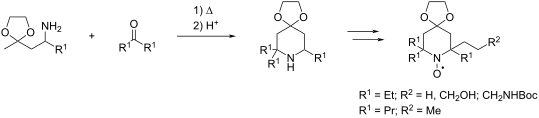
- signals of the dioxolane moiety protons, confirming complete deprotection. The signal intensities for the methylene protons at the 3- and 5-positions of the heterocycle were remarkably diminished due to H/D exchange under the acidic conditions employed for sample preparation. All EPR spectra were


Recent advances in copper-catalyzed direct hydroamination of alkenes with (hetero)aromatic amines
Beilstein J. Org. Chem. 2026, 22, 925–947, doi:10.3762/bjoc.22.73
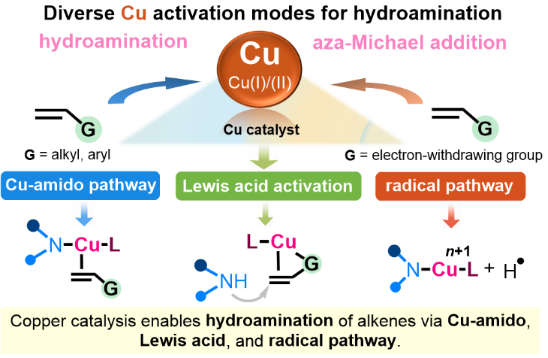
- was generated in situ via the reaction of the ligand-bound Cu–Ot-Bu intermediate Int-I with the amine substrate. In contrast to the NHC–CuNHPh catalyst system reported by the Gunnoe group, which requires the preparation of a preformed NHC–CuNHPh complex, the present protocol generates catalytically







A practical CO2-mediated synthesis of 5,6-carboxylated silicon-rhodamines for targeted probe development
Beilstein J. Org. Chem. 2026, 22, 915–924, doi:10.3762/bjoc.22.72
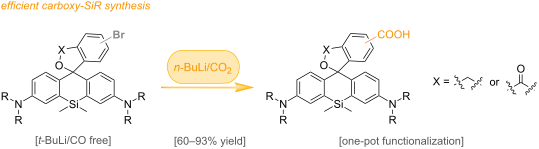
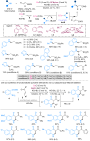
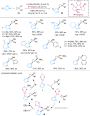
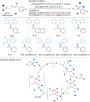
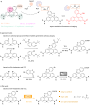
- practical utility. In addition, the preparation of protected carboxy-group containing substrates is often cumbersome [46], especially in the synthesis of (hydroxymethyl)rhodamine intermediates, thereby further increasing synthetic complexity [41]. To overcome these limitations, Butkevich developed an


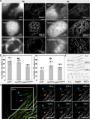

Palladium-catalyzed benzocyclization reactions of quinoline-2-carboxamides via sequential C–H/N–H functionalization
Beilstein J. Org. Chem. 2026, 22, 905–914, doi:10.3762/bjoc.22.71
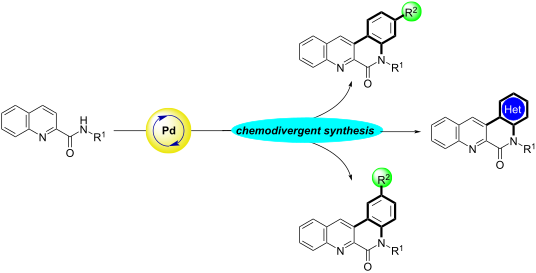
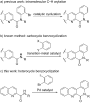
- allow facile preparation of aromatic amines (Scheme 1c) [28][29][30][31]. In general, intramolecular C–H arylation reactions in the presence of a transition-metal catalyst have been reported extensively in recent years. These reactions enable an efficient formation of fused-ring systems [32][33][34][35
- preparation of annulation precursors through o-brominated aniline derivatives [36][37][38][39][40][41]. Furthermore, the reported methodologies for synthesizing N-heterocycle-fused lactams are characterized by either low efficiency or protracted processes [42][43]. On the other hand, benzocyclization




Cascade transformation of 2-(diazoacetyl)-2H-azirines to 2-aroyl-3-hydroxy-1H-pyrroles via condensation with aromatic aldehydes
Beilstein J. Org. Chem. 2026, 22, 897–904, doi:10.3762/bjoc.22.70
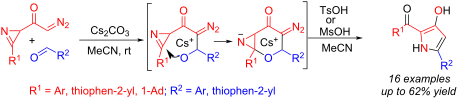
- described so far [23][24], optimization of the reaction conditions was carried out with the aim of developing a new method for the preparation of 2-aroyl-3-hydroxypyrroles (Table 1). Thus, as a result of optimization it was found that the best yields of pyrrole 5a was achieved by treating the reaction


Chiral cyclopropenimine-catalyzed enantioselective Michael reactions of phenol and benzofuran-derived α,β-unsaturated pyrazolamides with benzophenone-imine of glycine esters
Beilstein J. Org. Chem. 2026, 22, 888–896, doi:10.3762/bjoc.22.69
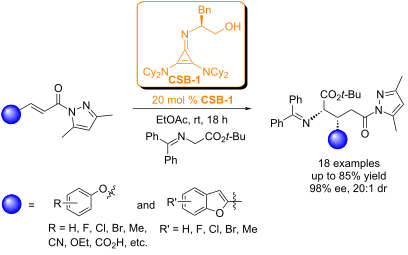
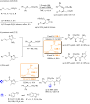
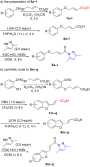
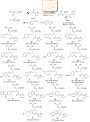
- base-catalyzed Michael reaction of 1a and 2a. The preparation of β-substituted α,β-unsaturated pyrazolamides 5. CSB-1-catalyzed Michael additions between compounds compounds 2 and 5. In situ acidic hydrolysis and lactamization of 6. The screening of reaction conditionsa. Supporting Information






Site-specific labelling of native peptides and proteins: chemical and enzymatic strategies
Beilstein J. Org. Chem. 2026, 22, 857–881, doi:10.3762/bjoc.22.67
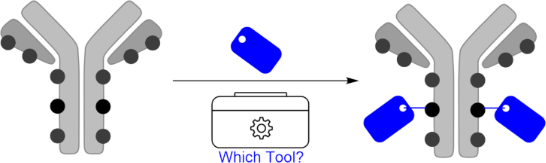
- sortase. Optimisations using depsipeptides or coupling strategies have further improved conversion efficiency and reduced reagent consumption [144]. Due to its ease of preparation, large libraries of sortase variants have been generated and screened to expand substrate scope [143]. In one example, sortase
- approaches provide scalability due to the relative ease of reagent preparation (see above for detailed discussion). Overall, however, the success of any given method is often case-dependent, reflecting the diversity of protein and peptide sequences and structures. Factors such as protein preparation can also
- . In general, highly substrate-promiscuous enzymes require more complex preparation procedures, which can hinder their engineering, whereas highly selective enzymes are easier to handle but depend on defined recognition sequences. Ultimately, we found that there is no single strategy simultaneously








Unsymmetrical sulfoxides with sterically hindered catechol fragment: synthesis, structure, electrochemical properties, and antiradical activity
Beilstein J. Org. Chem. 2026, 22, 828–837, doi:10.3762/bjoc.22.65
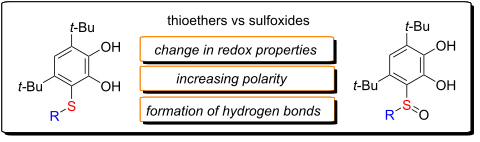
- soft sulfoxide group within a single molecule also provides a basis for the preparation of metal complexes with unusual properties. The aim of the present work is to synthesize new unsymmetrical sulfoxides bearing hydrocarbon fragments derived from catechol thioethers, to study their structure and


Total synthesis of the capsular polysaccharide repeating unit towards the development of a glycoconjugate vaccine against Klebsiella pneumoniae ST512
Beilstein J. Org. Chem. 2026, 22, 821–827, doi:10.3762/bjoc.22.64
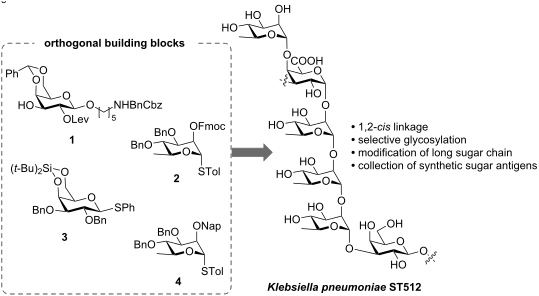
- . The total synthesis commenced with the preparation of the orthogonally protected monosaccharide building blocks 1–4 (Scheme 1). Galactoside 1 was synthesized starting from the β-selective glycosylation of thioglycoside 5 [30] with aminopentyl linker 6. This reaction was promoted by N-iodosuccinimide
- evaluation. This work represents a key step toward the development of semi-synthetic glycoconjugate vaccines against multidrug-resistant K. pneumoniae. Structure of the K. pneumoniae ST512 CPS repeating unit and retrosynthetic analysis. Preparation of building blocks 1–4. Synthesis of hexasaccharide


Knoevenagel condensation of 4,5- and 1,8-diazafluorenes
Beilstein J. Org. Chem. 2026, 22, 803–812, doi:10.3762/bjoc.22.62
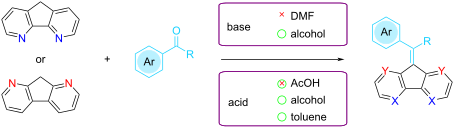
- diazafluorenes’ nature and solvent influence on the mechanism and reactivity. We also identified conditions allowing the preparation of both 4,5- and 1,8-diazafluorenylidenes in yields up to 85% minimizing complicated synthetic or experimental workup procedures. Additionally, the condensation of diazafluorenes
- found that acidic conditions allow the preparation of both 4,5- and 1,8-diazafluorenylidenes in yields up to 85%. The basicity of the diazafluorenes was demonstrated to be different and the reaction of 1,8-diazafluorene is impeded because of electrostatic repulsion of the protonated tautomer and the
- immediately after preparation and 6 hours later for solutions of 1 and 2 in pure CD3COOD and in CD3OD with a drop of CD3COOD. Remarkably, 4,5-diazafluorene did not undergo protonation in both experiments – only the signals of the neutral form of 1 were identified (see Supporting Information File 1, Figure S1




Synthetic study of vic-bromination of diarylacetylenes, easy purification and separation
Beilstein J. Org. Chem. 2026, 22, 795–802, doi:10.3762/bjoc.22.61
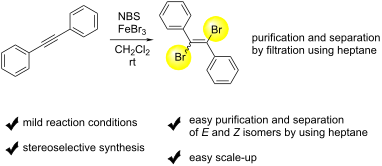
- present reaction. Reaction optimization of bromination reaction of diphenylacetylene (1a). Scope and limitations for bromination of various diarylacetylenes 1. Supporting Information Supporting Information File 24: General remarks, preparation of substrates, experimental procedure, characterization data



Design, synthesis, and biological evaluation of FXR/ASK1 dual-target modulators
Beilstein J. Org. Chem. 2026, 22, 771–781, doi:10.3762/bjoc.22.59
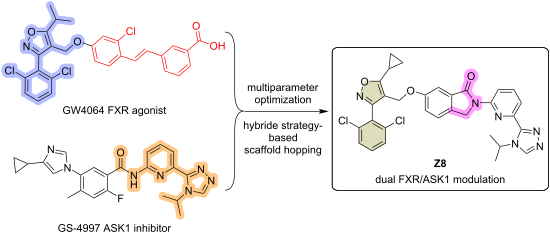
- preparation of triazole intermediates IXa–d is shown in Scheme 5. Firstly, compound VI was reacted with hydrazine hydrate in methanol to obtain hydrazide VII which was mixed with DMF/DMA and heated to provide intermediate VIII. The obtained VIII was not purified and directly reacted with different amines to
- LiOH or lithium aluminum hydride to obtain compounds Z4–7. The synthesis of compounds Z8–15 followed a similar preparation procedure as for Z1–7. The synthesis of target compounds Z16–29 is illustrated in Scheme 7. Intermediates 8 and 10 were synthesized by the Suzuki cross-coupling reaction using


Preparation of 3-(alkylamino)imidazo[1,2-a]pyridine-2-carbaldehydes via Kornblum oxidation and unexpected ring-opening reactions of the corresponding alcohols under oxidative conditions
Beilstein J. Org. Chem. 2026, 22, 763–770, doi:10.3762/bjoc.22.58
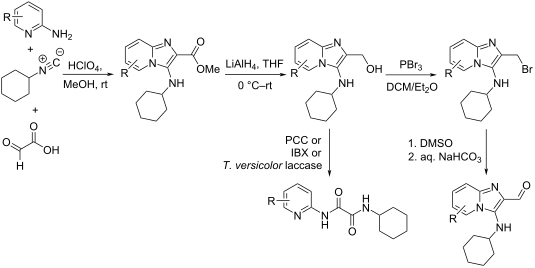
- derivatives have been found to be of interest in the development of organic materials with interesting properties [11][12]. The importance of imidazo[1,2-a]pyridines is evidenced by the plethora of recent review articles covering methods for their preparation [13][14][15][16] and functionalisation reactions
- . Compound 9f was also successfully converted into 13f under the conditions shown in Table 1. Nenajdenko et al. reported a few examples of the preparation of imidazo[1,2-a]pyridin-3-amine ethyl esters starting from ethyl glyoxylate in toluene and using ammonium chloride as a catalyst in yields of 30–35% [26
- ]. With the relatively facile preparation of esters 13a–d and 13f now demonstrated, we shifted our focus to investigate possible routes to compounds such as 8, that have not been reported previously. There were three immediate possibilities to consider: i) reaction of the ester directly with 2


Rongalite addition to dienones: diastereoselectivity in cyclic sulfone synthesis; stereochemical rationalization and prospects as a general conjugate nucleophile
Beilstein J. Org. Chem. 2026, 22, 742–752, doi:10.3762/bjoc.22.56

- [7][8][9][10][11][12][13][14]. Importantly for our work, it can also act as an equivalent of the unstable hyposulfite (SO22−) ion (Figure 1) [15][16]. The reagent was first used for the preparation of symmetrical sulfones as early as 1971 [17], but interest in the reagent has increased dramatically
- sought confirmation of the structures of the minor and major diastereomers in our own hands. Noting that preparation of sulfides by double conjugate addition of Na2S or NaSH has been widely studied, and that the stereochemical assignments presented therein are in some cases supported by X-ray
- -toluenesulfinate to dibenzalacetone (Scheme 5). Diadducts 25 and 27 were isolated as inseparable 3:2 and 4:3 mixtures of diastereomers, respectively. From these experiments, we observed the following: 1) double conjugate addition of methanesulfinate occurs readily, such that selective preparation of monoadduct 24




Synthesis of heterocycles based on azomethine ylides from α-amino acids (or amines) and carbonyl compounds
Beilstein J. Org. Chem. 2026, 22, 705–741, doi:10.3762/bjoc.22.55
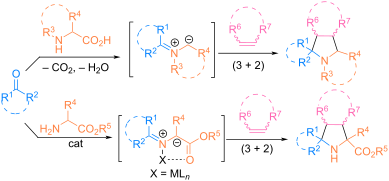
- with a dipolarophile, such as an alkene or alkyne, to form a five-membered heterocycle in one step. Currently, this type of reaction allows for the efficient preparation of bi- and polycyclic fused or spiro-linked structures with multiple chiral centers and high regio- and stereocontrol [1][2][3][4
- chiral metal complexes of Ag(I), Cu(I/II), Zn(II), Ni(II) with ligands of the Segphos, Fesulfos, or Biphamphos type [12][13][14][15]. Such catalytic systems control the enantioselectivity of cycloaddition and allow the preparation of enantioenriched pyrrolidines containing several stereocenters in high
- activity. In 2022, Wang and Teng developed an efficient method for the preparation of enantioenriched derivatives of 3,3-difluoro- and 3,3,4-trifluoropyrrolidines 33 in yields of up to 97% via Cu(I)-catalyzed enantioselective 1,3-dipolar cycloaddition of azomethine ylides to 1,1-difluoro- and 1,1,2


Anti-invasive and cytotoxic evaluation of a (+)-pinoresinol-based semisynthetic library against glioblastoma
Beilstein J. Org. Chem. 2026, 22, 691–704, doi:10.3762/bjoc.22.54
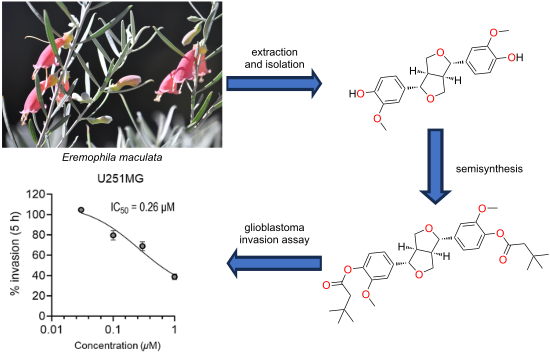
- (3.59) nm; ECD (MeOH) λext (Δε) 208 (+6.25), 256 (−0.08), 282 (+0.26) nm; see Supporting Information File 1 for 1H and 13C NMR data in CDCl3; LRESIMS m/z: [M + Na]+ 381, [M − H]− 357; HRESIMS m/z: [M + Na]+ calcd for C20H22NaO6, 381.1308; found, 381.1307. Preparation and purification of semisynthetic
- DMEM containing 2% FBS and 100 U/mL Pen-Strep. The flask was placed at 37 °C and 5% CO2 for 24 h of starvation. Insert preparation 40 µL of Matrigel (1:40 dilution) was added to each insert, followed by fixing for 5 min under UV light in a biosafety cabinet. The inserts were left to dry overnight in
- the biosafety cabinet. After 24 h, 50 µL of FBS-free DMEM with 100 U/mL Pen-Strep was added to each insert and placed in the incubator at 37 °C and 5% CO2 to rehydrate for 1 h. Cell preparation Medium from the starved cells was aspirated, and the cells were washed with 10 mL of 1× PBS. The PBS was



Synthesis of depressin, cryptomeridiol and 4-epi-cryptomeridiol enabled by a terpenoid chiral pool-producing platform
Beilstein J. Org. Chem. 2026, 22, 683–690, doi:10.3762/bjoc.22.53
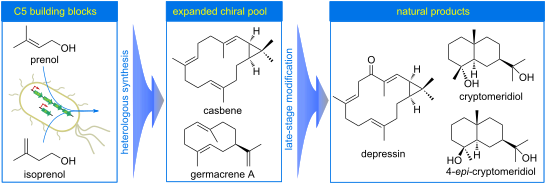
- -cryptomeridiol (3). Synthesis of depressin (1), cryptomeridiol (2), and 4-epi-cryptomeridiol (3). a) Synthetic route of 1 starting from casbene (4). b) Preparation of 2,4-nitrophenylhydrazone derivative of 13-ketocasbene (9) for X-ray diffraction. c) Synthetic route of 2 and 3 starting from germacrene A (5


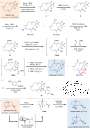
Computational prediction of C–H hydricities and their use in predicting the regioselectivity of electron-rich C–H functionalisation reactions
Beilstein J. Org. Chem. 2026, 22, 603–610, doi:10.3762/bjoc.22.46
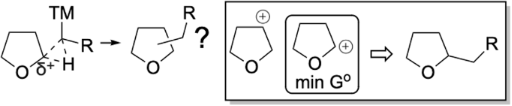
- . Refer to section 4 in Supporting Information File 1 for more details. The percentages of buried volumes of the C atoms are computed using MORFEUS [34]. Data preparation and hyperparameter optimization Following the methodology by Ree et al. and our previous work [3][10], we use the Optuna framework (v


![[Graphic 6]](/bjoc/content/inline/1860-5397-22-46-i8.svg?max-width=637&scale=1.18182)


Continuous-flow carbonyl hydrogenation under subatmospheric to atmospheric hydrogen pressure enabled by robust heterogeneous Pt–Fe catalysts
Beilstein J. Org. Chem. 2026, 22, 575–582, doi:10.3762/bjoc.22.43
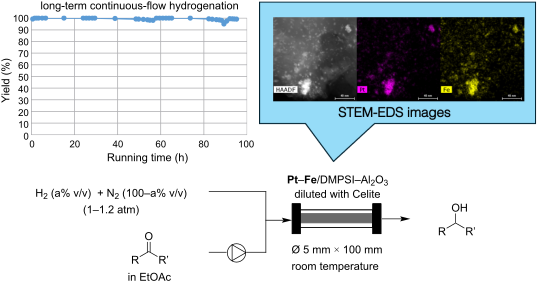
- catalysts. Results and Discussion Catalyst preparation First, we prepared Pt‒Fe/DMPSi‒Al2O3 with different Fe/Pt ratios by the simultaneous reduction of Pt and Fe salts in a solution containing dissolved sodium borohydride (NaBH4) and suspended DMPSi [15][30][31][32]. After DMPSi stabilized the resulting
- bimetallic nanoparticles, Al2O3 was added to the mixture, followed by methanol. The resulting solid catalyst was collected by filtration, washed with solvents, and heated twice. Si‒Si bonds in DMPSi were partially oxidized to form Si‒O‒Si bonds during the preparation process, and they became cross-linked to
- Al2O3 to form a stabilized composite support [32]. A plausible scenario for the formation of the bimetallic structure of Pt‒Fe nanoparticles during the catalyst preparation would be the same as that for the formation of Pt–Ni bimetallic structures, and it involves the following steps [33]. Na2PtCl6∙6H2O


Kinetic resolution of racemic planar-chiral vinylcymantrenes by molybdenum-catalyzed asymmetric metathesis dimerization
Beilstein J. Org. Chem. 2026, 22, 568–574, doi:10.3762/bjoc.22.42
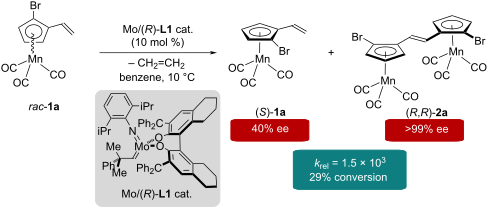
- conditions, (S,S)-2 was the sole AMD product and the formation of the respective mesomeric stereoisomer was negligible. It should be noted that this work is a rare example of catalytic asymmetric synthesis of planar-chiral CpMn(I) half-sandwich complexes [19][32]. Results and Discussion Preparation of
- ). Structures of less-reactive enantiomers in three representative planar-chiral vinylmetallocene substrates in Mo/(R)-L1-catalyzed AMD/KR. Asymmetric metathesis dimerization/kinetic resolution of racemic planar-chiral vinylferrocene/vinylphosphaferrocene. Preparation of racemic planar-chiral vinylcymantrene


Experimental and DFT studies on the regioselective methanolysis of 5-azido-9-oxabicyclo[6.1.0]nonan-4-yl 4-nitrobenzoate isomers
Beilstein J. Org. Chem. 2026, 22, 547–556, doi:10.3762/bjoc.22.40
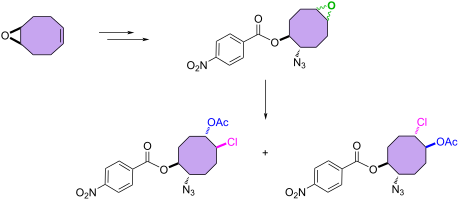
- process, highlighting its precision and efficiency. Keywords: azides; 8-azidocyclooct-4-en-1-yl 4-nitrobenzoate; DFT; epoxycyclooctane azide; methanolysis; Introduction Organic azides are very important precursors for the preparation and synthesis of various nitrogen-containing compounds, as well as
- methodologies for the preparation of this class of compounds are of considerable interest. Azides have traditionally been used as protected primary amine equivalents. Therefore, in our previous studies, we employed azides containing eight-membered rings as precursors in the synthesis of C8-aminocyclitols [12


Synthesis and uranyl(VI) extraction performance of a calix[4]pyrrole–tetrahydroxamic acid receptor
Beilstein J. Org. Chem. 2026, 22, 486–494, doi:10.3762/bjoc.22.36
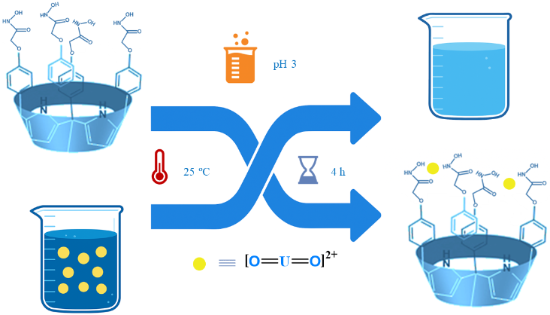
- was first examined, since the ester functions as the synthetic precursor to the corresponding acid used in the preparation of PCP derivatives from PCP [21]. For that, PCP was initially synthesized through the molecular cyclisation of pyrrole with 4-hydroxyacetophenone in methanol in the presence of


Concept-driven strategies in target-oriented synthesis
Beilstein J. Org. Chem. 2026, 22, 451–454, doi:10.3762/bjoc.22.32
- hope that all readers, whether seasoned experts or newcomers to the field, find as much pleasure and inspiration in these articles as we derived from the preparation and collaboration that brought them to life. We believe that the diverse perspectives and rich discussions encapsulated within these


Synthesis and stereochemical analysis of dynamic planar chiral oxa[7]orthocyclophene
Beilstein J. Org. Chem. 2026, 22, 436–442, doi:10.3762/bjoc.22.30

- alkyne 6. Subsequent preparation of the lithium acetylide using n-BuLi, followed by treatment with formaldehyde, afforded propargyl alcohol 3a in 70% yield over three steps. The reaction of 3a with Red-Al generated a vinyl aluminum species, which was then treated with iodine to provide the iodinated Z
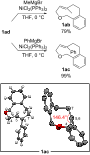
- , the treatment with iPrMgBr for preparation of the magnesium alkoxide at highly dilute conditions (10 mM) and sequential cyclization successfully proceeded to provide the C6-iodo-substituted oxacyclophene 1ad in 79% yield. Synthesis of C6-methyl and C6-phenyl-substituted oxacyclophenes The Kumada–Tamao




Cone p-aminocalix[4]arenes enriched with ‘clickable’ alkyne or azide functionalities
Beilstein J. Org. Chem. 2026, 22, 399–415, doi:10.3762/bjoc.22.28
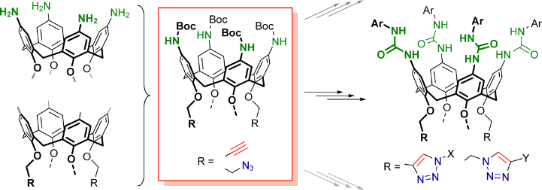
- -aminocalix[4]arenes enriched with alkyne or azide functionalities can be readily used as multifunctional platforms to obtain even higher functionalized macrocycles. As an example, they can be used for the preparation of sophisticated supramolecular assemblies with homo- or heterodimeric calixarene cores and
- developed for the preparation of the targeted multifunctionalized calixarenes. Propargylated p-aminocalix[4]arenes Following the published example [9], for the preparation of propargylated p-aminocalix[4]arenes a three-step synthesis strategy was selected, which involved protection of the calixarene
- substitution patterns were selected as the starting materials to enable further preparation of the respective mono-, di- and tetrapropargylated calix[4]arene tetraamines and their derivatives. The silylation of propargyl ethers 1–5 was first attempted using tert-butyldimethylsilyl chloride (TBSCl) and the