


Search results
Search for "time dependent" in Full Text gives 233 result(s) in Beilstein Journal of Nanotechnology. Showing first 200.
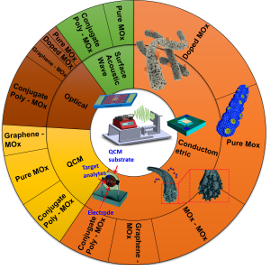
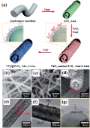
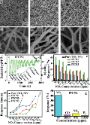
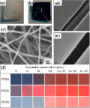
Electrospun one-dimensional nanostructures: a new horizon for gas sensing materials
Beilstein J. Nanotechnol. 2018, 9, 2128–2170, doi:10.3762/bjnano.9.202






Multimodal noncontact atomic force microscopy and Kelvin probe force microscopy investigations of organolead tribromide perovskite single crystals
Beilstein J. Nanotechnol. 2018, 9, 1695–1704, doi:10.3762/bjnano.9.161
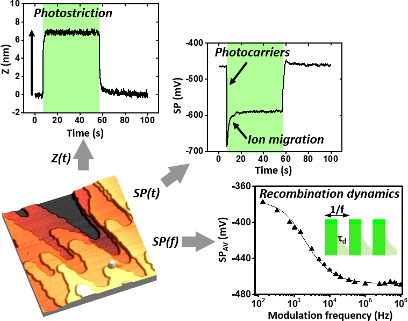
- accumulate near the crystal surface due to band bending effects. Time-dependent changes of the surface potential occurring under illumination on the scale of a few seconds reveal the existence of slow ion-migration mechanisms. Lastly, photopotential decay at the sub-millisecond time scale related to the


Friction force microscopy of tribochemistry and interfacial ageing for the SiOx/Si/Au system
Beilstein J. Nanotechnol. 2018, 9, 1647–1658, doi:10.3762/bjnano.9.157
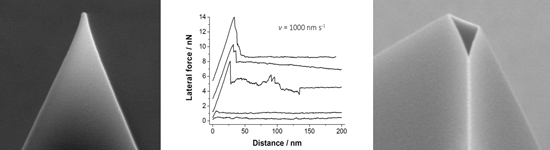
- on oxidized silicon surfaces, although we found evidence for atomic rearrangement in the course of scanning. We conclude that the contact formation with the gold surface is too fast and the contact too compliant to reveal contact ageing as holding-time-dependent static friction. For friction between




Spatial Rabi oscillations between Majorana bound states and quantum dots
Beilstein J. Nanotechnol. 2018, 9, 1527–1535, doi:10.3762/bjnano.9.143
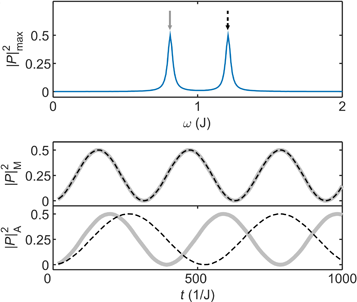
- where we can obtain a series of secular equations by inserting the ansatz solution back into the Schrödinger equation, where l = 0, ±1, and the Fourier transformed components of the Hamiltonian Hl are Now the problem of solving a time-dependent Schrödinger equation is transformed to a problem of solving


Electronic conduction during the formation stages of a single-molecule junction
Beilstein J. Nanotechnol. 2018, 9, 1471–1477, doi:10.3762/bjnano.9.138
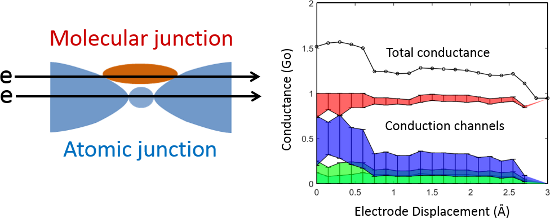
- either transmitted or scattered back, leading to time-dependent current fluctuations [16]. In the framework of Landauer formalism [17][18], shot noise depends on the number of conduction channels, i, across the examined junction and the transmission probability of each channel, τi. When an applied


Nanoporous silicon nitride-based membranes of controlled pore size, shape and areal density: Fabrication as well as electrophoretic and molecular filtering characterization
Beilstein J. Nanotechnol. 2018, 9, 1390–1398, doi:10.3762/bjnano.9.131
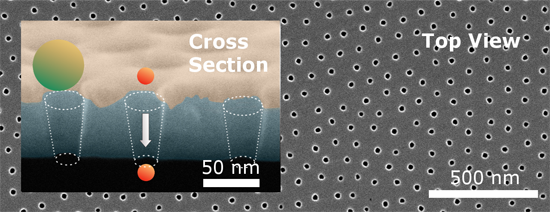
- , two experiments are reported: First the diffusion of a mixture of GFP (green fluorescent protein, mass 26.9 kDa) and TG (thyreoglobulin, mass 660–690 kDa) through the membrane is recorded. The green data points represent the time-dependent fluorescence intensity of GFP molecules that have passed the


Artifacts in time-resolved Kelvin probe force microscopy
Beilstein J. Nanotechnol. 2018, 9, 1272–1281, doi:10.3762/bjnano.9.119
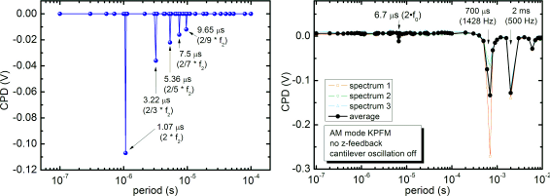
- pulses, the resulting time-dependent electrostatic forces are very complex and result in intricate mixing of frequencies that may, in some cases, have a component at the detection frequency, leading to falsified KPFM measurements. Additionally, we performed fast Fourier transform (FFT) analyses that
- simplest approach, time-dependent changes in the CPD are observed in real time in a point measurement following an excitation pulse. Sadewasser et al. [13] studied light-induced changes in a CuGaSe2 semiconductor used in photovoltaic applications. The authors measured the surface photovoltage (SPV) – the
- performed numerical dynamics simulations of the cantilever oscillation in KPFM subjected to a bias-modulated signal. We consider square bias pulses, as well as exponentially raising and falling pulses. For square pulses, the resulting time-dependent electrostatic forces are very complex and result in


Atomistic modeling of tribological properties of Pd and Al nanoparticles on a graphene surface
Beilstein J. Nanotechnol. 2018, 9, 1239–1246, doi:10.3762/bjnano.9.115
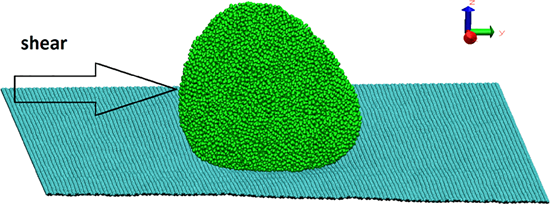
- different temperatures, and showed how the static friction and contact stiffness depend on the contact area. They observed “contact aging” due to stress-aided, thermally activated atomic rearrangement processes. The term “contact aging” [6] is related to time-dependent atomic reconstructions at the


Imaging of viscoelastic soft matter with small indentation using higher eigenmodes in single-eigenmode amplitude-modulation atomic force microscopy
Beilstein J. Nanotechnol. 2018, 9, 1116–1122, doi:10.3762/bjnano.9.103
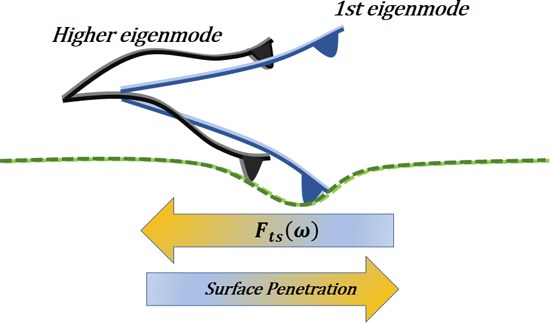
- having f1 ≈ 45 kHz and k1 ≈ 5.80 N/m. Polystyrene with 33 kDa molecular weight diluted to 2.5 wt % in THF was used, which was spin-coated onto a silicon wafer at 1400 rpm for 60 s. We have selected a polystyrene of low molecular weight to prepare a sample that displays time-dependent behavior within the


Towards the third dimension in direct electron beam writing of silver
Beilstein J. Nanotechnol. 2018, 9, 842–849, doi:10.3762/bjnano.9.78
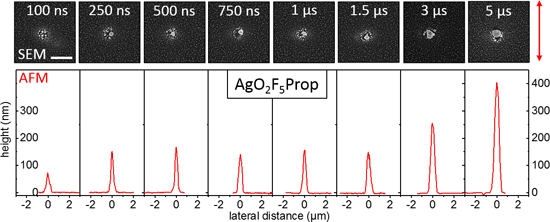
- pentafluoropropionate were investigated with respect to their dwell-time-dependent deposition behavior and growth characteristics. While silver 2,2-dimethylbutyrate showed a strong depletion in the center of the impinging electron beam profile hindering any vertical growth, silver pentafluoropropionate indicated a


Perovskite-structured CaTiO3 coupled with g-C3N4 as a heterojunction photocatalyst for organic pollutant degradation
Beilstein J. Nanotechnol. 2018, 9, 671–685, doi:10.3762/bjnano.9.62
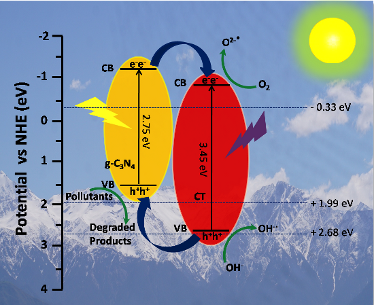
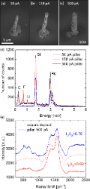
- quantify the amount of dye degraded. The time-dependent absorption spectra of RhB solutions degraded by the CTCN heterojunction photocatalyst under different light sources are depicted in Figure 9a–c and those for bare g-C3N4 and CT, including the control experiments performed without catalyst, are
- heterojunction. Photoluminescence spectra of g-C3N4, CT and CTCN heterojunction. Nitrogen adsorption–desorption curves for (a) g-C3N4 (b) CT and (c) CTCN heterojunction; BET surface area plots for (d) g-C3N4 (e) CT and (f) CTCN heterojunction. Time-dependent absorption spectra of RhB degradation with the CTCN
- , f) the modified Freundlich model for RhB degradation with different photocatalysts under (a, d) UV light, (b, e) visible light and (c, f) sunlight irradiation. Time-dependent absorption spectra of BPA degradation under sunlight irradiation (a) pure BPA (without catalyst) and (b) using CTCN


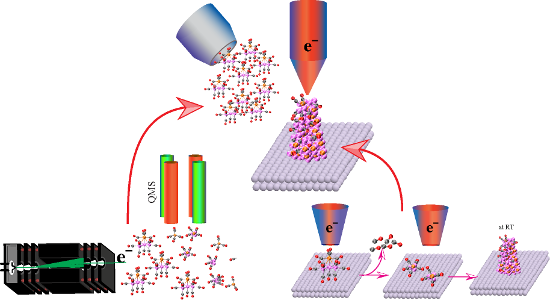
Electron interactions with the heteronuclear carbonyl precursor H2FeRu3(CO)13 and comparison with HFeCo3(CO)12: from fundamental gas phase and surface science studies to focused electron beam induced deposition
Beilstein J. Nanotechnol. 2018, 9, 555–579, doi:10.3762/bjnano.9.53


Colloidal solution of silver nanoparticles for label-free colorimetric sensing of ammonia in aqueous solutions
Beilstein J. Nanotechnol. 2018, 9, 499–507, doi:10.3762/bjnano.9.48
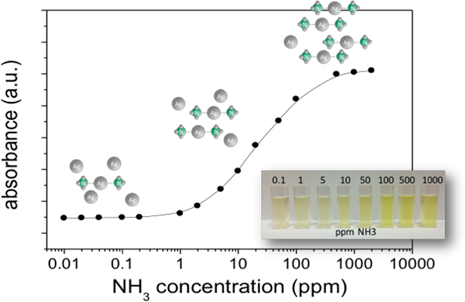
- the nanoparticles in the colloidal solution as a function of the reaction time (t): where abs∞ represents the absorbance saturation value, and the constants k and n are, respectively, the apparent rate constant and the Avrami exponent. Zhou et al. [32] write n as where a denotes the time-dependent



Dynamic behavior of nematic liquid crystal mixtures with quantum dots in electric fields
Beilstein J. Nanotechnol. 2018, 9, 399–406, doi:10.3762/bjnano.9.39

- 3. When a dynamic study of the mixture is made, the total free energy density must also take into account the dissipative time-dependent term, and the total free energy becomes: By applying the Euler–Lagrange equation and assuming that θ is small we obtain: where θzz = ∂2θ/∂z2. Considering the


The nanofluidic confinement apparatus: studying confinement-dependent nanoparticle behavior and diffusion
Beilstein J. Nanotechnol. 2018, 9, 301–310, doi:10.3762/bjnano.9.30
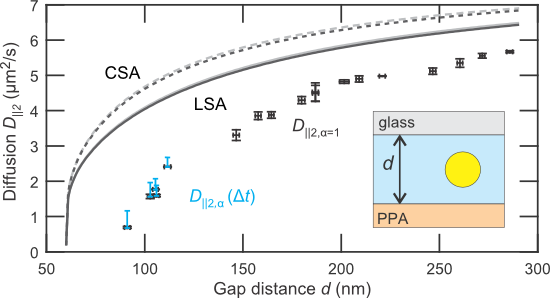
- diffusion coefficients D||2 (black scatter plot) and d are determined by the difference of D||2 in x- and y-direction and the standard deviation of d, respectively. The range of time dependent diffusion coefficients D||2,α(Δt) for 1.25 ms < Δt < 31.25 ms is plotted for d < 120 nm (blue bars). For greater



Gas-assisted silver deposition with a focused electron beam
Beilstein J. Nanotechnol. 2018, 9, 224–232, doi:10.3762/bjnano.9.24
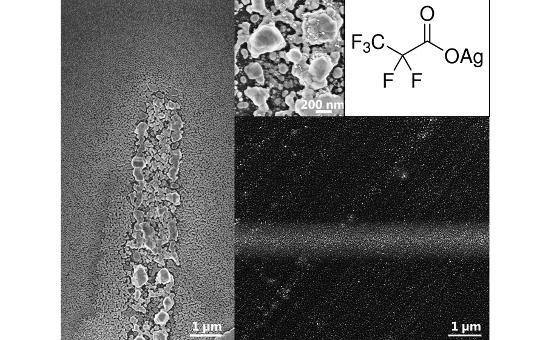
- pixel exposure in the line deposit (lineXENOS) has a time dependent behavior. During the refreshment time the physisorbed volatile ligands are not further decomposed by the electron beam and have time to thermally desorb. Furthermore, the precursor can be replenished in this area before the beam


Growth model and structure evolution of Ag layers deposited on Ge films
Beilstein J. Nanotechnol. 2018, 9, 66–76, doi:10.3762/bjnano.9.9
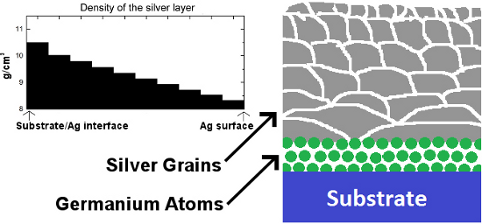
- smaller grains near the Ag surface. Annealing at different temperatures and various durations allowed for a controlled distribution of crystal dimensions, thus influencing the segregation rate. Furthermore, using ellipsometric and optical transmission measurements we determined the time-dependent
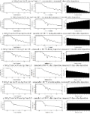
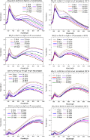
- and density profile of 35 nm thick Ag layers seeded with 2 nm thick Ge films with and without temperature treatment. To investigate the kinetics of the segregation process, we perform time-dependent transmission and ellipsometry measurements for Ag samples deposited on Ge films with thicknesses






Study of the vertically aligned in-plane switching liquid crystal mode in microscale periodic electric fields
Beilstein J. Nanotechnol. 2018, 9, 11–19, doi:10.3762/bjnano.9.2
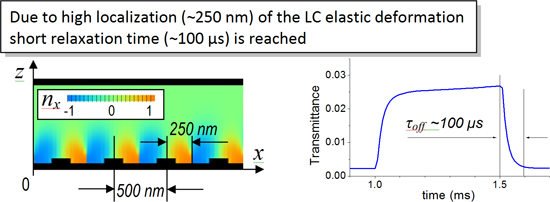
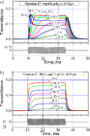
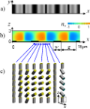
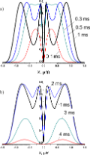
- (ca. 4 ms at a pulse length of 15 ms), which is the consequence of propagation of the surface deformation along the z-axis into the bulk. As it was discussed above, this bulk deformation has a maximum relaxation time dependent on the layer thickness, which, in our particular case, is rather high (3.5






Facile synthesis of silver/silver thiocyanate (Ag@AgSCN) plasmonic nanostructures with enhanced photocatalytic performance
Beilstein J. Nanotechnol. 2017, 8, 2781–2789, doi:10.3762/bjnano.8.277
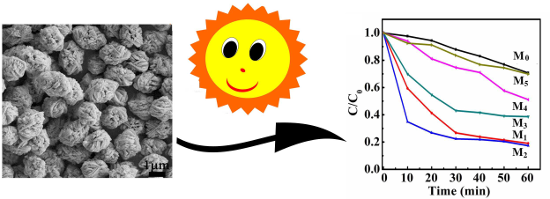
- the product was investigated based on the time-dependent experiments. Further experiments indicated that the prepared Ag@AgSCN nanostructures with an atomic ratio of Ag/AgSCN = 0.0463 exhibited high photocatalytic activity and long-term stability for the degradation of oxytetracycline (84%) under
- activity of AgSCN [31][32]. Formation mechanism of Ag@AgSCN nanostructures To investigate the formation mechanism of Ag@AgSCN nanostructures, a time-dependent precipitation experiment was conducted. It can be seen that small AgSCN nanoplates with size of ≈10 nm were formed in 2 min due to the low
- catalysts are shown in Figure 5a. The degradation rates were 29%, 81%, 84%, 61%, 49%, and 30%, respectively, in 60 min according to the absorption intensity at 364 nm. When M2 was used as a photocatalyst, the maximum degradation rate was obtained. The time-dependent UV–vis spectrum of the oxytetracycline


Involvement of two uptake mechanisms of gold and iron oxide nanoparticles in a co-exposure scenario using mouse macrophages
Beilstein J. Nanotechnol. 2017, 8, 2396–2409, doi:10.3762/bjnano.8.239
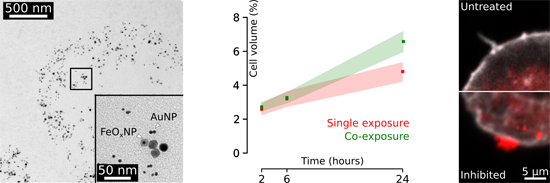
- scanning microscopy, transmission electron microscopy, and inductively coupled plasma optical emission spectrometry revealed intracellular appearance of both NP types in all exposure scenarios and a time-dependent increase. This increase was higher for both AuNPs and FeOxNPs during co-exposure. Cells
- the entire experiment. The data show mean ± one standard deviation. n = 10 z-stacks per exposure type and particle type, yielding a minimum of 61 cells and a maximum of 104 cells, hence 60 < n < 105). Time-dependent colocalisation of AuNPs and FeOxNPs with lysosomal markers. The Pearson’s



Surfactant-induced enhancement of droplet adhesion in superhydrophobic soybean (Glycine max L.) leaves
Beilstein J. Nanotechnol. 2017, 8, 2345–2356, doi:10.3762/bjnano.8.234
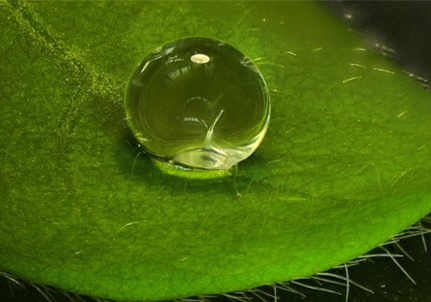
- expected to increase to over 300 million tons per year by 2020 [35]. It is known that different wax structures are based on different chemical compositions with different solubility in different solvents [36]. Thus the solubility of the epicuticular waxes in chloroform was studied by using a time-dependent


Comprehensive investigation of the electronic excitation of W(CO)6 by photoabsorption and theoretical analysis in the energy region from 3.9 to 10.8 eV
Beilstein J. Nanotechnol. 2017, 8, 2208–2218, doi:10.3762/bjnano.8.220
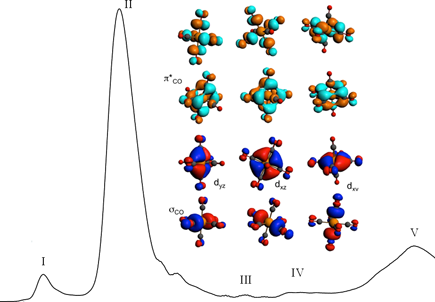
- /Université de Strasbourg 1 Rue Blaise Pascal BP296/R8, F-67008 Strasbourg, France 10.3762/bjnano.8.220 Abstract High-resolution vacuum ultraviolet photoabsorption measurements in the wavelength range of 115–320 nm (10.8–3.9 eV) have been performed together with comprehensive relativistic time-dependent
- based on the 80 lowest excited states has been computed by means of time-dependent density functional theory (TDDFT) [39][40]. Spin–orbit coupling (SOC) effects have been applied as a perturbation to obtain the “spin–orbit” states. All calculations have been performed in vacuum with the ADF2013 code [41
- range of 125–350 nm [1][2][3][4][5], and electron energy loss [6][7][8], photoelectron [9][10], photoionisation [11] and electron momentum [12][13] spectroscopy. In theoretical studies, Dirac-scattered-wave (DSW) calculations [14], molecular orbital energy level calculations [2], relativistic time


Ester formation at the liquid–solid interface
Beilstein J. Nanotechnol. 2017, 8, 2139–2150, doi:10.3762/bjnano.8.213
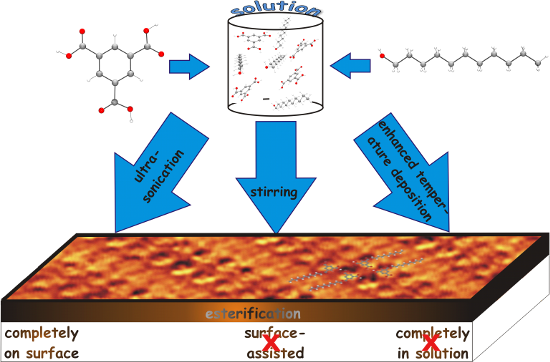
- undecanol-1, and the time-dependent evolution of LP and ester pattern. Acknowledgements The authors thank for the financial support from the DFG Research Unit 1154 "Towards Molecular Spintronics".


Electronic structure, transport, and collective effects in molecular layered systems
Beilstein J. Nanotechnol. 2017, 8, 2094–2105, doi:10.3762/bjnano.8.209
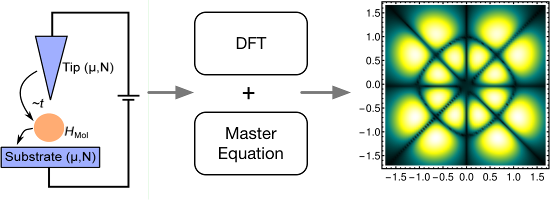
- DFT, which is a method for the ground state. In principle, excited states and time-dependent effects can be treated using time-dependent density functional theory and time-dependent current density functional theory [36][37]. However, this is complicated by the lack of good approximate exchange


![[Graphic 29]](/bjnano/content/inline/2190-4286-8-209-i41.png?max-width=637&scale=1.18182) between the occupations nA and nB of the two checkerboard sublattices for a) asy...
between the occupations nA and nB of the two checkerboard sublattices for a) asy...

![[Graphic 30]](/bjnano/content/inline/2190-4286-8-209-i42.png?max-width=637&scale=1.18182) per site for a) asymmetric tunneling, Γtop/Γbottom = 0.5, and b) symmetric tunneli...
per site for a) asymmetric tunneling, Γtop/Γbottom = 0.5, and b) symmetric tunneli...
Bi-layer sandwich film for antibacterial catheters
Beilstein J. Nanotechnol. 2017, 8, 1982–2001, doi:10.3762/bjnano.8.199
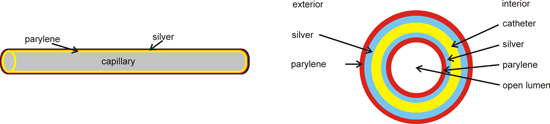
- antibacterial impact, two data sets have to be compiled, the time-dependent release rate of Ag+ ions, and its effect on bacteria. Several standard methods are in use to measure the released concentration of Ag+ ions, always at the detection limit. Among the physical and chemical standard methods to detect





