


Search results
Search for "carbanions" in Full Text gives 47 result(s) in Beilstein Journal of Organic Chemistry.
Superoxide chemistry revisited: synthesis of tetrachloro-substituted methylenenortricyclenes
- Basavaraj M. Budanur and
- Faiz Ahmed Khan
Beilstein J. Org. Chem. 2014, 10, 2531–2538, doi:10.3762/bjoc.10.264
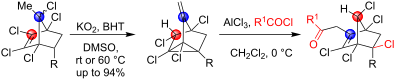
- norcamphor using o-amino acetophenone hydrochloride. Ladenberger and co-worker [27] observed the rearrangement of a lithiated-tetrachloronorbornyl intermediate to a tricyclene derivative in a study about stability of vinyl carbanions. Li and co-workers [28][29] have synthesized aryl/benzyl substituted

Graphical Abstract

Scheme 1: Synthesis of Nortricyclenes from Norbornenes.

Figure 1: X-ray crystal structure of 5a with 30% thermal ellipsoids.
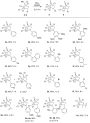
Scheme 2: KO2-mediated synthesis of tetrachloro-substituted 3-methylenenortricyclenes. Reaction conditions: A...

Scheme 3: Mechanism investigations.

Scheme 4: Plausible mechanism of the KO2-mediated reaction.

Figure 2: X-ray crystal structure of 8a with 30% thermal ellipsoids.

Scheme 5: Plausible mechanism of the acylation reaction of 3-methylenenortricyclenes.
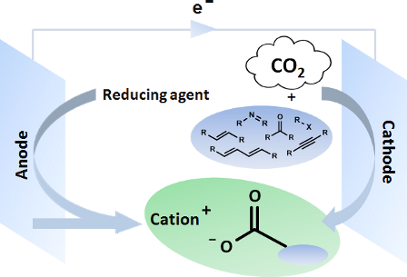
Electrocarboxylation: towards sustainable and efficient synthesis of valuable carboxylic acids
- Roman Matthessen,
- Jan Fransaer,
- Koen Binnemans and
- Dirk E. De Vos
Beilstein J. Org. Chem. 2014, 10, 2484–2500, doi:10.3762/bjoc.10.260
- . Oxidation of chloride, which itself originates in the CCl4 reactant, likely results in partial chlorination of the acetonitrile solvent, releasing protons which in turn cause the formation of chloroform by attacking the cathodically formed carbanions [143]. An undivided electrosynthesis setup with stable

Graphical Abstract

Scheme 1: Synthesis of salicylic acid and p-hydroxybenzoic acid via Kolbe–Schmidt reaction [16-20].

Scheme 2: Electroreduction of carbon dioxide to formic acid, methanol or methane.

Scheme 3: Electrochemical fixation of CO2 in olefins.

Scheme 4: Electrohydrodimerisation of acrylonitrile to adiponitrile [32].

Scheme 5: Parallel paired electrosynthesis of phthalide and tert-butylbenzaldehyde dimethylacetal [34].

Scheme 6: Overview of electrocarboxylation setups using (a) a sacrificial anode, (b) an inert anode, generati...

Scheme 7: General mechanism of the electrochemical dicarboxylation of conjugated dienes [49].

Scheme 8: Reported anodic reactions for the electrocarboxylation of 1,3-butadiene.

Scheme 9: General mechanism for electrocarboxylation of alkynes.

Scheme 10: Electrocarboxylation of ethyl cinnamate [70].

Scheme 11: General electrocarboxylation mechanism for carbonyl compounds (Y = O) and imines (Y = NH) [75-77].

Scheme 12: Electrocarboxylation mechanism of butyraldehyde proposed by Doherty [78].

Scheme 13: Electrocarboxylation of AMN to HN using a sacrificial aluminum anode [86].

Scheme 14: Electrocarboxylation of benzalaniline using a sacrificial aluminum anode [105].

Scheme 15: Electrocarboxylation of p-isobutylacetophenone with stable electrodes [94,95].

Scheme 16: Electrochemical carboxylation of MMP to MHA [110,111].

Scheme 17: General mechanism for electrocarboxylation of alkyl halides [122,124-126,128].

Scheme 18: Electrocarboxylation of benzylic chlorides as synthesis route for NSAIDs.

Scheme 19: Electrocarboxylation of 1,4-dibromo-2-butene [144].

Scheme 20: Convergent paired electrosynthesis of cyanoacetic acid, with X− = F4B−, ClO4−, HSO4−, Cl−, Br− [147].

Scheme 21: General scheme of carboxylation of weak acidic hydrocarbons with electrogenerated bases. RH: weakly...

Scheme 22: Electrocarboxylation of N-methyldiglycolimide to methoxymethane-1,1,1’-tricarboxylate precursors. R1...

Scheme 23: Electrochemical dimerization of CO2 with stable electrodes [153].
Application of cyclic phosphonamide reagents in the total synthesis of natural products and biologically active molecules
- Thilo Focken and
- Stephen Hanessian
Beilstein J. Org. Chem. 2014, 10, 1848–1877, doi:10.3762/bjoc.10.195
- carbanions with alkyl halides gives stereoselective access to a variety of α-substituted alkylphosphonic acids (Scheme 3). The attack on the alkyl halide occurs from the “left cleft” side of the anion 29 in the (R,R)-isomer. Thus, α-substituted phosphonamides 32 can be obtained in good to excellent

Graphical Abstract

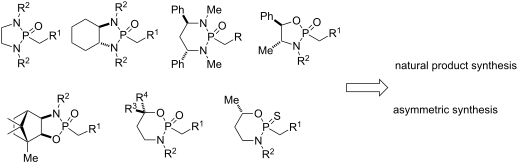
Figure 1: Examples of phosphonamide reagents used in stereoselective synthesis.

Figure 2: Natural products and bioactive molecules synthesized using phosphonamide-based chemistry (atoms, bo...

Scheme 1: Olefination with cyclic phosphonamide anions, mechanistic rationale, and selected examples 27a–d [18].

Scheme 2: Asymmetric olefination with chiral phosphonamide anions and selected examples 31a–d [1,22].

Scheme 3: Synthesis of α-substituted phosphonic acids 33a–e by asymmetric alkylation of chiral phosphonamide ...

Scheme 4: Asymmetric conjugate additions of C2-symmetric chiral phosphonamide anions to cyclic enones, lacton...

Scheme 5: Asymmetric conjugate additions of P-chiral phosphonamide anions generated from 40a and 44a to cycli...

Scheme 6: Asymmetric cyclopropanation with chiral chloroallyl phosphonamide 47, mechanistic rationale, and se...

Scheme 7: Asymmetric cyclopropanation with chiral chloromethyl phosphonamide 28d [59].

Scheme 8: Stereoselective synthesis of cis-aziridines 57 from chiral chloroallyl phosphonamide 47a [62].

Scheme 9: Synthesis of phosphonamides by (A) Arbuzov reaction, (B) condensation of diamines with phosphonic a...

Figure 3: Original and revised structure of polyoxin A (69) [24-26].
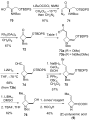
Scheme 10: Synthesis of (E)-polyoximic acid (9) [24-26].

Figure 4: Key assembly strategy of acetoxycrenulide (10) [41,42].

Scheme 11: Total synthesis of (+)-acetoxycrenulide (10) [41,42].

Scheme 12: Synthesis squalene synthase inhibitor 19 by asymmetric sulfuration (A) and asymmetric alkylation (B...

Figure 5: Key assembly strategy of fumonisin B2 (20) and its tricarballylic acid fragment 105 [45,46].

Scheme 13: Final steps of the total synthesis of fumonisin B2 (20) [45,46].

Figure 6: Selected examples of two subclasses of β-lactam antibiotics – carbapenems (111 and 112) and trinems...

Scheme 14: Synthesis of tricyclic β-lactam antibiotic 123 [97].

Scheme 15: Total synthesis of (−)-anthoplalone (8) [56].

Figure 7: Protein tyrosine phosphatase (PTP) inhibitors 130, 131 and model compounds 16, 132 and 133 [68].

Scheme 16: Synthesis of model PTP inhibitors 16a,b [68].
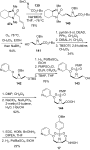
Scheme 17: Synthesis of aziridine hydroxamic acid 17 as MMP inhibitor [63].
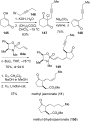
Scheme 18: Synthesis of methyl jasmonate (11) [48].

Figure 8: Structures of nudiflosides A (137) and D (13) [49].

Scheme 19: Total synthesis of the pentasubstituted cyclopentane core 159 of nudiflosides A (151) and D (13) an...

Figure 9: L-glutamic acid (161) and constrained analogues [57,124].

Scheme 20: Stereoselective synthesis of DCG-IV (162) [57].

Scheme 21: Stereoselective synthesis of mGluR agonist 21 [124].

Figure 10: Key assembly strategy of berkelic acid (15) [43].

Scheme 22: Total synthesis of berkelic acid (15) [43].

Figure 11: Key assembly strategy of jerangolid A (22) and ambruticin S (14) [27,28].
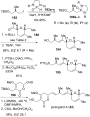
Scheme 23: Final assembly steps in the total synthesis of jerangolid A [27].

Scheme 24: Key assembly steps in the total synthesis of ambruticin S (14) [28].

Figure 12: General steroid construction strategy based on conjugate addition of 212 to cyclopentenone 48, exem...

Scheme 25: Total synthesis of estrone (12) [44].
Syntheses of fluorooxindole and 2-fluoro-2-arylacetic acid derivatives from diethyl 2-fluoromalonate ester
- Antal Harsanyi,
- Graham Sandford,
- Dmitri S. Yufit and
- Judith A.K. Howard
Beilstein J. Org. Chem. 2014, 10, 1213–1219, doi:10.3762/bjoc.10.119
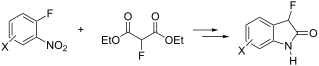
- elemental fluorine for the key construction of the carbon–fluorine bond by complementary direct selective direct fluorination [41][42][43][44], continuous flow [45][46][47][48][49] and building block [50] strategies, in this paper, we describe nucleophilic aromatic substitution reactions of carbanions
- ][58][59][60][61][62] or DAST [63] providing an indication of the importance of fluorooxindoles for medicinal chemistry applications. Results and Discussion Reactions of carbanions generated by the addition of sodium hydride to a solution of diethyl 2-fluoromalonate (1) in DMF with ortho

Graphical Abstract

Scheme 1: SNAr reaction of 2-fluoronitrobenzene (2a) with diethyl 2-fluoromalonate (1).
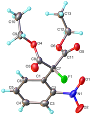
Figure 1: Molecular structure of 3.

Scheme 2: Synthesis of benzyl fluoride derivative 5.
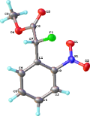
Figure 2: Molecular structure of methyl ester 6a.

Scheme 3: Synthesis of pyridyl fluoride 7.

Figure 3: Molecular structure of 7.
Silver and gold-catalyzed multicomponent reactions
- Giorgio Abbiati and
- Elisabetta Rossi
Beilstein J. Org. Chem. 2014, 10, 481–513, doi:10.3762/bjoc.10.46
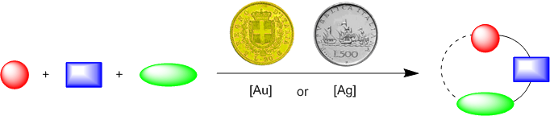
- (enamines and carbanions) or be involved in cycloaddition reactions affording tricyclic compounds by cascade processes. An unprecedented, co-catalyzed reaction involving enamines 51 as nucleophilic partners, also yields the H-pyrazolo[5,1-a]isoquinoline nucleus 48, in the presence of silver triflate and

Graphical Abstract

Scheme 1: General reaction mechanism for Ag(I)-catalyzed A3-coupling reactions.

Scheme 2: A3-coupling reaction catalyzed by polystyrene-supported NHC–silver halides.

Figure 1: Various NHC–Ag(I) complexes used as catalysts for A3-coupling.

Scheme 3: Proposed reaction mechanism for NHC–AgCl catalyzed A3-coupling reactions.

Scheme 4: Liu’s synthesis of pyrrole-2-carboxaldehydes 4.

Scheme 5: Proposed reaction mechanism for Liu’s synthesis of pyrrole-2-carboxaldehydes 4.

Scheme 6: Gold-catalyzed synthesis of propargylamines 1.

Scheme 7: A3-coupling catalyzed by phosphinamidic Au(III) metallacycle 6.

Scheme 8: Gold-catalyzed KA2-coupling.

Scheme 9: A3-coupling applied to aldehyde-containing oligosaccharides 8.

Scheme 10: A3-MCR for the preparation of propargylamine-substituted indoles 9.

Scheme 11: A3-coupling interceded synthesis of furans 12.

Scheme 12: A3/KA2-coupling mediated synthesis of functionalized dihydropyrazoles 13 and polycyclic dihydropyra...

Scheme 13: Au(I)-catalyzed entry to cyclic carbamimidates 17 via an A3-coupling-type approach.

Scheme 14: Proposed reaction mechanism for the Au(I)-catalyzed synthesis of cyclic carbamimidates 17.

Figure 2: Chiral trans-1-diphenylphosphino-2-aminocyclohexane–Au(I) complex 20.

Scheme 15: A3-coupling-type synthesis of oxazoles 21 catalyzed by Au(III)–salen complex.

Scheme 16: Proposed reaction mechanism for the synthesis of oxazoles 21.

Scheme 17: Synthesis of propargyl ethyl ethers 24 by an A3-coupling-type reaction.

Scheme 18: General mechanism of Ag(I)-catalyzed MCRs of 2-alkynylbenzaldehydes, amines and nucleophiles.

Scheme 19: General synthetic pathway to 1,3-disubstituted-1,2-dihydroisoquinolines.

Scheme 20: Synthesis of 1,3-disubstituted-1,2-dihydroisoquinolines 29.

Scheme 21: Synthesis of 1,3-disubstituted-1,2-dihydroisoquinolines 35 and 36.

Scheme 22: Rh(II)/Ag(I) co-catalyzed synthesis of 1,3-disubstituted-1,2-dihydroisoquinolines 40.

Scheme 23: General synthetic pathway to 2-amino-1,2-dihydroquinolines.

Scheme 24: Synthesis of 2-amino-1,2-dihydroquinolines 47.

Scheme 25: Synthesis of tricyclic H-pyrazolo[5,1-a]isoquinoline 48.

Scheme 26: Synthesis of tricyclic H-pyrazolo[5,1-a]isoquinolines 48.

Scheme 27: Cu(II)/Ag(I) catalyzed synthesis of H-pyrazolo[5,1-a]isoquinolines 48.

Scheme 28: Synthesis of 2-aminopyrazolo[5,1-a]isoquinolines 53.

Scheme 29: Synthesis of 1-(isoquinolin-1-yl)guanidines 55.

Scheme 30: Ag(I)/Cu(I) catalyzed synthesis of 2-amino-H-pyrazolo[5,1-a]isoquinolines 58.

Scheme 31: Ag(I)/Ni(II) co-catalyzed synthesis of 3,4-dihydro-1H-pyridazino[6,1-a]isoquinoline-1,1-dicarboxyla...

Scheme 32: Ag(I) promoted activation of the α-carbon atom of the isocyanide group.

Scheme 33: Synthesis of dihydroimidazoles 65.

Scheme 34: Synthesis of oxazoles 68.

Scheme 35: Stereoselective synthesis of chiral butenolides 71.

Scheme 36: Proposed reaction mechanism for the synthesis of butenolides 71.

Scheme 37: Stereoselective three-component approach to pirrolidines 77 by means of a chiral auxiliary.

Scheme 38: Stereoselective three-component approach to pyrrolidines 81 and 82 by means of a chiral catalyst.

Scheme 39: Synthesis of substituted five-membered carbocyles 86.

Scheme 40: Synthesis of regioisomeric arylnaphthalene lactones.

Scheme 41: Enantioselective synthesis of spiroacetals 96 by Fañanás and Rodríguez [105].

Scheme 42: Enantioselective synthesis of spiroacetals 101 by Gong [106].

Scheme 43: Synthesis of polyfunctionalized fused bicyclic ketals 103 and bridged tricyclic ketals 104.

Scheme 44: Proposed reaction mechanism for the synthesis of ketals 103 and 104.

Scheme 45: Synthesis of β-alkoxyketones 108.

Scheme 46: Synthesis of N-methyl-1,4-dihydropyridines 112.

Scheme 47: Synthesis of tetrahydrocarbazoles 115–117.

Scheme 48: Plausible reaction mechanism for the synthesis of tetrahydrocarbazoles 115–117.

Scheme 49: Carboamination, carboalkoxylation and carbolactonization of terminal alkenes.

Scheme 50: Oxyarylation of alkenes with arylboronic acids and Selectfluor as reoxidant.

Scheme 51: Proposed reaction mechanism for oxyarylation of alkenes.

Scheme 52: Oxyarylation of alkenes with arylsilanes and Selectfluor as reoxidant.

Scheme 53: Oxyarylation of alkenes with arylsilanes and IBA as reoxidant.
Synthesis and quantitative structure–activity relationship study of substituted imidazophosphor ester based tetrazolo[1,5-b]pyridazines as antinociceptive/anti-inflammatory agents
- Wafaa M. Abdou,
- Neven A. Ganoub and
- Eman Sabry
Beilstein J. Org. Chem. 2013, 9, 1730–1736, doi:10.3762/bjoc.9.199

- , showed a notable antinociceptive and anti-inflammatory activity without toxic side-effects. Keywords: antinociceptive/anti-inflammatory agents; imidazophosphor esters; phosphonyl carbanions; ring closure; tetrazolo[1,5-b]pyridazine; Introduction Inflammation is a characteristic feature of disease

Graphical Abstract
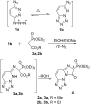
Scheme 1: Synthesis of substituted diethyl oxophosphonate 4.

Scheme 2: Synthesis of substituted diethyl aminophosphonate 7.

Scheme 3: Synthesis of fused diazaphospholo-substituted compounds 10a, 10b.

Scheme 4: Synthesis of fused imidazophosphono-substituted compound 13.

Scheme 5: Synthesis of β-enaminobisphosphonate 15.

Scheme 6: Synthesis of fused imidazophosphono-substituted compounds 17 and 19.

Scheme 7: Isomeric forms of diethyl 2-methylallylphosphonate (18).

Figure 1: Percentage inhibition of granuloma for the tested compounds at a dose of 50 mg per kilogram body we...
Organocatalytic asymmetric selenofunctionalization of tryptamine for the synthesis of hexahydropyrrolo[2,3-b]indole derivatives
- Qiang Wei,
- Ya-Yi Wang,
- Yu-Liu Du and
- Liu-Zhu Gong
Beilstein J. Org. Chem. 2013, 9, 1559–1564, doi:10.3762/bjoc.9.177
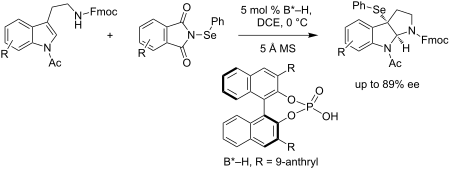
- products; selenofunctionalization; Introduction Selenofunctionalization of carbon–carbon double bonds provides practicable opportunities for rapid construction of molecule complexity [1][2][3][4][5][6][7][8], because the versatile carbon–selenium bond could either stabilize carbanions [9][10], serve as a

Graphical Abstract

Figure 1: Catalysts and seleno reagents evaluated in this study.

Figure 2: Generality for substitution at the indoline moiety. The reaction was performed in 0.1 mmol scale in...

Figure 3: X-ray crystallography of 4a catalyzed by (S)-3b.

Scheme 1: The plausible reaction mechanism.

Scheme 2: Scale up of the protocol and synthetic application.
A study on electrospray mass spectrometry of fullerenol C60(OH)24
- Mihaela Silion,
- Andrei Dascalu,
- Mariana Pinteala,
- Bogdan C. Simionescu and
- Cezar Ungurenasu
Beilstein J. Org. Chem. 2013, 9, 1285–1295, doi:10.3762/bjoc.9.145
- anions formed by electron addition to a fullerenyl radical shall be described as fullerene carbanions and referred to as fullerenide anions (M3 in Scheme 1) and [mM + ne]m–n∙ shall be described as molecular anions. As regards to the observation of distonic fullerenyl-fullerenate M7 ions, such distonic

Graphical Abstract

Scheme 1: Proposed mechanisms for the formation of fullerenol anions and distonic radical anions observed by ...

Figure 1: Negative-ion mass spectra for a 0.5 × 10⁻⁵ M solution of C60(OH)24 in ultrapure water: (a) full sca...

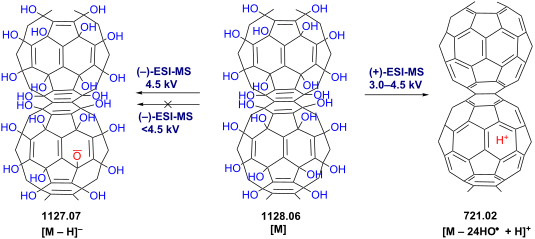
Scheme 2: Examples of proposed structures for the main deprotonated molecules and final distonic molecular io...
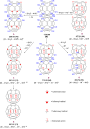
Scheme 3: Proposed (−)ESI-MS ionization mechanisms for fullerenol C60(OH)24 in pure water.

Figure 2: Negative-ion mass spectra of a 0.5 × 10⁻⁵ M aqueous solution of C60(OH)24 in ammonia solution: (a) ...

Figure 3: Positive ionization ESI mass spectrum of C60(OH)24 in (a) 3 × 10⁻¹ M (b) 2 × 10⁻² M aqueous ammonia...

Scheme 4: Proposed (+)ESI-MS ionization mechanisms for fullerenol C60(OH)24 in ammonia solution.
Easy and direct conversion of tosylates and mesylates into nitroalkanes
- Alessandro Palmieri,
- Serena Gabrielli and
- Roberto Ballini
Beilstein J. Org. Chem. 2013, 9, 533–536, doi:10.3762/bjoc.9.58

- electron-withdrawing effect of the nitro group, nitroalkanes are prone to afford, under basic conditions, stabilized carbanions, which are commonly used as nucleophiles with a variety of electrophiles [8][9][10][11] leading to carbon–carbon bond formation. Furthermore, by making use of the possibility to

Graphical Abstract

Figure 1: Classical conversion of tosylate and mesylate into the corresponding nitroalkanes via halides.
The chemistry of bisallenes
- Henning Hopf and
- Georgios Markopoulos
Beilstein J. Org. Chem. 2012, 8, 1936–1998, doi:10.3762/bjoc.8.225
- are summarized under this title, whether they involve carbocations or carbanions, or “only” polarized intermediates, ionic reactions involving 2 and its derivatives have only been studied to a limited extent so far. And this situation does not change very much if we include the chemical behavior of
- 1.2) [74][75][76] can probably also be exploited to introduce other substituents than TMS. Thus the quenching of the corresponding carbanions with, e.g., carbon dioxide to produce carboxylic acid derivatives of conjugated bisallenes could be tried [83][138][144]. 2. Acyclic nonconjugated bisallenes

Graphical Abstract

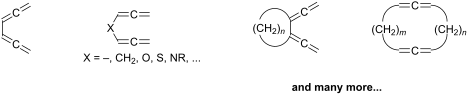
Figure 1: Loschmidt’s structure proposal for benzene (1) (Scheme 181 from [3]) and the corresponding modern stru...

Figure 2: The first isolated bisallenes.

Figure 3: Carbon skeletons of selected bisallenes discussed in this review.

Scheme 1: The preparation of 1,2,4,5-hexatetraene (2).

Scheme 2: The preparation of a conjugated bisallene by the DMS-protocol.

Scheme 3: Preparation of the 3-deuterio- and 3,4-dideuterio derivatives of 24.

Scheme 4: A versatile method to prepare alkylated conjugated bisallenes and other allenes.

Scheme 5: A preparation of 3,4-dimethyl-1,2,4,5-hexatetraene (38).

Scheme 6: A (C6 + 0)-approach to 1,2,4,5-hexatetraene (2).

Scheme 7: The preparation of a fully alkylated bisallenes from a 2,4-hexadiyne-1,6-diol diacetate.

Scheme 8: The preparation of the first phenyl-substituted conjugated bisallenes 3 and 4.

Scheme 9: Selective hydrogenation of [5]cumulenes to conjugated bisallenes: another (C6 + 0)-route.

Scheme 10: Aryl-substituted conjugated bisallenes by a (C3 + C3)-approach.

Scheme 11: Hexaphenyl-1,2,4,5-hexatetraene (59) by a (C3 + C3)-approach.

Scheme 12: An allenation route to conjugated bisallenes.

Scheme 13: The preparation of 3,4-difunctionalized conjugated bisallenes.

Scheme 14: Problems during the preparation of sulfur-substituted conjugated bisallenes.

Scheme 15: The preparation of 3,4-dibromo bisallenes.

Scheme 16: Generation of allenolates by an oxy-Cope rearrangement.

Scheme 17: A linear trimerization of alkynes to conjugated bisallenes: a (C2 + C2 + C2)-protocol.

Scheme 18: Preparation of a TMS-substituted conjugated bisallene by a C3-dimerization route.

Scheme 19: A bis(trimethylsilyl)bisallene by a C3-coupling protocol.

Scheme 20: The rearrangement of highly substituted benzene derivatives into their conjugated bisallenic isomer...

Scheme 21: From fully substituted benzene derivatives to fully substituted bisallenes.

Scheme 22: From a bicyclopropenyl to a conjugated bisallene derivative.

Scheme 23: The conversion of a bismethylenecyclobutene into a conjugated bisallene.

Scheme 24: The preparation of monofunctionalized bisallenes.

Scheme 25: Preparation of bisallene diols and their cyclization to dihydrofurans.

Scheme 26: A 3,4-difunctionalized conjugated bisallene by a C3-coupling process.

Scheme 27: Preparation of a bisallenic diketone by a coupling reaction.

Scheme 28: Sulfur and selenium-substituted bisallenes by a [2.3]sigmatropic rearrangement.

Scheme 29: The biallenylation of azetidinones.

Scheme 30: The preparation of a fully ferrocenylated conjugated bisallene.

Scheme 31: The first isomerization of a 1,5-hexadiyne to a 1,2,4,5-hexatetraene.

Scheme 32: The preparation of alkynyl-substituted bisallenes by a C3-dimerization protocol.

Scheme 33: Preparation of another completely ferrocenylated bisallene.

Scheme 34: The cyclization of 1,5-hexadiyne (129) to 3,4-bismethylenecyclobutene (130) via 1,2,4,5-hexatetraen...
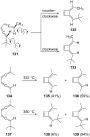
Scheme 35: Stereochemistry of the thermal cyclization of bisallenes to bismethylenecyclobutenes.

Scheme 36: Bisallene→bismethylenecyclobutene ring closures in the solid state.

Scheme 37: A bisallene cyclization/dimerization reaction.

Scheme 38: A selection of Diels–Alder additions of 1,2,4,5-hexatetraene with various double-bond dienophiles.

Scheme 39: The stereochemistry of the [2 + 4] cycloaddition to conjugated bisallenes.

Scheme 40: Preparation of azetidinone derivatives from conjugated bisallenes.

Scheme 41: Cycloaddition of heterodienophiles to a conjugated bisallene.

Scheme 42: Addition of triple-bond dienophiles to conjugated bisallenes.

Scheme 43: Sulfur dioxide addition to conjugated bisallenes.

Scheme 44: The addition of a germylene to a conjugated bisallene.

Scheme 45: Trapping of conjugated bisallenes with phosphinidenes.

Scheme 46: The cyclopropanantion of 1,2,4,5-hexatetraene (2).

Scheme 47: Photochemical reactions involving conjugated bisallenes.

Scheme 48: Base-catalyzed isomerizations of conjugated bisallenes.

Scheme 49: Ionic additions to a conjugated bisallene.

Scheme 50: Oxidation reactions of a conjugated bisallene.
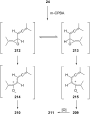
Scheme 51: The mechanism of oxidation of the bisallene 24.

Scheme 52: CuCl-catalyzed cyclization of 1,2,4,5-hexatetraene (2).

Scheme 53: The conversion of conjugated bisallenes into cyclopentenones.

Scheme 54: Oligomerization of a conjugated bisallene by nickel catalysts.
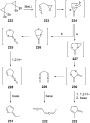
Scheme 55: Generation of 1,2,5,6-heptatetraene (229) as a reaction intermediate.

Scheme 56: The preparation of a stable derivative of 1,2,5,6-heptatetraene.

Scheme 57: A bisallene with a carbonyl group as a spacer element.

Scheme 58: The first preparation of 1,2,6,7-octatetraene (242).

Scheme 59: Preparation of 1,2,6,7-octatetraenes by (C4 + C4)-coupling of enynes.

Scheme 60: Preparation of 1,2,6,7-octatetraenes by (C4 + C4)-coupling of homoallenyl bromides.

Scheme 61: Preparation of 1,2,6,7-octatetraenes by alkylation of propargylic substrates.

Scheme 62: Preparation of two highly functionalized 1,2,6,7-octatetraenes.

Scheme 63: Preparation of several higher α,ω-bisallenes.

Scheme 64: Preparation of different alkyl derivatives of α,ω-bisallenes.

Scheme 65: The preparation of functionalized 1,2,7,8-nonatetraene derivatives.

Scheme 66: Preparation of functionalized α,ω-bisallenes.

Scheme 67: The preparation of an α,ω-bisallene by direct homologation of an α,ω-bisalkyne.

Scheme 68: The gas-phase pyrolysis of 4,4-dimethyl-1,2,5,6-heptatetraene (237).
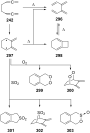
Scheme 69: Gas-phase pyrolysis of 1,2,6,7-octatetraene (242).

Scheme 70: The cyclopropanation of 1,2,6,7-octatetraene (242).

Scheme 71: Intramolecular cyclization of 1,2,6,7-octatetraene derivatives.

Scheme 72: The gas-phase pyrolysis of 1,2,7,8-nonatetraene (265) and 1,2,8,9-decatetraene (266).

Scheme 73: Rh-catalyzed cyclization of a functionalized 1,2,7,8-nonatetraene.

Scheme 74: A triple cyclization involving two different allenic substrates.

Scheme 75: Bicyclization of keto derivatives of 1,2,7,8-nonatetraene.

Scheme 76: The preparation of complex organic compounds from functionalized bisallenes.

Scheme 77: Cycloisomerization of an α,ω-bisallene containing a C9 tether.

Scheme 78: Organoborane polymers from α,ω-bisallenes.

Scheme 79: Preparation of trans- (337) and cis-1,2,4,6,7-octapentaene (341).

Scheme 80: The preparation of 4-methylene-1,2,5,6-heptatetraene (349).

Scheme 81: The preparation of acetylenic bisallenes.

Scheme 82: The preparation of derivatives of hydrocarbon 351.

Scheme 83: The construction of macrocyclic alleno-acetylenes.

Scheme 84: Preparation and reactions of 4,5-bismethylene-1,2,6,7-octatetraene (365).

Scheme 85: Preparation of 1,2-bis(propadienyl)benzene (370).

Scheme 86: The preparation of 1,4-bis(propadienyl)benzene (376).

Scheme 87: The preparation of aromatic and heteroaromatic bisallenes by metal-mediated coupling reactions.

Scheme 88: Double cyclization of an aromatic bisallene.

Scheme 89: Preparation of an allenic [15]paracyclophane by a ring-closing metathesis reaction of an aromatic α...

Scheme 90: Preparation of a macrocyclic ring system containing 1,4-bis(propadienyl)benzene units.

Scheme 91: Preparation of copolymers from 1,4-bis(propadienyl)benzene (376).

Scheme 92: A boration/copolymerization sequence of an aromatic bisallene and an aromatic bisacetylene.

Scheme 93: Formation of a layered aromatic bisallene.

Figure 4: The first members of the semicyclic bisallene series.

Scheme 94: Preparation of the first bis(vinylidene)cyclobutane derivative.
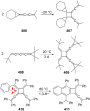
Scheme 95: Dimerization of strain-activated cumulenes to bis(vinylidene)cyclobutanes.

Scheme 96: Photodimerization of two fully substituted butatrienes in the solid state.

Scheme 97: Preparation of the two parent bis(vinylidene)cyclobutanes.

Scheme 98: The preparation of 1,3-bis(vinylidene)cyclopentane and its thermal isomerization.

Scheme 99: The preparation of the isomeric bis(vinylidene)cyclohexanes.

Scheme 100: Bi- and tricyclic conjugated bisallenes.
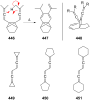
Scheme 101: A selection of polycyclic bisallenes.

Scheme 102: The first endocyclic bisallenes.

Figure 5: The stereochemistry of 1,2,6,7-cyclodecatetraene.

Scheme 103: The preparation of several endocyclic bisallenes.

Scheme 104: Synthesis of diastereomeric derivatives of 1,2,6,7-cyclodecatetraene.

Scheme 105: Preparation of a derivative of 1,2,8,9-cyclotetradecatetraene.

Scheme 106: The preparation of keto derivatives of cyclic bisallenes.

Scheme 107: The preparation of cyclic biscumulenic ring systems.

Scheme 108: Cyclic bisallenes in natural- and non-natural-product chemistry.

Scheme 109: The preparation of iron carbonyl complexes from cyclic bisallenes.

Figure 6: A selection of unknown exocyclic bisallenes that should have interesting chemical properties.

Scheme 110: The thermal isomerization of 1,2-diethynylcyclopropanes and -cyclobutanes.

Scheme 111: Intermediate generation of a cyclooctapentaene.

Scheme 112: Attempted preparation of a cyclodecahexaene.

Scheme 113: The thermal isomerization of 1,5,9-cyclododecatriyne (511) into [6]radialene (514).

Scheme 114: An isomerization involving a diketone derived from a conjugated bisallene.

Scheme 115: Typical reaction modes of heteroorganic bisallenes.

Scheme 116: Generation and thermal behavior of acyclic hetero-organic bisallenes.

Scheme 117: Generation of bis(propadienyl)thioether.

Scheme 118: The preparation of a bisallenic sulfone and its thermal isomerization.

Scheme 119: Bromination of the bisallenic sulfone 535.

Scheme 120: Metalation/hydrolysis of the bisallenic sulfone 535.

Scheme 121: Aromatic compounds from hetero bisallenes.

Scheme 122: Isomerization/cyclization of bispropargylic ethers.

Scheme 123: The preparation of novel aromatic systems by base-catalyzed isomerization of bispropargyl ethers.

Scheme 124: The isomerization of bisacetylenic thioethers to bicyclic thiophenes.

Scheme 125: Aromatization of macrocyclic bispropargylic sulfides.

Scheme 126: Preparation of ansa-compounds from macrocyclic bispropargyl thioethers.

Scheme 127: Alternate route for cyclization of a heterorganic bisallene.
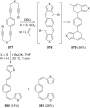
Scheme 128: Multiple isomerization/cyclization of “double” bispropargylic thioethers.

Scheme 129: Preparation of a bisallenyl disulfide and its subsequent bicyclization.

Scheme 130: Thermal cyclization of a bisallenyl thiosulfonate.

Scheme 131: Some reactions of heteroorganic bisallenes with two sulfur atoms.

Scheme 132: Further methods for the preparation of heteroorganic bisallenes.

Scheme 133: Cyclization reactions of heteroorganic bisallenes.

Scheme 134: Thermal cycloadditions of bisallenic tertiary amines.

Scheme 135: Cyclization of a bisallenic tertiary amine in the presence of a transition-metal catalyst.

Scheme 136: A Pauson–Khand reaction of a bisallenic ether.

Scheme 137: Formation of a 2:1adduct from two allenic substrates.

Scheme 138: A ring-forming silastannylation of a bisallenic tertiary amine.

Scheme 139: A three-component cyclization involving a heterorganic bisallene.

Scheme 140: Atom-economic construction of a complex organic framework from a heterorganic α,ω-bisallene.
A quantitative approach to nucleophilic organocatalysis
- Herbert Mayr,
- Sami Lakhdar,
- Biplab Maji and
- Armin R. Ofial
Beilstein J. Org. Chem. 2012, 8, 1458–1478, doi:10.3762/bjoc.8.166
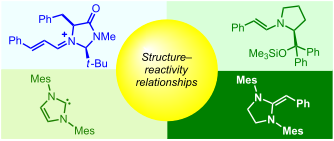
- of magnitude corresponding to relative reaction times from nanoseconds to 1015 years, we have been able to compare nucleophiles of widely differing structure and reactivity [4]. As illustrated by Figure 1, this method allows us to characterize strong nucleophiles, such as carbanions and ylides, by
- reactions with C-nucleophiles, mostly stabilized carbanions [4][73][74][75][76][77][78][79][80]. As illustrated in Figure 19, the benzhydrylium methodology was again employed for the determination of the nucleophilicities of enamines. Whereas the enamine 32b, which is derived from the diphenylprolinol silyl

Graphical Abstract

Figure 1: Second-order rate constants for reactions of electrophiles with nucleophiles.

Figure 2: Mechanism of amine-catalyzed conjugate additions of nucleophiles [23-28].

Figure 3: Kinetics of the reactions of the iminium ion 3a with the silylated ketene acetal 7a [35].

Figure 4: Laser flash photolytic generation of iminium ions 3a.
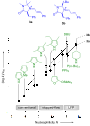
Figure 5: Correlations of the reactivities of the iminium ions 3a and 3b toward nucleophiles with the corresp...
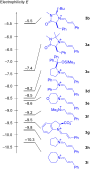
Figure 6: Comparison of the electrophilicities of cinnamaldehyde-derived iminium ions 3a–3i.

Figure 7: Nucleophiles used in iminium activated reactions [35,42,44-52].
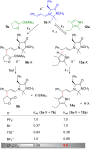
Figure 8: Counterion effects in electrophilic reactions of iminium ions 3a-X (at 20 °C, silyl ketene acetal 7b...

Figure 9: Comparison of calculated and experimental rate constants of electrophilic aromatic substitutions wi...

Figure 10: Aza-Michael additions of the imidazoles 15 with the iminium ion 3a [58].

Figure 11: Plots of log k2 for the reactions of enamides 17a–17e with the benzhydrylium ions 18a–d in CH3CN at...
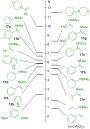
Figure 12: Comparison of the nucleophilicities of enamides 17 with those of several other C nucleophiles (solv...

Figure 13: Experimental and calculated rate constants k2 for the reactions of 17b and 17g with 3a and 3b in th...

Figure 14: Comparison between experimental and calculated (Equation 1) cyclopropanation rate constants [64].

Figure 15: Electrostatic activation of iminium activated cyclopropanations with sulfur ylides.
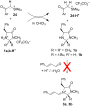
Figure 16: Sulfur ylides inhibit the formation of iminium ions.

Figure 17: Enamine activation [65].

Figure 18: Electrophilicity parameters E for classes of compounds that have been used as electrophilic substra...

Figure 19: Quantification of the nucleophilic reactivities of the enamines 32a–e in acetonitrile (20 °C) [83]; a d...

Figure 20: Proposed transition states for the stereogenic step in proline-catalyzed reactions.

Figure 21: Kinetic evidence for the anchimeric assistance of the electrophilic attack by the carboxylate group....

Figure 22: Differentiation of nucleophilicity and Lewis basicity (in acetonitrile at 20 °C): Rate (left) and e...

Figure 23: NHCs 41, 42, and 43 are moderately active nucleophiles and exceptionally strong Lewis bases (methyl...

Figure 24: Nucleophilic reactivities of the deoxy Breslow intermediates 45 in THF at 20 °C [107].

Figure 25: Comparison of the proton affinities (PA, from [107]) of the diaminoethylenes 47a–c with the methyl catio...

Figure 26: Berkessel’s synthesis of a Breslow intermediate (51, keto tautomer) from carbene 43 [112].

Figure 27: Synthesis of O-methylated Breslow intermediates [114].
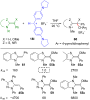
Figure 28: Relative reactivities of deoxy- and O-methylated Breslow intermediates [114].
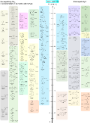
Figure 29: Reactivity scales for electrophiles and nucleophiles relevant for organocatalytic reactions (refere...
Highly selective synthesis of (E)-alkenyl-(pentafluorosulfanyl)benzenes through Horner–Wadsworth–Emmons reaction
- George Iakobson and
- Petr Beier
Beilstein J. Org. Chem. 2012, 8, 1185–1190, doi:10.3762/bjoc.8.131
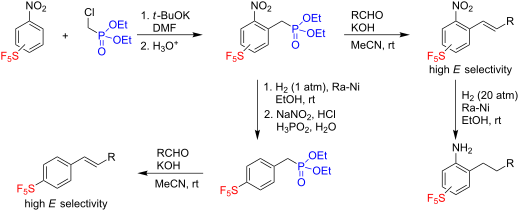
- . In contrast to most of the reactions with 3, phosphonate 4 gave exclusively E-isomers of 6 (Table 3). This improved selectivity can be explained by relative differences in the stabilities and reactivities of carbanions derived from phosphonates and reactive intermediates. In reactions of phosphoryl
- -stabilized carbanions with aldehydes, several intermediates are formed reversibly. Less-hindered intermediates A and A’, which eliminate to E-alkene, exist in equilibrium with more-hindered intermediates B and B’ giving Z-alkene (Scheme 2). In our reactions, the stabilization of the negative charge in the

Graphical Abstract

Scheme 1: Proposed synthesis of alkenyl-(pentafluorosulfanyl)benzenes.

Scheme 2: Reactive intermediates involved in HWE reactions to alkenes 5 and 6.

Scheme 3: Diazotization/reduction of 8d to 9d and the formation of unexpected cyclized product 10d.

Scheme 4: Synthesis of substituted phenanthrene 11d.

Scheme 5: Synthesis of phosphonate 12 and SF5-stilbene derivative 13d.
Synthesis and structure of tricarbonyl(η6-arene)chromium complexes of phenyl and benzyl D-glycopyranosides
- Thomas Ziegler and
- Ulrich Heber
Beilstein J. Org. Chem. 2012, 8, 1059–1070, doi:10.3762/bjoc.8.118

- to the fact that the tricarbonylchromium ligand stabilizes both benzylic and homo-benzylic carbenium ions and carbanions [5][6]. Asymmetric ortho- or meta-substituted tricarbonyl(η6-arene)chromium compounds display planar chirality, which, in turn, makes these chiral complexes attractive catalysts

Graphical Abstract

Figure 1: Known types of η6-tricarbonylchromium complexes of sugar derivatives [9-13].

Scheme 1: Synthesis of glucoside 1l.

Scheme 2: Deprotection of 2c and enzymatic cleavage of 3.

Figure 2: ORTEP-plot of the asymmetric unit containing two molecules of compound 2a showing 30% probability e...

Figure 3: ORTEP-plot of the asymmetric unit showing two molecules of compound 2b and 30% probability ellipsoi...

Figure 4: ORTEP-plot of the asymmetrical unit showing two molecules of compound 2c and 30% probability ellips...

Figure 5: ORTEP-plot of the asymmetric unit showing two molecules of compound 2d and 30% probability ellipsoi...

Figure 6: ORTEP-plot of the asymmetrical unit showing two molecules of compound 2e and 30% probability ellips...

Figure 7: ORTEP-plot of the asymmetric unit showing three molecules of compound 2j and 30% probability ellips...

Figure 8: ORTEP-plot of the asymmetric unit showing three molecules of compound 2k and 30% probability ellips...

Figure 9: ORTEP-plot of the asymmetric unit showing two molecules of compound pR-2m and 30% probability ellip...

Figure 10: ORTEP-plot of the asymmetric unit showing three molecules of compound pS-2m and 30% probability ell...
Fluorescent hexaaryl- and hexa-heteroaryl[3]radialenes: Synthesis, structures, and properties
- Antonio Avellaneda,
- Courtney A. Hollis,
- Xin He and
- Christopher J. Sumby
Beilstein J. Org. Chem. 2012, 8, 71–80, doi:10.3762/bjoc.8.7
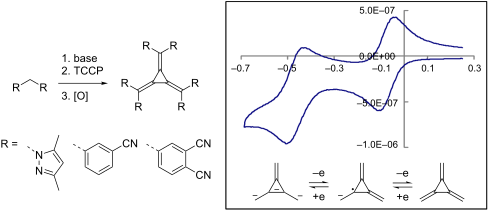
- ][11][12]. Derivatives of [3]radialene containing aryl and heteroaryl moieties have gained more interest than the parent compound itself due to their increased stability. The preparation of hexaaryl[3]radialenes, using Fukunaga’s method of reacting stabilised carbanions with tetrachlorocyclopropene [13
- difference in yields between 2 and hexakis(4-cyanophenyl)[3]radialene, 73% reported by Oda [15], is a consequence of the relative stability of the carbanions of the two dicyanodiphenylmethane precursors. To maintain a high yielding synthesis whilst investigating the substitution in the 3-position, a new
- been shown to undergo two one-electron reductions to yield the radical anion and dianion species [1]. In this context, in materials science [1][39][40], there is considerable interest in the use of the carbanions obtained by reduction. Up to now, the most electron deficient hexaaryl[3]radialene

Graphical Abstract

Figure 1: The structures of a) the parent [3]-, [4]-, [5]-, and [6]dendralenes and b) the corresponding radia...

Scheme 1: Synthesis of (a) hexakis(3-cyanophenyl)[3]radialene (2) and (b) hexakis(3,4-dicyanophenyl)[3]radial...

Figure 2: A perspective view of the asymmetric unit of 3.

Figure 3: (a) UV–visible (bold line) and fluorescence (dashed line) spectra of 1, 2, hexa(2-pyridyl)[3]radial...
On the control of secondary carbanion structure utilising ligand effects during directed metallation
- Andrew E. H. Wheatley,
- Jonathan Clayden,
- Ian H. Hillier,
- Alison Campbell Smith,
- Mark A. Vincent,
- Laurence J. Taylor and
- Joanna Haywood
Beilstein J. Org. Chem. 2012, 8, 50–60, doi:10.3762/bjoc.8.5
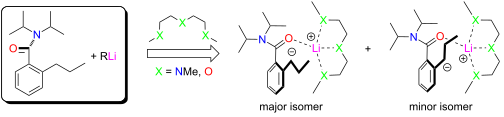
- deprotonation on electronic grounds [1][2]. Moreover, steric effects have also been found to play an important role. Hence, whereas the formation of primary [18] and secondary [19] carbanions through lateral deprotonation has been known for many years, it is only very recently that the analogous formation of
- tertiary carbanions has been reported [20]. Amongst the most important, versatile and widely used agents for directing the deprotonative lithiation of aromatic substrates are amide type (or “N+O”) groups [3]. In the case of such systems, solid-state structural evidence for carbanion structure has only
- -position is not blocked (contrast this scenario with the conversion of 4-H into 4-Lil·3THF) recently led us to examine the hitherto unachievable formation of tertiary carbanions by directed lateral lithiation [16][17]. Accordingly, 2-isopropyl-N,N-diisopropylbenzamide (5-H) has been used to source 5-Lil·L

Graphical Abstract

Scheme 1: Molecular structures of 1/2-H and their corresponding ortho-lithiates [21].

Scheme 2: Molecular structures of 3/4-H and their corresponding lateral lithiates [23,24].

Scheme 3: Conversion of kinetic ortho-lithiate into the thermodynamic lateral lithiate under the influence of...

Scheme 4: Molecular structure of 5-H and its lateral and ortho-lithiates [20].

Scheme 5: Lateral metallation of 6-H using t-BuLi in the presence of Lewis base L.

Figure 1: Molecular structure of 6-Lil·PMDTA; H-atoms (excl. H8) omitted for clarity. Selected bond lengths (...

Scheme 6: Comparison of aromatic and aryl–(α-C) bond distances in 5-Lil·L [20] and 6-Lil·L (L = PMDTA).

Figure 2: Molecular structure of 6-Lil·DGME; H-atoms omitted. Selected bond lengths (Å) and angles (°): O1–Li...

Figure 3: Computed minimum energy conformers (B3LYP density functional/6-311++G(2d,2p) basis set; H-atoms omi...
Selectivity in C-alkylation of dianions of protected 6-methyluridine
- Ngoc Hoa Nguyen,
- Christophe Len,
- Anne-Sophie Castanet and
- Jacques Mortier
Beilstein J. Org. Chem. 2011, 7, 1228–1233, doi:10.3762/bjoc.7.143
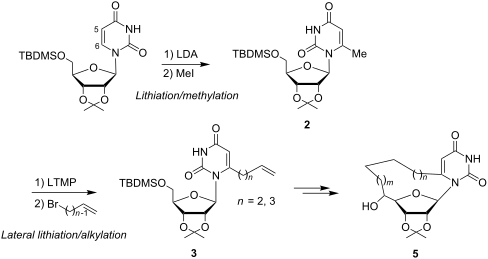
- do not alkylate, or give poor yields, with any halides other than iodomethane [21][22][23][24]. Competing base-induced elimination reactions are presumably observed with iodoethane and higher homologues [19][20][25][26]. It has also been proposed that poor reactivity of lithiated carbanions toward

Graphical Abstract

Scheme 1: Synthesis of potent antiviral and antitumor cyclonucleosides 5.
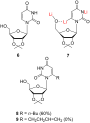
Figure 1: Lithiation of 2',3'-O-isopropylideneuridine (6).

Figure 2: Metalation of 5'-O-TMDMS protected nucleoside 10.

Figure 3: Lithiation/alkylation of 2',3',5'-tri-O-benzoyl-3,6-dimethyluridine (13) using LDA.

Scheme 2: Preparation of 2',3'-O-isopropylidene-5'-O-(tert-butyldimethylsilyl)-6-methyluridine (2).

Scheme 3: Lateral lithiation/alkylation of 6-methyluridine 2.

Figure 4: Bis-allylated products 20 and 21.
Asymmetric synthesis of tertiary thiols and thioethers
- Jonathan Clayden and
- Paul MacLellan
Beilstein J. Org. Chem. 2011, 7, 582–595, doi:10.3762/bjoc.7.68
- about the C–S, Se or Te bond [62]. Simple inversion in α-thio-substituted carbanions has a barrier as low as 0.5 kcal·mol−1 [63] making inversion itself unlikely to comprise the rate determining step of the racemisation. Consistent with this explanation, the barrier to racemisation increases with

Graphical Abstract

Figure 1: Seven out of the ten top selling drugs in the USA in 2009 contain sulfur. Figures in italics are to...

Figure 2: Naturally occurring organosulfur compounds glutathione and (R)-thioterpineol.

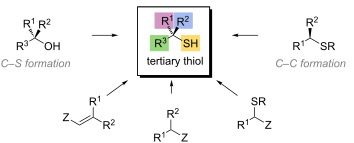
Figure 3: Methods for the synthesis of chiral tertiary thiol 1.

Scheme 1: Preparation of thioethers 4 from α-hydroxy esters.

Scheme 2: Nucleophilic substitution in α-aryl-α-hydroxy esters.

Scheme 3: Preparation of α,α-dialkylthioethers.

Scheme 4: Preparation of α-cyanothioacetate 12.

Scheme 5: Synthesis of (R)-(+)-spirobrassinin.

Scheme 6: Opening of cyclic sulfamidates with thiol nucleophiles.

Scheme 7: Synthesis of androgen 20.

Scheme 8: Synthesis of (+)-BE-52440A.

Scheme 9: The Mitsunobu reaction.

Scheme 10: Mitsunobu substitution at a quaternary centre.
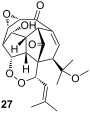
Figure 4: Initially assigned structure of hexacyclinol.

Scheme 11: Preparation of thioether 29.

Scheme 12: Thioethers 33 prepared from phosphinites 31.

Scheme 13: Preparation of enantiomerically pure thiol 39.

Scheme 14: Thioethers prepared by a modified Mitsunobu reaction.

Scheme 15: Nucleophilic conjugate addition.

Scheme 16: Asymmetric addition to cyclic enones.

Scheme 17: Preparation of thioether 45.

Scheme 18: Catalytic kinetic resolution of the enantiomers of enone 46.
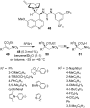
Scheme 19: Organocatalytic conjugate addition to nitroalkenes 49.

Scheme 20: Preparation of β-amino acid 54.

Scheme 21: Sulfur migration within oxazolidine-2-thiones 56.
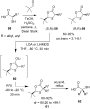
Scheme 22: Preparation of thiols 62 by self-regeneration of stereocentres.

Scheme 23: Synthesis of (5R)-thiolactomycin.

Scheme 24: Preparation of tertiary thiols and thioethers via α-thioorganolithiums.

Scheme 25: Diastereoselective methylation of organolithium 71.

Scheme 26: Addition to lithiated thiocarbamate 75.

Scheme 27: Configurational lability in unhindered α-lithiothiocarbamates.

Scheme 28: Configurational stability in bulky α-lithiothiocarbamates.

Scheme 29: Asymmetric functionalisation of secondary benzylic thiocarbamates.

Scheme 30: Methylation of lithioallyl thiocarbamates.

Scheme 31: Asymmetric preparation of tertiary allylic thiols.
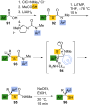
Scheme 32: Asymmetric preparation of thiols 96 by aryl migration in lithiated thiocarbamates.
Aromatic and heterocyclic perfluoroalkyl sulfides. Methods of preparation
- Vladimir N. Boiko
Beilstein J. Org. Chem. 2010, 6, 880–921, doi:10.3762/bjoc.6.88
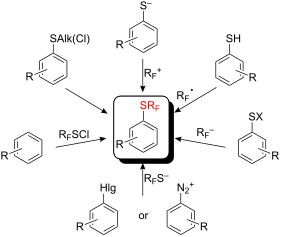
- have appeared which make use of novel intermediates. Thus, single-electron oxidation or reduction enables the generation of perfluoroalkyl radicals. Two-electron reduction of perfluoroalkyl iodides generates perfluoroalkyl carbanions, which may be stabilized by organophosphorus and organosilicon
- analogues continues to grow. Previous reviews in this area are either dated [19] or focus on specialist aspects such as perfluoroalkyl radicals [20][21][22], fluorinated carbanions [23], organometallic compounds [24][25], perfluoroalkyl sulfenyl halides [26], perfluoroalkyl silicon reagents [27][28][29][30

Graphical Abstract

Figure 1: Examples of industrial fluorine-containing bio-active molecules.

Figure 2: CF3(S)- and CF3(O)-containing pharmacologically active compounds.

Figure 3: Hypotensive candidates with SRF and SO2RF groups – analogues of Losartan and Nifedipin.

Figure 4: The variety of the pharmacological activity of RFS-substituted compounds.

Figure 5: Recent examples of compounds containing RFS(O)n-groups [12-18].

Scheme 1: Fluorination of ArSCCl3 to corresponding ArSCF3 derivatives. For references see: a[38-43]; b[41,42]; c[43]; d[44]; e[38-43,45-47]; f[38-43,48,49]; g...

Scheme 2: Preparation of aryl pentafluoroethyl sulfides.

Scheme 3: Mild fluorination of the aryl SCF2Br derivatives.

Scheme 4: HF fluorinations of aryl α,α,β-trichloroisobutyl sulfide at various conditions.

Scheme 5: Monofluorination of α,α-dichloromethylene group.

Scheme 6: Electrophilic substitution of phenols with CF3SCl [69].

Scheme 7: Introduction of SCF3 groups into activated phenols [71-74].

Scheme 8: Preparation of tetrakis(SCF3)-4-methoxyphenol [72].

Scheme 9: The interactions of resorcinol and phloroglucinol derivatives with RFSCl.

Scheme 10: Reactions of anilines with CF3SCl.

Scheme 11: Trifluoromethylsulfanylation of anilines with electron-donating groups in the meta position [74].

Scheme 12: Reaction of benzene with CF3SCl/CF3SO3H [77].

Scheme 13: Reactions of trifluoromethyl sulfenyl chloride with aryl magnesium and -mercury substrates.

Scheme 14: Reactions of pyrroles with CF3SCl.

Scheme 15: Trifluoromethylsulfanylation of indole and indolizines.

Scheme 16: Reactions of N-methylpyrrole with CF3SCl [80,82].

Scheme 17: Reactions of furan, thiophene and selenophene with CF3SCl.

Scheme 18: Trifluoromethylsulfanylation of imidazole and thiazole derivatives [83].

Scheme 19: Trifluoromethylsulfanylation of pyridine requires initial hydride reduction.

Scheme 20: Introduction of additional RFS-groups into heterocyclic compounds in the presence of CF3SO3H.

Scheme 21: Introduction of additional RFS-groups into pyrroles [82,87].

Scheme 22: By-products in reactions of pyrroles with CF3SCl [82].

Scheme 23: Reaction of aromatic iodides with CuSCF3 [93,95].

Scheme 24: Reaction of aromatic iodides with RFZCu (Z = S, Se), RF = CF3, C6F5 [93,95,96].

Scheme 25: Side reactions during trifluoromethylsulfanylation of aromatic iodides with CF3SCu [98].

Scheme 26: Reactions with in situ generated CuSCF3.

Scheme 27: Perfluoroalkylthiolation of aryl iodides with bulky RFSCu [105].

Scheme 28: In situ formation and reaction of RFZCu with aryl iodides.

Figure 6: Examples of compounds obtained using in situ generated RFZCu methodology [94].

Scheme 29: Introduction of SCF3 group into aromatics via difluorocarbene.

Scheme 30: Tetrakis(dimethylamino)ethylene dication trifluoromethyl thiolate as a stable reagent for substitut...

Scheme 31: The use of CF2=S/CsF or (CF3S)2C=S/CsF for the introduction of CF3S groups into fluorinated heteroc...

Scheme 32: One-pot synthesis of ArSCF3 from ArX, CCl2=S and KF.

Scheme 33: Reaction of aromatics with CF3S− Kat+ [115].

Scheme 34: Reactions of activated aromatic chlorides with AgSCF3/KI.

Scheme 35: Comparative CuSCF3/KI and Hg(SCF3)2/KI reactions.

Scheme 36: Me3SnTeCF3 – a reagent for the introduction of the TeCF3 group.

Scheme 37: Sandmeyer reactions with CuSCF3.

Scheme 38: Reactions of perfluoroalkyl iodides with alkali and organolithium reagents.

Scheme 39: Perfluoroalkylation with preliminary breaking of the disulfide bond.

Scheme 40: Preparation of RFS-substituted anilines from dinitrodiphenyl disulfides.

Scheme 41: Photochemical trifluoromethylation of 2,4,6-trimercaptochlorobenzene [163].

Scheme 42: Putative process for the formation of B, C and D.

Scheme 43: Trifluoromethylation of 2-mercapto-4-hydroxy-6-trifluoromethylyrimidine [145].

Scheme 44: Deactivation of 2-mercapto-4-hydroxypyrimidines S-centered radicals.

Scheme 45: Perfluoroalkylation of thiolates with CF3Br under UV irradiation.

Scheme 46: Catalytic effect of methylviologen for RF• generation.

Scheme 47: SO2−• catalyzed trifluoromethylation.

Scheme 48: Electrochemical reduction of CF3Br in the presence of SO2 [199,200].

Scheme 49: Participation of SO2 in the oxidation of ArSCF3−•.

Scheme 50: Electron transfer cascade involving SO2 and MV.

Scheme 51: Four stages of the SRN1 mechanism for thiol perfluoroalkylation.

Scheme 52: A double role of MV in the catalysis of RFI reactions with aryl thiols.

Scheme 53: Photochemical reaction of pentafluoroiodobenzene with trifluoromethyl disulfide.

Scheme 54: N- Trifluoromethyl-N-nitrosobenzene sulfonamide – a source of CF3• radicals [212,213].

Scheme 55: Radical trifluoromethylation of organic disulfides with ArSO2N=NCF3.

Scheme 56: Barton’s S-perfluoroalkylation reactions [216].

Scheme 57: Decarboxylation of thiohydroxamic esters in the presence of C6F13I.

Scheme 58: Reactions of thioesters of trifluoroacetic and trifluoromethanesulfonic acids in the presence of ar...

Scheme 59: Perfluoroalkylation of polychloropyridine thiols with xenon perfluorocarboxylates or XeF2 [222,223].

Scheme 60: Interaction of Xe(OCORF)2 with nitroaryl disulfide [227].

Scheme 61: Bi(CF3)3/Cu(OCOCH3)2 trifluoromethylation of thiophenolate [230].

Scheme 62: Reaction of fluorinated carbanions with aryl sulfenyl chlorides.

Scheme 63: Reaction of methyl perfluoromethacrylate with PhSCl in the presence of fluoride.

Scheme 64: Reactions of ArSCN with potassium and magnesium perfluorocarbanions [237].

Scheme 65: Reactions of RFI with TDAE and organic disulfides [239,240].

Scheme 66: Decarboxylation of perfluorocarboxylates in the presence of disulfides [245].

Scheme 67: Organization of a stable form of “CF3−” anion in the DMF.

Scheme 68: Silylated amines in the presence of fluoride can deprotonate fluoroform for reaction with disulfide...

Figure 7: Other examples of aminomethanols [264].

Scheme 69: Trifluoromethylation of diphenyl disulfide with PhSO2CF3/t-BuOK.

Scheme 70: Amides of trifluoromethane sulfinic acid are sources of CF3− anion.

Scheme 71: Trifluoromethylation of various thiols using “hyper-valent” iodine (III) reagent [279].

Scheme 72: Trifluoromethylation of p-nitrothiophenolate with diaryl CF3 sulfonium salts [280].

Scheme 73: Trifluoromethyl transfer from dibenzo (CF3)S-, (CF3)Se- and (CF3)Te-phenium salts to thiolates [283].

Scheme 74: Multi-stage paths for synthesis of dibenzo-CF3-thiophenium salts [61].
Shelf-stable electrophilic trifluoromethylating reagents: A brief historical perspective
- Norio Shibata,
- Andrej Matsnev and
- Dominique Cahard
Beilstein J. Org. Chem. 2010, 6, No. 65, doi:10.3762/bjoc.6.65
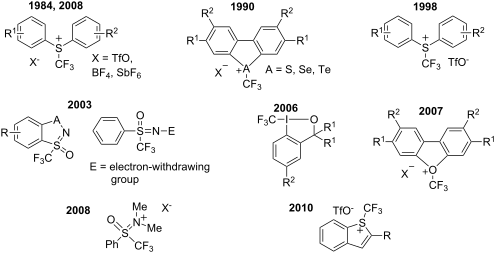
- Daikin laboratories in 2003. 1-Oxo-1-trifluoromethyl-1λ6-benzo[d]isothiazol-3-one (30), and 1-trifluoromethyl-benzo[1,3,2]dithiazole 1,3,3-trioxide (31) as well as acyclic sulfoximines 32 were synthesized as new trifluoromethylating agents (Scheme 26). It was possible to trifluoromethylate carbanions

Graphical Abstract

Scheme 1: Preparation of the first electrophilic trifluoromethylating reagent and its reaction with a thiophe...

Scheme 2: Synthetic routes to S-CF3 and Se-CF3 dibenzochalcogenium salts.

Scheme 3: Synthesis of (trifluoromethyl)dibenzotellurophenium salts.

Scheme 4: Nitration of (trifluoromethyl)dibenzochalcogenium salts.

Scheme 5: Synthesis of a sulphonium salt with a bridged oxygen.

Scheme 6: Reactivity of (trifluoromethyl)dibenzochalcogenium salts.

Scheme 7: Pd(II)-Catalyzed ortho-trifluoromethylation of heterocycle-substituted arenes by Umemoto’s reagents....

Scheme 8: Mild electrophilic trifluoromethylation of β-ketoesters and silyl enol ethers.

Scheme 9: Enantioselective electrophilic trifluoromethylation of β-ketoesters.

Scheme 10: Preparation of water-soluble S-(trifluoromethyl)dibenzothiophenium salts.

Scheme 11: Method for large-scale preparation of S-(trifluoromethyl)dibenzothiophenium salts.

Scheme 12: Triflic acid catalyzed synthesis of 5-(trifluoromethyl)thiophenium salts.

Scheme 13: Trifluoromethylation of β-ketoesters and dicyanoalkylidenes by S-(trifluoromethyl)benzothiophenium ...

Scheme 14: Synthesis of chiral S-(trifluoromethyl)benzothiophenium salt 18 and attempt of enantioselective tri...

Scheme 15: Synthesis of O-(trifluoromethyl)dibenzofuranium salts.

Scheme 16: Photochemical O- and N-trifluoromethylation by 20b.

Scheme 17: Thermal O-trifluoromethylation of phenol by diazonium salt 19a. Effect of the counteranion.

Scheme 18: Thermal O- and N-trifluoromethylations.

Scheme 19: Method of preparation of S-(trifluoromethyl)diphenylsulfonium triflates.

Scheme 20: Reactivity of some S-(trifluoromethyl)diarylsulfonium triflates.

Scheme 21: One-pot synthesis of S-(trifluoromethyl)diarylsulfonium triflates.

Scheme 22: One-pot synthesis of Umemoto’s type reagents.

Scheme 23: Preparation of sulfonium salts by transformation of CF3− into CF3+.

Scheme 24: Selected reactions with the new Yagupolskii reagents.

Scheme 25: Synthesis of heteroaryl-substituted sulfonium salts.

Scheme 26: First neutral S-CF3 reagents.

Scheme 27: Synthesis of Togni reagents. aYield for the two-step procedure.

Scheme 28: Trifluoromethylation of C-nucleophiles with 37.

Scheme 29: Selected examples of trifluoromethylation of S-nucleophiles with 37.

Scheme 30: Selected examples of trifluoromethylation of P-nucleophiles with 35 and 37.

Scheme 31: Trifluoromethylation of 2,4,6-trimethylphenol with 35.

Scheme 32: Examples of O-trifluoromethylation of alcohols with 35 in the presence of 1 equiv of Zn(NTf2)2.

Scheme 33: Formation of trifluoromethyl sulfonates from sulfonic acids and 35.

Scheme 34: Organocatalytic α-trifluoromethylation of aldehydes with 37.

Scheme 35: Synthesis of reagent 42 and mechanism of trifluoromethylation.

Scheme 36: Trifluoromethylation of β-ketoesters and dicyanoalkylidenes with 42.
Fused bicyclic piperidines and dihydropyridines by dearomatising cyclisation of the enolates of nicotinyl-substituted esters and ketones
- Heloise Brice,
- Jonathan Clayden and
- Stuart D. Hamilton
Beilstein J. Org. Chem. 2010, 6, No. 22, doi:10.3762/bjoc.6.22
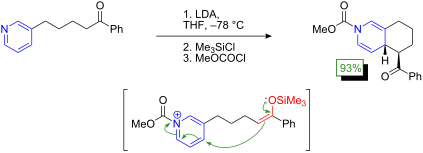
- and new reactivity from simple, readily made starting materials. We have used cyclisations of benzamide-stabilised carbanions, for example, to give bicyclic functionalised indolinones as intermediates in the synthesis of the neuroactive amino acids [22][23][24][25][26][27][28][29][30][31][32], while
- related cyclisations of pyridyl-, nicotinamide- and isonicotinamide-containing carbanions yield related bicyclic dihydropyridines [33][34]. While reactive carbanions derived from allyl or benzyllithiums will undergo dearomatising addition even into relatively electron rich rings [35][36][37][38], the

Graphical Abstract

Scheme 1: Dearomatising cyclisations (a) of enolates; (b) of electron-rich heteroaromatics.

Scheme 2: Synthesis of ketone 7.

Scheme 3: Dearomatising cyclisation to a 5-benzoylhexahydroisoquinoline.

Scheme 4: Synthesis of ester 12.

Scheme 5: Dearomatising cyclisation of ester 12.

Figure 1: Coupling constants (Hz) in the major diastereoisomer of 15.

Scheme 6: Synthesis of esters 18.

Scheme 7: Dearomatising cyclisation to form tetrahydrofurans.

Figure 2: Determination of the stereochemistry of 20b. Arrows indicate nuclear Overhauser enhancements.
The role of an aromatic group in remote chiral induction during conjugate addition of α-sulfonylallylic carbanions to ethyl crotonate
- Shlomo Levinger,
- Ranjeet Nair and
- Alfred Hassner
Beilstein J. Org. Chem. 2008, 4, No. 32, doi:10.3762/bjoc.4.32
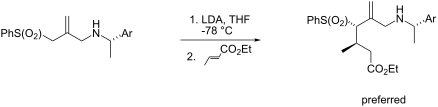
- Shlomo Levinger Ranjeet Nair Alfred Hassner Department of Chemistry, Bar-Ilan University, Ramat-Gan 52900, Israel 10.3762/bjoc.4.32 Abstract The impact of a remote aromatic nucleus on the stereochemical outcome of the conjugate addition of α-sulfonylallylic carbanions to an α,β-unsaturated ester
- -(phenylsulfonyl)allylic carbanions bearing a chiral auxiliary [1]. Transmission of asymmetry, though four atoms removed, was striking and was found to depend on the presence of an aromatic nucleus bound to the stereogenic center attached to N in 1. Thus, addition to crotonate 2 of the lithio derivative of amino
- -sulfonylallylic carbanions to open-chain α,β-unsaturated esters, which has been shown to proceed anti-diastereoselectively [2][13] and with the N(1)R*,3S*,4R* relative configuration predominating [1], we assign our major and minor products structures 3 and 4 respectively (showing in Scheme 1 only one enantiomer

Graphical Abstract

Scheme 1: Transmission of asymmetry in the conjugate addition of allyl sulfones to ethyl crotonate depending ...

Scheme 2: Preparation of donor precursors for conjugate addition (1), bearing a remote stereogenic center.

Scheme 3: Borch reductive amination of acetophenones.

Scheme 4: Preparation of [(9-anthryl)alkyl]- and (mesitylalkyl)amines 6h and 6j from nitriles via imines 8.

Figure 1: Calculated minimum energy conformation of lithiated amino-substituted sulfone 1a showing π-interact...
Efficient 1,4-addition of α-substituted fluoro(phenylsulfonyl)methane derivatives to α,β-unsaturated compounds
- G. K. Surya Prakash,
- Xiaoming Zhao,
- Sujith Chacko,
- Fang Wang,
- Habiba Vaghoo and
- George A. Olah
Beilstein J. Org. Chem. 2008, 4, No. 17, doi:10.3762/bjoc.4.17
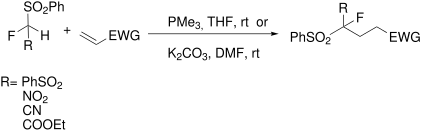
- monofluoromethylated compounds, which would undergo various transformations. New synthetic methods for the synthesis of α-substituted fluoro(phenylsulfonyl)methane derivatives under mild reaction conditions, using convenient starting materials, are still desirable. Fluorinated carbanions are in principle "hard

Graphical Abstract

Scheme 1: Reaction mechanism for phosphine catalyzed 1,4-addition to α,β-unsaturated compounds.



