


Search results
Search for "catalyst-free" in Full Text gives 93 result(s) in Beilstein Journal of Organic Chemistry.
Non-noble metal-catalyzed cross-dehydrogenation coupling (CDC) involving ether α-C(sp3)–H to construct C–C bonds
Beilstein J. Org. Chem. 2023, 19, 1259–1288, doi:10.3762/bjoc.19.94
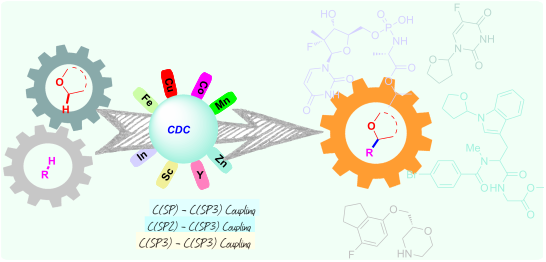
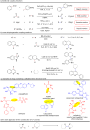
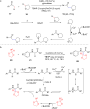
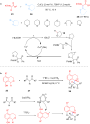
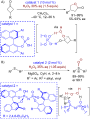
- methodologies involving ether α-C(sp3)–H and aromatic C(sp2)–H bonds were investigated and these are shown in Scheme 43. Shah et al. reported a catalyst-free CDC method using only 2 equivalents of K2S2O8 in H2O under irradiation with a 27 W CFL (Scheme 43a) [123]. In this reaction, both water and the light










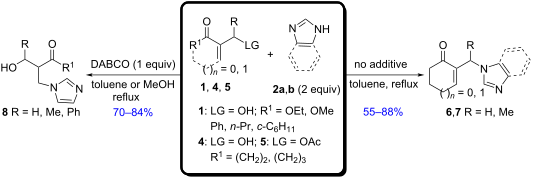
Metal catalyst-free N-allylation/alkylation of imidazole and benzimidazole with Morita–Baylis–Hillman (MBH) alcohols and acetates
Beilstein J. Org. Chem. 2023, 19, 1251–1258, doi:10.3762/bjoc.19.93


Selective and scalable oxygenation of heteroatoms using the elements of nature: air, water, and light
Beilstein J. Org. Chem. 2023, 19, 1146–1154, doi:10.3762/bjoc.19.82
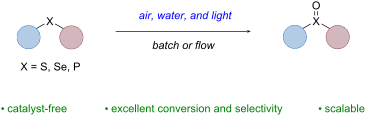
- byproducts, and increased efficiency in industrial processes. As such, this field of research is of great importance and interest to both academia and industry. This work showcases a sustainable and catalyst-free oxidation method for heteroatoms (e.g., S, P, and Se) using only air, water and light. An
- flow using the HANU flow reactor, indicating scalability and improving safety. Keywords: catalyst-free; flow chemistry; oxygen; photochemistry; sustainable oxidation; Introduction Oxidation reactions are widely used in the chemical industry, but are often problematic due to challenges with
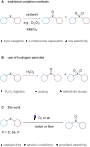
- [23][24] and methods for oxidation such as photochemistry, or electrochemistry have been developed [2][25]. However, low selectivity and the need for appropriate catalysts that are stable, cost-effective, and easy to remove remain problematic. Recently, catalyst-free procedures using O2 or air have





Copper-catalyzed N-arylation of amines with aryliodonium ylides in water
Beilstein J. Org. Chem. 2023, 19, 1008–1014, doi:10.3762/bjoc.19.76
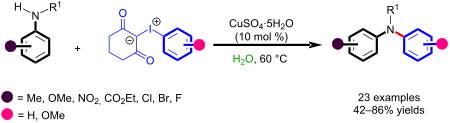
- types of hypervalent iodine reagents, diaryliodonium salts are commonly used reagents for the N-arylation of nitrogen-containing compounds, particularly for N-arylation of amines under catalyst-free conditions either in the presence of additives or at higher temperatures [26][27][28][29][30][31][32



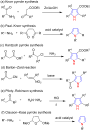
Clauson–Kaas pyrrole synthesis using diverse catalysts: a transition from conventional to greener approach
Beilstein J. Org. Chem. 2023, 19, 928–955, doi:10.3762/bjoc.19.71
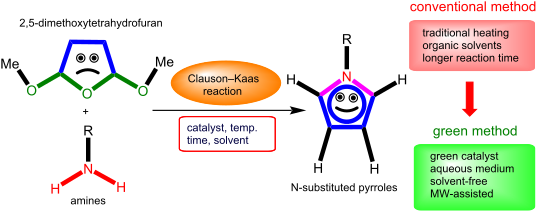
- -SO3H-catalyzed synthesis and proposed mechanism of pyrroles 37. Solvent-free and catalyst-free synthesis and plausible mechanism of N-substituted pyrroles 39. Nano-sulfated TiO2-catalyzed synthesis of N-substituted pyrroles 41. Copper nitrate-catalyzed Clauson–Kaas synthesis and mechanism of N




Access to cyclopropanes with geminal trifluoromethyl and difluoromethylphosphonate groups
Beilstein J. Org. Chem. 2023, 19, 541–549, doi:10.3762/bjoc.19.39
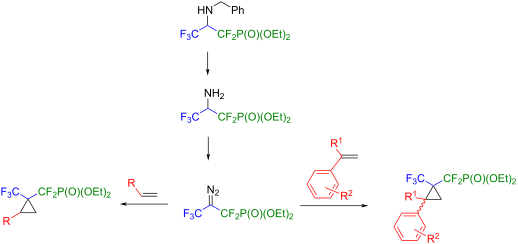
- % yield (Table 1, entry 6). In addition, in a catalyst-free reaction under UV irradiation, no reaction occurred and the starting diazo compound 5 was recovered (Table 1, entry 7). Having identified the optimal catalyst and conditions, we then examined the scope of the cyclopropanation reaction by reacting

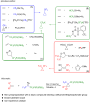


An efficient metal-free and catalyst-free C–S/C–O bond-formation strategy: synthesis of pyrazole-conjugated thioamides and amides
Beilstein J. Org. Chem. 2023, 19, 231–244, doi:10.3762/bjoc.19.22
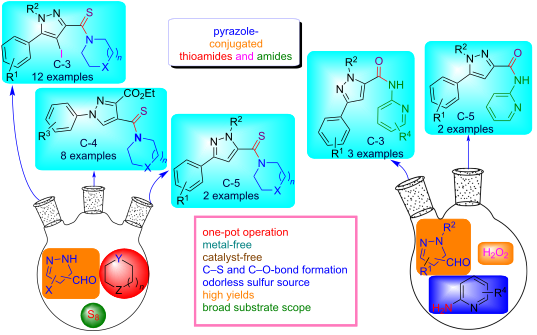
- established the optimal reaction conditions, we explored the generality and the scope of this metal- and catalyst-free approach by employing pyrazole C-3 carbaldehydes 1–4, secondary amines A–E and elemental sulfur as substrates. It was observed that the reaction conditions were compatible with different
- 10A in high yields (67–71%) within 1 hour of reaction time as depicted in Scheme 3. Thereafter, the substrates 4-iodopyrazole-3-carbaldehydes were further investigated for this metal- and catalyst-free sulfur insertion reaction as shown in Scheme 4. It was found that 4-iodopyrazole C-3 carbaldehydes
- elemental sulfur under metal and catalyst-free conditions. The salient features of the current protocol may be attributed to the broad substrate scope, commercially available secondary amines, operational simplicity, multicomponent character of the reaction, easy isolation of products, short reaction time


Redox-active molecules as organocatalysts for selective oxidative transformations – an unperceived organocatalysis field
Beilstein J. Org. Chem. 2022, 18, 1672–1695, doi:10.3762/bjoc.18.179
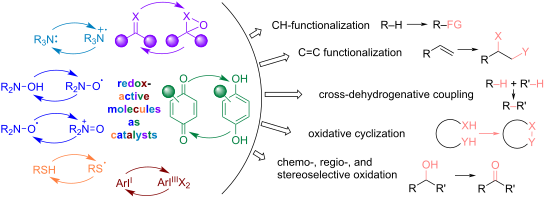
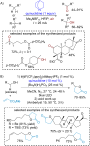
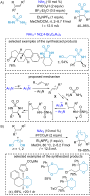
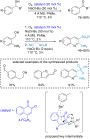
- that hydrogen bonding is considered as one of the key factors determining the selectivity of catalyst-free sulfoxidations [68]. In such reactions, the selectivity of sulfide oxidation by oxone (sulfoxide/sulfone ratio) was controlled by the solvent nature (deeper oxidation was observed in water than in











A facile approach to spiro[dihydrofuran-2,3'-oxindoles] via formal [4 + 1] annulation reaction of fused 1H-pyrrole-2,3-diones with diazooxindoles
Beilstein J. Org. Chem. 2022, 18, 1532–1538, doi:10.3762/bjoc.18.162
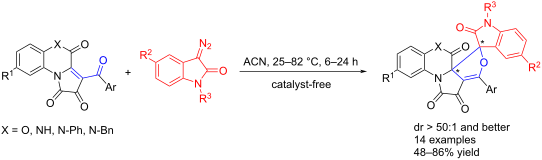
- heterocyclic systems are heteroanalogues of antimicrobial and antibiofilm fungal metabolites. The developed reaction represents the first example of involving 1H-pyrrole-2,3-diones fused at the [e]-side in a [4 + 1] annulation reaction. Keywords: [4 + 1] annulation; catalyst-free; diazooxindole; 1H-pyrrole
- compounds to molecules containing an enone fragment. Cycloaddition reactions involving diazo and enone moieties are usually carried out using transition-metal catalysis [18][19][20], with catalyst-free reactions being carried out only with the participation of reactive unsubstituted diazomethane [21][22][23
- ] (Scheme 1). Thus, in the present work, we report a simple, catalyst-free diastereoselective method for the synthesis of dihydrofurans spiro-annulated with an oxindole moiety for the first time. The essence of the method is the use of [e]-fused 1H-pyrrole-2,3-diones (FPDs) as the enone component in a


Automated grindstone chemistry: a simple and facile way for PEG-assisted stoichiometry-controlled halogenation of phenols and anilines using N-halosuccinimides
Beilstein J. Org. Chem. 2022, 18, 999–1008, doi:10.3762/bjoc.18.100
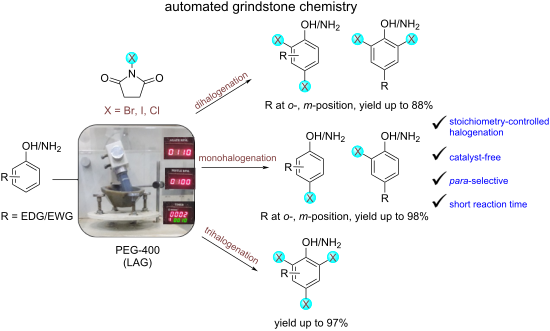
- catalyst-free halogenation of phenols and anilines via liquid-assisted grinding using PEG-400 as the grinding auxiliary. A series of mono-, di-, and tri-halogenated phenols and anilines was synthesized in good to excellent yields within 10–15 min in a chemoselective manner by controlling the stoichiometry
- catalyst-free methods, the use of costly and low boiling hexafluoroisopropanol (HFIP) as solvent offered the para-selective halogenation of activated aromatic systems (Scheme 1c) [44]. It is noteworthy to mention that over-halogenation of activated systems like phenols and anilines, due to the high
- , the optimal reaction conditions for the electrophilic monobromination was set as to grind the substrates (1 mmol) in an automated grinder with 1.1 mmol of NBS at 100 rpm in PEG-400 (0.2 mL per mmol of the substrate) as a grinding auxiliary. We next explored the substrate scope of the catalyst-free




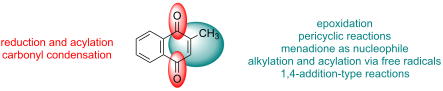
Menadione: a platform and a target to valuable compounds synthesis
Beilstein J. Org. Chem. 2022, 18, 381–419, doi:10.3762/bjoc.18.43


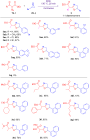
Efficient synthesis of ethyl 2-(oxazolin-2-yl)alkanoates via ethoxycarbonylketene-induced electrophilic ring expansion of aziridines
Beilstein J. Org. Chem. 2022, 18, 70–76, doi:10.3762/bjoc.18.6
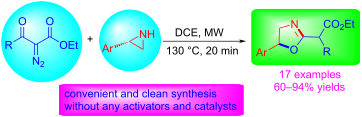
- -diazo-3-oxoalkanoates first generate alkoxycarbonylketenes, which undergo an electrophilic ring expansion with aziridines to afford alkyl 2-(oxazolin-2-yl)alkanoates in good to excellent yields under microwave heating. The current method is an activator- and catalyst-free, and clean synthetic strategy




Direct C(sp3)–H allylation of 2-alkylpyridines with Morita–Baylis–Hillman carbonates via a tandem nucleophilic substitution/aza-Cope rearrangement
Beilstein J. Org. Chem. 2021, 17, 2505–2510, doi:10.3762/bjoc.17.167
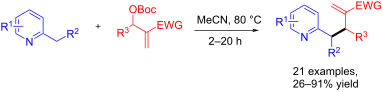
- Siyu Wang Lianyou Zheng Shutao Wang Shulin Ning Zhuoqi Zhang Jinbao Xiang The Center for Combinatorial Chemistry and Drug Discovery, School of Pharmaceutical Sciences, Jilin University, 1266 Fujin Road, Changchun, Jilin 130021, P. R. China 10.3762/bjoc.17.167 Abstract A base- and catalyst-free C
- in the reaction to give the allylation products in 26–91% yields. The developed method provides a straightforward and operational simple strategy for the allylic functionalization of 2-alkypyridine derivatives. Keywords: 2-alkylpyridines; allylic alkylation; aza-Cope rearrangement; catalyst-free
- our studies on a direct benzylic allylic reaction of 2-alkylpyridines with MBH carbonates as allylic precursors under base- and catalyst-free conditions. As depicted in Scheme 2, we envisioned that the MBH carbonate 2 can undergo the SN2’ reaction with the nucleophilic 2-picoline 1a, giving the


A novel methodology for the efficient synthesis of 3-monohalooxindoles by acidolysis of 3-phosphate-substituted oxindoles with haloid acids
Beilstein J. Org. Chem. 2021, 17, 2321–2328, doi:10.3762/bjoc.17.150
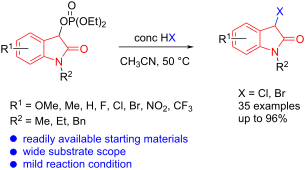
- disclosed the application of N-fluorobenzenesulfonimide (NFSI) and NBS (N-bromosuccinimide), respectively, as the halogen sources, with diazoacetamide under catalyst-free conditions via a carbene pathway, which constructed 3-fluorooxindoles and 3-bromooxindoles (Scheme 1, reaction 1) [20][21]. Then, the
- ) under solvent-free and catalyst-free conditions at room temperature (Table 1, entry 1). To our delight, the desired product 3a was obtained in 19% yield. To further improve the yield, we firstly probed the solvent effect using methanol, THF, toluene, ClCH2CH2Cl, 1,4-dioxane, chloroform, dichloromethane




An initiator- and catalyst-free hydrogel coating process for 3D printed medical-grade poly(ε-caprolactone)
Beilstein J. Org. Chem. 2021, 17, 2095–2101, doi:10.3762/bjoc.17.136
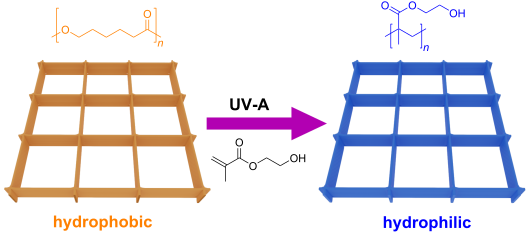
- fouling, critically depend mainly on the immediate surface energy. To gain control over the surface chemistry post-processing modifications are generally necessary, since it′s not a feature of additive manufacturing. Here, we report on the use of initiator and catalyst-free photografting and


A recent overview on the synthesis of 1,4,5-trisubstituted 1,2,3-triazoles
Beilstein J. Org. Chem. 2021, 17, 1600–1628, doi:10.3762/bjoc.17.114
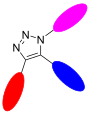
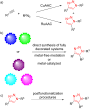
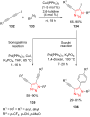
- catalyst-free conditions. A series of azidobenzenesulfonamides 101 was first synthesized from commercially available orthanilic acid by a three-step procedure and then submitted to cycloaddition with different alkynes 102 using CuI and Cu as copper source, tris([1-(tert-butyl)-1H-1,2,3-triazol-4-yl]methyl













Microwave-assisted multicomponent reactions in heterocyclic chemistry and mechanistic aspects
Beilstein J. Org. Chem. 2021, 17, 819–865, doi:10.3762/bjoc.17.71
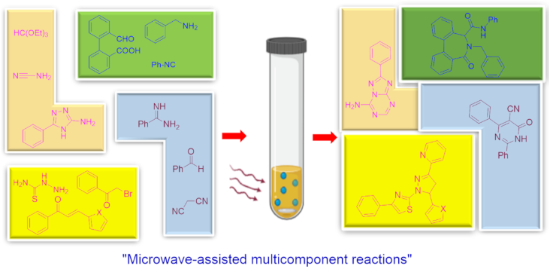
- moderate to good yields under catalyst-free conditions (Scheme 1). A rationale of mechanism proposed the transformation via a Knoevenagel condensation between aldehyde and a molecule of 6 affording A. The concurrent condensation of ammonium acetate with another molecule of 6 led to the formation of an
- co-workers [50] demonstrated an aqueous phase, diastereoselective, multicomponent reaction involving substituted isatins 35, β-nitrostyrene 36 and benzylamine (20) or α-amino acids 37 using microwave irradiation to afford a library of spirooxindoles 38 in good yields under catalyst-free conditions
- ). Similarly, the same group extended the work by illustrating [51] a three and four-component microwave-assisted base and catalyst-free reaction for the synthesis of substituted spirooxindoles 40. The three-component reaction involved the reaction between substituted isatin 35, but-2-ynedioates 39 and amino




Synthetic reactions driven by electron-donor–acceptor (EDA) complexes
Beilstein J. Org. Chem. 2021, 17, 771–799, doi:10.3762/bjoc.17.67

- widespread presence in pharmaceutical-, agrochemical-, and materials sciences [73][74][75]. At present, most of the C–N-bonding reactions require transition-metal catalysis, and the reaction conditions are more stringent; however, the EDA-complex pathway proceeds under mild, catalyst-free conditions


Synthesis of β-triazolylenones via metal-free desulfonylative alkylation of N-tosyl-1,2,3-triazoles
Beilstein J. Org. Chem. 2021, 17, 762–770, doi:10.3762/bjoc.17.66
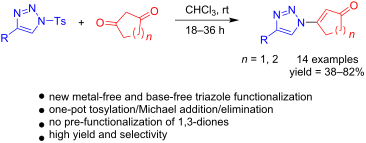
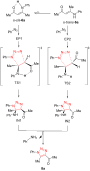
- the keto-form [53][54][55][56]. Presumably for this reason, the acyclic 1,3-dicarbonyls did not react in the desired way under our experimental conditions. Conclusion In conclusion, we have developed a metal-free and catalyst-free approach for the desulfonylative coupling of N-tosyl-1,2,3-triazoles


Effective microwave-assisted approach to 1,2,3-triazolobenzodiazepinones via tandem Ugi reaction/catalyst-free intramolecular azide–alkyne cycloaddition
Beilstein J. Org. Chem. 2021, 17, 678–687, doi:10.3762/bjoc.17.57
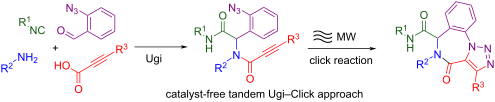
- Chemistry, University of Nebraska – Lincoln, 639 N 12th St, Lincoln, NE 68588, USA 10.3762/bjoc.17.57 Abstract A novel catalyst-free synthetic approach to 1,2,3-triazolobenzodiazepinones has been developed and optimized. The Ugi reaction of 2-azidobenzaldehyde, various amines, isocyanides, and acids
- harder while the microwave-assisted catalyst-free conditions were effective for both terminal and non-terminal alkynes. Keywords: click chemistry; microwave chemistry; multicomponent reactions; triazolobenzodiazepines; Ugi reaction; Introduction Benzannulated heterocycles are among the most important
- availability of previously described methods for the synthesis of 1,2,3-triazolobenzodiazepines represented in Scheme 1, they have such drawbacks as long reaction time, use of toxic solvents, additional catalysts, etc. In this article, we present a novel tandem Ugi/catalyst-free intramolecular azide–alkyne


Decarboxylative trifluoromethylthiolation of pyridylacetates
Beilstein J. Org. Chem. 2021, 17, 229–233, doi:10.3762/bjoc.17.23
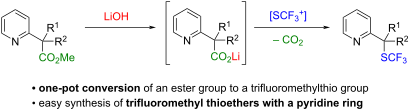
- lithium pyridylacetates undergo decarboxylative fluorination upon treatment with an electrophilic fluorination reagent to afford fluoromethylpyridines under catalyst-free conditions. Furthermore, we demonstrated the one-pot synthesis of fluoromethylpyridines from methyl pyridylacetates by saponification


An atom-economical addition of methyl azaarenes with aromatic aldehydes via benzylic C(sp3)–H bond functionalization under solvent- and catalyst-free conditions
Beilstein J. Org. Chem. 2020, 16, 3093–3103, doi:10.3762/bjoc.16.259
- malononitrile under catalyst-free conditions have been reported [29]. Wang et al. reported the functionalization of benzylic C–H bonds of 2-methylazaarenes by nucleophilic addition to aromatic aldehydes catalyzed by acetic acid using harmful chlorinated solvent, and this reaction suffers from longer reaction
- [41][42]. However, to develop advantageous eco-friendly, atom-economical, simple, and efficient synthetic-organic processes under solvent- and catalyst-free conditions in order to synthesize highly demanding pharmaceuticals or natural products can be quite backbreaking [43][44][45]. From this
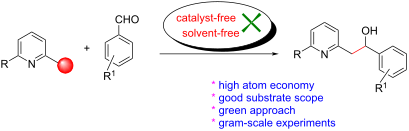
- perspective, we herein disclose environmentally benign, atom-economical, catalyst-free nucleophilic additions of benzylic-like azaarene C–H groups to various benzaldehydes under neat conditions (Scheme 3). Results and Discussion With the purpose to develop an environmentally benign process, we first examined


Thermodynamic and electrochemical study of tailor-made crown ethers for redox-switchable (pseudo)rotaxanes
Beilstein J. Org. Chem. 2020, 16, 2576–2588, doi:10.3762/bjoc.16.209

- the optoelectronic properties of the NDI unit. The binding properties suggest that the combination of the A1·BArF24 axle and NDIC8 is optimal for the synthesis of an NDI-containing [2]rotaxane. We applied Takata’s catalyst-free stoppering approach [58] using the nitrile oxide St for the preparation of




Et3N/DMSO-supported one-pot synthesis of highly fluorescent β-carboline-linked benzothiophenones via sulfur insertion and estimation of the photophysical properties
Beilstein J. Org. Chem. 2020, 16, 1740–1753, doi:10.3762/bjoc.16.146
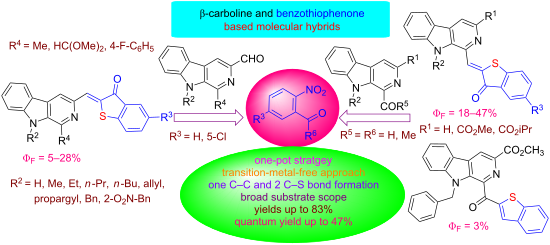
- -metal-free strategy is presented to access novel β-carboline-tethered benzothiophenone derivatives from 1(3)-formyl-β-carbolines using elemental sulfur activated by Et3N/DMSO. This expeditious catalyst-free reaction proceeds through the formation of β-carboline-based 2-nitrochalcones followed by an


Microwave-assisted efficient one-pot synthesis of N2-(tetrazol-5-yl)-6-aryl/heteroaryl-5,6-dihydro-1,3,5-triazine-2,4-diamines
Beilstein J. Org. Chem. 2020, 16, 1706–1712, doi:10.3762/bjoc.16.142
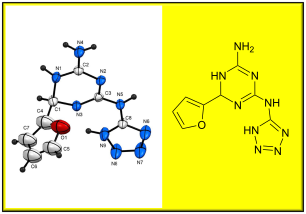
- experimental conditions and the results revealed that performing the reaction in dioxane, CH3CN, THF, or catalyst-free ethanol resulted in no product formation. However, the same products were obtained with lower yields (≈60%) when performing the reaction under conventional heating utilizing pyridine as the





