


Search results
Search for "electrocyclization" in Full Text gives 65 result(s) in Beilstein Journal of Organic Chemistry.
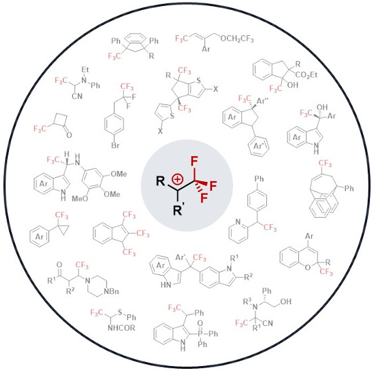
CF3-substituted carbocations: underexploited intermediates with great potential in modern synthetic chemistry
- Anthony J. Fernandes,
- Armen Panossian,
- Bastien Michelet,
- Agnès Martin-Mingot,
- Frédéric R. Leroux and
- Sébastien Thibaudeau
Beilstein J. Org. Chem. 2021, 17, 343–378, doi:10.3762/bjoc.17.32
- authors [55][56]. Related studies on diphenyl derivative 9c in a mixture of H2SO4 and chloroform also showed the formation of fluorene derivative 37 in 25% yield [58]. Exploiting this impact of the trifluoromethyl substituent in the cationic Nazarov electrocyclization, the synthesis of CF3-substituted
- delocalized α-(trifluoromethyl)carbenium ions 40a–c. Vasilyev et al. also investigated this Nazarov electrocyclization for the synthesis of indene derivatives. Thus, a variety of indenes 42 could be readily obtained from α-(trifluoromethyl)allyl-substituted benzyl alcohols 41a or the corresponding silyl

Graphical Abstract

Figure 1: Stabilizing interaction in the CF3CH2+ carbenium ion (top) and structure of the first observable fl...

Scheme 1: Isodesmic equations accounting for the destabilizing effect of the CF3 group. ΔE in kcal⋅mol−1, cal...

Scheme 2: Stabilizing effect of fluorine atoms by resonance electron donation in carbenium ions (δ in ppm).
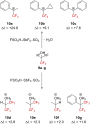
Scheme 3: Direct in situ NMR observation of α-(trifluoromethyl)carbenium ion or protonated alcohols. Δδ = δ19...

Scheme 4: Reported 13C NMR chemical shifts for the α-(trifluoromethyl)carbenium ion 10c (δ in ppm).
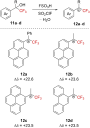
Scheme 5: Direct NMR observation of α-(trifluoromethyl)carbenium ions in situ (δ in ppm).

Scheme 6: Illustration of the ion pair solvolysis mechanism for sulfonate 13f. YOH = solvent.
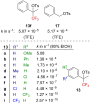
Figure 2: Solvolysis rate for 13a–i and 17.

Figure 3: Structures of allyl triflates 18 and 19 and allyl brosylate 20. Bs = p-BrC6H4SO2.

Figure 4: Structure of tosylate derivatives 21.
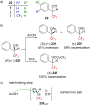
Figure 5: a) Structure of triflate derivatives 22. b) Stereochemistry outcomes of the reaction starting from (...

Scheme 7: Solvolysis reaction of naphthalene and anthracenyl derivatives 26 and 29.

Figure 6: Structure of bisarylated derivatives 34.

Figure 7: Structure of bisarylated derivatives 36.

Scheme 8: Reactivity of 9c in the presence of a Brønsted acid.

Scheme 9: Cationic electrocyclization of 38a–c under strongly acidic conditions.

Scheme 10: Brønsted acid-catalyzed synthesis of indenes 42 and indanes 43.

Scheme 11: Reactivity of sulfurane 44 in triflic acid.

Scheme 12: Solvolysis of triflate 45f in alcoholic solvents.

Scheme 13: Synthesis of labeled 18O-52.

Scheme 14: Reactivity of sulfurane 53 in triflic acid.

Figure 8: Structure of tosylates 56 and 21f.

Scheme 15: Resonance forms in benzylic carbenium ions.

Figure 9: Structure of pyrrole derivatives 58 and 59.

Scheme 16: Resonance structure 60↔60’.

Scheme 17: Ga(OTf)3-catalyzed synthesis of 3,3’- and 3,6’-bis(indolyl)methane from trifluoromethylated 3-indol...

Scheme 18: Proposed reaction mechanism.

Scheme 19: Metal-free 1,2-phosphorylation of 3-indolylmethanols.
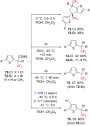
Scheme 20: Superacid-mediated arylation of thiophene derivatives.

Scheme 21: In situ mechanistic NMR investigations.

Scheme 22: Proposed mechanisms for the prenyltransferase-catalyzed condensation.

Scheme 23: Influence of a CF3 group on the allylic SN1- and SN2-mechanism-based reactions.

Scheme 24: Influence of the CF3 group on the condensation reaction.

Scheme 25: Solvolysis of 90 in TFE.

Scheme 26: Solvolysis of allyl triflates 94 and 97 and isomerization attempt of 96.

Scheme 27: Proposed mechanism for the formation of 95.

Scheme 28: Formation of α-(trifluoromethyl)allylcarbenium ion 100 in a superacid.
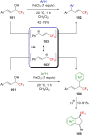
Scheme 29: Lewis acid activation of CF3-substituted allylic alcohols.
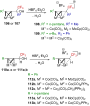
Scheme 30: Bimetallic-cluster-stabilized α-(trifluoromethyl)carbenium ions.

Scheme 31: Reactivity of cluster-stabilized α-(trifluoromethyl)carbenium ions.
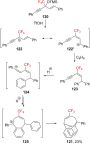
Scheme 32: α-(Trifluoromethyl)propargylium ion 122↔122’ generated from silyl ether 120 in a superacid.

Scheme 33: Formation of α-(trifluoromethyl)propargylium ions from CF3-substituted propargyl alcohols.

Scheme 34: Direct NMR observation of the protonation of some trifluoromethyl ketones in situ and the correspon...

Scheme 35: Selected resonance forms in protonated fluoroketone derivatives.

Scheme 36: Acid-catalyzed Friedel–Crafts reactions of trifluoromethyl ketones 143a,b and 147a–c.

Scheme 37: Enantioselective hydroarylation of CF3-substituted ketones.

Scheme 38: Acid-catalyzed arylation of ketones 152a–c.

Scheme 39: Reactivity of 156 in a superacid.
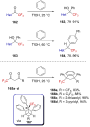
Scheme 40: Reactivity of α-CF3-substituted heteroaromatic ketones and alcohols as well as 1,3-diketones.

Scheme 41: Reactivity of 168 with benzene in the presence of a Lewis or Brønsted acid.

Scheme 42: Acid-catalyzed three-component asymmetric reaction.

Scheme 43: Anodic oxidation of amines 178a–c and proposed mechanism.

Scheme 44: Reactivity of 179b in the presence of a strong Lewis acid.

Scheme 45: Trifluoromethylated derivatives as precursors of trifluoromethylated iminium ions.

Scheme 46: Mannich reaction with trifluoromethylated hemiaminal 189.

Scheme 47: Suitable nucleophiles reacting with 192 after Lewis acid activation.

Scheme 48: Strecker reaction involving the trifluoromethylated iminium ion 187.
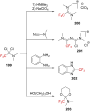
Scheme 49: Reactivity of 199 toward nucleophiles.

Scheme 50: Reactivity of 204a with benzene in the presence of a Lewis acid.

Scheme 51: Reactivity of α-(trifluoromethyl)-α-chloro sulfides in the presence of strong Lewis acids.

Scheme 52: Anodic oxidation of sulfides 213a–h and Pummerer rearrangement.

Scheme 53: Mechanism for the electrochemical oxidation of the sulfide 213a.

Scheme 54: Reactivity of (trifluoromethyl)diazomethane (217a) in HSO3F.

Figure 10: a) Structure of diazoalkanes 217a–c and b) rate-limiting steps of their decomposition.

Scheme 55: Deamination reaction of racemic 221 and enantioenriched (S)-221.

Scheme 56: Deamination reaction of labeled 221-d2. Elimination products were formed in this reaction, the yiel...

Scheme 57: Deamination reaction of 225-d2. Elimination products were also formed in this reaction in undetermi...

Scheme 58: Formation of 229 from 228 via 1,2-H-shift.

Scheme 59: Deamination reaction of 230. Elimination products were formed in this reaction, the yield of which ...

Scheme 60: Deamination of several diazonium ions. Elimination products were formed in these reactions, the yie...

Scheme 61: Solvolysis reaction mechanism of alkyl tosylates.

Scheme 62: Solvolysis outcome for the tosylates 248 and 249 in HSO3FSbF5.

Figure 11: Solvolysis rate of 248, 249, 252, and 253 in 91% H2SO4.

Scheme 63: Illustration of the reaction pathways. TsCl, pyridine, −5 °C (A); 98% H2SO4, 30 °C (B); 98% H2SO4, ...

Scheme 64: Proposed solvolysis mechanism for the aliphatic tosylate 248.

Scheme 65: Solvolysis of the derivatives 259 and 260.

Scheme 66: Solvolysis of triflate 261. SOH = solvent.

Scheme 67: Intramolecular Friedel–Crafts alkylations upon the solvolysis of triflates 264 and 267.

Scheme 68: α-CF3-enhanced γ-silyl elimination of cyclobutyltosylates 270a,b.

Scheme 69: γ-Silyl elimination in the synthesis of a large variety of CF3-substituted cyclopropanes. Pf = pent...

Scheme 70: Synthetic pathways to 281. aNMR yields.

Scheme 71: The cyclopropyl-substituted homoallylcyclobutylcarbenium ion manifold.

Scheme 72: Reactivity of CF3-substituted cyclopropylcarbinyl derivatives 287a–c. LG = leaving group.

Scheme 73: Reactivity of CF3-substituted cyclopropylcarbinyl derivatives 291a–c.

Scheme 74: Superacid-promoted dimerization or TFP.

Scheme 75: Reactivity of TFP in a superacid.

Scheme 76: gem-Difluorination of α-fluoroalkyl styrenes via the formation of a “hidden” α-RF-substituted carbe...

Scheme 77: Solvolysis of CF3-substituted pentyne 307.

Scheme 78: Photochemical rearrangement of 313.

Figure 12: Structure of 2-norbornylcarbenium ion 318 and argued model for the stabilization of this cation.

Figure 13: Structures and solvolysis rate (TFE, 25 °C) of the sulfonates 319–321. Mos = p-MeOC6H4SO2.

Scheme 79: Mechanism for the solvolysis of 323. SOH = solvent.

Scheme 80: Products formed by the hydrolysis of 328.

Scheme 81: Proposed carbenium ion intermediates in an equilibrium during the solvolysis of tosylates 328, 333,...
A sustainable strategy for the straightforward preparation of 2H-azirines and highly functionalized NH-aziridines from vinyl azides using a single solvent flow-batch approach
- Michael Andresini,
- Leonardo Degannaro and
- Renzo Luisi
Beilstein J. Org. Chem. 2021, 17, 203–209, doi:10.3762/bjoc.17.20

- resulted in safer procedures for the preparation of 2H-azirines, offering valuable alternatives for production purposes. In 2013, Kirschning harnessed the photoinduced electrocyclization of vinyl azides in a microfluidic photoreactor yielding 2H-azirines as precursors of 1,3-dipolarophiles (Scheme 1a) [27

Graphical Abstract

Scheme 1: Flow generation and transformation of 2H-azirines.

Scheme 2: Flow synthesis of 2H-azirines from vinyl azides. aThe solution of vinyl azide was re-introduced twi...

Scheme 3: Mixed flow-batch approach for the preparation of functionalized NH-aziridines from vinyl azides.
Pentannulation of N-heterocycles by a tandem gold-catalyzed [3,3]-rearrangement/Nazarov reaction of propargyl ester derivatives: a computational study on the crucial role of the nitrogen atom
- Giovanna Zanella,
- Martina Petrović,
- Dina Scarpi,
- Ernesto G. Occhiato and
- Enrique Gómez-Bengoa
Beilstein J. Org. Chem. 2020, 16, 3059–3068, doi:10.3762/bjoc.16.255
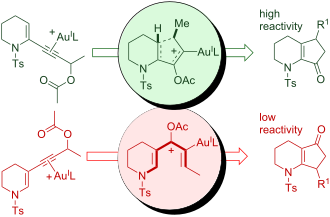
- at C3) could stabilize the pentadienyl cationic intermediate 6, and thus relenting the 4π-electrocyclization, causing either the degradation of the starting material or the formation of unwanted side products. In fact, preliminary experimental results with 5 pointed in this direction, and we decided

Graphical Abstract

Figure 1: Tandem acetate rearrangement/Nazarov cyclization of different substrates.

Figure 2: DFT-computed energy profile of the tandem Au(I)-catalyzed [3,3]-rearrangement/Nazarov reaction of 3...

Figure 3: DFT-computed energy profile of the tandem Au(I)-catalyzed [3,3]-rearrangement/Nazarov reaction of 2...

Figure 4: Computed comparison of the NBO charges of 2- and 3-substituted substrates.

Figure 5: Single-step transformation of IV to IX.

Figure 6: Triflate-promoted hydrogen abstraction and protodeauration with HOTf.

Figure 7: Triflate-mediated abstraction of the hydrogen atom Ha and protodeauration.

Scheme 1: Synthesis of the enynyl acetate starting material 14.

Scheme 2: Synthesis and cyclization of enynyl acetate 20.
A simple and easy to perform synthetic route to functionalized thienyl bicyclo[3.2.1]octadienes
- Dragana Vuk,
- Irena Škorić,
- Valentina Milašinović,
- Krešimir Molčanov and
- Željko Marinić
Beilstein J. Org. Chem. 2020, 16, 1092–1099, doi:10.3762/bjoc.16.96
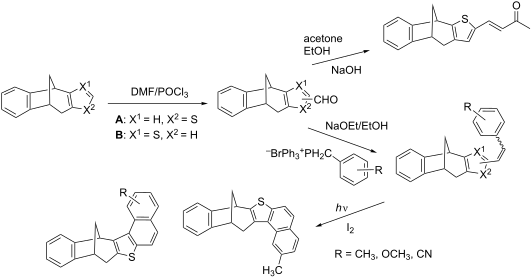
- [3.2.1]octadiene derivatives by irradiating the toluene solution of compound's 3–7 mixture of cis- and trans-isomers in the presence of iodine (Scheme 2 and Scheme 3). The electrocyclization reactions were successfully implemented in most cases and photoproducts 8–11 were obtained in moderate yields. The

Graphical Abstract

Figure 1: Known biologically active bicyclo[3.2.1]octenes/octadienes.

Figure 2: Previously prepared bicyclo[3.2.1]octenes/octadienes with cholinesterase inhibitory properties.

Scheme 1: Synthesis of annulated furobenzobicyclo[3.2.1]octadiene compounds.

Scheme 2: Synthesis of annulated thiophenebicyclo[3.2.1]octadiene compounds 8-10.

Scheme 3: Synthesis of compound 11.

Figure 3: 1H NMR spectra (CDCl3) for the trans-isomers 3–6.

Figure 4: UV spectra in ethanol (95%) of the cis- and trans-isomers of compound 3.

Figure 5: Photolysis spectra of cis-3 (a) and trans-3 (b) in ethanol (95%).

Figure 6: UV spectra in ethanol (95%) of the trans-isomers of compounds 3–7.

Figure 7: Molecular structure of compound trans-6. Displacement ellipsoids are drawn for the probability of 3...

Figure 8: Crystal packing of trans-6. (a) Chain parallel to [100] and (b) chain parallel to [010].

Figure 9: 1H NMR spectra (CDCl3) of compounds 1, 8, and 9.

Scheme 4: Synthesis of compound 12.

Figure 10: UV spectra of compounds 1 and 12 in ethanol (95%).

Figure 11: Photolysis spectra of compound 12 in ethanol (95%).

Scheme 5: Possible outcomes of future photocatalytic oxygenation reactions of new benzobicyclo[3.2.1.]octadie...
Reversible photoswitching of the DNA-binding properties of styrylquinolizinium derivatives through photochromic [2 + 2] cycloaddition and cycloreversion
- Sarah Kölsch,
- Heiko Ihmels,
- Jochen Mattay,
- Norbert Sewald and
- Brian O. Patrick
Beilstein J. Org. Chem. 2020, 16, 111–124, doi:10.3762/bjoc.16.13
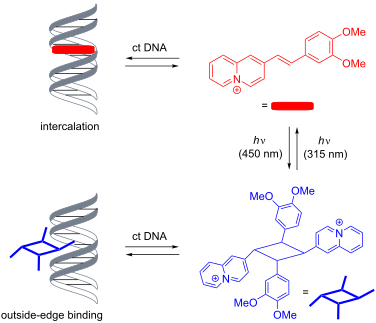
- electrocyclization or E-to-Z isomerization reactions, whereas the well-established photochromic cycloaddition–cycloreversion equilibrium to establish photoswitchable DNA binders has so far been widely neglected. In fact, there is only one reported example for the use of the reversible photoinduced dimerization of

Graphical Abstract

Scheme 1: Synthesis of styrylquinolizinium derivatives 3a–d.

Figure 1: Absorption spectra and normalized emission spectrum (Abs. = 0.10, 3b: λex = 394 nm) of derivatives ...

Figure 2: Spectrophotometric titration upon the addition of ct DNA to the styrylquinolizinium derivatives 3a ...

Figure 3: Spectrofluorimetric titration upon the addition of ct DNA to the styrylquinolizinium derivatives 3a...
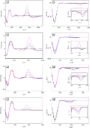
Figure 4: CD and LD spectra of the styryl derivatives 3a (A), 3b (B), 3c (C), and 3d (D) with ct DNA in BPE b...

Figure 5: Spectrophotometric monitoring of the irradiation of styrylquinolizinium derivatives 3a (A), 3b (B), ...

Figure 6: Absorption of the monomers (c = 20 µM, red) 3b (A) and 3c (B) and their dimers (black) 4b and 4c in...

Figure 7: Photometric monitoring of the photoreaction of 3b (c = 20 µM) to the dimer 4b by irradiation at ca....

Figure 8: ORTEP drawings of cyclobutane derivatives 4b (A) and 4c (B) in the solid state (thermal ellipsoids ...

Scheme 2: Possible pathways for the selective photodimerization of styrylquinolizinium derivatives 3b and 3c.

Figure 9: A) Spectrophotometric titration of ct DNA to dimer 4b in BPE buffer (cL = 20 µM, cct DNA = 1.45 mM, ...

Figure 10: A) Photometric and B) CD spectroscopic monitoring of the photoinduced switching (4b: λex = 315 nm, ...

Scheme 3: Photoinduced switching of the DNA binding properties of styrylquinolizinium compound 3b.
Unexpected one-pot formation of the 1H-6a,8a-epiminotricyclopenta[a,c,e][8]annulene system from cyclopentanone, ammonia and dimethyl fumarate. Synthesis of highly strained polycyclic nitroxide and EPR study
- Sergey A. Dobrynin,
- Igor A. Kirilyuk,
- Yuri V. Gatilov,
- Andrey A. Kuzhelev,
- Olesya A. Krumkacheva,
- Matvey V. Fedin,
- Michael K. Bowman and
- Elena G. Bagryanskaya
Beilstein J. Org. Chem. 2019, 15, 2664–2670, doi:10.3762/bjoc.15.259

- heterocycle formation [11]. Presumably, a prototropic shift in the enamine-imine intermediate 4 is followed by electrocyclization to the cyclic azomethine ylide, which then reacts with dimethyl fumarate in a 1,3-dipolar cycloaddition. The suggested mechanism accounts for the trans-position of the methyne
- hydrogens in the azepine ring: electrocyclization proceeds via a conrotatory mechanism due to the antisymmetry of the HOMO (Figure 2). The selective formation of a single diastereomer in the 1,3-dipolar cycloaddition reaction is likely a result from secondary interactions of orbitals of the π-systems of the
- : the electrocyclization proceeds via a conrotatory mechanism due to the antisymmetry of the HOMO. Selective formation of a single diastereomer in the 1,3-dipolar cycloaddition reaction. X-ray structure of compound 6 (one of the two enantiomers present in the crystal). A, B) Temperature dependence of

Graphical Abstract

Scheme 1: Synthesis of compound 1.

Figure 1: X-ray structure of compound 1 (one of the two enantiomers present in the crystal).

Scheme 2: Possible mechanism for the formation of 1.

Figure 2: A possible mechanism for the trans-position of the methyne hydrogens in the azepine ring: the elect...

Figure 3: Selective formation of a single diastereomer in the 1,3-dipolar cycloaddition reaction.

Scheme 3: Synthesis of nitroxide 6.

Figure 4: X-ray structure of compound 6 (one of the two enantiomers present in the crystal).

Scheme 4: A proposed mechanism for nitroxide 6 synthesis.

Figure 5: A, B) Temperature dependence of the electron spin relaxation times in water/glycerol at X-band freq...
Click chemistry towards thermally reversible photochromic 4,5-bisthiazolyl-1,2,3-triazoles
- Chenxia Zhang,
- Kaori Morinaka,
- Mahmut Kose,
- Takashi Ubukata and
- Yasushi Yokoyama
Beilstein J. Org. Chem. 2019, 15, 2161–2169, doi:10.3762/bjoc.15.213
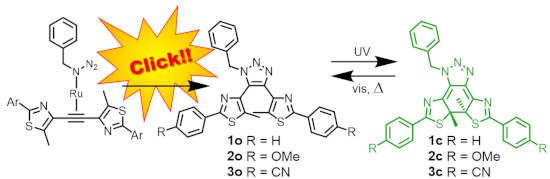
- ] or the introduction of two aromatic rings to the central aromatic ring [11]. If the construction of three contiguous aromatic-ring arrays can be easily achieved, a new and facile synthesis method for the photochromic family which undergoes 6π-electrocyclization can be realized [13]. Early in the 21st

Graphical Abstract

Scheme 1: Reaction mechanisms of Huisgen cyclization catalyzed by Cu(I) and Ru(I).

Scheme 2: Synthesis and photochromism of bisthiazolyltriazoles.

Figure 1: Absorption spectral change of triazoles 1o–3o upon irradiation of 313 nm light in MeCN at 28 °C. Li...

Scheme 3: Wavelengths of absorption maxima of the closed forms of bisthienyletenes in hexane [36].

Scheme 4: Photochromism of closely related compounds.

Figure 2: Absorption spectral change of triazoles 1c–3c during the thermal back reaction after 313-nm light i...
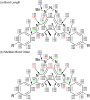
Scheme 5: Bond length (a) (in Å) and Mulliken bond order (b) of 1c–3c obtained by DFT calculations. Top numbe...

Scheme 6: Possible reaction mechanism of thermal ring opening of the closed forms.
Recent advances on the transition-metal-catalyzed synthesis of imidazopyridines: an updated coverage
- Gagandeep Kour Reen,
- Ashok Kumar and
- Pratibha Sharma
Beilstein J. Org. Chem. 2019, 15, 1612–1704, doi:10.3762/bjoc.15.165
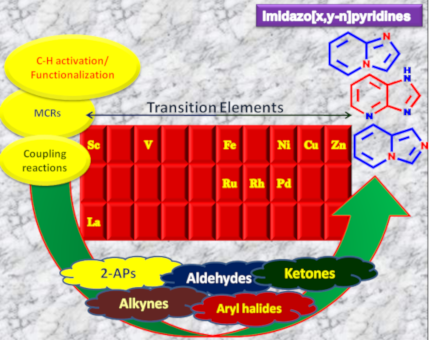

Graphical Abstract

Figure 1: Various drugs having IP nucleus.

Figure 2: Participation percentage of various TMs for the syntheses of IPs.

Scheme 1: CuI–NaHSO4·SiO2-catalyzed synthesis of imidazo[1,2-a]pyridines.

Scheme 2: Experimental examination of reaction conditions.

Scheme 3: One-pot tandem reaction for the synthesis of 2-haloimidazopyridines.

Scheme 4: Mechanistic scheme for the synthesis of 2-haloimidazopyridine.

Scheme 5: Copper-MOF-catalyzed three-component reaction (3-CR) for imidazo[1,2-a]pyridines.

Scheme 6: Mechanism for copper-MOF-driven synthesis.

Scheme 7: Heterogeneous synthesis via titania-supported CuCl2.

Scheme 8: Mechanism involving oxidative C–H functionalization.

Scheme 9: Heterogeneous synthesis of IPs.

Scheme 10: One-pot regiospecific synthesis of imidazo[1,2-a]pyridines.

Scheme 11: Vinyl azide as an unprecedented substrate for imidazo[1,2-a]pyridines.

Scheme 12: Radical pathway.

Scheme 13: Cu(I)-catalyzed transannulation approach for imidazo[1,5-a]pyridines.

Scheme 14: Plausible radical pathway for the synthesis of imidazo[1,5-a]pyridines.

Scheme 15: A solvent-free domino reaction for imidazo[1,2-a]pyridines.

Scheme 16: Cu-NPs-mediated synthesis of imidazo[1,2-a]pyridines.

Scheme 17: CuI-catalyzed synthesis of isoxazolylimidazo[1,2-a]pyridines.

Scheme 18: Functionalization of 4-bromo derivative via Sonogashira coupling reaction.

Scheme 19: A plausible reaction pathway.

Scheme 20: Cu(I)-catalyzed intramolecular oxidative C–H amidation reaction.

Scheme 21: One-pot synthetic reaction for imidazo[1,2-a]pyridine.

Scheme 22: Plausible reaction mechanism.

Scheme 23: Cu(OAc)2-promoted synthesis of imidazo[1,2-a]pyridines.

Scheme 24: Mechanism for aminomethylation/cycloisomerization of propiolates with imines.

Scheme 25: Three-component synthesis of imidazo[1,2-a]pyridines.

Figure 3: Scope of pyridin-2(1H)-ones and acetophenones.

Scheme 26: CuO NPS-promoted A3 coupling reaction.

Scheme 27: Cu(II)-catalyzed C–N bond formation reaction.

Scheme 28: Mechanism involving Chan–Lam/Ullmann coupling.

Scheme 29: Synthesis of formyl-substituted imidazo[1,2-a]pyridines.

Scheme 30: A tandem sp3 C–H amination reaction.

Scheme 31: Probable mechanistic approach.

Scheme 32: Dual catalytic system for imidazo[1,2-a]pyridines.

Scheme 33: Tentative mechanism.

Scheme 34: CuO/CuAl2O4/ᴅ-glucose-promoted 3-CCR.

Scheme 35: A tandem CuOx/OMS-2-based synthetic strategy.

Figure 4: Biomimetic catalytic oxidation in the presence of electron-transfer mediators (ETMs).

Scheme 36: Control experiment.

Scheme 37: Copper-catalyzed C(sp3)–H aminatin reaction.

Scheme 38: Reaction of secondary amines.

Scheme 39: Probable mechanistic pathway.

Scheme 40: Coupling reaction of α-azidoketones.

Scheme 41: Probable pathway.

Scheme 42: Probable mechanism with free energy calculations.

Scheme 43: MCR for cyanated IP synthesis.

Scheme 44: Substrate scope for the reaction.

Scheme 45: Reaction mechanism.

Scheme 46: Probable mechanistic pathway for Cu/ZnAl2O4-catalyzed reaction.

Scheme 47: Copper-catalyzed double oxidative C–H amination reaction.

Scheme 48: Application towards different coupling reactions.

Scheme 49: Reaction mechanism.

Scheme 50: Condensation–cyclization approach for the synthesis of 1,3-diarylated imidazo[1,5-a]pyridines.

Scheme 51: Optimized reaction conditions.

Scheme 52: One-pot 2-CR.

Scheme 53: One-pot 3-CR without the isolation of chalcone.

Scheme 54: Copper–Pybox-catalyzed cyclization reaction.

Scheme 55: Mechanistic pathway catalyzed by Cu–Pybox complex.

Scheme 56: Cu(II)-promoted C(sp3)-H amination reaction.

Scheme 57: Wider substrate applicability for the reaction.

Scheme 58: Plausible reaction mechanism.

Scheme 59: CuI assisted C–N cross-coupling reaction.

Scheme 60: Probable reaction mechanism involving sp3 C–H amination.

Scheme 61: One-pot MCR-catalyzed by CoFe2O4/CNT-Cu.

Scheme 62: Mechanistic pathway.

Scheme 63: Synthetic scheme for 3-nitroimidazo[1,2-a]pyridines.

Scheme 64: Plausible mechanism for CuBr-catalyzed reaction.

Scheme 65: Regioselective synthesis of halo-substituted imidazo[1,2-a]pyridines.

Scheme 66: Synthesis of 2-phenylimidazo[1,2-a]pyridines.

Scheme 67: Synthesis of diarylated compounds.

Scheme 68: CuBr2-mediated one-pot two-component oxidative coupling reaction.

Scheme 69: Decarboxylative cyclization route to synthesize 1,3-diarylimidazo[1,5-a]pyridines.

Scheme 70: Mechanistic pathway.

Scheme 71: C–H functionalization reaction of enamines to produce diversified heterocycles.

Scheme 72: A plausible mechanism.

Scheme 73: CuI-promoted aerobic oxidative cyclization reaction of ketoxime acetates and pyridines.

Scheme 74: CuI-catalyzed pathway for the formation of imidazo[1,2-a]pyridine.

Scheme 75: Mechanistic pathway.

Scheme 76: Mechanistic rationale for the synthesis of products.

Scheme 77: Copper-catalyzed synthesis of vinyloxy-IP.

Scheme 78: Regioselective product formation with propiolates.

Scheme 79: Proposed mechanism for vinyloxy-IP formation.

Scheme 80: Regioselective synthesis of 3-hetero-substituted imidazo[1,2-a]pyridines with different reaction su...

Scheme 81: Mechanistic pathway.

Scheme 82: CuI-mediated synthesis of 3-formylimidazo[1,2-a]pyridines.

Scheme 83: Radical pathway for 3-formylated IP synthesis.

Scheme 84: Pd-catalyzed urea-cyclization reaction for IPs.

Scheme 85: Pd-catalyzed one-pot-tandem amination and intramolecular amidation reaction.

Figure 5: Scope of aniline nucleophiles.

Scheme 86: Pd–Cu-catalyzed Sonogashira coupling reaction.

Scheme 87: One-pot amide coupling reaction for the synthesis of imidazo[4,5-b]pyridines.

Scheme 88: Urea cyclization reaction for the synthesis of two series of pyridines.

Scheme 89: Amidation reaction for the synthesis of imidazo[4,5-b]pyridines.

Figure 6: Amide scope.

Scheme 90: Pd NPs-catalyzed 3-component reaction for the synthesis of 2,3-diarylated IPs.

Scheme 91: Plausible mechanistic pathway for Pd NPs-catalyzed MCR.

Scheme 92: Synthesis of chromenoannulated imidazo[1,2-a]pyridines.

Scheme 93: Mechanism for the synthesis of chromeno-annulated IPs.

Scheme 94: Zinc oxide NRs-catalyzed synthesis of imidazo[1,2-a]azines/diazines.

Scheme 95: Zinc oxide-catalyzed isocyanide based GBB reaction.

Scheme 96: Reaction pathway for ZnO-catalyzed GBB reaction.

Scheme 97: Mechanistic pathway.

Scheme 98: ZnO NRs-catalyzed MCR for the synthesis of imidazo[1,2-a]azines.

Scheme 99: Ugi type GBB three-component reaction.

Scheme 100: Magnetic NPs-catalyzed synthesis of imidazo[1,2-a]pyridines.

Scheme 101: Regioselective synthesis of 2-alkoxyimidazo[1,2-a]pyridines catalyzed by Fe-SBA-15.

Scheme 102: Plausible mechanistic pathway for the synthesis of 2-alkoxyimidazopyridine.

Scheme 103: Iron-catalyzed synthetic approach.

Scheme 104: Iron-catalyzed aminooxygenation reaction.

Scheme 105: Mechanistic pathway.

Scheme 106: Rh(III)-catalyzed double C–H activation of 2-substituted imidazoles and alkynes.

Scheme 107: Plausible reaction mechanism.

Scheme 108: Rh(III)-catalyzed non-aromatic C(sp2)–H bond activation–functionalization for the synthesis of imid...

Scheme 109: Reactivity and selectivity of different substrates.

Scheme 110: Rh-catalyzed direct C–H alkynylation by Li et al.

Scheme 111: Suggested radical mechanism.

Scheme 112: Scandium(III)triflate-catalyzed one-pot reaction and its mechanism for the synthesis of benzimidazo...

Scheme 113: RuCl3-assisted Ugi-type Groebke–Blackburn condensation reaction.

Scheme 114: C-3 aroylation via Ru-catalyzed two-component reaction.

Scheme 115: Regioselective synthetic mechanism.

Scheme 116: La(III)-catalyzed one-pot GBB reaction.

Scheme 117: Mechanistic approach for the synthesis of imidazo[1,2-a]pyridines.

Scheme 118: Synthesis of imidazo[1,2-a]pyridine using LaMnO3 NPs under neat conditions.

Scheme 119: Mechanistic approach.

Scheme 120: One-pot 3-CR for regioselective synthesis of 2-alkoxy-3-arylimidazo[1,2-a]pyridines.

Scheme 121: Formation of two possible products under optimization of the catalysts.

Scheme 122: Mechanistic strategy for NiFe2O4-catalyzed reaction.

Scheme 123: Two-component reaction for synthesizing imidazodipyridiniums.

Scheme 124: Mechanistic scheme for the synthesis of imidazodipyridiniums.

Scheme 125: CuI-catalyzed arylation of imidazo[1,2-a]pyridines.

Scheme 126: Mechanism for arylation reaction.

Scheme 127: Cupric acetate-catalyzed double carbonylation approach.

Scheme 128: Radical mechanism for double carbonylation of IP.

Scheme 129: C–S bond formation reaction catalyzed by cupric acetate.

Scheme 130: Cupric acetate-catalyzed C-3 formylation approach.

Scheme 131: Control experiments for signifying the role of DMSO and oxygen.

Scheme 132: Mechanism pathway.

Scheme 133: Copper bromide-catalyzed CDC reaction.

Scheme 134: Extension of the substrate scope.

Scheme 135: Plausible radical pathway.

Scheme 136: Transannulation reaction for the synthesis of imidazo[1,5-a]pyridines.

Scheme 137: Plausible reaction pathway for denitrogenative transannulation.

Scheme 138: Cupric acetate-catalyzed C-3 carbonylation reaction.

Scheme 139: Plausible mechanism for regioselective C-3 carbonylation.

Scheme 140: Alkynylation reaction at C-2 of 3H-imidazo[4,5-b]pyridines.

Scheme 141: Two-way mechanism for C-2 alkynylation of 3H-imidazo[4,5-b]pyridines.

Scheme 142: Palladium-catalyzed SCCR approach.

Scheme 143: Palladium-catalyzed Suzuki coupling reaction.

Scheme 144: Reaction mechanism.

Scheme 145: A phosphine free palladium-catalyzed synthesis of C-3 arylated imidazopyridines.

Scheme 146: Palladium-mediated Buchwald–Hartwig cross-coupling reaction.

Figure 7: Structure of the ligands optimized.

Scheme 147: Palladium acetate-catalyzed direct arylation of imidazo[1,2-a]pyridines.

Scheme 148: Palladium acetate-catalyzed mechanistic pathway.

Scheme 149: Palladium acetate-catalyzed regioselective arylation reported by Liu and Zhan.

Scheme 150: Mechanism for selective C-3 arylation of IP.

Scheme 151: Pd(II)-catalyzed alkenylation reaction with styrenes.

Scheme 152: Pd(II)-catalyzed alkenylation reaction with acrylates.

Scheme 153: A two way mechanism.

Scheme 154: Double C–H activation reaction catalyzed by Pd(OAc)2.

Scheme 155: Probable mechanism.

Scheme 156: Palladium-catalyzed decarboxylative coupling.

Scheme 157: Mechanistic cycle for decarboxylative arylation reaction.

Scheme 158: Ligand-free approach for arylation of imidazo[1,2-a]pyridine-3-carboxylic acids.

Scheme 159: Mechanism for ligandless arylation reaction.

Scheme 160: NHC-Pd(II) complex assisted arylation reaction.

Scheme 161: C-3 arylation of imidazo[1,2-a]pyridines with aryl bromides catalyzed by Pd(OAc)2.

Scheme 162: Pd(II)-catalyzed C-3 arylations with aryl tosylates and mesylates.

Scheme 163: CDC reaction for the synthesis of imidazo[1,2-a]pyridines.

Scheme 164: Plausible reaction mechanism for Pd(OAc)2-catalyzed synthesis of imidazo[1,2-a]pyridines.

Scheme 165: Pd-catalyzed C–H amination reaction.

Scheme 166: Mechanism for C–H amination reaction.

Scheme 167: One-pot synthesis for 3,6-di- or 2,3,6-tri(hetero)arylimidazo[1,2-a]pyridines.

Scheme 168: C–H/C–H cross-coupling reaction of IPs and azoles catalyzed by Pd(II).

Scheme 169: Mechanistic cycle.

Scheme 170: Rh-catalyzed C–H arylation reaction.

Scheme 171: Mechanistic pathway for C–H arylation of imidazo[1,2-a]pyridine.

Scheme 172: Rh(III)-catalyzed double C–H activation of 2-phenylimidazo[1,2-a]pyridines and alkynes.

Scheme 173: Rh(III)-catalyzed mechanistic pathway.

Scheme 174: Rh(III)-mediated oxidative coupling reaction.

Scheme 175: Reactions showing functionalization of the product obtained by the group of Kotla.

Scheme 176: Mechanism for Rh(III)-catalyzed oxidative coupling reaction.

Scheme 177: Rh(III)-catalyzed C–H activation reaction.

Scheme 178: Mechanistic cycle.

Scheme 179: Annulation reactions of 2-arylimidazo[1,2-a]pyridines and alkynes.

Scheme 180: Two-way reaction mechanism for annulations reaction.

Scheme 181: [RuCl2(p-cymene)]2-catalyzed C–C bond formation reaction.

Scheme 182: Reported reaction mechanism.

Scheme 183: Fe(III) catalyzed C-3 formylation approach.

Scheme 184: SET mechanism-catalyzed by Fe(III).

Scheme 185: Ni(dpp)Cl2-catalyzed KTC coupling.

Scheme 186: Pd-catalyzed SM coupling.

Scheme 187: Vanadium-catalyzed coupling of IP and NMO.

Scheme 188: Mechanistic cycle.

Scheme 189: Selective C3/C5–H bond functionalizations by mono and bimetallic systems.

Scheme 190: rGO-Ni@Pd-catalyzed C–H bond arylation of imidazo[1,2-a]pyridine.

Scheme 191: Mechanistic pathway for heterogeneously catalyzed arylation reaction.

Scheme 192: Zinc triflate-catalyzed coupling reaction of substituted propargyl alcohols.
Enantioselective PCCP Brønsted acid-catalyzed aza-Piancatelli rearrangement
- Gabrielle R. Hammersley,
- Meghan F. Nichol,
- Helena C. Steffens,
- Jose M. Delgado,
- Gesine K. Veits and
- Javier Read de Alaniz
Beilstein J. Org. Chem. 2019, 15, 1569–1574, doi:10.3762/bjoc.15.160
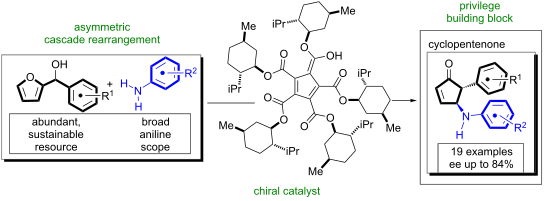
- a trans relationship between the C4 and C5 substituents [13][14][15]. It is believed that the 4π conrotatory electrocyclization step that converts the pentadienyl cation 5 into the corresponding cyclopentenone adduct 6 is responsible for controlling the relative diastereoselectivity in this cascade
- rearrangement (Figure 1). Analogous to the Nazarov cyclization, controlling the absolute stereochemistry can be achieved by governing the direction of the conrotatory electrocyclization, clockwise vs counterclockwise [32][33][34]. Despite the direct relationship to the asymmetric Nazarov cyclization, however
- -inducing element capable of controlling the clockwise or counterclockwise conrotation of the key 4π electrocyclization step. Although the utility of these asymmetric catalytic systems is unquestionable, the ability to identify the optimal catalyst is not straightforward. In each case, extensive

Graphical Abstract

Figure 1: Proposed mechanism of the asymmetric aza-Piancatelli reaction.

Scheme 1: Asymmetric aza-Piancatelli rearrangement with a range of substituted anilines. *To simplify the pur...

Scheme 2: Asymmetric aza-Piancatelli rearrangement with a range of substituted furylcarbinols. *To simplify t...
Oxidative and reductive cyclization in stiff dithienylethenes
- Michael Kleinwächter,
- Ellen Teichmann,
- Lutz Grubert,
- Martin Herder and
- Stefan Hecht
Beilstein J. Org. Chem. 2018, 14, 2812–2821, doi:10.3762/bjoc.14.259
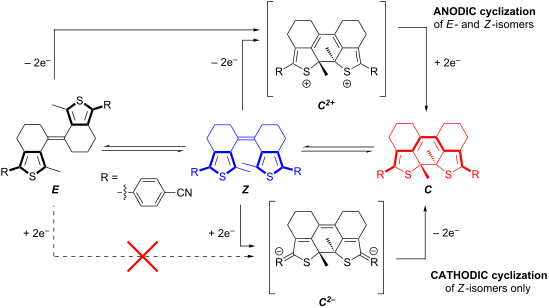
- substituents (to modulate the redox potential) on the electrocyclization was examined. In the series of derivatives with 6-membered rings, both the E- and the Z-isomer convert to the closed isomer, whereas for the 7-membered rings no cyclization from the E-isomer was observed. For both stiff and normal
- dithienylethenes bearing benzonitrile substituents an additional and rare reductive electrocyclization was observed. The mechanism underlying both observed electrocyclization pathways has been elucidated. Keywords: diarylethenes; electrochromism; molecular switches; (spectro)electrochemistry; Introduction
- Diarylethenes (DAEs) are a rich family of organic photoswitches formally derived from stilbene [1][2]. Upon irradiation they are able to undergo reversible photoisomerization based on 6π-electrocyclization and -cycloreversion, respectively, between two thermally stable states, which make them interesting

Graphical Abstract

Scheme 1: Combining double bond isomerization (E/Z) and cyclization/cycloreversion (Z/C) in three-state switc...

Scheme 2: Overview of all sDTE and reference DTE compounds investigated in this study. The compound names ind...

Figure 1: Cyclic voltammograms of sDTE66-Me. a) Both E- (black line) and Z-isomer (blue dashed line) display ...

Figure 2: Spectroelectrochemistry of sDTE66-Me. Absorption changes during CV, insets showing the correspondin...

Scheme 3: Proposed mechanism for the oxidative cyclization of sDTE66-Me. Upon two-fold oxidation, both open i...

Figure 3: Anodic peak potentials (Epa) of sDTEs and reference compounds in MeCN. Solid circles refer to the f...

Figure 4: Cyclic voltammograms of sDTE66-PhCN. The reduction of a) E-sDTE66-PhCN (black line) is reversible, ...

Figure 5: Cyclic voltammogram of DTE-PhFluorene. The ring-closed isomer (red dashed line) is formed both unde...

Figure 6: Cyclic voltammograms of Me2NPh-DTE-PhCN displaying separated one-electron anodic and cathodic waves...

Scheme 4: Proposed mechanism to explain the observed selectivity of anodic and cathodic cyclization in sDTE66...
Dialkyl dicyanofumarates and dicyanomaleates as versatile building blocks for synthetic organic chemistry and mechanistic studies
- Grzegorz Mlostoń and
- Heinz Heimgartner
Beilstein J. Org. Chem. 2017, 13, 2235–2251, doi:10.3762/bjoc.13.221
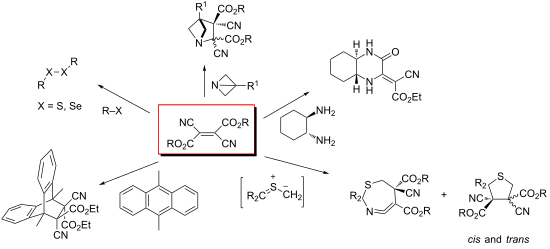
- mechanistic explanation of this cyclopropanation reaction is based on the assumption that the intermediate zwitterion 18a undergoes either a 1,3- or 1,5-electrocyclization leading to 15 or thiolanes 19a. The experiments with both isomers of 1b showed that the reactions proceeded non-stereospecifically and

Graphical Abstract

Figure 1: Dialkyl dicyanofumarates E-1 and dicyanomaleates Z-1.

Scheme 1: Methods for the synthesis of dialkyl dicyanofumarates E-1 from alkyl cyanoacetates 2.

Scheme 2: Methods for the synthesis of dialkyl dicyanofumarates E-1 from alkyl bromoacetates 3.

Scheme 3: Reaction of dimethyl dicyanofumarate (E-1b) with dimethoxycarbene [(MeO)2C:] generated in situ from...

Scheme 4: Cyclopropanation of diethyl dicyanofumarate (E-1a) through reaction with the thiophene derived sulf...

Scheme 5: Cyclopropanation of dimethyl dicyanofumarate (E-1b) through a stepwise reaction with the in situ ge...

Scheme 6: The [2 + 2]-cycloadditions of dimethyl dicyanofumarate (E-1b) with electron-rich ethylenes 20 and 22...

Scheme 7: The [2 + 2]-cycloaddition of isomeric dimethyl dicyanofumarate (E-1b) and dicyanomaleate (Z-1b) wit...

Scheme 8: Non-concerted [2 + 2]-cycloaddition between E-1b and bicyclo[2.1.0]pentene (27).

Scheme 9: Stepwise [3 + 2]-cycloadditions of some thiocarbonyl S-methanides with dialkyl dicyanofumarates E-1...

Scheme 10: Stepwise [3 + 2]-cycloadditions of dimethyl dicyanofumarate (E-1b) and dimethyl dicyanomaleate (Z-1b...

Scheme 11: [3 + 2]-Cycloaddition of diazomethane with dimethyl dicyanofumarate (E-1b) leading to 1H-pyrazole d...

Scheme 12: Reversible Diels–Alder reaction of fulvenes 36 with diethyl dicyanofumarate (E-1a).

Scheme 13: [4 + 2]-Cycloaddition of 9,10-dimethylanthracene (39b) and E-1a.

Scheme 14: Stepwise [4 + 2]-cycloaddition of dimethyl dicyanofumarate (E-1b) with electron-rich 1,1-dimethoxy-...

Scheme 15: Formal [4 + 2]-cycloaddition of 3,4-di(α-styryl)furan (47) with dimethyl dicyanofumarate (E-1b).

Scheme 16: Acid-catalyzed Michael addition of enolizable ketones of type 49 to E-1.

Scheme 17: Reaction of diethyl dicyanofumarate (E-1a) with ammonia NH3.

Scheme 18: Reaction of dialkyl dicyanofumarates E-1 with primary and secondary amines.

Scheme 19: Reaction of dialkyl dicyanofumarates E-1 with 1-azabicyclo[1.1.0]butanes 55.

Scheme 20: Formation of pyrazole derivatives in the reaction of hydrazines with E-1.

Scheme 21: Formation of 5-aminopyrazole-3,4-dicarboxylate 65 via heterocyclization reactions.

Scheme 22: Reactions of aryl- and hetarylcarbohydrazides 67 with E-1a.

Scheme 23: Multistep reaction leading to perhydroquinoxaline derivative 73.

Scheme 24: Synthesis of ethyl 7-aminopteridin-6-carboxylates 75 via a domino reaction.

Scheme 25: Synthesis of morhpolin-2-ones 80 from E-1 and β-aminoalcohols 78 through an initial aza-Michael add...

Scheme 26: Reaction of 3-amino-5-arylpyrazoles 81 with dialkyl dicyanofumarates E-1 via competitive nucleophil...

Scheme 27: Heterocyclization reaction of thiosemicarbazone 86 with E-1a.

Scheme 28: Formation of diethyl 4-cyano-5-oxotetrahydro-4H-chromene-3,4-dicarboxylate (90) from E-1a via heter...

Scheme 29: Reaction of dialkyl dicyanofumarates E-1 with cysteamine (92).

Scheme 30: Formation of disulfides through reaction of thiols with E-1a.

Scheme 31: Formation of CT salts of E-1 with Mn2+ and Cr2+ metallocenes through one-electron transfer.

Scheme 32: Oxidation of diethyl dicyanofumarate (E-1a) with H2O2 to give oxirane 101.

Scheme 33: The aziridination of E-1b through nitrene addition.
A strategic approach to [6,6]-bicyclic lactones: application towards the CD fragment of DHβE
- Tue Heesgaard Jepsen,
- Emil Glibstrup,
- François Crestey,
- Anders A. Jensen and
- Jesper Langgaard Kristensen
Beilstein J. Org. Chem. 2017, 13, 988–994, doi:10.3762/bjoc.13.98
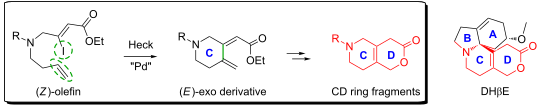
- effective synthetic protocol to access [6,6]-bicyclic lactone moieties through a regio- and stereoselective intramolecular Mizoroki–Heck cross-coupling reaction followed by a 6π-electrocyclization. This method enabled the first synthesis of the elusive CD fragment of the Erythrina alkaloid DHβE. Preliminary
- pharmacological evaluations support the notion that the key pharmacophores of DHβE are located in the A and B rings. Keywords: DhβE; Mizoroki–Heck cross-coupling reaction; 6π-electrocyclization; [6,6]-bicyclic lactone; vinyl halide; Introduction The neuronal nicotinic acetylcholine receptors (nAChRs) have been
- intramolecular Mizoroki–Heck cross-coupling reaction and a 6π-electrocyclization as key steps. Results and Discussion First strategy with Ts and Cbz protecting groups As depicted in Scheme 1, our first strategy featured a late stage installation of the lactonic D ring by a 6π-electrocyclization and formation of

Graphical Abstract

Figure 1: DHβE and related structures. The Ki values of the compounds at the rat α4β2 nAChR subtype determine...

Scheme 1: First strategy towards the CD fragment (Ts-strategy). i) TsCl, TEA, DCM, 0 °C. ii) NaH, DMF, 0 °C, ...

Scheme 2: First strategy towards the CD fragment (Cbz-strategy). i) R-Cl, TEA, CH2Cl2, 0 °C. ii) NaH, DMF, 0 ...

Scheme 3: Second strategy towards the CD fragment. i) 4-Bromobut-1-ene, K2CO3, acetone, 70 °C. ii) n-BuLi, TH...

Figure 2: The binding affinities of compounds 9 and 26 at the rat α4β2 nAChR. a) The AB fragment was evaluate...
Synthesis of 1-indanones with a broad range of biological activity
- Marika Turek,
- Dorota Szczęsna,
- Marek Koprowski and
- Piotr Bałczewski
Beilstein J. Org. Chem. 2017, 13, 451–494, doi:10.3762/bjoc.13.48
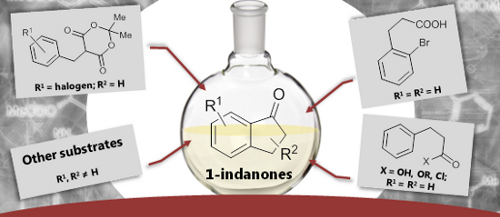
- -indanones and their heteroatom analogues 138–142 which may be further converted into biologically active compounds (Figure 4) [72]. Products 138–142 were obtained by electrocyclization of the substrates substituted by electron-withdrawing groups, such as CO2Me, P(O)(OEt)2, CN or NO2. This reaction was

Graphical Abstract

Figure 1: Biologically active 1-indanones and their structural analogues.

Figure 2: Number of papers about (a) 1-indanones, (b) synthesis of 1-indanones.

Scheme 1: Synthesis of 1-indanone (2) from hydrocinnamic acid (1).

Scheme 2: Synthesis of 1-indanone (2) from 3-(2-bromophenyl)propionic acid (3).

Scheme 3: Synthesis of 1-indanones 5 from 3-arylpropionic acids 4.

Scheme 4: Synthesis of kinamycin (9a) and methylkinamycin C (9b).

Scheme 5: Synthesis of trifluoromethyl-substituted arylpropionic acids 12, 1-indanones 13 and dihydrocoumarin...

Scheme 6: Synthesis of 1-indanones 16 from benzoic acids 15.

Scheme 7: Synthesis of 1-indanones 18 from arylpropionic and 3-arylacrylic acids 17.

Scheme 8: The NbCl5-induced one-step synthesis of 1-indanones 22.

Scheme 9: Synthesis of biologically active 1-indanone derivatives 26.

Scheme 10: Synthesis of enantiomerically pure indatraline ((−)-29).

Scheme 11: Synthesis of 1-indanone (2) from the acyl chloride 30.

Scheme 12: Synthesis of the mechanism-based inhibitors 33 of coelenterazine.

Scheme 13: Synthesis of the indane 2-imidazole derivative 37.

Scheme 14: Synthesis of fluorinated PAHs 41.

Scheme 15: Synthesis of 1-indanones 43 via transition metal complexes-catalyzed carbonylative cyclization of m...

Scheme 16: Synthesis of 6-methyl-1-indanone (46).

Scheme 17: Synthesis of 1-indanone (2) from ester 48.

Scheme 18: Synthesis of benzopyronaphthoquinone 51 from the spiro-1-indanone 50.

Scheme 19: Synthesis of the selective endothelin A receptor antagonist 55.

Scheme 20: Synthesis of 1-indanones 60 from methyl vinyl ketone (57).

Scheme 21: Synthesis of 1-indanones 64 from diethyl phthalate 61.

Scheme 22: Synthesis of 1-indanone derivatives 66 from various Meldrum’s acids 65.

Scheme 23: Synthesis of halo 1-indanones 69.

Scheme 24: Synthesis of substituted 1-indanones 71.

Scheme 25: Synthesis of spiro- and fused 1-indanones 73 and 74.

Scheme 26: Synthesis of spiro-1,3-indanodiones 77.

Scheme 27: Mechanistic pathway for the NHC-catalyzed Stetter–Aldol–Michael reaction.

Scheme 28: Synthesis of 2-benzylidene-1-indanone derivatives 88a–d.

Scheme 29: Synthesis of 1-indanone derivatives 90a–i.

Scheme 30: Synthesis of 1-indanones 96 from o-bromobenzaldehydes 93 and alkynes 94.

Scheme 31: Synthesis of 3-hydroxy-1-indanones 99.

Scheme 32: Photochemical preparation of 1-indanones 103 from ketones 100.

Scheme 33: Synthesis of chiral 3-aryl-1-indanones 107.

Scheme 34: Photochemical isomerization of 2-methylbenzil 108.

Scheme 35: Synthesis of 2-hydroxy-1-indanones 111a–c.

Scheme 36: Synthesis of 1-indanone derivatives 113 and 114 from η6-1,2-dioxobenzocyclobutene complex 112.

Scheme 37: Synthesis of nakiterpiosin (117).

Scheme 38: Synthesis of 2-alkyl-1-indanones 120.

Scheme 39: Synthesis of fluorine-containing 1-indanone derivatives 123.

Scheme 40: Synthesis of 2-benzylidene and 2-benzyl-1-indanones 126, 127 from the chalcone 124.

Scheme 41: Synthesis of 2-bromo-6-methoxy-3-phenyl-1-indanone (130).

Scheme 42: Synthesis of combretastatin A-4-like indanones 132a–s.

Figure 3: Chemical structures of investigated dienones 133 and synthesized cyclic products 134–137.

Figure 4: Chemical structures of 1-indanones and their heteroatom analogues 138–142.

Scheme 43: Synthesis of 2-phosphorylated and 2-non-phosphorylated 1-indanones 147 and 148 from β-ketophosphona...

Scheme 44: Photochemical synthesis of 1-indanone derivatives 150, 153a, 153b.

Scheme 45: Synthesis of polysubstituted-1-indanones 155, 157.

Scheme 46: Synthesis of 1-indanones 159a–g from α-arylpropargyl alcohols 158 using RhCl(PPh3)3 as a catalyst.

Scheme 47: Synthesis of optically active 1-indanones 162 via the asymmetric Rh-catalyzed isomerization of race...

Scheme 48: Mechanism of the Rh-catalyzed isomerization of α-arylpropargyl alcohols 161 to 1-indanones 162.

Figure 5: Chemical structure of abicoviromycin (168) and its new benzo derivative 169.

Scheme 49: Synthesis of racemic benzoabicoviromycin 172.

Scheme 50: Synthesis of [14C]indene 176.

Scheme 51: Synthesis of indanone derivatives 178–180.

Scheme 52: Synthesis of racemic pterosin A 186.

Scheme 53: Synthesis of trans-2,3-disubstituted 1-indanones 189.

Scheme 54: Synthesis of 3-aryl-1-indanone derivatives 192.

Scheme 55: Synthesis of 1-indanone derivatives 194 from 3-(2-iodoaryl)propanonitriles 193.

Scheme 56: Synthesis of 1-indanones 200–204 by cyclization of aromatic nitriles.

Scheme 57: Synthesis of 1,1’-spirobi[indan-3,3’-dione] derivative 208.

Scheme 58: Total synthesis of atipamezole analogues 211.

Scheme 59: Synthesis of 3-[4-(1-piperidinoethoxy)phenyl]spiro[indene-1,1’-indan]-5,5’-diol hydrochloride 216.

Scheme 60: Synthesis of 3-arylindan-1-ones 219.

Scheme 61: Synthesis of 2-hydroxy-1-indanones 222.

Scheme 62: Synthesis of the 1-indanone 224 from the THP/MOM protected chalcone epoxide 223.

Scheme 63: Synthesis of 1-indanones 227 from γ,δ-epoxy ketones 226.

Scheme 64: Synthesis of 2-hydroxy-2-methylindanone (230).

Scheme 65: Synthesis of 1-indanone derivatives 234 from cyclopropanol derivatives 233.

Scheme 66: Synthesis of substituted 1-indanone derivatives 237.

Scheme 67: Synthesis of 7-methyl substituted 1-indanone 241 from 1,3-pentadiene (238) and 2-cyclopentenone (239...

Scheme 68: Synthesis of disubstituted 1-indanone 246 from the siloxydiene 244 and 2-cyclopentenone 239.

Scheme 69: Synthesis of 5-hydroxy-1-indanone (250) via the Diels–Alder reaction of 1,3-diene 248 with sulfoxid...

Scheme 70: Synthesis of halogenated 1-indanones 253a and 253b.

Scheme 71: Synthesis of 1-indanones 257 and 258 from 2-bromocyclopentenones 254.

Scheme 72: Synthesis of 1-indanone 261 from 2-bromo-4-acetoxy-2-cyclopenten-1-one (260) and 1,2-dihydro-4-viny...

Scheme 73: Synthesis of 1-indanone 265 from 1,2-dihydro-7-methoxy-4-vinylnaphthalene (262) and bromo-substitut...

Scheme 74: Synthesis of 1-indanone 268 from dihydro-3-vinylphenanthrene 266 and 4-acetoxy-2-cyclopenten-1-one (...

Scheme 75: Synthesis of 1-indanone 271 from phenylselenyl-substituted cyclopentenone 268.

Scheme 76: Synthesis of 1-indanone 272 from the trienone 270.

Scheme 77: Synthesis of the 1-indanone 276 from the aldehyde 273.

Scheme 78: Synthesis of 1-indanones 278 and 279.

Scheme 79: Synthesis of 1-indanone 285 from octa-1,7-diyne (282) and cyclopentenone 239.

Scheme 80: Synthesis of benz[f]indan-1-one (287) from cyclopentenone 239 and o-bis(dibromomethyl)benzene (286)....

Scheme 81: Synthesis of 3-methyl-substituted benz[f]indan-1-one 291 from o-bis(dibromomethyl)benzene (286) and...

Scheme 82: Synthesis of benz[f]indan-1-one (295) from the anthracene epidioxide 292.

Scheme 83: Synthesis of 1-indanone 299 from homophthalic anhydride 298 and cyclopentynone 297.

Scheme 84: Synthesis of cyano-substituted 1-indanone derivative 301 from 2-cyanomethylbenzaldehyde (300) and c...

Scheme 85: Synthesis of 1-indanone derivatives 303–305 from ketene dithioacetals 302.

Scheme 86: Synthesis of 1-indanones 309–316.

Scheme 87: Mechanism of the hexadehydro-Diels–Alder (HDDA) reaction.

Scheme 88: Synthesis of 1-indenone 318 and 1-indanones 320 and 321 from tetraynes 317 and 319.

Scheme 89: Synthesis of 1-indanone 320 from the triyn 319.

Scheme 90: Synthesis 1-indanone 328 from 2-methylfuran 324.

Scheme 91: Synthesis of 1-indanones 330 and 331 from furans 329.

Scheme 92: Synthesis of 1-indanone 333 from the cycloadduct 332.

Scheme 93: Synthesis of (S)-3-arylindan-1-ones 335.

Scheme 94: Synthesis of (R)-2-acetoxy-1-indanone 338.

Figure 6: Chemical structures of obtained cyclopenta[α]phenanthrenes 339.

Scheme 95: Synthesis of the benzoindanone 343 from arylacetaldehyde 340 with 1-trimethylsilyloxycyclopentene (...
Dimerization reactions of aryl selenophen-2-yl-substituted thiocarbonyl S-methanides as diradical processes: a computational study
- Michael L. McKee,
- Grzegorz Mlostoń,
- Katarzyna Urbaniak and
- Heinz Heimgartner
Beilstein J. Org. Chem. 2017, 13, 410–416, doi:10.3762/bjoc.13.44

- case of similar thiocarbonyl S-isopropanides, the intermediate zwitterions, formed in the course of the attempted [3 + 2]-cycloaddition with electron-deficient ethenes, undergo 1,3-electrocyclization yielding mixtures of stereoisomeric cyclopropanes in addition to the expected 5-membered thiolanes
- pathway via a diradical intermediate leading to the formation of the unusual macrocyclic dimer 9 by computational methods. First calculations were made for phenyl selenophen-2-yl thiocarbonyl S-methanide (8A), which can undergo a 1,3-dipolar electrocyclization (1,3-ring closure) to form the thiirane 3a
- course of the dimerization of a reactive diaryl thiocarbonyl S-methanides. Potential 1,3-dipolar electrocyclization of thiocabonyl S-methanide 8A. Computed enthalpies (free energies in parentheses) at 298 K at the SMD(tetrahydrofuran)/M06-2X/6-311+G(2df,p)//M06-2X/6-31G(d) level of theory. Stepwise

Graphical Abstract

Scheme 1: Generation and typical reactions of the reactive dialkyl and diaryl thiocarbonyl S-methanides 1.

Figure 1: Structures of the reactive intermediates as a diradical 6 or a zwitterion 7 in the course of the di...

Scheme 2: The in situ generation of phenyl selenophen-2-yl S-methanide (8) and its competitive reactions: 1,3...

Figure 2: Potential 1,3-dipolar electrocyclization of thiocabonyl S-methanide 8A. Computed enthalpies (free e...

Figure 3: Stepwise radical dimerization of the reactive thiocarbonyl S-methanide 8. Computed enthalpies (free...
Figure 4: Potential competitive cyclization reactions of the intermediate diradical 12.
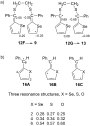
Figure 5: a) Spin densities in the conformers 12F and 12G of diradical 12. b) Heteroatom effect on the magnit...
Rapid regio- and multi-coupling reactivity of 2,3-dibromobenzofurans with atom-economic triarylbismuths under palladium catalysis
- Maddali L. N. Rao,
- Jalindar B. Talode and
- Venneti N. Murty
Beilstein J. Org. Chem. 2016, 12, 2065–2076, doi:10.3762/bjoc.12.195
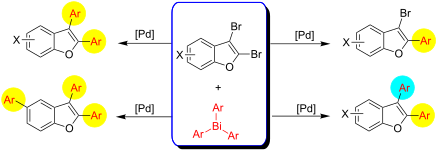
- the synthesis of 2,3-dialkenylbenzofurans and functionalized dibenzofurans with domino “twofold Heck/6π-electrocyclization” of 2,3-di- and 2,3,5-tribromobenzofuran substrates [34]. In this regard, the cross-coupling studies of triarylbismuth reagents in regioselective studies with functionalized

Graphical Abstract

Figure 1: Important benzofuran skeletons.

Scheme 1: Bis- and tris-couplings.

Figure 2: X-ray structure of bis-coupling product 3.1 (CCDC-1425338) [43].
Synthesis of 2,1-benzisoxazole-3(1H)-ones by base-mediated photochemical N–O bond-forming cyclization of 2-azidobenzoic acids
- Daria Yu. Dzhons and
- Andrei V. Budruev
Beilstein J. Org. Chem. 2016, 12, 874–881, doi:10.3762/bjoc.12.86
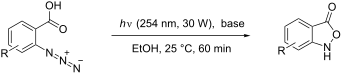
- -benzisoxazolones; 1,5-electrocyclization; nitrenes; photochemical cyclization; Introduction Substituted 2,1-benzisoxazoles display diverse biological activity [1][2][3][4][5][6] (Figure 1) and are widely used as starting materials for the synthesis of important heterocyclic pharmacophores, such as acridines [7][8
- through a 1,5-electrocyclization reaction [56][57]. Nonreacted singlet nitrenes A may undergo intersystem crossing (ISC) into the less reactive triplet state (Scheme 1, intermediate D). Although a multiplicity change is a spin-forbidden transition, it can be partially allowed in some cases. According to
- . Finally, the electron pair of the carboxylic group (Scheme 2, intermediate A) was joined by 1,5-electrocyclization to the electron-deficient singlet nitrene A with formation of 2-anion (see Scheme 2), which was neutralized by water (path I). Thus, the first path of cyclization of 1 was realized. Meanwhile

Graphical Abstract

Figure 1: Selected examples of biologically active, fused 2,1-isoxazole derivatives.

Scheme 1: Photochemical cyclization of substituted 2-azidobenzoic acids and possible reaction mechanism [34-59].

Scheme 2: Proposed reaction mechanism of the base-mediated photochemical cyclization of 2-azidobenzoic acids.
Diradical reaction mechanisms in [3 + 2]-cycloadditions of hetaryl thioketones with alkyl- or trimethylsilyl-substituted diazomethanes
- Grzegorz Mlostoń,
- Paulina Pipiak and
- Heinz Heimgartner
Beilstein J. Org. Chem. 2016, 12, 716–724, doi:10.3762/bjoc.12.71
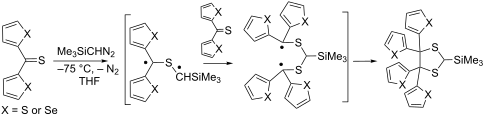
- . Only after warming up above −45/40 °C compounds 2 are expected to decompose yielding the reactive thiocarbonyl ylide 3. Under these conditions, the latter intermediates can undergo either 1,3-dipolar electrocyclization to give thiiranes 8 or dimerization leading to 1,4-dithianes 4 [20][26]. This

Graphical Abstract

Scheme 1: ‘Head-to-head dimerization’ of diarylthioketone S-methanides 3a,b leading to 2,2,3,3-tetrasubstitut...

Scheme 2: Diradical nature of the reactive intermediate 3c in the reaction of phenyl selenophen-2-yl thioketo...

Scheme 3: Formation of thiiranes 8 and/or 1,3-dithiolanes 10 in the reaction of aryl/aryl, aryl/hetaryl and d...
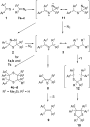
Scheme 4: Proposed competitive mechanisms in the reactions of aryl/hetaryl and dihetaryl thioketones 1 with 2...
Cupreines and cupreidines: an established class of bifunctional cinchona organocatalysts
- Laura A. Bryant,
- Rossana Fanelli and
- Alexander J. A. Cobb
Beilstein J. Org. Chem. 2016, 12, 429–443, doi:10.3762/bjoc.12.46
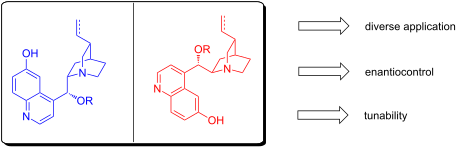
- set up a 4π-electrocyclization, generating second intermediate 27. Elimination of the tertiary amine then gives γ-methylene cyclopentenone 28. 1,2-Addition reactions Henry reaction The use of cupreine and cupreidine derivatives in the addition of nitroalkanes to carbonyl compounds was first

Graphical Abstract

Figure 1: The structural diversity of the cinchona alkaloids, along with cupreine, cupreidine, β-isoquinidine...

Scheme 1: The original 6’-OH cinchona alkaloid organocatalytic MBH process, showing how the free 6’-OH is ess...

Scheme 2: Use of β-ICPD in an aza-MBH reaction.

Scheme 3: (a) The isatin motif is a common feature for MBH processes catalyzed by β-ICPD, as demonstrated by ...

Scheme 4: (a) Chen’s asymmetric MBH reaction. Good selectivity was dependent upon the presence of (R)-BINOL (...

Scheme 5: Lu and co-workers synthesis of a spiroxindole.

Scheme 6: Kesavan and co-workers’ synthesis of spiroxindoles.

Scheme 7: Frontier’s Nazarov cyclization catalyzed by β-ICPD.

Scheme 8: The first asymmetric nitroaldol process catalyzed by a 6’-OH cinchona alkaloid.

Scheme 9: A cupreidine derived catalyst induces a dynamic kinetic asymmetric transformation.

Scheme 10: Cupreine derivative 38 has been used in an organocatalytic asymmetric Friedel–Crafts reaction.

Scheme 11: Examples of 6’-OH cinchona alkaloid catalyzed processes include: (a) Deng’s addition of dimethyl ma...

Scheme 12: A diastereodivergent sulfa-Michael addition developed by Melchiorre and co-workers.

Scheme 13: Melchiorre’s vinylogous Michael addition.

Scheme 14: Simpkins’s TKP conjugate addition reactions.

Scheme 15: Hydrocupreine catalyst HCPN-59 can be used in an asymmetric cyclopropanation.

Scheme 16: The hydrocupreine and hydrocupreidine-based catalysts HCPN-65 and HCPD-67 demonstrate the potential...

Scheme 17: Jørgensen’s oxaziridination.

Scheme 18: Zhou’s α-amination using β-ICPD.

Scheme 19: Meng’s cupreidine catalyzed α-hydroxylation.

Scheme 20: Shi’s biomimetic transamination process for the synthesis of α-amino acids.

Scheme 21: β-Isocupreidine catalyzed [4 + 2] cycloadditions.

Scheme 22: β-Isocupreidine catalyzed [2+2] cycloaddition.

Scheme 23: A domino reaction catalyst by cupreidine catalyst CPD-30.

Scheme 24: (a) Dixon’s 6’-OH cinchona alkaloid catalyzed oxidative coupling. (b) An asymmetric oxidative coupl...
Tandem processes promoted by a hydrogen shift in 6-arylfulvenes bearing acetalic units at ortho position: a combined experimental and computational study
- Mateo Alajarin,
- Marta Marin-Luna,
- Pilar Sanchez-Andrada and
- Angel Vidal
Beilstein J. Org. Chem. 2016, 12, 260–270, doi:10.3762/bjoc.12.28
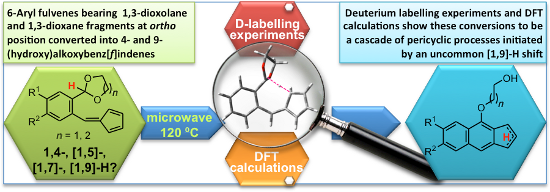
- into the isomeric spirotricycle 12a. The computed energy barriers for these processes are relatively small, 13.9 and 17.0 kcal·mol−1 respectively. Again the differences in the extent of the electronic conjugation in these electrocyclization transition states can give account of the relative stabilities
- geometry of transition structures TS1-A, TS1-B, and TS1-C computed at the B3LYP/6-31+G** theoretical level. Distances in Ångstroms, bond angles in degrees. Lewis acid-catalyzed [1,4]-H transfer/1,5-electrocyclization tandem processes of benzylidenemalonates 1 leading to indan-1-ones 2. Preparation of benz

Graphical Abstract

Scheme 1: Lewis acid-catalyzed [1,4]-H transfer/1,5-electrocyclization tandem processes of benzylidenemalonat...

Scheme 2: Preparation of benz[f]indenes 5 and 6. Reagents and conditions: i) cyclopentadiene, pyrrolidine, an...

Scheme 3: Postulated reaction path for the conversion 3a → 5a + 6a initiated by a [1,4]-hydride shift.

Scheme 4: Alternative mechanistic paths for the conversion 3a → 5a + 6a initiated by [1,5]-, [1,7]- or [1,9]-...

Scheme 5: Postulated outcome of the conversion 14 → 18 + 19 initiated by a [1,4]-deuteride shift.

Scheme 6: Preparation of deuterated benz[f]indenes 18 + 19 and 21 + 22. Reagents and conditions: i) DMSO, mic...

Scheme 7: Reagents and conditions: i) triethylamine (10%), DMSO, rt, 2 h.

Scheme 8: Preparation of benz[f]indenes 25 and 26. Reagents and conditions: i) cyclopentadiene, pyrrolidine, ...

Scheme 9: Mechanistic paths for the conversion of fulvene 3a into the benz[f]indenes 5a and 6a showing the en...

Figure 1: Optimized geometry of transition structures TS1-A, TS1-B, and TS1-C computed at the B3LYP/6-31+G** ...
Copper-mediated synthesis of N-alkenyl-α,β-unsaturated nitrones and their conversion to tri- and tetrasubstituted pyridines
- Dimitra Kontokosta,
- Daniel S. Mueller,
- Dong-Liang Mo,
- Wiktoria H. Pace,
- Rachel A. Simpson and
- Laura L. Anderson
Beilstein J. Org. Chem. 2015, 11, 2097–2104, doi:10.3762/bjoc.11.226

- modularity of the Chan–Lam coupling process, and proceeds through a pathway that is distinct from the Liebeskind copper-catalyzed C–N bond coupling and electrocyclization (Scheme 2). Results and Discussion A Chan–Lam coupling between chalcone oxime 6a and cyclohexenylboronic acid (7a) was initially tested
- enamine to the ketone. This pathway may explain the solvent dependence that was observed for the transformation (Scheme 3). The lack of any observation of dihydropyridine N-oxide intermediate 17ae suggests that the reaction is not proceeding through an electrocyclization and elimination process. A second

Graphical Abstract
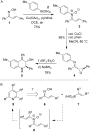
Scheme 1: Use of a Chan–Lam reaction for the synthesis of tetrahydroquinolines and potential extension to pyr...
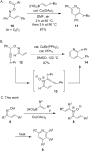
Scheme 2: Examples of pyridine synthesis from oxime precursors [51,52].

Scheme 3: Solvent effect on conversion of N-alkenylnitrones to pyridines.

Scheme 4: Mechanistic experiments.
On the strong difference in reactivity of acyclic and cyclic diazodiketones with thioketones: experimental results and quantum-chemical interpretation
- Andrey S. Mereshchenko,
- Alexey V. Ivanov,
- Viktor I. Baranovskii,
- Grzegorz Mloston,
- Ludmila L. Rodina and
- Valerij A. Nikolaev
Beilstein J. Org. Chem. 2015, 11, 504–513, doi:10.3762/bjoc.11.57
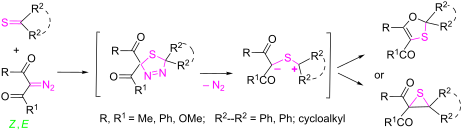
- =S ylides bearing at least one acyl group is identified as the 1,5-electrocyclization into 1,3-oxathioles. However, in the case of diazomalonates, the dominating process is 1,3-cyclization into thiiranes followed by their spontaneous desulfurization yielding the corresponding alkenes. Finally
- bond (step 1), followed by decomposition of thiadiazoline 6 formed (step 2) and competitive electrocyclization of the intermediate thiocarbonyl ylide 7 either into 1,3-oxathiole 3 or thiirane 4 (step 3) (Scheme 2). According to the latest molecular orbital (MO) theory, reactions of diazodicarbonyl
- diazodiketones 1e,f. Transformations of thiocarbonyl ylides 7 and 7' In order to evaluate the correlation between the structure of thiocarbonyl ylides 7, 7' and the direction of their electrocyclizations (1,5- or 1,3-dipolar electrocyclization), the relative energies of the stationary points on the potential

Graphical Abstract

Scheme 1: The key experimental results on the DDC 1 reactions with thioketones 2 [19-21].

Figure 1: Diazo compounds 1 and thioketones 2 used in the study.

Scheme 2: General scheme for reactions of DDC 1 with thiobenzophenone (2a).

Figure 2: Optimized structures of the lowest energy Z,E-conformers of diazo compounds 1a–d.

Scheme 3: Reactions of the intermediate thiocarbonyl ylide 7'd via competative 1,5-EC (a) or 1,3-EC (b) follo...
Photochemical approach to functionalized benzobicyclo[3.2.1]octene structures via fused oxazoline derivatives from 4- and 5-(o-vinylstyryl)oxazoles
- Ivana Šagud,
- Simona Božić,
- Željko Marinić and
- Marija Šindler-Kulyk
Beilstein J. Org. Chem. 2014, 10, 2222–2229, doi:10.3762/bjoc.10.230
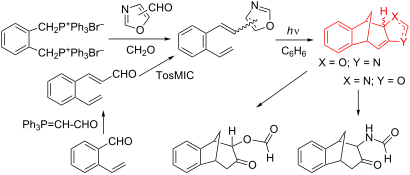
- )oxazole small quantities of electrocyclization product, 4-(1,2-dihydronaphthalen-2-yl)oxazole, are isolated and spectroscopically characterized. Keywords: bicyclo[3.2.1]octane; intramolecular photocycloaddition; oxazole; styryl; vinyl; Introduction The bicyclo[3.2.1]octane skeleton is the basic
- electrocyclization of the benzodivinyl moiety to intermediate C followed by 1,5-H shift and rearomatization of the benzene ring. Analogue electrocyclization was not detected in phenyl or furyl-substituted o-divinylbenzenes but instead stilbene-like 6π electrocyclization and formation of 1-vinylphenanthrene [42] or 6

Graphical Abstract

Scheme 1: Synthesis of 4- (1) and 5-(2-vinylstyryl)oxazoles (2).

Scheme 2: Irradiation of 4- (1) and 5-(2-vinylstyryl)oxazoles (2) (crude reaction mixtures).

Figure 1: Part of 1H NMR spectra in C6D6 of the crude photomixtures after 200 min (300 nm, rt ) of irradiatio...

Scheme 3: Plausible mechanisms of oxazoline ring-opening in photoproduct 10.

Figure 2: 1H NMR spectra in C6D6 of rel-(9S)-12a (a) and rel-(9S)-11 (b).

Scheme 4: Mechanism of the formation of polycyclic compounds (8–10).

Scheme 5: Reactions of the photochemical product 8 with EtOH, MeOD and H2O/silica gel.

Scheme 6: Plausible mechanisms of oxazoline ring opening in photoproduct 10 and formation of 12.
Isoxazolium N-ylides and 1-oxa-5-azahexa-1,3,5-trienes on the way from isoxazoles to 2H-1,3-oxazines
- Alexander F. Khlebnikov,
- Mikhail S. Novikov,
- Yelizaveta G. Gorbunova,
- Ekaterina E. Galenko,
- Kirill I. Mikhailov,
- Viktoriia V. Pakalnis and
- Margarita S. Avdontceva
Beilstein J. Org. Chem. 2014, 10, 1896–1905, doi:10.3762/bjoc.10.197
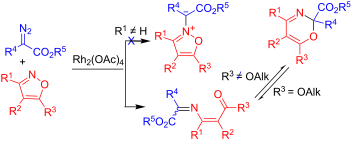
- -electrocyclization to give oxazine E (Scheme 1). At the same time, the third mechanism of the reaction, involving a one-step formation of 1-oxa-5-azahexa-1,3,5-triene D, cannot be excluded. The reaction of a carbenoid with isoxazoles is the only known one-step intermolecular reaction which can in principle produce
- synthetic approach to derivatives of 2H-1,3-oxazines via a Rh2(OAc)4-catalyzed reaction of diazo esters with 2-acyl-2H-azirines F. This reaction involves the intermediate formation of azirinium ylides G, their transformation into 1-oxa-5-azahexa-1,3,5-triene D, and finally the 6π-electrocyclization of the

Graphical Abstract

Scheme 1: Mechanistic scheme of the formation of 2H-1,3-oxazine by the reaction of isoxazoles with a diazo co...

Scheme 2: Mechanistic scheme of the formation of 2H-1,3-oxazine by the reaction of azirine with a diazo compo...

Figure 1: Energy profiles for the transformations of ylides C, (3Z)-1-oxa-5-azahexa-1,3,5-triene D and oxazin...

Figure 2: Energy profiles for the transformations of (3Z)-1-oxa-5-azahexa-1,3,5-triene D and oxazines E deriv...

Scheme 3: Reaction of isoxazole 1a and diazo ester 2a.

Figure 3: Molecular structures of compounds 3a,k, displacement parameters are drawn at 50% probability level.

Figure 4: Molecular structures of compounds 4a,b, displacement parameters are drawn at 50% probability level.

Scheme 4: Isodesmic reactions for 1,3-oxazines 3d,e,n,o and 1-oxa-5-azahexa-1,3,5-trienes 4a,b,g,h.
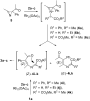
Scheme 5: Reaction of complementary isoxazole 1a and azirine 5 with diazo esters.
Aza-Diels–Alder reaction between N-aryl-1-oxo-1H-isoindolium ions and tert-enamides: Steric effects on reaction outcome
- Amitabh Jha,
- Ting-Yi Chou,
- Zainab ALJaroudi,
- Bobby D. Ellis and
- T. Stanley Cameron
Beilstein J. Org. Chem. 2014, 10, 848–857, doi:10.3762/bjoc.10.81
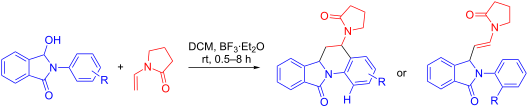
- reported reaction conditions for imino [4 + 2] Diels–Alder reactions [13][14] were employed here for the electrocyclization of N-acyliminium ions from N-aryl-3-hydroxyisoindolinones and tert-enamide analogues namely N-vinylpyrrolidone and N-vinylcaprolactam as the electron-rich dienophiles. Sixteen

Graphical Abstract

Figure 1: Pyridoisoindole frameworks (highlighted) in bioactive molecules and compounds under present investi...

Scheme 1: Comparison of the retro-synthetic approach for the synthesis of isoindoloquinoline skeleton reporte...

Scheme 2: Mechanistic explanation for regio- and diastereoselectivity leading to (±)-6,6a-dihydroisoindolo[2,...

Figure 2: ORTEP diagrams and 2D structures for the isoindolo[2,1-a]quinolone derivatives 1b, 1h and 2b.

Figure 3: ORTEP diagram and 2D structure of E-2-(2-fluorophenyl)-3-(2-(2-oxopyrrolidin-1-yl)vinyl)isoindolin-...

Scheme 3: Most plausible mechamism for the formation of E-2-(2-substituted-phenyl)-3-(2-(2-oxopyrrolidin-1-yl...
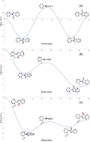
Figure 4: Rotational barrier calculation across N-aryl bond for the N-acyliminium ion intermediates of 1a [A]...
Recent applications of the divinylcyclopropane–cycloheptadiene rearrangement in organic synthesis
- Sebastian Krüger and
- Tanja Gaich
Beilstein J. Org. Chem. 2014, 10, 163–193, doi:10.3762/bjoc.10.14
- rearrangement in great detail. Electrocycloreversion of initialy formed nitrene 321 leads to intermediate 322, which can undergo electrocyclization to give the required trans-vinylisocyanatocyclopropane 323, which underwent the desired rearrangement to give tricycle 324. The group of Boeckman pioneered the

Graphical Abstract

Scheme 1: Vogel’s first approach towards the divinylcyclopropane rearrangement [4] and characterization of cis-d...

Scheme 2: Transition states for the Cope rearrangement and the related DVCPR. Ts = transition state.

Scheme 3: Two possible mechanisms of trans-cis isomerizations of divinylcyclopropanes.

Scheme 4: Proposed biosynthesic pathway to ectocarpene (21), an inactive degradation product of a sexual pher...

Scheme 5: Proposed biosynthesis of occidenol (25) and related natural compounds.

Scheme 6: Gaich’s bioinspired system using the DVCPR to mimick the dimethylallyltryptophan synthase. DMAPP = ...

Scheme 7: Iguchi’s total synthesis of clavubicyclone, part 1.

Scheme 8: Iguchi’s total synthesis of clavubicyclone, part 2.

Scheme 9: Wender’s syntheses of the two pseudoguainanes confertin (50) and damsinic acid (51) and Pier’s appr...
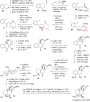
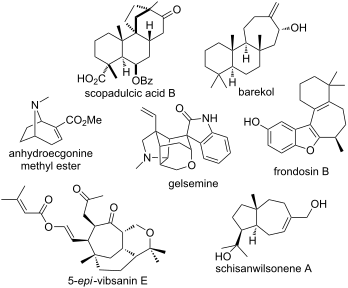
Scheme 10: Overman’s total synthesis of scopadulcic acid B.

Scheme 11: Davies’ total syntheses of tremulenolide A and tremulenediol A.

Scheme 12: Davies formal [4 + 3] cycloaddition approach towards the formal synthesis of frondosin B.

Scheme 13: Davies and Sarpongs formal [4 + 3]-cycloaddition approach towards barekoxide (106) and barekol (107...

Scheme 14: Davies formal [4 + 3]-cycloaddition approach to 5-epi-vibsanin E (115) containing an intermediate c...

Scheme 15: Echavarren’s total synthesis of schisanwilsonene A (126) featuring an impressive gold-catalzed casc...

Scheme 16: Davies early example of a formal [4 + 3]-cycloaddition in alkaloids synthesis.

Scheme 17: Fukuyama’s total synthesis of gelsemine, part 1.

Scheme 18: Fukuyama’s total synthesis of gelsemine, featuring a divinylcyclopropane rearrangement, part 2.

Scheme 19: Kende’s total synthesis of isostemofoline, using a formal [4 + 3]-cycloaddition, including an inter...

Scheme 20: Danishefsky’s total synthesis of gelsemine, part 1.

Scheme 21: Danishefsky’s total synthesis of gelsemine, part 2.

Scheme 22: Fukuyama’s total synthesis of gelsemoxonine.

Scheme 23: Wender’s synthetic access to the core skeleton of tiglianes, daphnanes and ingenanes.

Scheme 24: Davies’ approach towards the core skeleton of CP-263,114 (212).

Scheme 25: Wood’s approach towards actinophyllic acid.

Scheme 26: Takeda’s approach towards the skeleton of the cyanthins, utilitizing the divinylcyclopropane rearra...

Scheme 27: Donaldson’s organoiron route towards the guianolide skeleton.

Scheme 28: Stoltz’s tandem Wolff/DVCPR rearrangement.

Scheme 29: Stephenson’s tandem photocatalysis/arylvinylcyclopropane rearrangement.

Scheme 30: Padwa’s rhodium cascade involving a DVCPR.

Scheme 31: Matsubara’s version of a DVCPR.

Scheme 32: Toste’s tandem gold-catalyzed Claisen-rearrangement/DVCPR.

Scheme 33: Ruthenium- and gold-catalyzed versions of tandem reactions involving a DVCPR.

Scheme 34: Tungsten, platinum and gold catalysed cycloisomerizations leading to a DVCPR.

Scheme 35: Reisman’s total synthesis of salvileucalin B, featuring an (undesired) vinylcyclopropyl carbaldehyd...

Scheme 36: Studies on the divinylepoxide rearrangement.

Scheme 37: Studies on the vinylcyclopropanecarbonyl rearrangement.

Scheme 38: Nitrogen-substituted variants of the divinylcyclopropane rearrangement.



