


Search results
Search for "pyridone" in Full Text gives 48 result(s) in Beilstein Journal of Organic Chemistry.
Recent advances on the transition-metal-catalyzed synthesis of imidazopyridines: an updated coverage
- Gagandeep Kour Reen,
- Ashok Kumar and
- Pratibha Sharma
Beilstein J. Org. Chem. 2019, 15, 1612–1704, doi:10.3762/bjoc.15.165
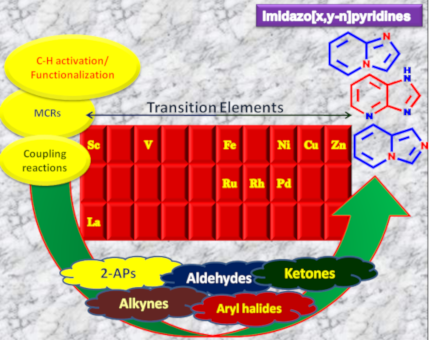

Graphical Abstract

Figure 1: Various drugs having IP nucleus.

Figure 2: Participation percentage of various TMs for the syntheses of IPs.

Scheme 1: CuI–NaHSO4·SiO2-catalyzed synthesis of imidazo[1,2-a]pyridines.

Scheme 2: Experimental examination of reaction conditions.

Scheme 3: One-pot tandem reaction for the synthesis of 2-haloimidazopyridines.

Scheme 4: Mechanistic scheme for the synthesis of 2-haloimidazopyridine.

Scheme 5: Copper-MOF-catalyzed three-component reaction (3-CR) for imidazo[1,2-a]pyridines.

Scheme 6: Mechanism for copper-MOF-driven synthesis.

Scheme 7: Heterogeneous synthesis via titania-supported CuCl2.

Scheme 8: Mechanism involving oxidative C–H functionalization.

Scheme 9: Heterogeneous synthesis of IPs.

Scheme 10: One-pot regiospecific synthesis of imidazo[1,2-a]pyridines.

Scheme 11: Vinyl azide as an unprecedented substrate for imidazo[1,2-a]pyridines.

Scheme 12: Radical pathway.

Scheme 13: Cu(I)-catalyzed transannulation approach for imidazo[1,5-a]pyridines.

Scheme 14: Plausible radical pathway for the synthesis of imidazo[1,5-a]pyridines.

Scheme 15: A solvent-free domino reaction for imidazo[1,2-a]pyridines.

Scheme 16: Cu-NPs-mediated synthesis of imidazo[1,2-a]pyridines.

Scheme 17: CuI-catalyzed synthesis of isoxazolylimidazo[1,2-a]pyridines.

Scheme 18: Functionalization of 4-bromo derivative via Sonogashira coupling reaction.

Scheme 19: A plausible reaction pathway.

Scheme 20: Cu(I)-catalyzed intramolecular oxidative C–H amidation reaction.

Scheme 21: One-pot synthetic reaction for imidazo[1,2-a]pyridine.

Scheme 22: Plausible reaction mechanism.

Scheme 23: Cu(OAc)2-promoted synthesis of imidazo[1,2-a]pyridines.

Scheme 24: Mechanism for aminomethylation/cycloisomerization of propiolates with imines.

Scheme 25: Three-component synthesis of imidazo[1,2-a]pyridines.

Figure 3: Scope of pyridin-2(1H)-ones and acetophenones.

Scheme 26: CuO NPS-promoted A3 coupling reaction.

Scheme 27: Cu(II)-catalyzed C–N bond formation reaction.

Scheme 28: Mechanism involving Chan–Lam/Ullmann coupling.

Scheme 29: Synthesis of formyl-substituted imidazo[1,2-a]pyridines.

Scheme 30: A tandem sp3 C–H amination reaction.

Scheme 31: Probable mechanistic approach.

Scheme 32: Dual catalytic system for imidazo[1,2-a]pyridines.

Scheme 33: Tentative mechanism.

Scheme 34: CuO/CuAl2O4/ᴅ-glucose-promoted 3-CCR.

Scheme 35: A tandem CuOx/OMS-2-based synthetic strategy.

Figure 4: Biomimetic catalytic oxidation in the presence of electron-transfer mediators (ETMs).

Scheme 36: Control experiment.

Scheme 37: Copper-catalyzed C(sp3)–H aminatin reaction.

Scheme 38: Reaction of secondary amines.

Scheme 39: Probable mechanistic pathway.

Scheme 40: Coupling reaction of α-azidoketones.

Scheme 41: Probable pathway.

Scheme 42: Probable mechanism with free energy calculations.

Scheme 43: MCR for cyanated IP synthesis.

Scheme 44: Substrate scope for the reaction.

Scheme 45: Reaction mechanism.

Scheme 46: Probable mechanistic pathway for Cu/ZnAl2O4-catalyzed reaction.

Scheme 47: Copper-catalyzed double oxidative C–H amination reaction.

Scheme 48: Application towards different coupling reactions.

Scheme 49: Reaction mechanism.

Scheme 50: Condensation–cyclization approach for the synthesis of 1,3-diarylated imidazo[1,5-a]pyridines.

Scheme 51: Optimized reaction conditions.

Scheme 52: One-pot 2-CR.

Scheme 53: One-pot 3-CR without the isolation of chalcone.

Scheme 54: Copper–Pybox-catalyzed cyclization reaction.

Scheme 55: Mechanistic pathway catalyzed by Cu–Pybox complex.

Scheme 56: Cu(II)-promoted C(sp3)-H amination reaction.

Scheme 57: Wider substrate applicability for the reaction.

Scheme 58: Plausible reaction mechanism.

Scheme 59: CuI assisted C–N cross-coupling reaction.

Scheme 60: Probable reaction mechanism involving sp3 C–H amination.

Scheme 61: One-pot MCR-catalyzed by CoFe2O4/CNT-Cu.

Scheme 62: Mechanistic pathway.

Scheme 63: Synthetic scheme for 3-nitroimidazo[1,2-a]pyridines.

Scheme 64: Plausible mechanism for CuBr-catalyzed reaction.

Scheme 65: Regioselective synthesis of halo-substituted imidazo[1,2-a]pyridines.

Scheme 66: Synthesis of 2-phenylimidazo[1,2-a]pyridines.

Scheme 67: Synthesis of diarylated compounds.

Scheme 68: CuBr2-mediated one-pot two-component oxidative coupling reaction.

Scheme 69: Decarboxylative cyclization route to synthesize 1,3-diarylimidazo[1,5-a]pyridines.

Scheme 70: Mechanistic pathway.

Scheme 71: C–H functionalization reaction of enamines to produce diversified heterocycles.

Scheme 72: A plausible mechanism.

Scheme 73: CuI-promoted aerobic oxidative cyclization reaction of ketoxime acetates and pyridines.

Scheme 74: CuI-catalyzed pathway for the formation of imidazo[1,2-a]pyridine.

Scheme 75: Mechanistic pathway.

Scheme 76: Mechanistic rationale for the synthesis of products.

Scheme 77: Copper-catalyzed synthesis of vinyloxy-IP.

Scheme 78: Regioselective product formation with propiolates.

Scheme 79: Proposed mechanism for vinyloxy-IP formation.

Scheme 80: Regioselective synthesis of 3-hetero-substituted imidazo[1,2-a]pyridines with different reaction su...

Scheme 81: Mechanistic pathway.

Scheme 82: CuI-mediated synthesis of 3-formylimidazo[1,2-a]pyridines.

Scheme 83: Radical pathway for 3-formylated IP synthesis.

Scheme 84: Pd-catalyzed urea-cyclization reaction for IPs.

Scheme 85: Pd-catalyzed one-pot-tandem amination and intramolecular amidation reaction.

Figure 5: Scope of aniline nucleophiles.

Scheme 86: Pd–Cu-catalyzed Sonogashira coupling reaction.

Scheme 87: One-pot amide coupling reaction for the synthesis of imidazo[4,5-b]pyridines.

Scheme 88: Urea cyclization reaction for the synthesis of two series of pyridines.

Scheme 89: Amidation reaction for the synthesis of imidazo[4,5-b]pyridines.

Figure 6: Amide scope.

Scheme 90: Pd NPs-catalyzed 3-component reaction for the synthesis of 2,3-diarylated IPs.

Scheme 91: Plausible mechanistic pathway for Pd NPs-catalyzed MCR.

Scheme 92: Synthesis of chromenoannulated imidazo[1,2-a]pyridines.

Scheme 93: Mechanism for the synthesis of chromeno-annulated IPs.

Scheme 94: Zinc oxide NRs-catalyzed synthesis of imidazo[1,2-a]azines/diazines.

Scheme 95: Zinc oxide-catalyzed isocyanide based GBB reaction.

Scheme 96: Reaction pathway for ZnO-catalyzed GBB reaction.

Scheme 97: Mechanistic pathway.

Scheme 98: ZnO NRs-catalyzed MCR for the synthesis of imidazo[1,2-a]azines.

Scheme 99: Ugi type GBB three-component reaction.

Scheme 100: Magnetic NPs-catalyzed synthesis of imidazo[1,2-a]pyridines.

Scheme 101: Regioselective synthesis of 2-alkoxyimidazo[1,2-a]pyridines catalyzed by Fe-SBA-15.

Scheme 102: Plausible mechanistic pathway for the synthesis of 2-alkoxyimidazopyridine.

Scheme 103: Iron-catalyzed synthetic approach.

Scheme 104: Iron-catalyzed aminooxygenation reaction.

Scheme 105: Mechanistic pathway.

Scheme 106: Rh(III)-catalyzed double C–H activation of 2-substituted imidazoles and alkynes.

Scheme 107: Plausible reaction mechanism.

Scheme 108: Rh(III)-catalyzed non-aromatic C(sp2)–H bond activation–functionalization for the synthesis of imid...

Scheme 109: Reactivity and selectivity of different substrates.

Scheme 110: Rh-catalyzed direct C–H alkynylation by Li et al.

Scheme 111: Suggested radical mechanism.

Scheme 112: Scandium(III)triflate-catalyzed one-pot reaction and its mechanism for the synthesis of benzimidazo...

Scheme 113: RuCl3-assisted Ugi-type Groebke–Blackburn condensation reaction.

Scheme 114: C-3 aroylation via Ru-catalyzed two-component reaction.

Scheme 115: Regioselective synthetic mechanism.

Scheme 116: La(III)-catalyzed one-pot GBB reaction.

Scheme 117: Mechanistic approach for the synthesis of imidazo[1,2-a]pyridines.

Scheme 118: Synthesis of imidazo[1,2-a]pyridine using LaMnO3 NPs under neat conditions.

Scheme 119: Mechanistic approach.

Scheme 120: One-pot 3-CR for regioselective synthesis of 2-alkoxy-3-arylimidazo[1,2-a]pyridines.

Scheme 121: Formation of two possible products under optimization of the catalysts.

Scheme 122: Mechanistic strategy for NiFe2O4-catalyzed reaction.

Scheme 123: Two-component reaction for synthesizing imidazodipyridiniums.

Scheme 124: Mechanistic scheme for the synthesis of imidazodipyridiniums.

Scheme 125: CuI-catalyzed arylation of imidazo[1,2-a]pyridines.

Scheme 126: Mechanism for arylation reaction.

Scheme 127: Cupric acetate-catalyzed double carbonylation approach.

Scheme 128: Radical mechanism for double carbonylation of IP.

Scheme 129: C–S bond formation reaction catalyzed by cupric acetate.

Scheme 130: Cupric acetate-catalyzed C-3 formylation approach.

Scheme 131: Control experiments for signifying the role of DMSO and oxygen.

Scheme 132: Mechanism pathway.

Scheme 133: Copper bromide-catalyzed CDC reaction.

Scheme 134: Extension of the substrate scope.

Scheme 135: Plausible radical pathway.

Scheme 136: Transannulation reaction for the synthesis of imidazo[1,5-a]pyridines.

Scheme 137: Plausible reaction pathway for denitrogenative transannulation.

Scheme 138: Cupric acetate-catalyzed C-3 carbonylation reaction.

Scheme 139: Plausible mechanism for regioselective C-3 carbonylation.

Scheme 140: Alkynylation reaction at C-2 of 3H-imidazo[4,5-b]pyridines.

Scheme 141: Two-way mechanism for C-2 alkynylation of 3H-imidazo[4,5-b]pyridines.

Scheme 142: Palladium-catalyzed SCCR approach.

Scheme 143: Palladium-catalyzed Suzuki coupling reaction.

Scheme 144: Reaction mechanism.

Scheme 145: A phosphine free palladium-catalyzed synthesis of C-3 arylated imidazopyridines.

Scheme 146: Palladium-mediated Buchwald–Hartwig cross-coupling reaction.

Figure 7: Structure of the ligands optimized.

Scheme 147: Palladium acetate-catalyzed direct arylation of imidazo[1,2-a]pyridines.

Scheme 148: Palladium acetate-catalyzed mechanistic pathway.

Scheme 149: Palladium acetate-catalyzed regioselective arylation reported by Liu and Zhan.

Scheme 150: Mechanism for selective C-3 arylation of IP.

Scheme 151: Pd(II)-catalyzed alkenylation reaction with styrenes.

Scheme 152: Pd(II)-catalyzed alkenylation reaction with acrylates.

Scheme 153: A two way mechanism.

Scheme 154: Double C–H activation reaction catalyzed by Pd(OAc)2.

Scheme 155: Probable mechanism.

Scheme 156: Palladium-catalyzed decarboxylative coupling.

Scheme 157: Mechanistic cycle for decarboxylative arylation reaction.

Scheme 158: Ligand-free approach for arylation of imidazo[1,2-a]pyridine-3-carboxylic acids.

Scheme 159: Mechanism for ligandless arylation reaction.

Scheme 160: NHC-Pd(II) complex assisted arylation reaction.

Scheme 161: C-3 arylation of imidazo[1,2-a]pyridines with aryl bromides catalyzed by Pd(OAc)2.

Scheme 162: Pd(II)-catalyzed C-3 arylations with aryl tosylates and mesylates.

Scheme 163: CDC reaction for the synthesis of imidazo[1,2-a]pyridines.

Scheme 164: Plausible reaction mechanism for Pd(OAc)2-catalyzed synthesis of imidazo[1,2-a]pyridines.

Scheme 165: Pd-catalyzed C–H amination reaction.

Scheme 166: Mechanism for C–H amination reaction.

Scheme 167: One-pot synthesis for 3,6-di- or 2,3,6-tri(hetero)arylimidazo[1,2-a]pyridines.

Scheme 168: C–H/C–H cross-coupling reaction of IPs and azoles catalyzed by Pd(II).

Scheme 169: Mechanistic cycle.

Scheme 170: Rh-catalyzed C–H arylation reaction.

Scheme 171: Mechanistic pathway for C–H arylation of imidazo[1,2-a]pyridine.

Scheme 172: Rh(III)-catalyzed double C–H activation of 2-phenylimidazo[1,2-a]pyridines and alkynes.

Scheme 173: Rh(III)-catalyzed mechanistic pathway.

Scheme 174: Rh(III)-mediated oxidative coupling reaction.

Scheme 175: Reactions showing functionalization of the product obtained by the group of Kotla.

Scheme 176: Mechanism for Rh(III)-catalyzed oxidative coupling reaction.

Scheme 177: Rh(III)-catalyzed C–H activation reaction.

Scheme 178: Mechanistic cycle.

Scheme 179: Annulation reactions of 2-arylimidazo[1,2-a]pyridines and alkynes.

Scheme 180: Two-way reaction mechanism for annulations reaction.

Scheme 181: [RuCl2(p-cymene)]2-catalyzed C–C bond formation reaction.

Scheme 182: Reported reaction mechanism.

Scheme 183: Fe(III) catalyzed C-3 formylation approach.

Scheme 184: SET mechanism-catalyzed by Fe(III).

Scheme 185: Ni(dpp)Cl2-catalyzed KTC coupling.

Scheme 186: Pd-catalyzed SM coupling.

Scheme 187: Vanadium-catalyzed coupling of IP and NMO.

Scheme 188: Mechanistic cycle.

Scheme 189: Selective C3/C5–H bond functionalizations by mono and bimetallic systems.

Scheme 190: rGO-Ni@Pd-catalyzed C–H bond arylation of imidazo[1,2-a]pyridine.

Scheme 191: Mechanistic pathway for heterogeneously catalyzed arylation reaction.

Scheme 192: Zinc triflate-catalyzed coupling reaction of substituted propargyl alcohols.
Selectivity in multiple multicomponent reactions: types and synthetic applications
- Ouldouz Ghashghaei,
- Francesca Seghetti and
- Rodolfo Lavilla
Beilstein J. Org. Chem. 2019, 15, 521–534, doi:10.3762/bjoc.15.46
- reactions can be linked with Povarov MCRs through the intermediacy of the enamine-containing adducts from the former processes (Scheme 10C) [40]. Many additional combinations arise from the Union concept, such as Bredereck–Passerini [41], pyridone-cyclocondensation/Passerini–Ugi [42], azadiene-keteneimine

Graphical Abstract

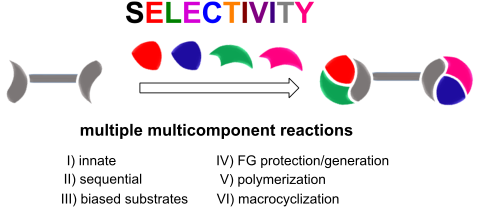
Scheme 1: Selectivity levels found in multiple multicomponent reactions. I) Innate selectivity; II) sequentia...

Scheme 2: Indiscriminate double Ugi MCR upon pyridine-2,6-dicarboxylic acid.

Scheme 3: Representative examples of MCR-polymer synthesis. A) Biginelli HTS of polymers; B) Passerini;- C) U...

Scheme 4: Concept of multicomponent macrocyclization.

Scheme 5: Supramolecular structures out of MMCR macrocyclizations.

Scheme 6: Macrocyclization by MMCRs. A) Staudinger MCR; B) boronic-imine MCR.

Scheme 7: Selective Sequential MMCRs. A and B) MCRs involving terephthalaldehyde; C) Multiple GBB processes w...

Scheme 8: Biased substrates for selective MMCRs.

Scheme 9: The Union concept. A) Asinger–Ugi combination; B) Passerini–Ugi/azide from anthranilic acid; C) Pas...

Scheme 10: Relevant examples of consecutive MCRs exploiting the Union Concept. A) Petasis-Ugi combination; B) ...

Scheme 11: Selective MMCRs featuring FGs with distinct reactivity along the sequence. A) Synthesis of aminomet...

Scheme 12: High order MMCRs. A) Ugi/Ugi–Smiles 7C combination; B) imidazoline-N-cyanomethylamide-Ugi union lea...

Scheme 13: Consecutive Ugi 4CR-deprotection–Ugi 4CR strategy towards A) PNA oligomers and B) peptidic tetrazol...

Scheme 14: Sequential Ugi 4CR-deprotection access to cyclopeptoids.

Scheme 15: Stepwise access to 6-aminopenicillanic acid derivative through an Asinger, deprotection, Joullié ap...

Scheme 16: A triple MCR-deprotection approach affording anticancer peptidomimetics.
Rhodium-catalyzed C–H functionalization of heteroarenes using indoleBX hypervalent iodine reagents
- Erwann Grenet,
- Ashis Das,
- Paola Caramenti and
- Jérôme Waser
Beilstein J. Org. Chem. 2018, 14, 1208–1214, doi:10.3762/bjoc.14.102
- Nitrogen-containing heteroaromatic compounds have valuable properties in medicinal chemistry, pharmacology and functional materials. Among those, pyridinone, sometimes called pyridone, is a key structural motif of well-known active compounds and natural products (Figure 1) [1]. For example, the 2
- previously reported [13], 5-substituted pyridinone 5m could not be functionalized. Isoquinolone 7n was prepared in 82% yield. The methodology could also be applied to 4-pyridone in a moderate 57% yield for product 7o. Unfortunately, pyrazin-2-one 5p could not be functionalized. Modification of the

Graphical Abstract

Figure 1: Bioactive compounds with pyridinone, quinolone and indole cores.

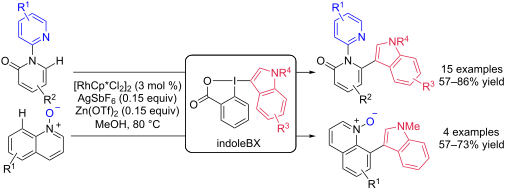
Scheme 1: C–H functionalization of pyridinones and quinoline N-oxides.
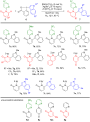
Scheme 2: Scope and limitations of the Rh-catalyzed C–H activation of [1,2'-bipyridin]-2-one.

Scheme 3: Scope of the Rh-catalyzed peri C–H activation of quinoline N-oxides.

Scheme 4: Product modifications.
Rearrangements of organic peroxides and related processes
- Ivan A. Yaremenko,
- Vera A. Vil’,
- Dmitry V. Demchuk and
- Alexander O. Terent’ev
Beilstein J. Org. Chem. 2016, 12, 1647–1748, doi:10.3762/bjoc.12.162
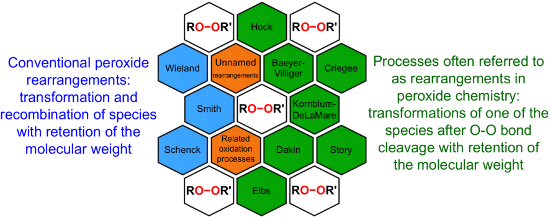

Graphical Abstract
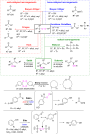
Figure 1: The named transformations considered in this review.

Scheme 1: The Baeyer–Villiger oxidation.

Scheme 2: The general mechanism of the peracid-promoted Baeyer–Villiger oxidation.

Scheme 3: General mechanism of the Lewis acid-catalyzed Baeyer–Villiger rearrangement.

Scheme 4: The theoretically studied mechanism of the BV oxidation reaction promoted by H2O2 and the Lewis aci...

Scheme 5: Proton movements in the transition states of the Baeyer–Villiger oxidation.

Scheme 6: The dependence of the course of the Baeyer–Villiger oxidation on the type of O–O-bond cleavage in t...
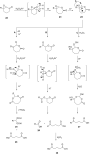
Scheme 7: The acid-catalyzed Baeyer–Villiger oxidation of cyclic epoxy ketones 22.

Scheme 8: Oxidation of isophorone oxide 29.

Scheme 9: Synthesis of acyl phosphate 32 from acyl phosphonate 31.

Scheme 10: Synthesis of aflatoxin B2 (36).

Scheme 11: The Baeyer–Villiger rearrangement of ketones 37 to lactones 38.

Scheme 12: Synthesis of 3,4-dimethoxybenzoic acid (40) via Baeyer–Villiger oxidation.

Scheme 13: Oxone transforms α,β-unsaturated ketones 43 into vinyl acetates 44.

Scheme 14: The Baeyer–Villiger oxidation of ketones 45 using diaryl diselenide and hydrogen peroxide.

Scheme 15: Baeyer–Villiger oxidation of (E)-2-methylenecyclobutanones.

Scheme 16: Oxidation of β-ionone (56) by H2O2/(BnSe)2 with formation of (E)-2-(2,6,6-trimethylcyclohex-1-en-1-...

Scheme 17: The mechanism of oxidation of ketones 58a–f by hydrogen peroxide in the presence of arsonated polys...

Scheme 18: Oxidation of ketone (58b) by H2O2 to 6-methylcaprolactone (59b) catalyzed by Pt complex 66·BF4.

Scheme 19: Oxidation of ketones 67 with H2O2 in the presence of [(dppb}Pt(µ-OH)]22+.

Scheme 20: The mechanism of oxidation of ketones 67 in the presence of [(dppb}Pt(µ-OH)]22+ and H2O2.

Scheme 21: Oxidation of benzaldehydes 69 in the presence of the H2O2/MeReO3 system.

Scheme 22: Oxidation of acetophenones 72 in the presence of the H2O2/MeReO3 system.

Scheme 23: Baeyer–Villiger oxidation of 2-adamantanone (45c) in the presence of Sn-containing mesoporous silic...

Scheme 24: Aerobic Baeyer–Villiger oxidation of ketones 76 using metal-free carbon.

Scheme 25: A regioselective Baeyer-Villiger oxidation of functionalized cyclohexenones 78 into a dihydrooxepin...

Scheme 26: The oxidation of aldehydes and ketones 80 by H2O2 catalyzed by Co4HP2Mo15V3O62.

Scheme 27: The cleavage of ketones 82 with hydrogen peroxide in alkaline solution.

Scheme 28: Oxidation of ketones 85 to esters 86 with H2O2–urea in the presence of KHCO3.

Scheme 29: Mechanism of the asymmetric oxidation of cyclopentane-1,2-dione 87a with the Ti(OiPr)4/(+)DET/t-BuO...

Scheme 30: The oxidation of cis-4-tert-butyl-2-fluorocyclohexanone (93) with m-chloroperbenzoic acid.

Scheme 31: The mechanism of the asymmetric oxidation of 3-substituted cyclobutanone 96a in the presence of chi...

Scheme 32: Enantioselective Baeyer–Villiger oxidation of cyclic ketones 98.

Scheme 33: Regio- and enantioselective Baeyer–Villiger oxidation of cyclic ketones 101.

Scheme 34: The proposed mechanism of the Baeyer–Villiger oxidation of acetal 105f.

Scheme 35: Synthesis of hydroxy-10H-acridin-9-one 117 from tetramethoxyanthracene 114.

Scheme 36: The Baeyer–Villiger oxidation of the fully substituted pyrrole 120.

Scheme 37: The Criegee rearrangement.

Scheme 38: The mechanism of the Criegee reaction of a peracid with a tertiary alcohol 122.

Scheme 39: Criegee rearrangement of decaline ethylperoxoate 127 into ketal 128.

Scheme 40: The ionic cleavage of 2-methoxy-2-propyl perester 129.

Scheme 41: The Criegee rearrangement of α-methoxy hydroperoxide 136.
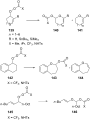
Scheme 42: Synthesis of enol esters and acetals via the Criegee rearrangement.

Scheme 43: Proposed mechanism of the transformation of 1-hydroperoxy-2-oxabicycloalkanones 147a–d.

Scheme 44: Transformation of 3-hydroxy-1,2-dioxolanes 151 into diketone derivatives 152.

Scheme 45: Criegee rearrangement of peroxide 153 with the mono-, di-, and tri-O-insertion.

Scheme 46: The sequential Criegee rearrangements of adamantanes 157a,b.

Scheme 47: Synthesis of diaryl carbonates 160a–d from triarylmethanols 159a–d through successive oxygen insert...

Scheme 48: The synthesis of sesquiterpenes 162 from ketone 161 with a Criegee rearrangement as one key step.

Scheme 49: Synthesis of trans-hydrindan derivatives 164, 165.

Scheme 50: The Hock rearrangement.

Scheme 51: The general scheme of the cumene process.

Scheme 52: The Hock rearrangement of aliphatic hydroperoxides.
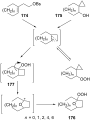
Scheme 53: The mechanism of solvolysis of brosylates 174a–c and spiro cyclopropyl carbinols 175a–c in THF/H2O2....

Scheme 54: The fragmentation mechanism of hydroperoxy acetals 178 to esters 179.

Scheme 55: The acid-catalyzed rearrangement of phenylcyclopentyl hydroperoxide 181.

Scheme 56: The peroxidation of tertiary alcohols in the presence of a catalytic amount of acid.

Scheme 57: The acid-catalyzed reaction of bicyclic secondary alcohols 192 with hydrogen peroxide.

Scheme 58: The photooxidation of 5,6-disubstituted 3,4-dihydro-2H-pyrans 196.

Scheme 59: The oxidation of tertiary alcohols 200a–g, 203a,b, and 206.

Scheme 60: Transformation of functional peroxide 209 leading to 2,3-disubstitued furans 210 in one step.

Scheme 61: The synthesis of carbazoles 213 via peroxide rearrangement.

Scheme 62: The construction of C–N bonds using the Hock rearrangement.

Scheme 63: The synthesis of moiety 218 from 217 which is a structural motif in the antitumor–antibiotic of CC-...

Scheme 64: The in vivo oxidation steps of cholesterol (219) by singlet oxygen.

Scheme 65: The proposed mechanism of the rearrangement of cholesterol-5α-OOH 220.

Scheme 66: Photochemical route to artemisinin via Hock rearrangement of 223.

Scheme 67: The Kornblum–DeLaMare rearrangement.

Scheme 68: Kornblum–DeLaMare transformation of 1-phenylethyl tert-butyl peroxide (225).

Scheme 69: The synthesis 4-hydroxyenones 230 from peroxide 229.

Scheme 70: The Kornblum–DeLaMare rearrangement of peroxide 232.

Scheme 71: The reduction of peroxide 234.

Scheme 72: The Kornblum–DeLaMare rearrangement of endoperoxide 236.

Scheme 73: The rearrangement of peroxide 238 under Kornblum–DeLaMare conditions.

Scheme 74: The proposed mechanism of rearrangement of peroxide 238.

Scheme 75: The Kornblum–DeLaMare rearrangement of peroxides 242a,b.

Scheme 76: The base-catalyzed rearrangements of bicyclic endoperoxides having electron-withdrawing substituent...

Scheme 77: The base-catalyzed rearrangements of bicyclic endoperoxides 249a,b having electron-donating substit...

Scheme 78: The base-catalyzed rearrangements of bridge-head substituted bicyclic endoperoxides 251a,b.

Scheme 79: The Kornblum–DeLaMare rearrangement of hydroperoxide 253.

Scheme 80: Synthesis of β-hydroxy hydroperoxide 254 from endoperoxide 253.

Scheme 81: The amine-catalyzed rearrangement of bicyclic endoperoxide 263.

Scheme 82: The base-catalyzed rearrangement of meso-endoperoxide 268 into 269.

Scheme 83: The photooxidation of 271 and subsequent Kornblum–DeLaMare reaction.

Scheme 84: The Kornblum–DeLaMare rearrangement as one step in the oxidation reaction of enamines.

Scheme 85: The Kornblum–DeLaMare rearrangement of 3,5-dihydro-1,2-dioxenes 284, 1,2-dioxanes 286, and tert-but...

Scheme 86: The Kornblum–DeLaMare rearrangement of epoxy dioxanes 290a–d.

Scheme 87: Rearrangement of prostaglandin H2 292.

Scheme 88: The synthesis of epicoccin G (297).

Scheme 89: The Kornblum–DeLaMare rearrangement used in the synthesis of phomactin A.

Scheme 90: The Kornblum–DeLaMare rearrangement in the synthesis of 3H-quinazolin-4-one 303.

Scheme 91: The Kornblum–DeLaMare rearrangement in the synthesis of dolabriferol (308).

Scheme 92: Sequential transformation of 3-substituted 2-pyridones 309 into 3-hydroxypyridine-2,6-diones 311 in...

Scheme 93: The Kornblum–DeLaMare rearrangement of peroxide 312 into hydroxy enone 313.

Scheme 94: The Kornblum–DeLaMare rearrangement in the synthesis of polyfunctionalized carbonyl compounds 317.

Scheme 95: The Kornblum–DeLaMare rearrangement in the synthesis of (Z)-β-perfluoroalkylenaminones 320.

Scheme 96: The Kornblum–DeLaMare rearrangement in the synthesis of γ-ketoester 322.

Scheme 97: The Kornblum–DeLaMare rearrangement in the synthesis of diterpenoids 326 and 328.

Scheme 98: The synthesis of natural products hainanolidol (331) and harringtonolide (332) from peroxide 329.

Scheme 99: The synthesis of trans-fused butyrolactones 339 and 340.

Scheme 100: The synthesis of leucosceptroid C (343) and leucosceptroid P (344) via the Kornblum–DeLaMare rearra...

Scheme 101: The Dakin oxidation of arylaldehydes or acetophenones.

Scheme 102: The mechanism of the Dakin oxidation.

Scheme 103: A solvent-free Dakin reaction of aromatic aldehydes 356.

Scheme 104: The organocatalytic Dakin oxidation of electron-rich arylaldehydes 358.

Scheme 105: The Dakin oxidation of electron-rich arylaldehydes 361.

Scheme 106: The Dakin oxidation of arylaldehydes 358 in water extract of banana (WEB).

Scheme 107: A one-pot approach towards indolo[2,1-b]quinazolines 364 from indole-3-carbaldehydes 363 through th...

Scheme 108: The synthesis of phenols 367a–c from benzaldehydes 366a-c via acid-catalyzed Dakin oxidation.

Scheme 109: Possible transformation paths of the highly polarized boric acid coordinated H2O2–aldehyde adduct 3...

Scheme 110: The Elbs oxidation of phenols 375 to hydroquinones.

Scheme 111: The mechanism of the Elbs persulfate oxidation of phenols 375 affording p-hydroquinones 376.

Scheme 112: Oxidation of 2-pyridones 380 under Elbs persulfate oxidation conditions.

Scheme 113: Synthesis of 3-hydroxy-4-pyridone (384) via an Elbs oxidation of 4-pyridone (382).

Scheme 114: The Schenck rearrangement.

Scheme 115: The Smith rearrangement.

Scheme 116: Three main pathways of the Schenck rearrangement.

Scheme 117: The isomerization of hydroperoxides 388 and 389.

Scheme 118: Trapping of dioxacyclopentyl radical 392 by oxygen.

Scheme 119: The hypothetical mechanism of the Schenck rearrangement of peroxide 394.

Scheme 120: The autoxidation of oleic acid (397) with the use of labeled isotope 18O2.

Scheme 121: The rearrangement of 18O-labeled hydroperoxide 400 under an atmosphere of 16O2.

Scheme 122: The rearrangement of the oleate-derived allylic hydroperoxides (S)-421 and (R)-425.

Scheme 123: Mechanisms of Schenck and Smith rearrangements.

Scheme 124: The rearrangement and cyclization of 433.

Scheme 125: The Wieland rearrangement.

Scheme 126: The rearrangement of bis(triphenylsilyl) 439 or bis(triphenylgermyl) 441 peroxides.

Scheme 127: The oxidative transformation of cyclic ketones.

Scheme 128: The hydroxylation of cyclohexene (447) in the presence of tungstic acid.

Scheme 129: The oxidation of cyclohexene (447) under the action of hydrogen peroxide.

Scheme 130: The reaction of butenylacetylacetone 455 with hydrogen peroxide.

Scheme 131: The oxidation of bridged 1,2,4,5-tetraoxanes.

Scheme 132: The proposed mechanism for the oxidation of bridged 1,2,4,5-tetraoxanes.

Scheme 133: The rearrangement of ozonides.

Scheme 134: The acid-catalyzed oxidative rearrangement of malondialdehydes 462 under the action of H2O2.

Scheme 135: Pathways of the Lewis acid-catalyzed cleavage of dialkyl peroxides 465 and ozonides 466.

Scheme 136: The mechanism of the transformation of (tert-butyldioxy)cyclohexanedienones 472.

Scheme 137: The synthesis of Vitamin K3 from 472a.

Scheme 138: Proposed mechanism for the transformation of 478d into silylated endoperoxide 479d.

Scheme 139: The rearrangement of hydroperoxide 485 to form diketone 486.

Scheme 140: The base-catalyzed rearrangement of cyclic peroxides 488a–g.

Scheme 141: Synthesis of chiral epoxides and aldols from peroxy hemiketals 491.

Scheme 142: The multistep transformation of (R)-carvone (494) to endoperoxides 496a–e.

Scheme 143: The decomposition of anthracene endoperoxide 499.

Scheme 144: Synthesis of esters 503 from aldehydes 501 via rearrangement of peroxides 502.

Scheme 145: Two possible paths for the base-promoted decomposition of α-azidoperoxides 502.

Scheme 146: The Story decomposition of cyclic diperoxide 506a.

Scheme 147: The Story decomposition of cyclic triperoxide 506b.

Scheme 148: The thermal rearrangement of endoperoxides A into diepoxides B.

Scheme 149: The transformation of peroxide 510 in the synthesis of stemolide (511).

Scheme 150: The possible mechanism of the rearrangement of endoperoxide 261g.

Scheme 151: The photooxidation of indene 517.

Scheme 152: The isomerization of ascaridole (523).

Scheme 153: The isomerization of peroxide 525.

Scheme 154: The thermal transformation of endoperoxide 355.

Scheme 155: The photooxidation of cyclopentadiene (529) at a temperature higher than 0 °C.

Scheme 156: The thermal rearrangement of endoperoxides 538a,b.

Scheme 157: The transformation of peroxides 541.

Scheme 158: The thermal rearrangements of strained cyclic peroxides.

Scheme 159: The thermal rearrangement of diacyl peroxide 551 in the synthesis of C4-epi-lomaiviticin B core 553....

Scheme 160: The 1O2 oxidation of tryptophan (554) and rearrangement of dioxetane intermediate 555.

Scheme 161: The Fe(II)-promoted cleavage of aryl-substituted bicyclic peroxides.

Scheme 162: The proposed mechanism of the Fe(II)-promoted rearrangement of 557a–c.

Scheme 163: The reaction of dioxolane 563 with Fe(II) sulfate.

Scheme 164: Fe(II)-promoted rearrangement of 1,2-dioxane 565.

Scheme 165: Fe(II) cysteinate-promoted rearrangement of 1,2-dioxolane 568.

Scheme 166: The transformation of 1,2-dioxanes 572a–c under the action of FeCl2.

Scheme 167: Fe(II) cysteinate-promoted transformation of tetraoxane 574.

Scheme 168: The CoTPP-catalyzed transformation of bicyclic endoperoxides 600a–d.

Scheme 169: The CoTPP-catalyzed transformation of epoxy-1,2-dioxanes.

Scheme 170: The Ru(II)-catalyzed reactions of 1,4-endoperoxide 261g.

Scheme 171: The Ru(II)-catalyzed transformation as a key step in the synthesis of elyiapyrone A (610) from 1,4-...

Scheme 172: Peroxides with antimalarial activity.

Scheme 173: The interaction of iron ions with artemisinin (616).

Scheme 174: The interaction of FeCl2 with 1,2-dioxanes 623, 624.

Scheme 175: The mechanism of reaction 623 and 624 with Fe(II)Cl2.

Scheme 176: The reaction of bicyclic natural endoperoxides G3-factors 631–633 with FeSO4.

Scheme 177: The transformation of terpene cardamom peroxide 639.
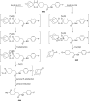
Scheme 178: The different ways of the cleavage of tetraoxane 643.

Scheme 179: The LC–MS analysis of interaction of tetraoxane 646 with iron(II)heme 647.

Scheme 180: The rearrangement of 3,6-epidioxy-1,10-bisaboladiene (EDBD, 649).

Scheme 181: Easily oxidized substrates.

Scheme 182: Biopathway of synthesis of prostaglandins.

Scheme 183: The reduction and rearrangements of isoprostanes.

Scheme 184: The partial mechanism for linoleate 658 oxidation.

Scheme 185: The transformation of lipid hydroperoxide.

Scheme 186: The acid-catalyzed cleavage of the product from free-radical oxidation of cholesterol (667).

Scheme 187: Two pathways of catechols oxidation.

Scheme 188: Criegee-like or Hock-like rearrangement of the intermediate hydroperoxide 675 in dioxygenase enzyme...

Scheme 189: Carotinoides 679 cleavage by carotenoid cleavage dioxygenases.
Biosynthesis of oxygen and nitrogen-containing heterocycles in polyketides
- Franziska Hemmerling and
- Frank Hahn
Beilstein J. Org. Chem. 2016, 12, 1512–1550, doi:10.3762/bjoc.12.148
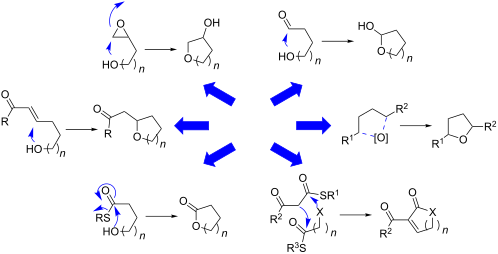

Graphical Abstract

Scheme 1: Schematic description of the cyclisation reaction catalysed by TE domains. In most cases, the nucle...

Scheme 2: Mechanisms for the formation of oxygen heterocycles. The degree of substitution can differ from tha...

Scheme 3: Pyran-ring formation in pederin (24) biosynthesis. Incubation of recombinant PedPS7 with substrate ...

Scheme 4: The domain AmbDH3 from ambruticin biosynthesis catalyses the dehydration of 25 and subsequent cycli...

Scheme 5: SalBIII catalyses dehydration of 29 and subsequent cyclisation to tetrahydropyran 30 [18].

Figure 1: All pyranonaphtoquinones contain either the naphtha[2,3-c]pyran-5,10-dione (32) or the regioisomeri...

Scheme 6: Pyran-ring formation in actinorhodin (34) biosynthesis. DNPA: 4-dihydro-9-hydroxy-1-methyl-10-oxo-3H...

Scheme 7: Pyran formation in granaticin (36) biosynthesis. DNPA: 4-dihydro-9-hydroxy-1-methyl-10-oxo-3H-napht...

Scheme 8: Pyran formation in alnumycin (37) biosynthesis. Adapted from [21].

Scheme 9: Biosynthesis of pseudomonic acid A (61). The pyran ring is initially formed in 57 after dehydrogena...

Scheme 10: Epoxidation–cyclisation leads to the formation of the tetrahydropyran ring in the western part of t...

Scheme 11: a) Nonactin (70) is formed from heterodimers of (−)(+)-dimeric nonactic acid and (+)(−)-dimeric non...

Figure 2: Pamamycins (73) are macrodiolide antibiotics containing three tetrahydrofuran moieties, which are a...

Scheme 12: A PS domain homolog in oocydin A (76) biosynthesis is proposed to catalyse furan formation via an o...

Scheme 13: Mechanism of oxidation–furan cyclisation by AurH, which converts (+)-deoxyaureothin (77) into (+)-a...

Scheme 14: Leupyrrin A2 (80) and the proposed biosynthesis of its furylidene moiety [69,70].

Scheme 15: Asperfuranone (93) biosynthesis, adapted from [75].
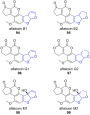
Figure 3: The four major aflatoxins produced by Aspergilli are the types B1, B2, G1 and G2 (94–97). In the di...

Scheme 16: Overview on aflatoxin B1 (94) biosynthesis. HOMST = 11-hydroxy-O-methylsterigmatocystin [78,79,82-106].

Scheme 17: A zipper mechanism leads to the formation of oxygen heterocycles in monensin biosynthesis [109-111].

Scheme 18: Formation of the 2,6-dioxabicyclo[3.2.1]octane (DBO) ring system in aurovertin B (118) biosynthesis ...

Figure 4: Structures of the epoxide-containing polyketides epothilone A (119) and oleandomycin (120) [123-125].

Scheme 19: Structures of phoslactomycin B (121) (a) and jerangolid A (122) (b). The heterocycle-forming steps ...

Scheme 20: a) Structures of rhizoxin (130) and cycloheximide (131). Model for the formation of δ-lactones (b) ...

Scheme 21: EncM catalyses a dual oxidation sequence and following processing of the highly reactive intermedia...

Figure 5: Mesomeric structures of tetronates [138,139].

Figure 6: Structures of tetronates for which gene clusters have been sequenced. The tetronate moiety is shown...

Scheme 22: Conserved steps for formation and processing in several 3-acyl-tetronate biosynthetic pathways were...

Scheme 23: In versipelostatin A (153) biosynthesis, VstJ is a candidate enzyme for catalysing the [4 + 2] cycl...

Scheme 24: a) Structures of some thiotetronate antibiotics. b) Biosynthesis of thiolactomycin (165) as propose...

Scheme 25: Aureusidine synthase (AS) catalyses phenolic oxidation and conjugate addition of chalcones leading ...

Scheme 26: a) Oxidative cyclisation is a key step in the biosynthesis of spirobenzofuranes 189, 192 and 193. b...

Scheme 27: A bicyclisation mechanism forms a β-lactone and a pyrrolidinone and removes the precursor from the ...

Scheme 28: Spontaneous cyclisation leads to off-loading of ebelactone A (201) from the PKS machinery [163].

Scheme 29: Mechanisms for the formation of nitrogen heterocycles.

Scheme 30: Biosynthesis of highly substituted α-pyridinones. a) Feeding experiments confirmed the polyketide o...

Scheme 31: Acridone synthase (ACS) catalyses the formation of 1,3-dihydroxy-N-methylacridone (224) by condensa...

Scheme 32: A Dieckmann condensation leads to the formation of a 3-acyl-4-hydroxypyridin-2-one 227 and removes ...

Scheme 33: a) Biosynthesis of the pyridinone tenellin (234). b) A radical mechanism was proposed for the ring-...

Scheme 34: a) Oxazole-containing PKS–NRPS-derived natural products oxazolomycin (244) and conglobatin (245). b...

Scheme 35: Structure of tetramic acids 251 (a) and major tautomers of 3-acyltetramic acids 252a–d (b). Adapted...

Scheme 36: Equisetin biosynthesis. R*: terminal reductive domain. Adapted from [202].

Scheme 37: a) Polyketides for which a similar biosynthetic logic was suggested. b) Pseurotin A (256) biosynthe...

Figure 7: Representative examples of PTMs with varying ring sizes and oxidation patterns [205,206].

Scheme 38: Ikarugamycin biosynthesis. Adapted from [209-211].

Scheme 39: Tetramate formation in pyrroindomycin aglycone (279) biosynthesis [213-215].

Scheme 40: Dieckmann cyclases catalyse tetramate or 2-pyridone formation in the biosynthesis of, for example, ...
Synthesis of highly functionalized 2,2'-bipyridines by cyclocondensation of β-ketoenamides – scope and limitations
- Paul Hommes and
- Hans-Ulrich Reissig
Beilstein J. Org. Chem. 2016, 12, 1170–1177, doi:10.3762/bjoc.12.112
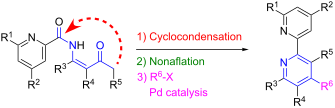
- oligomeric side products. The resulting primary condensation products contain a 4-hydroxy group in the newly formed pyridine ring that also exists as 4-pyridone tautomer making the identification and purification at this stage inconvenient. We therefore removed all volatile components from the crude products

Graphical Abstract

Scheme 1: Synthesis of highly functionalized 2,2'-bipyridines 4a and 5b from symmetrical 1,3-diketones 1a and ...
Scheme 2: Synthesis of β-ketoenamines 2c–e and of β-ketoenamides 3c–h.

Scheme 3: Synthesis of α-methoxy-β-ketoenamine 2i, its N-acylation to 3i and the reaction of β-ketoenamide 3a...

Scheme 4: Cyclizations of β-ketoenamide 3i leading to 2,2´-bipyridine derivative 4i or to the related 2-(2-py...

Scheme 5: Suzuki-couplings of 2,2'-bipyrid-4-yl nonaflates 5a and 5b to compounds 9 and 10.

Scheme 6: Palladium-catalyzed couplings of chloro-substituted 2,2'-bipyrid-4-yl nonaflate 5g leading to compo...
The aminoindanol core as a key scaffold in bifunctional organocatalysts
- Isaac G. Sonsona,
- Eugenia Marqués-López and
- Raquel P. Herrera
Beilstein J. Org. Chem. 2016, 12, 505–523, doi:10.3762/bjoc.12.50
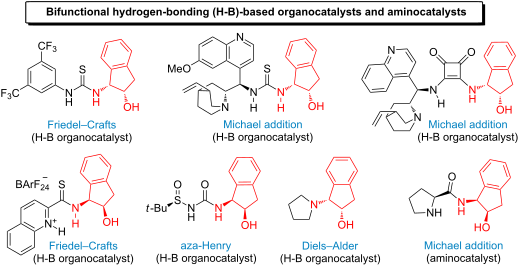
- , the asymmetric Diels–Alder (D–A) reaction between the N-sulfonamide-3-hydroxy-2-pyridone-based dienes 52 and different dienophile substrates was developed using the bifunctional cis-2-trialkylaminoindanol organocatalyst ent-41 [56]. We show herein the reactivity of this family of dienes with several

Graphical Abstract

Figure 1: Different configurations of 1,2-aminoindanol 1a–d.

Scheme 1: Asymmetric F–C alkylation catalyzed by thiourea 4.

Figure 2: Results for the F–C reaction carried out with catalyst 4 and the structurally modified analogues, 4'...

Figure 3: (a) Transition state TS1 originally proposed for the F–C reaction catalyzed by thiourea 4 [18]. (b) Tra...

Scheme 2: Asymmetric F–C alkylation catalyzed by thiourea ent-4 in the presence of D-mandelic acid as a Brøns...

Figure 4: Transition state TS2 proposed for the activation of the thiourea-based catalyst ent-4 by an externa...

Scheme 3: Friedel–Crafts alkylation of indoles catalyzed by the chiral thioamide 6.

Scheme 4: Scalable tandem C2/C3-annulation of indoles, catalyzed by the thioamide ent-6.

Scheme 5: Plausible tandem process mechanism for the sequential, double Friedel–Crafts alkylation, which invo...

Scheme 6: One-pot multisequence process that allows the synthesis of interesting compounds 14. The pharmacolo...

Scheme 7: Reaction pathway proposed for the preparation of the compounds 14.

Scheme 8: The enantioselective synthesis of cis-vicinal-substituted indane scaffolds 21, catalyzed by ent-6.

Scheme 9: Asymmetric domino procedure (Michael addition/Henry cyclization), catalyzed by the thioamide ent-6 ...

Scheme 10: The enantioselective addition of indoles 2 to α,β-unsaturated acyl phosphonates 24, a) screening of...

Figure 5: Proposed transition state TS7 for the Friedel–Crafts reaction of indole and α,β-unsaturated acyl ph...

Scheme 11: Study of aliphatic β,γ-unsaturated α-ketoesters 26 as substrates in the F–C alkylation of indoles c...

Figure 6: Possible transition states TS8 and TS9 in the asymmetric addition of indoles 2 to the β,γ-unsaturat...

Figure 7: Transition state TS10 proposed for the asymmetric addition of dialkylhydrazone 28 to the β,γ-unsatu...

Scheme 12: Different β-hydroxylamino-based catalysts tested in a Michael addition, and the transition state TS...

Scheme 13: Enantioselective addition of acetylacetone (36a) to nitroalkenes 3, catalyzed by 37 and the propose...

Scheme 14: Addition of 3-oxindoles 39 to 2-amino-1-nitroethenes 40, catalyzed by 41.

Scheme 15: Michael addition of 1,3-dicarbonyl compounds 36 to the nitroalkenes 3 catalyzed by the squaramide 43...

Scheme 16: Asymmetric aza-Henry reaction catalyzed by the aminoindanol-derived sulfinyl urea 50.

Figure 8: Results for the aza-Henry reaction carried out with the structurally modified catalysts 50–50''.

Scheme 17: Diels–Alder reaction catalyzed by the aminoindanol derivative ent-41.

Scheme 18: Asymmetric Michael addition of 3-pentanone (55a) to the nitroalkenes 3 through aminocatalysis.

Scheme 19: Substrate scope extension for the asymmetric Michael addition between the ketones 55 and the nitroa...

Scheme 20: A possible reaction pathway in the presence of the catalyst 56 and the plausible transition state T...
Natural products from microbes associated with insects
- Christine Beemelmanns,
- Huijuan Guo,
- Maja Rischer and
- Michael Poulsen
Beilstein J. Org. Chem. 2016, 12, 314–327, doi:10.3762/bjoc.12.34
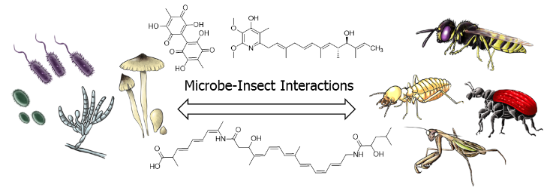
- substances were detectable on the cocoon surface for months during hibernation. Structurally, piericidins consist of a pyridone core attached to polyene side chains of variable size, a structural and physiochemical feature of ubiquinone. Therefore, it is not surprising that piericidins are potent inhibitors

Graphical Abstract

Figure 1: Flow chart of the typical characterization of chemical signals from microbial interactions. (1) Che...

Figure 2: Multilateral microbe–insect interactions. (1) Insect–symbiont interactions with both partners benef...
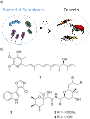
Figure 3: a) Interactions between bacterial (endo)symbionts and insects with both partners benefiting from th...

Figure 4: Multilateral microbial interactions in fungus-growing insects. (1) Insect cultivar: protects and sh...
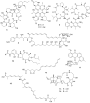
Figure 5: Small molecules (chemical mediators) play key roles in maintaining garden homeostasis in fungus-gro...

Figure 6: Secondary metabolites isolated from Actinobacteria from fungus-growing termites. Microtermolide A (...

Figure 7: Secondary metabolites from bacterial mutualists of solitary insects. Bafilomycin A1 (21), bafilomyc...

Figure 8: Beneficial interactions (1) between fungal symbionts and insects.

Figure 9: Secondary metabolites isolated from fungal symbionts. Cerulenin (30), helvolic acid (31), lepiochlo...

Figure 10: Predatory interactions, (1) entomopathogenic fungi use insect as prey.
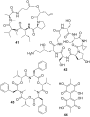
Figure 11: Entomopathogenic fungi use secondary metabolites as insecticidal compounds to kill their prey. Dest...
Autonomous assembly of synthetic oligonucleotides built from an expanded DNA alphabet. Total synthesis of a gene encoding kanamycin resistance
- Kristen K. Merritt,
- Kevin M. Bradley,
- Daniel Hutter,
- Mariko F. Matsuura,
- Diane J. Rowold and
- Steven A. Benner
Beilstein J. Org. Chem. 2014, 10, 2348–2360, doi:10.3762/bjoc.10.245
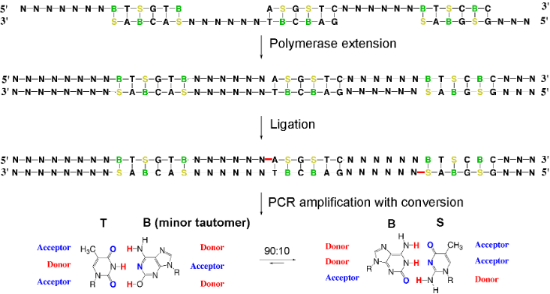
- -letter GACTSB DNA alphabet. This was an alternative to the AEGIS nucleotides 2-amino-8-(1’-β-D-2’-deoxyribofuranosyl)imidazo[1,2-a]-1,3,5-triazin-4(8H)-one (trivially named P) and 6-amino-5-nitro-3-(1’-β-D-2’-deoxyribofuranosyl)-2(1H)-pyridone (trivially named Z) (Figure 2), which give a GACTZP six

Graphical Abstract

Figure 1: Structures explaining why large DNA (L-DNA) constructs cannot easily autonomously self-assemble fro...

Figure 2: Watson–Crick pairing rules follow two rules of complementarity: (a) size complementarity (large pur...

Figure 3: (top) Schematic showing the mix-anneal-extend-ligate-amplify process exploiting AEGIS pairing (to o...

Figure 4: The exact sequences and overlaps of the fragments designed by OligArch to allow the autonomous asse...
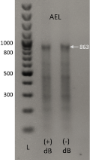
Figure 5: Agarose gel (1%, stained with ethidium bromide) showing the products (before PCR) arising from the ...

Figure 6: LB-agar plates spread, at various dilutions, with 25 µL cells transformed by plasmids containing th...
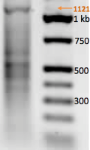
Figure 7: (left) Autonomous assembly of the 32A construct yielded the desired 1,121 base-pair amplicon in a s...

Figure 8: Fragments built only from standard nucleotides, without AEGIS, and designed by OligArch [21] to support...
OligArch: A software tool to allow artificially expanded genetic information systems (AEGIS) to guide the autonomous self-assembly of long DNA constructs from multiple DNA single strands
- Kevin M. Bradley and
- Steven A. Benner
Beilstein J. Org. Chem. 2014, 10, 1826–1833, doi:10.3762/bjoc.10.192
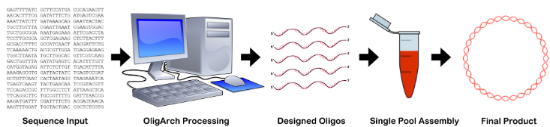
- (trivially named B), 2-amino-8-(1’-β-D-2’-deoxyribofuranosyl)-imidazo[1,2-a]-1,3,5-triazin-4(8H)one (trivially named P), and 6-amino-5-nitro-3-(1’-β-D-2’-deoxyribofuranosyl)-2(1H)-pyridone (trivially named Z) (Figure 2). In both cases, conversion is facilitated by forcing polymerases to mismatch AEGIS

Graphical Abstract

Figure 1: Some structures showing possible reasons why large DNA (L-DNA) constructs do not self-assemble from...

Figure 2: Watson–Crick pairing rules follow two rules of complementarity: (a) size complementarity (large pur...

Figure 3: (top) The conversion of S:B pairs to T:A pairs involves tautomerization of B to give its minor enol...

Figure 4: Representative assembly of oligonucleotides designed by OligArch built from the components of the s...
Streptopyridines, volatile pyridine alkaloids produced by Streptomyces sp. FORM5
- Ulrike Groenhagen,
- Michael Maczka,
- Jeroen S. Dickschat and
- Stefan Schulz
Beilstein J. Org. Chem. 2014, 10, 1421–1432, doi:10.3762/bjoc.10.146
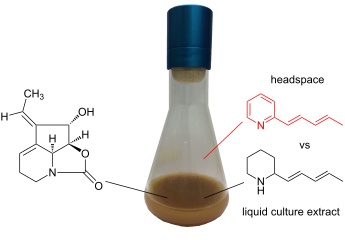
- derivatives streptazones B1 (1), B2 (2), C (3), the 4-pyridone derivative streptazone D (4) with a pentadienyl side chain, and streptazolin (5) (Figure 1) [8]. Streptazolin is produced by several streptomycetes [8][9][10][11][12], and is formed biosynthetically by a polyketide mechanism [13]. The respective

Graphical Abstract

Figure 1: Alkaloids produced by Streptomyces strain FORM5.

Figure 2: Part of the total ion chromatogram of the headspace extract of Streptomyces sp. FORM5 with the stru...

Figure 3: Mass spectra of a) (E)-2-(pent-3-en-1-yl)pyridine (streptopyridine E, 8), b) (1Z,3E)-penta-1,3-dien...

Scheme 1: Synthesis of streptopyridines A to E (8–12) and the 2-alkylpyridines 6 and 7.

Figure 4: Total ion chromatograms of the product mixtures of isomers 9–12 synthesized under E-selective (a) a...

Figure 5: Structures of piperidine derivatives 20–26.

Figure 6: a) Mass spectrum of streptopyridine A (12), b) mass spectrum of 12 after feeding of 2 mM 13C2-sodiu...

Scheme 2: Proposed biosynthesis of the streptopyridines. PKS: polyketide synthase; red: reduction; ta: transa...

Figure 7: Compounds detected in the headspace of Streptomyces sp. FORM5.
An efficient method for the construction of polysubstituted 4-pyridones via self-condensation of β-keto amides mediated by P2O5 and catalyzed by zinc bromide
- Liquan Tan,
- Peng Zhou,
- Cui Chen and
- Weibing Liu
Beilstein J. Org. Chem. 2013, 9, 2681–2687, doi:10.3762/bjoc.9.304
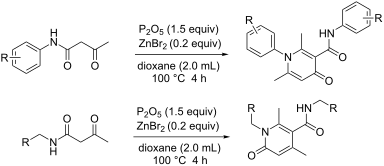
- 1a–1k could be easily converted into their corresponding 4-pyridone 2a–2k. All the reactions proceeded smoothly and afforded the desired product in good to excellent isolated yields (72–90%) in 4 h. This transformation appears quite tolerant with respect to the positions of the substituents on the
- In summary, we have established an improved efficient synthetic protocol for the synthesis of 4-pyridone derivatives by a sequence of intermolecular dehydration of β-keto amides in the presence of phosphorus pentoxide (P2O5), 1,3-acyl migration and intramolecular dehydration. Comparing to the similar

Graphical Abstract

Scheme 1: The six different reactive positions of β-keto amides.

Scheme 2: Synthesis of polysubstituted 4-pyridones from β-keto amides.

Scheme 3: The scope of the substrates. (Note: All the listed yields are isolated yields.)

Scheme 4: Synthesis of polysubstituted 4-pyridones from N-aliphatic-substituted β-keto amides.

Scheme 5: Construct the cross-condensation products.

Scheme 6: Hypothesized mechanism.
New syntheses of 5,6- and 7,8-diaminoquinolines
- Maroš Bella and
- Viktor Milata
Beilstein J. Org. Chem. 2013, 9, 2669–2674, doi:10.3762/bjoc.9.302
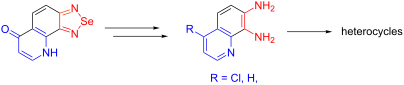
- .9.302 Abstract The synthesis of 5,6- and 7,8-diaminoquinoline derivatives starting from angularly annelated selenadiazoloquinolones is presented. Simple chlorination of the pyridone ring followed by reductive deselenation of the 1,2,5-selenadiazole ring afforded novel 4-chloro-o-diaminoquinolines
- -benzoselenadiazole skeleton while the pyridine ring can be obtained by transformation of the pyridone core [15]. The synthesis of 7,8-diaminoquinoline (3) starting from selenadiazolo[3,4-h]quinolone 1 is depicted in Scheme 1. In the first step, the aromatization of the pyridone ring by chlorination with POCl3 in DMF

Graphical Abstract

Scheme 1: Synthesis of 7,8-diaminoquinoline hydrochloride (5).

Scheme 2: Application of hydrochloride 5 in the syntheses of nitrogen heterocycles.

Scheme 3: Synthesis of 4-chloro-5,6-diaminoquinoline (11).
Investigating the continuous synthesis of a nicotinonitrile precursor to nevirapine
- Ashley R. Longstreet,
- Suzanne M. Opalka,
- Brian S. Campbell,
- B. Frank Gupton and
- D. Tyler McQuade
Beilstein J. Org. Chem. 2013, 9, 2570–2578, doi:10.3762/bjoc.9.292
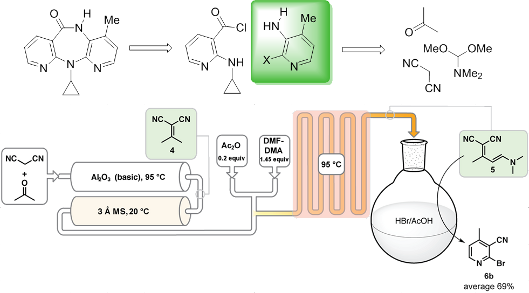
- malononitrile) and bypass the pyridone intermediate used in the original CAPIC synthesis (Scheme 2a) by effecting the ring closure under Pinner reaction conditions (Scheme 2b) [14]. We set out to investigate the possibility of performing a continuous synthesis of 2-bromo-4-methylnicotinonitrile starting from

Graphical Abstract

Figure 1: The estimated demand of for nevirapine until 2015 [6].

Scheme 1: Commercial building blocks to nevirapine.

Scheme 2: a) Current commercial process to CAPIC and b) newly developed batch synthesis to CAPIC and its brom...

Scheme 3: Proposed synthesis to 2-bromo-4-methylnicotinonitrile using a continuous approach with the consider...

Figure 2: a) Flow scheme to produce the enamine intermediate 5 from isopropylidenemalononitrile (4) (see Supporting Information File 1 for...

Scheme 4: Flow scheme to produce the enamine 5 starting from acetone and malononitrile (See Supporting Information File 1 for details).

Figure 3: Comparing the long-term stability of the Al2O3 and 3 Å MS columns when the Al2O3 column temperature...

Scheme 5: Several byproducts were observed when producing 5 starting from acetone and malononitrile. 7 is for...

Scheme 6: Flow scheme to produce 2-bromo-4-methylnicotinonitrile (6b) in 81% yield from 4 with a 1 M concentr...

Scheme 7: Reactor scheme for the continuous synthesis of 2-bromo-4-methylnicotinonitrile (6b) with an average...
An overview of the synthetic routes to the best selling drugs containing 6-membered heterocycles
- Marcus Baumann and
- Ian R. Baxendale
Beilstein J. Org. Chem. 2013, 9, 2265–2319, doi:10.3762/bjoc.9.265
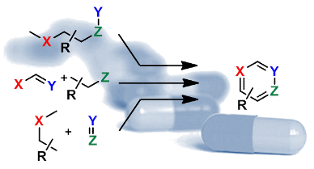
- instances different names are commonly used by the synthetic community (i.e. pyridone and pyridinone). Furthermore, in most cases throughout this review only the syntheses of the free-based form of the parent drugs is discussed although these are commonly formulated in their prescription form as salts
- readily prepared by chlorination of 2-pyridone (1.42) with phosphorous oxychloride (Scheme 8) [31][32]. The resulting primary alcohol 1.45 is then subjected to a second SNAr reaction with 4-fluorobenzaldehyde [33]. A Knoevenagel condensation of the aldehyde functionality in compound 1.47 with
- substituted 2-pyridones (Scheme 9) [34][35]. This protocol is closely related to the Hantzsch pyridine synthesis and offers access to a wide range of products with well-defined regioselectivity. The simple undecorated parent 2-pyridone (1.42) can be somewhat harder to access but is obtained in a linear

Graphical Abstract

Scheme 1: Scaled industrial processes for the synthesis of simple pyridines.

Scheme 2: Synthesis of nicotinic acid from 2-methyl-5-ethylpyridine (1.11).

Scheme 3: Synthesis of 3-picoline and nicotinic acid.

Scheme 4: Synthesis of 3-picoline from 2-methylglutarodinitrile 1.19.

Scheme 5: Picoline-based synthesis of clarinex (no yields reported).

Scheme 6: Mode of action of proton-pump inhibitors and structures of the API’s.

Scheme 7: Hantzsch-like route towards the pyridine rings in common proton pump inhibitors.

Figure 1: Structures of rosiglitazone (1.40) and pioglitazone (1.41).

Scheme 8: Synthesis of rosiglitazone.

Scheme 9: Syntheses of 2-pyridones.

Scheme 10: Synthesis and mechanism of 2-pyrone from malic acid.

Scheme 11: Polymer-assisted synthesis of rosiglitazone.

Scheme 12: Synthesis of pioglitazone.

Scheme 13: Meerwein arylation reaction towards pioglitazone.

Scheme 14: Route towards pioglitazone utilising tyrosine.

Scheme 15: Route towards pioglitazone via Darzens ester formation.

Scheme 16: Syntheses of the thiazolidinedione moiety.

Scheme 17: Synthesis of etoricoxib utilising Negishi and Stille cross-coupling reactions.

Scheme 18: Synthesis of etoricoxib via vinamidinium condensation.

Figure 2: Structures of nalidixic acid, levofloxacin and moxifloxacin.

Scheme 19: Synthesis of moxifloxacin.

Scheme 20: Synthesis of (S,S)-2,8-diazabicyclo[4.3.0]nonane 1.105.

Scheme 21: Synthesis of levofloxacin.

Scheme 22: Alternative approach to the levofloxacin core 1.125.

Figure 3: Structures of nifedipine, amlodipine and clevidipine.

Scheme 23: Mg3N2-mediated synthesis of nifedipine.

Scheme 24: Synthesis of rac-amlodipine as besylate salt.

Scheme 25: Aza Diels–Alder approach towards amlodipine.

Scheme 26: Routes towards clevidipine.

Figure 4: Examples of piperidine containing drugs.

Figure 5: Discovery of tiagabine based on early leads.

Scheme 27: Synthetic sequences to tiagabine.

Figure 6: Structures of solifenacin (2.57) and muscarine (2.58).

Scheme 28: Enantioselective synthesis of solifenacin.

Figure 7: Structures of DPP-4 inhibitors of the gliptin-type.

Scheme 29: Formation of inactive diketopiperazines from cis-rotameric precursors.

Figure 8: Co-crystal structure of carmegliptin bound in the human DPP-4 active site (PDB 3kwf).

Scheme 30: Improved route to carmegliptin.

Figure 9: Structures of lamivudine and zidovudine.

Scheme 31: Typical routes accessing uracil, thymine and cytosine.

Scheme 32: Coupling between pyrimidones and riboses via the Vorbrüggen nucleosidation.

Scheme 33: Synthesis of lamivudine.

Scheme 34: Synthesis of raltegravir.

Scheme 35: Mechanistic studies on the formation of 3.22.

Figure 10: Structures of selected pyrimidine containing drugs.

Scheme 36: General preparation of pyrimidines and dihydropyrimidones.

Scheme 37: Synthesis of imatinib.

Scheme 38: Flow synthesis of imatinib.

Scheme 39: Syntheses of erlotinib.

Scheme 40: Synthesis of erlotinib proceeding via Dimroth rearrangement.

Scheme 41: Synthesis of lapatinib.

Scheme 42: Synthesis of rosuvastatin.

Scheme 43: Alternative preparation of the key aldehyde towards rosuvastatin.

Figure 11: Structure comparison between nicotinic acetylcholine receptor agonists.

Scheme 44: Syntheses of varenicline and its key building block 4.5.

Scheme 45: Synthetic access to eszopiclone and brimonidine via quinoxaline intermediates.

Figure 12: Bortezomib bound in an active site of the yeast 20S proteasome ([114], pdb 2F16).

Scheme 46: Asymmetric synthesis of bortezomib.

Figure 13: Structures of some prominent piperazine containing drugs.

Figure 14: Structural comparison between the core of aplaviroc (4.35) and a type-1 β-turn (4.36).

Scheme 47: Examplary synthesis of an aplaviroc analogue via the Ugi-MCR.

Scheme 48: Syntheses of azelastine (5.1).

Figure 15: Structures of captopril, enalapril and cilazapril.

Scheme 49: Synthesis of cilazapril.

Figure 16: Structures of lamotrigine, ceftriaxone and azapropazone.

Scheme 50: Synthesis of lamotrigine.

Scheme 51: Alternative synthesis of lamotrigine (no yields reported).

Figure 17: Structural comparison between imiquimod and the related adenosine nucleoside.

Scheme 52: Conventional synthesis of imiquimod (no yields reported).

Scheme 53: Synthesis of imiquimod.

Scheme 54: Synthesis of imiquimod via tetrazole formation (not all yields reported).

Figure 18: Structures of various anti HIV-medications.

Scheme 55: Synthesis of abacavir.

Figure 19: Structures of diazepam compared to modern replacements.

Scheme 56: Synthesis of ocinaplon.

Scheme 57: Access to zaleplon and indiplon.

Scheme 58: Different routes towards the required N-methylpyrazole 6.65 of sildenafil.

Scheme 59: Polymer-supported reagents in the synthesis of key aminopyrazole 6.72.

Scheme 60: Early synthetic route to sildenafil.

Scheme 61: Convergent preparations of sildenafil.

Figure 20: Comparison of the structures of sildenafil, tadalafil and vardenafil.

Scheme 62: Short route to imidazotriazinones.

Scheme 63: Alternative route towards vardenafils core imidazotriazinone (6.95).

Scheme 64: Bayer’s approach to the vardenafil core.

Scheme 65: Large scale synthesis of vardenafil.

Scheme 66: Mode of action of temozolomide (6.105) as methylating agent.

Scheme 67: Different routes to temozolomide.

Scheme 68: Safer route towards temozolomide.

Figure 21: Some unreported heterocyclic scaffolds in top market drugs.
Total synthesis of (−)-epimyrtine by a gold-catalyzed hydroamination approach
- Thi Thanh Huyen Trinh,
- Khanh Hung Nguyen,
- Patricia de Aguiar Amaral and
- Nicolas Gouault
Beilstein J. Org. Chem. 2013, 9, 2042–2047, doi:10.3762/bjoc.9.242
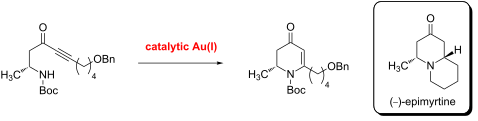
- -alanine. The key step to access the enantiopure pyridone intermediate was achieved by a gold-mediated cyclization. Finally, various transformations afforded the natural product in a few steps and good overall yield. Keywords: epimyrtine; gold; gold catalysis; heterocycles; hydroamination; quinolizidine
- enantiopure α and β-aminoynones was successfully used in our group to access pyrrolidinone and pyridone heterocycles via a gold-mediated approach [19][20]. The use of β-aminoynone intermediates for the synthesis of 2,3-dihydropyridones was recently developed by Georg [21] (Scheme 1). This strategy involves
- lithium acetylide to furnish the β-aminoynone 2 with a yield of 71%. With this key building block in hand, efforts were directed toward the gold-mediated intramolecular hydroamination for the construction of the chiral pyridone intermediate 3. For this, PPh3AuSbF6 generated in situ from a 5 mol % mixture

Graphical Abstract

Scheme 1: Previously reported approach from β-aminoynones for the synthesis of pyridones.

Scheme 2: Retrosynthetic analysis of (−)-epimyrtine.

Scheme 3: Synthesis of (−)-epimyrtine.
Exploration of an epoxidation–ring-opening strategy for the synthesis of lyconadin A and discovery of an unexpected Payne rearrangement
- Brad M. Loertscher,
- Yu Zhang and
- Steven L. Castle
Beilstein J. Org. Chem. 2013, 9, 1179–1184, doi:10.3762/bjoc.9.132
- addition to its interesting bioactivity, lyconadin A presents a significant synthetic challenge by virtue of its unique pentacyclic skeleton, which contains six stereocenters and a pyridone ring. It is therefore not surprising that 1 has attracted the attention of the organic synthesis community. The first
- for synthesis. Herein, we provide an account of our studies directed toward the construction of this alkaloid. Specifically, we describe our efforts to prepare advanced intermediates that could be employed in the aforementioned pyridone annulation and tandem radical cyclization processes. In the
- functional-group manipulations. Based on the aforementioned model study [11], 7-exo–6-exo tandem radical cyclization of phenyl selenoester 4 was expected to produce ketone 3. Disassembly of the pyridone moiety of 4 according to our annulation protocol [14] revealed thioester 5 as a suitable precursor. We

Graphical Abstract

Figure 1: Lyconadin A.

Scheme 1: Retrosynthetic analysis of 1.

Scheme 2: Synthesis of triether 15.

Scheme 3: Synthesis and attempted ring-opening of epoxide 17.

Scheme 4: Attempted protection of 14 and silyl migration.

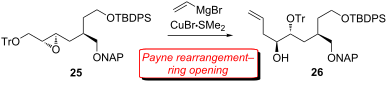
Scheme 5: Synthesis and ring-opening rearrangement of epoxide 25.

Scheme 6: Proposed mechanism for generation of alcohol 26.

Scheme 7: Synthesis of epoxide 29 from alcohol 26 (asterisks indicate relative but not absolute stereochemist...
Aldol elaboration of 4,5,6,7-tetrahydroisoxazolo[4,3-c]pyridin-4-ones, masked precursors to acylpyridones
- Raymond C. F. Jones,
- Abdul K. Choudhury,
- James N. Iley,
- Mark E. Light,
- Georgia Loizou and
- Terence A. Pillainayagam
Beilstein J. Org. Chem. 2012, 8, 308–312, doi:10.3762/bjoc.8.33
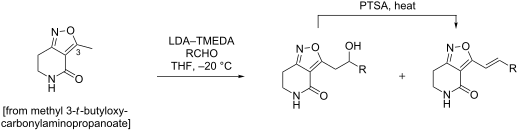
- condensation to give new 3-alkenyl-4,5,6,7-tetrahydroisoxazolo[4,3-c]pyridine-4-ones, which are masked forms related to the acylpyridone natural products. Keywords: aldol reaction; fused-ring systems; heterocycles; isoxazole; metalation; pyridone; Introduction The 3-acyl-4-hydroxypyridin-2-one moiety 1
- elfamycin antibiotics [5]. Interest has also been stimulated in these metabolites by the use of the entomopathogenic fungi such as Cordyceps sp., many of which contain pyridone metabolites, in traditional Chinese medicine to strengthen the immune system and improve cognitive function. Farinosone A (2d) from
- conditions (toluene, reflux, PTSA, 1.3 mol equiv) to give the 3-alkenyl compound 8a (63%). This revised protocol has not yet been extended to the reaction of pyridone 6 with other aldehydes, but has been routinely employed for elaboration of the dehydro version 4 [16]. The acylpyridone antifungal natural

Graphical Abstract

Figure 1: The 3-acyl-4-hydroxypyridin-2-one motif, example natural products and the isoxazolopyridone scaffol...

Scheme 1: Aldol reactions of tetrahydroisoxazolopyridone 6. Reagents: (i) LDA–TMEDA, RCHO, THF, −20 °C; (ii) ...

Figure 2: X-ray crystal structure of 3-(2-phenylethenyl)-4,5,6,7-tetrahydroisoxazolo[4,3-c]pyridin-4-one (8a) ...

Figure 3: Ilicicolin H as an example of a 3-decalinoyl-4-hydroxypyridin-2-one metabolite.

Scheme 2: Retrosynthetic analysis of a model 3-decalinyl-4,5,6,7-tetrahydroisoxazolopyridone 10.

Scheme 3: Synthesis of triene 11. Reagents: (i), LDA, propenal, THF, −78 °C; (ii), LiAlH4, THF, 20 °C (75%); ...
Directed aromatic functionalization in natural-product synthesis: Fredericamycin A, nothapodytine B, and topopyrones B and D
- Charles Dylan Turner and
- Marco A. Ciufolini
Beilstein J. Org. Chem. 2011, 7, 1475–1485, doi:10.3762/bjoc.7.171
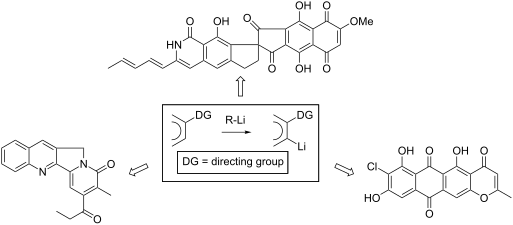
- central problem we wished to address was the preparation of the 3-alkyl-2-pyridone moiety of 36 by an unusual [3 + 3] construction developed in our laboratory [80]. This chemistry (Scheme 7) promotes the condensation of a cyanoacetamide 37, with an enone or enal 38, in the presence of t-BuOK in DMSO
- ] upon the resultant 42 delivered the requisite 41 in 87% yield. Happily, it transpired that the conjugate addition chemistry of 41 is indeed controlled exclusively by the quinolyl ketone. This enabled the conduct of our pyridone-forming sequence, which in the present case, however, had to be implemented
- in the slightly modified form seen in Scheme 10. Thus, Michael addition of 2-methyl cyanoacetamide converted 41 into a mixture of diastereomers of hemiamidals 47 and 48. Attempts to force this mixture to advance to the desired pyridone under basic conditions yielded uniformly unsatisfactory results

Graphical Abstract
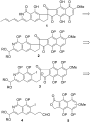
Scheme 1: Structure and retrosynthetic analysis of fredericamycin A.

Scheme 2: Assembly of the isoquinolone segment of fredericamycin.

Scheme 3: Synthesis of a naphthalide precursor to the quinoid moiety of fredericamycin.
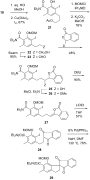
Scheme 4: Palladium-mediated cyclization of a fredericamycin model system.
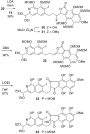
Scheme 5: Synthesis of the precursor of fredericamycin and the facile air oxidation thereof.

Scheme 6: Formal synthesis of fredericamycin A.

Figure 1: Structure of nothapodytine B.

Scheme 7: A useful pyridone synthesis.

Scheme 8: Retrosynthetic logic for nothapodytine B.

Scheme 9: Preparation of a key nothapodytine fragment.

Scheme 10: Total synthesis of nothapodytine B.

Figure 2: Structures of topopyrones.

Scheme 11: Retrosynthetic logic for the linear series of topopyrones.

Scheme 12: Construction of the molecular subunit common to all topopyrones.
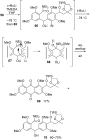
Scheme 13: Difficulties encountered during the merger of the topopyrone D moieties.

Scheme 14: Efficient synthesis of a simplified anthraquinone.

Scheme 15: Total synthesis of topopyrone D.
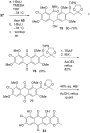
Scheme 16: Total synthesis of topopyrone B.
A practical two-step procedure for the preparation of enantiopure pyridines: Multicomponent reactions of alkoxyallenes, nitriles and carboxylic acids followed by a cyclocondensation reaction
- Christian Eidamshaus,
- Roopender Kumar,
- Mrinal K. Bera and
- Hans-Ulrich Reissig
Beilstein J. Org. Chem. 2011, 7, 962–975, doi:10.3762/bjoc.7.108

- pyridines in Table 1 are depicted in their predominant tautomeric form as found in CDCl3 at ambient temperature. Interestingly, the pyridone/pyridinol equilibrium seems to depend on the substituents at the C-2 or C-6 side chains. In general, a hydrogen bond-acceptor seems to stabilize the pyridone tautomer
- , whereas the pyridinol tautomer is favored when a hydrogen bond-donor is present. Compound 37 exists exclusively as pyridone tautomer, but after desilylation the resulting product, with a free hydroxy group in the side chain, strongly prefers the pyridinol tautomer. It seems reasonable to assume that the
- pyridone tautomer is stabilized through an internal hydrogen bond between a silyl ether or a tertiary amine moiety of the side chain as observed for compounds 22 and 24. Moreover, we found that the equilibrium is strongly influenced by the solvent. In CDCl3 pyridine 40 exclusively exists in its pyridone

Graphical Abstract

Scheme 1: Preparation of β-ketoenamides and subsequent cyclocondensation to 4-hydroxypyridines. a) Et2O, −40 ...

Scheme 2: Mechanistic rational for the formation of β-ketoenamides 16.

Scheme 3: Reaction of proline derivative 45 and formation of β-ketoenamide 47 and enolester 48.

Figure 1: 1H NMR spectra of 49 and the mixture of diastereoisomers 49 and 49’.

Scheme 4: Synthesis of pyrid-4-yl nonaflate 52.

Scheme 5: O-Methylation of pyridine derivatives 22 and 30 followed by desilylation.

Scheme 6: Formation of 5-alkoxypyrimidines from β-alkoxy-β-ketoenamides.
Desymmetrization of 7-azabicycloalkenes by tandem olefin metathesis for the preparation of natural product scaffolds
- Wolfgang Maison,
- Marina Büchert and
- Nina Deppermann
Beilstein J. Org. Chem. 2007, 3, No. 48, doi:10.1186/1860-5397-3-48
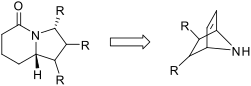
- precursors for the tandem conversions, 7 was deprotected and acylated with butenoic acid and pentenoyl chloride to give 8 and 10. However, first attempts to convert the bis-olefin 8 via RORCM to the bicyclic target structure failed and only pyridone derivative 9 was isolated in small quantities along with
- . Ruthenium based precatalysts used in this study. RORCM of 2-azabicycloalkenes 5 to bicyclic scaffolds 6. RORCM of 7-azabicycloalkenes 8 and 10 to pyridone 9 and isoindole scaffold 11. RORCM of 7-azabicycloalkenes 13 and 16 to bicyclic scaffolds 14, 15, 17 and 18. Conditions A: 10 mol % 1, C2H4, 3 equiv

Graphical Abstract

Figure 1: Ruthenium based precatalysts used in this study.

Scheme 1: RORCM of 2-azabicycloalkenes 5 to bicyclic scaffolds 6.

Scheme 2: RORCM of 7-azabicycloalkenes 8 and 10 to pyridone 9 and isoindole scaffold 11.

Scheme 3: RORCM of 7-azabicycloalkenes 13 and 16 to bicyclic scaffolds 14, 15, 17 and 18. Conditions A: 10 mo...

Scheme 4: ROCM of 7-azabicycloalkenes 7 and 12 to isoindole and pyrrolidine scaffolds 19 and 20.

Scheme 5: Catalytic enantioselective desymmetrization of 7-azabicycloalkene 10 to scaffold 23.
Asymmetric aza-Diels- Alder reaction of Danishefsky's diene with imines in a chiral reaction medium
- Bruce Pégot,
- Olivier Nguyen Van Buu,
- Didier Gori and
- Giang Vo-Thanh
Beilstein J. Org. Chem. 2006, 2, No. 18, doi:10.1186/1860-5397-2-18
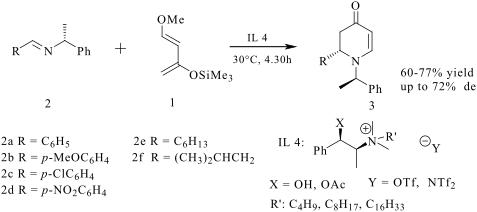
- highly efficient procedure for the synthesis of 2-substituted-2,3-dihydro-4-pyridone derivatives through the aza-Diels-Alder reaction under 'green chemistry' conditions. The reaction has been found to perform well at room temperature in ionic liquids using no Lewis acid catalyst or organic solvent.[30

Graphical Abstract

Scheme 1: Asymmetric aza-Diels-Alder reaction of Danishefsky's diene 1 with imines 2.

Figure 1: Possible interactions of substrates or intermediate of the aza-Diels-Alder reaction with the chiral...
Efficient synthesis of 5-substituted 2-aryl- 6-cyanoindolizines via nucleophilic substitution reactions
- Eugene V. Babaev,
- Natalya I. Vasilevich and
- Anna S. Ivushkina
Beilstein J. Org. Chem. 2005, 1, No. 9, doi:10.1186/1860-5397-1-9

- lead to substitution of oxo/oxy-group to chlorine giving the products 2 a – d. (It is well known that analogous 2-hydroxypyridines which exist in the pyridone tautomeric form can be easily converted to 2-chloroderivatives by reaction with POCl3.).[7] Indeed, heating of indolizinones 1 a – d in POCl3 at

Graphical Abstract

Scheme 1: Synthesis of 2-aryl-5-chloro-6-cyano-7-methylindolizines 2. Possible tautomeric structures A and B ...
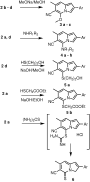
Scheme 2: Nucleophilic substitution in 2-aryl-5-chloro-6-cyano-7-methylindolizines.



