


Search results
Search for "DBU" in Full Text gives 327 result(s) in Beilstein Journal of Organic Chemistry. Showing first 200.
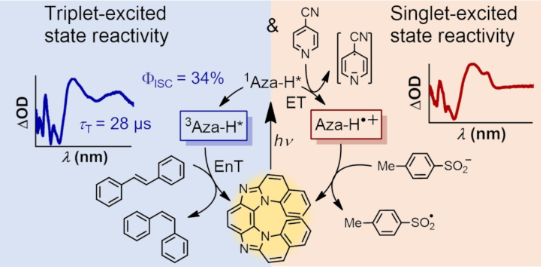
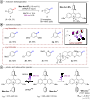
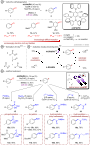
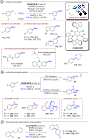
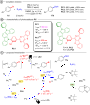
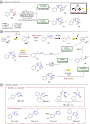
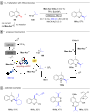
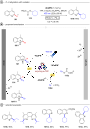
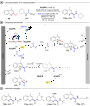
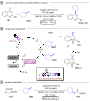
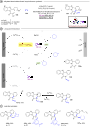
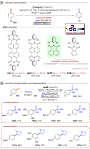
Mechanistic investigations of polyaza[7]helicene in photoredox and energy transfer catalysis
Beilstein J. Org. Chem. 2024, 20, 1236–1245, doi:10.3762/bjoc.20.106
- Foundation (DBU, Ph.D. fellowship to T.J.B.Z., grant number 20022/028). M.S. is grateful to the Chemical Industry Funds for a Kekulé fellowship.




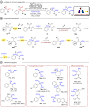
Entry to new spiroheterocycles via tandem Rh(II)-catalyzed O–H insertion/base-promoted cyclization involving diazoarylidene succinimides
Beilstein J. Org. Chem. 2024, 20, 561–569, doi:10.3762/bjoc.20.48
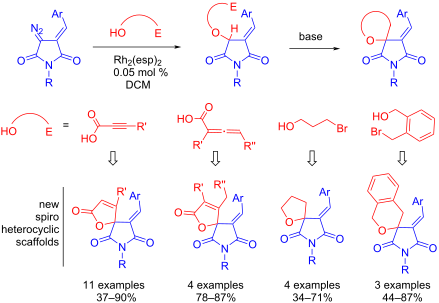
- %). Under these conditions, the 5-endo-dig cyclization leading to the target spirobutenolide 2a proceeded rather slowly (about 25% conversion per day). However, an attempt to accelerate the reaction by using a stronger base (DBU) resulted in side processes with the formation of unwanted impurities, whereas
- monitor the progress of the reaction and the formation of the OH-insertion product 14. An attempt to carry out the second step in a one-pot format with the addition of 1.2 equiv of base (DIPEA or DBU) was unsuccessful and the formation of the spirocyclic product was not observed. Replacing DCM with a more
- polar solvent, acetone, significantly accelerated the cyclization process. Thus, one to three days were required to complete the 5-exo-tet cyclization process in the acetone/DBU system. The results of the syntheses carried out with the participation of various DAS 1 to obtain spirocyclic THFs are


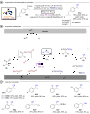
(E,Z)-1,1,1,4,4,4-Hexafluorobut-2-enes: hydrofluoroolefins halogenation/dehydrohalogenation cascade to reach new fluorinated allene
Beilstein J. Org. Chem. 2024, 20, 452–459, doi:10.3762/bjoc.20.40
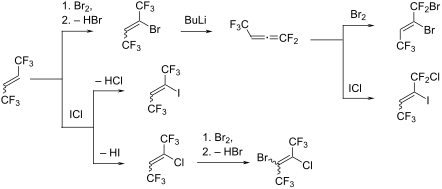
- of stereoisomers in 2:1 ratio. After isolation by distillation, 2,3-dibromo-1,1,1,4,4,4-hexafluorobutane (2) was characterized by 1H, 19F, 13C NMR and mass spectra. We studied the reaction of dibromoalkane 2 with various bases such as DBU, Hünig’s base (iPr2NEt), and potassium hydroxide (Table 1). In
- ca. 11 Hz for (E)-isomer). The best results were obtained in Et2O with Hünig’s and DBU bases (Table 1, entries 2 and 3), but unfortunately in these cases the product olefins could not be separated from Et2O. Therefore, we decided to use high-boiling diglyme instead of ether. The reaction of a butane
- 2 with one equivalent of DBU (Table 1, entry 4) led to the same results as for the Hünig’s base (Table 1, entry 1). The use of two equivalents of DBU (Table 1, entry 6) led to the complete conversion of the initial substrate, but the selectivity of the reaction was significantly reduced in this case


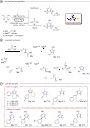
Mono or double Pd-catalyzed C–H bond functionalization for the annulative π-extension of 1,8-dibromonaphthalene: a one pot access to fluoranthene derivatives
Beilstein J. Org. Chem. 2024, 20, 427–435, doi:10.3762/bjoc.20.37
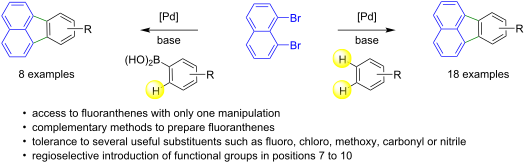
- derivatives (Scheme 1b) [21]. In the course of this reaction 20 mol % of Pd catalyst, 50 mol % of phosphine ligand and 30 equiv of DBU as base were used to afford the desired fluoranthene derivatives. 1-Naphthylboronic acid and 1,2-dibromobenzene in the presence of Pd2(dba)3 (20 mol %) and PCy3 (80 mol
- %) using again a large excess of DBU base (7 equiv) also allowed to prepare unsubstituted fluoranthene in 87% yield (Scheme 1c) [22]. The reaction of naphthol with aryl bromides followed by nonaflation and intramolecular C–H activation for the access to fluoranthenes has also been reported [23]. Most of


Metal-catalyzed coupling/carbonylative cyclizations for accessing dibenzodiazepinones: an expedient route to clozapine and other drugs
Beilstein J. Org. Chem. 2024, 20, 193–204, doi:10.3762/bjoc.20.19
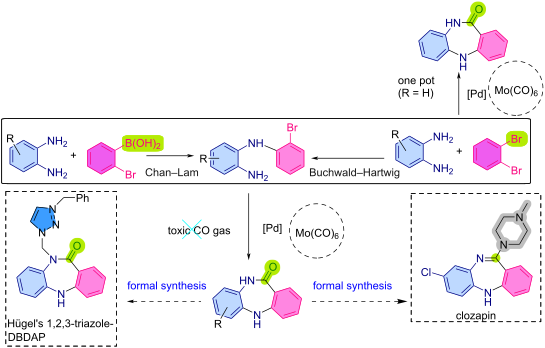
- , did not provide any improvement of the reaction outcome as only traces of the intermediate 3a were obtained (entry 3, Table 1). Switching to DBU as the base under these conditions, gave intermediate 3a in 35% yield (entry 4, Table 1). In fact, DBU was previously shown by Wannberg and Larhed to be an
- . However, we only obtained traces of intermediate 3a (entries 5 and 6, Table 1). A slight improvement of the yield of the intermediate 3 was obtained when using DBU in dioxane, which gave 3a in 42%, but only traces of the target DBDAP were observed (entry 7, Table 1). The difficulty encountered in the
- formation of DBDAP, prompted us to test alternative CO surrogates. When the reaction was performed using Co2(CO)8 (0.3 equiv) in the presence of DBU, the intermediate 3a was isolated in 35% yield, but again no DBDAP 4 was obtained (entry 8, Table 1). Formic acid, an effective CO surrogate [20][22], was also


Cycloaddition reactions of heterocyclic azides with 2-cyanoacetamidines as a new route to C,N-diheteroarylcarbamidines
Beilstein J. Org. Chem. 2024, 20, 17–24, doi:10.3762/bjoc.20.3
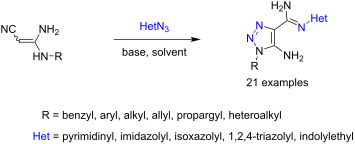
- -sulfonylamidines selectively [17]. The following screening of organic (Table 1, entries 2‒7 and 8) and inorganic (Table 1, entry 10) bases at room temperature revealed that using DBU resulted in the highest yield of triazole 3a. Analysis of experiments with 100 mol %, 120 mol %, and 80 mol % of DBU (Table 1
- , entries 2‒7) showed that the use of 100 mol % of DBU is optimal for the selective synthesis of triazole 3a in high yield (Table 1, entries 4 and 5). A study of the reaction medium revealed that common organic solvents are highly efficient for this cascade reaction (Table 1, entries 1‒11). Among the
- solvents screened, 1,4-dioxane was found the best solvent in terms of yield of the target product, solubility of the reagents, and ease of separation of the product. Thus, the optimal conditions found were reacting amidine 1 with azide 2 in the presence of DBU in a 1:1:1 ratio in 1,4-dioxane at room



1-Butyl-3-methylimidazolium tetrafluoroborate as suitable solvent for BF3: the case of alkyne hydration. Chemistry vs electrochemistry
Beilstein J. Org. Chem. 2023, 19, 1966–1981, doi:10.3762/bjoc.19.147
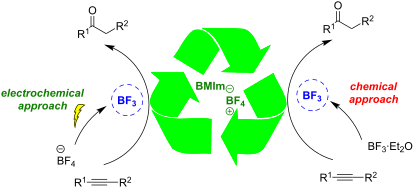
- . Therefore, while confirming the presence of the adduct, we could not quantify it. The next choice was DBU (1,8-diazabicyclo[5,4,0]undec-7-ene). The DBU-BF3 adduct is reported to be very stable in water and in air and not subjected to hydrolysis [115]. The DBU solubility in BMIm-BF4 was confirmed by NMR
- analysis (amidine carbon atom at 161.6 ppm in BMIm-BF4, taking as internal reference the imidazolium C2 at 136.4 ppm) [116]. The addition of an excess of BF3·Et2O to the solution of DBU in IL shifted the DBU amidine signal to 166.0 ppm, confirming the rapid formation of the adduct (see Supporting
- oxidation of pure BMIm-BF4 (divided cell, galvanostatic conditions) and stopped the electrolysis after 60 C (corresponding to 0.6 mmol of electrons). At the end of the electrolysis, 0.6 mmol of DBU were added to the anolyte and the mixture was kept under stirring at room temperature for 30 min. Then the


Long oligodeoxynucleotides: chemical synthesis, isolation via catching-by-polymerization, verification via sequencing, and gene expression demonstration
Beilstein J. Org. Chem. 2023, 19, 1957–1965, doi:10.3762/bjoc.19.146

- -cyanoethyl groups were removed by flushing the CPG with a solution of DBU in ACN. Under these conditions, the ODN remains on CPG and the nucleobases remain protected, both of which decrease the probability of the Michael addition side reaction. After washing off acrylonitrile, the CPG was subjected to


Construction of diazepine-containing spiroindolines via annulation reaction of α-halogenated N-acylhydrazones and isatin-derived MBH carbonates
Beilstein J. Org. Chem. 2023, 19, 1923–1932, doi:10.3762/bjoc.19.143
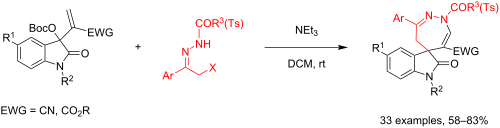
- nitrile of isatin 2a as standard reaction. The main experiments are briefly summarized in Table 1. At first, the reaction in DCM in the presence of common organic bases such as DMAP, DABCO, or DBU gave the expected spiro[indoline-3,5'-[1,2]diazepine] 3a in low to moderate yields (Table 1, entries 1–3




Synthesis and biological evaluation of Argemone mexicana-inspired antimicrobials
Beilstein J. Org. Chem. 2023, 19, 1511–1524, doi:10.3762/bjoc.19.108
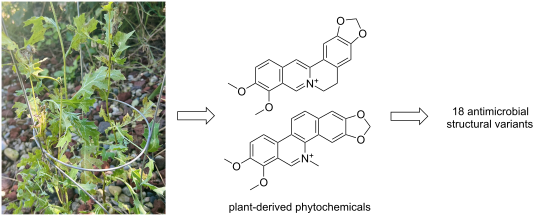
- synthesis began with the generation of substituted 2-bromo-1-aminonaphthalenes 9 and 10 (Scheme 6). After α-bromination of tetralones 1 and 2, intermediates 3 and 4 underwent elimination/aromatization with 1,8-diazabicyclo[5.4.0]undec-7-ene (DBU) to afford 2-bromo-1-naphthols 5 and 6 in fairly good yield


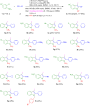
Consecutive four-component synthesis of trisubstituted 3-iodoindoles by an alkynylation–cyclization–iodination–alkylation sequence
Beilstein J. Org. Chem. 2023, 19, 1379–1385, doi:10.3762/bjoc.19.99
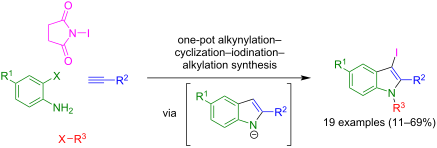
- commences with a copper-free alkynylation using DBU as a base at 100 °C. This step is followed by the addition of KOt-Bu and reaction at 100 °C for 15 min and subsequent reaction with N-iodosuccinimide (3) at room temperature. Finally, the reaction with alkyl halides 4 at room temperature gives the title
- , 122 mg, 1.20 mmol), DBU (457 mg, 3.00 mmol), and DMSO (1.50 mL) were added under nitrogen. The reaction mixture was heated at 100 °C (oil bath) for 2 h. After cooling to room temperature, potassium tert-butoxide (505 mg, 4.50 mmol) and DMSO (1.50 mL) were added to the reaction mixture and heated to
- , 25.0 µmol) and (1-Ad)2PBn·HBr (23.6 mg, 50 μmol) were placed in an oven-dried Schlenk tube with magnetic stirring bar under nitrogen. Then, 2,4-dibromoaniline (1c, 254 mg, 1.00 mmol), phenylacetylene (2a, 245 mg, 2.40 mmol), DBU (457 mg, 3.00 mmol), and 1.50 mL DMSO were added and flushed with nitrogen




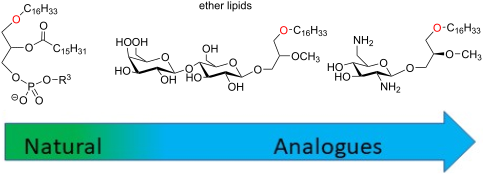
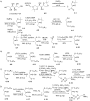
Synthesis of ether lipids: natural compounds and analogues
Beilstein J. Org. Chem. 2023, 19, 1299–1369, doi:10.3762/bjoc.19.96






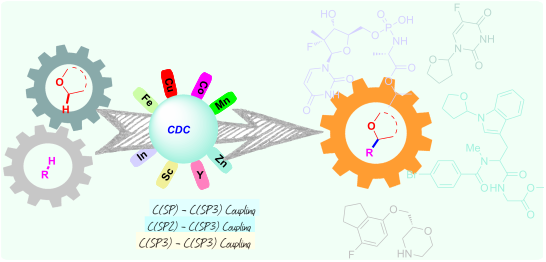
Non-noble metal-catalyzed cross-dehydrogenation coupling (CDC) involving ether α-C(sp3)–H to construct C–C bonds
Beilstein J. Org. Chem. 2023, 19, 1259–1288, doi:10.3762/bjoc.19.94
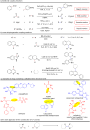
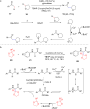
- -chain alkyl ethers in the presence of DBU under relatively mild conditions (Scheme 29b) [92]. In 2018, Wang et al. developed the cobalt-catalyzed oxidative CDC reaction of 2-arylimidazo[1,2-a]pyridines with isochroman using molecular oxygen as an oxidant (Scheme 30) [93]. These reactions involved a



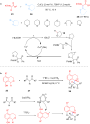


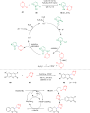

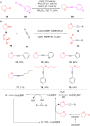


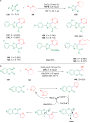


Selective construction of dispiro[indoline-3,2'-quinoline-3',3''-indoline] and dispiro[indoline-3,2'-pyrrole-3',3''-indoline] via three-component reaction
Beilstein J. Org. Chem. 2023, 19, 1234–1242, doi:10.3762/bjoc.19.91
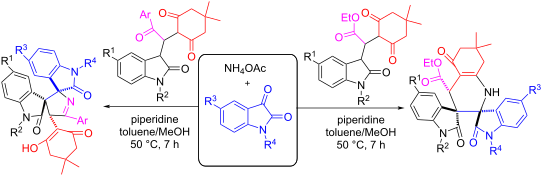
- selectively produced by using differently substituted 3-methyleneoxindoles (reaction 4 in Scheme 1). Herein, we wish to report these interesting results. Results and Discussion At first, 3-isatyl-1,4-dicarbonyl compound 1 was prepared by DBU-catalyzed Michael addition reaction of dimedone and ethyl 2-(2
- % (Table 1, entry 7). When DABCO or DBU was employed as base, the yield of 3a decreased to 36% and 29% yield, respectively (Table 1, entries 8 and 9). When the loading of ammonium acetate was increased to 0.8 mmol and 1.0 mmol, the yield of 3a increased to 85% and 82% (Table 1, entries 10 and 11



Photoredox catalysis harvesting multiple photon or electrochemical energies
Beilstein J. Org. Chem. 2023, 19, 1055–1145, doi:10.3762/bjoc.19.81
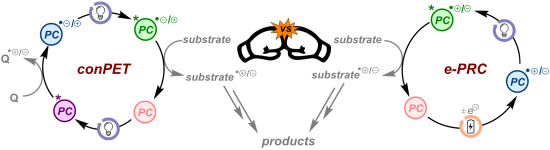
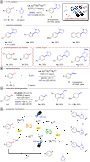
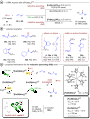
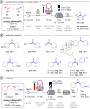
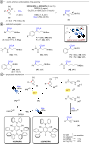
- reduction to PC•− ensures higher concentrations that are directly user-influenced. Upon activation, PC1 could successfully reduce various aryl halides generating borylated products in modest to excellent (30–99%) yields. Control experiments confirmed that light, catalyst and DBU as a sacrificial electron
- a two-photon process. DBU was found to quench the steady-state fluorescence of *PC1 with a quenching rate constant two orders of magnitude smaller than the diffusion rate constant in DMSO at 298 K and one order of magnitude greater under the borylation reaction conditions (i.e., 0.20 M DBU) than the
- intrinsic decay rate of *PC1. Since no quenching by 1d or B2pin2 could be observed, the formation of PC1•− can be attributed exclusively to the thermodynamically favored reductive quenching of *PC1 by DBU. Nanosecond laser flash photolysis techniques were employed to directly monitor the back electron

























Synthesis of substituted 8H-benzo[h]pyrano[2,3-f]quinazolin-8-ones via photochemical 6π-electrocyclization of pyrimidines containing an allomaltol fragment
Beilstein J. Org. Chem. 2023, 19, 778–788, doi:10.3762/bjoc.19.58
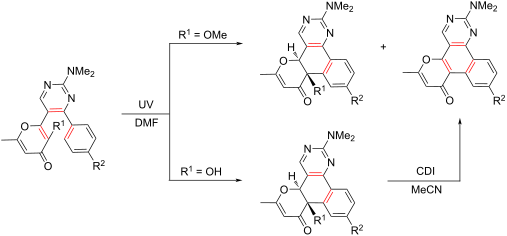
- of the photoproducts (Table 2). Based on the structure of compound 11a we assumed that it could be converted into a polyaromatic product using conventional synthetic methods. However, the use of different systems (TsOH/toluene, HCl/EtOH, DBU/EtOH, MeONa/MeOH) resulted only in the decomposition of the


Sulfate radical anion-induced benzylic oxidation of N-(arylsulfonyl)benzylamines to N-arylsulfonylimines
Beilstein J. Org. Chem. 2023, 19, 771–777, doi:10.3762/bjoc.19.57
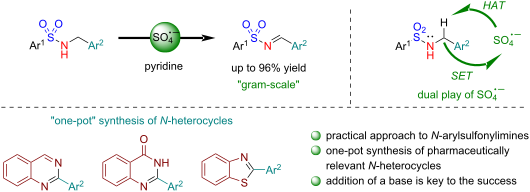
- , entry 5). Lowering the temperature to 60 °C had a deleterious effect (Table 1, entry 6). Likewise, reducing the stoichiometry of pyridine to 1 equiv proved detrimental (Table 1, entry 7). Replacing pyridine with other organic and inorganic bases such as Et3N, DBU, DABCO or K2CO3 also gave product 2a


Direct C2–H alkylation of indoles driven by the photochemical activity of halogen-bonded complexes
Beilstein J. Org. Chem. 2023, 19, 575–581, doi:10.3762/bjoc.19.42
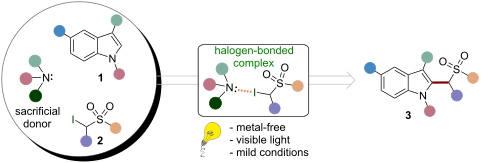
- -iodosulfone 2a (Table 1). The experiments were conducted at ambient temperature in acetonitrile (0.5 M) and under irradiation by a Kessil lamp at 456 nm. When adding 1,8-diazabiciclo[5.4.0]undec-7-ene (DBU) as sacrificial donor (1 equiv), the desired product 3a was formed in good chemical yield (entry 1
- that DBU was essential for the reactivity, since no reaction occurred in its absence (entry 3, Table 1). Reactivity was also inhibited under an aerobic atmosphere and in the presence of 2,2,6,6‐tetramethylpiperidinyloxyl (TEMPO). These experiments are consonant with the occurrence of a radical


Transition-metal-catalyzed domino reactions of strained bicyclic alkenes
Beilstein J. Org. Chem. 2023, 19, 487–540, doi:10.3762/bjoc.19.38
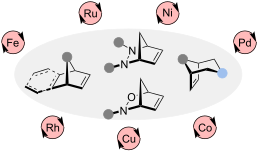
- photoexcitation of the photosensitizer 43 to form 44 which can oxidize aniline 36a to give radical cation 46 (Scheme 7). Deprotonation by DBU produces the radical 40. The radical anion photosensitizer 45 can reduce Ni(I) to Ni(0), closing the first catalytic cycle. The Ni(0) complex can undergo oxidative addition











An accelerated Rauhut–Currier dimerization enabled the synthesis of (±)-incarvilleatone and anticancer studies
Beilstein J. Org. Chem. 2023, 19, 204–211, doi:10.3762/bjoc.19.19
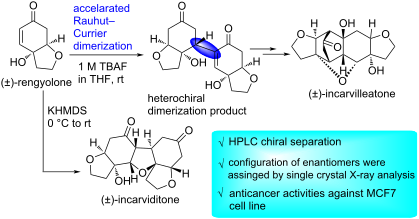
- ][13][14][15] such as NaHMDS, DBU, NaH, DABCO, t-BuOK, aq NaOH but none of them gave the desired product. Instead, either a complex mixture was formed, or the starting material was recovered as such (Table 1). However, when we treated compound (±)-4 with a strong base such as KHMDS (2 equiv) in THF at


Total synthesis of grayanane natural products
Beilstein J. Org. Chem. 2022, 18, 1707–1719, doi:10.3762/bjoc.18.181
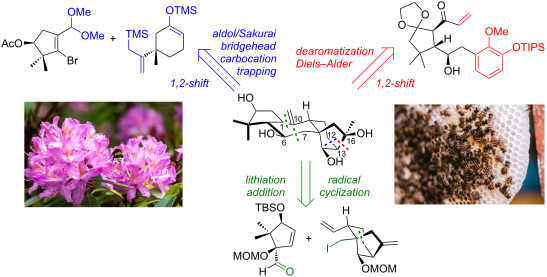
- ketone methylation gave access to 56. Directed C1–C5 vanadium-mediated epoxidation followed by DBU treatment and TBS deprotection afforded 57 in one pot. The tertiary alcohol 58 was obtained as a single diastereomer after hydration of position C18. Subsequent reduction with DIBAL-H gave the desired




Oxa-Michael-initiated cascade reactions of levoglucosenone
Beilstein J. Org. Chem. 2022, 18, 1457–1462, doi:10.3762/bjoc.18.151
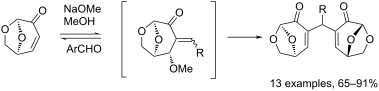
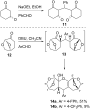
- formation of 5. Known reactions giving 11, and reactions of dihydrolevoglucosenone 12 and aromatic aldehydes with DBU. Reactions of enone 1 and aldehydes promoted by NaOMe in MeOH. Supporting Information Supporting Information File 323: Experimental details for all compounds including 1H and 13C NMR


Lewis acid-catalyzed Pudovik reaction–phospha-Brook rearrangement sequence to access phosphoric esters
Beilstein J. Org. Chem. 2022, 18, 1188–1194, doi:10.3762/bjoc.18.123
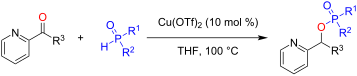
- accomplished the synthesis of phosphoric esters through a 1,8-diazabicyclo[5.4.0]undec-7-ene (DBU)-catalyzed Pudovik reaction–phospha-Brook rearrangement sequence [43]. A decade later, Chakravarty and colleagues reported the efficient synthesis of organic phosphates from ketones and aldehydes using n-BuLi as




Synthesis of tryptophan-dehydrobutyrine diketopiperazine and biological activity of hangtaimycin and its co-metabolites
Beilstein J. Org. Chem. 2022, 18, 1159–1165, doi:10.3762/bjoc.18.120
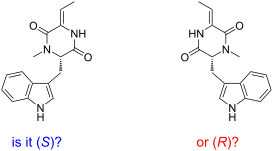
- DBU is a common strategy for the dehydration of serine and threonine units in peptides [16], but unfortunately the acetylation of 10 failed. Interestingly, the direct treatment of 10 with LiClO4 and DBU under prolonged reaction times (3 days) resulted in the elimination of water. This reaction
- basic treatment with DBU in the last step. This was confirmed by HPLC analysis on a chiral stationary phase, showing that the obtained target compound 4 was nearly racemic (Figure 1A). Because of the configurational instability of 4 under base treatment, we aimed at an approach for the final elimination


Facile and diastereoselective arylation of the privileged 1,4-dihydroisoquinolin-3(2H)-one scaffold
Beilstein J. Org. Chem. 2022, 18, 1070–1078, doi:10.3762/bjoc.18.109
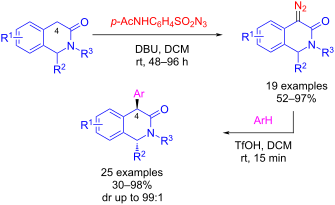
- (Danheiser method [22]) or ethoxalylation [23]. Fortunately, all of the substrates 11a–s were converted cleanly and smoothly over 2–5 days into their diazo derivatives 10a–s using p-(acetamido)benzenesulfonyl azide (p-ABSA) as the diazo group donor [24] and DBU as the base. The yields of diazo compounds 10





