


Search results
Search for "anilines" in Full Text gives 214 result(s) in Beilstein Journal of Organic Chemistry. Showing first 200.
Automated grindstone chemistry: a simple and facile way for PEG-assisted stoichiometry-controlled halogenation of phenols and anilines using N-halosuccinimides
Beilstein J. Org. Chem. 2022, 18, 999–1008, doi:10.3762/bjoc.18.100
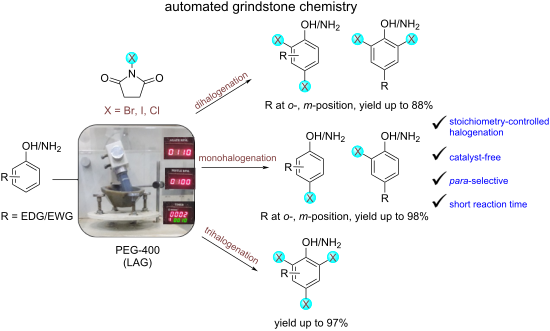
- catalyst-free halogenation of phenols and anilines via liquid-assisted grinding using PEG-400 as the grinding auxiliary. A series of mono-, di-, and tri-halogenated phenols and anilines was synthesized in good to excellent yields within 10–15 min in a chemoselective manner by controlling the stoichiometry
- catalyst-free methods, the use of costly and low boiling hexafluoroisopropanol (HFIP) as solvent offered the para-selective halogenation of activated aromatic systems (Scheme 1c) [44]. It is noteworthy to mention that over-halogenation of activated systems like phenols and anilines, due to the high
- desired monobromo derivative 2z was achieved only after 30 min of rigorous grinding. However, a negligible conversion was observed for p-xylene or mesitylene even after grinding for an hour. Therefore, we restricted our study to the halogenation of phenols and anilines only. Subsequently, a short series


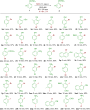


Synthetic strategies for the preparation of γ-phostams: 1,2-azaphospholidine 2-oxides and 1,2-azaphospholine 2-oxides
Beilstein J. Org. Chem. 2022, 18, 889–915, doi:10.3762/bjoc.18.90
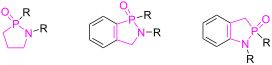
- -arylaminopropyl(methyl)phosphinic acids 45 under reduced pressure. The reactions of 1,2-oxaphospholane 2-oxides 47/2-sulfides 50 and anilines 48 generated 1-aryl-2-methyl-1,2-azaphospholidine 2-oxides 49 and 46a as well, while the reaction of 1,2-thiaphospholane 2-sulfide (51) with aniline (48a) gave
- with anilines. Synthesis of 1,3-dihydrobenzo[d][1,2]azaphosphole 2-oxides/sulfides from 2-aminobenzyl(phenyl)phosphinic acid. Synthesis of 1,3-dihydrobenzo[d][1,2]azaphosphole 2-sulfide (59) from zwitterionic 2-aminobenzyl(phenyl)dithiophosphinic acid (58). Synthesis of 1,3-dihydrobenzo[d][1,2


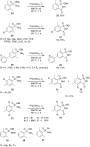






Continuous flow synthesis of azobenzenes via Baeyer–Mills reaction
Beilstein J. Org. Chem. 2022, 18, 781–787, doi:10.3762/bjoc.18.78
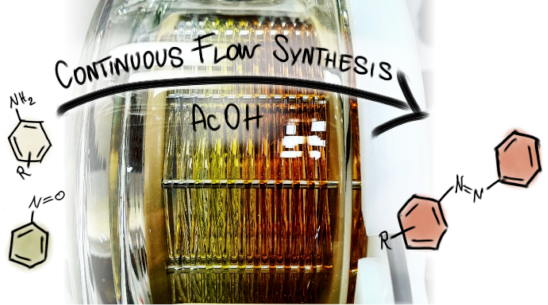
- reliable synthesis of symmetric ABs in high yields via a Cu-catalyzed oxidative coupling of aniline derivatives [17]. This synthesis can be also used for the formation of non-symmetric AB, however, only for a selected set of anilines. One of the most applied methods to access non-symmetric azobenzenes is
- based on the condensation of nitrosobenzenes with anilines (Scheme 1). This so-called Baeyer–Mills reaction, which was first published by Baeyer in 1874 and further investigated by Mills, proceeds best for electron-rich anilines with electron-poor nitrosobenzenes. The reactivity can be rationalized by
- excellently for most of the electron-rich anilines due to their increased nucleophilicity. A comparison of ortho-, meta- and para-substituted derivatives revealed that for electron-rich anilines, the para-substituted ABs are formed in better yields as their ortho- and meta-analogues. For example, the


Cs2CO3-Promoted reaction of tertiary bromopropargylic alcohols and phenols in DMF: a novel approach to α-phenoxyketones
Beilstein J. Org. Chem. 2022, 18, 420–428, doi:10.3762/bjoc.18.44
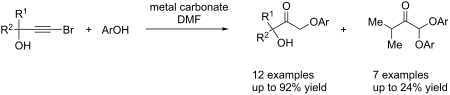
- the reaction of bromopropargylic alcohol 1a and phenols 2b–i. Reaction of bromopropargylic alcohol 1b and phenols 2a and 2d. Reaction of bromopropargylic alcohol 1c and phenol (2a). Reaction of chloropropargylic alcohol and phenol (2a). Reaction of bromopropargylic alcohol 1a and anilines. Control


Efficient N-arylation of 4-chloroquinazolines en route to novel 4-anilinoquinazolines as potential anticancer agents
Beilstein J. Org. Chem. 2021, 17, 2968–2975, doi:10.3762/bjoc.17.206
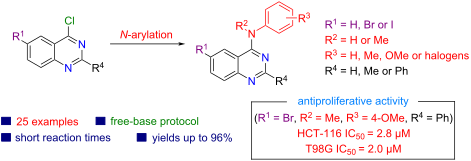
- -, meta-, and para-substituted N-methylanilines as well as substituted anilines and furnished the corresponding 4-anilinoquinazolines in good yields. Preliminary screening of the synthesized compounds against tumor cells (HCT-116 and T98G) showed promising antiproliferative properties. Keywords: 4
- -substituted anilines) [6][9] readily react with 4-chloroquinazolines to give 4-aminoquinazolines in moderate to good yields under milder reaction conditions (Scheme 1a). On the other hand, long reaction times and low yields may be observed when electron-poor amines are applied in these reactions [17][18
- ]. These limitations can be overcome by using microwave irradiation [12][13][18][19][20], which promotes fast and efficient anilination reactions when a wide range of anilines bearing both electron-donating and electron-withdrawing groups are employed as nucleophiles (Scheme 1b) [12][13]. Moreover, 4


Iron-catalyzed domino coupling reactions of π-systems
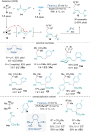
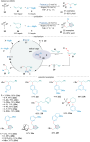
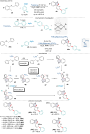
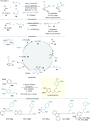
Beilstein J. Org. Chem. 2021, 17, 2848–2893, doi:10.3762/bjoc.17.196




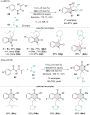

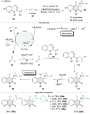
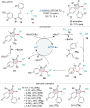


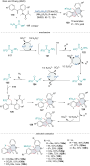

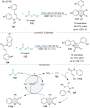


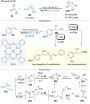

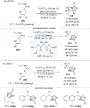


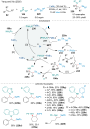
Me3Al-mediated domino nucleophilic addition/intramolecular cyclisation of 2-(2-oxo-2-phenylethyl)benzonitriles with amines; a convenient approach for the synthesis of substituted 1-aminoisoquinolines
Beilstein J. Org. Chem. 2021, 17, 2765–2772, doi:10.3762/bjoc.17.186
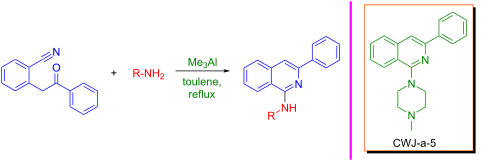
- the substrate scope of this protocol. Initially, 2-(2-oxo-2-phenylethyl)benzonitrile (3a) was treated with various anilines under the optimized reaction conditions (Scheme 2). The yields of the reactions were not influenced significantly by the electronic effects of the substituents. However, the
- huge impact on the reaction efficiency and efficacy, where para- and meta-substituents have minimal impact on the yields of the reaction delivering the corresponding products in comparable yields (Scheme 2). While least yields were observed with ortho-substituted anilines (Scheme 2, 5h and 5k), which
- can be rationalized by the steric hindrance created by the ortho-substituents. It is also worth mentioning that secondary anilines also reacted with 2-(2-oxo-2-phenylethyl)benzonitrile (3a) and delivered the corresponding product 5m, albeit in lesser yields. Later, the substrate scope of 2-(2-oxo-2




Recent advances in the asymmetric phosphoric acid-catalyzed synthesis of axially chiral compounds
Beilstein J. Org. Chem. 2021, 17, 2729–2764, doi:10.3762/bjoc.17.185
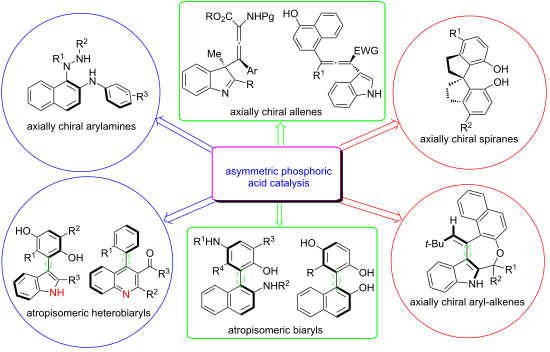
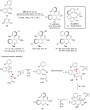
- groups were tolerated [7]. In 2020, Tan and co-workers disclosed the phosphoric acid-catalyzed atroposelective arene functionalization of nitrosonaphthalene with indoles to form atropisomeric indole-naphthalenes 39 and indole-anilines 40 by a nucleophilic aromatic substitution reaction [61] (Scheme 13










Recent advances in organocatalytic asymmetric aza-Michael reactions of amines and amides
Beilstein J. Org. Chem. 2021, 17, 2585–2610, doi:10.3762/bjoc.17.173
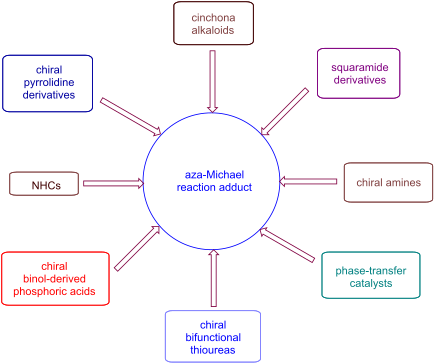
- bifunctional thioureas Thioureas constitute one of the most important class of organocatalysts [49]. Wang et al. reported a cascade aza-Michael/Michael reaction of anilines 60 to nitroolefin enoates 61 using chiral bifunctional thiourea as catalyst (cat. 62). It provided a mild and efficient approach to the
- -quinolones 92 in very good yields (67–95%) with high ee (82–97%) (Table 20) [59]. Following a similar approach, Yang et al. reported asymmetric aza-Michael additions of anilines 94 to β-nitrostyrenes 93 using a chiral binol-derived phosphoric acid diester catalyst (cat. 95). They succeeded in preparing β


α-Ketol and α-iminol rearrangements in synthetic organic and biosynthetic reactions
Beilstein J. Org. Chem. 2021, 17, 2570–2584, doi:10.3762/bjoc.17.172
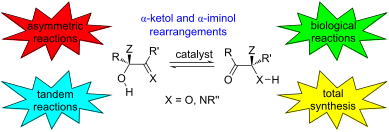
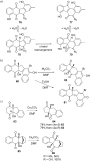
- equivalent of aniline in the presence of a Brønsted acid undergoes a multistep rearrangement to form the indole group as part of the target tryptamine 110 (Figure 20). The one-pot conversions occurred successfully over a wide range of monosubstituted anilines, including various para-alkyl groups (65–72




Copper-catalyzed monoselective C–H amination of ferrocenes with alkylamines
Beilstein J. Org. Chem. 2021, 17, 2488–2495, doi:10.3762/bjoc.17.165
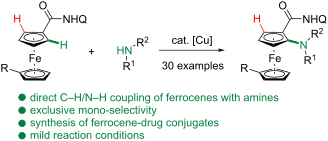
- also reported the Co-catalyzed C–H alkoxylation of ferrocenes under nearly room temperature [38]. In comparison, despite the direct C–H amination of arenes with alkylamines has emerged as an efficient strategy to prepare substituted anilines [39][40][41][42][43][44][45][46][47][48][49], the application
- %), largely due to the poison of copper catalyst by thioether. Acyclic amines were also tested and the amination products were obtained in low yields (4n, 18%; 4o, 15%). Unfortunately, primary amines and anilines were completely inert. Encouraged by the above results, we further tried to synthesize ferrocene




Recent advances in the tandem annulation of 1,3-enynes to functionalized pyridine and pyrrole derivatives
Beilstein J. Org. Chem. 2021, 17, 2462–2476, doi:10.3762/bjoc.17.163
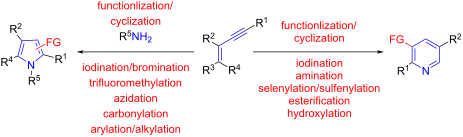
- trifluoromethylated coumarins [59], we recently developed a Rh-catalyzed approach to trifluoromethyl-substituted pyrroles using the Togni reagent II as trifluoromethyl source. It involves a three-component cascade reaction of 1,3-enynes, anilines, and Togni reagent II to afford fully substituted pyrrole derivatives




A visible-light-induced, metal-free bis-arylation of 2,5-dichlorobenzoquinone
Beilstein J. Org. Chem. 2021, 17, 2315–2320, doi:10.3762/bjoc.17.149
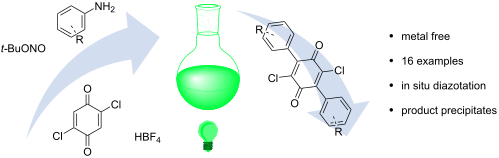
- conditions, different anilines were applied to explore the scope of the reaction (Scheme 1). The procedure is tolerant towards a range of different substituents. Both 4- and 3-substituted anilines readily functionalized the quinone (3a–n), and the halogens and other functional groups present are providing
- , explaining the lowered yield. The reaction also required six equivalents and 72 h of reaction time to produce the product. ortho-Substituted anilines are interesting substrates as the product enables several possibilities for post-functionalization. Despite the inherent steric hindrance originating from the


On the application of 3d metals for C–H activation toward bioactive compounds: The key step for the synthesis of silver bullets
Beilstein J. Org. Chem. 2021, 17, 1849–1938, doi:10.3762/bjoc.17.126
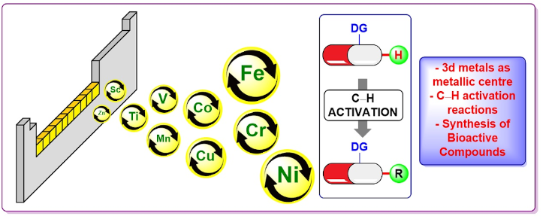
- authors used a bulky titanium catalyst, by which a desirable regioselectivity could be achieved (Scheme 7B and C). The obtained N-substituted anilines resemble some important compounds already known for their biological activities, such as antimalarial (17) [69] and anticancer (18) [70][71] properties
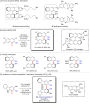
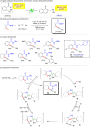
- 30C). A straightforward method for an α-amino C−H bond functionalization was described by Kang et al. in 2020 to promote the synthesis of tetrahydroquinolines from tertiary anilines (Scheme 31B and C) [163]. Tetrahydroquinolines are a class of compounds already known to present varied biological
- anilines afforded α-aminoalkyl radicals that could be coupled with a wide range of electrophilic partners to afford the products in moderate to good yields. The new reaction was also used in the first step of the total synthesis of a caspase-3 inhibitor (90), and mechanistic investigations showed that O2
















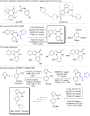
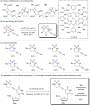


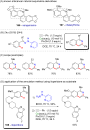
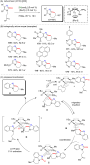









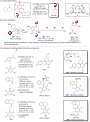

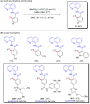
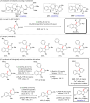
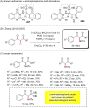
Substituted nitrogen-bridged diazocines
Beilstein J. Org. Chem. 2021, 17, 1503–1508, doi:10.3762/bjoc.17.107
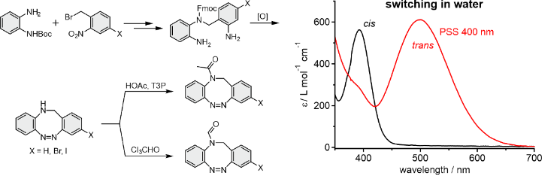
- . In contrast to previous approaches, the azo cyclization (ring closure) was achieved via the oxidation of the bis-anilines 7 with mCPBA (≈60% yield). Among the nitrogen-bridged diazocines compounds 10a and 11c are water soluble and retained their high switching efficiency (≈70%) also in water. The


Synthetic accesses to biguanide compounds
Beilstein J. Org. Chem. 2021, 17, 1001–1040, doi:10.3762/bjoc.17.82
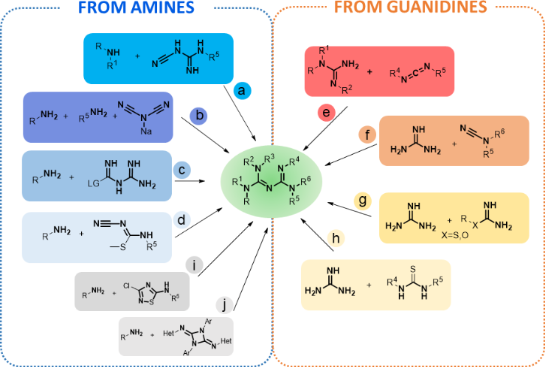
- heterocyclic biguanides found applications as new solid energetic materials [28]. ”Biguanide-like” molecules: Similar conditions were reported with ortho-substituted anilines. The addition of these compounds to cyanoguanidine usually results in a cyclization by subsequent ammonia or water condensation to form
- N1,N5-substituted biguanides, that shows little variation in reactivity. By adapting these conditions, other reactants can be used such as nitrogen-containing heterocycles, other aminated nucleophiles, or ortho-substituted anilines, extending the scope of this reaction to a broader diversity of


Application of the Meerwein reaction of 1,4-benzoquinone to a metal-free synthesis of benzofuropyridine analogues
Beilstein J. Org. Chem. 2021, 17, 977–982, doi:10.3762/bjoc.17.79
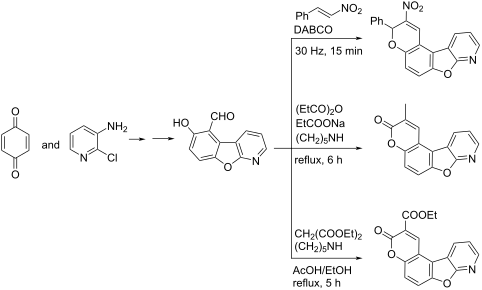
- -radical mechanism [29]. Similar reaction intermediates can be prepared using precursors such as organoboron reagents [30]. However, due to the accessibility, aryldiazonium salts are the reagents of choice. They can be prepared starting from the commercially available corresponding anilines. The present


Synthetic reactions driven by electron-donor–acceptor (EDA) complexes
Beilstein J. Org. Chem. 2021, 17, 771–799, doi:10.3762/bjoc.17.67

- electron-withdrawing groups, the scope of the reaction comprises anilines including electron-withdrawing or electron-donating substituents in the arene, except N-acetylated or ortho-halogenated anilines. In 2017, Chen and colleagues [21] reported a method that promoted the formation of an alkoxy radical


Synthesis of (Z)-3-[amino(phenyl)methylidene]-1,3-dihydro-2H-indol-2-ones using an Eschenmoser coupling reaction
Beilstein J. Org. Chem. 2021, 17, 527–539, doi:10.3762/bjoc.17.47
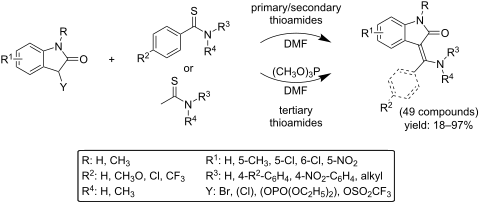
- of the oxindole skeleton were also described starting from 2-alkynylphenyl isocyanates and their precursors [21][22][23], or from N-phenylpropiolamides [24][25][26]. The newest method of synthesis, starting from 3-bromo-3-[bromo(phenyl)methyl]oxindole and substituted anilines [27], is similar to a


Novel library synthesis of 3,4-disubstituted pyridin-2(1H)-ones via cleavage of pyridine-2-oxy-7-azabenzotriazole ethers under ionic hydrogenation conditions at room temperature
Beilstein J. Org. Chem. 2021, 17, 156–165, doi:10.3762/bjoc.17.16
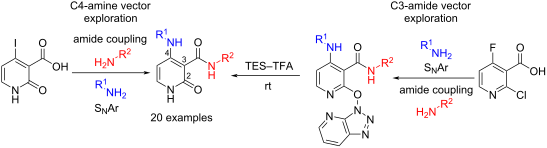
- compounds 24. In practice, the process was very efficient affording 60 final compounds with a median yield of 47%. Best results were obtained with electron-rich anilines (e.g., compounds 24a–d) and aliphatic amines (e.g., compounds 24k–l). For electron-deficient anilines (e.g., compounds 24e–g), the
- reaction mixtures were heated to 65 °C to complete the amide coupling reaction. For the least reactive anilines (e.g., compounds 24h,i), HATU only afforded trace quantities of the amide even at 65 °C. However, satisfactory results were obtained by generating the acid chloride in situ by adding a 3 fold


Three-component reactions of aromatic amines, 1,3-dicarbonyl compounds, and α-bromoacetaldehyde acetal to access N-(hetero)aryl-4,5-unsubstituted pyrroles
Beilstein J. Org. Chem. 2020, 16, 2920–2928, doi:10.3762/bjoc.16.241
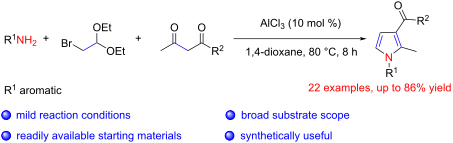
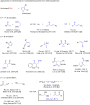
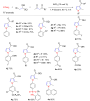
- was reflected by the tolerance of a broad range of functional groups attached to the aromatic amine. For example, anilines bearing methyl (in 4f), phenyl (in 4g), and halo functionalities (in 4h–m) were readily compatible with the AlCl3 and 1,4-dioxane system. In these cases, the pyrrole products were
- isolated in moderate to good yield. The presence of an electron-donating group in the phenyl ring facilitated the progress of the reaction to some extent, resulting in 4n. Anilines with electron-withdrawing groups, such as an acetyl or carboxy group, can also be used in the reaction, but the yields




A novel and robust heterogeneous Cu catalyst using modified lignosulfonate as support for the synthesis of nitrogen-containing heterocycles
Beilstein J. Org. Chem. 2020, 16, 2888–2902, doi:10.3762/bjoc.16.238
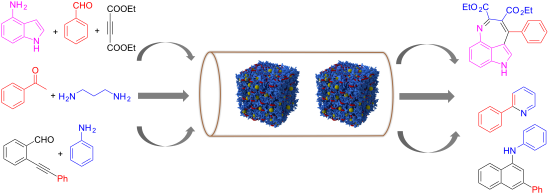
- investigation, the LS-FAS-Cu was also found to be an efficient catalyst for the synthesis of aminonaphthalene derivatives (Table 5). The substituent effect of aniline was examined systematically, and the results showed that anilines bearing electron-donating groups such as Me, OMe and t-Bu at the para-position
- could convert smoothly and give the corresponding products in excellent yields (10a–c). The anilines with electron-withdrawing substituents such as 4-bromoaniline (9d) worked sluggishly and only a moderate yield of 10d was obtained. Disubstituted anilines also tolerated the catalytic system, generating


Synthesis of purines and adenines containing the hexafluoroisopropyl group
Beilstein J. Org. Chem. 2020, 16, 2739–2748, doi:10.3762/bjoc.16.224
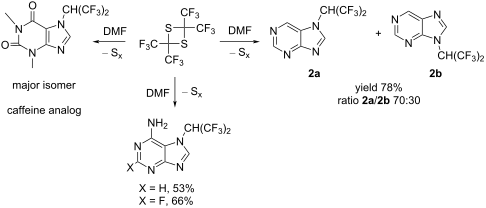
- report by Ishikawa and Kitazume that the reaction of anilines with tetrakis(trifluoromethyl)-1,3-dithietane (1) results in the formation of the corresponding imines of hexafluoroacetone [18]. Unfortunately, we were not able to confirm the structures by X-ray diffraction, and the structural assignment for
- of the reaction of tetrakis(trifluoromethyl)-1,3-dithietane (1) with the azoles 2–7 is not entirely clear. Although there are two similar reactions reported in the literature (the reaction of 1 with anilines [18] and azoles [17]), no satisfactory mechanism was suggested for these reactions. Recently
- into the final product, with extrusion of elemental sulfur) is not well understood and may be more complex, involving additional steps. The mechanism clarification of the reaction of tetrakis(trifluoromethyl)-1,3-dithietane (1) with azoles (and anilines) does require further investigation. As was



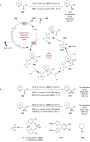
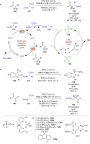
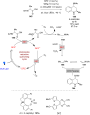
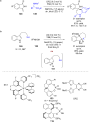
Recent developments in enantioselective photocatalysis
Beilstein J. Org. Chem. 2020, 16, 2363–2441, doi:10.3762/bjoc.16.197


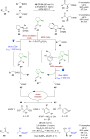
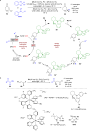


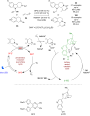


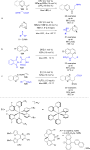


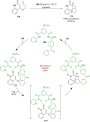
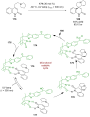


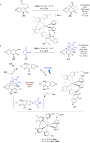
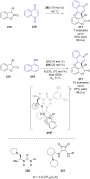


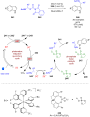

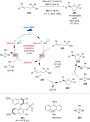


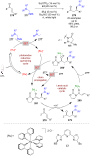


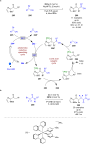


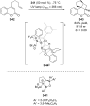


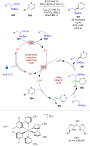


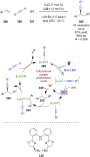


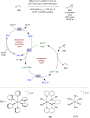
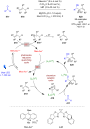
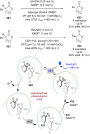


The biomimetic synthesis of balsaminone A and ellagic acid via oxidative dimerization
Beilstein J. Org. Chem. 2020, 16, 2026–2031, doi:10.3762/bjoc.16.169
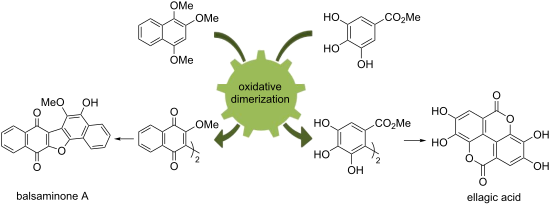
- Ullman coupling, Suzuki–Miyaura coupling and Stille coupling have dominated the field for the synthesis of biaryls [1][4]. Throughout the years, the exploration of oxidative dimerization reactions of electron-rich aromatic compounds, such as thiophenes, anilines and alkoxyarenes, in an attempt to





