Search results
Search for "carbonyl compounds" in Full Text gives 275 result(s) in Beilstein Journal of Organic Chemistry. Showing first 200.
Facile access to 3-sulfonylquinolines via Knoevenagel condensation/aza-Wittig reaction cascade involving ortho-azidobenzaldehydes and β-ketosulfonamides and sulfones
Beilstein J. Org. Chem. 2023, 19, 800–807, doi:10.3762/bjoc.19.60
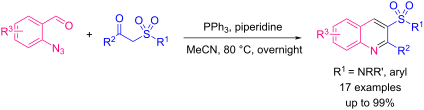
- modification of various substrates, such as 3-bromoquinolines [52][53][54][55], quinoline-3-boronic acids [56], and diazonium salts [57]. When considering general methods for the quinoline core formation, aromatic ortho-substituted carbonyl compounds attract attention as decent and easily available reagents


Enolates ambushed – asymmetric tandem conjugate addition and subsequent enolate trapping with conventional and less traditional electrophiles
Beilstein J. Org. Chem. 2023, 19, 593–634, doi:10.3762/bjoc.19.44
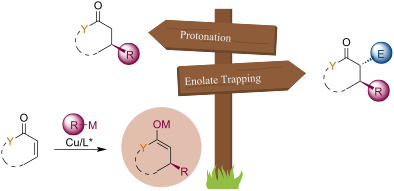
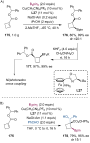
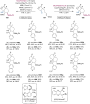
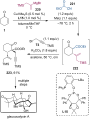
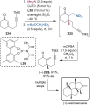
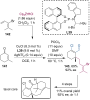
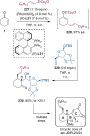
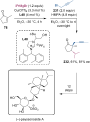
- α,β-unsaturated carbonyl compounds [2]. In particular, the last-mentioned method is highly synthetically relevant. This approach has the advantage of being more selective and affording more molecular complexity in one step. In addition, transition-metal catalysis allows the introduction of
- , which is otherwise not easy to introduce into the C-2 position of carbonyl compounds. Finally, the benzodithiolyl group can be reduced into a methyl group (Scheme 29). Conjugate additions with trialkylaluminum reagents Conjugate additions of trialkylaluminum reagents are somewhat less populated as a
- derivatives have been found to exhibit potent biological activities, which has led to the development of several FDA-approved drug molecules [73][74]. Following the seminal works of Hosomi [75] and Miyaura [76], the synthesis of β-boron-substituted carbonyl compounds by conjugate addition of boron species to








Mechanochemical solid state synthesis of copper(I)/NHC complexes with K3PO4
Beilstein J. Org. Chem. 2023, 19, 440–447, doi:10.3762/bjoc.19.34
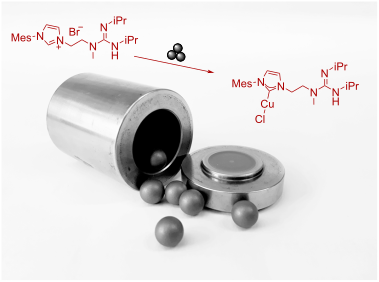
- the standard reactions for catalytic hydrogenations with copper(I)/NHC complexes [4]. In this vein, we tested complex 5 from solid and liquid phase synthesis in the catalytic hydrogenation of esters, carbonyl compounds and in the semihydrogenation of alkynes. In the catalytic hydrogenation of ethyl
- complex 5 was never evaluated in this reported reaction. Therefore, 5bm behaves similarly to other copper(I)/NHC complexes in this transformation [54][55][56][57][58][59][60]. The catalytic 1,2-reduction of carbonyl compounds is mainstay for copper(I)/NHC complexes [61][62][63][64][65][66][67], which is


Modern flow chemistry – prospect and advantage
Beilstein J. Org. Chem. 2023, 19, 33–35, doi:10.3762/bjoc.19.3
- mass transfer of continuous flow reactors. The generation of organolithium species in the presence of carbonyl compounds and their reaction has been facilitated by the extremely fast mixing of reagents and almost instantaneous heat transfer (i.e., cooling) in specifically designed microreactors [5
Synthetic study toward tridachiapyrone B
Beilstein J. Org. Chem. 2022, 18, 1741–1748, doi:10.3762/bjoc.18.183
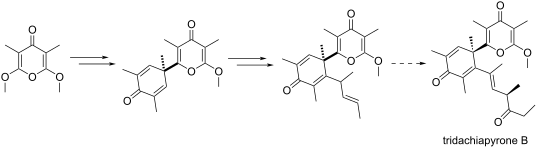
- allyltitanocene reagents to carbonyl compounds was described by Sato which were prepared from the corresponding allyl carbonates exposed to the combination of [Cp2TiCl2]/n-BuLi [40]. Pleasingly, conducting the coupling of carbonate 20 to 5 in conditions inspired from Carreira’s study (Scheme 7b) led to the


Redox-active molecules as organocatalysts for selective oxidative transformations – an unperceived organocatalysis field
Beilstein J. Org. Chem. 2022, 18, 1672–1695, doi:10.3762/bjoc.18.179
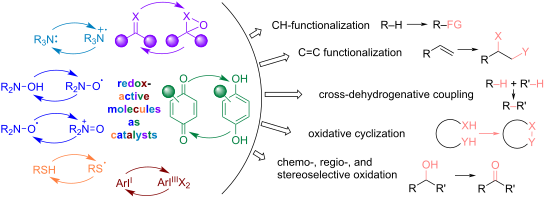
- active oxidative agent. Asymmetric quaternary ammonium phase-transfer catalysts proved to be effective in the asymmetric nucleophilic epoxidation of electron-poor alkenes by hydroperoxides [70] and the asymmetric hydroxylation of enolizable carbonyl compounds employing O2 or H2O2 as terminal oxidants [71
- multigram-scale syntheses [86]. The selective allylic [86] and benzylic [80] CH-oxidation to the corresponding carbonyl compounds was achieved. Compared to the direct anodic oxidation of organic substrates, the N-oxyl-mediated indirect electrolysis proceeds at lower potentials, demonstrates wider
- the key factor for the high chemoselectivity. Hypervalent iodine catalysis Effective hypervalent iodine(III)-catalyzed processes (for example, oxidative double C=C bond functionalization, oxidative cyclizations, CH-functionalization of carbonyl compounds, etc.) employing mainly peroxoacids or electric











Cyclometalated iridium complexes-catalyzed acceptorless dehydrogenative coupling reaction: construction of quinoline derivatives and evaluation of their antimicrobial activities
Beilstein J. Org. Chem. 2022, 18, 1507–1517, doi:10.3762/bjoc.18.159
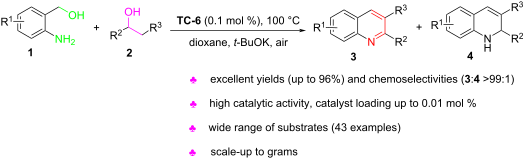
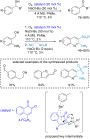
- ][42], we found that cyclometalated iridium catalysts can effectively catalyze the dehydrogenation of alcohols to produce carbonyl compounds and hydrogen gas. Therefore, we used cyclometalated iridium complex (TC-6) to catalyze the ADC reaction of o-aminobenzyl alcohols 1 and aryl/heteroaryl/alkyl


One-pot synthesis of 2-arylated and 2-alkylated benzoxazoles and benzimidazoles based on triphenylbismuth dichloride-promoted desulfurization of thioamides
Beilstein J. Org. Chem. 2022, 18, 1479–1487, doi:10.3762/bjoc.18.155

- with various carbonyl compounds, such as carboxylic acid derivatives or aldehydes [6][7][8][9]. These classic reactions require harsh conditions, such as using strong acids or high temperatures. The syntheses of azoles using one-pot reactions are attracting increasing attention as alternatives to


A one-pot electrochemical synthesis of 2-aminothiazoles from active methylene ketones and thioureas mediated by NH4I
Beilstein J. Org. Chem. 2022, 18, 1249–1255, doi:10.3762/bjoc.18.130
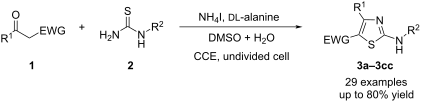
- demonstrate the feasibility of our idea, ethyl acetoacetate (1a) and thiourea (2a) were chosen as model substrates for the optimization of reaction conditions. Based on our previous studies on the halide-mediated α-C–H functionalization of carbonyl compounds [32][33][34][35], graphite was chosen as the




Electrochemical formal homocoupling of sec-alcohols
Beilstein J. Org. Chem. 2022, 18, 1062–1069, doi:10.3762/bjoc.18.108
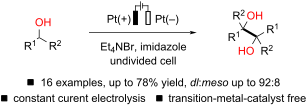
- Kosuke Yamamoto Kazuhisa Arita Masashi Shiota Masami Kuriyama Osamu Onomura Graduate School of Biomedical Sciences, Nagasaki University, 1-14 Bunkyo-machi, Nagasaki 852-8521, Japan 10.3762/bjoc.18.108 Abstract Electrochemical pinacol coupling of carbonyl compounds in an undivided cell with a
- electrolysis; Introduction Carbon–carbon bond formation is one of the most fundamental and important reactions in synthetic organic chemistry. Reductive coupling of carbonyl compounds known as pinacol coupling would be a powerful method to construct vic-1,2-diol scaffolds through C–C bond formation [1][2
- ][16][17][18]. In addition to the reductive coupling of carbonyl compounds, oxidative homocoupling reactions of benzyl alcohols under transition metal- or semiconductor-based photoredox catalysis have been demonstrated as attractive approaches to access vic-1,2-diols [19][20][21][22][23


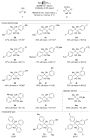


Electrochemical hydrogenation of enones using a proton-exchange membrane reactor: selectivity and utility
Beilstein J. Org. Chem. 2022, 18, 1055–1061, doi:10.3762/bjoc.18.107
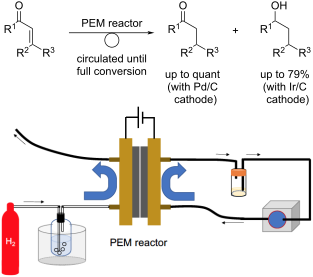
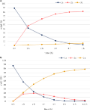
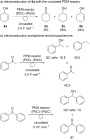
- conditions, and highly chemoselective reductions were achieved with the use of appropriate cathode catalysts. The use of a Pd/C cathode gave carbonyl compounds selectively. In contrast, saturated alcohols were obtained selectively with an Ir/C cathode. The reaction with H2O as a proton source was also





Electroreductive coupling of 2-acylbenzoates with α,β-unsaturated carbonyl compounds: density functional theory study on product selectivity
Beilstein J. Org. Chem. 2022, 18, 956–962, doi:10.3762/bjoc.18.95

- –carbon bond formation [1][2][3][4]. Recently, we reported the electroreductive coupling of phthalic anhydrides with α,β-unsaturated carbonyl compounds in the presence of chlorotrimethylsilane (TMSCl) and subsequent treatment with 1 M HCl to give 1,4-dihydroxynaphthalenes and 2-methyl-2,3
- -dihydronaphthalene-1,4-diones (Scheme 1) [5]. In addition, we disclosed that the electroreduction of phthalimides with α,β-unsaturated carbonyl compounds under the same conditions and subsequent treatment with trifluoroacetic acid (TFA) produced 3- and 2-substituted 4-aminonaphthalen-1-ols (Scheme 2) [6]. In this
- solvent in vacuo, the residue was purified by column chromatography on silica gel (hexanes/EtOAc) to give 95 mg of 3a [8][23] (56% yield in two steps). Electroreductive coupling of phthalic anhydrides with α,β-unsaturated carbonyl compounds and subsequent treatment with 1 M HCl (previous work


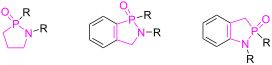
Synthetic strategies for the preparation of γ-phostams: 1,2-azaphospholidine 2-oxides and 1,2-azaphospholine 2-oxides
Beilstein J. Org. Chem. 2022, 18, 889–915, doi:10.3762/bjoc.18.90
- -unsaturated carbonyl compounds as electrophiles. Interestingly, for propenal (150), besides two pairs of alkylated products 151 and 152, the second naphthyl group was alkylated by sec-butyllithium, leading to the corresponding product 153 in 5% yield. For but-3-en-2-one (154), methyl propenoate, cyclopent-2








Cathodic generation of reactive (phenylthio)difluoromethyl species and its reactions: mechanistic aspects and synthetic applications
Beilstein J. Org. Chem. 2022, 18, 872–880, doi:10.3762/bjoc.18.88
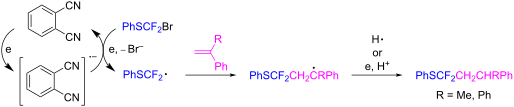
- olefins in moderate yields [5]. Prakash et al. also achieved fluoride-induced nucleophilic (phenylthio)difluoromethylation of carbonyl compounds using PhSCF2SiMe3 [6]. Quite recently, Shen et al., developed various nucleophilic, electrophilic, and radical difluoromethylthiolating reagents [1]. However


Synthesis of bis-spirocyclic derivatives of 3-azabicyclo[3.1.0]hexane via cyclopropene cycloadditions to the stable azomethine ylide derived from Ruhemann's purple
Beilstein J. Org. Chem. 2022, 18, 769–780, doi:10.3762/bjoc.18.77
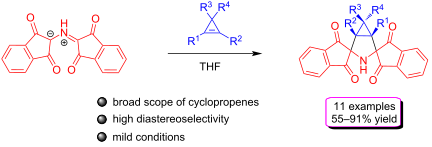
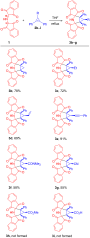
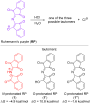
- been explored [19][20][21][22][23][24]. To generate azomethine ylides, we used a classical method based on the reaction of cyclic carbonyl compounds with α-amino acids. Μono-, bi-, and tetracyclic carbonyl compounds were utilized in these studies. 1,3-Dipolar cycloaddition of cyclopropenes to
- azomethine ylides generated from primary or secondary α-amino acids and carbonyl compounds such as alloxan, isatin, tryptanthrin, and 11H-indeno[1,2-b]quinoxalin-11-one were performed in a multicomponent fashion [19][20][21][24]. In these reactions, the azomethine ylides generated in situ are highly reactive






Inductive heating and flow chemistry – a perfect synergy of emerging enabling technologies
Beilstein J. Org. Chem. 2022, 18, 688–706, doi:10.3762/bjoc.18.70
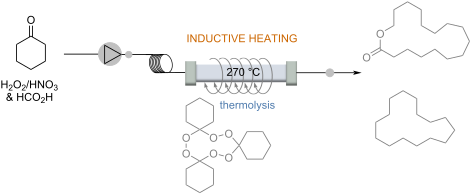
- protocol began with the carbonyl compounds (e.g., 74), and the first flow step yielding tosylhydrazones that were transferred directly to the second reactor to be coupled with boronic acids (Scheme 13). Both steps required heating, which was performed by electromagnetic induction of a fixed-bed material




Unusual highly diastereoselective Rh(II)-catalyzed dimerization of 3-diazo-2-arylidenesuccinimides provides access to a new dibenzazulene scaffold
Beilstein J. Org. Chem. 2022, 18, 533–538, doi:10.3762/bjoc.18.55
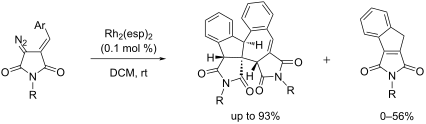
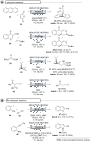
- at the double bond underwent cyclization as the result of intramolecular interception of the rhodium carbene, which led to the formation of indolizine [6] or 2H-chromene [7] derivatives, respectively (Figure 1). At the same time, Rh2(esp)2-catalyzed reactions of DAS with nitriles and carbonyl
- compounds (aldehydes and ketones) enable to obtain the products of formal [5 + 2] cycloaddition reactions ‒ 2-benzazepines [8] and 2-benzoxepines [9][10]. When studying the Rh(II)-catalyzed reaction of DAS with ketones [10], we attempted to involve poorly reactive fluorenone in the reaction. To our surprise


New advances in asymmetric organocatalysis
Beilstein J. Org. Chem. 2022, 18, 240–242, doi:10.3762/bjoc.18.28
- within the area. Organocatalytic reactions are highly suitable components of cascade transformations as exemplified by the seminal work of Enders [13]. Besides traditional enamine and iminium activation of carbonyl compounds other activation modes were uncovered which significantly broadened the
- nitromethane to β-silyl α,β-unsaturated carbonyl compounds catalyzed by bifunctional squaramide catalysts are effective under solvent-free conditions [26]. Zhai and Du demonstrated that asymmetric [3 + 2] annulation reactions of 2-isothiocyanato-1-indanones with barbiturate-based olefins are efficiently
Organocatalytic asymmetric nitroso aldol reaction of α-substituted malonamates
Beilstein J. Org. Chem. 2022, 18, 217–224, doi:10.3762/bjoc.18.25

- achieve optically active α-aminoxy and α-hydroxyamino carbonyl compounds has received considerable attention in the past decades [24]. In 2003, the Yamamoto group demonstrated for the first time that nitrosobenzene could be used as a practical reagent for the catalytic enantioselective α-aminoxylation




Recent advances and perspectives in ruthenium-catalyzed cyanation reactions
Beilstein J. Org. Chem. 2022, 18, 37–52, doi:10.3762/bjoc.18.4
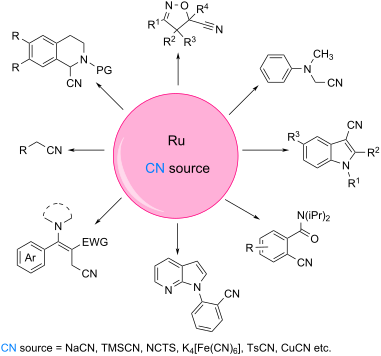
- carbonyl compounds under environmentally benign conditions. This method provides an efficient synthetic route towards alkyl iodides and nitriles in one pot. Carbonyl compounds such as cinnamaldehyde, acetophenone, and cyclohexanone etc. were well tolerated in this reaction and afforded the corresponding


Study on the interactions between melamine-cored Schiff bases with cucurbit[n]urils of different sizes and its application in detecting silver ions
Beilstein J. Org. Chem. 2021, 17, 2950–2958, doi:10.3762/bjoc.17.204
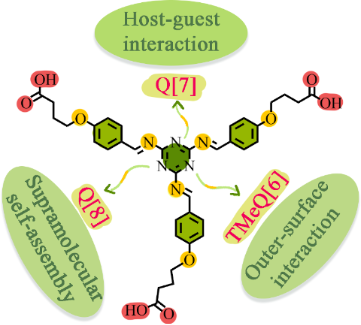
- : cucurbiturils; melamine; Schiff base; silver ion; Introduction Schiff bases [1] are usually synthesized by the condensation of amines and active carbonyl compounds, endowing them both nitrogen and oxygen donor atoms [2][3][4][5]. Schiff bases are not only easy to coordinate with various transition metal ions


Solvent-free synthesis of enantioenriched β-silyl nitroalkanes under organocatalytic conditions
Beilstein J. Org. Chem. 2021, 17, 2642–2649, doi:10.3762/bjoc.17.177
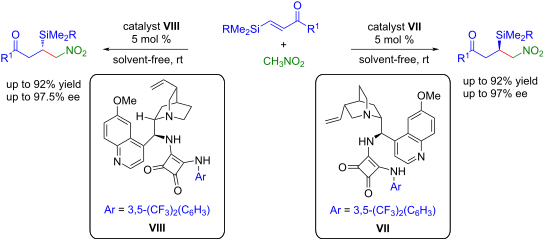
- -unsaturated carbonyl compounds catalyzed by bifunctional squaramide catalysts has been developed. This methodology offers both enantiomers of β-silyl nitroalkanes in good to excellent yields (up to 92%) and enantioselectivities (up to 97.5% ee) under solvent-free conditions at room temperature. Control
- experiments reveal that the presence of a β-silyl group in the enones is crucial for high reactivity under the optimized reaction conditions. Keywords: β-silyl α,β-unsaturated carbonyl compounds; β-silyl nitroalkanes; chiral organosilanes; organocatalysis; solvent-free synthesis; Introduction
- nucleophiles to β-silyl α,β-unsaturated carbonyl compounds were documented as one of the straightforward and atom-economic approaches for the facile synthesis of chiral organosilanes (Scheme 1c–f) [30][31][32][33]. Recently, the aforementioned reaction under organocatalytic conditions has gained attention [34



N-Sulfinylpyrrolidine-containing ureas and thioureas as bifunctional organocatalysts
Beilstein J. Org. Chem. 2021, 17, 2629–2641, doi:10.3762/bjoc.17.176
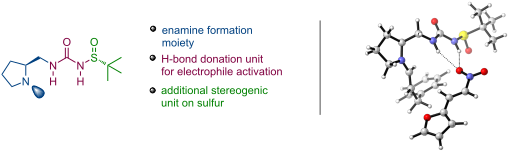
- itself, in which the carboxylic function acts as an ancillary hydrogen-bond donor for the direction of one of the reagents [9]. Amines serve as basic units and nucleophilic components capable of carbonyl compounds activation via enamine or iminium ion formation [10][11]. In particular, pyrrolidine became
- unit, which should engage in enamine activation of enolizable carbonyl compounds. The urea or thiourea moiety shall provide hydrogen-bond donating ability. Furthermore, these compounds possess a sulfinyl group with an additional stereogenic center on the sulfur. To verify the influence of a matched


Recent advances in the tandem annulation of 1,3-enynes to functionalized pyridine and pyrrole derivatives
Beilstein J. Org. Chem. 2021, 17, 2462–2476, doi:10.3762/bjoc.17.163
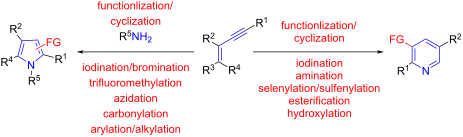
- condensation of α-halogenated carbonyl compounds, β-dicarbonyl compounds and amines; and iv) the latest developed multicomponent tandem reactions and transition metal-catalyzed coupling reactions [30][31][32][33][34][35][36][37][38][39]. Recently, substantial achievements have been made using azides as a




Halides as versatile anions in asymmetric anion-binding organocatalysis
Beilstein J. Org. Chem. 2021, 17, 2270–2286, doi:10.3762/bjoc.17.145
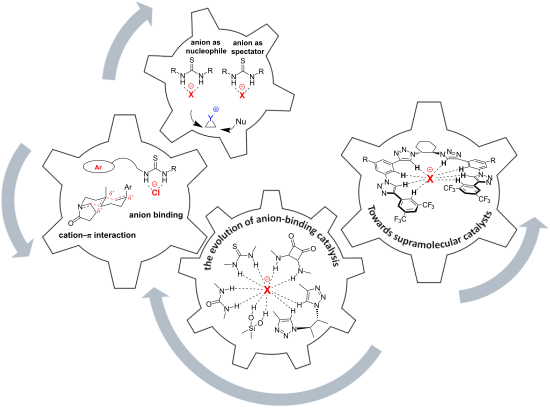
- catalyzed [15][23]. While both catalyses are closely related by making use of hydrogen-bond interactions as the directing noncovalent force, they can be distinguished by the type of substrate that is bound to and activated by the catalyst (Figure 2a). In H-bond catalysis, neutral substrates such as carbonyl
- compounds are coordinated to the H-bond catalyst, whereas anion-binding catalysis relies on the formation of an ion pair by binding to the counter-anion of an ionic substrate. The ionization of the corresponding substrate can either occur before the coordination to the anion or the catalyst itself directly