


Search results
Search for "chiral HPLC" in Full Text gives 125 result(s) in Beilstein Journal of Organic Chemistry.
Alkylation of lithiated dimethyl tartrate acetonide with unactivated alkyl halides and application to an asymmetric synthesis of the 2,8-dioxabicyclo[3.2.1]octane core of squalestatins/zaragozic acids
Beilstein J. Org. Chem. 2019, 15, 1194–1202, doi:10.3762/bjoc.15.116
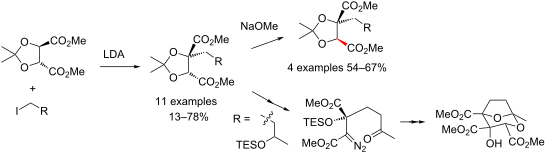
- subsequently those of Nagano [27] and of Li [28] for allylations, i.e., stereoretentive (contrasteric) alkylation. As noted above, Seebach recorded 97:3 er (by NMR using a chiral shift reagent) for a benzylated tartrate [18]; in the present case, chiral HPLC comparison of 17 with the corresponding adduct from
- only ≈25% of tartrate 7 in an impure state. In contrast to the unsuccessful propylation with LiHMDS/LiCl mentioned above, following our modified Seebach‘s protocol, propylation could be achieved to give propylated tartrate 33a [12] (Scheme 9), in 66% yield and 97:3 er by chiral HPLC, with the trans
- , propylation of the monopropylated tartrate 33a can be achieved in 34% yield, if the reaction mixture is warmed to −50 °C (Scheme 10). Chiral HPLC comparison of the trans-dipropylated material 34a obtained as the byproduct from the alkylation of tartrate acetonide 7, and from propylation of the monopropylated


New α- and β-cyclodextrin derivatives with cinchona alkaloids used in asymmetric organocatalytic reactions
Beilstein J. Org. Chem. 2019, 15, 830–839, doi:10.3762/bjoc.15.80
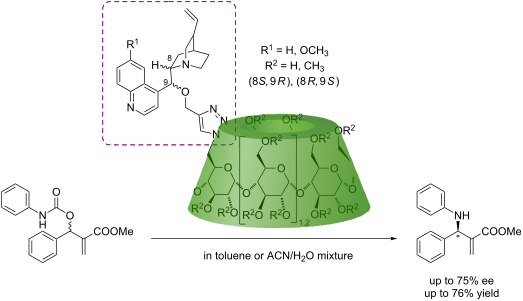
- Information File 288: Experimental procedures, characterization data, copies of NMR spectra and chiral HPLC analysis. Supporting Information File 289: 2D NMR spectra of compounds 4a–d and 5a–d. Supporting Information File 290: 2D NMR spectra of compounds 8a–d, 9a–d and 11. Acknowledgements The work has been


A chemoenzymatic synthesis of ceramide trafficking inhibitor HPA-12
Beilstein J. Org. Chem. 2019, 15, 490–496, doi:10.3762/bjoc.15.42
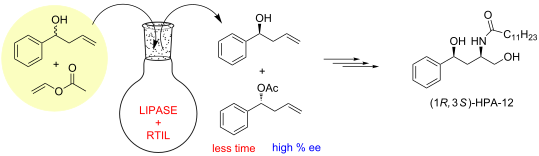
- reused the recovered lipase in ionic liquid at least three times without any significant loss of enzyme activity. The % ee of the (R)-5 and (S)-4 were determined from chiral HPLC analyses (150 mm × 4.6 mm, 5 μm, chiral AD-H column, 5% isopropanol/hexane @ 1.0 mL min−1, UV detection at 254 nm). The


Silanediol versus chlorosilanol: hydrolyses and hydrogen-bonding catalyses with fenchole-based silanes
Beilstein J. Org. Chem. 2019, 15, 167–186, doi:10.3762/bjoc.15.17
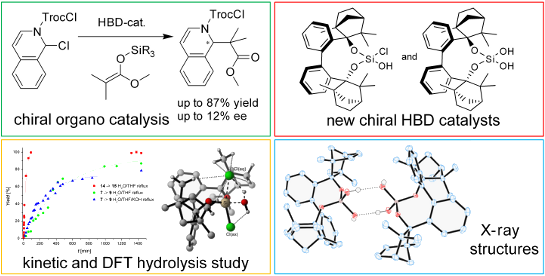
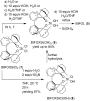
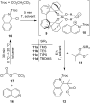
- . The enantiomeric excess is determined by chiral HPLC analysis (see Supporting Information File 1). General procedure for addition of silyl ketene acetals 11 to 1-chloroisochroman (18) to product 19: In a heat dried Schlenk tube 1-chloroisochroman (18, 0.15 mmol, 0.3 mL of 0.5 M in toluene) was solved
- NaOMe (0.2 mL, 0.5 M in MeOH), concentrated in vacuo and purified by silica gel flash column chromatography (n-hexane/Et2O 9:1). The enantiomeric excess is determined by chiral HPLC analysis (see Supporting Information File 1). General procedure for addition of silyl ketene acetals 11 to chromone 20 to
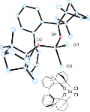
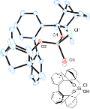
- acetate 9:1). The enantiomeric excess is determined by chiral HPLC analysis (see Supporting Information File 1). Hydrogen-bonding silanediols, i.e., di(1-naphthyl)silanediol (1) [39], silanediols 2 [41][42][43], binaphthylsilanediol derivatives 3 [45][46] and 4 [47][48] and novel biphenyl-2,2








Green synthesis of new chiral 1-(arylamino)imidazo[2,1-a]isoindole-2,5-diones from the corresponding α-amino acid arylhydrazides in aqueous medium
Beilstein J. Org. Chem. 2018, 14, 2923–2930, doi:10.3762/bjoc.14.271
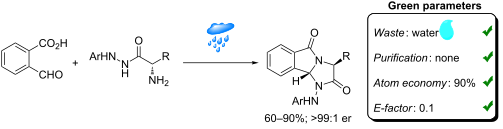
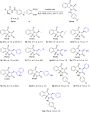
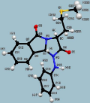
- –m. Diastereoisomeric (dr) and enantiomeric (er) ratio were determined by chiral HPLC (see Supporting Information File 3). Proposed partial mechanism with a selectivity model. Synthesis of the α-amino acid arylhydrazides 3a–m. Optimization of the reaction conditions for the cyclocondensation of 2




Some mechanistic aspects regarding the Suzuki–Miyaura reaction between selected ortho-substituted phenylboronic acids and 3,4,5-tribromo-2,6-dimethylpyridine
Beilstein J. Org. Chem. 2018, 14, 2384–2393, doi:10.3762/bjoc.14.214
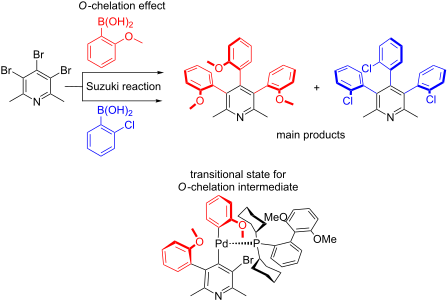
- asymmetric synthesis of various substituted arylpyridine derivatives. Unfortunately, separation using chiral HPLC columns were unsuccessful and therefore, the racemic mixtures of these atropisomers were examined by 1H NMR spectroscopy with a chiral solvating agent ((+)-(R)-tert-butyl(phenyl)phosphinothioic


A novel and practical asymmetric synthesis of eptazocine hydrobromide
Beilstein J. Org. Chem. 2018, 14, 2340–2347, doi:10.3762/bjoc.14.209
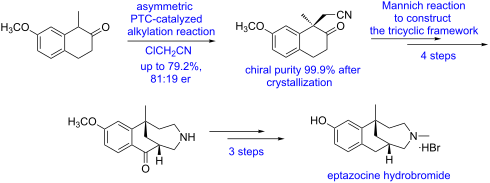
- alkylation.a Optimization of oxidation conditions. Optimization of Mannich cyclization.a Supporting Information Supporting Information File 400: 1H NMR and MS spectra of 3, 4, 8–15, 13C NMR spectra of 4, 12, 13, chiral HPLC chromatograms of 4, 1H NMR, MS and HPLC chromatograms of 1.


Enantioselective phase-transfer catalyzed alkylation of 1-methyl-7-methoxy-2-tetralone: an effective route to dezocine
Beilstein J. Org. Chem. 2018, 14, 1421–1427, doi:10.3762/bjoc.14.119
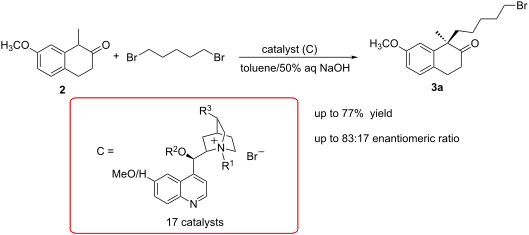
- and MS spectra of catalysts C1–C17 and chiral HPLC diagrams of 3. 1H NMR, 13C NMR, MS spectra of 3. 1H NMR, MS spectra HPLC diagrams of dezocine.



Enantioselective dioxytosylation of styrenes using lactate-based chiral hypervalent iodine(III)
Beilstein J. Org. Chem. 2018, 14, 659–663, doi:10.3762/bjoc.14.53
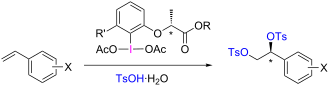
- determined by 1H NMR using an internal standard. The ee of 3 was determined by chiral HPLC analysis. The results for the yields and ee are summarized in Table 1. The reaction of styrene (1a) with 4a gave the 1,2-dioxytosylated product 3a with 70% ee of the (S)-isomer (Table 1, entry 1). An ee of equal to or


Copper-catalyzed asymmetric methylation of fluoroalkylated pyruvates with dimethylzinc
Beilstein J. Org. Chem. 2018, 14, 576–582, doi:10.3762/bjoc.14.44
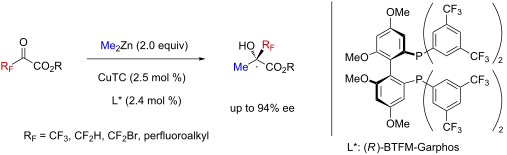
- under reduced pressure. The residue was purified by silica gel column chromatography to give p-nitrobenzoylated alcohol 2’. The enantiomeric excess was determined by chiral HPLC analysis. (S)-3-Ethoxy-1,1,1-trifluoro-2-methyl-3-oxopropan-2-yl 4-nitrobenzoate (2a’) The yield of alcohol 2a (86%) was


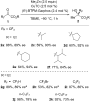

Mechanochemical enzymatic resolution of N-benzylated-β3-amino esters
Beilstein J. Org. Chem. 2017, 13, 1728–1734, doi:10.3762/bjoc.13.167

- enantioenriched (R)-N-benzylated-β3-amino acid (R)-2a was observed, recovering 51% of enantioenriched starting material. It could be established by chiral HPLC that the ee of the product amounted 80% (Table 1, entry 1). This assay demonstrated that enzymatic hydrolysis can indeed be carried out under HSBM


Base-promoted isomerization of CF3-containing allylic alcohols to the corresponding saturated ketones under metal-free conditions
Beilstein J. Org. Chem. 2017, 13, 1507–1512, doi:10.3762/bjoc.13.149

- chirality transmission (CT) on the basis of the chiral HPLC analysis (Table 4, entries 1, 4, and 5). Unanimous formation of (R)-stereoisomers at the 3 position of 7 from (R,E)-6 led to confirmation that the proton attached to C1 was migrated to C3 from its si face, thus from the same back side if (R,E)-6


Construction of highly enantioenriched spirocyclopentaneoxindoles containing four consecutive stereocenters via thiourea-catalyzed asymmetric Michael–Henry cascade reactions
Beilstein J. Org. Chem. 2017, 13, 1342–1349, doi:10.3762/bjoc.13.131
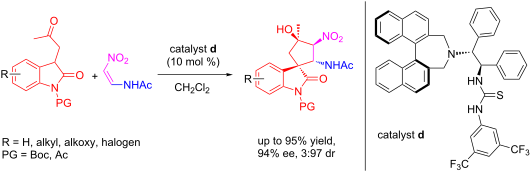
- chiral HPLC analysis of major diastereomer. The dr values were determined by 1H NMR analysis. Method A: with 10 mol % of d as a catalyst, −20 °C, 12 h. Method B: with 10 mol % of d as a catalyst, −10 °C, 24 h. A plausible mechanism. Optimization for the reaction conditionsa. Supporting Information


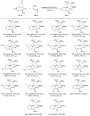

Studies directed toward the exploitation of vicinal diols in the synthesis of (+)-nebivolol intermediates
Beilstein J. Org. Chem. 2017, 13, 571–578, doi:10.3762/bjoc.13.56
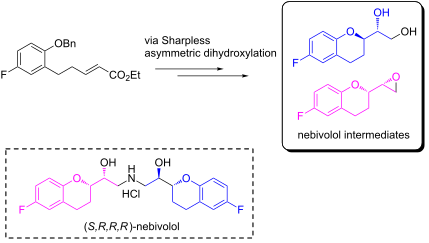
- chromans have become attractive synthetic targets in academia and pharmaceutical industry [1]. Nebivolol (1, Figure 1) is a chroman-based antihypertensive drug that was first reported in the racemic form [2][3]. Chiral HPLC was subsequently employed to access various stereoisomers of 1 in enantiomerically


Characterization of the synthetic cannabinoid MDMB-CHMCZCA
Beilstein J. Org. Chem. 2016, 12, 2808–2815, doi:10.3762/bjoc.12.279
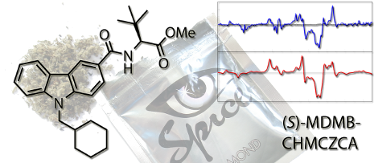
- and comparison of the data with DFT calculations, while ECD spectroscopy was found to be inconclusive in this case. The enantiomeric purity of samples from test purchases and police seizures was assessed by a self-developed chiral HPLC method. Keywords: chiral HPLC; ECD spectroscopy; NPS; synthetic
- samples. For this purpose, we used analytical methods such as NMR, tandem mass spectrometry, vibrational and electronic circular dichroism spectroscopy (VCD and ECD), as well as chiral HPLC. Results and Discussion Pure MDMB-CHMCZCA (3) was obtained as a so-called “research chemical” (RC) from an online RC
- (pure substances as well as designer drug products) was assessed by chiral HPLC after base-induced racemization of a sample of (S)-3. Experimental Isolation of MDMB-CHMCZCA from Spice products In analogy to the procedure described in [9], hashish-like resin (20 mg) was cut in small pieces, soaked in




Biomimetic synthesis and HPLC–ECD analysis of the isomers of dracocephins A and B
Beilstein J. Org. Chem. 2016, 12, 2523–2534, doi:10.3762/bjoc.12.247
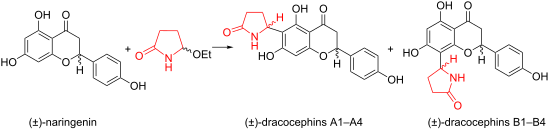
- Dracocephalum rupestre, have been synthesized in a one-pot reaction. The separation of 2a–d and 3a–d was achieved by preparative HPLC. The four stereoisomers of each natural product were separated by analytical chiral HPLC and their absolute configuration was studied by the combination of HPLC–ECD measurements
- and B showed good agreement with those of the isolated flavonoid alkaloids [2]. Similarly to the natural route, no diastereoselectivity occurred in this sequence, as proven by the separation of the stereoisomers by chiral HPLC and by the integration or deconvolution of NMR signals of Hy-3 recorded in
- CD3OD. The separation of the stereoisomers of dracocephins A (±)-2a–d could be achieved by chiral HPLC using an analytical Chiralpak IC column with the eluent MeCN/2-propanol/TFA 97:3:0.1 (Figure 2). Four peaks with alternating signs of the ECD signal in the HPLC–UV and –ECD traces were observed, the


Highly chemo-, enantio-, and diastereoselective [4 + 2] cycloaddition of 5H-thiazol-4-ones with N-itaconimides
Beilstein J. Org. Chem. 2016, 12, 2293–2297, doi:10.3762/bjoc.12.222
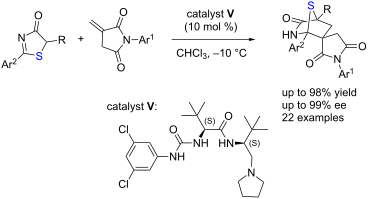
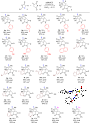
- , followed by gradient elution with DCM/MeOH mixture (500:1−200:1 ratio). Removing the solvent in vacuo, afforded product 3a. Substrate scope of the [4 + 2] annulation. Reaction conditions: 1 (0.1 mmol), 2 (0.15 mmol), V (0.01 mmol), CHCl3 (1.0 mL) at −10 °C. All drs are >20:1; ees were determined via chiral
- HPLC analysis. a20 mol % of V was used, T = 0 °C. Transformation of adduct. Optimization of reaction conditionsa. Supporting Information Supporting Information File 356: Experimental information and spectroscopic data. Acknowledgements Financial support from the National Science Foundation of China


Determination of the absolute stereostructure of a cyclic azobenzene from the crystal structure of the precursor containing a heavy element
Beilstein J. Org. Chem. 2016, 12, 2211–2215, doi:10.3762/bjoc.12.212
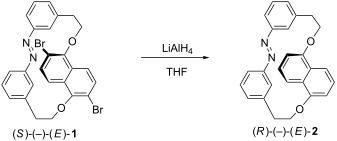
- found that the spectrum completely matches with the previously reported compound (E)-2 [46]. To confirm the formation of compound (E)-2 we have carried out chiral HPLC studies on a Chiralpak IA column using a mixture of ethyl acetate and hexane (10:90) as the eluent to characterize the nature of the
- , 35.9. Schematic representation of the steps to enantiomer (E)-2A. Chromatogram (Chiral HPLC) obtained for (a) racemic mixture of (E)-1 (b) sample used for reductive debromination (second eluted enantiomer S-(−)-(E)-1) (c) recorded after the LiAlH4 reduction of S-(−)-(E)-1 and (d) the chromatogram of


Catalytic Chan–Lam coupling using a ‘tube-in-tube’ reactor to deliver molecular oxygen as an oxidant
Beilstein J. Org. Chem. 2016, 12, 1598–1607, doi:10.3762/bjoc.12.156
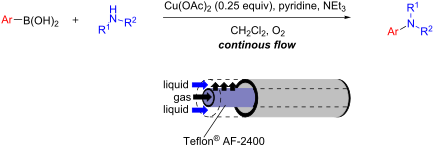
- , unfortunately, gave a poor isolated yield of 26% and also underwent some epimerisation (25, 53% ee determined by chiral HPLC, Scheme 2). Additionally, a small amount of the product (25) reacted further with phenylboronic acid through the phenol to give 26 in 3% isolated yield. In the case of L-leucine methyl
- ester an isolated yield of 60% was realised, but this substrate also underwent partial epimerisation (27, 71% ee determined by chiral HPLC, Scheme 2). Using N-heterocyclic substrates as the nucleophilic partner with a range of different phenylboronic acids generally gave good isolated yields (19, 20, 28


Synergistic chiral iminium and palladium catalysis: Highly regio- and enantioselective [3 + 2] annulation reaction of 2-vinylcyclopropanes with enals
Beilstein J. Org. Chem. 2016, 12, 1340–1347, doi:10.3762/bjoc.12.127
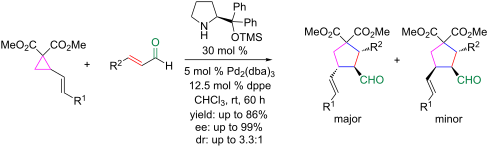
- albeit a relatively low yield (Table 3, 46%, entry 13). It is noteworthy that although aliphatic enals also can engage in this [3 + 2] annulation reaction. Unfortunately, we could not separate them on chiral HPLC column for the determination of the enantioselectivity by all means we have attempted (data


One-pot synthesis of enantiomerically pure N-protected allylic amines from N-protected α-amino esters
Beilstein J. Org. Chem. 2016, 12, 957–962, doi:10.3762/bjoc.12.94
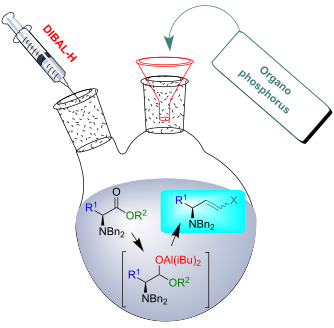
- treatment. Although we have demonstrated earlier that no loss of enantiomeric purity was observed in the synthesis of anti-β-amino alcohols [16], we submitted commercially available DL-alanine to the aforementioned one-pot procedure to give rac-2a. Both rac-2a and 2a were analyzed by chiral HPLC. The


Supported bifunctional thioureas as recoverable and reusable catalysts for enantioselective nitro-Michael reactions
Beilstein J. Org. Chem. 2016, 12, 628–635, doi:10.3762/bjoc.12.61
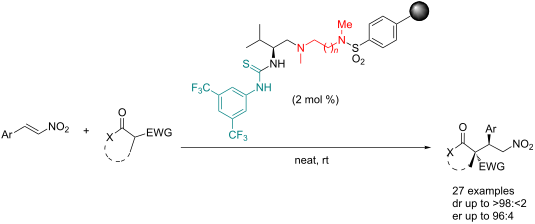
- or by staining with phosphomolybdic acid solution. Specific rotations were measured on a digital polarimeter using a 5 mL cell with a 1 dm path length, and a sodium lamp, and the concentration is given in g per 100 mL. Chiral HPLC analysis was performed by using Daicel Chiralcel OD or Chiralpak AD-H


Spiro-fused carbohydrate oxazoline ligands: Synthesis and application as enantio-discrimination agents in asymmetric allylic alkylation
Beilstein J. Org. Chem. 2016, 12, 166–171, doi:10.3762/bjoc.12.18
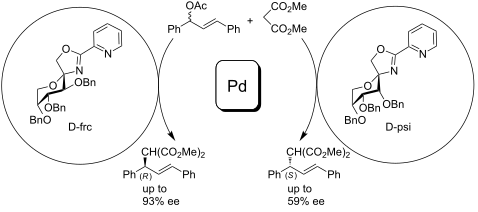
- as a benchmark for new chiral ligands and examined in great detail [9][10][11][12][13][14][27][28]. In all cases investigated here, the alkylated product 14 was isolated after purification by chromatography and its enantiomeric excess was determined via chiral HPLC using a Reprosil chiral-NR column




A novel and practical asymmetric synthesis of dapoxetine hydrochloride
Beilstein J. Org. Chem. 2015, 11, 2641–2645, doi:10.3762/bjoc.11.283
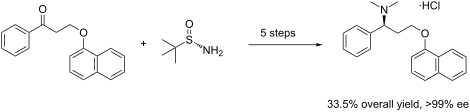
- . Experimental All solvents and reagents were of reagent grade and used without further purification. 1H and 13C NMR spectra were recorded using a Bruker 400 MHz spectrometer with TMS as an internal standard. HPLC analyses were recorded with on a Dionex Ultimate 3000 chromatograph and chiral HPLC analyses were
- , 13C NMR and ESIMS spectra of compounds 1, 4, 5, 5”, 6 and 7 and chiral HPLC diagrams of 1 and 7.


Bifunctional phase-transfer catalysis in the asymmetric synthesis of biologically active isoindolinones
Beilstein J. Org. Chem. 2015, 11, 2591–2599, doi:10.3762/bjoc.11.279
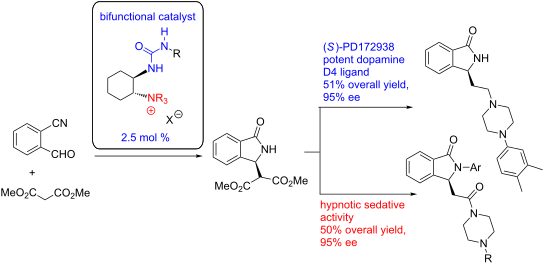
- after crystallization overnight at −20 °C, the solid was filtered off and the solution containing the enantioenriched compound was evaporated and analyzed by chiral HPLC. The resulting enantioenriched product was obtained as a colourless oil in 77% overall yield (400 mg, 1.51 mmol, 95% ee). The





