Search results
Search for "light irradiation" in Full Text gives 173 result(s) in Beilstein Journal of Organic Chemistry.
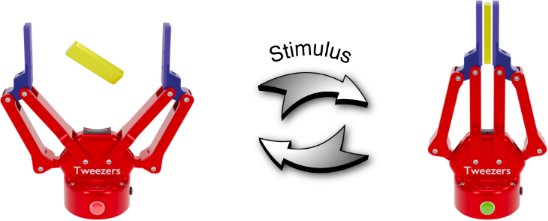
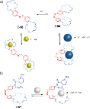
Switchable molecular tweezers: design and applications
Beilstein J. Org. Chem. 2024, 20, 504–539, doi:10.3762/bjoc.20.45




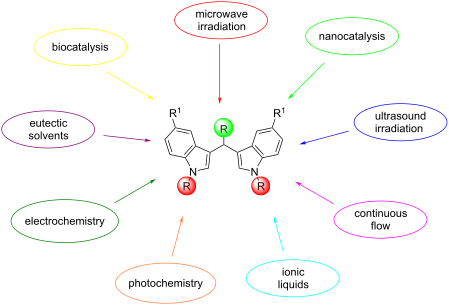
Green and sustainable approaches for the Friedel–Crafts reaction between aldehydes and indoles
Beilstein J. Org. Chem. 2024, 20, 379–426, doi:10.3762/bjoc.20.36




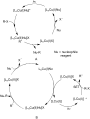
Mechanisms for radical reactions initiating from N-hydroxyphthalimide esters
Beilstein J. Org. Chem. 2024, 20, 346–378, doi:10.3762/bjoc.20.35
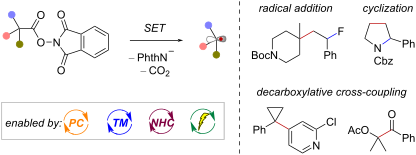
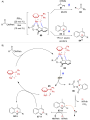
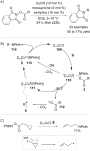
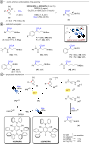
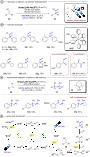
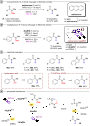
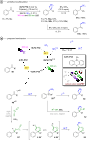
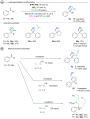
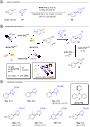
- radicals were successfully generated by subjecting NHPI esters to light irradiation in the presence of the photoreductant 1,6-bis(dimethylamino)pyrene (BDMAP). Following their initial discovery, multiple studies have shown their versatility as radical progenitors under thermal, photochemical, and
- readers to recently published review articles for additional discussion [30][31]. Discussion Mechanism under photochemical conditions In this section we provide a summary of the various conditions and activation modes employed in radical reactions of NHPI esters using visible-light irradiation. Upon
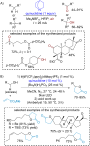
- type addition reactions (Scheme 4A). In 1991, Okada and co-workers reported the addition of alkyl radicals to α,β-unsaturated ketones, by subjecting NHPI esters to visible-light irradiation in the presence of the photocatalyst [Ru(bpy)3]Cl2 and the reductant 1-benzyl-1,4-dihydronicotinamide (BNAH) [37








Synthesis of π-conjugated polycyclic compounds by late-stage extrusion of chalcogen fragments
Beilstein J. Org. Chem. 2024, 20, 287–305, doi:10.3762/bjoc.20.30
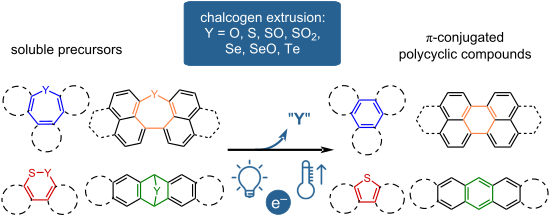
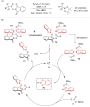
- concept, a thin-film of the latter sulfoxide precursor, spin-coated onto a glass sample, yielded full conversion to PBI 6a in only 2 min, confirming the potential application of this precursor in electronic devices. Light irradiation was next tested as an alternative activation method, since




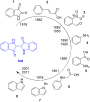
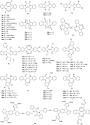
Photochromic derivatives of indigo: historical overview of development, challenges and applications
Beilstein J. Org. Chem. 2024, 20, 228–242, doi:10.3762/bjoc.20.23
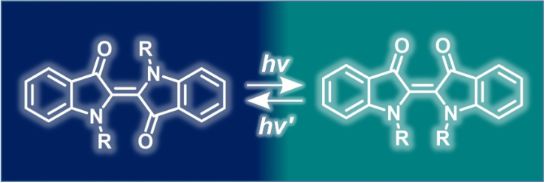
- compounds [66]. It was shown that despite the prerequisites for the occurrence of the excited-state proton transfer, monoarylated indigos underwent E–Z photoisomerization upon red-light irradiation at 625 nm. Remarkably, the thermal half-life of the Z-isomer of compound 20b was sensitive to the presence of





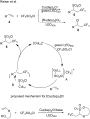
Visible-light-induced radical cascade cyclization: a catalyst-free synthetic approach to trifluoromethylated heterocycles
Beilstein J. Org. Chem. 2024, 20, 118–124, doi:10.3762/bjoc.20.12
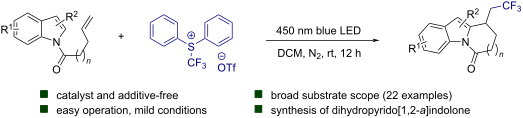
- trifluoromethyl radical source under light irradiation. Umemoto’s reagent, which is capable of releasing a trifluoromethyl radical via a photoinduced single-electron-transfer (SET) process, is usually employed to enable the trifluoromethylation of unsaturated substrates [25][26][27]. Herein, we report a protocol
- that omitting the photocatalyst led to an even higher yield (Table 1, entry 2), but light irradiation was essential to the reaction (Table 1, entries 3 and 4). Initially, some bases were added into the reaction system considering a deprotonation process, but subsequent investigations indicated that
- 450 nm visible light irradiation is optimal (Table 1, entries 9–12). Furthermore, various types of Umemoto’s reagent were also screened (Table 1, entries 13–15). As Umemoto’s reagent 2b was easier to prepare [29] and the use of 2b did not significantly affect the reaction yield, it was chosen as the




Recent advancements in iodide/phosphine-mediated photoredox radical reactions
Beilstein J. Org. Chem. 2023, 19, 1785–1803, doi:10.3762/bjoc.19.131
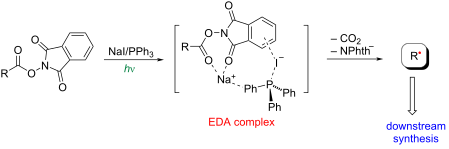
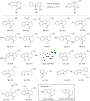
- smoothly delivered an electron donor–acceptor (EDA) complex II via coulombic interactions. Upon 456 nm blue LED light irradiation, the EDA complex II underwent a single electron transfer (SET) process, followed by subsequent decarboxylation to produce the alkyl radical intermediate A, accompanied by
- light irradiation at either 440 nm or 456 nm, and they occurred in acetone at room temperature, without the need for transition metals or organic dyes as photosensitizers. Interestingly, it was discovered that solvation played a vital role in the overall process. These findings shed light on the
- -anion catalysis under visible light irradiation, as depicted in Scheme 9. Subsequent investigations revealed that redox-active esters 3 and Katritzky salts 15 derived from amino acids could be effectively employed in decarboxylative/deaminative cross-coupling reactions [15]. These reactions enabled the




Selectivity control towards CO versus H2 for photo-driven CO2 reduction with a novel Co(II) catalyst
Beilstein J. Org. Chem. 2023, 19, 1766–1775, doi:10.3762/bjoc.19.129
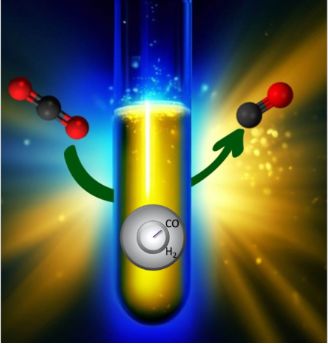
- [20][21][41]. In addition, the benzimidazolidine derivative, BIH (1,3-dimethyl-2-phenyl-benzo[d]imidazolidine) (shown in Figure 1) suited well as a sacrificial electron donor, because of its high reducing power [47]. The photocatalytic experiments were performed under 420 nm light irradiation unless


Visible-light-induced nickel-catalyzed α-hydroxytrifluoroethylation of alkyl carboxylic acids: Access to trifluoromethyl alkyl acyloins
Beilstein J. Org. Chem. 2023, 19, 1372–1378, doi:10.3762/bjoc.19.98
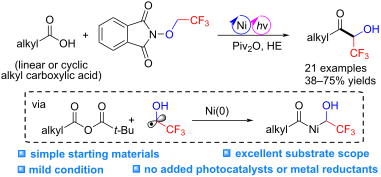
- ., Zibo 256401, China 10.3762/bjoc.19.98 Abstract A visible-light-induced nickel-catalyzed cross coupling of alkyl carboxylic acids with N-trifluoroethoxyphthalimide is described. Under purple light irradiation, an α-hydroxytrifluoroethyl radical generated from a photoactive electron donor–acceptor


Selective and scalable oxygenation of heteroatoms using the elements of nature: air, water, and light
Beilstein J. Org. Chem. 2023, 19, 1146–1154, doi:10.3762/bjoc.19.82
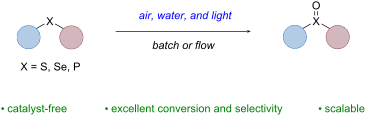
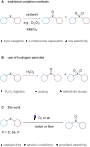
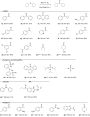
- = 365 nm, 96 W) at a distance of 0.5 cm from the reactor wall. In contrary with what has been reported previously for the catalyst-free oxidation under blue light irradiation [28], the reaction occurs also using water as the solvent (Table 1, entry 2). Running the reaction without adding extra water
- increase the concentration from 0.06 M to 0.6 M (Table 1, entry 7) maintaining approximately the same reaction time, while further concentration increase resulted in substantially slower kinetics (see Supporting Information File 1, Table S2). When performing the reaction in the dark or under visible light
- irradiation (e.g., at 405 or 455 nm) no conversion was observed (Table 1, entries 8 and 9). Finally, the effect of the light intensity was investigated irradiating at 365 nm and it turned out to largely effect the kinetic of the reaction (see Supporting Information File 1, Figure S3). In general, the presence





Photoredox catalysis harvesting multiple photon or electrochemical energies
Beilstein J. Org. Chem. 2023, 19, 1055–1145, doi:10.3762/bjoc.19.81
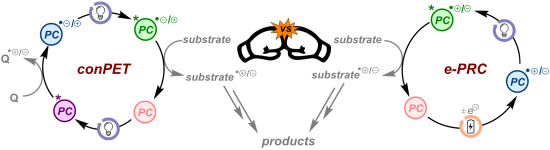
- in this Review, with a particular emphasis on the challenges and areas for improvement, such as the standardization of reactors capable to conjugate applied potential and light irradiation either in different modules or within the same flow path. 2 conPET in organic synthesis 2.1 Reductive activation

















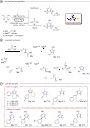
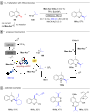


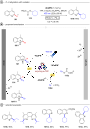
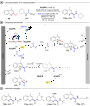
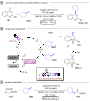


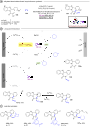


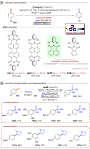


Photoredox catalysis enabling decarboxylative radical cyclization of γ,γ-dimethylallyltryptophan (DMAT) derivatives: formal synthesis of 6,7-secoagroclavine
Beilstein J. Org. Chem. 2023, 19, 918–927, doi:10.3762/bjoc.19.70
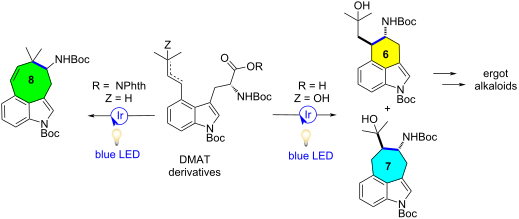
- of all ergot alkaloids, specifically the decarboxylative cyclization of DMAT, is still a puzzle even though a radical mechanism has been proposed (Figure 1a) [72][73]. Results and Discussion Herein, we propose that visible light irradiation of the cationic iridium photocatalyst Ir[dF(CF3)ppy]2(dtbbpy
- visible-light irradiation of the photoredox catalyst [Ir(dF(CF3)ppy)2(dtbpy)]PF6 to access the excited state *[Ir(dF(CF3)ppy)2(dtbpy)]PF6, which can trigger SET oxidation of 8. Rapid decarboxylation leads to α-amino radical V (and the reduced photocatalyst), which is intercepted by the pendant double bond


Light-responsive rotaxane-based materials: inducing motion in the solid state
Beilstein J. Org. Chem. 2023, 19, 873–880, doi:10.3762/bjoc.19.64
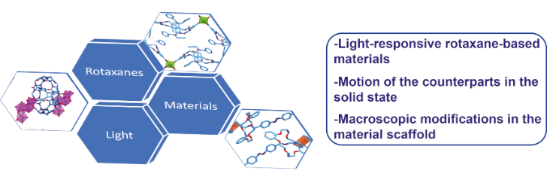
- counterparts and/or macroscopic motion of the interlocked materials are achieved. Although further development is needed, these materials are envisioned as privileged scaffolds which will be used for different advanced applications in the area of molecular machinery. Keywords: light irradiation; light
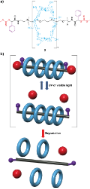
- of rotaxanes in crystalline molecular solids has been studied [38][39]. Rotaxane crystals bearing ferrocene motifs experienced elongation and contraction along the axes in a rapid and reversible manner by simply turning on and off a laser light irradiation, thus providing enough free space in order
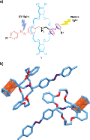
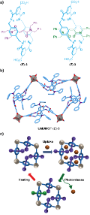
- , such as bending, jumping and curling, upon light irradiation. Interestingly, the bending of the crystals could proceed in different directions. As an example, crystals of pseudorotaxane 1a (Figure 1b), having hydrogens as substituents R2 and R3 placed at the ferrocenyl motif and macrocycle

Direct C2–H alkylation of indoles driven by the photochemical activity of halogen-bonded complexes
Beilstein J. Org. Chem. 2023, 19, 575–581, doi:10.3762/bjoc.19.42
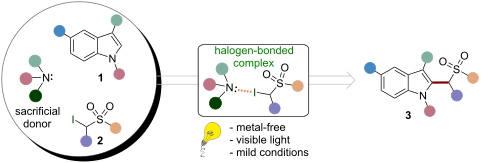
- charge transfer state which results in a bathochromic shift of the absorption towards the visible range [19][20]. Upon light irradiation, the EDA complex may undergo an intramolecular single-electron-transfer (SET) process to produce a radical ion pair (D•+, A•−). To avoid the occurrence of a back
- ambient temperature and under visible-light irradiation. Interestingly, this method employs 1,4-diazabicyclo[2.2.2]octane (DABCO) as sacrificial donor in the EDA complex formation with 2. To test the feasibility of our design plan, we focused on the reaction between 3-methylindole (1a, 2 equiv) and α


NaI/PPh3-catalyzed visible-light-mediated decarboxylative radical cascade cyclization of N-arylacrylamides for the efficient synthesis of quaternary oxindoles
Beilstein J. Org. Chem. 2023, 19, 57–65, doi:10.3762/bjoc.19.5
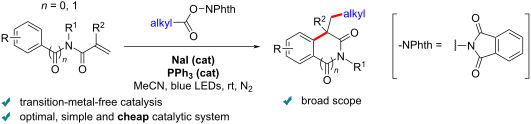
- is mediated by visible light irradiation. A wide range of substrates bearing different substituents and derived from ubiquitous carboxylic acids, including α-amino acids, were synthesized and examined under this very mild, efficient, and cost effective transition-metal-free synthetic method. These




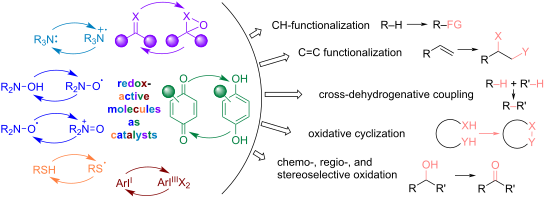
Redox-active molecules as organocatalysts for selective oxidative transformations – an unperceived organocatalysis field
Beilstein J. Org. Chem. 2022, 18, 1672–1695, doi:10.3762/bjoc.18.179
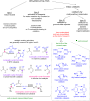
- under visible light irradiation. The advantages of this mixed hetero-/homogeneous catalytic system include the easy separation of the products from NHPI and TiO2, recyclability, selectivity control by TiO2/NHPI ratio, and high efficiency at low TiO2 loading due to the radical chain nature of the
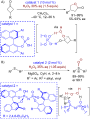
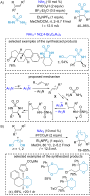
- enantioselective hydroxylation of benzylic positions was achieved using a chiral aryl iodide mediator [148] (Scheme 34). At the first stage, under the action of m-CPBA and sodium bromide an active form of the catalyst ArI3-Br is formed, in which the iodine–bromine bond is cleaved homolytically under visible light
- irradiation. The resulting iodoaryl cation radical abstracts the hydrogen atom from the benzylic position to form a benzyl radical, whose bromination gives the racemic benzyl bromide. The second step takes place without the participation of light and leads to only one enantiomer due to the assistance of the











Synthesis of α-(perfluoroalkylsulfonyl)propiophenones: a new set of reagents for the light-mediated perfluoroalkylation of aromatics
Beilstein J. Org. Chem. 2022, 18, 788–795, doi:10.3762/bjoc.18.79
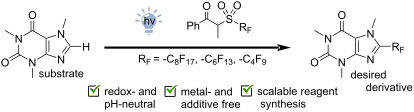
- radicals under light irradiation for the diversification of arenes. To verify the generation of perfluoroalkyl radicals from compounds 1, we conducted an experiment with perfluorohexyl analogue 1b and 1,1-diphenylethylene (7) as a radical trapping agent (Scheme 4). Gratifyingly we observed the formation of


Tetraphenylethylene-embedded pillar[5]arene-based orthogonal self-assembly for efficient photocatalysis in water
Beilstein J. Org. Chem. 2022, 18, 429–437, doi:10.3762/bjoc.18.45
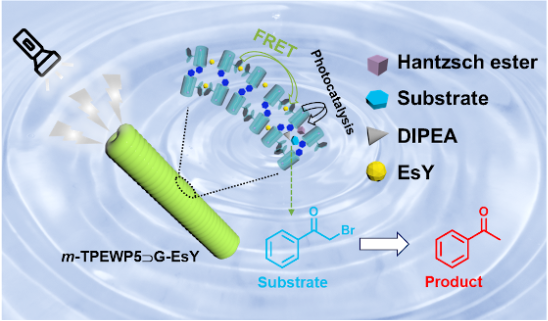
- light might be successfully employed to catalyze these reactions. Here, we used white light (20 W) as a solar light simulator for the photocatalytic dehalogenation reactions. Upon light irradiation, the absorbed light energy could be transferred from the m-TPEWP5G donor to the EsY acceptor through the
- FRET process, whilst the m-TPEWP5G-EsY nanorod assembly could act as a nanoreactor providing a suitable environment for the photochemical catalytic reaction in aqueous solution under visible light irradiation. In the presence of 0.5 mol % m-TPEWP5G-EY in aqueous solution, 2-bromo-1-phenylethanone (1a
- ) gave acetophenone (2a) as product in good yield (97%) under white light irradiation for 2 hours (Table 1 and Supporting Information File 1, Figure S6). In comparison, we added an internal standard (1,3,5-trimethoxybenzene) to the final crude reaction mixture and calculated the NMR yield of the product


![[Graphic 5]](/bjoc/content/inline/1860-5397-18-45-i7.svg?max-width=637&scale=1.18182) G-EsY self-assembled photocat...
G-EsY self-assembled photocat...
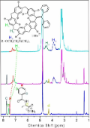


![[Graphic 15]](/bjoc/content/inline/1860-5397-18-45-i17.svg?max-width=637&scale=1.18182) G; (b) m-TPEWP5
G; (b) m-TPEWP5![[Graphic 16]](/bjoc/content/inline/1860-5397-18-45-i18.svg?max-width=637&scale=1.18182) G-EsY. [m-TPEWP5] = 1 × 10⁻⁴ M, [G] = 1 × 10⁻⁴ M, [EsY] = ...
G-EsY. [m-TPEWP5] = 1 × 10⁻⁴ M, [G] = 1 × 10⁻⁴ M, [EsY] = ...

![[Graphic 25]](/bjoc/content/inline/1860-5397-18-45-i27.svg?max-width=637&scale=1.18182) G donor assembly...
G donor assembly...

![[Graphic 43]](/bjoc/content/inline/1860-5397-18-45-i45.svg?max-width=637&scale=1.18182) G-EsY na...
G-EsY na...

![[Graphic 48]](/bjoc/content/inline/1860-5397-18-45-i50.svg?max-width=637&scale=1.18182) G-E...
G-E...
Menadione: a platform and a target to valuable compounds synthesis
Beilstein J. Org. Chem. 2022, 18, 381–419, doi:10.3762/bjoc.18.43
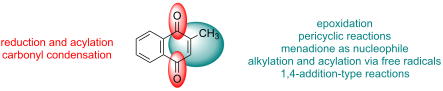
- steps whose main difficulties are the separation of pyridine byproducts and inorganic phosphate (Scheme 20). Kulkarni and co-workers reported a method for menadione reduction mediated by 5,6-O-isopropylidene-ʟ-ascorbic acid (70, R = H) under UV light irradiation [120]. Initial studies were carried out
- using lawsone (4) and after optimization of the reaction conditions, it was extended to other quinones, including menadione (10). The best conditions were 1,2-dimethoxyethane (DME) as solvent, temperature 25 °C, under ultraviolet light irradiation (125 W lamp) using a Pyrex filter in an immersion-well


Recent developments and trends in the iron- and cobalt-catalyzed Sonogashira reactions
Beilstein J. Org. Chem. 2022, 18, 262–285, doi:10.3762/bjoc.18.31
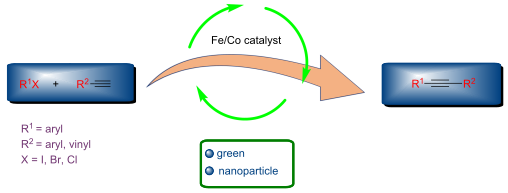
- additive and K2CO3 as base in DMF under visible light irradiation. The reaction of Co(OAc)2·4H2O with 2-(hydroxyimino)-1-phenylpropan-1-one in EtOH resulted in the formation of the Co catalyst. The coupling strategy exhibited only poor activity by the use of pure Co salts and the reaction was promoted by




High-speed C–H chlorination of ethylene carbonate using a new photoflow setup
Beilstein J. Org. Chem. 2022, 18, 152–158, doi:10.3762/bjoc.18.16
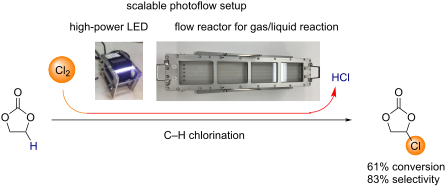
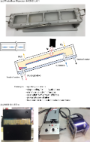
- ), chloroethylene carbonate (2) was obtained in good to excellent selectivity by tuning the flow rates of 1 and chlorine gas. Partial irradiation of the flow channel is sufficient for the C–H chlorination, consistent with the requirement for light irradiation for the radical initiation step. If we apply the




Recent advances and perspectives in ruthenium-catalyzed cyanation reactions
Beilstein J. Org. Chem. 2022, 18, 37–52, doi:10.3762/bjoc.18.4
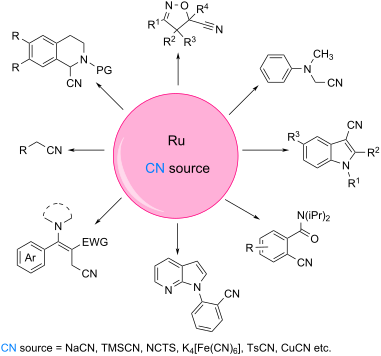
- catalyst [41]. This method provides an efficient pathway to 1°, 2°, and 3° alkyl nitriles using p‐toluenesulfonyl cyanide (TsCN) in CH2Cl2/H2O under visible-light irradiation (Scheme 17). 1‐Acetoxy‐1,2‐benziodoxol‐3‐(1H)‐one (BI‐OAc) was chosen as the oxidant and TFA as the additive in this method. A lower
- , alkynes, and halides were compatible with this strategy. A photoredox-catalyzed oxidative coupling of 4-alkyl-3,4-dihydroquinoxalin-2(1H)-ones with nucleophiles was reported by Hong and co-workers [42]. The reaction was performed using 20 mol % of Ru(bpy)3Cl2.6H2O in methanol under CFL light irradiation
- trimethylsilyl cyanide (TMSCN) in acetonitrile solvent under CFL light irradiation. 4 Miscellaneous An efficient methodology for the synthesis of α-aminonitriles via the one-pot coupling of aldehydes, amines and trimethylsilyl cyanide was reported [46]. This reaction was catalyzed by RuCl3 and used acetonitrile


DABCO-promoted photocatalytic C–H functionalization of aldehydes
Beilstein J. Org. Chem. 2021, 17, 2959–2967, doi:10.3762/bjoc.17.205
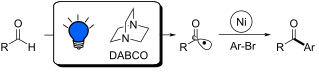
- Supporting Information File 1, Tables S4 and S5 for details). A plausible mechanism for the aldehyde arylation is presented in Scheme 3 based on previous literature reports [19][26][33][34] and our mechanistic investigation experiments. Upon blue light irradiation, the photocatalyst is excited generating the


Photophysical, photostability, and ROS generation properties of new trifluoromethylated quinoline-phenol Schiff bases
Beilstein J. Org. Chem. 2021, 17, 2799–2811, doi:10.3762/bjoc.17.191
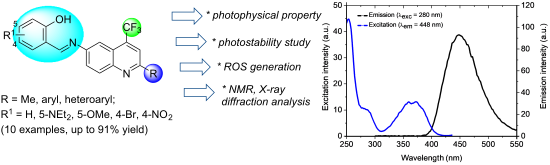
- attributed to a greater electronic conjugation provided by the imine function present in the molecules of the series 3. Photostability and singlet oxygen quantum yield (ΦΔ) assays In order to be efficient for applications in photobiology, organic dyes must be stable when subjected to light irradiation for
- possible reactive oxygen species in DMSO solution (e.g., hydroxyl and superoxide radical species) that are not identified by the type of photooxidation assay employed in this work. The good photostability and tendency of these Schiff base derivatives to generate 1O2 under light irradiation demonstrated
- solution after irradiation with white-light LED array system (400–800 nm) at a fluence rate of 25 mW/cm2 for different periods (0 to 60 min; total light dosage = 90 J/cm2). DPBF photooxidation assays by red-light irradiation with diode laser (λ = 660 nm) in the presence of quinoline 3bb (R = Ph, R1 = 5




Visible-light-mediated copper photocatalysis for organic syntheses
Beilstein J. Org. Chem. 2021, 17, 2520–2542, doi:10.3762/bjoc.17.169
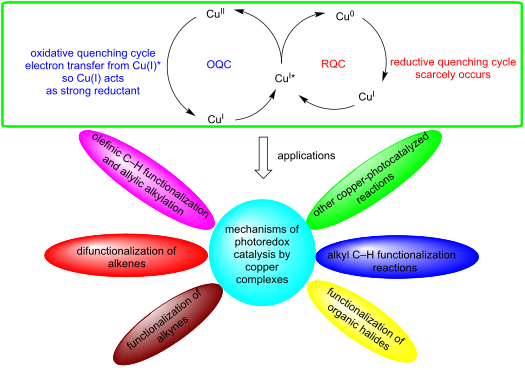
- transformation under visible-light irradiation by acting as a catalyst for single-electron reduction and as an intermediate stabilizing agent (Scheme 8). In 2016, the same group [48] reported the [Cu(dap)2]Cl-catalyzed cyclization of α,ω-alkenols and trifluoromethylsulfonyl chloride to form sultones (Scheme 8
- ). Intrigued by this unique transformation, Reiser’s group [49] extended this protocol to the chlorosulfonylation of alkenes and alkynes in 2019. Under visible light irradiation and in the presence of [Cu(dap)2]Cl, the reaction of p-toluenesulfonyl chloride (7) with alkenes gave an excellent yield of the
- form the desired product 13 (Scheme 9). In 2019, the same group [56] applied this protocol to the asymmetric cyanofluoroalkylation of alkenes. Under visible-light irradiation, the Cu-based catalyst plays a dual role as both the photosensitizer for the SET and the catalyst for asymmetric control (Scheme