Search results
Search for "lipophilicity" in Full Text gives 147 result(s) in Beilstein Journal of Organic Chemistry.
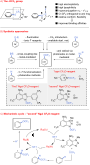
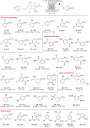
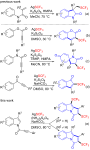
Synthesis of tetrafluorinated piperidines from nitrones via a visible-light-promoted annelation reaction
Beilstein J. Org. Chem. 2020, 16, 3104–3108, doi:10.3762/bjoc.16.260
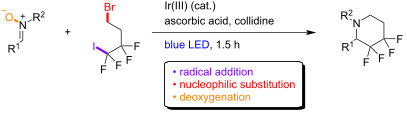
- modify basicity, lipophilicity, as well as the hydrogen-bonding properties of amines [4][5] makes fluorinated piperidines [6][7] attractive targets in medicinal chemistry [8][9]. Previous efforts were mainly focused on the synthesis of mono- and difluorinated compounds. A single fluorine atom is


Synthesis of novel fluorinated building blocks via halofluorination and related reactions
Beilstein J. Org. Chem. 2020, 16, 2562–2575, doi:10.3762/bjoc.16.208
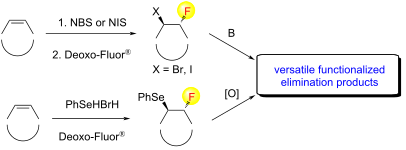
- lipophilicity, metabolism, binding, and bioavailability are often beneficial [1][2][3][4][5][6][7][8][9]. Fluorinated organic compounds are common amongst drugs [8][9], and the synthesis of fluorinated compounds has become a rapidly developing area [9][10][11][12][13][14][15][16][17][18]. In addition to


Conformational preferences of fluorine-containing agrochemicals and their implications for lipophilicity prediction
Beilstein J. Org. Chem. 2020, 16, 2469–2476, doi:10.3762/bjoc.16.200
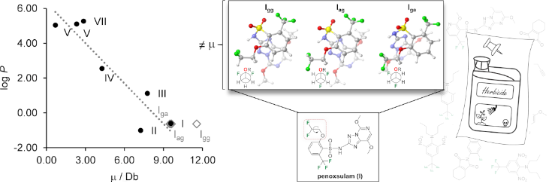
- Daniela Rodrigues Silva Joyce K. Dare Matheus P. Freitas Department of Chemistry, Federal University of Lavras, 37200–900, Lavras–MG, Brazil 10.3762/bjoc.16.200 Abstract Molecular polarity governs lipophilicity, which in turn determines important agrochemical and environmental properties, such as
- lipophilicity with the molecular conformation. Keywords: dipole moment; fluorinated compounds; gauche effect; herbicides; log P; Introduction Whilst in the last years the agrochemical industry has encountered a period of downturn affected by new regulations, low crop prices, biochemical resistance, among
- expensive and time-consuming procedure [2]. Fluorination is a common strategy employed as part of the optimization process during the design of new chemical compounds, which includes the modulation of a variety of properties such as lipophilicity, biological half-life, and biosorption [3][4]. This role


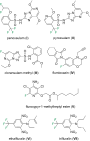


Photosensitized direct C–H fluorination and trifluoromethylation in organic synthesis
Beilstein J. Org. Chem. 2020, 16, 2151–2192, doi:10.3762/bjoc.16.183
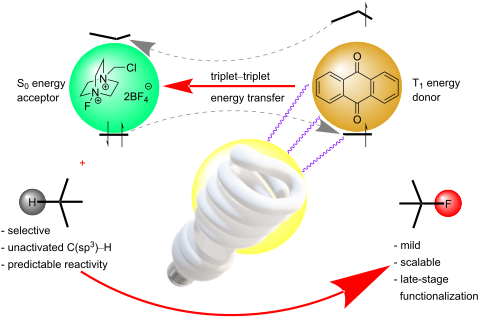
- , metabolic stability, adsorption and excretion properties of the compound [16][17]. For example, the pharmacokinetics of drugs are mostly regulated by the balance of the lipophilicity, hydrophilicity and ionization state. Since C–H/C–F substitution in a drug molecule enhances the lipophilicity [18], this has


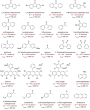
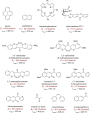


Lipophilicity trends upon fluorination of isopropyl, cyclopropyl and 3-oxetanyl groups
Beilstein J. Org. Chem. 2020, 16, 2141–2150, doi:10.3762/bjoc.16.182
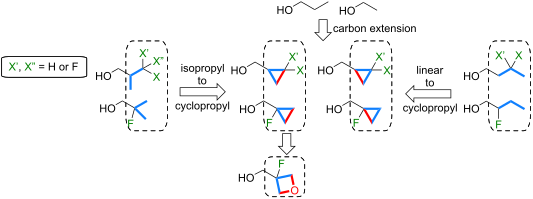
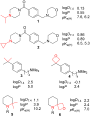
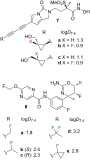
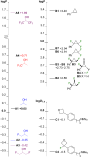
- Nantes, France Medicinal Chemistry, Oncology R&D, AstraZeneca, Cambridge CB4 0WG, UK 10.3762/bjoc.16.182 Abstract A systematic comparison of lipophilicity modulations upon fluorination of isopropyl, cyclopropyl and 3-oxetanyl substituents, at a single carbon atom, is provided using directly comparable
- , and easily accessible model compounds. In addition, comparison with relevant linear chain derivatives is provided, as well as lipophilicity changes occurring upon chain extension of acyclic precursors to give cyclopropyl containing compounds. For the compounds investigated, fluorination of the
- isopropyl substituent led to larger lipophilicity modulation compared to fluorination of the cyclopropyl substituent. Keywords: aliphatic fluorination; cyclopropane; isopropyl; isostere; lipophilicity; oxetane; Introduction The introduction of small alkyl groups onto bioactive compounds as space filling



Design, synthesis and application of carbazole macrocycles in anion sensors
Beilstein J. Org. Chem. 2020, 16, 1901–1914, doi:10.3762/bjoc.16.157

- -life sensing, also influences binding [4]. Within an ion-selective electrode (ISE), lipophilicity is mostly contributed by the low polarity membrane, which is commonly based on plasticized PVC [5]. One possible receptor family for carboxylates is based on the biscarbazolylurea moiety (Figure 1). This
- functional groups in the 3,6-positions of the carbazole. High lipophilicity is achievable by using alkylation and leads to the possibility of using the receptor dissolved in the lipophilic polymeric sensor membrane, without the need for chemical linking. Cyclization of the receptor is possible via the
- ionophore clearly disrupted the Hofmeister selectivity pattern that could be seen in the control membrane where the lipophilicity of the interfering ion was the dominant factor in determining the selectivity. All of the ionophores had a greater affinity for pivalate than for benzoate based on the




On the hydrolysis of diethyl 2-(perfluorophenyl)malonate
Beilstein J. Org. Chem. 2020, 16, 1863–1868, doi:10.3762/bjoc.16.153
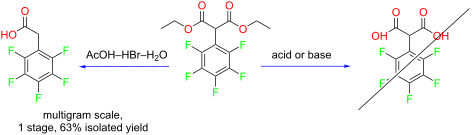
- to be one of the most powerful tools for fine tuning of chemical and physical properties [19][20]. For example, thermal stability, solubility, metabolic and oxidative stability, lipophilicity, membrane permeability, complexing ability, acid-base, and many other properties can be modified in a broad


Polarity effects in 4-fluoro- and 4-(trifluoromethyl)prolines
Beilstein J. Org. Chem. 2020, 16, 1837–1852, doi:10.3762/bjoc.16.151
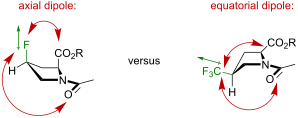
- trifluoromethyl- or a difluoromethylene group. This orientation of the substituents explains the observed trends in the pKa values, lipophilicity, and the kinetics of the amide bond rotation. The study also provides a set of evidences that the transition state of the amide-bond rotation in peptidyl-prolyl favors
- orientation of the groups, while in the (trifluoromethyl)prolines the orientation is similar. This is reflected in the acidity values. Lipophilicity Another parameter, which may be sensitive to the orientation of the dipoles within a molecule is the lipophilicity. It is well known that single aliphatic
- make a molecule more polar, but also more lipophilic at the same time. In addition, interactions of these dipoles with the ones preexisting in the parent molecule should always be considered for predicting the molecular polarity [60][76]. Experimental lipophilicity values found for the model compounds


Pauson–Khand reaction of fluorinated compounds
Beilstein J. Org. Chem. 2020, 16, 1662–1682, doi:10.3762/bjoc.16.138
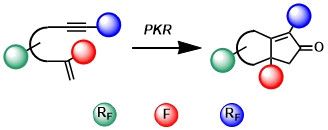
- strategic positions in a drug candidate may result in not only an increase in its potency, but also, perhaps more importantly, bring about an enhanced pharmacokinetic profile resulting in a more “drug-like” molecule [4]. Subtle changes in physicochemical properties such as acidity/basicity, lipophilicity


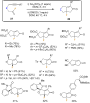


NHC-catalyzed enantioselective synthesis of β-trifluoromethyl-β-hydroxyamides
Beilstein J. Org. Chem. 2020, 16, 1572–1578, doi:10.3762/bjoc.16.129
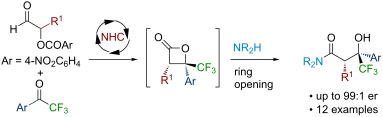
- ]. The incorporation of this motif is widely employed within the pharmaceutical, agrochemical, and materials industries as it can be used strategically to increase lipophilicity as well as to enhance metabolic stability and binding selectivity [7][8][9]. In this context, the generation of effective and



Photocatalytic trifluoromethoxylation of arenes and heteroarenes in continuous-flow
Beilstein J. Org. Chem. 2020, 16, 1305–1312, doi:10.3762/bjoc.16.111
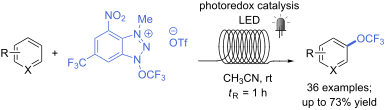
- properties, for example, a high electronegativity (χ = 3.7), and a high lipophilicity (Hansch-Leo parameter π = 1.04, intermediate between the -CF3 and the -SCF3 values, respectively, 0.88 and 1.44) [4]. From a pharmaceutical perspective, the former property provides stability of the drug under physiological



Synthesis, antiinflammatory activity, and molecular docking studies of bisphosphonic esters as potential MMP-8 and MMP-9 inhibitors
Beilstein J. Org. Chem. 2020, 16, 1277–1287, doi:10.3762/bjoc.16.108
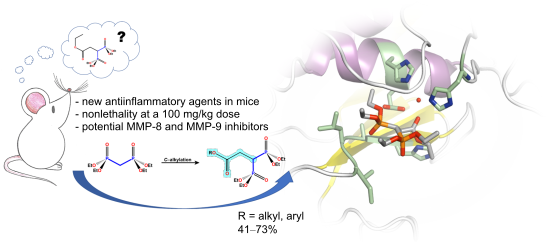
- could be the difference in lipophilicity between the aliphatic esters 3 and 4, which were less lipophilic (by means of the clogP value of 0.58 and 1.39, respectively) compared to the aromatic derivatives 5 and 6 (clogP = 1.80 and 1.85, respectively), with the last being the most permeable one through
- compounds was opposed to that observed with the TPA topical model. This may be a consequence of the lower lipophilicity of 3 (clogP = 0.58) and 4 (clogP = 1.39) compared to 5 (clogP = 1.80) and 6 (clogP = 1.85), influencing the better dissolution of 3 and 4 in an aqueous medium prior to its absorption
- active one, followed by 5, 3, and 4 in that order (Table 1). Thus, the efficacy of the tested compounds 3–6 was well correlated with the lipophilicity and the predicted interaction energy with MMP-8 (Table 4). Next, we searched for other energy interaction features from the docking calculation. As


Anthelmintic drug discovery: target identification, screening methods and the role of open science
Beilstein J. Org. Chem. 2020, 16, 1203–1224, doi:10.3762/bjoc.16.105
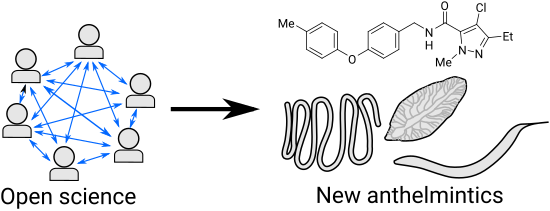
- structure–activity relationships for tolfenpyrad (19) [169]. The main objective of this work was to reduce the lipophilicity of tolfenpyrad 19, which was considered undesirable for an orally administered agent, as typical of anthelmintics, compared to a surface-applied pesticide. This was accomplished
- lipophilicity. Conversely, modifications to the pyrazole group gave rise to more dramatic changes in the potency. For instance, while changing the ethyl substituent within 20 to a methyl substituent in 22 gave a slight increase in potency, removal of the ethyl group in 23 showed a substantial improvement in the


Fluorinated phenylalanines: synthesis and pharmaceutical applications
Beilstein J. Org. Chem. 2020, 16, 1022–1050, doi:10.3762/bjoc.16.91
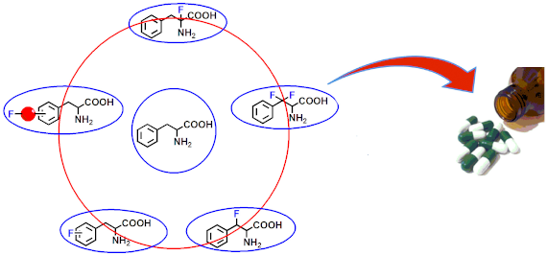
- the properties of peptides and proteins [5][6][7], influencing aspects such as protein folding, protein–protein interactions, ribosomal translation, lipophilicity, acidity/basicity, optimal pH, stability, thermal stability, and therapeutic properties [8][9][10]. This extends to metabolic properties of


Recent advances in Cu-catalyzed C(sp3)–Si and C(sp3)–B bond formation
Beilstein J. Org. Chem. 2020, 16, 691–737, doi:10.3762/bjoc.16.67
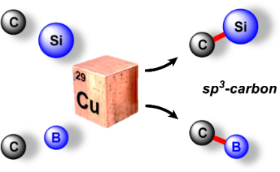
- functional groups into existing or new drugs. Examples include the incorporation of silicon bioisosteres that help increase lipophilicity, subsequently altering the existing metabolic pathway of a drug due to differences in its physicochemical properties [8]. On the other hand, the trigonal planar nature of


Cascade trifluoromethylthiolation and cyclization of N-[(3-aryl)propioloyl]indoles
Beilstein J. Org. Chem. 2020, 16, 657–662, doi:10.3762/bjoc.16.62
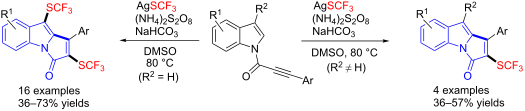
- involved in these transformations. Keywords: cyclization; indole derivatives; oxidation; radical reaction; trifluoromethylthiolation; Introduction The trifluoromethylthio (SCF3) group could significantly improve the lipophilicity of organic molecules as shown by its high Hansch constant (π = 1.44 for




Copper-promoted/copper-catalyzed trifluoromethylselenolation reactions
Beilstein J. Org. Chem. 2020, 16, 305–316, doi:10.3762/bjoc.16.30

- they confer very high lipophilicity [1][2]. In this context, transition-metal catalysis plays a key role in the formation of carbon–chalcogen trifluoromethyl bonds. Major advances have been made in the last ten years especially for C–OCF3 [3][4][5] and C–SCF3 [6][7][8] bond-forming processes. Today


Fluorinated maleimide-substituted porphyrins and chlorins: synthesis and characterization
Beilstein J. Org. Chem. 2019, 15, 2704–2709, doi:10.3762/bjoc.15.263
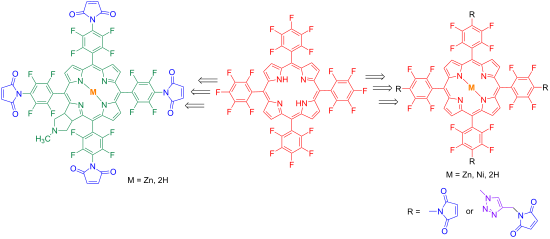
- on 5,10,15,20-tetrakis(pentafluorophenyl)porphyrin (1) as the starting compound. The presence of fluorine atoms on the four phenyl rings at the meso-positions of the porphyrin structure can make a strong influence on the hydrophobic interactions and lipophilicity, metabolic stability, thus modulating


Plasma membrane imaging with a fluorescent benzothiadiazole derivative
Beilstein J. Org. Chem. 2019, 15, 2644–2654, doi:10.3762/bjoc.15.257
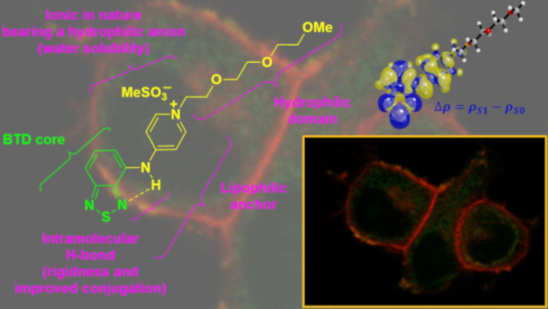
- agreed well with the experimental data obtained for the newly developed dye. DFT calculations were also employed to forecast the lipophilic character of the dye utilizing several XCFs. Experimentally, lipophilicity can be measured by means of the logarithm of the n-octanol/water partition coefficient


Synthesis of a dihalogenated pyridinyl silicon rhodamine for mitochondrial imaging by a halogen dance rearrangement
Beilstein J. Org. Chem. 2019, 15, 2333–2343, doi:10.3762/bjoc.15.226
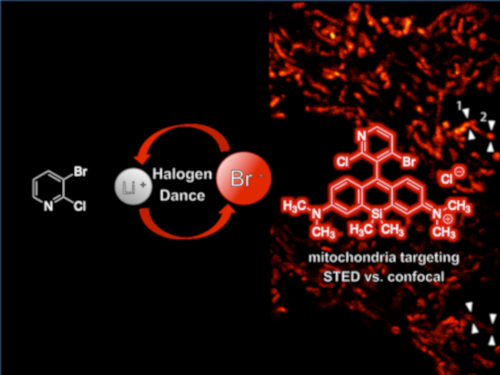
- . Lipophilic cations such as the phosphonium cation or rhodamines are known to accumulate selectively within the mitochondria, driven by the mitochondrial plasma membrane potential [39][40]. Thereby, the high lipophilicity facilitates the diffusion through the lipid bilayers of the cell and mitochondrial
- membranes. Recently, a silicon rhodamine for selective mitochondrial staining was developed by conjugation of the SiR core with ten different amines varying in lipophilicity [46]. The authors showed that the optimal range of clogP values for mitochondrial targeting ranges from 5.50 to 6.33. As mentioned
- application of SiR 15 as a specific NIR mito tracker probe. Pearson coefficients for selective mitochondria staining >0.8 correlate with much higher lipophilicity (clogP over 4.95). Especially SiR-Mito 8 offers a comparable quantum yield to dye 15 (ε and therefore brightness not available) combined with a



Recent advances in transition-metal-catalyzed incorporation of fluorine-containing groups
Beilstein J. Org. Chem. 2019, 15, 2213–2270, doi:10.3762/bjoc.15.218
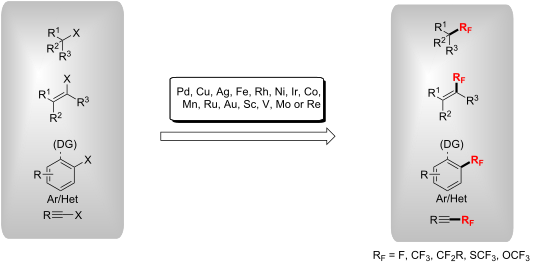
- similar to that of hydrogen atoms. Due to these unique properties, the introduction of fluorine into a molecule can cause dramatic changes, such as the acidity or basicity of neighboring groups, dipole moment, and properties such as lipophilicity, metabolic stability, and bioavailability [1]. Consequently
- their metabolic stability, lipophilicity, and the ability to penetrate the blood–brain barrier. Similar to fluorination, trifluoromethylation can also be achieved by three reaction types: nucleophilic, electrophilic and radical trifluoromethylation. In recent years, many novel trifluoromethylation




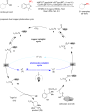


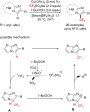


Design, synthesis and biological evaluation of immunostimulating mannosylated desmuramyl peptides
Beilstein J. Org. Chem. 2019, 15, 1805–1814, doi:10.3762/bjoc.15.174
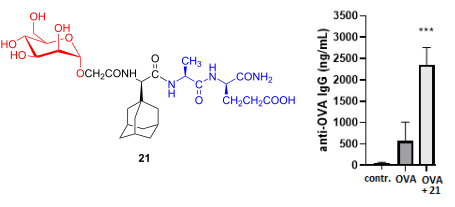
- and increase of lipophilicity are important approaches in the preparation of muramyl dipeptide analogues with improved pharmacological properties. Mannose receptors present on immunocompetent cells are pattern-recognition receptors and by mannose ligands binding they affect the immune system. Here we
- with derivatives lacking the adamantane moiety. Immunostimulating properties of synthesized derivatives were assessed in vivo using ovalbumin as an antigen. Results and Discussion Design Desmuramyl peptides enter into the cell by passive absorption and this process depends on lipophilicity [25


Synthesis of 9-O-arylated berberines via copper-catalyzed CAr–O coupling reactions
Beilstein J. Org. Chem. 2019, 15, 1575–1580, doi:10.3762/bjoc.15.161
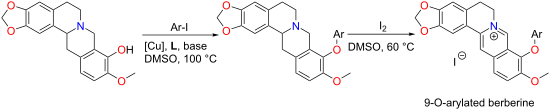
- agent in clinic. However, a high dosage is often required due to its low lipophilicity and bioavailability. The current study explores the structural modifications of berberines with potentially lipophilic aryl groups to address this problem. A series of 15 9-O-aryl-substituted berberines (3a–o) and one
- 9-O-phenylene-bridged berberine dimer (5) was synthesized by copper-catalyzed cross-coupling of tetrahydroberberrubine and aryl iodides, followed by oxidation with I2. Keywords: arylation; berberines; cross-coupling; copper; lipophilicity; structural modification; Introduction Berberine (BBR) is a
- considerable improvements in terms of biological activity (Scheme 1, BBR structure). Among all lipophilicity-enhancing strategies, C9-O-Me substitution is the most intensively studied one, which is primarily due to its synthetic convenience. The synthesis starts with pyrolysis of BBR under vacuum at high



Fluorine-containing substituents: metabolism of the α,α-difluoroethyl thioether motif
Beilstein J. Org. Chem. 2019, 15, 1441–1447, doi:10.3762/bjoc.15.144
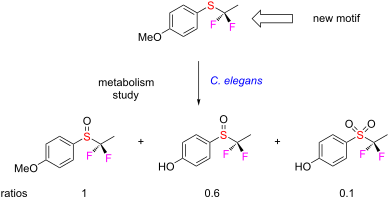
- literature [3], substituents which are typically introduced to stop metabolism of aryl rings [4]. Other fluorinated motifs are gaining in importance too, such as aryl–OCF3 and aryl–SCF3 ethers, although these substituents can significantly raise lipophilicity (log P) [5][6]. There are relatively few
- ) that is marketed as the active component [11][12]. The increase in lipophilicity associated with these substituents is not always desirable. In this regard, partially fluorinated alkyl substituents become an interesting alternative, as the fluorines polarise the adjacent hydrogens and lipophilicity


Tuning the stability of alkoxyisopropyl protection groups
Beilstein J. Org. Chem. 2019, 15, 746–751, doi:10.3762/bjoc.15.70
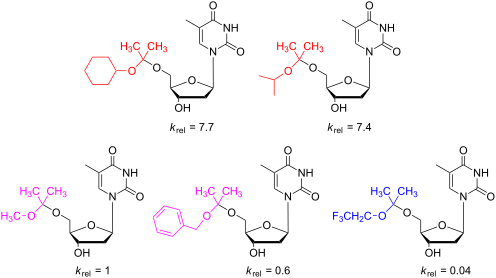
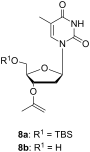
- of these acetone-based acetal groups are faster removed than a dimethoxytrityl group, and they are easier to cleave completely in solution. The structural variation allows steering of the stability and lipophilicity of the compounds in some range. Keywords: acetal; hydrolysis; protecting groups
- [7]. We realized that the lability of the acetal group can be easily steered by varying the alkoxy group, while preserving other beneficial properties of the protecting groups. On the other hand, structural modifications can also affect the lipophilicity of the protected compounds. The present study