Search results
Search for "phosphonate" in Full Text gives 157 result(s) in Beilstein Journal of Organic Chemistry.
The McKenna reaction – avoiding side reactions in phosphonate deprotection
Beilstein J. Org. Chem. 2020, 16, 1436–1446, doi:10.3762/bjoc.16.119
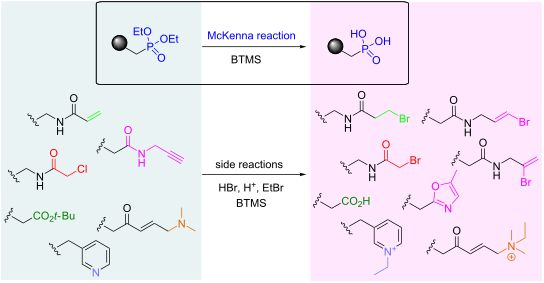
- phosphonate esters into bis(trimethylsilyl)esters, which are then easily converted into the target acids. However, the versatile character of the McKenna reaction is not always used to its full extent, due to formation of side products. Herein, demonstrated by using model examples we have not only analyzed
- . Keywords: bromotrimethylsilane; McKenna reaction; organophosphorus acid; oxazole; phosphonate ester; Introduction The McKenna reaction is a tool for the synthesis of organophosphorus acids from their esters and known for over 40 years [1][2]. The importance of this class of compounds is widely recognized
- reagent of choice for phosphonate ester cleavage, compared with its more and less reactive analogs, iodotrimethylsilane (ITMS) [11][12] and chlorotrimethylsilane (CTMS) [13], respectively. While being one of the most popular methods for the deprotection of organophosphorus esters, the McKenna reaction may


Highly selective Diels–Alder and Heck arylation reactions in a divergent synthesis of isoindolo- and pyrrolo-fused polycyclic indoles from 2-formylpyrrole
Beilstein J. Org. Chem. 2020, 16, 1320–1334, doi:10.3762/bjoc.16.113
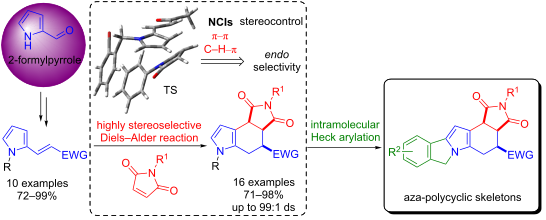
- phosphonates 15a–c to afford derivatives 8a–f in high yields (Table 1, entries 1–6). For the synthesis of pyrroles 8g,h (R1 = Ac), pyrroles 13c and 13e were subjected to condensation reactions at a higher temperature, with acetone as the nucleophile (instead the phosphonate 15) in the presence of KOH as the


Synthesis, antiinflammatory activity, and molecular docking studies of bisphosphonic esters as potential MMP-8 and MMP-9 inhibitors
Beilstein J. Org. Chem. 2020, 16, 1277–1287, doi:10.3762/bjoc.16.108
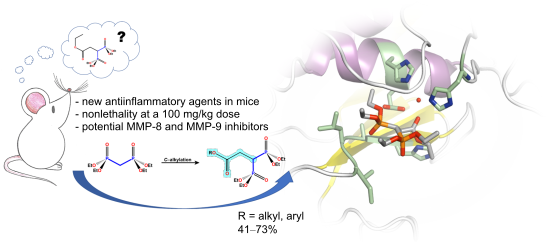
- expected, 4–6 could bind the Zn2+ ion in a monodentate fashion through the oxygen atom double bonded to the phosphorus atom (P=O) of one of the phosphonate moieties, as reported in the literature for other structures [38][39]. Only for 3, zinc chelation was observed through the oxygen atom double bonded to
- of the phosphonate moieties, while 5 and 6 had interactions through the C=O oxygen atom of the ester group. Because the interactions of the benzyl group of 5 and 6, respectively, with the Phe110 residue present at the catalytic site through π–π interactions are possible, the orientation of the
- molecules inside the catalytic site allowed the coordination through the ester groups rather than through the phosphonate moieties. The calculated distances from the Zn2+ ion and the different sites at the ligand and the protein are summarized in Table 6. In Figure 4, a schematic representation of the


Copper-based fluorinated reagents for the synthesis of CF2R-containing molecules (R ≠ F)
Beilstein J. Org. Chem. 2020, 16, 1051–1065, doi:10.3762/bjoc.16.92
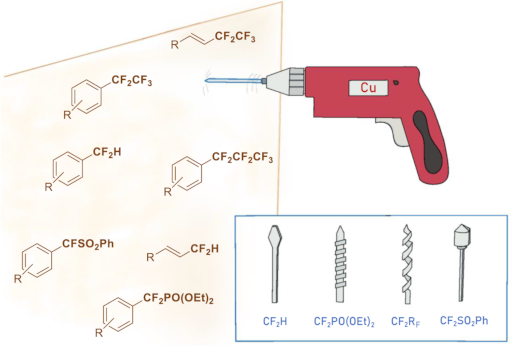
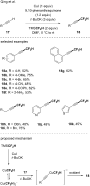
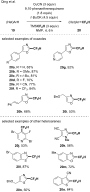
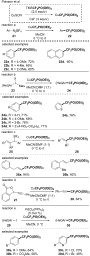
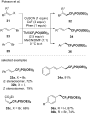
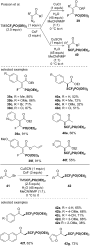
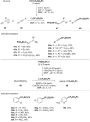
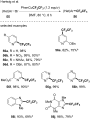
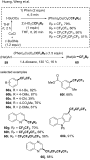
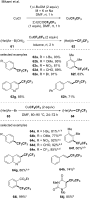
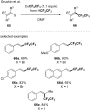
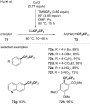
- -generated copper-based CF2PO(OEt)2 reagent As a bioisostere of the phosphonate group [47], a lot of attention was paid to the difluoromethylphosphonate residue as well as the development of efficient methodologies to introduce it onto molecules [48]. In that context, main contributions were made by the











Fluorinated phenylalanines: synthesis and pharmaceutical applications
Beilstein J. Org. Chem. 2020, 16, 1022–1050, doi:10.3762/bjoc.16.91
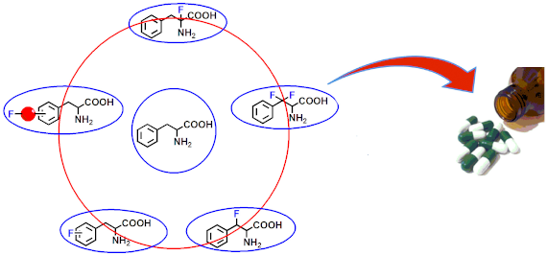
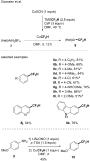
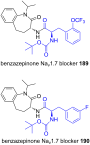
- )-2,5-difluorophenylalanine derivative 115 was carried out by coupling the commercially available aldehyde 55 and N-Boc phosphonate glycinate 112 to generate the enamino ester intermediate 113. The asymmetric hydrogenation of this enamine afforded the N-Boc-protected (R)-2,5-difluorophenylalanine ester


Copper-catalyzed O-alkenylation of phosphonates
Beilstein J. Org. Chem. 2020, 16, 611–615, doi:10.3762/bjoc.16.56

- chemistry [1][2][3]. In particular, O-alkenyl phosphonate esters (i.e., enol phosphonates) have been described as potent insecticides and show antifungal activity [4]. While several methods are available for the preparation of cyclic enol phosphonates [5][6][7][8][9][10], the synthesis of the acyclic
- copper catalyst on an alkenyl(aryl)iodonium salt [33][34] would generate an alkenyl–copper(III) species which might undergo nucleophilic attack of the Lewis-basic oxygen of a dialkyl phosphonate. The resulting phosphonium-like intermediate would evolve by Arbuzov-type substitution of one of the alkyl
- groups, and final reductive elimination would form the new C(sp2)–O bond, providing an acyclic enol phosphonate with concomitant regeneration of the Cu(I) catalyst (Scheme 1b). Herein we report the successful realization of such a copper-catalyzed oxygen-alkenylation strategy and show that a range of


[1,3]/[1,4]-Sulfur atom migration in β-hydroxyalkylphosphine sulfides
Beilstein J. Org. Chem. 2020, 16, 88–105, doi:10.3762/bjoc.16.11
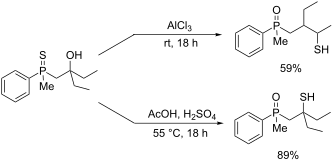
- phosphonate–phosphinate rearrangement of dimethyl phosphonates [50]. Other [1,3]-rearrangements of organophosphorus compounds include phosphoenolpyruvate formation from phosphonopyruvate [51], benzylphosphonium salt formation from the corresponding o-methylaryl-substituted precursors [52], or the formation of


Functionalization of the imidazo[1,2-a]pyridine ring in α-phosphonoacrylates and α-phosphonopropionates via microwave-assisted Mizoroki–Heck reaction
Beilstein J. Org. Chem. 2020, 16, 15–21, doi:10.3762/bjoc.16.3

- is rarely applied for the functionalization of molecules bearing phosphonate or phosphine oxide groups, and the known reactions involve high temperatures (≈100 °C) and long reaction times (in most cases >24 h) [4][5][6][7]. Herein we disclose the first method for functionalization of molecules


Synthesis of C-glycosyl phosphonate derivatives of 4-amino-4-deoxy-α-ʟ-arabinose
Beilstein J. Org. Chem. 2020, 16, 9–14, doi:10.3762/bjoc.16.2
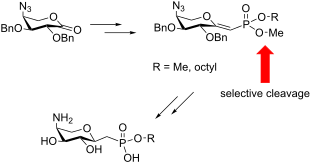
- antimicrobial drugs. C-glycosidically-linked phospholipid derivatives of 4-amino-4-deoxy-ʟ-arabinose have been prepared as hydrolytically stable and chain-shortened analogues of the native undecaprenyl donor. The C-phosphonate unit was installed via a Wittig reaction of benzyl-protected 1,5-arabinonic acid
- α-ʟ-anomeric arabino- and ribo-configured methyl phosphonate esters. In addition, the monomethyl phosphonate glycal intermediates were converted into n-octyl derivatives followed by subsequent selective removal of the methyl phosphonate ester group and hydrogenation to give the octylphosphono
- derivatives. These intermediates will be of value for their future conversion into transition state analogues as well as for the introduction of various lipid extensions at the anomeric phosphonate moiety. Keywords: antibiotic resistance; glycosyl phosphonate; glycosyl transferase; lipid A


Iodine-mediated hydration of alkynes on keto-functionalized scaffolds: mechanistic insight and the regiospecific hydration of internal alkynes
Beilstein J. Org. Chem. 2019, 15, 2747–2752, doi:10.3762/bjoc.15.265
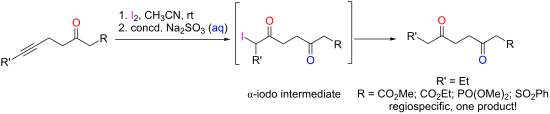
- intermediate 9, we turned our attention to investigating the reaction of internal alkynes 11 to examine the regioselectivity of the hydration process. Ester, sulfone, and phosphonate substrates were employed and, in all cases, the internal alkyne unit was capped by an ethyl group (Scheme 2). In general
- recovered. In contrast, the phosphonate 11d and the sulfone 11e smoothly converted to 15d and 15e in yields of 68% and 71%, respectively. The hydration of the phosphonate required 22 h, while the reaction of the sulfone was complete in 3.5 h. Overall, successful outcomes were obtained for the phosphonate
- , as well as phosphonate and sulfone analogues of the keto scaffold. Notably, the existence of the iodo intermediate points at the potential to synthesize α-substituted targets upon further development of the method. 1H NMR investigations on the iodine-mediated hydration of 8 (the range of 1.75–5.25


Synthesis of ([1,2,4]triazolo[4,3-a]pyridin-3-ylmethyl)phosphonates and their benzo derivatives via 5-exo-dig cyclization
Beilstein J. Org. Chem. 2019, 15, 1563–1568, doi:10.3762/bjoc.15.159
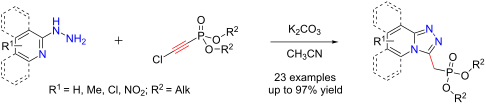
- of spin–spin interaction with the phosphorus nucleus at 23.43–28.99 ppm (1JСР = 143 Hz) and 53.5–72.1 ppm (2JCP = 7 Hz), respectively. In addition, the structure of phosphonate 14b was unambiguously proved by single crystal X-ray diffraction analysis. Probably, the reaction proceeds through the




Enantioselective Diels–Alder reaction of anthracene by chiral tritylium catalysis
Beilstein J. Org. Chem. 2019, 15, 1304–1312, doi:10.3762/bjoc.15.129
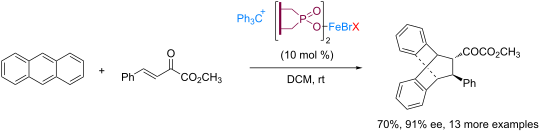
- -coordinated phosphonate anion with balanced association ability with tritylium ions provided a new opportunity in pursuing chiral ion pair-type carbocation catalysis. The resulted asymmetric tritylium catalysis has enabled the so-far challenging Diels–Alder reactions of unsubstituted anthracene with good


Steroid diversification by multicomponent reactions
Beilstein J. Org. Chem. 2019, 15, 1236–1256, doi:10.3762/bjoc.15.121
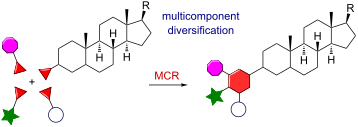
- to be conducted at reflux to obtain a good yield of Ugi-derived steroids, albeit the procedure generated a pair of diastereomers (epimeric at C-5) in almost equal amount. The stereoselectivity of the intramolecular MCR increased when a bulky isonitrile was used, e.g., diethyl phosphonate isocyanide


An improved synthesis of adefovir and related analogues
Beilstein J. Org. Chem. 2019, 15, 801–810, doi:10.3762/bjoc.15.77
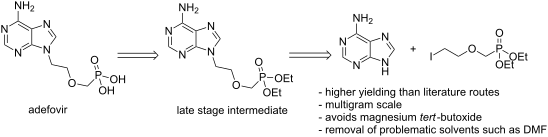
- the versatility of our approach. Keywords: acyclic nucleoside phosphonate; adefovir; alkylation; antiviral; N-alkylation; purine; Introduction The acyclic nucleoside phosphonate adefovir (1) [1], administered as its dipivoxil prodrug form (2) [2], is used clinically for the treatment of infections
- form alcohol 4 and further base-mediated alkylation with tosylate 5 affords phosphonate ester intermediate 6. Subsequent dealkylation of 6 using trimethylsilyl bromide (TMSBr) gives adefovir (1). The related analogue tenofovir, developed as an anti-HIV agent, may be prepared in a similar manner [37][38
- a sticky resin on exposure to atmospheric moisture. This resin hinders the isolation of phosphonate 6 and stymies scale-up. Finally, several byproducts, including the ethyl ether of 4 and the hemi-dealkylated ester of 6, are produced during this reaction, further reducing the atom economy of this


Synthesis of the polyketide section of seragamide A and related cyclodepsipeptides via Negishi cross coupling
Beilstein J. Org. Chem. 2019, 15, 577–583, doi:10.3762/bjoc.15.53
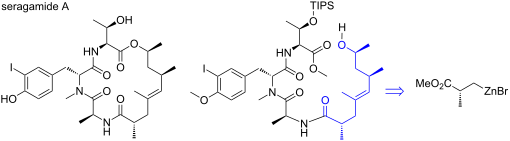
- [39] proved to be superior to the more commonly employed n-BuLi/MeI reagent combination that led to the formation of a series of side products. We also attempted a Bestmann–Ohira reaction with in situ formation of the diazo phosphonate [40] that gave a slightly inferior yield after methylation of the




Aqueous olefin metathesis: recent developments and applications
Beilstein J. Org. Chem. 2019, 15, 445–468, doi:10.3762/bjoc.15.39
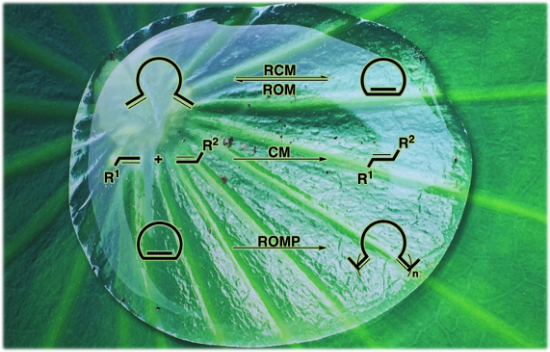
- , entries 2, 7 and 12). Gebbink and co-workers anchored the HG-type catalyst 79 to cutinase, a serine hydrolase [75]. The phosphonate ester moiety acts as a suicide inhibitor forming an irreversible covalent bond to a serine residue present in the active site of the enzyme. Assembly of ArM 8 occurs at pH 5




Pd-Catalyzed microwave-assisted synthesis of phosphonated 13α-estrones as potential OATP2B1, 17β-HSD1 and/or STS inhibitors
Beilstein J. Org. Chem. 2018, 14, 2838–2845, doi:10.3762/bjoc.14.262
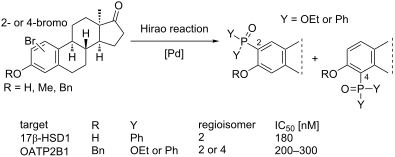
- the yields of the C–P couplings. Reactions with catalyst precursor Pd(OAc)2 gave the desired phosphonate 8a in moderate yields (Table 1, entries 1–8). Starting from 2-iodo compound 1I, dehalogenation, an unwanted side reaction occurred, in particular, at elevated temperature (Table 1, entries 3, 4, 7


Non-metal-templated approaches to bis(borane) derivatives of macrocyclic dibridgehead diphosphines via alkene metathesis
Beilstein J. Org. Chem. 2018, 14, 2354–2365, doi:10.3762/bjoc.14.211
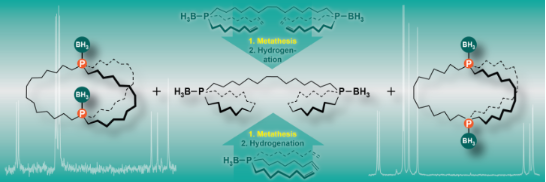
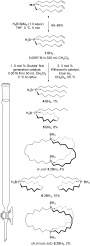
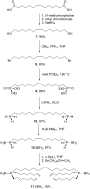
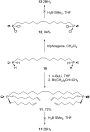
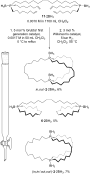
- tethered by a methylene chain, in two steps in 66–68% overall yields from diethyl phosphonate ((O=)PH(OEt)2), Grignard reagents BrMg(CH2)mCH=CH2, base (NaH), and appropriate α,ω-dibromides Br(CH2)nBr [25]. Following metathesis and hydrogenation, these afford dibridgehead diphosphine oxides 15 and 16 in 14





Investigation of the electrophilic reactivity of the biologically active marine sesquiterpenoid onchidal and model compounds
Beilstein J. Org. Chem. 2018, 14, 2229–2235, doi:10.3762/bjoc.14.197
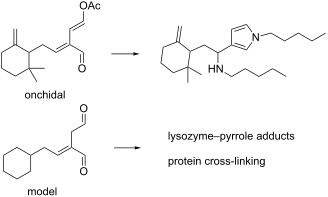
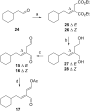
- enol acetate 17. Reagents and conditions: a) phosphonate 19 (1.3 equiv), LiOH·H2O (1.5 equiv), THF, 4 h, 15% (25), 1.5% (26); b) LiAlH4 (2.5 equiv), Et2O, 0 °C, 1 h, 61% (27), 71% (28); c) DMP (2.5 equiv), CH2Cl2, 4 h, 49% (15), 73% (16); d) Ac2O (2 equiv), pyridine (4 equiv), overnight, 43% (17






Visible light-mediated difluoroalkylation of electron-deficient alkenes
Beilstein J. Org. Chem. 2018, 14, 1637–1641, doi:10.3762/bjoc.14.139

- were coupled with alkenes 2 (Figure 1). Esters and amides of acrylic acid, acrylonitrile, and vinyl phosphonate used in a small excess (1.2 equiv) were successfully fluoroalkylated. For vinyl(phenyl)sulfone, significant amounts of hydrodeiodination product RfH was formed, likely because of the


Oligonucleotide analogues with cationic backbone linkages
Beilstein J. Org. Chem. 2018, 14, 1293–1308, doi:10.3762/bjoc.14.111
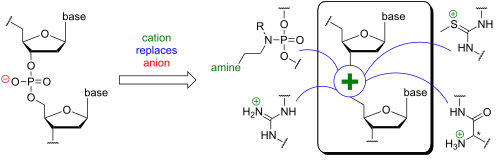
- oligonucleotide analogues was performed on solid support using H-phosphonate chemistry (Scheme 1). Thus, solid phase-linked thymidine 12 was coupled with 5'-dimethoxytrityl-(DMTr)-protected thymidine 3'-H-phosphonate 13 to give dimeric H-phosphonate 14, which was then acidically DMTr-deprotected to furnish 15
- review. Fathi et al. have established the aminoethylphosphonate linkage 19 (i.e., a phosphonate analogue of amidate 7) [47], and Rahman, Obika and co-workers have described cationic phosphorothioates of type 20 [48] (Figure 4). The preparation of phosphonate linkage 19 was achieved in diastereomerically
- accessible by means of chemical synthesis, which is either based on the application of H-phosphonate (for i) or phosphoramidite-based (for iv) DNA synthesis, or on a massively modified version of DNA synthesis (for ii and iii), or on solid phase-supported peptide synthesis (for iv). Studies on the properties



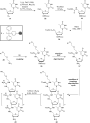


Electrochemically modified Corey–Fuchs reaction for the synthesis of arylalkynes. The case of 2-(2,2-dibromovinyl)naphthalene
Beilstein J. Org. Chem. 2018, 14, 891–899, doi:10.3762/bjoc.14.76
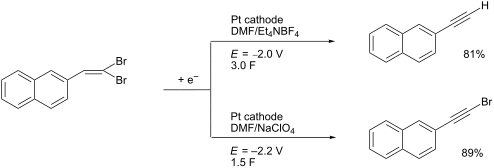
- dihalides or vinyl bromides using sodium in ammonia or strong bases [8]. Alternatively, the compounds are accessible by homologation of aldehydes following the Bestmann modification of the Seyferth–Gilbert reaction, using in situ generated dimethyl (diazomethyl)phosphonate [9][10]. Moreover, the aldehyde


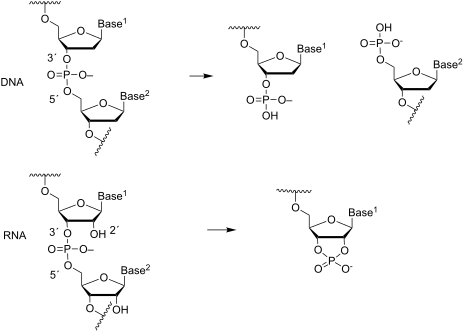
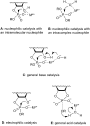
Phosphodiester models for cleavage of nucleic acids
Beilstein J. Org. Chem. 2018, 14, 803–837, doi:10.3762/bjoc.14.68



Preparation of trinucleotide phosphoramidites as synthons for the synthesis of gene libraries
Beilstein J. Org. Chem. 2018, 14, 397–406, doi:10.3762/bjoc.14.28
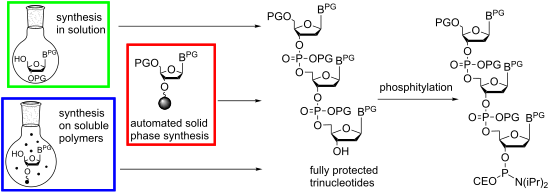
- proceed by either phosphite triester chemistry or phosphotriester chemistry with the latter being the more robust method. Also H-phosphonate chemistry has been used for assembling short oligomers in solution [34], although not with the aim of generating trinucleotide synthons for gene synthesis. 2
- released by a transesterification mechanism [35]. The 3'-start nucleoside is bound to one of the primary hydroxy groups of CPG-linked glycerol via an H-phosphonate linkage (Figure 5B). The removal of the TBDMS group from the remaining primary alcohol of glycerol induces the spontaneous cleavage of the H
- -phosphonate and the release of the oligomer with the free 3'-OH group leaving all other protecting groups intact. This strategy has been shown to be compatible with phosphoramidite chemistry and β-cyanoethyl protection of the internucleotide phosphates [33]. A more recent report describes the preparation of a


Aminosugar-based immunomodulator lipid A: synthetic approaches
Beilstein J. Org. Chem. 2018, 14, 25–53, doi:10.3762/bjoc.14.3