Search results
Search for "receptors" in Full Text gives 319 result(s) in Beilstein Journal of Organic Chemistry. Showing first 200.
1,4,6,10-Tetraazaadamantanes (TAADs) with N-amino groups: synthesis and formation of boron chelates and host–guest complexes
Beilstein J. Org. Chem. 2022, 18, 1424–1434, doi:10.3762/bjoc.18.148
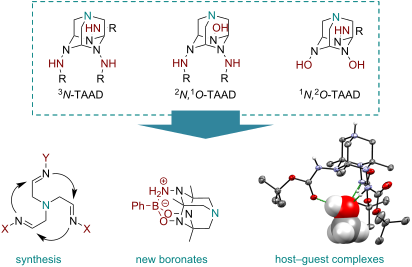
- hydrazone groups. The use of N-TAAD derivatives as potential ligands and receptors was showcased through forming boron chelates and host–guest complexes with water and simple alcohols. Keywords: azaadamantanes; cyclotrimerization; hydrazones; inclusion complexes; molecular recognition; Introduction
- as synthetic receptors to form host–guest complexes based on H-bond interactions with amide/carbamoyl groups [31][32]. In addition, N-TAADs can be viewed as analogs of hexahydrazide ligands, which were reported to stabilize high-valent metal complexes [33][34]. Since N-amino groups can be easily
- stabilization of the complex through weak hydrophobic interactions of with tert-butyl groups of Boc. We believe that by adjustment of the substituents on the amide/carbamate groups, receptors for supramolecular sensing of alcohols [44] could be designed based on 3N-TAADs of type 4. Further research in this





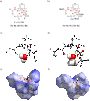

Computational model predicts protein binding sites of a luminescent ligand equipped with guanidiniocarbonyl-pyrrole groups
Beilstein J. Org. Chem. 2022, 18, 1322–1331, doi:10.3762/bjoc.18.137
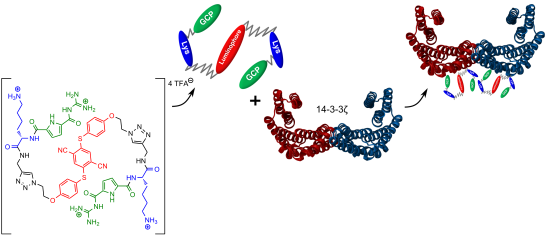
- to efficiently bind to oxo-anions such as carboxylates [10]. These compounds were already used to specifically address carboxylates on the surface of proteins. Many artificial receptors based on guanidinium scaffolds use hydrogen bonding, charge pairing, and hydrophobic interactions to complex oxo




Facile and diastereoselective arylation of the privileged 1,4-dihydroisoquinolin-3(2H)-one scaffold
Beilstein J. Org. Chem. 2022, 18, 1070–1078, doi:10.3762/bjoc.18.109
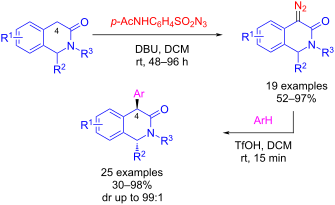
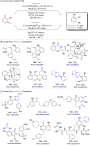
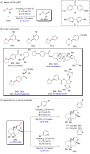
- receptors 1 [3], AChE and BACE-1 inhibitor 2 [4], inhibitor of oncogenic p53-MDM2 protein–protein interaction 3 [5], positive allosteric modulator of ionotropic glutamate receptor NMDA-1 4 [6], insulin-like growth factor 1 receptor inhibitor 5 [7], and metabotropic glutamate receptor 7 modulator 6 [8


Diametric calix[6]arene-based phosphine gold(I) cavitands
Beilstein J. Org. Chem. 2022, 18, 190–196, doi:10.3762/bjoc.18.21
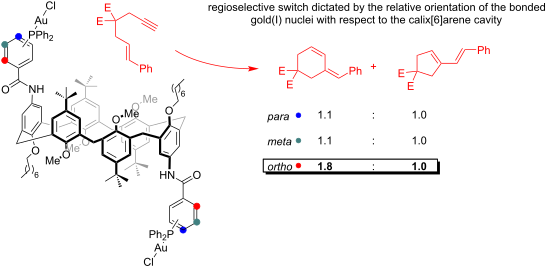
- macrocycles are less exploited in catalysis [28]. The larger macrocycle size, its conformational adaptability, and the possibility to selectively functionalize the macrocycle offered several opportunities to design synthetic receptors and prototypes of nanodevices, instead [29]. In this context, we recently


Regioselective synthesis of methyl 5-(N-Boc-cycloaminyl)-1,2-oxazole-4-carboxylates as new amino acid-like building blocks
Beilstein J. Org. Chem. 2022, 18, 102–109, doi:10.3762/bjoc.18.11
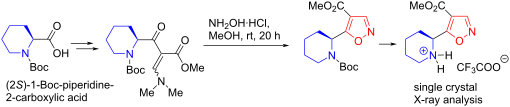
- muscimol (I) and ibotenic acid (II) (Figure 1) have been isolated from several fungal species and are active on the γ-aminobutyric acid (GABA) and glutamate receptors of the central nervous system (CNS), respectively [8][9]. Various unnatural amino acids bearing a 1,2-oxazole moiety, such as


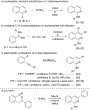
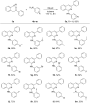
Me3Al-mediated domino nucleophilic addition/intramolecular cyclisation of 2-(2-oxo-2-phenylethyl)benzonitriles with amines; a convenient approach for the synthesis of substituted 1-aminoisoquinolines
Beilstein J. Org. Chem. 2021, 17, 2765–2772, doi:10.3762/bjoc.17.186
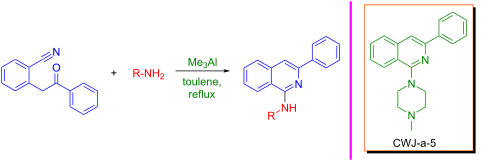
- ] receptors. They are useful in the synthesis of phosphorescent materials [22][23][24], fluorosensors [25]. and also found as chiral ligands in a variety of transition metal catalysts [26][27][28][29][30]. Given the pharmacological promiscuity of this scaffold, extensive efforts from different groups led to




Synthetic strategies toward 1,3-oxathiolane nucleoside analogues
Beilstein J. Org. Chem. 2021, 17, 2680–2715, doi:10.3762/bjoc.17.182
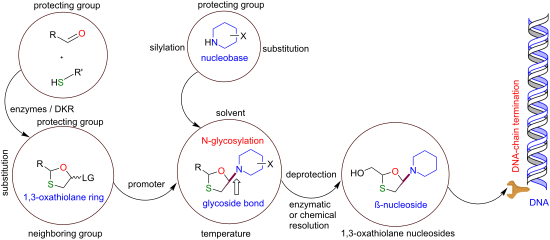
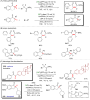
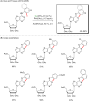
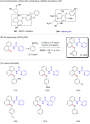
- was devised for targeting specific receptors on the leukocytes membrane. The crucial N-glycosylation reaction between 1,3-oxathiolane precursor 45 and silylated cytosine was carried out using TiCl4 as a catalyst. The N-acylation of compound 92a was performed for flash chromatography, and further


Synthesis of new bile acid-fused tetrazoles using the Schmidt reaction
Beilstein J. Org. Chem. 2021, 17, 2611–2620, doi:10.3762/bjoc.17.174
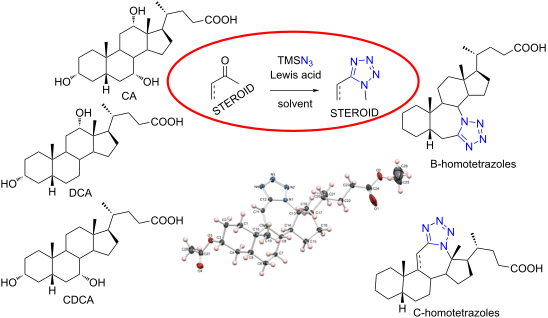
- solubilizers, bile acids are now recognized as metabolism regulators through specific receptors: farnesoid X receptor (FXR) and Takeda G protein receptor 5 (TGR5) [1][2][3]. Research efforts to find ligands for these receptors initiated several synthetic studies where bile acids are being used as a starting


Synthesis of new substituted 7,12-dihydro-6,12-methanodibenzo[c,f]azocine-5-carboxylic acids containing a tetracyclic tetrahydroisoquinoline core structure
Beilstein J. Org. Chem. 2021, 17, 2511–2519, doi:10.3762/bjoc.17.168
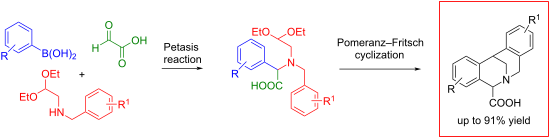
- ]nonane, isolated from Papaveraceae and Ranunculaceae species. Natural isopavines (e.g., amurensinine (I), and O-methylthalisopavine (II), Figure 1) as well as their synthetic analogues have attracted much attention [4][5] because of their interactions with the receptors in the central nervous system
- promising for the treatment of nervous system disorders, such as Parkinson’s and Alzheimer’s disease [6][7]. Hanessian and co-workers designed isopavines of type III (Figure 1) that act as morphinomimethics and bind strongly to human opioid receptors [8][9]. The synthesis of these compounds involved the


Post-functionalization of drug-loaded nanoparticles prepared by polymerization-induced self-assembly (PISA) with mitochondria targeting ligands
Beilstein J. Org. Chem. 2021, 17, 2302–2314, doi:10.3762/bjoc.17.148
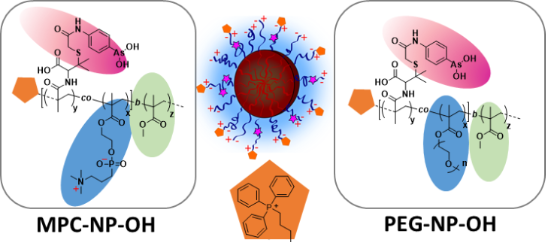
- strategy, drug conjugated monomers can be directly used in the polymerization, eliminating the post-modification step [28][37][38][39]. In order to use micelles, prepared by PISA or traditional techniques, for targeting specific receptors, it is necessary that these materials are low-fouling, thus repel
- proteins, enzymes and receptors bind to As(III) molecules [8][9]. It is on the other hand interesting that the zwitterionic micelles represent overall better anticancer efficiency when TPP is attached, while the PEG micelle performance is better without added TPP. The PPM-NP4-TPP micelle represents more
- cellular internalization as well as accumulation at the diseased tissues by targeting specific over-expressed receptors in cancer cells. However, to this date it is still debateable if active retention truly causes this "homing" effect. It has been shown that due to increased protein corona formation on a






Halides as versatile anions in asymmetric anion-binding organocatalysis
Beilstein J. Org. Chem. 2021, 17, 2270–2286, doi:10.3762/bjoc.17.145
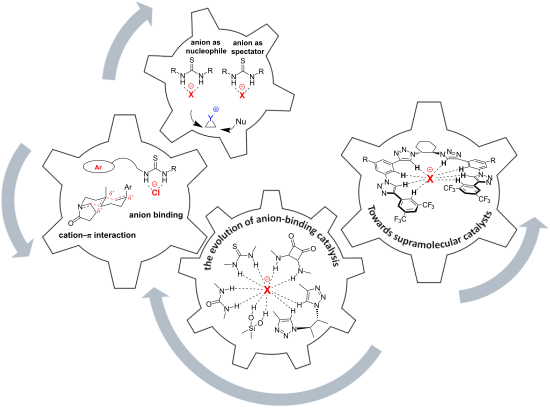
- challenging to design small molecule catalysts that resemble anion-binding properties of enzymes. Hence, a major challenge of small organic receptors to mimic nature’s capability of binding to the targeted anions resides in the supramolecular properties of enzymes and co-factors to form exact matching binding
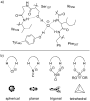
- receptors have often proven more efficient [9][12]. A breakthrough in the field of anion binding towards its application in catalysis was achieved with the findings that neutral (thio)urea derivatives are potent anion receptors due to their ability to bind anions of various topologies, including the
- spherical halides [10]. The key to hydrogen bonding of the halide anion resides in the polarized N–H bonds of these (thio)urea units, which have since served as a benchmark in the design and development of anion receptor catalysts [12][13][14]. Consequently, other synthetic anion receptors have been



Progress and challenges in the synthesis of sequence controlled polysaccharides
Beilstein J. Org. Chem. 2021, 17, 1981–2025, doi:10.3762/bjoc.17.129
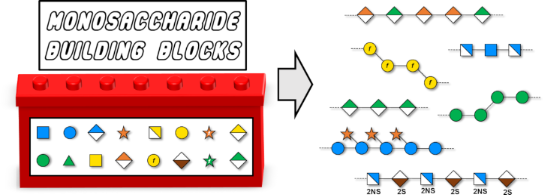
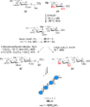
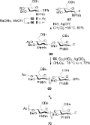
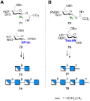
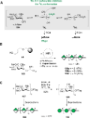
- controlled size and substitution pattern are highly desirable, because DP and FA affect the physicochemical properties of the COS [218][219]. A size-dependent immune recognition was verified in plant chitin receptors as well as in toll-like receptors (TLR2) [220]. Moreover, the PA can tune the biological










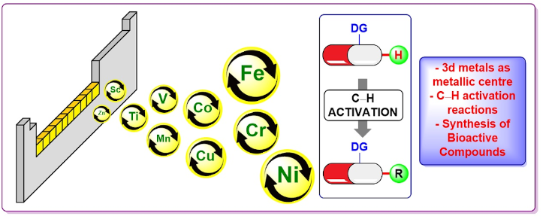
On the application of 3d metals for C–H activation toward bioactive compounds: The key step for the synthesis of silver bullets
Beilstein J. Org. Chem. 2021, 17, 1849–1938, doi:10.3762/bjoc.17.126
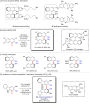
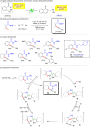
- ). These bicyclic structures may present unique biological activities including neuroprotective properties (15), as it was recently reported by Joubert and co-workers [58], as well as acting as agonists of nicotinic receptors (16) [59], representing an alternative option for the treatment of cigarette




























Natural products in the predatory defence of the filamentous fungal pathogen Aspergillus fumigatus
Beilstein J. Org. Chem. 2021, 17, 1814–1827, doi:10.3762/bjoc.17.124

- -melanin. Additionally, the surfactant protein D (SP-D), a soluble C-type lectin receptor (CLR), is also able to recognise DHN-melanin and opsonize it to increase the immune response. However, MelLec receptors are only present on some endothelial and myeloid cells [156][157]. Fumigaclavines Fumigaclavine C


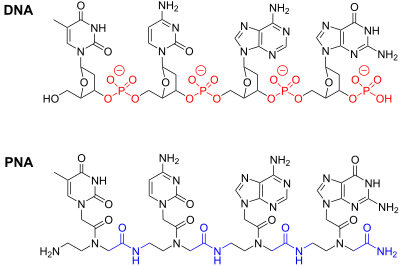
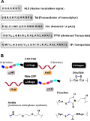
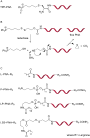
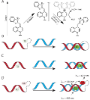
Chemical approaches to discover the full potential of peptide nucleic acids in biomedical applications
Beilstein J. Org. Chem. 2021, 17, 1641–1688, doi:10.3762/bjoc.17.116








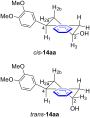
Cascade intramolecular Prins/Friedel–Crafts cyclization for the synthesis of 4-aryltetralin-2-ols and 5-aryltetrahydro-5H-benzo[7]annulen-7-ols
Beilstein J. Org. Chem. 2021, 17, 1481–1489, doi:10.3762/bjoc.17.104
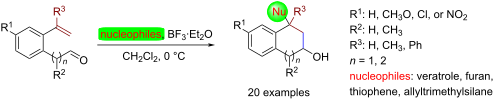
- therapeutic potential. In addition, trans-4-phenyl-N,N-dimethyl-2-aminotetralin (trans-H2-PAT, 4, Figure 1) [6] has been determined to modulate tyrosine hydroxylase activity and dopamine synthesis in rodent forebrain and is also a ligand binding to histamine H1 receptors, and thus is a potentially useful




Iodine-catalyzed electrophilic substitution of indoles: Synthesis of (un)symmetrical diindolylmethanes with a quaternary carbon center
Beilstein J. Org. Chem. 2021, 17, 1464–1475, doi:10.3762/bjoc.17.102
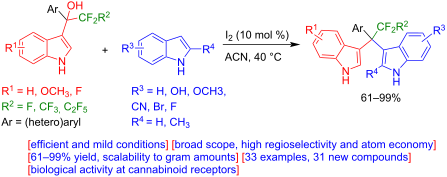
- , and scalability to obtain gram amounts for biological studies. Selected compounds were found to display affinity for cannabinoid receptors, which are promising drug targets for the treatment of inflammatory and neurodegenerative diseases. Keywords: alkylation of indole; anti-inflammatory; binding
- affinity; cannabinoid receptors; diindolylmethane; unsymmetrical 3,3'-diindolylmethane; Introduction Diindolylmethanes (DIMs) represent an important class of indole alkaloids, that are constituents of pharmaceuticals [1][2][3][4][5][6][7] and agrochemicals [8][9]. DIM derivatives possess a variety of
- studies for their affinities towards cannabinoid CB1 and CB2 receptors. Results and Discussion Optimization of the reaction The reaction conditions were optimized using 2,2,2-trifluoro-1-(5-methoxy-1H-indol-3-yl)-1-phenylethan-1-ol (1a, 5 mmol) and 1H-indole (2a, 5 mmol) as model substrates (Table 1). At


Design, synthesis and photophysical properties of novel star-shaped truxene-based heterocycles utilizing ring-closing metathesis, Clauson–Kaas, Van Leusen and Ullmann-type reactions as key tools
Beilstein J. Org. Chem. 2021, 17, 1374–1384, doi:10.3762/bjoc.17.96
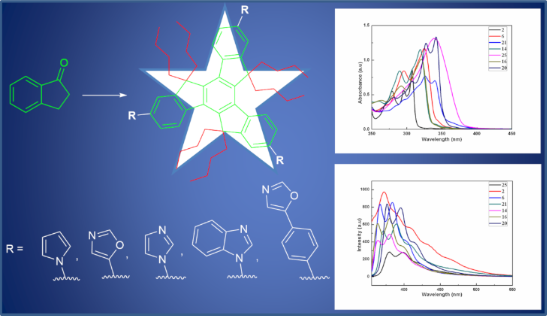
- -containing five-membered aromatic pyrrole scaffold will continue to play a significant role in the development of novel anionic receptors [33][34]. Therefore, as outlined in Scheme 2, our synthetic strategy towards the construction of the target pyrrole-based truxene derivative 6 initiated with the acid


Antiviral therapy in shrimp through plant virus VLP containing VP28 dsRNA against WSSV
Beilstein J. Org. Chem. 2021, 17, 1360–1373, doi:10.3762/bjoc.17.95
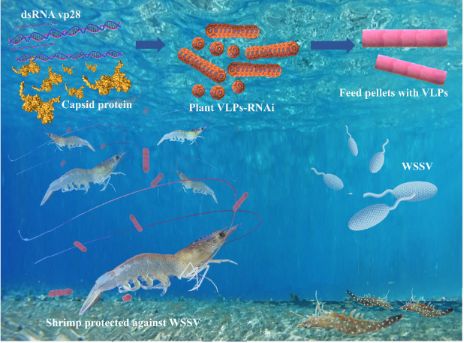
- ]. Also, the CCMV VLPs are resistant to enzyme degradation through the digestive tract [32][33][34]. It is to be kept in mind that possibly the shrimp’s virus, in contrast to CCMV VLP’s, needs specific receptors to be internalized in the shrimp cells. For these reasons, CCMV VLPs show quite an advantage


Beyond ribose and phosphate: Selected nucleic acid modifications for structure–function investigations and therapeutic applications
Beilstein J. Org. Chem. 2021, 17, 908–931, doi:10.3762/bjoc.17.76
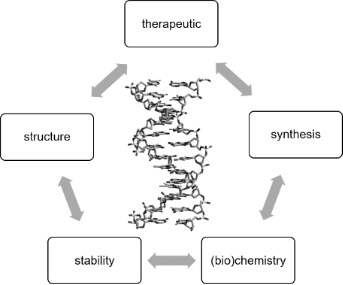
- , replication, splicing and other fundamental processes in biological information transfer. More specifically, they can affect chemical and thermodynamic stability, folding, secondary and tertiary structure, activity and interactions between nucleic acids, proteins and receptors. Particularly, as far as
- production of proteins, enzymes and receptors that may be inhibited by small-molecule and antibody therapeutics. However, native RNA oligonucleotides do not possess sufficient metabolic stability for in vivo applications. Therefore, chemical modification is absolutely essential to re-engineer RNA into a




Enhanced target cell specificity and uptake of lipid nanoparticles using RNA aptamers and peptides
Beilstein J. Org. Chem. 2021, 17, 891–907, doi:10.3762/bjoc.17.75
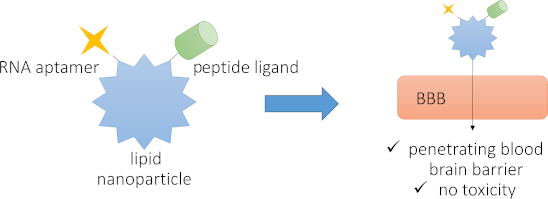
- potential of compounds [43]. To assess the specific uptake of the G-3 aptamer, we used TZM-bLs. TZM-bL is a HeLa-derived cell line that was engineered to express CD4 and CCR5 receptors on the cell surface [44]. HeLa cells were used as a negative control. To investigate the specific uptake of the A-1 aptamer
- complexation with cluster of differentiation 4 (CD4) and CCR5 or C-X-C motif chemokine receptor 4 (CXCR4) host cell surface receptors [35]. As such, gp160 expression on the host cell surface receptor may not be as adept at facilitating cell entry via receptor-mediated endocytosis. Although in 2009, Zhou et al
- also be due to differences in target receptor expression in the cell types and/or differences in the affinity and specificity of these aptamers for the target receptors and/or differences in the mechanisms of uptake. Finally, the formulation procedure also likely influences the ability of the aptamers



Effective microwave-assisted approach to 1,2,3-triazolobenzodiazepinones via tandem Ugi reaction/catalyst-free intramolecular azide–alkyne cycloaddition
Beilstein J. Org. Chem. 2021, 17, 678–687, doi:10.3762/bjoc.17.57
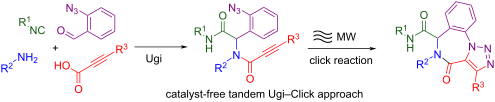
- of 1,2,4-triazolobenzodiazepines is the treatment of central nervous system (CNS) disorders. Such drugs as alprazolam and estazolam are used as anxiolytic agents, whereas adinazolam is known as an antidepressant [3]. Benzodiazepine molecules are ligands for GABA-receptors and act as positive


1,2,3-Triazoles as leaving groups: SNAr reactions of 2,6-bistriazolylpurines with O- and C-nucleophiles
Beilstein J. Org. Chem. 2021, 17, 410–419, doi:10.3762/bjoc.17.37
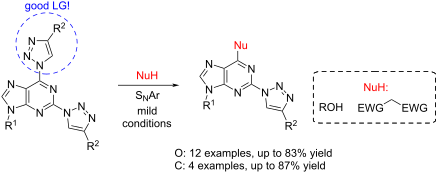
- 6-O-analogues are less common [61]. Azolylpurine derivatives are important due to their potential as drug candidates. They can be used as agonists and antagonists of adenosine receptors [58][64][65][66] and against Mycobacterium tuberculosis [60]. They also show useful fluorescent properties [11][67


1,2,3-Triazoles as leaving groups in SNAr–Arbuzov reactions: synthesis of C6-phosphonated purine derivatives
Beilstein J. Org. Chem. 2021, 17, 193–202, doi:10.3762/bjoc.17.19
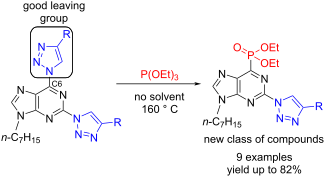
- activity against Mycobacterium tuberculosis and also as agonists and antagonists of adenosine receptors [18]. In 2013, we developed an efficient approach for the synthesis of ribo- and arabino-2,6-bistriazolylpurine nucleosides and showed that the triazolyl ring in the C6 position of purine acts as a good


Supramolecular polymerization of sulfated dendritic peptide amphiphiles into multivalent L-selectin binders
Beilstein J. Org. Chem. 2021, 17, 97–104, doi:10.3762/bjoc.17.10
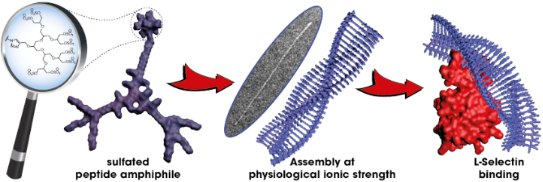
- achieved. As specific biological interactions strongly rely on the receptor–ligand interplays, we are interested in investigating the targeting of isolated receptors by supramolecular polymers built from peptide amphiphiles decorated with suitable ligand structures. The well-known L-selectin described