Search results
Search for "regioisomers" in Full Text gives 253 result(s) in Beilstein Journal of Organic Chemistry. Showing first 200.
Synthesis of 5-arylacetylenyl-1,2,4-oxadiazoles and their transformations under superelectrophilic activation conditions
Beilstein J. Org. Chem. 2021, 17, 2417–2424, doi:10.3762/bjoc.17.158
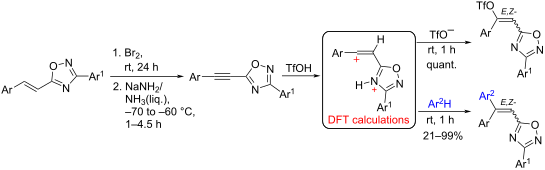
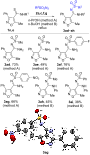
- proton and aromatic protons (see Supporting Information File 1). In the case of the reaction with o-xylene, pairs of E/Z-isomers of two regioisomers, (E/Z)-5b and (E/Z)-5b1, were obtained. We also checked the reaction of oxadiazole 3a with benzene under the action of Lewis acids AlCl3, AlBr3 and acidic


A visible-light-induced, metal-free bis-arylation of 2,5-dichlorobenzoquinone
Beilstein J. Org. Chem. 2021, 17, 2315–2320, doi:10.3762/bjoc.17.149
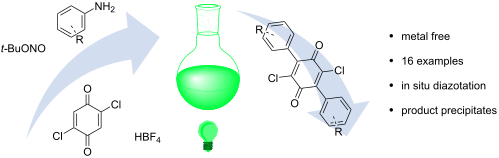
- precursor, potentially leading to both regioisomers and unwanted side products, complicating purification. As a result, accounts of bis-arylation using radical chemistry are scarce and report very low yields [29][30][31][32]. While transition-metal catalysis is a viable strategy, it is often based on


(Phenylamino)pyrimidine-1,2,3-triazole derivatives as analogs of imatinib: searching for novel compounds against chronic myeloid leukemia
Beilstein J. Org. Chem. 2021, 17, 2260–2269, doi:10.3762/bjoc.17.144
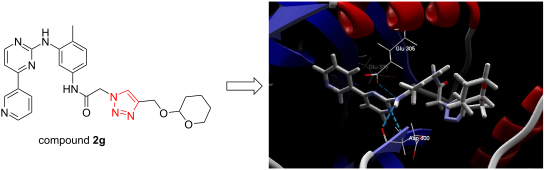
- cycloaddition reactions via the copper-catalyzed 1,3-dipolar cycloaddition reaction (CuAAC) of the azides 5 and 9 with suitably functionalized acetylenes 6a–j, using sodium ascorbate and copper sulfate in ACN/H2O 2:1 under microwave irradiation were carried out to obtain the 1,4-regioisomers of the final


Facile and innovative catalytic protocol for intramolecular Friedel–Crafts cyclization of Morita–Baylis–Hillman adducts: Synergistic combination of chiral (salen)chromium(III)/BF3·OEt2 catalysis
Beilstein J. Org. Chem. 2021, 17, 2186–2193, doi:10.3762/bjoc.17.140
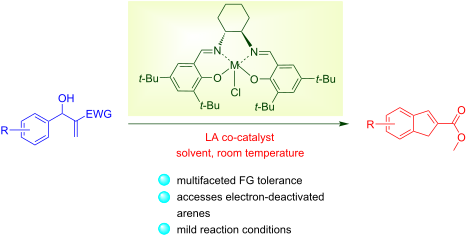
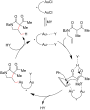
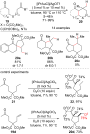
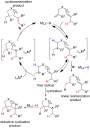
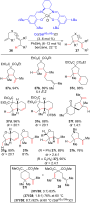
- possibly be utilized for the current investigation with expectations to minimize the formation of regioisomers, dimerized side products and overcome the usage of allylic-OH protected MBH adducts. Metallosalen complexes can be easily prepared and safely handled. The stability of metallosalen complexes
- synthesis of indenes from MBH adducts restricts the formation of regioisomers [10] and hinders the formation of dimerised side products [11]. In addition, the reaction smoothly accesses substituted indenes from MBH adducts at room temperature. In conclusion, the methodology is attractive for its easy


Chemical syntheses and salient features of azulene-containing homo- and copolymers
Beilstein J. Org. Chem. 2021, 17, 2164–2185, doi:10.3762/bjoc.17.139
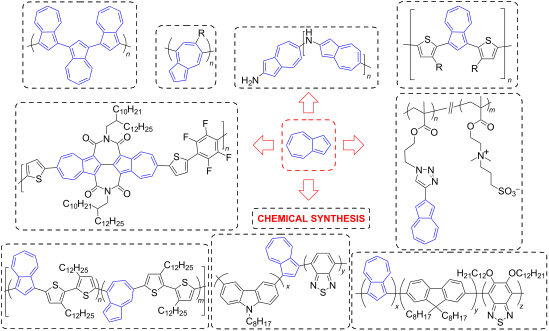
- synthesis of azulene-bithiophene copolymers 61–65 in which varied ratios of different regioisomers of azulene (1,3- and 4,7-connected) were present (Scheme 13). The synthesis of the key building block 5,5’-bis(trimethylstannyl)-3,3’-didodecyl-2,2’-bithiophene (60) is shown in Scheme 13A. The reaction of the
- bis-stannylated bithiophene 60 with varying ratios of dibromoazulenes 4 and 12 under Stille reaction conditions furnished the azulene-bithiophene copolymers 61–65 in decent yields (Scheme 13B). The final composition of the 1,3- and 4,7-regioisomers of azulene in the polymer chain was determined by 1H
- -diboronate 103 with varying ratios of 1,3-dibromoazulene (4) and 4,7-dibromoazulene (12) under Suzuki reaction conditions (Scheme 20). As stated above in the case of azulene-thiophene polymers 61–65, the final composition of 1,3- and 4,7-regioisomers of azulene in the polymer chain was determined by 1H NMR




Regioselective N-alkylation of the 1H-indazole scaffold; ring substituent and N-alkylating reagent effects on regioisomeric distribution
Beilstein J. Org. Chem. 2021, 17, 1939–1951, doi:10.3762/bjoc.17.127
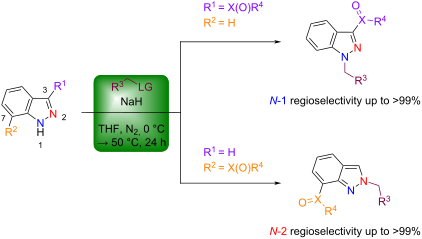
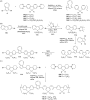
- effect of varying these reaction parameters, using n-pentyl bromide as the prototypical N-alkylating reagent (Table 1). Early investigations revealed that the combination of cesium carbonate (Cs2CO3) in dimethylformamide (DMF) at room temperature (≈ 20 °C) afforded a mixture of N-1 and N-2 regioisomers
- demonstrated a higher preference for N-1 indazole alkylation under conditions B, when compared with conditions A (Table 2, entries 1, 2, 4–7, and 9). Furthermore, C-3 ketone (22) and amide (23 and 24) substituted indazoles also gave the corresponding N-1 regioisomers with a high degree of N-1 regioselectivity
- from the N-2 position to the N-1 atom by the indazole C-3 substituent (vide infra). While the corresponding N-1 and N-2 regioisomers arising from the N-alkylation of C-3 substituted indazoles 12–24 were generally amenable to separation using wet flash column chromatography, the corresponding N-1- and N


A recent overview on the synthesis of 1,4,5-trisubstituted 1,2,3-triazoles
Beilstein J. Org. Chem. 2021, 17, 1600–1628, doi:10.3762/bjoc.17.114
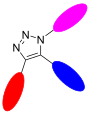
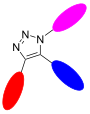
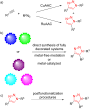
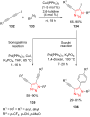
- group compatibility, including using enaminones containing aliphatic and aromatic substituents as well as azide compounds containing electron-donating and -withdrawing groups on the aromatic ring. In all cases, only 4-acyl-substituted regioisomers were obtained (Scheme 4) [40]. The mechanism was also













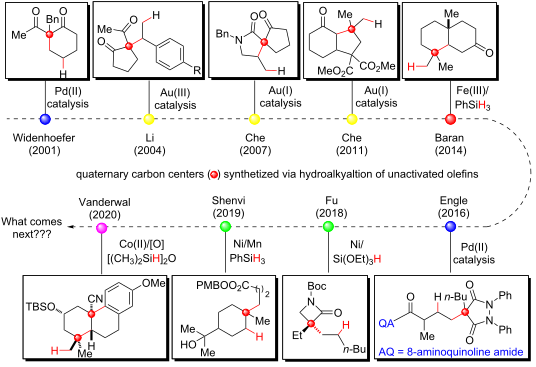
Methodologies for the synthesis of quaternary carbon centers via hydroalkylation of unactivated olefins: twenty years of advances
Beilstein J. Org. Chem. 2021, 17, 1565–1590, doi:10.3762/bjoc.17.112
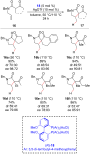
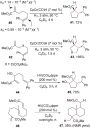
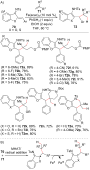
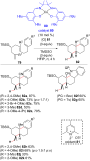
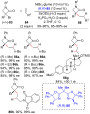
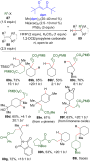
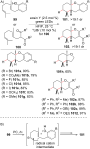
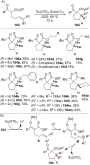
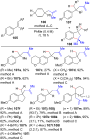
- olefin structure. Acyclic and endocyclic trisubstituted olefins, in general, afforded branched cross-coupling products with high selectivity (Scheme 35, compounds 89a, 89b, 89d, 89f–h), whereas exocyclic trisubstituted olefins led to a lower ratio between the regioisomers (Scheme 35, 89b’ and 89c













Chemical synthesis of C6-tetrazole ᴅ-mannose building blocks and access to a bioisostere of mannuronic acid 1-phosphate
Beilstein J. Org. Chem. 2021, 17, 1527–1532, doi:10.3762/bjoc.17.110
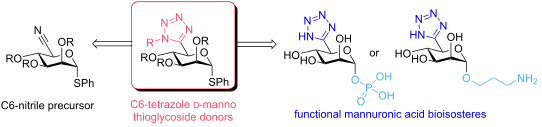
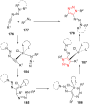
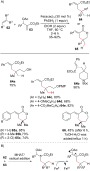
- nitrogen protection (Scheme 3). A first attempt here involved the reaction of 5 with PMBCl in DMF, using K2CO3 alongside KI. Two separable regioisomers 11 and 12 were isolated in an acceptable 53% overall yield and in a ratio of N1-PMB/N2-PMB = 1.1:1 (Scheme 3). HMBC NMR of 11 and 12 clarified the position
- separable regioisomers and their structures were confirmed by HMBC, as previously demonstrated. Removal of the need to orthogonally protect C4 expectedly reduced the complexity of the synthetic route and nine steps for the synthesis of donors of type 11/12 was reduced to five steps for 18/19. Moreover, the
- α-anomer]). Additionally, glycosylation of dibenzyl phosphate using the mixture 18/19 was successful and furnished the expected mixture of tetrazole N-regioisomers in 72% yield. These materials were not separated and instead exposed to hydrogenolysis conditions to deliver free ᴅ-manno C6-tetrazole 1


Breaking paracyclophane: the unexpected formation of non-symmetric disubstituted nitro[2.2]metaparacyclophanes
Beilstein J. Org. Chem. 2021, 17, 1518–1526, doi:10.3762/bjoc.17.109
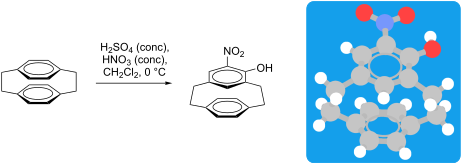
- -symmetric functionalized [2.2]metaparacyclophanes. Results and Discussion The nitration of [2.2]paracyclophane (1) is rarely a clean reaction [55][56][57][58][59][60], and the side-products are believed to include overnitration, as a mixture of regioisomers, as well as the products of oxidation and




Heterogeneous photocatalytic cyanomethylarylation of alkenes with acetonitrile: synthesis of diverse nitrogenous heterocyclic compounds
Beilstein J. Org. Chem. 2021, 17, 1171–1180, doi:10.3762/bjoc.17.89
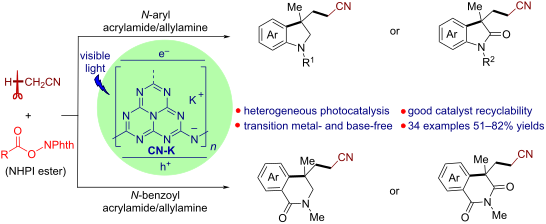
- positions, and the two regioisomers 6f and 6f’ were obtained in a 20:1 ratio. The established CN-K-catalyzed cyanomethylarylation protocol is not only effective for the above unactivated alkenes. Also activated alkenes including N-aryl and N-benzoyl acrylamides can be employed as substrates, allowing for
- , delivering the corresponding regioisomers 8l and 8l’ in 62% with 1:1.6 ratio. Moreover, the naphthalene and tetrahydroisoquinoline-derived acrylamides were also compatible, giving the polycyclic products 8m and 8n in 77% and 70%, respectively. Additionally, protecting groups such as isopropyl, benzyl, or


Stereoselective synthesis and transformation of pinane-based 2-amino-1,3-diols
Beilstein J. Org. Chem. 2021, 17, 983–990, doi:10.3762/bjoc.17.80
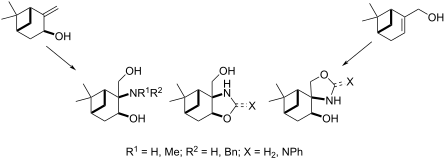
- the regioisomers of potential monoterpenic 2-amino-1,3-diols [29][30][31][32][33]. These trifunctionalized terpenoids may also possess diverse biological activities and could successfully applied as chiral catalysts in enantioselective transformations [34]. In the present study, our aim was to
- observed, forming a 1:1 mixture of the two regioisomers 21A and 21B. Compound 21B could be isolated from the mixture by column chromatography in pure form. The synthesis of the heteroanalogue 2-phenyliminothiazolidines 22A and 22B failed, even when the reaction was attempted under acidic or even milder


Application of the Meerwein reaction of 1,4-benzoquinone to a metal-free synthesis of benzofuropyridine analogues
Beilstein J. Org. Chem. 2021, 17, 977–982, doi:10.3762/bjoc.17.79
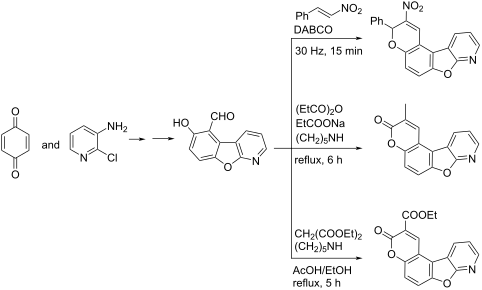
- expand the library of derivatives containing core structure 13, electrophilic aromatic substitution of this compound was explored (Scheme 2). Nitration of 13 using 70% nitric acid in glacial acetic acid gave the corresponding regioisomers 14 and 15 in 53% and 41% isolated yield, respectively. The 1H NMR
- novel and may have a potential medicinal interest. Conclusion In conclusion, we have successfully synthesized hydroxy-substituted pyridobenzofuran 13. Furthermore, nitration of 13 yielded two regioisomers, 14 and 15, which were further converted to oxazoles 19 and 20. Formylation of 13 was


Beyond ribose and phosphate: Selected nucleic acid modifications for structure–function investigations and therapeutic applications
Beilstein J. Org. Chem. 2021, 17, 908–931, doi:10.3762/bjoc.17.76
- chloride, affording both 2'-OMe and 3'-OMe regioisomers. Fortunately, these isomers could be separated by silica gel column chromatography. Other synthetic approaches have since been developed [109][110][111], however, this pioneering work should be appreciated as nowadays, the 2'-OMe phosphoramidites of




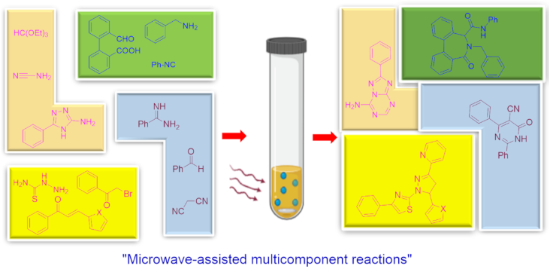
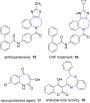
Microwave-assisted multicomponent reactions in heterocyclic chemistry and mechanistic aspects
Beilstein J. Org. Chem. 2021, 17, 819–865, doi:10.3762/bjoc.17.71




Synthesis of β-triazolylenones via metal-free desulfonylative alkylation of N-tosyl-1,2,3-triazoles
Beilstein J. Org. Chem. 2021, 17, 762–770, doi:10.3762/bjoc.17.66
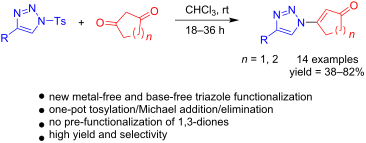
- azides and alkynes [14][15]. However, the formation of the nitrogenated azoles by the classical Huisgen methodology is slow due to its high activation energies and also lack of regiochemical control, in general, leading to a mixture of 1,4- and 1,5-regioisomers of 1,2,3-triazoles. Later, Sharpless and


Synthesis of N-perfluoroalkyl-3,4-disubstituted pyrroles by rhodium-catalyzed transannulation of N-fluoroalkyl-1,2,3-triazoles with terminal alkynes
Beilstein J. Org. Chem. 2021, 17, 504–510, doi:10.3762/bjoc.17.44
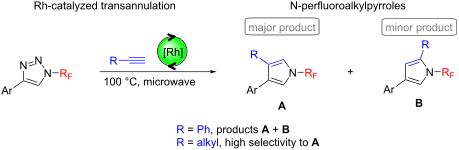
- unexpectedly high selectivities, ranging from 87:13 to 98:2 (Scheme 3). The isolated product yields were moderate to good and the products were generally obtained as mixtures of regioisomers. Column chromatography allowed the separation of pure isomers of 2a, 2a’, 3a, 3b, 3d, 3h, 3l, 3m, and 3n. However, no


Mesoionic tetrazolium-5-aminides: Synthesis, molecular and crystal structures, UV–vis spectra, and DFT calculations
Beilstein J. Org. Chem. 2021, 17, 385–395, doi:10.3762/bjoc.17.34
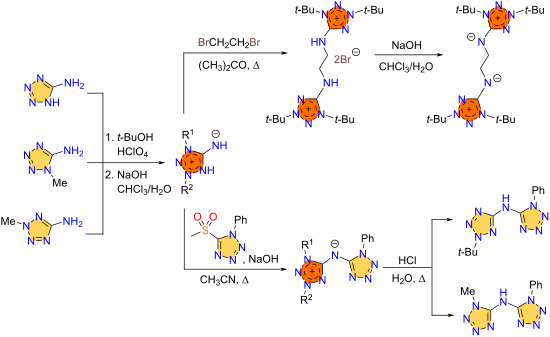
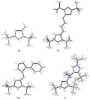
- -regioisomers (152–156 and 143.4 ppm for 1-methyl-5H-tetrazole) [31]. The de-tert-butylation selectivity observed for compound 11b can be explained by the higher stability of the t-Bu cation versus the Me cation. Crystal structures The mesoionic compounds 8a, 10, 11a, and salt 9 were characterized by single




Diels–Alder reaction of β-fluoro-β-nitrostyrenes with cyclic dienes
Beilstein J. Org. Chem. 2021, 17, 283–292, doi:10.3762/bjoc.17.27

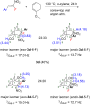
- mol−1 for endo-1h and 121.75 kJ mol−1 for exo-1h and were consistent with the predicted ones. Next, the reaction with some other cyclic dienes was investigated. The reaction with the unsymmetrical 1-methoxy-1,3-cyclohexadiene (Scheme 5) led to the formation of a mixture of four products (regioisomers
- and stereoisomers, respectively) 3d in 40% overall yield. Two pairs of regioisomers were partially separated by column chromatography with sufficiently slow elution and analyzed by 1H NMR spectroscopy. The structure assignment was made as depicted in Scheme 5. The structures of two pairs of
- regioisomers were assigned by chemical shifts of the singlet of the methoxy group. The products having the MeO and NO2 groups in the adjacent position have the signal of the methoxy protons shifted to a lower field. The assignment of the exo/endo-isomers was carried out by the position of the benzylic proton



Metal-free synthesis of biarenes via photoextrusion in di(tri)aryl phosphates
Beilstein J. Org. Chem. 2020, 16, 3008–3014, doi:10.3762/bjoc.16.250
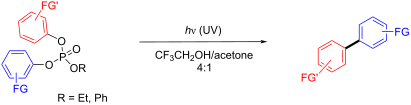
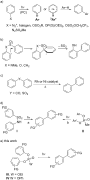
- –20-fold amount. Furthermore, the aryl radical/cation addition onto the aromatic reactant may lead to a mixture of regioisomers when using non-symmetrical Ar–H. A possible solution is having recourse to an intramolecular free radical ipso substitution reaction where an XSO2 tether is placed between



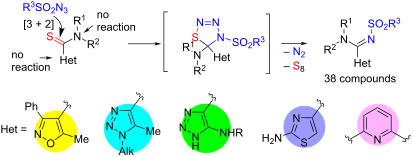
Regioselective synthesis of heterocyclic N-sulfonyl amidines from heteroaromatic thioamides and sulfonyl azides
Beilstein J. Org. Chem. 2020, 16, 2937–2947, doi:10.3762/bjoc.16.243
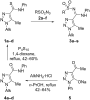
- reactions of 2-diazomalonates with aliphatic amines [40][52]. The first approach leads to a mixture of two regioisomers and the second method involves the use of explosive diazo compounds. Therefore, such compounds are better prepared by a recently found method in our laboratory which includes the reaction







One-pot multicomponent green Hantzsch synthesis of 1,2-dihydropyridine derivatives with antiproliferative activity
Beilstein J. Org. Chem. 2020, 16, 2862–2869, doi:10.3762/bjoc.16.235
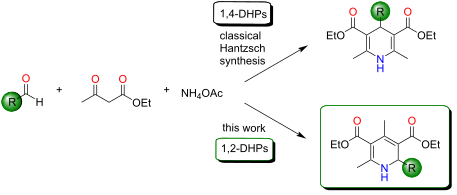
- under argon, they obtained a mixture of the two regioisomers (1,4-DHP/1,2-DHP 32:68), proving further the complexity of this reaction [19]. Therefore, continuing our studies for the development and application of environmentally friendly methodologies for multicomponent reactions [20], we attempted to



Changed reactivity of secondary hydroxy groups in C8-modified adenosine – lessons learned from silylation
Beilstein J. Org. Chem. 2020, 16, 2854–2861, doi:10.3762/bjoc.16.234
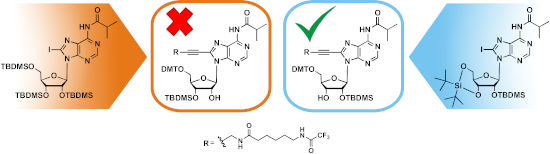
- isomers were characterized via HSQC and HMBC NMR spectroscopy (Figure 1). The 13C and 1H measurements of the two regioisomers show remarkable differences in chemical shifts and multiplicity of the relevant signals, though the merged signal of H2’ and an OH group in one of the spectra (Figure 1A) impedes
- in the presence of AgNO3, yielding a mixture of two regioisomers, although with the 2’-O-TBDMS protected isomer in excess over the 3’-O-TBDMS isomer [31]. Both species can be separated by chromatography; and often it is trusted that the isomer with the higher Rf value is the desired 2’-O-isomer. As
- the traditional method of reacting the 2’-, 3’- unprotected nucleoside and subsequently separating the formed regioisomers, in particular if like here, the desired 2’-O-isomer is the minor product. Moreover, the regiospecific iodination of the C8-position of 3’,5’-O-di-tert-butylsilyl-2’-O-TBDMS


3-Acetoxy-fatty acid isoprenyl esters from androconia of the ithomiine butterfly Ithomia salapia
Beilstein J. Org. Chem. 2020, 16, 2776–2787, doi:10.3762/bjoc.16.228
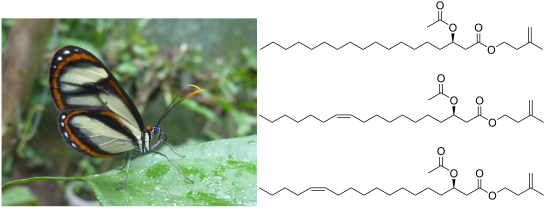
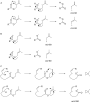
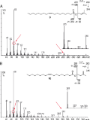
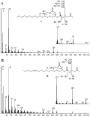
- leading to the observed regioisomers of the isoprenyl esters. All acids shown were found in form of their isoprenyl esters. (Z)-9-Hexadecenoic acid is obtained from palmitic acid by a Δ9-desaturase (ds). Malonate elongation and reduction (red) leads to (Z)-3-hydroxy-11-octadecenoic acid, an intermediate





Synthesis of purines and adenines containing the hexafluoroisopropyl group
Beilstein J. Org. Chem. 2020, 16, 2739–2748, doi:10.3762/bjoc.16.224
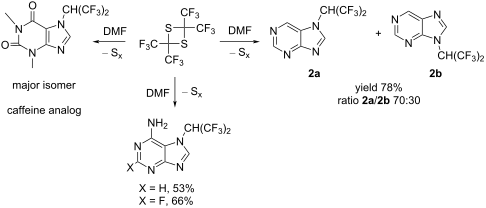
- in the formation of two regioisomers, 4a and 4b (Scheme 3). In this context, the isomers 4a and 4b were separated by column chromatography (see Experimental section), and the structure of both was established by X-ray diffraction. In the 19F NMR spectra of both isomers 4a and 4b, the resonances
- to the formation of two regioisomers, but interestingly, the ratio of the 7-CF2H- and 9-CF2H-isomers varied broadly from 1:2 [22] to 3:2, depending on the reaction conditions and the source of difluorocarbene [11]. Mechanism, regiochemistry, and rotation barriers of the CH(CF3)2 group The mechanism