Search results
Search for "triazole" in Full Text gives 305 result(s) in Beilstein Journal of Organic Chemistry. Showing first 200.
N-Boc-α-diazo glutarimide as efficient reagent for assembling N-heterocycle-glutarimide diads via Rh(II)-catalyzed N–H insertion reaction
Beilstein J. Org. Chem. 2023, 19, 1841–1848, doi:10.3762/bjoc.19.136
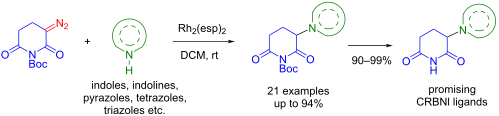
- pyrazole derivatives (including indazole), benzimidazole, 1,2,3-triazole, indole, carbazole, indoline, quinazoline, and isoquinoline. Nevertheless, many heterocyclic motifs still remain beyond the attention of researchers. For example, glutarimides that incorporate tetrazole and 1,2,4-triazole substituents
- varying characteristics were selected as substrates for the studied insertion reaction, encompassing both aromatic and non-aromatic compounds differing in the number and arrangement of nitrogen atoms (Scheme 3). Notably, several of these heterocycles, including tetrahydroquinoline, 1,2,4-triazole, and
- literature [30]. Despite the low reactivity (the reaction was carried out for 5 days with triple portion of the catalyst), the yield of the N–H insertion product involving 1,2,4-triazole was unexpectedly high (80%). Compound 6l was obtained as a single regioisomer. The reaction with tetrazoles is also


Active-metal template clipping synthesis of novel [2]rotaxanes
Beilstein J. Org. Chem. 2023, 19, 1776–1784, doi:10.3762/bjoc.19.130
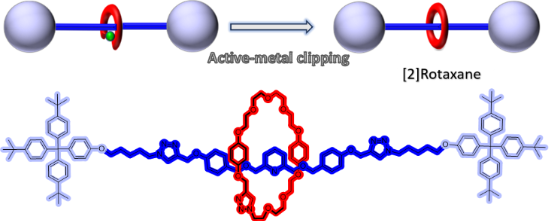
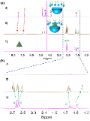
- macrocycles are more shifted, with the triazole proton presenting an upfield shift from δ = 7.95 ppm to δ = 7.65 ppm and the hydroquinone protons are upfield shifted from δ = 6.77/6.67 ppm to δ = 6.60/6.58 ppm. In order to validate formation of R1 we also recorded a room-temperature H,H-ROESY NMR spectrum


Selectivity control towards CO versus H2 for photo-driven CO2 reduction with a novel Co(II) catalyst
Beilstein J. Org. Chem. 2023, 19, 1766–1775, doi:10.3762/bjoc.19.129
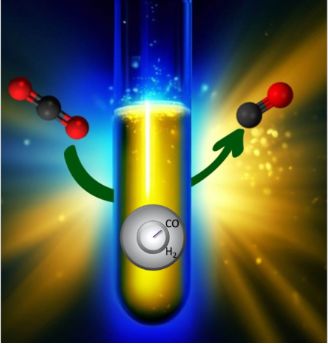
- complex obtainable via a straightforward synthesis, with improved solubility, concerning our previous Co(II) complexes [21]. Thus, the new Co(II) complex bears two 1-benzyl-4-(quinolin-2-yl)-1H-1,2,3-triazole (BzQuTr) units, that were obtained through a copper-catalyzed alkyne–azide cycloaddition (CuAAC
- maintaining high selectivity for carbon products. Results and Discussion Synthesis and characterization of the new Co(II)-based catalyst The novel cobalt(II) complex 1 was synthesized in dry methanol (MeOH) by mixing in a 2:1 ratio, the chelating diimine ligand, 1-benzyl-4-(quinolin-2-yl)-1H-1,2,3-triazole
- coordinating nitrogen of the 1,2,3-triazole units. The nitrogen atoms of the two quinoline moieties are therefore trans to each other. This conformation might be induced by the cobalt precursor Co(NCS)2(py)4, which has already the NCS monodentate ligands cis to each other, as it was not the case for other Co


Trifluoromethylated hydrazones and acylhydrazones as potent nitrogen-containing fluorinated building blocks
Beilstein J. Org. Chem. 2023, 19, 1741–1754, doi:10.3762/bjoc.19.127
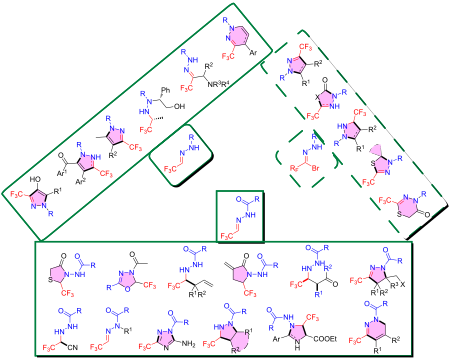
- trifluoromethylated hydrazonoyl halides. [3 + 2]/[3 + 3] Cycloadditions of trifluoromethylated hydrazonoyl halides. Substrate scope for [3 + 2] cycloadditions with trifluoroacetonitrile imines reported by Jasiński’s team and other groups. Synthesis of trifluoromethylated 1,2,4-triazole and 1,2,4-triazine derivatives


Unprecedented synthesis of a 14-membered hexaazamacrocycle
Beilstein J. Org. Chem. 2023, 19, 1728–1740, doi:10.3762/bjoc.19.126
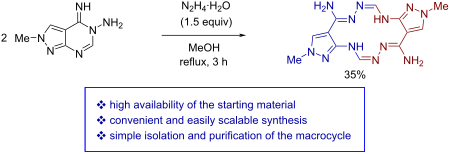
- of N2H4·H2O (2.9–3.0 equiv) with a catalytic amount of TsOH·H2O (0.05 equiv) in refluxing EtOH or 1,4-dioxane resulted in the formation of mixtures of macrocycle 5, pyrazolyl-1,2,4-triazole 10, and a very small amount of bis-pyrazole 6 according to NMR data (Table 1, entries 22 and 23). It is
- noteworthy that triazole 10 was the major product in dioxane (10/5/6 = 86.5:13:0.5, Table 1, entry 23). Again, macrocycle 5 was separated from this mixture by crystallization from DMF, and pyrazolyl-1,2,4-triazole 10 was isolated from the mother liquor. The structure of compound 10 was established based on
- calculated by the GIAO method at the PBE1PBE/6-311+G(2d,p) level of theory using the DFT B3LYP/6-311++G(d,p) optimized geometries (DMSO solution) and applying a multi-standard approach [44]. It is noteworthy that, in the most stable conformer of 10, the NH2 group of the triazole ring is located between the


Morpholine-mediated defluorinative cycloaddition of gem-difluoroalkenes and organic azides
Beilstein J. Org. Chem. 2023, 19, 1545–1554, doi:10.3762/bjoc.19.111
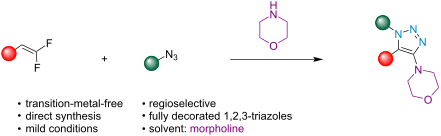
- ][12], inflammation [13], bacterial [14][15], and viral infections [16]. Hence, new ways to rapidly and efficiently access 1,2,3-triazole heterocyclic motifs are still in demand. However, methods for the direct synthesis of 1,4,5-trisubstituted-1,2,3-triazoles are limited [17]. This is highly desirable
- since the selective introduction of substituents at three different positions on the 1,2,3-triazole ring can augment the features of the molecule. Triazoles are also found in many biologically important molecules and functionalized materials [11][12][13][14][15][16]. 1,4,5-Trisubstituted-1,2,3-triazoles
- azides and gem-difluoroalkenes in the presence of morpholine generates 1,5-disubstituted-1,2,3-triazoles with a pendant C-4 morpholine moiety. The regioselectivity of the triazole formation is dictated by morpholine preferentially making the first nucleophilic attack over azide at the α-position of gem


Application of N-heterocyclic carbene–Cu(I) complexes as catalysts in organic synthesis: a review
Beilstein J. Org. Chem. 2023, 19, 1408–1442, doi:10.3762/bjoc.19.102
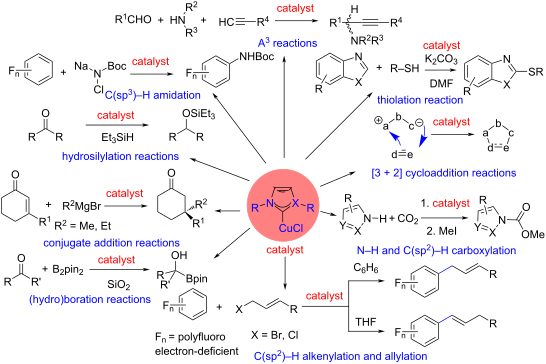
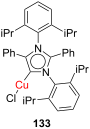
- copper(I) bromide in CH2Cl2 (Scheme 24) [31]. Nakamura et al. synthesized for the first time a copper complex with a 1,2,3-triazole carbene ligand in 2011. Complexes of copper with 1,4-diphenyl-, 1,4-dimesityl-, and 1-(2,6-diisopropylphenyl)-4-(3,5-xylyl)-1,2,3-triazol-5-ylidene were prepared through
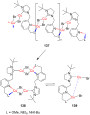
- bulky azide 134 to afford 1-(2,6-dimesityl)phenyl-4-(2-pyridyl)-1,2,3-triazole (135), which is otherwise difficult to achieve (Scheme 51). Oro and co-workers employed complexes 78a and 78a-MCH-41 (Scheme 27) as homogeneous and heterogeneous catalysts, respectively, for the [3 + 2] cycloaddition of








One-pot nucleophilic substitution–double click reactions of biazides leading to functionalized bis(1,2,3-triazole) derivatives
Beilstein J. Org. Chem. 2023, 19, 1399–1407, doi:10.3762/bjoc.19.101
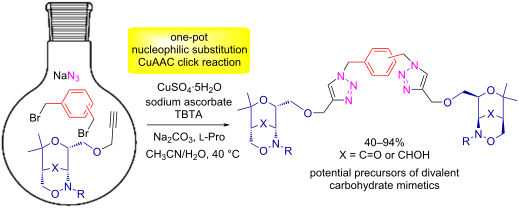
- (bromomethyl)benzene furnished geometrically differing bis(1,2,3-triazole) derivatives. The use of tris[(1-benzyl-1H-1,2,3-triazol-4-yl)methyl]amine (TBTA) as ligand for the click step turned out to be very advantageous. The compounds with 1,2-oxazinyl end groups can potentially serve as precursors of divalent
- -catalyzed version can generally be executed at room temperature and it affords exclusively 1,4-disubstituted 1,2,3-triazole derivatives, thus allowing a controlled and highly efficient connection of a variety of molecular building blocks. This “Lego-approach” found countless applications and the bestowal of
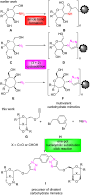
- converted into several multivalent compounds B by amine or amide bond formations [44][45][46][47]. The transformation of the corresponding azidopyrans and azidooxepanes C or E into multivalent 1,2,3-triazole derivatives D and F by Meldal–Sharpless cycloadditions with suitable alkynes proceeded generally in



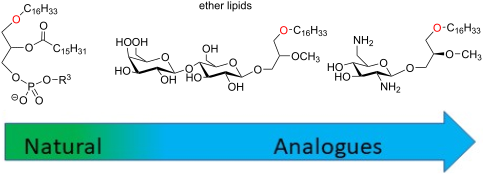
Synthesis of ether lipids: natural compounds and analogues
Beilstein J. Org. Chem. 2023, 19, 1299–1369, doi:10.3762/bjoc.19.96






Unravelling a trichloroacetic acid-catalyzed cascade access to benzo[f]chromeno[2,3-h]quinoxalinoporphyrins
Beilstein J. Org. Chem. 2023, 19, 1216–1224, doi:10.3762/bjoc.19.89
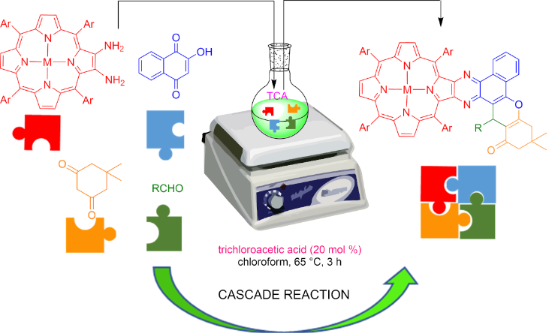
- -tetraarylporphyrins 1 were synthesized from the corresponding 2-nitro-meso-tetraarylporphyrins in two steps by following the literature procedure [42]. The first step involved an amination of copper(II) 2-nitro-meso-tetraarylporphyrins by using 4-amino-4H-1,2,4-triazole in the presence of NaOH in refluxing ethanol


Synthesis of imidazo[1,2-a]pyridine-containing peptidomimetics by tandem of Groebke–Blackburn–Bienaymé and Ugi reactions
Beilstein J. Org. Chem. 2023, 19, 727–735, doi:10.3762/bjoc.19.53
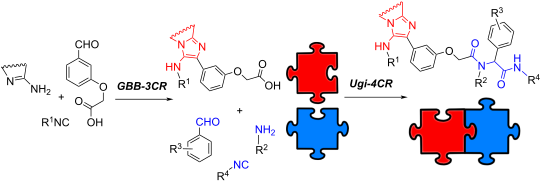
- target compounds, which contained two pharmacophores – [1,2-a]pyridine (1H-imidazo[1,2-b][1,2,4]triazole) and peptidomimetic moieties – were evaluated for their antibacterial activity and exhibited a weak effect. Drugs possessing imidazo[1,2-a]pyridine unit. Drugs possessing peptide unit. Diversity of


pH-Responsive fluorescent supramolecular nanoparticles based on tetraphenylethylene-labelled chitosan and a six-fold carboxylated tribenzotriquinacene
Beilstein J. Org. Chem. 2023, 19, 635–645, doi:10.3762/bjoc.19.45
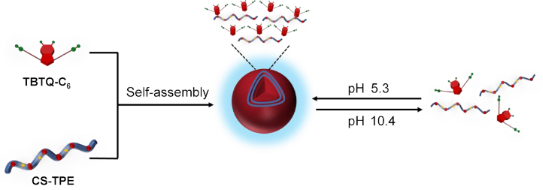
- -methyltribenzotriquinacene-2,3,6,7,10,11-hexayl)hexakis(oxy))hexaacetate (TBTQ-C6) and 2,2',2'',2''',2'''',2'''''-((((12d-methyltribenzotriquinacene-2,3,6,7,10,11-hexayl)hexakis(oxy))hexakis(methylene))hexakis(1H-1,2,3-triazole-4,1-diyl))hexaacetate (TBTQ-CB6), which act as host molecules to bind to guest molecules to


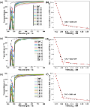
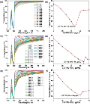

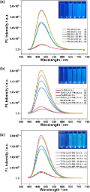
Phenanthridine–pyrene conjugates as fluorescent probes for DNA/RNA and an inactive mutant of dipeptidyl peptidase enzyme
Beilstein J. Org. Chem. 2023, 19, 550–565, doi:10.3762/bjoc.19.40
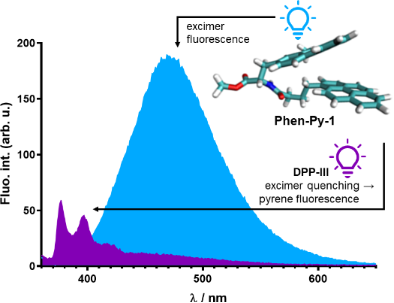
- fluorescence response. Compounds that consisted of pyrrole-guanidine attached to larger aryl moieties (pyrene and phenanthridine) bind to the human DPP III enzyme [17]. Pyrene–cyanine conjugates connected with a rigid triazole-peptide linker were designed and synthesized in our group and showed a strong pyrene




CuAAC-inspired synthesis of 1,2,3-triazole-bridged porphyrin conjugates: an overview
Beilstein J. Org. Chem. 2023, 19, 349–379, doi:10.3762/bjoc.19.29
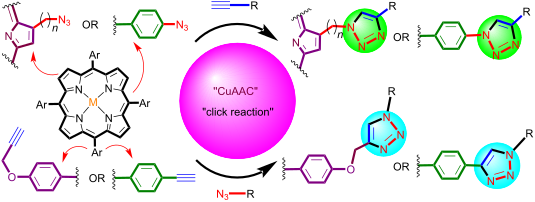
- connect two diverse moieties in a single framework. Therefore, this review focuses on the synthesis and photophysical studies of β- and meso-substituted and 1,2,3-triazole-fused porphyrin conjugates. All of the porphyrin conjugates discussed here are synthesized via a copper(I)-catalyzed Huisgen 1,3
- -dipolar cycloaddition reaction between an azide and a terminal alkyne, also popular as "click reaction" or CuAAC reaction. Moreover, the 1,2,3-triazole ring also serves as a spacer and an electron transfer bridge between the porphyrin and the attached chromophores. In order to provide a critical overview
- of the synthesis and properties of various porphyrin-triazole hybrids, this review will discuss some of the key reactions involved in the preparation of triazole-linked porphyrin conjugates. Keywords: azide–alkyne; click chemistry; CuAAC; 1,3-dipolar cycloaddition; porphyrin; 1,2,3-triazole




Synthesis and characterisation of new antimalarial fluorinated triazolopyrazine compounds
Beilstein J. Org. Chem. 2023, 19, 107–114, doi:10.3762/bjoc.19.11
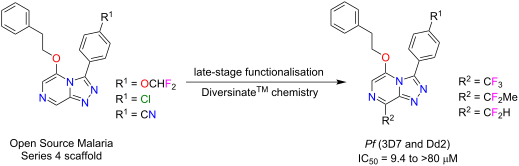
- , cyano, nitro, or halogenated groups at the para-position were crucial for activity [5][16][20]. Thus, compounds 1–3 with a para-phenyl-OCHF2, -Cl or -CN substituent at the C3 position of the triazole were selected as scaffolds in this study. In addition, the reported SAR data also indicated that the use


A novel bis-triazole scaffold accessed via two tandem [3 + 2] cycloaddition events including an uncatalyzed, room temperature azide–alkyne click reaction
Beilstein J. Org. Chem. 2022, 18, 1636–1641, doi:10.3762/bjoc.18.175
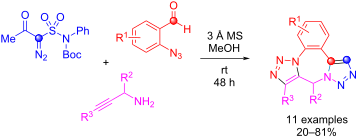
- University, Kaliningrad 236016, Russian Federation 10.3762/bjoc.18.175 Abstract The previously described α-acetyl-α-diazomethanesulfonamide was employed in a three-component reaction with azide-containing benzaldehydes and propargylamines. Besides the initial formation of the triazole core, the reaction
- ; Introduction 1,2,3-Triazoles are well-established heterocycles in drug discovery [1] and are even considered pharmacophores (i.e., structural motifs defining the compound’s biological activity profile) on their own [2]. Therefore, synthetic methods allowing to construct a 1,2,3-triazole heterocycle are a
- molecular scaffold. Pondering various opportunities for post-condensational modifications of the 1,5-disubstituted 1,2,3-triazole core according to this strategy, we turned our attention to such powerful transformation as the azide–alkyne [3 + 2] cycloaddition (also known as the azide–alkyne click reaction


Preparation of β-cyclodextrin-based dimers with selectively methylated rims and their use for solubilization of tetracene
Beilstein J. Org. Chem. 2022, 18, 1596–1606, doi:10.3762/bjoc.18.170
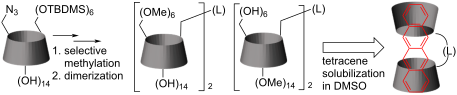
- triazole ring in 10 are at 2.6–3.0 ppm; the 5A-hydrogen is also quite distinctive on the spectra (4.17–4.23 ppm). These observations agree with the reported data [13][32] and may help to confirm the structure. The other resonance signals from the CD skeleton are difficult to follow due to total overlapping
- to the carbon-3 positions. The other signals (36H) from Me–O–C3 are concentrated in two overlapped singlets of different intensities. The single peak at 3.54 ppm represents all signals from Me–O–C2, implying that the triazole ring interacts mainly with the hydrogens inside the cavity. Another solid
- proof of the partial self-inclusion of the triazole into the internal space of CD is the fragment of the NOESY spectrum (Figure 1a), where the interaction of the triazole hydrogen with H–C6A, H–C5A, and H–C6 from the glucose unit next to the unit A is clearly seen indicating the interaction between the


New triazole-substituted triterpene derivatives exhibiting anti-RSV activity: synthesis, biological evaluation, and molecular modeling
Beilstein J. Org. Chem. 2022, 18, 1524–1531, doi:10.3762/bjoc.18.161
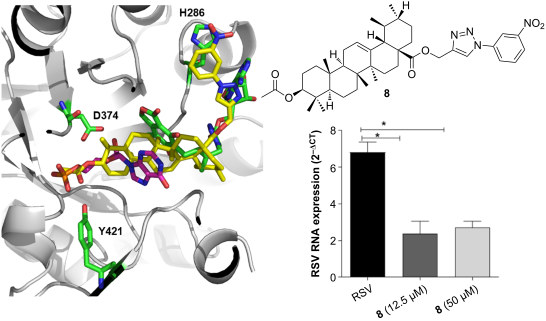
- , University of São Paulo, Ribeirão Preto, SP 14040-020, Brazil 10.3762/bjoc.18.161 Abstract Respiratory syncytial virus (RSV) is a major cause of acute lower respiratory tract infections in infants. Currently, ribavirin, a nucleoside analog containing a 1,2,4-triazole-3-carboxamide moiety, is a first-line
- drug for its treatment, however, its clinical use has been limited due to its side effects. Here, we designed two new nitroaryl-1,2,3-triazole triterpene derivatives as novel anti-RSV drugs. Their anti-RSV and cytotoxic activity were evaluated in vitro, RSV protein F gene effects by RT-PCR and
- with COVID-19 precautions; however, they state that less RSV cases now could reduce immunity and they fear there will be a rebound in infections after the pandemic [4][5][6][7]. As a therapeutic resource, ribavirin, a nucleoside analog prodrug containing a 1,2,4-triazole-3-carboxamide moiety (RBV


Scope of tetrazolo[1,5-a]quinoxalines in CuAAC reactions for the synthesis of triazoloquinoxalines, imidazoloquinoxalines, and rhenium complexes thereof
Beilstein J. Org. Chem. 2022, 18, 1088–1099, doi:10.3762/bjoc.18.111
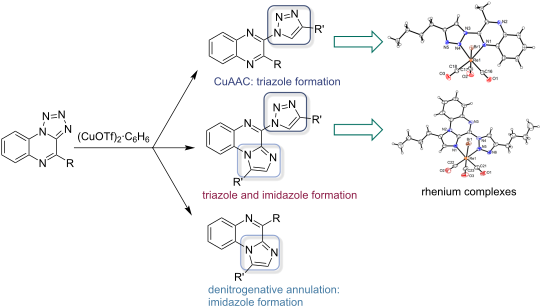
- ; tetrazole; triazole; Introduction Quinoxalines are amongst the most versatile N-heterocyclic compounds, combining a straightforward synthesis with a diverse set of possible functionalizations and a wide range of applications in drug development and materials sciences [1]. Different quinoxaline derivatives
- formation from tetrazolo[1,5-a]quinoxalines 1 is still limited. Triazole-linked N-heterocycles like pyridotriazoles and quinolinotriazoles exert a variety of favorable biological properties like anticancer and antimicrobial activities as well as protein kinase inhibition [10][13][14][15]. Moreover, a vast
- diversity of metal complexes incorporating 1,2,3-triazoles as ligands have been reported [16][17][18]. Triazole ligands with N-heterocycles such as Pyta (4-(2-pyridyl)-1,2,3-triazole) and related structures were employed to obtain novel metal complexes as catalysts [19][20] and imaging probes [21], as well


Electrochemical vicinal oxyazidation of α-arylvinyl acetates
Beilstein J. Org. Chem. 2022, 18, 1026–1031, doi:10.3762/bjoc.18.103
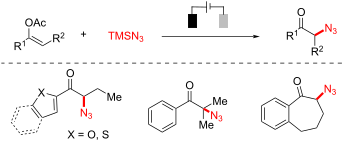
- ketones, such as cyclohexanone (see Supporting Information File 1 for details). As illustrated in Scheme 3, the synthetic utility of α-azidoketone was further evaluated [37][38]. Click reaction between 2-azido-1-phenylethan-1-one (2) and ethisterone (28) [39][40][41] readily afforded the target triazole




Synthesis of novel alkynyl imidazopyridinyl selenides: copper-catalyzed tandem selenation of selenium with 2-arylimidazo[1,2-a]pyridines and terminal alkynes
Beilstein J. Org. Chem. 2022, 18, 863–871, doi:10.3762/bjoc.18.87
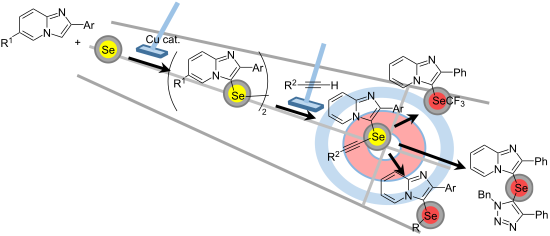
- -triazoles [33]. Based on these findings, we examined the reaction of Cu-mediated AAC. The reaction of 4aa with benzyl azide in the presence of one equivalent of CuI and pentamethyldiethylenetriamine (PMDETA) in THF at 60 °C gave the desired 5-selanyl-1,2,3-triazole 8 in 72% yield. This reaction yielded a
- regioselective 1,3-dipolar azide–alkyne cycloaddition to form 5-selanyl-1,2,3-triazole. The investigation of the biological activity of the compounds obtained in this study and the application of this synthesis route using other heterocycles, instead of imidazopyridine, are currently underway in our laboratory


Heteroleptic metallosupramolecular aggregates/complexation for supramolecular catalysis
Beilstein J. Org. Chem. 2022, 18, 597–630, doi:10.3762/bjoc.18.62
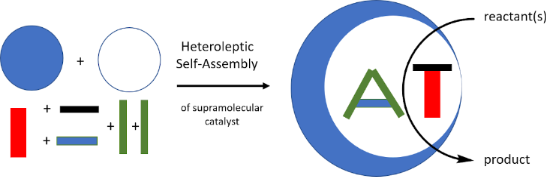
- -bonding, which would lead to catalytic quenching, a unique design strategy was applied. Instead of using a cis-blocked palladium(II) unit for self-assembly, Pd(NO3)2 was employed along with the triazole-based 0° clip 13. In a one-pot reaction, 12 and 13 in DMSO were treated with Pd(NO3)2 in a 1:1:1 ratio
- able to build a new catalytic machinery [100]. Hereunto, the two concepts RPI and ILC were combined in a synergistic manner, starting with rotor [Cu2(83)(91)]2+ (k298 = 46.0 kHz) that catalyzed the click reaction between the zinc porphyrin ligand 92 and the azide 93 furnishing triazole 94 (Figure 20
- state of the second click reaction, leads to an astounding synthetic efficiency, although there is a major distance mismatch between the copper(I) ions in [FeCu2(104)2]4+ and two triazole units of the rotaxane. For instance, the system [FeCu2(104)2]4+ (dCu–Cu = 34 Å) afforded the formation of both 109a


Synthesis of a new water-soluble hexacarboxylated tribenzotriquinacene derivative and its competitive host–guest interaction for drug delivery
Beilstein J. Org. Chem. 2022, 18, 539–548, doi:10.3762/bjoc.18.56
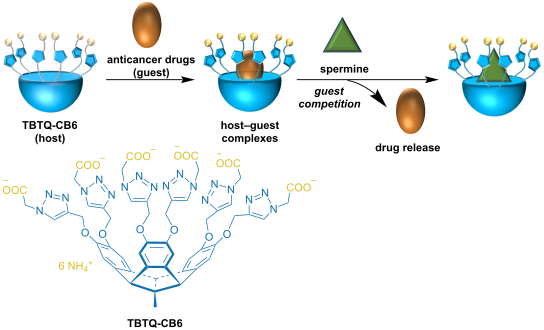
- larger cavity as compared to TBTQ-C6 due to the introduction of triazole rings. Two anticancer drug molecules, dimethyl viologen (MV) with a smaller size and DOX with a larger size, were selected as model anticancer agents for encapsulation by TBTQ-CB6 to form the host–guest complexes of TBTQ-CB6MV and





Chemistry of polyhalogenated nitrobutadienes, 17: Efficient synthesis of persubstituted chloroquinolinyl-1H-pyrazoles and evaluation of their antimalarial, anti-SARS-CoV-2, antibacterial, and cytotoxic activities
Beilstein J. Org. Chem. 2022, 18, 524–532, doi:10.3762/bjoc.18.54
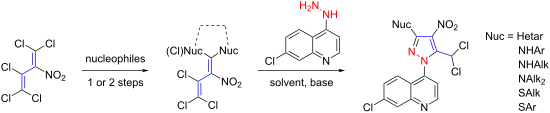
- Plasmodium has been developed and is reported in the literature [24]. Results and Discussion The vinylic SN reaction of 2-nitroperchlorobutadiene (1) with four equivalents of the azoles such as 1H-pyrazole, 1H-1,2,4-triazole, or 1H-benzotriazole affords similarly to [25] the corresponding 1,1
- concentration of 220 µM (50 µg/mL). Among the three 3-azolylpyrazoles 3a–c, the triazole derivative 3b showed the best activity with an EC50 = 0.2 ± 0.1 µM. The 3-aminopyrazoles 5a–o showed a rather broad activity range (EC50 = 0.5–4.1 µM) and were all less active than the azolylpyrazoles 3. The most active 3


BINOL as a chiral element in mechanically interlocked molecules
Beilstein J. Org. Chem. 2022, 18, 508–523, doi:10.3762/bjoc.18.53
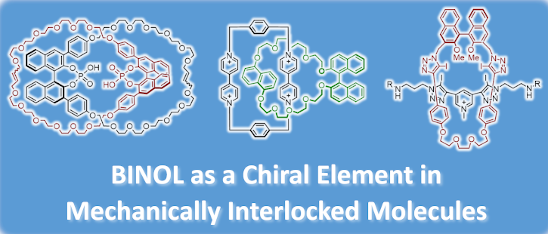
- the thread (see Figure 16). The stereoselective binding of chiral anions by rotaxanes 64a/b was studied by 1H NMR titration experiments, using the dicationic macrocycle (S)-61-Me22+ (obtained by methylation of the triazole units in (S)-61) as a reference system. As guest molecules, the Boc-protected