


Search results
Search for "GC/MS" in Full Text gives 265 result(s) in Beilstein Journal of Organic Chemistry. Showing first 200.
Harnessing enzyme plasticity for the synthesis of oxygenated sesquiterpenoids
Beilstein J. Org. Chem. 2019, 15, 2184–2190, doi:10.3762/bjoc.15.215
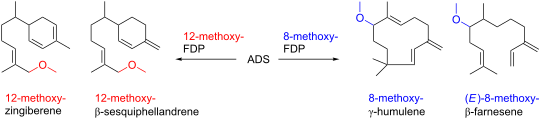
- ]. Both of these alcohols were methylated with methyl iodide to yield 16 and 17 [32]. To produce the final FDP analogues, THP was removed to generate alcohols 18 and 19, and subsequently diphosphorylated via halogenated intermediates (Scheme 2 and Supporting Information File 1) [33][34][35]. GC–MS
- (21) (Scheme 3B). Due to the racemic nature of the starting diphosphate 11b it is, however, also possible that each enzymatic product arises independently from the individual enantiomers. GC–MS analysis of the organic soluble products generated from an incubation of ADS with 12-methoxy-FDP (12


Regioselective Pd-catalyzed direct C1- and C2-arylations of lilolidine for the access to 5,6-dihydropyrrolo[3,2,1-ij]quinoline derivatives
Beilstein J. Org. Chem. 2019, 15, 2069–2075, doi:10.3762/bjoc.15.204
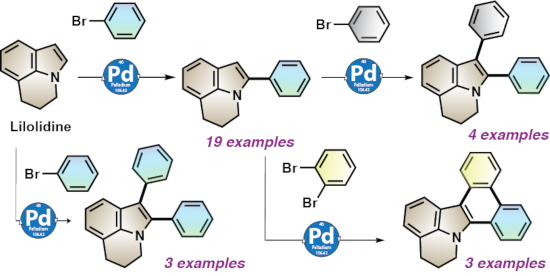
- lilolidines were detected in very low yields by GC–MS analysis of the crude mixtures. The structure of 20 was confirmed by X-ray diffraction. As α-arylated lilolidines can be easily obtained under the reaction conditions shown in Scheme 2, the synthesis of α,β-diarylated 5,6-dihydropyrrolo[3,2,1-ij]quinolines


Genome mining in Trichoderma viride J1-030: discovery and identification of novel sesquiterpene synthase and its products
Beilstein J. Org. Chem. 2019, 15, 2052–2058, doi:10.3762/bjoc.15.202
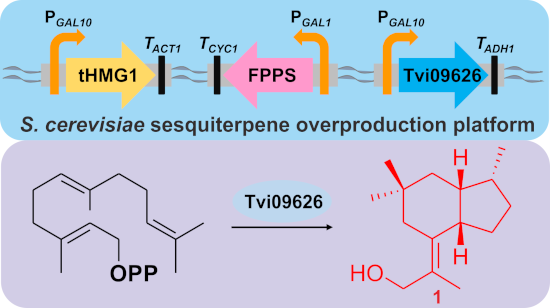
- by genome mining and determined the structure of its corresponding products. One new 5/6 bicyclic sesquiterpene and its esterified derivative were characterised by GC–MS and 1D and 2D NMR spectroscopy. To the best of our knowledge, this is the first well-identified sesquiterpene synthase from T
- characterised by GC–MS and 1D and 2D NMR, revealing a 5/6 bicyclic sesquiterpene and its C-11 esterified structure. Based on a literature search, to our knowledge, this is the first report of the characterisation of a sesquiterpene synthase in T. viride. In addition, this study demonstrates the effectiveness of
- spectrometry (GC–MS) [30][34]. In vitro assays clearly showed that Tvi09626 could use FPP as its only substrate to produce compound 1 (Figure 3 and Figure S3, Supporting Information File 1). Heterologous expression of Tvi09626 in S. cerevisiae To further verify the function of the putative terpene synthase, a



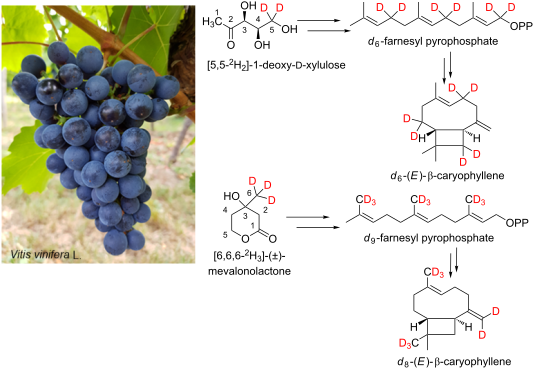
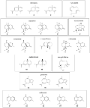
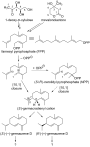
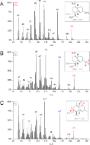
Analysis of sesquiterpene hydrocarbons in grape berry exocarp (Vitis vinifera L.) using in vivo-labeling and comprehensive two-dimensional gas chromatography–mass spectrometry (GC×GC–MS)
Beilstein J. Org. Chem. 2019, 15, 1945–1961, doi:10.3762/bjoc.15.190











Morphology-tunable and pH-responsive supramolecular self-assemblies based on AB2-type host–guest-conjugated amphiphilic molecules for controlled drug delivery
Beilstein J. Org. Chem. 2019, 15, 1925–1932, doi:10.3762/bjoc.15.188
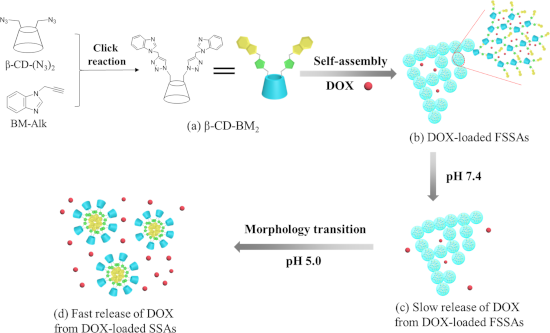
- the characteristic signals for BM and propargyl groups in 1H NMR spectrum (Figure S1B-c, Supporting Information File 1), accompanied with the GC–MS results (156.1), indicated the successful preparation of BM-Alk. Finally, the targeted monomer β-CD-BM2 was synthesized through the click reaction between




Metal-free mechanochemical oxidations in Ertalyte® jars
Beilstein J. Org. Chem. 2019, 15, 1786–1794, doi:10.3762/bjoc.15.172
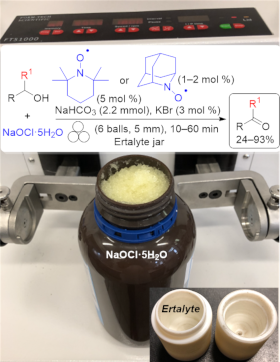
- the aldehyde was only detected in negligible amounts (GC–MS analyses). The (diacethoxyiodo)benzene acid (PIDA) allowed to further improve the alcohol-to-aldehyde conversion by a few percentage points (57%), but the formation of 2 equivalents of acetic acid makes it unsuitable for a mechanochemical
- %) and KBr (3.0 mol %) (Table 1, entry 6). Within 20 minutes, the alcohol was completely and selectively oxidized into the corresponding aldehyde (as assessed by GC–MS analyses). The use of NaCl, alone or in combination with NaHCO3, as an adsorbent [58] (Table 1, entries 1–5, 7) or bases (Na2CO3, Table 1
- corresponding ketones proceeded smoothly even without the necessity to use the nitrosyl catalyst (Scheme 6, ketones 17b–19b). With all benzylic alcohols examined, the GC–MS analyses showed that the reactions were nearly complete in about 15 minutes, ketones 17b–19b being isolated in high yields and purities


Different reactivity of phosphorylallenes under the action of Brønsted or Lewis acids: a crucial role of involvement of the P=O group in intra- or intermolecular interactions at the formation of cationic intermediates
Beilstein J. Org. Chem. 2019, 15, 1491–1504, doi:10.3762/bjoc.15.151
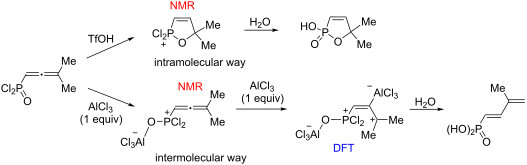
- hydrolysis strongly depend on the substituent X on the phosphorus atom. Ions containing a labile P–X bond (X = Cl, O, S), namely A, B, and F–H, gave unstable adducts 2 (registered by GC–MS), which are further transformed into acids 3. The structure of compound 3a was confirmed by X-ray analysis (see




Selenophene-containing heterotriacenes by a C–Se coupling/cyclization reaction
Beilstein J. Org. Chem. 2019, 15, 1379–1393, doi:10.3762/bjoc.15.138

- (doublet), t (triplet), m (multiplet). Coupling constants (J) relate to proton-proton couplings. GC–MS measurements were performed on a Shimadzu GCMS-QP2010 SE instrument. Melting points were measured via differential scanning calorimetric measurements (DSC) on a Mettler Toledo DSC823e under argon


One-pot activation–alkynylation–cyclization synthesis of 1,5-diacyl-5-hydroxypyrazolines in a consecutive three-component fashion
Beilstein J. Org. Chem. 2019, 15, 1360–1370, doi:10.3762/bjoc.15.136
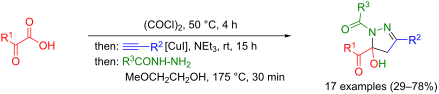
- diphenylbut-3-yne-1,2-dione (3a) increased from 63 to 76%. The terminal cyclization step, consisting of a Michael addition of benzoyl hydrazide (4b) to diphenylbut-3-yne-1,2-dione (3a) followed by a cyclizing addition of the central hydrazide nitrogen atom to the carbonyl group, was monitored by GC–MS and


Phylogenomic analyses and distribution of terpene synthases among Streptomyces
Beilstein J. Org. Chem. 2019, 15, 1181–1193, doi:10.3762/bjoc.15.115
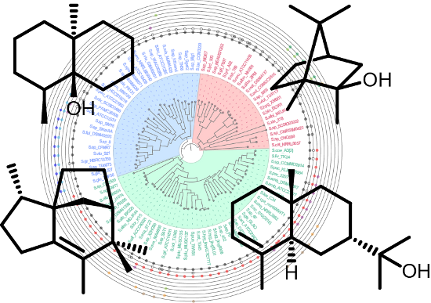
- culture headspace extracts by GC–MS [31]. Compound 4 was also isolated from in vitro incubations of FPP with the recombinant enzyme and its optical rotation was shown to be opposite to the material from Eucalyptus [32], but the absolute configuration remains unknown. Production of this sesquiterpene by S



Insertion of [1.1.1]propellane into aromatic disulfides
Beilstein J. Org. Chem. 2019, 15, 1172–1180, doi:10.3762/bjoc.15.114
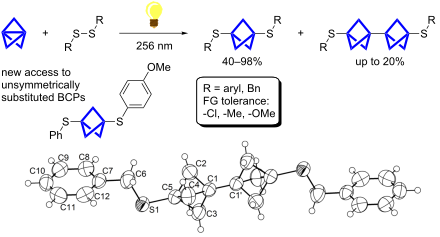
- reaction conditions was performed (Scheme 2). The screening reaction was set up with 1.0 equiv of diphenyl disulfide (10a) and 1.0 equiv of 1 in diethyl ether at room temperature and the consumption of the starting material was monitored by GC–MS over a period of 1 h (Figure 1). In this first screening
- particularly interesting if the two sulfides of the product can be modified individually. This approach to unsymmetrically substituted BCPs will be further investigated. Optimization of the reaction conditions. The relative conversion was determined by GC–MS. The use of a radical initiator (di-tert-butyl


Novel (2-amino-4-arylimidazolyl)propanoic acids and pyrrolo[1,2-c]imidazoles via the domino reactions of 2-amino-4-arylimidazoles with carbonyl and methylene active compounds
Beilstein J. Org. Chem. 2019, 15, 1032–1045, doi:10.3762/bjoc.15.101
- as internal standard. The mass spectra were recorded on a Varian 1200L GC–MS instrument, ionization by EI at 70 eV. Fast atom bombardment (FAB) mass spectrometry was performed on a VG 70-70EQ mass spectrometer, equipped with an argon primary atom beam, and a m-nitrobenzyl alcohol matrix was used. LC


Mechanistic investigations on multiproduct β-himachalene synthase from Cryptosporangium arvum
Beilstein J. Org. Chem. 2019, 15, 1008–1019, doi:10.3762/bjoc.15.99
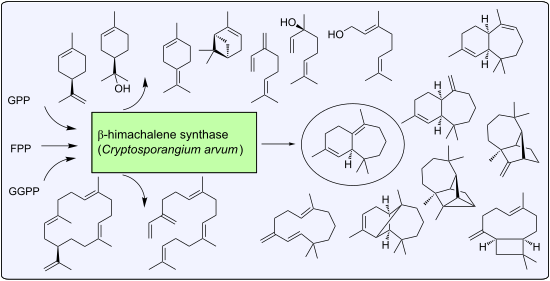
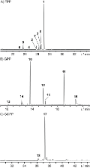
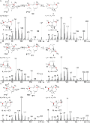
- . Whereas the latter diphosphate did not lead to any terpene product, the incubation with FPP showed a smooth conversion into several sesquiterpenes (Figure 1A) with compound 1 as the major peak after GC–MS analysis. However, also the incubations with GPP (Figure 1B) and GGPP (Figure 1C) led to several less
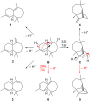
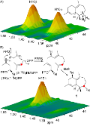
- deprotonation at the same carbon atom gives α-longipinene (6). For the main product 1, the deprotonation was followed by an incubation of HcS and FPPS with (2-2H)GPP [39] and IPP, which resulted in unlabelled 1 as observed by GC–MS (Figure 3). In case of a deprotonation at a methylene group, relevant for the
- formation of compounds 3, 5 and 6, the stereochemical course of these final steps could be followed by stereoselective deuterations. GC–MS analysis of the products obtained from the incubations with HcS, FPPS, DMAPP and (Z)- or (E)-(4-13C,4-2H)IPP showed a specific loss of HZ in all cases (Figure 4





Stereochemical investigations on the biosynthesis of achiral (Z)-γ-bisabolene in Cryptosporangium arvum
Beilstein J. Org. Chem. 2019, 15, 789–794, doi:10.3762/bjoc.15.75
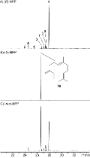
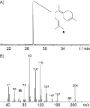
- , Supporting Information File 1) and incubated with the common terpene precursors geranyl- (GPP, C10), farnesyl- (FPP, C15), geranylgeranyl- (GGPP, C20) and geranylfarnesyl (GFPP, C25) diphosphate. With hexane extraction and GC–MS analysis, only the incubation with FPP yielded a terpene product (Figure 2) that
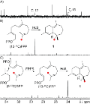
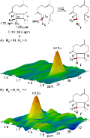
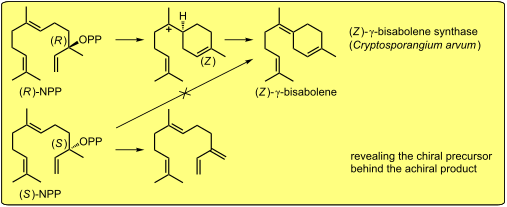
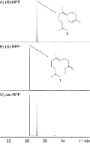
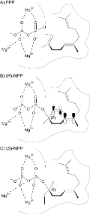
- Grignard reaction of geranylacetone with vinylmagnesium bromide. The two NPP samples featuring a well-defined stereocentre, and (rac)-NPP, were incubated with recombinant BbS, the experiments were extracted with hexane and analysed by GC–MS (Figure 3). A selective product formation was observed for the two



Hoveyda–Grubbs catalysts with an N→Ru coordinate bond in a six-membered ring. Synthesis of stable, industrially scalable, highly efficient ruthenium metathesis catalysts and 2-vinylbenzylamine ligands as their precursors
Beilstein J. Org. Chem. 2019, 15, 769–779, doi:10.3762/bjoc.15.73
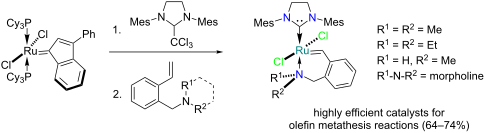
- the composition of the reaction mixtures by the GС–MS technique only (GC–MS was carried out using external calibration for CM and RCM reactions). The validity of quantitative GC–MS analysis was confirmed by additional LC–MS and 1H NMR analysis of selected reaction mixtures. At the beginning of this
- across olefins [56][57]. It is worth to note in the end of this part, that we did not detect formation of chlorine-containing products (molecular peaks with the isotopic distribution characteristic for chlorine were absent in GC–MS spectra). Conclusion The present work reports an efficient method for the
- 5. Reaction conditions and yields of the metathesis products. Supporting Information Supporting Information File 95: Experimental and analytical data. Supporting Information File 96: Copies of NMR spectra of synthesised compounds and selected GC–MS data of the metathesis products. Check-cif reports


Synthesis of the aglycon of scorzodihydrostilbenes B and D
Beilstein J. Org. Chem. 2019, 15, 610–616, doi:10.3762/bjoc.15.56
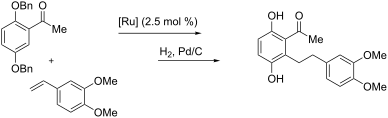
- TraceGC Ultra (GC–MS). Column chromatography was performed with Fluka silica gel 60 (230–400 mesh) and thin-layer chromatography was carried out by using Merck TLC Silicagel 60F254 aluminium sheets. Tetrahydrofuran (THF) and toluene were refluxed under nitrogen over sodium wire and a small amount of


Selective benzylic C–H monooxygenation mediated by iodine oxides
Beilstein J. Org. Chem. 2019, 15, 602–609, doi:10.3762/bjoc.15.55
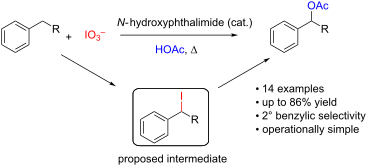
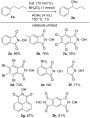
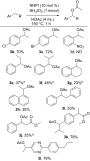
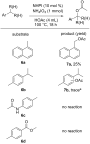
- oxidation of di-benzylic C–H bonds mediated by iodate. NHPI-catalyzed oxidation of substrates containing primary and tertiary benzylic C–H bonds. aReaction performed using NaIO3 (1 mmol) at 100 °C for 18 h. Product detected using GC–MS. Competitive deuterium KIE for the oxidation of ethyl benzene by the




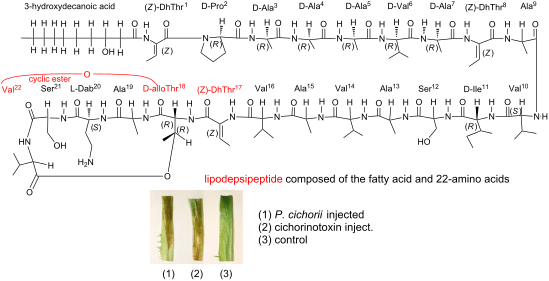
Chemical structure of cichorinotoxin, a cyclic lipodepsipeptide that is produced by Pseudomonas cichorii and causes varnish spots on lettuce
Beilstein J. Org. Chem. 2019, 15, 299–309, doi:10.3762/bjoc.15.27
- trimethylchlorosilane and N,O-bis(trimethylsilyl)acetamide (10:1) was added to the residue, the solution was heated at 80 °C for 24 h. The reaction mixture was then analyzed by GC–MS, which showed m/z 332 as the parent ion [M+], demonstrating that two TMS molecules were attached (Supporting Information File 1, Figure


Volatiles from the hypoxylaceous fungi Hypoxylon griseobrunneum and Hypoxylon macrocarpum
Beilstein J. Org. Chem. 2018, 14, 2974–2990, doi:10.3762/bjoc.14.277
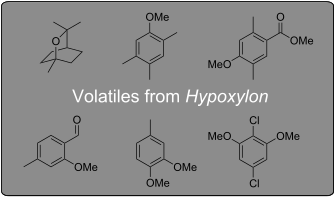
- 10.3762/bjoc.14.277 Abstract The volatiles emitted by the ascomycetes Hypoxylon griseobrunneum and Hypoxylon macrocarpum (Hypoxylaceae, Xylariales) were collected by use of a closed-loop stripping apparatus (CLSA) and analysed by GC–MS. The main compound class of both species were polysubstituted benzene
- [11][12]. Fungal volatiles can be efficiently analysed by trapping, e.g., on charcoal filters with a closed-loop stripping apparatus (CLSA) that was developed by Grob and Zürcher [13], followed by filter extraction and GC–MS analysis of the obtained headspace extracts [14]. The unambiguous compound
- , and therefore it is mandatory for unambiguous structure elucidation to compare analytes that fall into this class to all the possible isomers. A similar problem can apply to the structural assignment of compounds with multiple stereocentres based on GC–MS data, because the various possible




N-Acylated amino acid methyl esters from marine Roseobacter group bacteria
Beilstein J. Org. Chem. 2018, 14, 2964–2973, doi:10.3762/bjoc.14.276
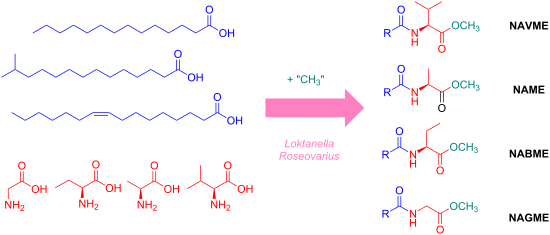
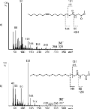
- derivatives and analogs of NAMEs, namely N-acyl-2-aminobutyric acid methyl esters (NABME), N-acylglycine methyl esters (NAGME), N-acylvaline methyl esters (NAVME), as well as for the first time a methyl-branched NAME, N-(13-methyltetradecanoyl)alanine methyl ester. These compounds were detected by GC–MS
- them have been characterized so far [14][15][16][17][18]. Such signalling compounds as well as many other unknown metabolites often occur in small amounts, which renders trace detecting methods like GC/MS a suitable approach for their detection and structure elucidation, provided their polarity falls
- compounds proved to be either new NAMEs or constitute new classes of acylated amino acid methyl esters, derived from valine (NAVME), glycine (NAGME), or 2-aminobutyric acid (NABME). The identification of these compounds will be discussed based on the outlined approach including GC/MS analysis





MoO3 on zeolites MCM-22, MCM-56 and 2D-MFI as catalysts for 1-octene metathesis
Beilstein J. Org. Chem. 2018, 14, 2931–2939, doi:10.3762/bjoc.14.272
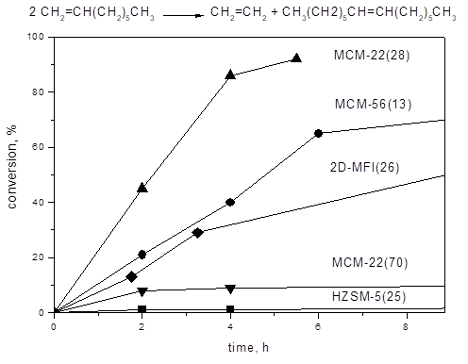
- cooling to 40 °C, the reactor was filled with Ar and neat 1-octene (1-octene/Mo ratio = 320) was added under stirring. The reaction progress was followed by GC analysis of reaction mixture samples taken at given intervals. Individual compounds were identified by GC/MS. A high-resolution gas chromatograph
- Agilent 6890 with a DB-5 column (length: 50 m, inner diameter: 320 μm, stationary phase thickness: 1 μm), equipped with a 7683 Automatic Liquid Sampler and a FID detector and GC/MS (ThermoFinnigan, FOCUS DSQ II single Quadrupole) were used. Conversions were calculated from the mass balance. A,B,C,D: XRD


Copper(I)-catalyzed tandem reaction: synthesis of 1,4-disubstituted 1,2,3-triazoles from alkyl diacyl peroxides, azidotrimethylsilane, and alkynes
Beilstein J. Org. Chem. 2018, 14, 2916–2922, doi:10.3762/bjoc.14.270
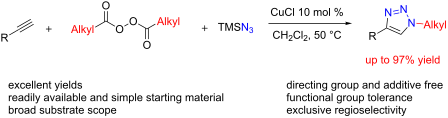
- trapping reagent (tetramethylpiperdinyloxy, TEMPO) [38][39] to the standard reaction system, no product 3a was obtained; only the radical trapped product 4 was detected by GC–MS (Scheme 4a). To further investigate this phenomenon, we synthesized a substrate bearing a cyclopropylmethyl moiety, diacyl




Generation of 1,2-oxathiolium ions from (arysulfonyl)- and (arylsulfinyl)allenes in Brønsted acids. NMR and DFT study of these cations and their reactions
Beilstein J. Org. Chem. 2018, 14, 2897–2906, doi:10.3762/bjoc.14.268
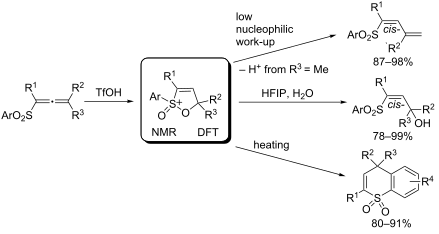
- the corresponding thiochromenes, due to oligomerization under the harsh reaction conditions. Other allenes 2g,h gave the corresponding heterocycles 5 in very poor yields (<4%, by GC–MS and 1H NMR data). As it was mentioned above, unsubsituted allenes 2i,j did not react with TfOH at room temperature


Molecular iodine-catalyzed one-pot multicomponent synthesis of 5-amino-4-(arylselanyl)-1H-pyrazoles
Beilstein J. Org. Chem. 2018, 14, 2789–2798, doi:10.3762/bjoc.14.256
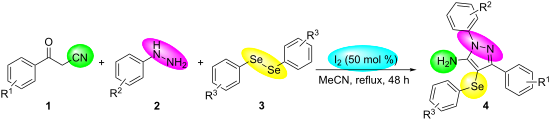
- % yield. When we performed the reaction by using the benzoylacetonitrile derivative 1c substituted with a methoxy group, a lower isolated yield was observed (Table 2, entry 3). This may be associated with the high reactivity of 1c which produced many byproducts as observed by TLC and GC–MS analysis
- -dinitrophenylhydrazine was used, the expected pyrazole 4k was not detected by GC–MS analysis. (Table 2, entry 11). In addition, different diaryl diselenides 3b–e were studied to produce valuable 5-amino-4-(arylselanyl)-1H-pyrazoles 4l–o (Table 2, entries 12–15). In this case, it is possible to see that all diaryl


Synthesis of aryl sulfides via radical–radical cross coupling of electron-rich arenes using visible light photoredox catalysis
Beilstein J. Org. Chem. 2018, 14, 2520–2528, doi:10.3762/bjoc.14.228
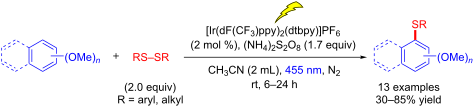
- Data Centre. Acknowledgements A.D., M.M, J.R. and S.M. thank the Deutsche Forschungsgemeinschaft (GRK 1626 and Emmy-Noether grant, 251211948) for financial support. We thank Dr. Rudolf Vasold and Mrs. R. Hoheisel for GC–MS and electrochemical measurements.





