Search results
Search for "aromatic rings" in Full Text gives 256 result(s) in Beilstein Journal of Organic Chemistry. Showing first 200.
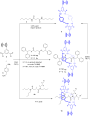
Water-soluble host–guest complexes between fullerenes and a sugar-functionalized tribenzotriquinacene assembling to microspheres
Beilstein J. Org. Chem. 2020, 16, 2551–2561, doi:10.3762/bjoc.16.207

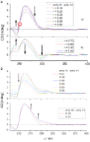
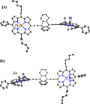
- exhibits an emission maximum peak at 329 nm upon excitation at 294 nm. This emission band is probably due to the formation of the ground-state dimer by interaction between the benzene rings upon excitation or excimer emission caused by the interaction between the aromatic rings [41][43]. As the


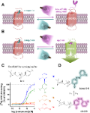
![[Graphic 2]](/bjoc/content/inline/1860-5397-16-207-i3.svg?max-width=637&scale=1.18182) C60 [TBTQ-(OG)6: 50 μM; C60: 50 μM] and (b) TBTQ-(OG)6
C60 [TBTQ-(OG)6: 50 μM; C60: 50 μM] and (b) TBTQ-(OG)6 


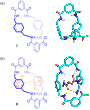
Design and synthesis of a bis-macrocyclic host and guests as building blocks for small molecular knots
Beilstein J. Org. Chem. 2020, 16, 2314–2321, doi:10.3762/bjoc.16.192
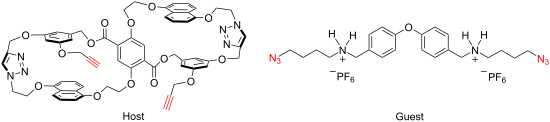
- , several of the aromatic peaks have shifted upfield relative to diacid 15, because of shielding from nearby aromatic rings. The high-resolution mass spectrometric data and IR spectra also support the successful synthesis of 1. The synthesis of bis(ammonium) guest 2 began with selective displacement of the


Naphthalene diimide bis-guanidinio-carbonyl-pyrrole as a pH-switchable threading DNA intercalator
Beilstein J. Org. Chem. 2020, 16, 2201–2211, doi:10.3762/bjoc.16.185
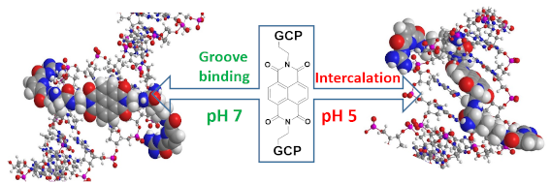
- GCP moiety by itself does not interact with DNA/RNA but, if combined with oligomers [15][16] or attached to the aryl moiety containing at least two aromatic rings [17], it will ensure efficient DNA/RNA binding. Moreover, due to the weakly acidic pKa = 6 of GCP, interactions and consequently





Models of necessity
Beilstein J. Org. Chem. 2020, 16, 1649–1661, doi:10.3762/bjoc.16.137
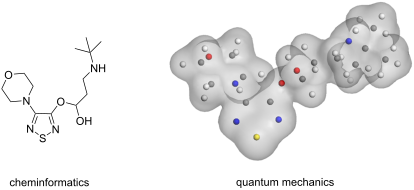
- molecule is most likely to be protonated or deprotonated and where the aromatic rings should be substituted, all from the Lewis structure. Many cheminformatics practitioners would also be able to write the structure from the SMILES string and medicinal chemists to recognize it as a benzodiazepine and


Rearrangement of o-(pivaloylaminomethyl)benzaldehydes: an experimental and computational study
Beilstein J. Org. Chem. 2020, 16, 1636–1648, doi:10.3762/bjoc.16.136
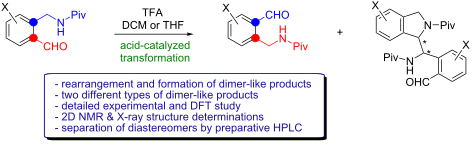
- upfield aromatic δH(7) value (5.71 ppm) was measured for the isoindoline moiety of this compound, i.e., a diamagnetic shift of ca. 1.8 ppm occurred in this position. In order to explain this phenomenon, we should consider the anisotropic effect of the aromatic rings. Such steric arrangement is only


Five-component, one-pot synthesis of an electroactive rotaxane comprising a bisferrocene macrocycle
Beilstein J. Org. Chem. 2020, 16, 1564–1571, doi:10.3762/bjoc.16.128
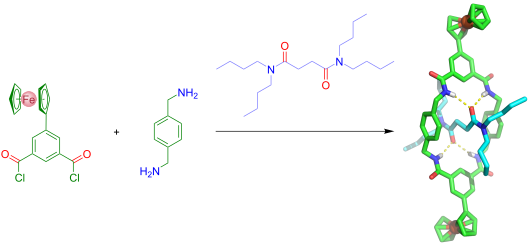
- analysis of the thread signals in the 1H NMR of the rotaxane showed a non-equivalency of both butyl chains indicating a slow rotation of the amide bond in the NMR timescale (Figure 4). One of these butyl chains is in close proximity to the macrocycle aromatic rings producing a shielding of the signals (j




Photocatalyzed syntheses of phenanthrenes and their aza-analogues. A review
Beilstein J. Org. Chem. 2020, 16, 1476–1488, doi:10.3762/bjoc.16.123
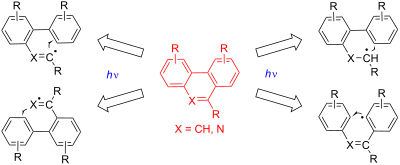
- cyclization occurring in a biphenyl moiety or a related system containing two aromatic rings. Either carbon-centered radicals (e.g., imidoyl, α-aminoalkyl, or phenyl) or nitrogen-centered radicals (e.g., iminyl or amidyl) can be used for this purpose as shown in Figure 2. Accordingly, the azaarene may be
- (hetero)aromatic rings. Most of the protocols illustrated herein, however, involved the use of rather expensive transition-metal-based (e.g., on Ru or Ir) photocatalysts, that still represents an issue in terms of sustainability. In this context, the use of photoorganocatalysts [24] is a promising


Highly selective Diels–Alder and Heck arylation reactions in a divergent synthesis of isoindolo- and pyrrolo-fused polycyclic indoles from 2-formylpyrrole
Beilstein J. Org. Chem. 2020, 16, 1320–1334, doi:10.3762/bjoc.16.113
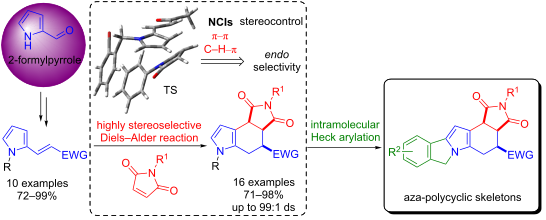
- intermolecular interactions (NCIs) between aromatic rings (π···π) [58][59] and alkyl and aromatic ring (Csp3–H)···π stackings [59][60][61][62] are widely recognized, from both the experimental and theoretical viewpoint, as a major factor governing the conformational equilibrium, supramolecular assembly and


Activated carbon as catalyst support: precursors, preparation, modification and characterization
Beilstein J. Org. Chem. 2020, 16, 1188–1202, doi:10.3762/bjoc.16.104
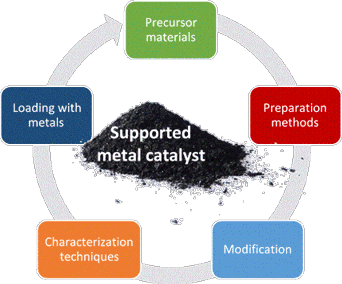
- of carboxyl groups, ketones or aldehydes, C=C double bonds, aromatic rings and ether C–O stretching bonds, respectively [65][82][115]. Changes of the surface properties due to the modification of the activated carbon samples can also be detected by FTIR measurements. Shafeeyan et al. investigated new
- ammonia due to the evolution of NH3 and HCN. Depending on the modification temperature, nitrogen is incorporated mainly to aromatic rings at higher temperatures, while less temperature-stable amide-like functionalities were formed at lower temperatures [129]. Composition of activated carbon Elemental


Development of fluorinated benzils and bisbenzils as room-temperature phosphorescent molecules
Beilstein J. Org. Chem. 2020, 16, 1154–1162, doi:10.3762/bjoc.16.102
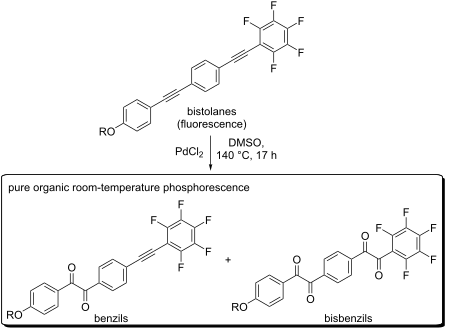
- )-catalyzed oxidation of the adjacent C≡C bond, thereby allowing the isolation of the half-oxidized benzil derivative 2a. On the basis of this theoretical investigation, the unique reactivities of bistolanes with fluorinated and nonfluorinated aromatic rings toward oxidation by DMSO can be rationalized



Synthesis and properties of tetrathiafulvalenes bearing 6-aryl-1,4-dithiafulvenes
Beilstein J. Org. Chem. 2020, 16, 974–981, doi:10.3762/bjoc.16.86
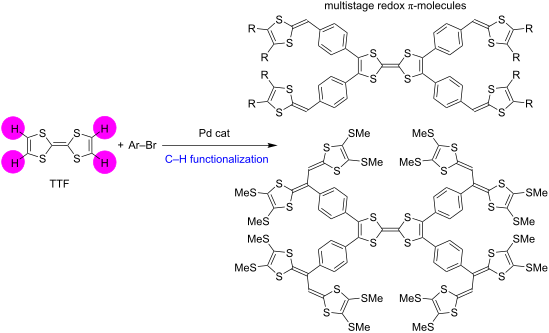
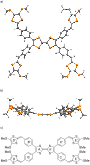
- of 1,3-dithiole rings to aromatic rings appears very appealing since these allow to produce novel multistage redox systems. However, such molecules could formerly not be synthesized by conventional approaches. In 2011, a breakthrough synthesis of arylated TTF derivatives by a palladium-catalyzed
- direct C–H arylation was reported, and the structural and electrochemical properties of the products were clarified [30]. This motivated us to synthesize novel multistage redox-TTFs bearing 1,3-dithiole rings on aromatic rings, 1–3 (Figure 1). In addition, we focused on cross-conjugated systems with 1,3
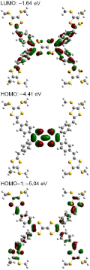
- is participating in this redox process is surrounded by extended aromatic rings bearing 1,3-dithiol rings. Conclusion We have synthesized novel multistage TTF derivatives 1–4 bearing 6-aryl-1,4-dithiafulvene moieties by palladium-catalyzed direct C–H arylation. The DFT calculations revealed the




Towards triptycene functionalization and triptycene-linked porphyrin arrays
Beilstein J. Org. Chem. 2020, 16, 763–777, doi:10.3762/bjoc.16.70
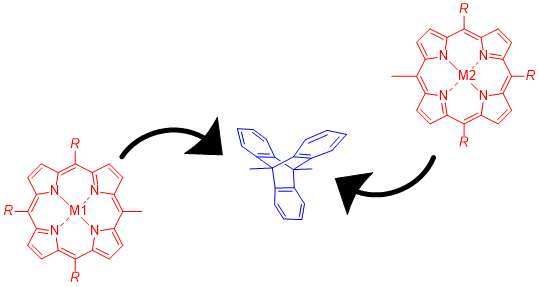
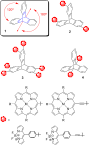
- directly to the periphery of triptycene or via various linkers; arrays with six chromophores 3 have thus far eluded us [26][27]. While much work has been done on the functionalization of the aromatic rings of triptycene as in 2 or 3 [24][25][26][27][28][29][30], the attachment of chromophores at the
- molecule in the asymmetric unit with the bridgehead substituents being almost 180° to each other (Figure 2, for labelling see Figure S33 in Supporting Information File 1). Unlike the unsubstituted triptycene 1 crystal structure which exhibits a high degree of C–H···π interactions between the aromatic rings
- [43], there is a high degree of interdigitation between the aromatic rings of the triptycene unit (Figure 2b) akin to some triptycene-quinones [44]. This is due to two of the triptycene aromatic rings i [C8A to C8, centroid···centroid distance of 3.845(3) Å and shift distance of 1.507(5) Å] and ii





Synthesis of organic liquid crystals containing selectively fluorinated cyclopropanes
Beilstein J. Org. Chem. 2020, 16, 674–680, doi:10.3762/bjoc.16.65
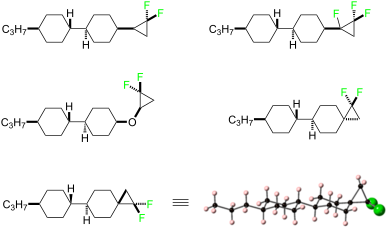
- core structures to enhance their LC potential. The birefringence Δn (Table 2) for compounds 8–11a was measured (Abbe refractometer). In all cases the Δn values were low, which is entirely consistent with their core aliphatic structures, unlike materials with aromatic rings. The differences for Δn for 8


Synthesis and herbicidal activities of aryloxyacetic acid derivatives as HPPD inhibitors
Beilstein J. Org. Chem. 2020, 16, 233–247, doi:10.3762/bjoc.16.25
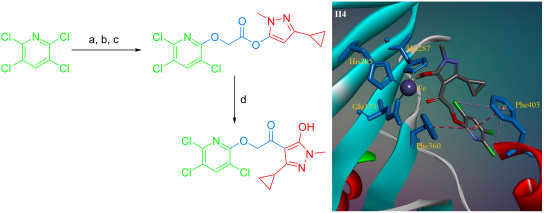
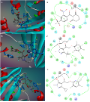
- -dicarbonyl bidentate chelation with the active center metal, and 2) through favorable sandwich π–π stacking interactions between aromatic rings and the Phe360, Phe403 residues of the active site. Thus, 1,3-dicarbonyl and aromatic moieties are indispensable pharmacophores for potent HPPD-inhibiting compounds
- , the introduction of large groups on the benzene ring appears to be beneficial to the activity and deserves further structural optimization. The herbicidal activities of compounds containing other aromatic rings, compound II and III bearing a pyridine ring and a naphthalene ring, were examined. The




Synthesis, liquid crystalline behaviour and structure–property relationships of 1,3-bis(5-substituted-1,3,4-oxadiazol-2-yl)benzenes
Beilstein J. Org. Chem. 2020, 16, 149–158, doi:10.3762/bjoc.16.17
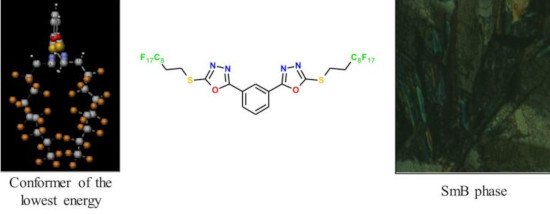
- core, the obtained compounds do not exhibit mesomorphism, only crystal–isotropic transitions were observed [26]. The absence of mesophases is mainly due to the strong bend (134°) between the aromatic rings, which disturbs the linear shape of the whole molecule [27]. Herein we describe the synthesis and
- compounds 2 and 4 is constituted by a rigid core (three aromatic rings) to which are attached the terminal chains. Based on this structure, some liquid crystalline mesophases were expected. Differential scanning calorimetry (DSC), polarized optical microscopy (POM) and X-ray diffraction pattern analysis




The interaction between cucurbit[8]uril and baicalein and the effect on baicalein properties
Beilstein J. Org. Chem. 2020, 16, 71–77, doi:10.3762/bjoc.16.9
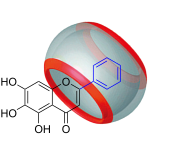
- ) was a simple superposition of BALE (a) and Q[8] (b), there was no interaction observed in the physical mixture. When compared to spectra (c) and (d), there were two absorption peaks observed at ≈3030 cm−1 corresponding to the stretching vibration of the two aromatic rings in BALE, but the complexes


Influence of the cis/trans configuration on the supramolecular aggregation of aryltriazoles
Beilstein J. Org. Chem. 2019, 15, 2881–2888, doi:10.3762/bjoc.15.282
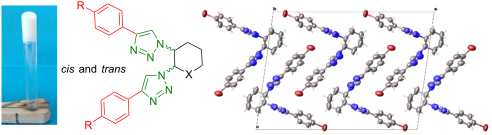
- stacking interactions, in addition to hydrogen bonding, with the aromatic rings adopting a high degree of parallelism, as seen in crystal packings and ECD data. Furthermore, π–bromine interactions between the bromine atom of the aryl substituents and the triazole units might also contribute to an overall
- ) and its X-ray analysis was not accurate enough to resolve its structure. However, its crystal packing (Figure 5) deserves discussion. As with compound 12, this packing revealed a number of π–bromine interactions [19], together with a high degree of π–π stacking interactions between the aromatic rings





Carbazole-functionalized hyper-cross-linked polymers for CO2 uptake based on Friedel–Crafts polymerization on 9-phenylcarbazole
Beilstein J. Org. Chem. 2019, 15, 2856–2863, doi:10.3762/bjoc.15.279
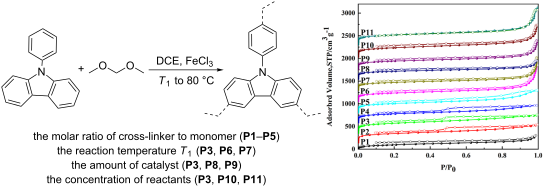
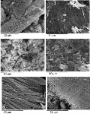
- . Chemical structure analysis FTIR spectra were measured to verify the structure of HCPs (Figure 1). The peak at 3100–3000 cm−1 correspond to the C–H stretching vibrations of the aromatic rings, which declined obviously in P1–P5 compared to monomer 9-PCz. The peak of the disubstituted phenyl ring in the 9


Photoreversible stretching of a BAPTA chelator marshalling Ca2+-binding in aqueous media
Beilstein J. Org. Chem. 2019, 15, 2801–2811, doi:10.3762/bjoc.15.273
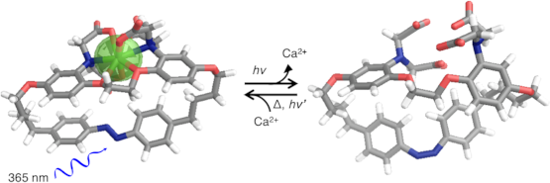
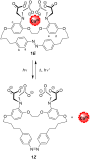
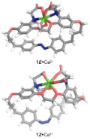
- cis and trans-forms [33][34]. Herein we describe a BAPTA host molecule 1, with an azobenzene moiety integrated in the tether linking both aromatic rings, as illustrated in Figure 1. The principle goal of the current work, with a long-term view of interfacing biological systems, was the development of




An improved, scalable synthesis of Notum inhibitor LP-922056 using 1-chloro-1,2-benziodoxol-3-one as a superior electrophilic chlorinating agent
Beilstein J. Org. Chem. 2019, 15, 2790–2797, doi:10.3762/bjoc.15.271
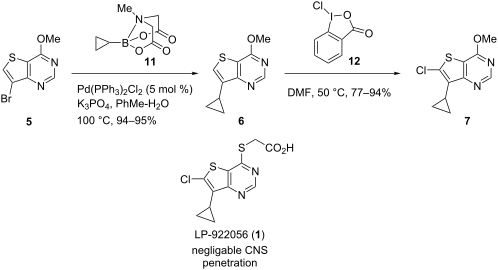
- yields of the desired product 7 (ca. 15–32%) due to competing ring opening reactions of the 7-cyclopropyl group (Scheme 2). Clearly, a better procedure was required. A large number of electrophilic chlorinating reagents for the direct chlorination of aromatic rings have been reported [17]. Recently, Xue




A combinatorial approach to improving the performance of azoarene photoswitches
Beilstein J. Org. Chem. 2019, 15, 2753–2764, doi:10.3762/bjoc.15.266
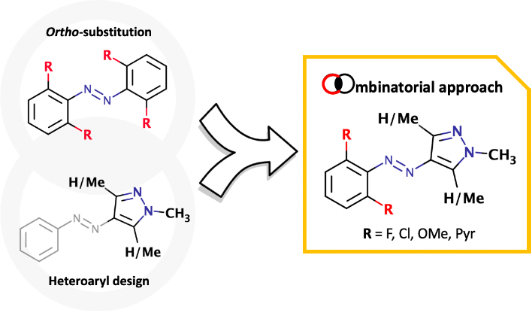
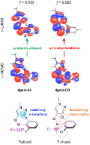
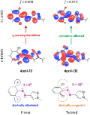
- applications. Experimental Computational details. Theoretical calculations were performed using the Gaussian 16 (revision A03) suite of programs [36]. Several rotational conformers of the studied compounds are available due to free rotation of the aromatic rings along single bonds linked to the azo bridge. All




A toolbox of molecular photoswitches to modulate the CXCR3 chemokine receptor with light
Beilstein J. Org. Chem. 2019, 15, 2509–2523, doi:10.3762/bjoc.15.244
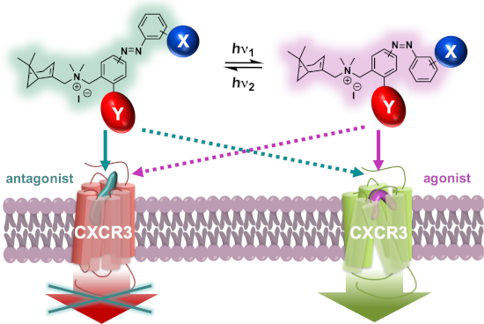
- latter one. One of the main reasons is that an azobenzene has a relatively simple structure that can resemble various biaryl moieties of bioactive compounds: two aromatic rings linked with a bridge (e.g., amide, ether, alkane or alkyne) [8]. In the case of azobenzene the bridge is a diazene group (also
- alignment between trans-2a and the agonist 1e (Figure 2B), since the planar azobenzene is partially overlapping with the biaryl moiety. However, the two aromatic rings of both compounds can evidently not be in exactly the same plane because the azobenzene moiety is planar while the tilting of the dihedral
- -isomer, but it should be complemented with other strategies to further increase intrinsic activity. Substituent effects on the outer ring One of the postulated contributors to the CXCR3 agonism effect of parent biaryls such as 1d and 1e is the increased π-electron density of the aromatic rings [24]. A



Combining the Ugi-azide multicomponent reaction and rhodium(III)-catalyzed annulation for the synthesis of tetrazole-isoquinolone/pyridone hybrids
Beilstein J. Org. Chem. 2019, 15, 2447–2457, doi:10.3762/bjoc.15.237

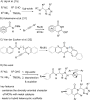
- synthesis of isoquinolones using an N-methoxyamide as directing group for the ortho-position and alkynyl bromide to achieve the regioselective cyclization (Scheme 1B) [31]. In parallel, our group has developed Ru(II) and Rh(III)-catalyzed inter- and intramolecular annulations of aromatic rings with alkynes
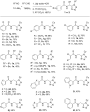
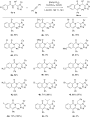
- explored with substrates bearing acyl groups other than benzoyl (Scheme 5). Compounds incorporating acrylamidomethyltetrazole fragments reacted with diphenylacetylene to form the tetrazole/pyridone hybrids 5a–c in good yields. In addition, very complex hybrid compounds based on heterocyclic, fused aromatic
- rings, such as furan, benzofuran, pyrrole, benzopyrrole, thiophene, benzothiophene and naphthalene were also successfully synthesized (5d–l) in moderate to very good yields. The exceptions were the cases of indolopyridone 5i and thiazolopyridone 5k, the latter one could not be obtained even after many




Effect of ring size on photoisomerization properties of stiff stilbene macrocycles
Beilstein J. Org. Chem. 2019, 15, 2408–2418, doi:10.3762/bjoc.15.233
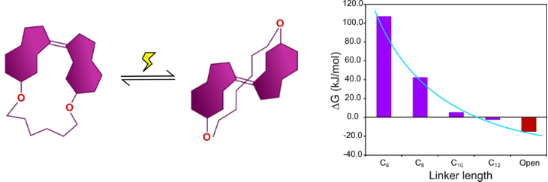
- of the macrocyclic stiff stilbene diethers, a conformational analysis was undertaken (Figure 6). According to X-ray crystallography, in compound (E)-7 (Scheme 4) the aromatic rings of the two indane units are in the same plane (dihedral angle 180°), whereas in (Z)-7 this angle is 9.1° [21]. In the
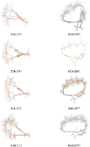
- reaction (Figure S47, Supporting Information File 1). The differences in ring strain between the E- and Z-isomers show an exponential correlation to the linker length. Conformer ensembles for the macrocyclic stiff stilbene diethers 1a–d. Dihedral angles between the two aromatic rings are given in




Functionalization of 4-bromobenzo[c][2,7]naphthyridine via regioselective direct ring metalation. A novel approach to analogues of pyridoacridine alkaloids
Beilstein J. Org. Chem. 2019, 15, 2304–2310, doi:10.3762/bjoc.15.222
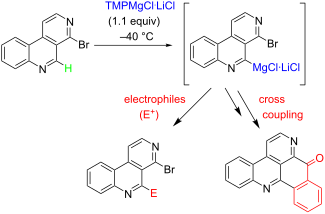
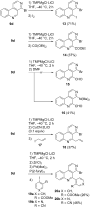
- , which undergo rearomatization as described above (Figure 2B). 4-Bromo-5-(methoxycarbonyl)benzo[c][2,7]naphthyridine generated this way gave, after Suzuki cross-coupling at C-4, intermediates for the synthesis of analogues of ascididemin (2) [16]. Introduction of (hetero)aromatic rings bearing ester