


Search results
Search for "dihydroxylation" in Full Text gives 113 result(s) in Beilstein Journal of Organic Chemistry.
The Flögel-three-component reaction with dicarboxylic acids – an approach to bis(β-alkoxy-β-ketoenamides) for the synthesis of complex pyridine and pyrimidine derivatives
Beilstein J. Org. Chem. 2014, 10, 394–404, doi:10.3762/bjoc.10.37
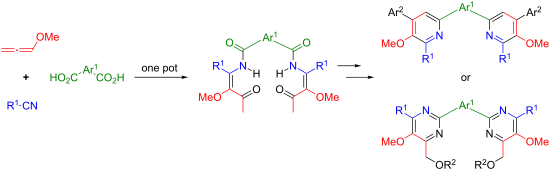
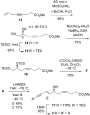
- potassium osmate/NMO to obtain the vicinal diol 35 in 76% yield (Scheme 8). In the case of a Z-configured olefin 34 this dihydroxylation should give a cis-configured diol (meso compound), whereas an E-configured olefin 34 would lead to a racemic mixture of the corresponding trans-configured diol. However
- diol 32a into macrocycle 34. Dihydroxylation of the macrocyclic olefin 34 to diol 35 and subsequent esterification to the bis-(R)-Mosher ester 36; (S)-MTPA-Cl = (S)-3,3,3-trifluoro-2-methoxy-2-phenylpropanoyl chloride. Calculated relative energy differences of the Z- and E-configured isomers of


Total synthesis and cytotoxicity of the marine natural product malevamide D and a photoreactive analog
Beilstein J. Org. Chem. 2014, 10, 316–322, doi:10.3762/bjoc.10.29
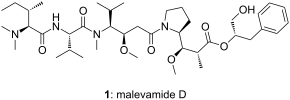
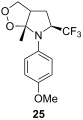
- starting from aryl(trifluoromethyl)ketone 19 (Scheme 3), which itself was synthesized via Grignard monoallylation of 1,4-dibromobenzene, followed by dihydroxylation, dioxolane protection and trifluoroacetylation of the remaining brominated position [16]. Refluxing of ketone 19 with NH2OH·HCl in pyridine




Efficient carbon-Ferrier rearrangement on glycals mediated by ceric ammonium nitrate: Application to the synthesis of 2-deoxy-2-amino-C-glycoside
Beilstein J. Org. Chem. 2014, 10, 300–306, doi:10.3762/bjoc.10.27
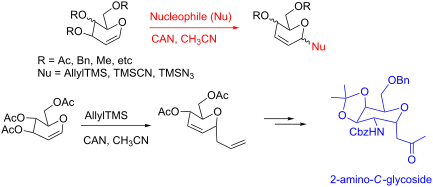
- δ 4.00, which in turn was adjacent to the amide proton at δ 4.85, thereby indicating that the amide moiety is present at the C-2 position (see Supporting Information File 1). The internal olefin was subjected to a dihydroxylation under the Upjohn conditions [64], followed by an acetonide protection
- rearrangement took place from the axial side, as expected, since the hydroxy group at C-4 is axially oriented in compound 9. Moreover, the dihydroxylation took place from the side opposite to the amino group at C-2, which can be attributed to the steric hindrance from the bulky amide group. A D-galacto


Synthesis of new enantiopure poly(hydroxy)aminooxepanes as building blocks for multivalent carbohydrate mimetics
Beilstein J. Org. Chem. 2014, 10, 213–223, doi:10.3762/bjoc.10.17
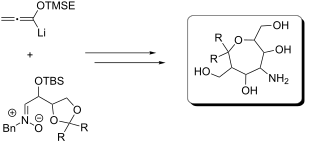
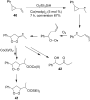
- interesting option is the pathway via oxepines [15][16][17][18] and the subsequent dihydroxylation or direct reduction of their C=C double bond to give the corresponding oxepane derivatives [19][20]. Alternatively, oxepanes were also synthesized by the ring enlargement of their six-membered homologues [21][22


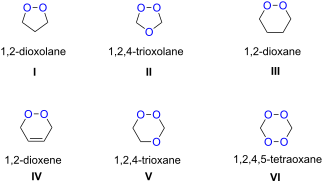
Synthesis of five- and six-membered cyclic organic peroxides: Key transformations into peroxide ring-retaining products
Beilstein J. Org. Chem. 2014, 10, 34–114, doi:10.3762/bjoc.10.6






A unified approach to the important protein kinase inhibitor balanol and a proposed analogue
Beilstein J. Org. Chem. 2013, 9, 2910–2915, doi:10.3762/bjoc.9.327
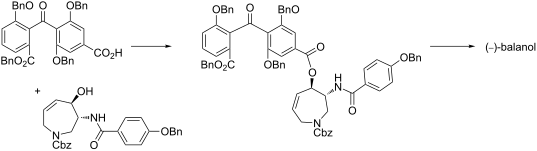
- possible synthesis of an azepane ring-modified balanol derivative along the projected pathway. To this end, dihydroxylation of the adduct 31 was next attempted. Pleasingly, the dihydroxylation of 31 proceeded smoothly; however, unfortunately to provide an inseparable mixture of the two possible


Total synthesis of the endogenous inflammation resolving lipid resolvin D2 using a common lynchpin
Beilstein J. Org. Chem. 2013, 9, 2762–2766, doi:10.3762/bjoc.9.310
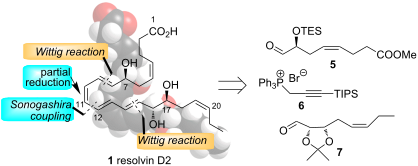
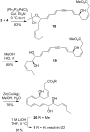
- C7 stereochemistry was introduced via asymmetric dihydroxylation [25][26]. Thus, ester 13 [27] was treated with AD-mix-α in t-BuOH/H2O to give diol 14 in reasonable yield. The enantioselectivity and absolute configuration of the secondary alcohol was determined by conversion of diol into the bis-(S


Multigramme synthesis and asymmetric dihydroxylation of a 4-fluorobut-2E-enoate
Beilstein J. Org. Chem. 2013, 9, 2660–2668, doi:10.3762/bjoc.9.301
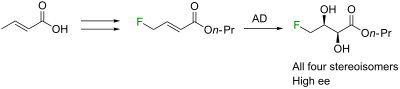
- multigramme scale using a free radical procedure. A phase transfer catalysed fluorination transformed these species to the 4-fluorobut-2E-enoates reproducibly and at scale (48–53%, ca. 300 mmol). Asymmetric dihydroxylation reactions were then used to transform the butenoate, ultimately into all four
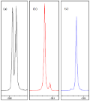
- d-chloroform/diisopropyl tartrate showed distinct baseline separated signals for different enantiomers. Keywords: asymmetric; dihydroxylation; ee determination; fluorination; fluorosugars; organo-fluorine; Introduction Selective fluorination can be used to make subtle but decisive modifications of
- and enantioselectivities [25]. Figure 2 shows the panel of ligands used for the asymmetric transformations. Scheme 5 shows the initial dihydroxylation carried out on 25, and Table 1 summarises the method development. The asymmetric dihydroxylation conditions were subject to some optimization; the




Garner’s aldehyde as a versatile intermediate in the synthesis of enantiopure natural products
Beilstein J. Org. Chem. 2013, 9, 2641–2659, doi:10.3762/bjoc.9.300
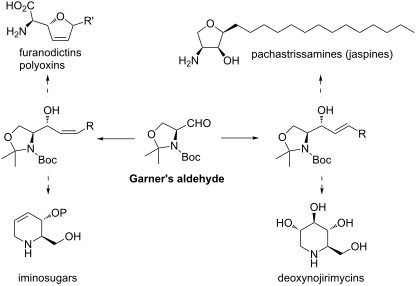
- -selectivity (Table 1, entry 20). Olefination of Garner’s aldehyde Olefination of 1 provides an easy access to chiral 2-aminohomoallylic alcohols A (Scheme 24). The intermediate can be derivatized further, thus providing a route for greater molecular diversity. Diastereoselective dihydroxylation of A with OsO4




The total synthesis of D-chalcose and its C-3 epimer
Beilstein J. Org. Chem. 2013, 9, 2620–2624, doi:10.3762/bjoc.9.296
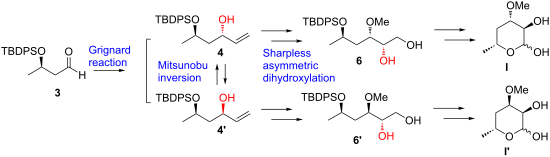
- C3 via Grignard reaction, the introduction of the stereogenic center on C2 by Sharpless asymmetric dihydroxylation, the protection of the C1 and C2 hydroxy groups with tert-butyldimethylsilyl trifluoromethanesulfonate (TBSOTf), and the selective cleavage of the primary OTBS ether using catalytic DL
- -10-camphorsulfonic acid (CSA) in MeOH. Keywords: asymmetric dihydroxylation; chalcose; epimer; total synthesis; Introduction Chalcose (4,6-dideoxy-3-O-methyl-D-xylo-hexose, I [1][2]) is a structural component of many macrolide antibiotics, such as chalcomycin [3], neutramycin [4], and lankamycin [5
- retrosynthetic analysis of I and I′ is presented in Scheme 1. Diol II and II′ arose from a Sharpless asymmetric dihydroxylation that form the C2 stereogenic center. The installation of the C3 stereocenter on vinyl ether III was proposed to utilize a Grignard reaction followed by chromatographic separation


An overview of the synthetic routes to the best selling drugs containing 6-membered heterocycles
Beilstein J. Org. Chem. 2013, 9, 2265–2319, doi:10.3762/bjoc.9.265


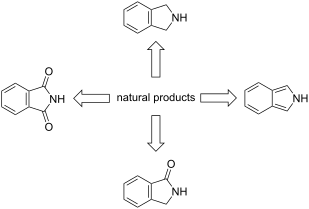
The chemistry of isoindole natural products
Beilstein J. Org. Chem. 2013, 9, 2048–2078, doi:10.3762/bjoc.9.243
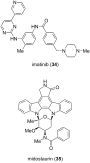
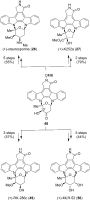
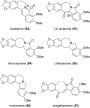
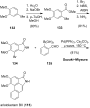
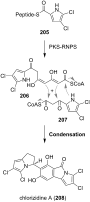
- , dihydroxylation and a final deprotection step. Macrocyclic polyketides: The first cytochalasan alkaloids, cytochalasin A (51) and B (52), originally named phomins [39], were isolated in 1966 [39][40][41][42]. Since then, the number of natural products belonging to this family has increased to over 80. Some












A concise enantioselective synthesis of the guaiane sesquiterpene (−)-oxyphyllol
Beilstein J. Org. Chem. 2013, 9, 2028–2032, doi:10.3762/bjoc.9.239
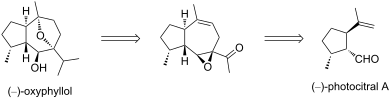
- shown in Scheme 2, we first planned to use the known diol 7, which is available by diastereoselective dihydroxylation of 4 [6]. Since a chemoselective deoxygenation of the secondary alcohol of 7 would give rise to the desired intermediate 3, we investigated a radical defunctionalization strategy [8]. To


Stereoselective synthesis of the C79–C97 fragment of symbiodinolide
Beilstein J. Org. Chem. 2013, 9, 1931–1935, doi:10.3762/bjoc.9.228
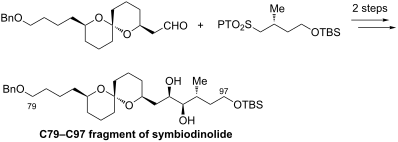
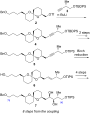
- Sharpless asymmetric dihydroxylation were utilized as the key transformations. Keywords: Julia–Kocienski olefination; polyol marine natural product; Sharpless asymmetric dihydroxylation; spiroacetalization; symbiodinolide; Findings A 62-membered polyol marine natural product, symbiodinolide (1, Figure 1
- the Birch reduction to afford the trans-alkene 6, wherein the benzyl moiety was deprotected. The alkene 6 was derivatized to the spiroacetal C79–C96 fragment 7 in four steps including the benzyl protection and Sharpless asymmetric dihydroxylation (AD). Although the desired spiroacetal fragment 7 was
- Information File 1). In conclusion, we have achieved the stereoselective synthesis of the C79–C97 fragment. The synthetic route has featured a stereoselective spiroacetalization, a Julia–Kocienski olefination, and a Sharpless asymmetric dihydroxylation. This synthesis of the spiroacetal fragment, wherein the




De novo synthesis of D- and L-fucosamine containing disaccharides
Beilstein J. Org. Chem. 2013, 9, 332–341, doi:10.3762/bjoc.9.38
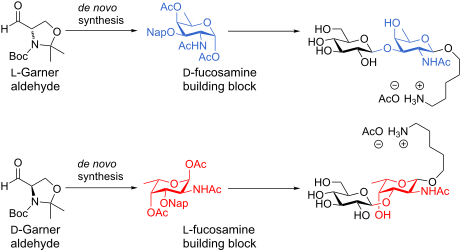
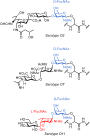
- blocks Our retrosynthetic analysis of D-fucosamine envisioned the installation of the syn-1,2-diol unit by osmium-catalysed dihydroxylation of allylic ether A. It was anticipated that the conformation adopted by the molecule would allow for the formation of the required anti relationship between C3 and
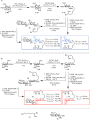
- commercially available starting materials. The two different O-protecting groups, namely naphthyl ether (Nap) [57][58][59] and benzoate ester (Bz), were introduced to gain access to two sets of electronically different and orthogonally protected derivatives (Scheme 2A). Dihydroxylation of aldehyde 6a under
- a 3JH3–H4 coupling of 3.5 Hz. When the same sequence of dihydroxylation–peracetylation was performed on Bz-substituted aldehyde 6b, compound D-8b was formed in 71% as a single diastereomer (Scheme 3). This product was crystallized from n-hexane/EtOAc solvent mixture, and the stereochemical



Iron-containing mesoporous aluminosilicate catalyzed direct alkenylation of phenols: Facile synthesis of 1,1-diarylalkenes
Beilstein J. Org. Chem. 2013, 9, 49–55, doi:10.3762/bjoc.9.6
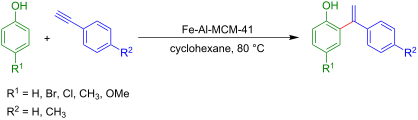
- ]. Furthermore, a variety of available reactions to functionalize the double bond, such as reductive (hydrogenation, hydrosilylation, etc.), oxidative (epoxidation, halogenations, dihydroxylation, etc.) or cycloaddition transformations, encourage such vinylation process as an attractive primary tool in organic


Total synthesis and biological evaluation of fluorinated cryptophycins
Beilstein J. Org. Chem. 2012, 8, 2060–2066, doi:10.3762/bjoc.8.231
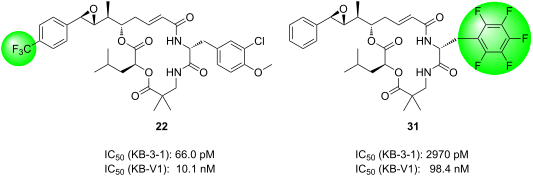
- 11 could then be directly employed without purification in the asymmetric dihydroxylation with osmium tetroxide and (DHQD)2PHAL, in close analogy to a previously published procedure [23]. The initially formed vicinal diol cyclizes under the reaction conditions to give lactone 12 in enantiomerically


A new approach toward the total synthesis of (+)-batzellaside B
Beilstein J. Org. Chem. 2012, 8, 1831–1838, doi:10.3762/bjoc.8.210

- (+)-batzellaside B from naturally abundant L-pyroglutamic acid is presented in this article. The key synthetic step involves Sharpless asymmetric dihydroxylation of an olefinic substrate functionalized with an acetoxy group to introduce two chiral centres diastereoselectively into the structure. Heterocyclic
- hemiaminal 4, which could be converted from the resulting product, was found to provide stereospecific access to enantiomerically enriched allylated intermediate, offering better prospects for the total synthesis of this natural product. Keywords: asymmetric dihydroxylation; (+)-batzellaside B; iminosugar
- transformation will involve Sharpless asymmetric dihydroxylation to install stereoselectively the hydroxy groups at C3 and C4 positions of the olefinic substrate 6, and an intramolecular cyclization of aldehyde generated in situ from 5 to construct the piperidine ring system. The present publication describes


Synthesis and ring openings of cinnamate-derived N-unfunctionalised aziridines
Beilstein J. Org. Chem. 2012, 8, 1747–1752, doi:10.3762/bjoc.8.199
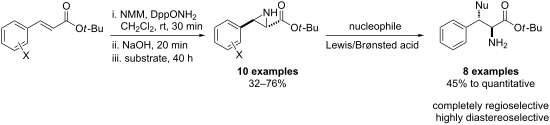
- dihydroxylation, conversion to a cyclic sulfate, ring opening with azide, and finally ring closure to afford the NH-aziridine [18]. We recently reported [21][22] a nucleophilic aziridination methodology [23][24][25][26][27][28][29][30] that allows access to NH-aziridines in a single step from α,β-unsaturated


On the proposed structures and stereocontrolled synthesis of the cephalosporolides
Beilstein J. Org. Chem. 2012, 8, 1287–1292, doi:10.3762/bjoc.8.146
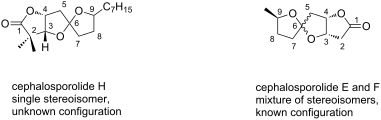
- C9, as opposed to the n-heptyl chain in cephalosporolide H. Synthesis of cephalosporolide E started with the known alcohol 12, which was prepared from the commercially available diester 11 (Scheme 4) [34]. PMB protection of alcohol 12 followed by Sharpless dihydroxylation afforded diol 14 [35][36
- tracing back to the Sharpless dihydroxylation reaction). Spectroscopic data for our synthetic material was in full agreement with the reported data for cephalosporolide E [28][29][30]. Conclusion We have completed the stereocontrolled synthesis of the reported structure of cephalosporolide H and three


Chiral multifunctional thiourea-phosphine catalyzed asymmetric [3 + 2] annulation of Morita–Baylis–Hillman carbonates with maleimides
Beilstein J. Org. Chem. 2012, 8, 1098–1104, doi:10.3762/bjoc.8.121
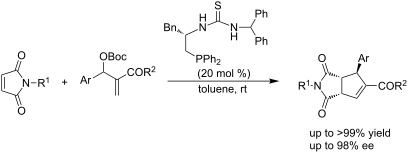
- desired catalytic cycle. To illustrate the synthetic utility of these products 3 obtained from the above asymmetric [3 + 2] annulation, the further transformation of 3c was performed in the presence of RuCl3 and NaIO4 under mild conditions (Scheme 3) [22][60]. Upon dihydroxylation of 3c, the corresponding
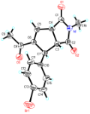
- /EtOAc 10:1–4:1) to provide compound 3. The ORTEP plot of compound 3r. 31P NMR spectra (161.9 MHz, CDCl3) of control experiments. Paths to the formation of 1,3-dipolar synthons by using a catalytic amount of phosphines. Proposed transition models. Dihydroxylation of 3c. Optimization of the reaction




Directed ortho,ortho'-dimetalation of hydrobenzoin: Rapid access to hydrobenzoin derivatives useful for asymmetric synthesis
Beilstein J. Org. Chem. 2011, 7, 1315–1322, doi:10.3762/bjoc.7.154
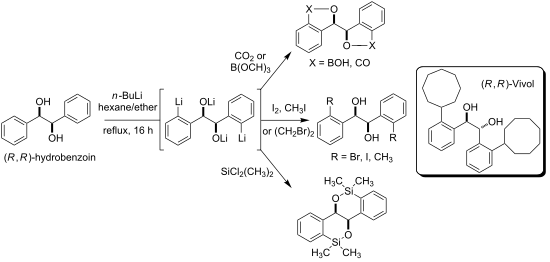
- (S,S)-hydrobenzoin are relatively inexpensive [18], or can be readily prepared on kilogram-scale from trans-stilbene through Sharpless asymmetric dihydroxylation (SAD) [19][20], the synthesis of ortho,ortho'-functionalized derivatives of hydrobenzoin typically requires several steps that include


Amine-linked diglycosides: Synthesis facilitated by the enhanced reactivity of allylic electrophiles, and glycosidase inhibition assays
Beilstein J. Org. Chem. 2011, 7, 1115–1123, doi:10.3762/bjoc.7.128
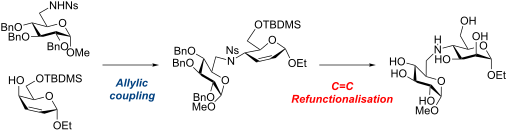
- carbohydrate into an unsaturated derivative with an allylic alcohol as leaving group [16]. After the coupling reaction, dihydroxylation of the C=C double bond would restore the carbohydrate structure (Scheme 1) [17]. As well as Mitsunobu chemistry [18], the allylic nature of the electrophile opens up the way
- achieved the coupling, we turned to the refunctionalisation of the C=C bond (Scheme 4). Osmium-catalysed dihydroxylation of the double bond in erythro configured pseudodisaccharide 13 proceeded to give a single diastereomer of product 16. The configuration of the dihydroxylated product 16 was most
- consistent with the α-manno configuration, and inconsistent with the alternative α-allo configuration. Hence dihydroxylation proceeded from the opposite side to the two neighbouring substituents (at C-1 and C-4), as expected in a sterically controlled reaction, and consistent with previous results [35]. The




Metathesis access to monocyclic iminocyclitol-based therapeutic agents
Beilstein J. Org. Chem. 2011, 7, 699–716, doi:10.3762/bjoc.7.81

- the core cyclic olefin; and (iii) dihydroxylation of the endocyclic double bond in a highly diastereoselective manner to form the target product. In comparison to the traditional, lengthier syntheses of iminocyclitols, the metathesis approach has emerged as a highly advantageous method in terms of
- ) and ester group reduction (LiBH4), a protected racemic diene 16 was obtained; RCM cyclization of the latter using the Grubbs catalyst Cl2(PCy3)2Ru=CH–CH=CPh2 (3) led to the racemic dehydroprolinol derivative 17 in high yield. Subsequent O-protection with trityl chloride and dihydroxylation (with OsO4
- dihydroxylation with simultaneous deprotection of (+)-22 gave the final product (−)-23 in good yield. In an interesting work by Rao and co-workers [54] a Grignard reaction was employed to design the diene with desired stereochemistry for the synthesis of 1,4-dideoxy-1,4-imino-D-allitol (29) and the formal





Brønsted acid-promoted azide–olefin [3 + 2] cycloadditions for the preparation of contiguous aminopolyols: The importance of disiloxane ring size to a diastereoselective, bidirectional approach to zwittermicin A
Beilstein J. Org. Chem. 2010, 6, 1206–1210, doi:10.3762/bjoc.6.138

- alkene functionalization such as aminohydroxylation [3] and dihydroxylation [4] reactions, or by methods that forge the carbon–carbon bond such as the glycolate Mannich reaction [5]. Recently, we developed a Brønsted acid-promoted azide–olefin reaction as an alternative to metal catalyzed





