


Search results
Search for "molecular structure" in Full Text gives 395 result(s) in Beilstein Journal of Organic Chemistry. Showing first 200.
Bromination of endo-7-norbornene derivatives revisited: failure of a computational NMR method in elucidating the configuration of an organic structure
Beilstein J. Org. Chem. 2023, 19, 764–770, doi:10.3762/bjoc.19.56
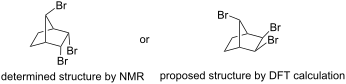
- ppm). NOE-Diff experiment. Irradiation at the resonance frequency of proton H7 (4.23 ppm). A) Molecular structure of the compound 6 with displacement ellipsoids drawn at the 30% probability level. H-atoms are shown as small spheres of arbitrary radii. B) Perspective view of the crystal packing of


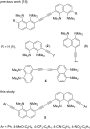
Synthesis, structure, and properties of switchable cross-conjugated 1,4-diaryl-1,3-butadiynes based on 1,8-bis(dimethylamino)naphthalene
Beilstein J. Org. Chem. 2023, 19, 674–686, doi:10.3762/bjoc.19.49
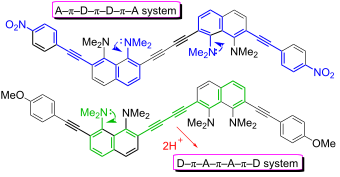
- ). Molecular structure of compound 11c: frontal (top; BF4− omitted) and side views (bottom; hydrogen atoms omitted). Calculation of the qr parameter. Two π-conjugation ways in oligomers 5. UV–vis spectra of oligomers 5 (blue line), monomers 6 (red line), and butadiyne 1 (green line). UV–vis spectra of salts 11



Combining the best of both worlds: radical-based divergent total synthesis
Beilstein J. Org. Chem. 2023, 19, 1–26, doi:10.3762/bjoc.19.1
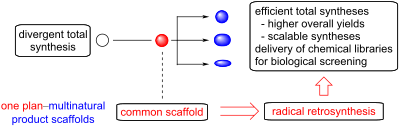
- libraries. But how big should this chemical space be, so as to actually address our needs? A general consensus has emerged, supporting that “it is not actually the library size but rather the library diversity in terms of molecular structure and function which is fundamental for a successful drug discovery








Redox-active molecules as organocatalysts for selective oxidative transformations – an unperceived organocatalysis field
Beilstein J. Org. Chem. 2022, 18, 1672–1695, doi:10.3762/bjoc.18.179
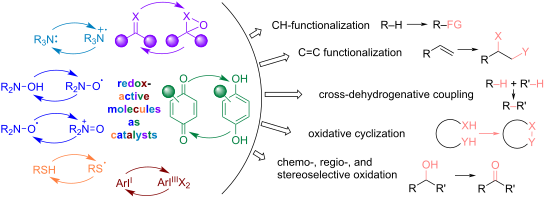
- recent years are covered here. The present article is aimed at the summarization of main molecular structure types employed in redox organocatalysis, the consolidation of this research field, and highlighting possible areas of further development. Discussion The present article is aimed at the







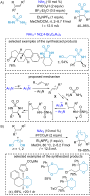


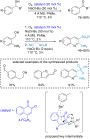


Rhodium-catalyzed intramolecular reductive aldol-type cyclization: Application for the synthesis of a chiral necic acid lactone
Beilstein J. Org. Chem. 2022, 18, 1642–1648, doi:10.3762/bjoc.18.176
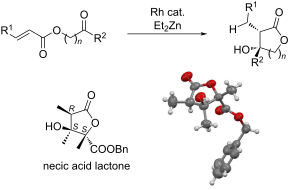
- monocrotaline There are several reports of bioactive natural products that have a 3-hydroxy-2-methyllactone scaffold in the molecular structure. For example, cytospolide K2 [50] containing a 10-membered lactone and feigrisolide [51] containing a 7-membered lactone are known to exhibit cytotoxicity and
- . In addition, we demonstrated a new approach to a necic acid lactone 2j that is a diastereomer of monocrotalic acid, a key intermediate of monocrotalin. Bioactive natural products bearing a 3-hydroxy-2-methyllactone scaffold. Monocrotaline and its structural components. Molecular structure of necic


Comparison of crystal structure and DFT calculations of triferrocenyl trithiophosphite’s conformance
Beilstein J. Org. Chem. 2022, 18, 1499–1504, doi:10.3762/bjoc.18.157
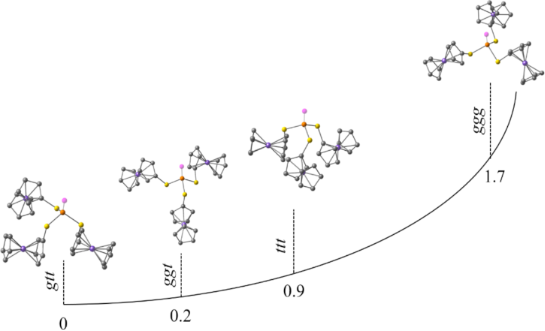
- C–H···O interactions, respectively, are observed. It should be noted that (FcS)3PO crystals contain a solvent molecule that participates in intermolecular interactions. Thus, despite the similarity of the molecular structure of the three compounds and some crystal parameters, the intermolecular


Naphthalimide-phenothiazine dyads: effect of conformational flexibility and matching of the energy of the charge-transfer state and the localized triplet excited state on the thermally activated delayed fluorescence
Beilstein J. Org. Chem. 2022, 18, 1435–1453, doi:10.3762/bjoc.18.149
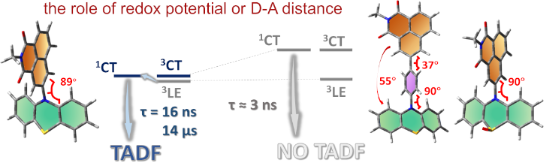
- observed in the nanosecond transient absorption spectra with lifetimes in the 4–48 μs range. Computational investigations show that the orthogonal electron donor–acceptor molecular structure is beneficial for TADF. These calculations indicate small energetic difference between the 3LE and 3CT states, which
- -transfer (CT) and intersystem-crossing (ISC) phenomena [4][5]. Compounds showing TADF are usually presenting an orthogonal electron donor–acceptor molecular structure, i.e., the π-planes of the electron donor and acceptor adopt an orthogonal geometry [6][7]. Such an architecture is beneficial to spatially
Synthesis of C6-modified mannose 1-phosphates and evaluation of derived sugar nucleotides against GDP-mannose dehydrogenase
Beilstein J. Org. Chem. 2022, 18, 1379–1384, doi:10.3762/bjoc.18.142
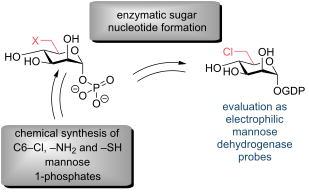
- , the structural model allowed unambiguous assignment of the solid state molecular structure and absolute configuration. As shown in Figure 2, the desired axial anomeric phosphate was clearly visible alongside an interesting gg rotameric form for the C6–chloro side chain substituent (pyranose side chain


Experimental and theoretical studies on the synthesis of 1,4,5-trisubstituted pyrrolidine-2,3-diones
Beilstein J. Org. Chem. 2022, 18, 1140–1153, doi:10.3762/bjoc.18.118
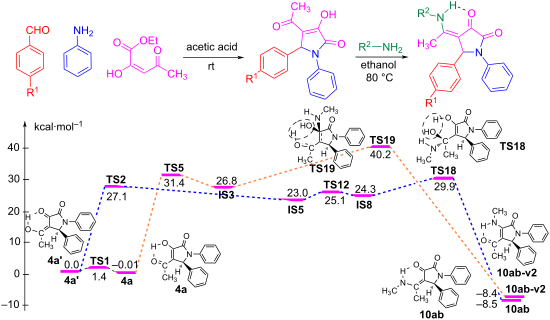
- subunit. View of the molecular structure of compound 10aa with atom labeling. Displacement ellipsoids are drawn at the 30% probability level. The intramolecular hydrogen bond N15–H15···O13 is shown as dashed line. The PES of reaction for the synthesis of 1,4,5-trisubstituted pyrrolidine-2,3-dione 10ab


Scope of tetrazolo[1,5-a]quinoxalines in CuAAC reactions for the synthesis of triazoloquinoxalines, imidazoloquinoxalines, and rhenium complexes thereof
Beilstein J. Org. Chem. 2022, 18, 1088–1099, doi:10.3762/bjoc.18.111
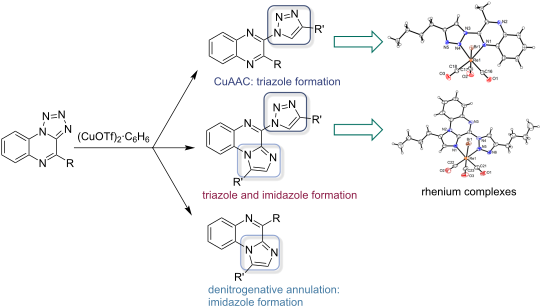
- –d and ORTEP diagrams of the resulting molecular structures with the thermal ellipsoids shown at 50% probability. Synthesis of rhenium tricarbonyl complex 29 and ORTEP diagram of the resulting molecular structure with the thermal ellipsoids shown at 50% probability. Synthesis of a TIQ rhenium complex


Thiophene/selenophene-based S-shaped double helicenes: regioselective synthesis and structures
Beilstein J. Org. Chem. 2022, 18, 809–817, doi:10.3762/bjoc.18.81
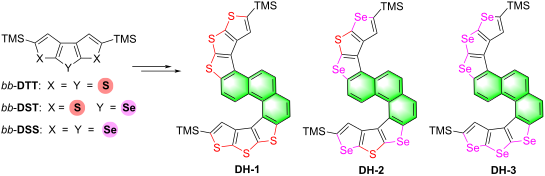
- packing structures of these compounds. Spectroscopic results and our previous work showed that the combination of molecular structure change and heteroatom replacement from S to Se could precisely modulate molecular energy levels. Keywords: crystal structure; double helicene; regioselective synthesis
- arrangement in the crystal packing structures of DH-1 and DH-2 indicate that these compounds may be used as supramolecular self-assembly units. Changes in molecular structure may substantially modulate the optical band gap of heteroacenes, and the replacement of heteroatoms from S to Se could fine-tune their
- optical band gap [18][27][28]. Thus, the combination of molecular structure modification and atom replacement could be a viable strategy, for the precise modulation molecular energy levels and yield molecules with strong application potential in organic functional materials, such as OFETs, and CPLs, among


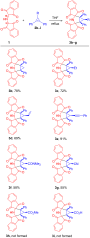
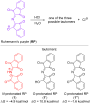
Synthesis of bis-spirocyclic derivatives of 3-azabicyclo[3.1.0]hexane via cyclopropene cycloadditions to the stable azomethine ylide derived from Ruhemann's purple
Beilstein J. Org. Chem. 2022, 18, 769–780, doi:10.3762/bjoc.18.77
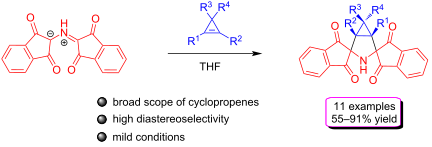
- cycloadditions of tetrasubstituted azomethine ylides with cyclopropenes. ORTEP representation of the molecular structure of 3e. Early studies concerning cyclopropene cycloadditions to azomethine ylides and cycloaddition reactions involving protonated Ruhemann's purple (PRP). The pilot experiment aimed at






A trustworthy mechanochemical route to isocyanides
Beilstein J. Org. Chem. 2022, 18, 732–737, doi:10.3762/bjoc.18.73
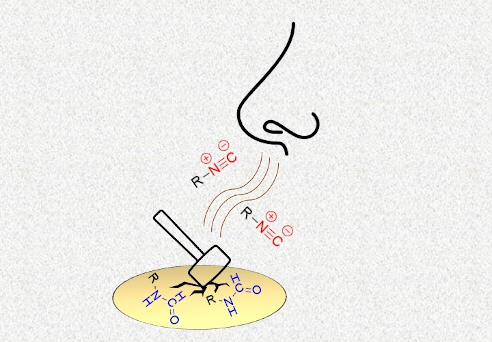
- , they are often used in heterocycles formation [8][9], multicomponent strategies [10][11], polymers production [12][13], and metal complexation [14][15]. The molecular structure is composed of an N–C planar triple bond where the nitrogen atom assumes a positive charge due to the fourth bond with a


Mechanochemical halogenation of unsymmetrically substituted azobenzenes
Beilstein J. Org. Chem. 2022, 18, 680–687, doi:10.3762/bjoc.18.69
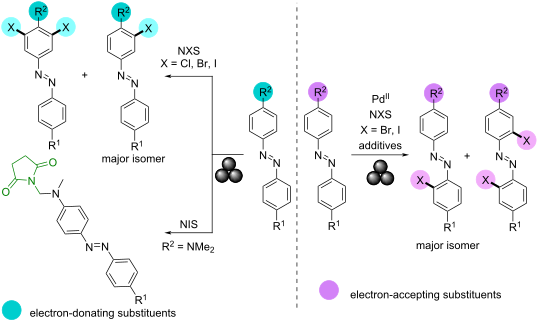
- % yields, respectively, as confirmed by NMR spectroscopy (Figures S82–S91 in Supporting Information File 1). Additional support for the formation of succinimide products was provided by the molecular structure of L4-III, resolved by single-crystal X-ray analysis (Figure 3 and Figure S33 and Table S1 in
- Supporting Information File 1). The molecular structure of L4-III showed that imidation occurred at the methyl group of the NMe2 substituent. Analogous succinimide species were also observed in the reaction of N,N-dimethyl-p-toluidine with NIS in ethyl acetate [55] or N,N-dimethylamides and N,N
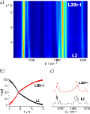
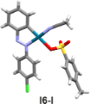
- monitoring. Experimental X-ray molecular structure of succinimide product L4-III. Experimental X-ray molecular structure of the intermediate I6-I. a) In situ observation of I6-I during the time-resolved Raman monitoring of LAG of L6 (0.50 mmol) with NBS (0.6 mmol), TsOH (0.25 mmol), Pd(OAc)2 (30 mol %), MeCN





Substituent effect on TADF properties of 2-modified 4,6-bis(3,6-di-tert-butyl-9-carbazolyl)-5-methylpyrimidines
Beilstein J. Org. Chem. 2022, 18, 497–507, doi:10.3762/bjoc.18.52
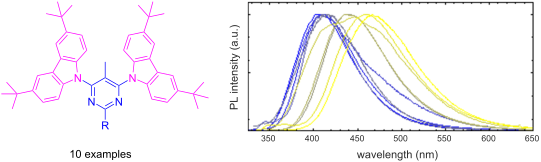
- .18.52 Abstract The interest in organic materials exhibiting thermally activated delayed fluorescence (TADF) significantly increased in recent years owing to their potential application as emitters in highly efficient organic light emitting diodes (OLEDs). Simple modification of the molecular structure
- modified with various phenyl-like fragments, increasing the flexibility of the molecular structure, probably altering the electron–vibronic coupling. A similar behavior was observed for similar pyrimidine TADF compounds [42]. Moreover, fluorescence line shapes of compounds 2a and 2d were different from the



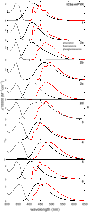

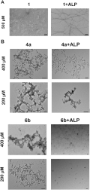
Synthesis and bioactivity of pyrrole-conjugated phosphopeptides
Beilstein J. Org. Chem. 2022, 18, 159–166, doi:10.3762/bjoc.18.17
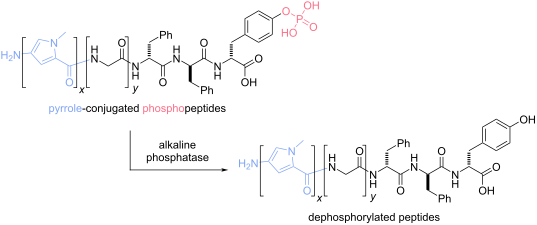
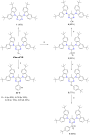
- spacer in the molecular structure. As the enantiomers of 2g and 2h, respectively, 3a and 3b offer an opportunity to assess the effects of stereochemistry of the pyrrole-capped phosphopeptides. Substituting the ᴅ-phosphotyrosine (py) in 2g and 2h, by ᴅ-phosphoserine (ps), affords 4a and 4b, respectively


Effect of a twin-emitter design strategy on a previously reported thermally activated delayed fluorescence organic light-emitting diode
Beilstein J. Org. Chem. 2021, 17, 2894–2905, doi:10.3762/bjoc.17.197
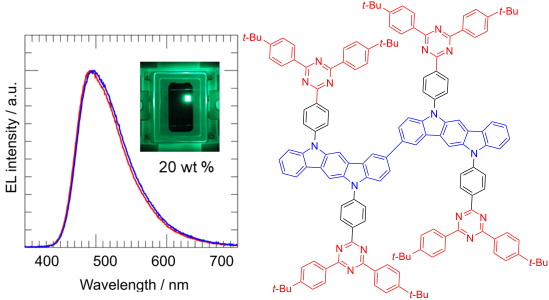
- vertical orientation of its TDM are the primary factors governing the relatively poorer device performance, with an EQEmax of 8.4%, compared to the vacuum-deposited OLED with ICzTRZ [14]. Molecular structures of emitters. a) Molecular structure and b) optimized DFT-calculated geometry of DICzTRZ. Hydrogen


Photophysical, photostability, and ROS generation properties of new trifluoromethylated quinoline-phenol Schiff bases
Beilstein J. Org. Chem. 2021, 17, 2799–2811, doi:10.3762/bjoc.17.191
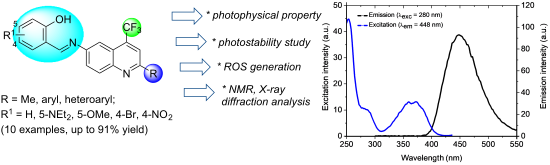
- solution and no signal belonging to the Z isomer was observed in all cases, which can be confirmed by the chemical shift values in the 1H NMR regarding the –CH=N bond. Finally, in order to determine the real molecular structure of the Schiff bases 3, single-crystal X-ray diffraction (SC-XRD) was performed




Highly stereocontrolled total synthesis of racemic codonopsinol B through isoxazolidine-4,5-diol vinylation
Beilstein J. Org. Chem. 2021, 17, 2781–2786, doi:10.3762/bjoc.17.188
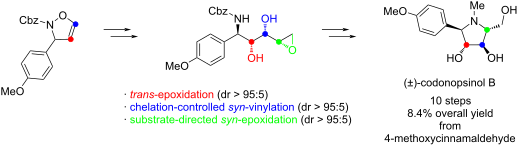
- tubular cells HK2. (−)-Codonopsinol B (1) and its N-nor-methyl analogue 2; known inhibition activities against α-glucosidases from: (a) Bacillus stearothermophilus lyoph., (b) yeast [2]. Molecular structure of N-Cbz-protected pyrrolidine 12 confirmed by single-crystal X-ray crystallographic analysis


Synthesis of new pyrazolo[1,2,3]triazines by cyclative cleavage of pyrazolyltriazenes
Beilstein J. Org. Chem. 2021, 17, 2773–2780, doi:10.3762/bjoc.17.187
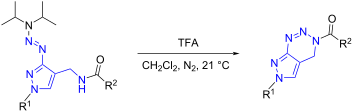
- able to exemplarily determine the molecular structure by X-ray crystallography, proving the regioisomer obtained in the alkylation reaction (Figure 2). While isomer 12 was used for the synthesis of pyrazolo[3,4-d][1,2,3]-3H-triazine derivatives of general structure 5, the isomer 13 was intended to


Synthesis of new bile acid-fused tetrazoles using the Schmidt reaction
Beilstein J. Org. Chem. 2021, 17, 2611–2620, doi:10.3762/bjoc.17.174
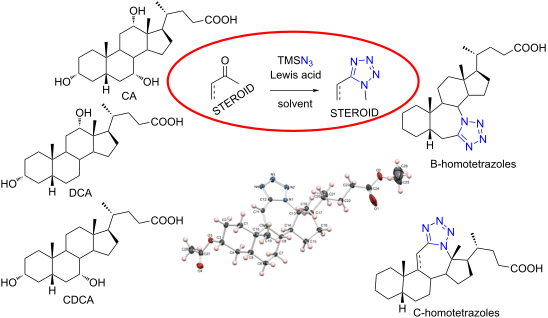
- the aromatic tetrazole ring. A characteristic example of this is the H-17 proton in compound 13 with an unusually high chemical shift (2.85 ppm). Unambiguous confirmation of the tetrazole molecular structure came from the XRD analysis of compounds 13 and 14 (Figure 3) [50][51]. The already established
- , TMSOTf proved to be the most efficient. High yields of the desired tetrazole compounds with no lactam byproduct were obtained. The molecular structure and stereochemistry of newly synthesized tetrazoles was established by detailed NMR analysis. For compounds 13 and 14, the structure was established by


In-depth characterization of self-healing polymers based on π–π interactions
Beilstein J. Org. Chem. 2021, 17, 2496–2504, doi:10.3762/bjoc.17.166
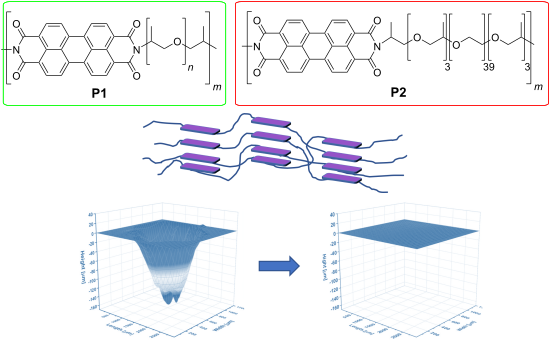
- synthesized utilizing a polycondensation of a perylene tetracarboxylic dianhydride with polyether-based diamines and the resulting materials were investigated using various analytical techniques. Thus, the molecular structure of the polymers could be correlated with the ability for self-healing. Moreover, the
- is evident that the broadening of the band shows an intensive increase at 150 °C. This nonlinear behavior indicates a drastic change in molecular structure around this temperature range, which corresponds to the observed signals in the DSC measurements and the findings of the DMTA analysis. The
- , which correlates to the changes of the molecular structure. Furthermore, the scratch healing was analyzed in detail showing that only one of the two polymers studied, polymer P1 is able to heal scratches in a sufficient manner at temperature higher than the activation of the π–π interaction. In contrast


(Phenylamino)pyrimidine-1,2,3-triazole derivatives as analogs of imatinib: searching for novel compounds against chronic myeloid leukemia
Beilstein J. Org. Chem. 2021, 17, 2260–2269, doi:10.3762/bjoc.17.144
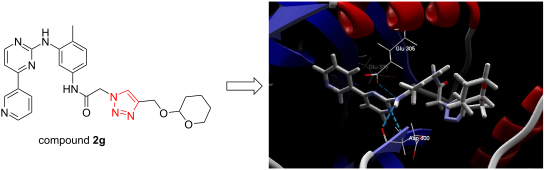
- analysis, the molecular structure was confirmed, as shown in Figure 2. Biological assay The compounds showed significant inhibitory activity at 10 μM but not at 1 μM (Figure 3). Compounds 2c, 2d, and 2g were the most promising, and concentration–response curves were drawn to determine the cytotoxic


Constrained thermoresponsive polymers – new insights into fundamentals and applications
Beilstein J. Org. Chem. 2021, 17, 2123–2163, doi:10.3762/bjoc.17.138
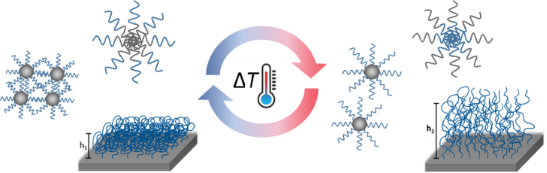
- the design of novel thermoresponsive polymers exhibiting UCST type behavior. Seuring et al. [51][54], Niskanen et al. [50], Bansal et al. [52] or Zhao et al. [55] summarize known thermoresponsive building blocks based on their molecular structure and offer interesting design approaches supported by
- published studies, the present review does not only focus on the molecular structure of thermoresponsive polymers and their synthesis but also discusses their phase transitions, in terms of structure–property relationships arising from the alignment of the polymer chains in assemblies of constrained


Free-radical cyclization approach to polyheterocycles containing pyrrole and pyridine rings
Beilstein J. Org. Chem. 2021, 17, 1490–1498, doi:10.3762/bjoc.17.105
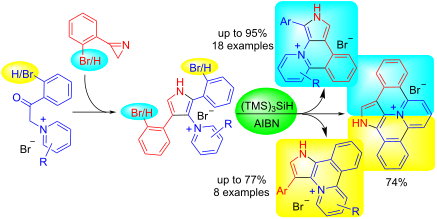
- ]isoquinoline backbone from N-unprotected pyrrolylpyridinium salts and, unlike the Pd-catalyzed version cyclization, avoids the deprotection step that is accompanied by isomerization. Molecular structure of compound 3a, displacement parameters are drawn at 50%. Molecular structure of compound 13, displacement
- parameters are drawn at 50% probability level. Molecular structure of compound 17a, displacement parameters are drawn at 50% probability level. Retrosynthetic analysis of heterocycles A and B. Free-radical cyclization of N-protected and N-unprotected pyrroles 1a and 2. Synthesis of 2H-pyrido[2,1-a]pyrrolo





