Search results
Search for "sterically-hindered" in Full Text gives 297 result(s) in Beilstein Journal of Organic Chemistry. Showing first 200.
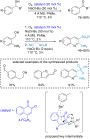
Palladium-catalyzed enantioselective three-component synthesis of α-arylglycine derivatives from glyoxylic acid, sulfonamides and aryltrifluoroborates
Beilstein J. Org. Chem. 2023, 19, 719–726, doi:10.3762/bjoc.19.52
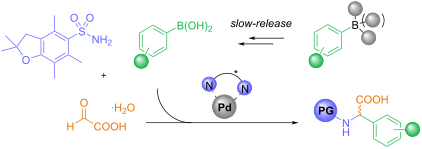
- sterically hindered arylboronic acids. Herein, we report an improved version of this palladium-catalyzed enantioselective three-component reactions using aryltrifluoroborates as replacement of the arylboronic acid building block (Scheme 1d). The broader scope of this 2nd generation protocol is exploiting a
- enantiomeric ratio of 87:13 (compared to 68% and an enantiomeric ratio of 60:40 with the boronic acid). As in the case of arylboronic acids, reactions with a sterically hindered ortho-substituted trifluoroborate furnished the arylglycine product in almost racemic form. Unfortunately, reactions with


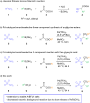
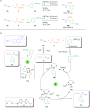


Strategies in the synthesis of dibenzo[b,f]heteropines
Beilstein J. Org. Chem. 2023, 19, 700–718, doi:10.3762/bjoc.19.51

- yield proved to be good to excellent and sterically hindered aryl rings were tolerated. This method was applied by Huang et al. [74] to prepare a series of fluorescent compounds in excellent yield. Copper- and nickel-catalysed arylation were reported as alternatives to the Pd-catalysed arylation of 1a


Synthesis and reactivity of azole-based iodazinium salts
Beilstein J. Org. Chem. 2023, 19, 317–324, doi:10.3762/bjoc.19.27
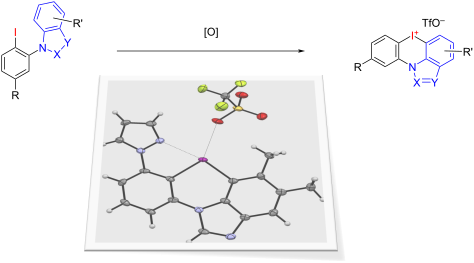
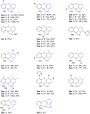
- electron-rich salt 5al was obtained in 75% yield using modified reaction conditions B. The harsher conditions were probably required due to a sterically hindered rotation of the benzimidazole moiety in the plane of the iodophenyl, which could also be observed in two rotamers of the starting iodoarene 4al




Continuous flow synthesis of 6-monoamino-6-monodeoxy-β-cyclodextrin
Beilstein J. Org. Chem. 2023, 19, 294–302, doi:10.3762/bjoc.19.25
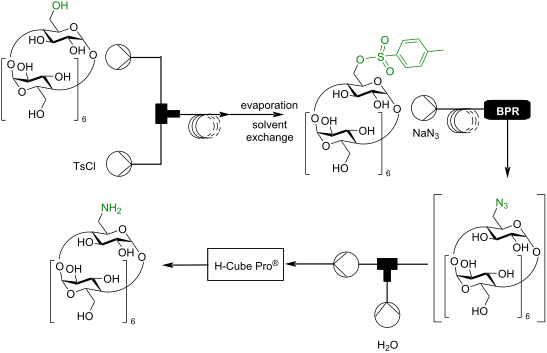
- pure monofunctionalized CDs. Alternative approaches use sterically hindered reagents, preventing the approach of the second molecule of the reagent to provide higher yields for the monosubstituted compounds [4]. The three different hydroxy groups on the glucose subunits offer three different sites on


Sequential hydrozirconation/Pd-catalyzed cross coupling of acyl chlorides towards conjugated (2E,4E)-dienones
Beilstein J. Org. Chem. 2023, 19, 176–185, doi:10.3762/bjoc.19.17
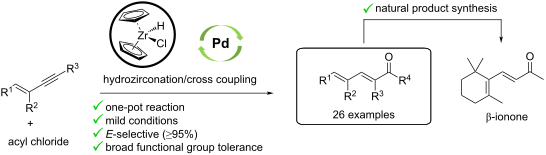
- ) yielded 43% of the desired product 27an (Table 4, entry 14) and even the sterically hindered pivaloyl chloride (26p) gave 32% of dienone 27ap (Table 4, entry 16). Due to these promising results, we tested the combination of phenylenyne 25a with acetyl chloride (22), which however provided 32% of the



Total synthesis of grayanane natural products
Beilstein J. Org. Chem. 2022, 18, 1707–1719, doi:10.3762/bjoc.18.181
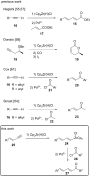
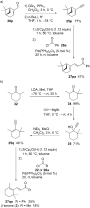
- alcohol on the A ring in 75% yield. The C3 epimer was also obtained in 4% yield and confirmed by X-ray diffraction. Hydrogenation of the sterically hindered C1–C2 alkene was accomplished using a combination of Mn(dpm)3 and Ph(iPrO)SiH2, providing grayanotoxin III in 51% yield. The authors also achieved




Redox-active molecules as organocatalysts for selective oxidative transformations – an unperceived organocatalysis field
Beilstein J. Org. Chem. 2022, 18, 1672–1695, doi:10.3762/bjoc.18.179
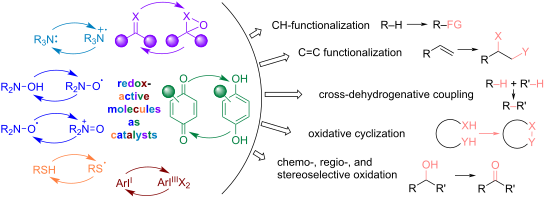
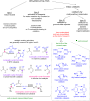
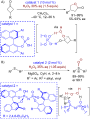
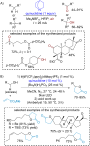
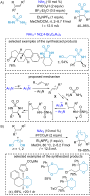
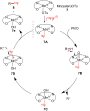
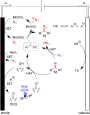
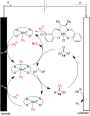
- HFIP. The regioselective amination of benzylic positions in alkylarenes [82] and ethers [83] directed by steric effects was achieved by the development of sterically hindered “bowl-shaped” imide-N-oxyl radical precursors (Scheme 7). The presented example with a sterically hindered N-hydroxyimide
- -hydroxylation of lactams under phase-transfer organocatalysis conditions employing a chiral quaternary ammonium ion salt. Selective CH-oxidation of methylarenes to aldehydes or carboxylic acids. An example of the regioselective CH-amination by a sterically hindered imide-N-oxyl radical precursor. CH-amination











Solid-phase total synthesis and structural confirmation of antimicrobial longicatenamide A
Beilstein J. Org. Chem. 2022, 18, 1560–1566, doi:10.3762/bjoc.18.166
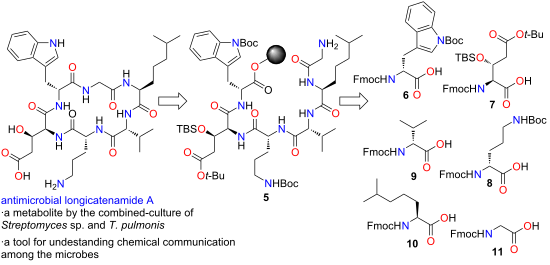
- ] and provides insights into the biosynthesis pathways of these peptides [14]. However, the biosynthetic gene clusters of compounds 1–4 remain unidentified. Therefore, the least sterically hindered amine, namely the amino group of glycine, was selected as a nucleophile of the cyclization reaction in


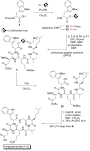

One-pot synthesis of 2-arylated and 2-alkylated benzoxazoles and benzimidazoles based on triphenylbismuth dichloride-promoted desulfurization of thioamides
Beilstein J. Org. Chem. 2022, 18, 1479–1487, doi:10.3762/bjoc.18.155

- electron-donating or electron-withdrawing groups on the phenyl rings (R2) afforded the corresponding 2-arylbenzoxazoles 8b–g in good to excellent yields (79–99%). The nature of substituents on the benzene rings of the thioamides did not significantly affect the reaction outcome. Sterically hindered
- tosyl group instead of the diamine 14, and the corresponding product 16c was obtained. The reaction of 15 with various thioamides 2 bearing electron-donating or electron-withdrawing groups on the phenyl rings, sterically hindered aryl groups, heteroaryl groups, and alkyl groups also proceeded


Synthetic strategies for the preparation of γ-phostams: 1,2-azaphospholidine 2-oxides and 1,2-azaphospholine 2-oxides
Beilstein J. Org. Chem. 2022, 18, 889–915, doi:10.3762/bjoc.18.90
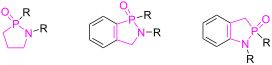
- -methylphenol (DTBMP)), trifluoroacetic acid (TFA), and 4-methylbenzenesulfonic acid (TsOH) as the proton donors. The results indicated that the less bulky methanol, more bulky DTBMP, more sterically hindered and acidic TsOH show certain regio- and stereoselectivities, which also depended upon the steric


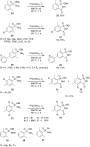


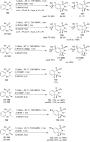
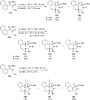
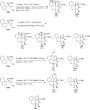




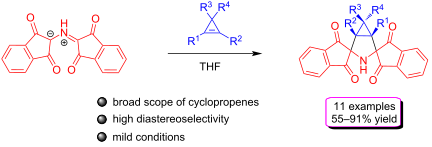
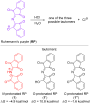
Synthesis of bis-spirocyclic derivatives of 3-azabicyclo[3.1.0]hexane via cyclopropene cycloadditions to the stable azomethine ylide derived from Ruhemann's purple
Beilstein J. Org. Chem. 2022, 18, 769–780, doi:10.3762/bjoc.18.77
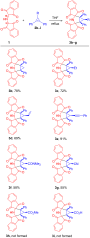
- prochiral cyclopropene 2j from the less sterically hindered side. This is consistent with previous experiments in which 3-substituted-1,2-diphenylcyclopropenes were utilized as dipolarophiles. Regretfully, neither methyl 1-methylcycloprop-2-enecarboxylate (2k) [37] nor 3-methyl-1,2,3-triphenylcycloprop-1






Unusual highly diastereoselective Rh(II)-catalyzed dimerization of 3-diazo-2-arylidenesuccinimides provides access to a new dibenzazulene scaffold
Beilstein J. Org. Chem. 2022, 18, 533–538, doi:10.3762/bjoc.18.55
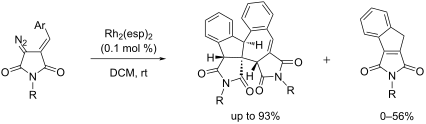
- formation of a single diastereomer at the cyclopropanation step can be explained by the preferred approach of carbene A from the least sterically hindered side of indene C and the π-stacking interaction of the aromatic fragment of indene and the benzylidene substituent of the carbene. The conversion of


Chemistry of polyhalogenated nitrobutadienes, 17: Efficient synthesis of persubstituted chloroquinolinyl-1H-pyrazoles and evaluation of their antimalarial, anti-SARS-CoV-2, antibacterial, and cytotoxic activities
Beilstein J. Org. Chem. 2022, 18, 524–532, doi:10.3762/bjoc.18.54
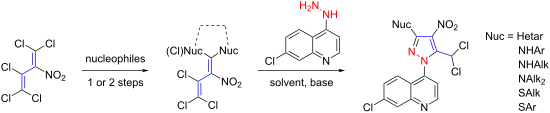
- group forming a six-membered ring system that upon reaction with 7-chloro-4-hydrazinylquinoline formed 5-aminopyrazoles 5a,l–o. Here, a nucleophilic attack of the NH2 group of the arylhydrazine on the C3 position of the butadiene chain is observed due to the sterically hindered rigidized six-membered


Comparative study of thermally activated delayed fluorescent properties of donor–acceptor and donor–acceptor–donor architectures based on phenoxazine and dibenzo[a,j]phenazine
Beilstein J. Org. Chem. 2022, 18, 459–468, doi:10.3762/bjoc.18.48
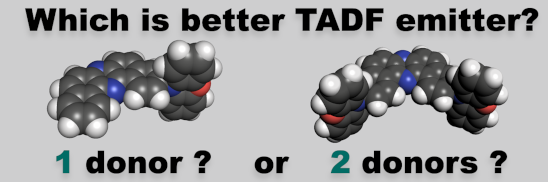
- deposition process. However, when compared with the D–A–D counterpart, the Td of 1 is much lower (by 111 °C) than that of POZ-DBPHZ (453 °C) [17]. These data would support that the increase in the sterically hindered donors in emitting molecule suppress intermolecular contact to enhance the thermal stability


Cs2CO3-Promoted reaction of tertiary bromopropargylic alcohols and phenols in DMF: a novel approach to α-phenoxyketones
Beilstein J. Org. Chem. 2022, 18, 420–428, doi:10.3762/bjoc.18.44
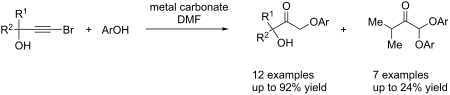
- leading to intermediate A, nucleophilic attack of phenolate at the less sterically hindered carbon of the above zwitterion A and subsequent protonation of anion B (Scheme 8). Based on these plausible mechanisms for the formation of phenoxyketones, it can be assumed that a decline of the Cs+ concentration


Borylated norbornadiene derivatives: Synthesis and application in Pd-catalyzed Suzuki–Miyaura coupling reactions
Beilstein J. Org. Chem. 2022, 18, 368–373, doi:10.3762/bjoc.18.41
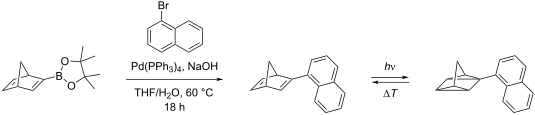
- . Unfortunately, the latter was not available on preparative scale (see above) so that this aspect could not be clarified with control experiments. At the same time, the coupling reaction may also be sterically hindered by the 3-methyl group of the norbornadiene 2b, which is in agreement with the low yields of


Recent developments and trends in the iron- and cobalt-catalyzed Sonogashira reactions
Beilstein J. Org. Chem. 2022, 18, 262–285, doi:10.3762/bjoc.18.31
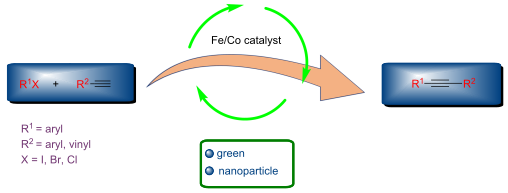
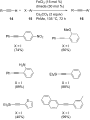
- conditions [13]. This system is applicable to sterically hindered aryl iodides or substituted aryl iodides with terminal arylalkynes (Scheme 2). K3PO4 was the effective base for the reaction of 4-iodoacetophenone with phenylacetylene. Ligands such as DABCO and trans-1,2-diaminocyclohexane were also tested




Iridium-catalyzed hydroacylation reactions of C1-substituted oxabenzonorbornadienes with salicylaldehyde: an experimental and computational study
Beilstein J. Org. Chem. 2022, 18, 251–261, doi:10.3762/bjoc.18.30
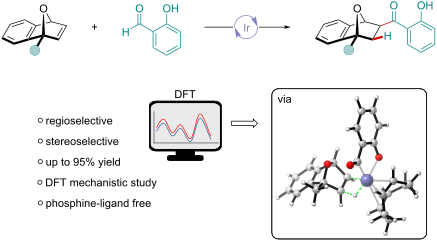
- determined the stereoselectivity of the reaction arises from the unattractive interactions imposed from the sterically hindered endo-face of the bicyclic alkene. The mechanistic insights gained from this combined experimental and theoretical study will facilitate further future methodology development in


Anomeric 1,2,3-triazole-linked sialic acid derivatives show selective inhibition towards a bacterial neuraminidase over a trypanosome trans-sialidase
Beilstein J. Org. Chem. 2022, 18, 208–216, doi:10.3762/bjoc.18.24
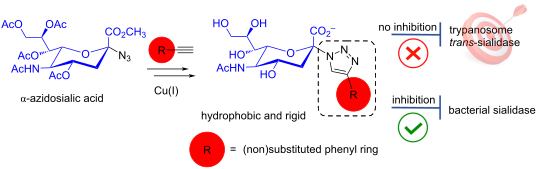
- sterically hindered active site (comparison shown with black arrows – Figure 5C and Figure 5D), which in turn conferred selectivity towards the neuraminidase. From the analogues perspective, the absence of TcTS inhibition could be also attributed to the lack of flexibility of the substituents rather than



Iron-catalyzed domino coupling reactions of π-systems
Beilstein J. Org. Chem. 2021, 17, 2848–2893, doi:10.3762/bjoc.17.196
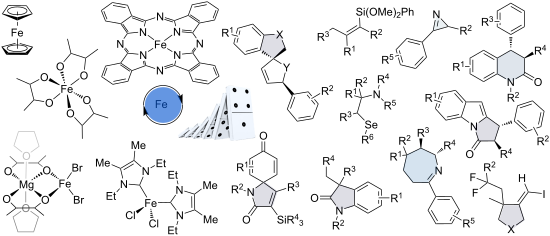
- sterically hindered tertiary alkyl bromides, the authors were able to favor intermolecular radical addition of the generated alkyl radical 17 to the vinylcyclopropane, outcompeting radical rebound to an aryl Fe species. The incipient radical can then undergo ring-opening of the cyclopropane 18. Work by
- reaction. In the same year, the Gutierrez Lab reported the first three-component 1,2-dicarbofunctionalzation of alkenes 21 (Scheme 5) [66]. The authors noted π-systems bearing O- and S-heteroatoms had little to no compatibility with the transformation as well as sterically hindered Grignard reagents 2
- radical 28 (Scheme 5). Regioselective Giese addition to the π-system 21 would generate the transient 2° alkyl radical 29. Due to the high energetic barrier associated with direct cross-coupling between sterically hindered 3° alkyl radicals and aryliron complexes, it is assumed the persistent aryliron













N-Sulfinylpyrrolidine-containing ureas and thioureas as bifunctional organocatalysts
Beilstein J. Org. Chem. 2021, 17, 2629–2641, doi:10.3762/bjoc.17.176
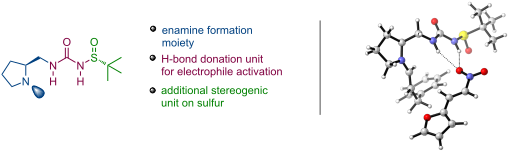
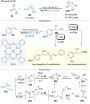
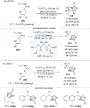
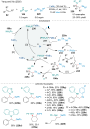
- this case, the nitroalkene could not be activated by hydrogen bonding via the (thio)urea moiety, however, it is also probably less sterically hindered (Figure 3a). The DFT calculated transition states support this analysis. The transition state TS-major-re-SR-cat leading to the major stereoisomer of


Direct C(sp3)–H allylation of 2-alkylpyridines with Morita–Baylis–Hillman carbonates via a tandem nucleophilic substitution/aza-Cope rearrangement
Beilstein J. Org. Chem. 2021, 17, 2505–2510, doi:10.3762/bjoc.17.167
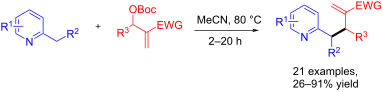
- 39%, respectively), which was presumably due to their lower nucleophilicity. However, the reaction of 2a with more sterically hindered 2,6-lutidine was very sluggish and only trace amount of product 4h could be observed under the optimized conditions over 24 h. Conclusion In summary, we have


On the application of 3d metals for C–H activation toward bioactive compounds: The key step for the synthesis of silver bullets
Beilstein J. Org. Chem. 2021, 17, 1849–1938, doi:10.3762/bjoc.17.126
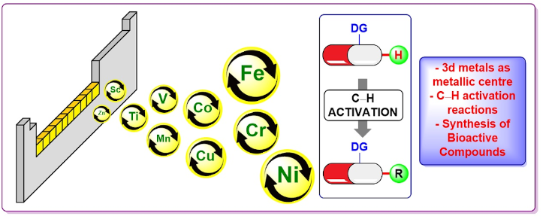
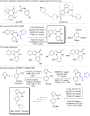
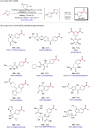
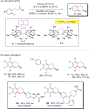
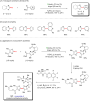
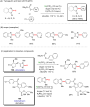
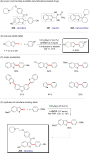
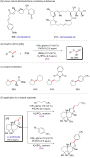
- hydroxylation of positions next to heteroatoms leads to hemiaminals and hemiacetals which typically promotes an overoxidation to the corresponding carbonyl compound. The sterically hindered catalyst Mn(CF3PDP)(MeCN)2(SbF6)2 (where CF3PDP is 1,1′-bis((5-(2,6-bis(trifluoromethyl)phenyl)pyridin-2-yl)methyl)-2,2





















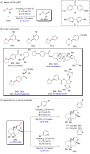


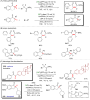


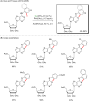

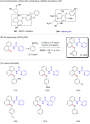

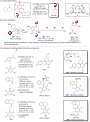

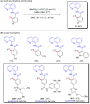
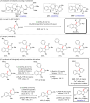
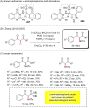
Sustainable manganese catalysis for late-stage C–H functionalization of bioactive structural motifs
Beilstein J. Org. Chem. 2021, 17, 1733–1751, doi:10.3762/bjoc.17.122

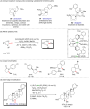
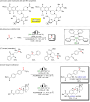
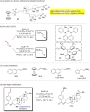
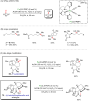
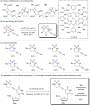
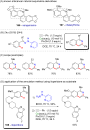
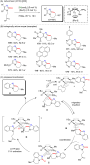
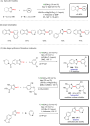
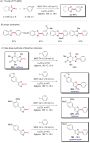
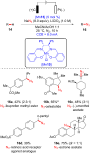
- the A-ring system were the most reactive sites for hydrogen abstraction, yielding fluorinated steroids 4a and 4b in 32% and 23% yield, respectively. For both products, α-fluorination was dominant over β-fluorination, likely because α-fluorination occurred on the less sterically hindered face
- was observed at the less sterically hindered benzylic position. The proposed reaction mechanism for radiofluorination is depicted in Figure 2. Although the trans-difluoro-substituted Mn(IV) complex is the reactive F-transfer intermediate in 19F chemistry, the formation of a trans-18F-difluoro
- adjacent carbamate group. The naturally available substrate 9b was shown to undergo the azidation process at the less sterically hindered position. An analogue of rasagiline (Azilect®), a Parkinson’s disease drug, successfully underwent benzylic azidation, providing product 11c. Other complex molecules








A recent overview on the synthesis of 1,4,5-trisubstituted 1,2,3-triazoles
Beilstein J. Org. Chem. 2021, 17, 1600–1628, doi:10.3762/bjoc.17.114
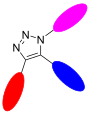
- products was achieved using β-methyl-substituted, long-chain heptyl-substituted, and sterically hindered cyclohexyl-substituted azides. The α-bromo-β-phenylacroleins bearing electron-donating or electron-withdrawing substituents produced the corresponding trisubstituted 3 in good to moderate yield
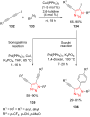
- sterically hindered 1-(2-bromophenyl)-1,2,3-triazole derivatives 130. The target compounds, triazolo[1,5-a]indolones 131, were then obtained from 130 in high yield using catalytic amounts of Pd(OAc)2 and PCy3, carbon monoxide, and potassium carbonate and with heating in toluene at 120 °C. The structure of
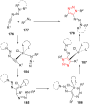
- such as cinnamyl, (ethoxycarbonyl)methyl, 1-naphthalenemethyl, and (phenylthio)methyl were cyclized with ethynylstibanes 82 and diaryl diselenides 84 to afford the desired triazole products. The reaction between ethynylstibane, organic azide, and a range of diaryl diselenides 84 including sterically