


Search results
Search for "acidic conditions" in Full Text gives 400 result(s) in Beilstein Journal of Organic Chemistry. Showing first 200.
Catalyzed and uncatalyzed procedures for the syntheses of isomeric covalent multi-indolyl hetero non-metallides: an account
Beilstein J. Org. Chem. 2021, 17, 2102–2122, doi:10.3762/bjoc.17.137
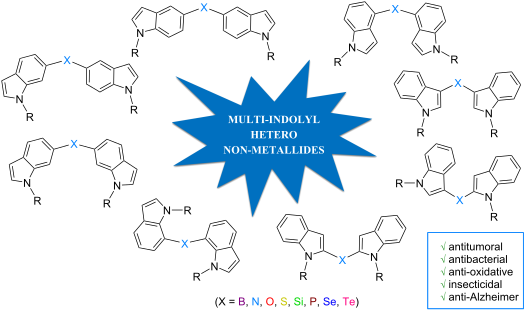
- and Dockendorf prepared the corresponding 2,2’-sulfur-substituted compounds 90 by reacting tryptophan amines 89 and 90 with S2Cl2 under neutral and acidic conditions, respectively (Scheme 11b and Scheme 11c) [77][78]. Kamal took a different approach using a CuO nanoparticle-supported graphene-oxide


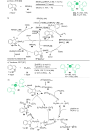


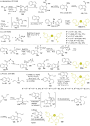

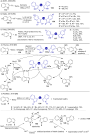


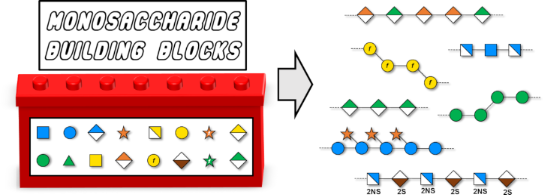
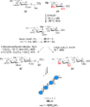
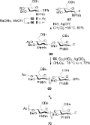
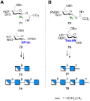
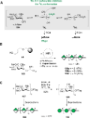
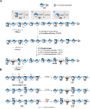
Progress and challenges in the synthesis of sequence controlled polysaccharides
Beilstein J. Org. Chem. 2021, 17, 1981–2025, doi:10.3762/bjoc.17.129










Cationic oligonucleotide derivatives and conjugates: A favorable approach for enhanced DNA and RNA targeting oligonucleotides
Beilstein J. Org. Chem. 2021, 17, 1828–1848, doi:10.3762/bjoc.17.125
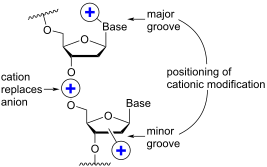
- synthesis of a 2’-deoxyadenosyl dinucleotide linked via an aminoethyl phosphoramidate linkage that was positively charged under neutral to acidic conditions [105]. A subsequent work based on these findings resulted in the synthesis of short cationic DNA ONs linked via N-alkylated phosphoramidate linkages


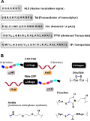
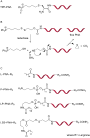
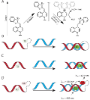
Chemical approaches to discover the full potential of peptide nucleic acids in biomedical applications
Beilstein J. Org. Chem. 2021, 17, 1641–1688, doi:10.3762/bjoc.17.116








Substituted nitrogen-bridged diazocines
Beilstein J. Org. Chem. 2021, 17, 1503–1508, doi:10.3762/bjoc.17.107
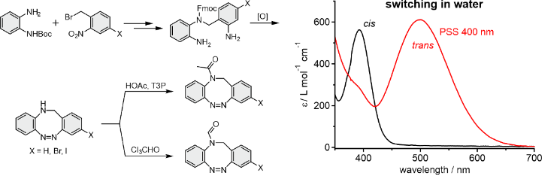
- anhydride of acetic acid and T3P (propanephosphonic acid anhydride). The formylation of NH-diazocines 9a–c was accomplished with chloral [23] under non-acidic conditions. Investigation of the photophysical properties The UV–vis spectra of diazocines 10a–c, and 11a–c were recorded in acetonitrile at 25 °C


Double-headed nucleosides: Synthesis and applications
Beilstein J. Org. Chem. 2021, 17, 1392–1439, doi:10.3762/bjoc.17.98
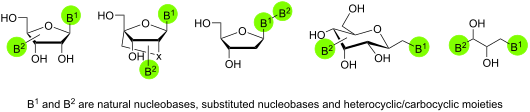
- analogues 89a and 89b with 2,6-dichloropurine under acidic conditions resulted in the formation of mononucleoside analogs 90a,b. The nucleoside 90a was reacted with mesitylnitrile to give the double-headed nucleoside 91, whereas nucleoside 90b was reacted with phenylazide to give the double-headed





Design, synthesis and photophysical properties of novel star-shaped truxene-based heterocycles utilizing ring-closing metathesis, Clauson–Kaas, Van Leusen and Ullmann-type reactions as key tools
Beilstein J. Org. Chem. 2021, 17, 1374–1384, doi:10.3762/bjoc.17.96
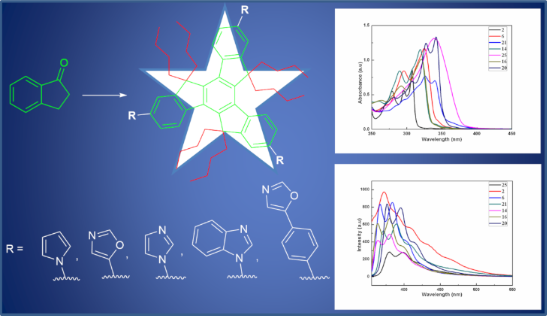
- applicability in the synthesis of dendrimers as well as C3-tripods and also in the host–guest chemistry [17][18][19][20][21]. This architecturally simple yet effective rigid system was first prepared in 1894 by Kipping [22] involving the trimerization of 3‐phenylpropionic acid under acidic conditions but


N-tert-Butanesulfinyl imines in the asymmetric synthesis of nitrogen-containing heterocycles
Beilstein J. Org. Chem. 2021, 17, 1096–1140, doi:10.3762/bjoc.17.86

- organometallic compounds to the iminic carbon [1][2][3]. The ready availability of both enantiomers of tert-butanesulfinamide in large-scale processes, the easy deprotection of the amine under mild acidic conditions, and a practical procedure for recycling the chiral auxiliary [4][5] have contributed to the
- in the synthesis of (–)-batzelladine D 61 and (–)-13-epi-batzelladine D 62. The reaction of (SS)-58 with methyl bromoacetate in the presence on Zn and CuCl in THF, left, after removal of the sulfinyl group under acidic conditions, to β-amino ester ammonium chloride 59 in high yield. This compound was
- t-BuOH and LiBr as additives [102]. The isopropyl-substituted derivative 84 was easily converted into the corresponding methylene lactam 85, upon removal of the sulfinyl unit under acidic conditions. Finally, ozonolysis of 85 yielded tetramic acid 86 in 60% yield (Scheme 26). The configuration of


Synthetic accesses to biguanide compounds
Beilstein J. Org. Chem. 2021, 17, 1001–1040, doi:10.3762/bjoc.17.82
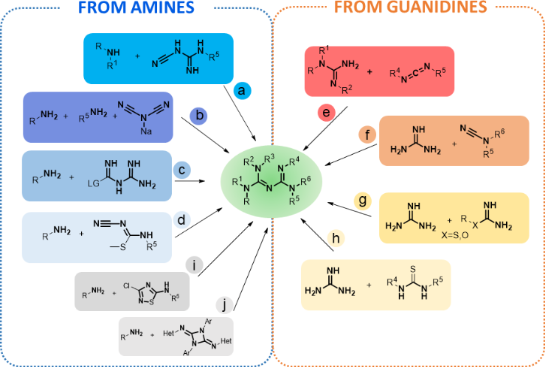
- (Scheme 12) [35]. The 2,4-diaminoquinazoline products were obtained under strong acidic conditions with a satisfactory 75% yield. The resulting molecules were tested in 1971 as folic acid analogs [34]. The 3-guanidinoarylo[e][1,3]diazepine-1,5-diones were synthesized under basic conditions in 13–62% yield
- addition of pyridine to cyanoguanidine was reported by Petersen et al. [50]. This resulted from an unexpected cyclization under acidic conditions, of different pyridylcyanoguanidines to 4-imino-4H-pyrido[1,2-a][1,3,5]triazin-2-amines (Scheme 20). In conclusion, the preparation of biguanides from


Beyond ribose and phosphate: Selected nucleic acid modifications for structure–function investigations and therapeutic applications
Beilstein J. Org. Chem. 2021, 17, 908–931, doi:10.3762/bjoc.17.76
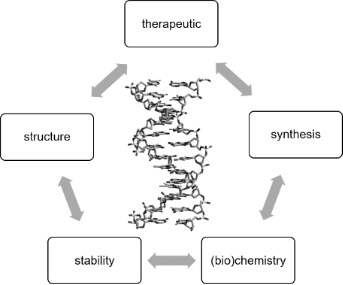
- mixture of triethylammonium bicarbonate (TEAB) and N,N-dimethylformamide (DMF) followed by a sodium borohydride reduction to give the 4'-alkoxy products [202]. The 4'-methoxy-2'-deoxynucleosides exhibited high resistance towards depurination under acidic conditions [202]. In contrast, nucleosides that are




Synthesis of bis(aryloxy)fluoromethanes using a heterodihalocarbene strategy
Beilstein J. Org. Chem. 2021, 17, 813–818, doi:10.3762/bjoc.17.70
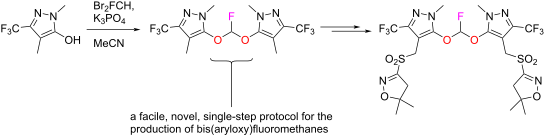
- in Scheeren’s method must be constructed with electron-rich arenes under highly acidic conditions. Furthermore, the method detailed in this work is operationally simple, not requiring the use or isolation of unstable intermediates and giving electron-poor bis(aryloxy)fluoromethanes in a single step
- highly oxidizing and alkaline conditions in the synthesis of 1. We decided to probe the stability of this moiety to acidic conditions. Compound 11 proved to have considerable stability to acidic hydrolysis, suffering only 33% hydrolysis upon stirring in 2 M HCl/MeOH/1,2-dichloroethane 1:4:1 at 35 °C for


Menthyl esterification allows chiral resolution for the synthesis of artificial glutamate analogs
Beilstein J. Org. Chem. 2021, 17, 540–550, doi:10.3762/bjoc.17.48
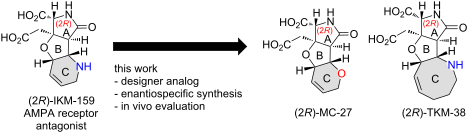
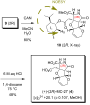
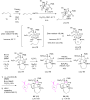
- only a monocarboxylic acid product, and the menthyl ester remained unaffected (structure not shown). Fortunately, the complete deprotection of the two esters was cleanly possible under acidic conditions (6 M aq HCl, 1,4-dioxane, 75 °C, 4 days) to furnish (2R)-MC-27 (4) in 48% yield (Scheme 3), the
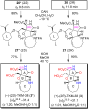
- enantiomers of TKM-38, 3 and 3* (Scheme 6). A preliminary study with 21* (2S) showed the low reactivity under acidic conditions (6 M aq HCl, MeOH, 65 °C) [5][24], which resulted in the quantitative recovery of the substrate 21* (2S). We then examined an alkaline hydrolysis (KOH, MeOH, H2O, 40 °C) [25][26








Mesoionic tetrazolium-5-aminides: Synthesis, molecular and crystal structures, UV–vis spectra, and DFT calculations
Beilstein J. Org. Chem. 2021, 17, 385–395, doi:10.3762/bjoc.17.34
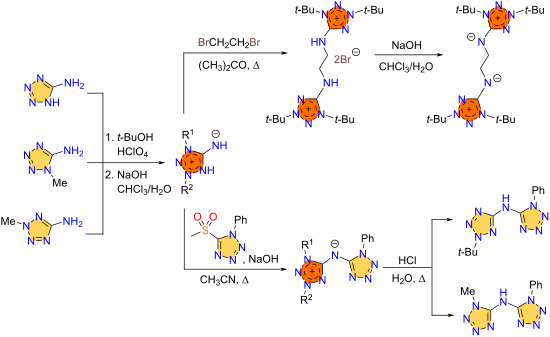
- salts under acidic conditions [30], N-tert-butyltetrazolium-5-aminides are of special interest as agents for the introduction of tetrazol-5-ylamino groups into various substrates having suitable leaving groups. Therefore, we carried out the de-tert-butylation of compounds 11a and 11b under the action of




CF3-substituted carbocations: underexploited intermediates with great potential in modern synthetic chemistry
Beilstein J. Org. Chem. 2021, 17, 343–378, doi:10.3762/bjoc.17.32
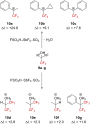
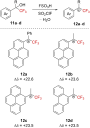
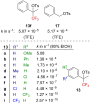
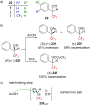
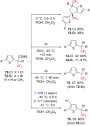
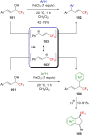
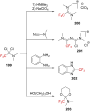
- carbenium ions have also been suggested to exist as reaction intermediates. During their investigations on the reactivity of sulfuranes under acidic conditions, Martin et al. reported that sulfurane 44 reacts with triflic acid to provide alcohol 9g and sultine 46, according to 1H and 19F NMR assignments

















Synthesis of legonmycins A and B, C(7a)-hydroxylated bacterial pyrrolizidines
Beilstein J. Org. Chem. 2021, 17, 334–342, doi:10.3762/bjoc.17.31

- protecting group under acidic conditions was accompanied by cyclization in situ [14][15][34][35] and pyrrolizinone derivative 17 was obtained efficiently on a multigram scale over two steps. Originally, it was expected that adapting the conditions (NaH, RCOCl, THF) used for the acylation step in the


Novel library synthesis of 3,4-disubstituted pyridin-2(1H)-ones via cleavage of pyridine-2-oxy-7-azabenzotriazole ethers under ionic hydrogenation conditions at room temperature
Beilstein J. Org. Chem. 2021, 17, 156–165, doi:10.3762/bjoc.17.16
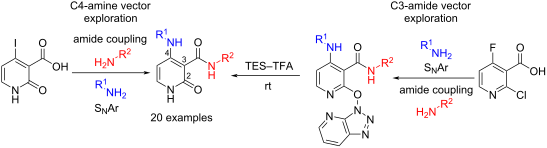
- ). No product was observed via direct SNAr using KOH (Table 1, entry 1) [3]. Acidic conditions (Table 1, entries 2–5) [4], where we can expect protonation thus activation of the pyridine ring towards nucleophilic attack, resulted in only traces of product along with hydrolysis of the amide moiety at C-3
- under these acidic conditions, hydrolysis of our py–OAt ether 15 would be accompanied by in situ deprotection of the Boc group to afford directly our final pyridin-2-(1H)-one products 16 and thereby eliminating a purification stage compared to the previous route. As literature was scarce for this
- transformation and we were also concerned about hydrolysis of the amide bond under aqueous acidic conditions, we decided to carry out a final reaction conditions’ screening using 15 before starting the library production (Table 3). As attested by the results presented in Table 3, the Py–OAt ether was much easier


Selected peptide-based fluorescent probes for biological applications
Beilstein J. Org. Chem. 2020, 16, 2971–2982, doi:10.3762/bjoc.16.247

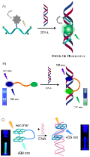
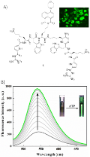
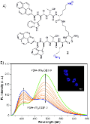
- lysosomal imaging (Figure 11) [64]. Peptide 14 contains two symmetric lysine-rich arms attached via their C-terminus to a central lysine spacer. Under high acidic conditions (pH > 2), the peptide 14 shows a sharp absorption band at 410 nm and relatively weak fluorescence at 623 nm, corresponding to the MCH



Synthesis of imidazo[1,5-a]pyridines via cyclocondensation of 2-(aminomethyl)pyridines with electrophilically activated nitroalkanes
Beilstein J. Org. Chem. 2020, 16, 2903–2910, doi:10.3762/bjoc.16.239
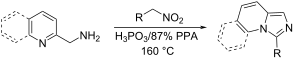
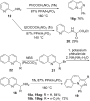
- , entries 2 and 3). To the contrary, an attempt to carry out the reaction in 80% PPA provided a conversion of only 6% even at 140 °C (Table 1, entry 4), whereas no reaction was observed in 100% orthophosphoric acid (Table 1, entry 5). Evidently, under acidic conditions, protonation of the primary amino


Fluorine effect in nucleophilic fluorination at C4 of 1,6-anhydro-2,3-dideoxy-2,3-difluoro-β-D-hexopyranose
Beilstein J. Org. Chem. 2020, 16, 2880–2887, doi:10.3762/bjoc.16.237
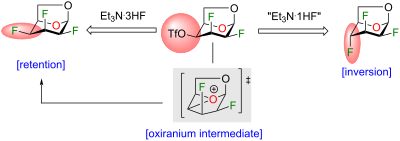
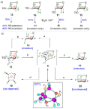
- reaction mixture was treated under acidic conditions and furnished the desired acetylated analogue 23 in 54% over 3 steps. This synthetic sequence represents a useful alternative to DAST or TBAF (tetrabutylammonium fluoride) that lead to elimination byproducts. Finally, after acetates removal, reduction of



One-pot multicomponent green Hantzsch synthesis of 1,2-dihydropyridine derivatives with antiproliferative activity
Beilstein J. Org. Chem. 2020, 16, 2862–2869, doi:10.3762/bjoc.16.235
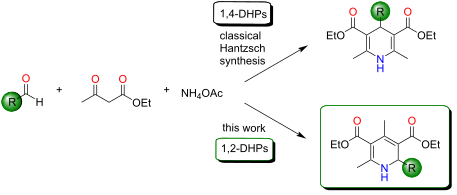
- solid insoluble catalyst can easily be removed from the reaction mixture via filtration, unlike a soluble one [23][24][25]. Results and Discussion According to literature, the reaction has shown to work best and most efficiently under acidic conditions since such conditions enhance the selectivity. When



Easy access to a carbohydrate-based template for stimuli-responsive surfactants
Beilstein J. Org. Chem. 2020, 16, 2788–2794, doi:10.3762/bjoc.16.229
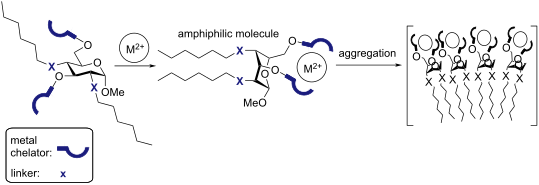
- could then be opened under acidic conditions [22] to give the acetyl pyranoside 4 as a mixture of two anomers (α:β: 1:0.5) in a 95% yield. The methyl glucoside 5 was prepared by treating acetyl glucopyranoside 4 with methanol and HCl to generate an anomeric mixture of the methyl glucopyranoside 5. By


Bifurcated synthesis of methylene-lactone- and methylene-lactam-fused spirolactams via electrophilic amide allylation of γ-phenylthio-functionalized γ-lactams
Beilstein J. Org. Chem. 2020, 16, 2769–2775, doi:10.3762/bjoc.16.227
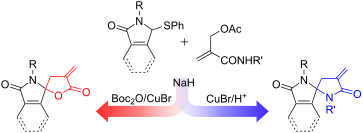
- equivalents of NaH to give the corresponding adducts in excellent yields. The remaining phenylthio group was substituted with a hydroxy group by treatment with CuBr, and the resulting γ-hydroxyamides were cyclized under acidic conditions to afford the corresponding methylene-lactam-fused spirolactams in high
- % yields, indicating widespread applicability of this sequential transformation. Since the cyclization under acidic conditions led to the predominant formation of the methylene-lactam-fused spirolactam, we set another route toward 5 via cyclization of N-Boc-functionalized γ-hydroxymethacrylamide [26]. We


Asymmetric Mannich reactions of (S)-N-tert-butylsulfinyl-3,3,3-trifluoroacetaldimines with yne nucleophiles
Beilstein J. Org. Chem. 2020, 16, 2671–2678, doi:10.3762/bjoc.16.217
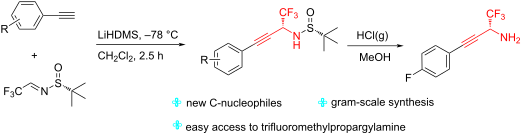
- , only a slight decrease in the yield was observed (84%) along with the same stereochemical outcome. Also, the chiral sulfinyl auxiliary can be easily removed under acidic conditions to give the free amine. Treating 3i with HCl gas in methanol at 0 °C, the tert-butylsulfinyl group was cleaved under mild




Palladium nanoparticles supported on chitin-based nanomaterials as heterogeneous catalysts for the Heck coupling reaction
Beilstein J. Org. Chem. 2020, 16, 2477–2483, doi:10.3762/bjoc.16.201
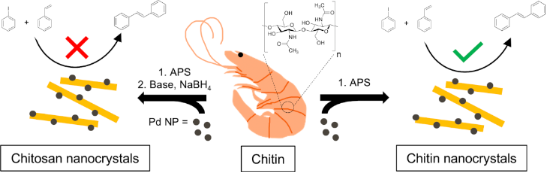
- coordinating role, since they should be fully protonated under acidic conditions. Then, the mixtures were subjugated to 4 bar H2 for 2 h at room temperature to reduce Pd(II) into metallic Pd NPs (Scheme 2), and the reaction mixture turned black. We also conducted a control study in the exact experimental


Hierarchically assembled helicates as reaction platform – from stoichiometric Diels–Alder reactions to enamine catalysis
Beilstein J. Org. Chem. 2020, 16, 2338–2345, doi:10.3762/bjoc.16.195
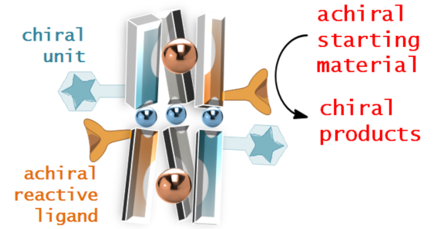
- Diels–Alder reaction [21][22] and (2) a chiral ligand 2-H2 for the stereocontrol [13]. Cleaving the complex under acidic conditions resulted in the desired enantiomerically enriched product 9 and enabled the recovery of the chiral ligand 2-H2 (Scheme 2) [13]. The solvent choice allowed on/off-switching
- deprotected under acidic conditions with hydrochloric acid yielding ligands 13a–d-H2 [33][36] as ammonium chloride salts. The obtained ligands 13a–d-H2 were used together with the chiral ligands 2,4,5-H2 for the formation of hierarchical helicates with a statistical ligand ratio which were formed from 1





