


Search results
Search for "carbonyl compounds" in Full Text gives 275 result(s) in Beilstein Journal of Organic Chemistry. Showing first 200.
p-Pyridinyl oxime carbamates: synthesis, DNA binding, DNA photocleaving activity and theoretical photodegradation studies
- Panagiotis S. Gritzapis,
- Panayiotis C. Varras,
- Nikolaos-Panagiotis Andreou,
- Katerina R. Katsani,
- Konstantinos Dafnopoulos,
- George Psomas,
- Zisis V. Peitsinis,
- Alexandros E. Koumbis and
- Konstantina C. Fylaktakidou
Beilstein J. Org. Chem. 2020, 16, 337–350, doi:10.3762/bjoc.16.33
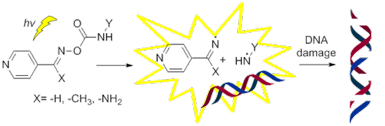
- )-one [29] derivatives, various enediyne [30][31][32], proflavine [33], N-nitroso carboxamide [34], naphazoline [35] and triazole [36] derivatives, azido carbonyl compounds [37] and N,O-diacyl-4-benzoyl-N-phenylhydroxylamines [38]. O-Acyl amidoximes, ketoximes and aldoximes (I, II and III, respectively

Graphical Abstract

Figure 1: General structures of oxime derivatives with possible DNA photocleavage ability. Left: Oxime carbox...

Scheme 1: Synthesis of O-carbamoyl amidoximes (8–13), ethanone oximes (15–20) and aldoximes (22–27). Oxime 1 ...

Figure 2: UV–vis spectra of CT DNA ([DNA] = 1.1 × 10⁻⁴ M) in buffer solution in the absence or presence of in...

Figure 3: Relative viscosity (η/η0)1/3 of CT DNA (0.1 mM) in buffer solution in the presence of compounds 11 ...

Figure 4: Plot of EB-DNA relative fluorescence emission intensity at λ = 592 nm (I/I0, %) vs r (= [compound]/...

Figure 5: DNA photocleavage of amidoxime carbamates at a concentration of 500 μM and mechanistic studies of a...

Figure 6: Potential energy curve for the dissociation of 12 in the first excited triplet state, T1. For compo...

Scheme 2: Photodissociation reaction of the derivative 12 in the T1 state and the formation of ground state r...

Scheme 3: Decarboxylation reaction of the p-chlorophenylcarbamoyloxyl radical.

Figure 7: Proposed scheme showing a possible energy transfer from acetophenone sensitizer to oxime carbamate ...

Figure 8: DNA photocleavage of compounds 8–10 and 12–13 at concentration of 500 μM, at 365 nm, in the absence...

Figure 9: DNA photocleavage of compound 12 at a concentration of 500 μM, at 312 nm, in the absence and presen...
Copper-promoted/copper-catalyzed trifluoromethylselenolation reactions
- Clément Ghiazza and
- Anis Tlili
Beilstein J. Org. Chem. 2020, 16, 305–316, doi:10.3762/bjoc.16.30

- same group studied the direct trifluoromethylselenolation of α-brominated unsaturated carbonyl compounds with [(bpy)CuSeCF3]2 and CsF as the base (Scheme 5, top) [21]. The products were obtained with good yields as a mixture of E/Z isomers. The authors postulated the formation of a copper(III) complex
- ) bromide. The same group also reported the trifluoromethylselenolation of β-brominated unsaturated carbonyl compounds under base-free conditions (Scheme 5, bottom) [22]. Good to excellent yields were obtained for the products. The authors demonstrated that no major alterations were observed in the presence
- carbonyl compounds with [(bpy)CuSeCF3]2 by the group of Weng. Trifluoromethylselenolation of α,β-unsaturated ketones with [(bpy)CuSeCF3]2 by the group of Weng. Trifluoromethylselenolation of acid chlorides with [(bpy)CuSeCF3]2 by the group of Weng. Synthesis of 2-trifluoromethylselenylated benzofused

Graphical Abstract

Scheme 1: Process for the formation of C(sp3)–SeCF3 bonds with [(bpy)CuSeCF3]2 developed by the group of Weng....

Scheme 2: Trifluoromethylselenolation of vinyl and (hetero)aryl halides with [(bpy)CuSeCF3]2 by the group of ...

Scheme 3: Trifluoromethylselenolation of terminal alkynes using [(bpy)CuSeCF3]2 by the group of You and Weng.

Scheme 4: Trifluoromethylselenolation of carbonyl compounds with [(bpy)CuSeCF3]2 by the group of Weng.

Scheme 5: Trifluoromethylselenolation of α,β-unsaturated ketones with [(bpy)CuSeCF3]2 by the group of Weng.

Scheme 6: Trifluoromethylselenolation of acid chlorides with [(bpy)CuSeCF3]2 by the group of Weng.

Scheme 7: Synthesis of 2-trifluoromethylselenylated benzofused heterocycles with [(bpy)CuSeCF3]2 by the group...

Scheme 8: Difunctionalization of terminal alkenes and alkynes with [(bpy)CuSeCF3]2 by the group of Liang.

Scheme 9: Synthesis of Me4NSeCF3.

Scheme 10: Oxidative trifluoromethylselenolation of terminal alkynes and boronic acid derivatives with Me4NSeCF...

Scheme 11: Trifluoromethylselenolation of diazoacetates and diazonium salts with Me4NSeCF3 by the group of Goo...

Scheme 12: Trifluoromethylselenolation with ClSeCF3 by the group of Tlili and Billard.

Scheme 13: Trifluoromethylselenolation with TsSeCF3 by the group of Tlili and Billard.

Scheme 14: Copper-catalyzed synthesis of a selenylated analog 30 of Pretomanid developed by the group of Tlili...

Scheme 15: One-pot procedures for C–SeCF3 bond formations developed by Hor and Weng, Deng and Xiao, and Ruepin...
Ultrasonic-assisted unusual four-component synthesis of 7-azolylamino-4,5,6,7-tetrahydroazolo[1,5-a]pyrimidines
- Yana I. Sakhno,
- Maryna V. Murlykina,
- Oleksandr I. Zbruyev,
- Anton V. Kozyryev,
- Svetlana V. Shishkina,
- Dmytro Sysoiev,
- Vladimir I. Musatov,
- Sergey M. Desenko and
- Valentyn A. Chebanov
Beilstein J. Org. Chem. 2020, 16, 281–289, doi:10.3762/bjoc.16.27
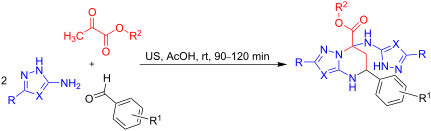
- approaches were described for the synthesis of 7-hydroxytetrahydroazolopyrimidines by the reaction of aminoazoles, aromatic aldehydes, and some carbonyl compounds (Scheme 1, IV and Scheme 2, VI and VIII) [4][5][16][17][18][19][20][21][22][23]. Oxygen-bridged tetrahydroazolopyrimidines III were also obtained

Graphical Abstract

Scheme 1: Synthesis of tetrahydroazolopyrimidine derivatives.

Scheme 2: Various multicomponent reactions involving pyruvic acids (pyruvates) and different α-aminoazoles.

Scheme 3: Synthesis of 4-arylamino-substituted tetrahydroquinolines.

Scheme 4: Ultrasound-assisted multicomponent reactions of 3-amino-1,2,4-triazole or 5-amino-1H-pyrazole-4-car...

Scheme 5: Synthesis of 3-cyano-7-(4-methoxyphenyl)-4,7-dihydropyrazolo[1,5-a]pyrimidine-5-carboxylic acid (7)....

Scheme 6: Proposed reaction mechanism.

Figure 1: Alternative structures A and B for the tetrahydroazolopyrimidines 4.

Figure 2: Molecular structure of ethyl 5-(4-bromophenyl)-3-cyano-7-((4-cyano-1H-pyrazol-5-yl)amino)-4,5,6,7-t...

Figure 3: Chains of 4g molecules in the crystal phase.
Efficient method for propargylation of aldehydes promoted by allenylboron compounds under microwave irradiation
- Jucleiton J. R. Freitas,
- Queila P. S. B. Freitas,
- Silvia R. C. P. Andrade,
- Juliano C. R. Freitas,
- Roberta A. Oliveira and
- Paulo H. Menezes
Beilstein J. Org. Chem. 2020, 16, 168–174, doi:10.3762/bjoc.16.19
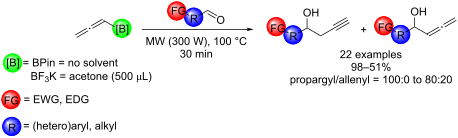
- ; synthesis; Introduction The propargylation of carbonyl compounds is widely used in the synthesis of biologically active natural products [1]. Some examples can be found in the synthesis of histrionicotoxin [2], rhizopodin [3], bafilomycin [4], bryostatin [5], vancosamine [6] and macrolactin A [7]. Although
- there are several stereoselective methods described for the reaction of propargyl or allenyl organometallics with carbonyl compounds [8][9][10][11][12][13][14], the control of the regioselectivity is still a major concern. This is mainly due to the metallotropic rearrangement of propargyl and allenyl

Graphical Abstract

Scheme 1: Scope of the propargylation reaction. Reactions were performed with the appropriate aldehyde (1 mmo...

Scheme 2: Synthesis of potassium allenyltrifluoroborate (4).

Scheme 3: Propargylation of aldehydes using potassium allenyltrifluoroborate (4).
Synthesis of 3-alkenylindoles through regioselective C–H alkenylation of indoles by a ruthenium nanocatalyst
- Abhijit Paul,
- Debnath Chatterjee,
- Srirupa Banerjee and
- Somnath Yadav
Beilstein J. Org. Chem. 2020, 16, 140–148, doi:10.3762/bjoc.16.16
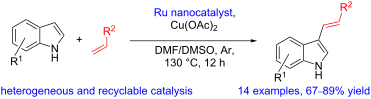
- following three categories: (i) by Wittig or Doebner reaction of indoles bearing a 3-aldehyde group; (ii) by 1,4- or 1,2-addition of α,β-enones or carbonyl compounds, followed by oxidation or elimination, respectively; (iii) by Pd-catalysed oxidative coupling of indoles with activated alkenes. Several

Graphical Abstract

Figure 1: Biologically and medicinally important 3-alkenylindoles.
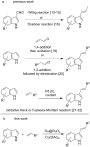
Scheme 1: a) Previous and b) present work related to the synthesis of 3-alkenylindoles.

Scheme 2: Substrate scope for the C–H alkenylation of the indoles 1. Reaction conditions: 1 (1 mmol), 2 (2 mm...
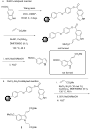
Scheme 3: a) Three-phase test to determine a homogeneous or heterogeneous catalytic mechanism of action for t...

Scheme 4: Probable catalytic mechanism for the transformation of 1a by the RuNC.
A review of asymmetric synthetic organic electrochemistry and electrocatalysis: concepts, applications, recent developments and future directions
- Munmun Ghosh,
- Valmik S. Shinde and
- Magnus Rueping
Beilstein J. Org. Chem. 2019, 15, 2710–2746, doi:10.3762/bjoc.15.264
- ) [23]. In the second report, the same electrode was applied for the asymmetric reduction of prochiral carbonyl compounds 10a and 12a, oximes 14 and gem-dibromo compounds 16 (Scheme 4). Among all of these the highest optical yield (16.6%) was obtained in the reduction of gem-dibromide substrates 16 to
- method for the enantioselective synthesis of 4,5,5-trisubstituted γ-butyrolactones 193 using an electroreductive coupling of diaryl ketones 191 with α,β-unsaturated carbonyl compounds 190 bearing chiral auxiliaries derived from imidazolidin-2-one and oxazolidine-2-ones (Scheme 60). Compound 191 underwent
- modified graphite cathode. Asymmetric hydrogenation of ketones using Raney nickel powder electrodes modified with optically active tartaric acid. Asymmetric reduction of prochiral activated olefins with a poly-ʟ-valine-coated graphite cathode. Asymmetric reduction of prochiral carbonyl compounds, oximes

Graphical Abstract

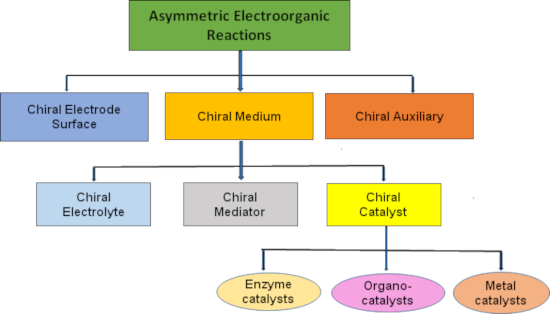
Figure 1: General classification of asymmetric electroorganic reactions.

Scheme 1: Asymmetric reduction of 4-acetylpyridine using a modified graphite cathode.

Scheme 2: Asymmetric hydrogenation of ketones using Raney nickel powder electrodes modified with optically ac...

Scheme 3: Asymmetric reduction of prochiral activated olefins with a poly-ʟ-valine-coated graphite cathode.

Scheme 4: Asymmetric reduction of prochiral carbonyl compounds, oximes and gem-dibromides on a poly-ʟ-valine-...

Scheme 5: Asymmetric hydrogenation of prochiral ketones with poly[RuIII(L)2Cl2]+-modified carbon felt cathode...

Scheme 6: Asymmetric hydrogenation of α-keto esters using chiral polypyrrole film-coated cathode incorporated...

Scheme 7: Quinidine and cinchonidine alkaloid-induced asymmetric electroreduction of acetophenone.

Scheme 8: Asymmetric electroreduction of 4- and 2-acetylpyridines at a mercury cathode in the presence of a c...

Scheme 9: Enantioselective reduction of 4-methylcoumarin in the presence of catalytic yohimbine.

Scheme 10: Cinchonine-induced asymmetric electrocarboxylation of 4-methylpropiophenone.

Scheme 11: Enantioselective hydrogenation of methyl benzoylformate using an alkaloid entrapped silver cathode.

Scheme 12: Alkaloid-induced enantioselective hydrogenation using a Cu nanoparticle cathode.

Scheme 13: Alkaloid-induced enantioselective hydrogenation of aromatic ketones using a bimetallic Pt@Cu cathod...

Scheme 14: Enantioselective reduction of ketones at mercury cathode using N,N'-dimethylquininium tetrafluorobo...

Scheme 15: Asymmetric synthesis of an amino acid using an electrode modified with amino acid oxidase and elect...

Scheme 16: Asymmetric oxidation of p-tolyl methyl sulfide using chemically modified graphite anode.

Scheme 17: Asymmetric oxidation of unsymmetric sulfides using poly(amino acid)-coated electrodes.

Scheme 18: Enantioselective, electocatalytic oxidative coupling on TEMPO-modified graphite felt electrode in t...

Scheme 19: Asymmetric electrocatalytic oxidation of racemic alcohols on a TEMPO-modified graphite felt electro...

Scheme 20: Asymmetric electrocatalytic lactonization of diols on TEMPO-modified graphite felt electrodes.

Scheme 21: Asymmetric electrochemical pinacolization in a chiral solvent.

Scheme 22: Asymmetric electroreduction using a chiral supporting electrolyte.

Scheme 23: Asymmetric anodic oxidation of enol acetates using chiral supporting electrolytes.

Scheme 24: Kinetic resolution of primary amines using a chiral N-oxyl radical mediator.

Scheme 25: Chiral N-oxyl-radical-mediated kinetic resolution of secondary alcohols via electrochemical oxidati...

Scheme 26: Chiral iodoarene-mediated asymmetric electrochemical lactonization.

Scheme 27: Os-catalyzed electrochemical asymmetric dihydroxylation of olefins using the Sharpless ligand and i...

Scheme 28: Asymmetric electrochemical epoxidation of olefins catalyzed by a chiral Mn-salen complex.

Scheme 29: Asymmetric electrooxidation of 1,2-diols, and amino alcohols using a chiral copper catalyst.

Scheme 30: Mechanism of asymmetric electrooxidation of 1,2-diols, and amino alcohols using a chiral copper cat...

Scheme 31: Enantioselective electrocarboxylation catalyzed by an electrogenerated chiral [CoI(salen)]− complex....

Scheme 32: Asymmetric oxidative cross coupling of 2-acylimidazoles with silyl enol ethers.

Scheme 33: Ni-catalyzed asymmetric electroreductive cleavage of allylic β-keto ester 89.

Scheme 34: Asymmetric alkylation using a combination of electrosynthesis and a chiral Ni catalyst.

Scheme 35: Mechanism of asymmetric alkylation using a combination of electrosynthesis and a chiral Ni catalyst....

Scheme 36: Asymmetric epoxidation by electrogenerated percarbonate and persulfate ions in the presence of chir...

Scheme 37: α-Oxyamination of aldehydes via anodic oxidation catalyzed by chiral secondary amines.

Scheme 38: The α-alkylation of aldehydes via anodic oxidation catalyzed by chiral secondary amines.
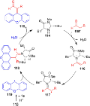
Scheme 39: Mechanism of α-alkylation of aldehydes via anodic oxidation catalyzed by chiral secondary amines.

Scheme 40: Electrochemical chiral secondary amine-catalyzed intermolecular α-arylation of aldehydes.

Scheme 41: Mechanism of electrochemical chiral secondary amine-catalyzed intermolecular α-arylation of aldehyd...

Scheme 42: Asymmetric cross-dehydrogenative coupling of tertiary amines with simple ketones via an electrochem...

Scheme 43: Electroenzymatic asymmetric reduction using enoate reductase.

Scheme 44: Assymetric reduction using alcohol dehydrogenase as the electrocatalyst.

Scheme 45: Asymmetric electroreduction catalyzed by thermophilic NAD-dependent alcohol dehydrogenase.

Scheme 46: Asymmetric epoxidation of styrene by electrochemical regeneration of flavin-dependent monooxygenase....

Scheme 47: Asymmetric electroreduction using a chloroperoxidase catalyst.

Scheme 48: Asymmetric electrochemical transformation mediated by hydrophobic vitamin B12.

Scheme 49: Diastereoselective cathodic reduction of phenylglyoxalic acids substituted with amines as chiral au...

Scheme 50: Ni-catalyzed asymmetric electroreductive cross coupling of aryl halides with α-chloropropanoic acid...

Scheme 51: Electrochemical Mannich addition of silyloxyfuran to in situ-generated N-acyliminium ions.

Scheme 52: Stereoselective electroreductive homodimerization of cinnamates attached to a camphor-derived chira...
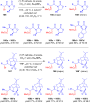
Scheme 53: Diastereoselective electrochemical carboxylation of chiral α-bromocarboxylic acid derivatives.

Scheme 54: Electrocatalytic stereoselective conjugate addition of chiral β-dicarbonyl compounds to methyl viny...

Scheme 55: Stereoselective electrochemical carboxylation of chiral cinnamic acid derivatives under a CO2 atmos...

Scheme 56: Electrochemical diastereoselective α-alkylation of pyrrolidines attached with phosphorus-derived ch...

Scheme 57: Electrogenerated cyanomethyl anion-induced synthesis of chiral cis-β-lactams from amides bearing ch...

Scheme 58: Diastereoselective anodic oxidation followed by intramolecular cyclization of ω-hydroxyl amides bea...

Scheme 59: Electrochemical deprotonation of Ni(II) glycinate containing (S)-BPB as a chiral auxiliary: diaster...

Scheme 60: Enantioselective electroreductive coupling of diaryl ketones with α,β-unsaturated carbonyl compound...

Scheme 61: Asymmetric total synthesis of ropivacaine and its analogues using a electroorganic reaction as a ke...

Scheme 62: Asymmetric total synthesis of (−)-crispine A and its natural enantiomer via anodic cyanation of tet...

Scheme 63: Asymmetric oxidative electrodimerization of cinnamic acid derivatives as key step for the synthesis...
Unexpected one-pot formation of the 1H-6a,8a-epiminotricyclopenta[a,c,e][8]annulene system from cyclopentanone, ammonia and dimethyl fumarate. Synthesis of highly strained polycyclic nitroxide and EPR study
- Sergey A. Dobrynin,
- Igor A. Kirilyuk,
- Yuri V. Gatilov,
- Andrey A. Kuzhelev,
- Olesya A. Krumkacheva,
- Matvey V. Fedin,
- Michael K. Bowman and
- Elena G. Bagryanskaya
Beilstein J. Org. Chem. 2019, 15, 2664–2670, doi:10.3762/bjoc.15.259

- carbonyl compounds for the synthesis of heterocyclic compounds has been repeatedly demonstrated [2][3]. We recently used a domino reaction of amino acid, ketone and dimethyl fumarate for the one-pot synthesis of a substituted pyrrolidine, which then was converted into a reduction-resistant pyrrolidine

Graphical Abstract

Scheme 1: Synthesis of compound 1.

Figure 1: X-ray structure of compound 1 (one of the two enantiomers present in the crystal).

Scheme 2: Possible mechanism for the formation of 1.

Figure 2: A possible mechanism for the trans-position of the methyne hydrogens in the azepine ring: the elect...

Figure 3: Selective formation of a single diastereomer in the 1,3-dipolar cycloaddition reaction.

Scheme 3: Synthesis of nitroxide 6.

Figure 4: X-ray structure of compound 6 (one of the two enantiomers present in the crystal).

Scheme 4: A proposed mechanism for nitroxide 6 synthesis.

Figure 5: A, B) Temperature dependence of the electron spin relaxation times in water/glycerol at X-band freq...
1,5-Phosphonium betaines from N-triflylpropiolamides, triphenylphosphane, and active methylene compounds
- Vito A. Fiore,
- Chiara Freisler and
- Gerhard Maas
Beilstein J. Org. Chem. 2019, 15, 2603–2611, doi:10.3762/bjoc.15.253

- -catalyzed reactions of acetylenic ketones and esters with pinacolborane have been discussed [7][8]. The Michael addition of PPh3 at acetylenic carbonyl compounds generates phosphonium/vinyl anion intermediates which have been trapped with CH-, NH-, OH- and SH-acids [5]. In this manner, the 1:1:1 reaction of

Graphical Abstract

Scheme 1: Stable betaines I–IV.

Scheme 2: Reactions of N-triflyl-propiolamides 1 with N- and P-nucleophiles. Tf = SO2CF3.

Scheme 3: Synthesis of betaines 3 by a three-component reaction. N-triflylpropiolamides 1: R = Ph (a), 4-Cl-C6...

Figure 1: Phosphonium betaines 3 prepared. An E:Z ratio of 100:0 means that only the E-isomer was observed in...

Scheme 4: Unexpected synthesis of E-3o.

Scheme 5: Betaines 3 from propiolic acid chlorides.

Scheme 6: Two mechanistic scenarios for the formation of betaines 3.

Figure 2: Solid-state structure of E-3a (ORTEP plot), two symmetry-independent molecules in the triclinic uni...

Figure 3: Solid-state structure of E-3b·CH2Cl2 (ORTEP plot); CH2Cl2 solvate molecule not shown.

Figure 4: Solid-state structure of E-3e·H2O·CH2Cl2 (ORTEP plot). The CH2Cl2 solvate molecule is disordered. H...

Figure 5: Solid-state structure of Z-3e (ORTEP plot).

Scheme 7: Resonance structures describing the bonding in 1,2-oxaphospholes/1,5-betaines 8.
α,ß-Didehydrosuberoylanilide hydroxamic acid (DDSAHA) as precursor and possible analogue of the anticancer drug SAHA
- Shital K. Chattopadhyay,
- Subhankar Ghosh,
- Sarita Sarkar and
- Kakali Bhadra
Beilstein J. Org. Chem. 2019, 15, 2524–2533, doi:10.3762/bjoc.15.245
- reaction in the presence of Hoveyda-Grubbs 2nd generation catalyst (HG-II, 9b, 2 mol %) in refluxing DCM was found to be much faster and better yielding (77%). The product 10a was obtained as a single geometric isomer identified as E. It may be mentioned that CM with other unsaturated carbonyl compounds

Graphical Abstract

Figure 1: Some hydroxamic acid-based anti-tumor drugs.

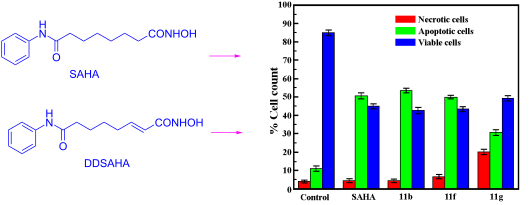
Scheme 1: Synthesis of SAHA and DDSAHA.

Figure 2: Cell viability from MTT assay for SAHA, 11b, 11f and 11g on HeLa after 24 h treatment.

Figure 3: Percent of cell death by LDH assay at a GI50 dose of SAHA, 11b, 11f and 11g after 24 h incubation a...

Figure 4: ROS generation by DCFDA.

Figure 5: The quantitative results of bivariate FITC-Annexin V/PI FCM of HeLa cells after treatment with 11b ...

Figure 6: Fluorescence microscopic images of 11b at different concentrations (8.9, and 14.2 µM, respectively)...
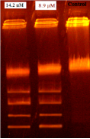
Figure 7: DNA Ladder formation in a gel electrophoresis study of 11b at different concentrations (at 8.9, and...
In water multicomponent synthesis of low-molecular-mass 4,7-dihydrotetrazolo[1,5-a]pyrimidines
- Irina G. Tkachenko,
- Sergey A. Komykhov,
- Vladimir I. Musatov,
- Svitlana V. Shishkina,
- Viktoriya V. Dyakonenko,
- Vladimir N. Shvets,
- Mikhail V. Diachkov,
- Valentyn A. Chebanov and
- Sergey M. Desenko
Beilstein J. Org. Chem. 2019, 15, 2390–2397, doi:10.3762/bjoc.15.231
- starting material and subsequent dihydropyrimidine ring formation. The first approach [6][7] represents a two-component cyclocondensation of 5-aminotetrazole (1) as binucleophilic component and bielectrophilic α,β-unsaturated carbonyl compounds 2 (Scheme 1, reaction 1). The second method [8][9][10][11][12

Graphical Abstract

Scheme 1: Three synthetic approaches to dihydrotetrazolo[1,5-a]pyrimidines.

Scheme 2: Three-component reaction of 1, 7a,b and 8a–d in water.

Figure 1: Molecular structure of 9a according to X-ray data. Displacement ellipsoids are shown at the 50% pro...

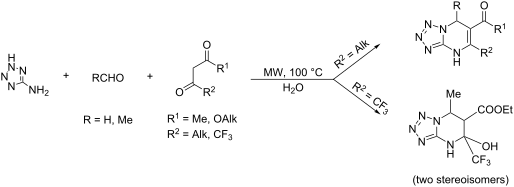
Scheme 3: Three-component reaction of 5-aminotetrazole (1) with formaldehyde (7a) and acetylacetone (10).

Scheme 4: a) Three-component reaction of 5-aminotetrazole (1) with acetaldehyde (7b) and ethyl 4,4,4-trifluor...
Recent advances in transition-metal-catalyzed incorporation of fluorine-containing groups
- Xiaowei Li,
- Xiaolin Shi,
- Xiangqian Li and
- Dayong Shi
Beilstein J. Org. Chem. 2019, 15, 2213–2270, doi:10.3762/bjoc.15.218
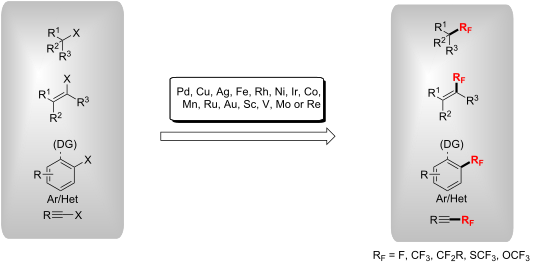
- nucleophilic fluoride source was reported by Doyle and co-worker (Scheme 5) [39]. Herein, the authors utilized a Pd/Cr cocatalytic system to generate the allylic fluorides with high regioselectivity (branched > linear). Alkyl fluorination of acidic carbonyl compounds and other compounds: In 2012, the group of
- achieved using Et3N·3HF as the fluorine source with a high catalyst loading (20–30 mol %) affording the products in 45–92% yield [70]. The heteroatom-containing functional group (R1) is necessary for good reactivity and regioselectivity. α-Fluorination of acidic carbonyl compounds: In 2011, Shibatomi and
- stereocontrolled acrylic allylic fluorides. Fluorination of acidic carbonyl compounds: In 2010, Itoh and co-workers [96] demonstrated the asymmetric fluorination of cyclic and acyclic β-ketoesters by using a catalytic amount of Co(acac)2 with (R,R)-Jacobsen’s salen ligand (Scheme 48). The α-fluorinated products

Graphical Abstract

Scheme 1: The main three strategies of fluorination: nucleophilic, electrophilic and radical fluorination.

Scheme 2: Doyle’s Pd-catalyzed fluorination of allylic chlorides.

Scheme 3: Allylic fluorination of 2- and 3-substituted propenyl esters.

Scheme 4: Regioselective allylic fluorination of cinnamyl phosphorothioate esters.

Scheme 5: Palladium-catalyzed aliphatic C–H fluorination reported by Doyle.

Scheme 6: Pd-catalyzed enantioselective fluorination of α-ketoesters followed by stereoselective reduction to...

Scheme 7: Pd-catalyzed C(sp3)–H fluorination of oxindoles.

Scheme 8: C–H fluorination of 8-methylquinoline derivatives with F− reagents.

Scheme 9: Fluorination of α-cyano acetates reported by van Leeuwen.

Scheme 10: The catalytic enantioselective electrophilic C–H fluorination of α-chloro-β-keto phosphonates.

Scheme 11: Fluorination of unactivated C(sp3)–H bonds directed by the bidentate PIP auxiliary.

Scheme 12: Fluorination of C(sp3)–H bonds at the β-position of carboxylic acids.

Scheme 13: Enantioselective benzylic C–H fluorination with a chiral transient directing group.

Scheme 14: Microwave-heated Pd-catalyzed fluorination of aryl alcohols.

Scheme 15: Fluorination of aryl potassium trifluoroborates.

Scheme 16: C(sp2)–F bond formation using precatalyst [L·Pd]2(cod).

Scheme 17: Pd-catalyzed fluorination of (hetero)aryl triflates and bromides.

Scheme 18: The Pd-catalyzed C–H fluorination of arenes with Selectfluor/NFSI.

Scheme 19: Pd(II)-catalyzed ortho-monofluorination protocol for benzoic acids.

Scheme 20: Pd-catalyzed C(sp2)–H bond fluorination of 2-arylbenzothiazoles.

Scheme 21: Nitrate-promoted fluorination of aromatic and olefinic C(sp2)–H bonds and proposed mechanism.

Scheme 22: Fluorination of oxalyl amide-protected benzylamine derivatives.

Scheme 23: C–H fluorination of benzaldehydes with orthanilic acids as transient directing group.

Scheme 24: Pd(II)-catalyzed aryl C–H fluorination with various directing groups.

Scheme 25: Cu-catalyzed aliphatic, allylic, and benzylic fluorination.

Scheme 26: Cu-catalyzed SN2 fluorination of primary and secondary alkyl bromides.

Scheme 27: Copper-catalyzed fluorination of alkyl triflates.

Scheme 28: Cu-catalyzed fluorination of allylic bromides and chlorides.

Scheme 29: Synthetic strategy for the fluorination of active methylene compounds.

Scheme 30: Fluorination of β-ketoesters using a tartrate-derived bidentate bisoxazoline-Cu(II) complex.

Scheme 31: Highly enantioselective fluorination of β-ketoesters and N-Boc-oxindoles.

Scheme 32: Amide group-assisted site-selective fluorination of α-bromocarbonyl compounds.

Scheme 33: Cu-mediated aryl fluorination reported by Sanford [77].

Scheme 34: Mono- or difluorination reactions of benzoic acid derivatives.

Scheme 35: Cu-catalyzed fluorination of diaryliodonium salts with KF.
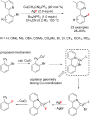
Scheme 36: Copper(I)-catalyzed cross-coupling of 2-pyridylaryl bromides.

Scheme 37: AgNO3-catalyzed decarboxylative fluorination of aliphatic carboxylic acids.

Scheme 38: The Mn-catalyzed aliphatic and benzylic C–H fluorination.

Scheme 39: Iron(II)-promoted C–H fluorination of benzylic substrates.

Scheme 40: Ag-catalyzed fluorodecarboxylation of carboxylic acids.

Scheme 41: Vanadium-catalyzed C(sp3)–H fluorination.

Scheme 42: AgNO3-catalyzed radical deboronofluorination of alkylboronates and boronic acids.

Scheme 43: Selective heterobenzylic C–H fluorination with Selectfluor reported by Van Humbeck.

Scheme 44: Fe(II)-catalyzed site-selective fluorination guided by an alkoxyl radical.

Scheme 45: Fluorination of allylic trichloroacetimidates reported by Nguyen et al.

Scheme 46: Iridium-catalyzed fluorination of allylic carbonates with TBAF(t-BuOH)4.

Scheme 47: Iridium-catalyzed asymmetric fluorination of allylic trichloroacetimidates.

Scheme 48: Cobalt-catalyzed α-fluorination of β-ketoesters.

Scheme 49: Nickel-catalyzed α-fluorination of various α-chloro-β-ketoesters.

Scheme 50: Ni(II)-catalyzed enantioselective fluorination of oxindoles and β-ketoesters.

Scheme 51: Scandium(III)-catalyzed asymmetric C–H fluorination of unprotected 3-substituted oxindoles.

Scheme 52: Iron-catalyzed directed C–H fluorination.

Scheme 53: Electrophilic silver-catalyzed Ar–F bond-forming reaction from arylstannanes.

Figure 1: Nucleophilic, electrophilic and radical CF3 sources.

Scheme 54: Cu(I)-catalyzed allylic trifluoromethylation of unactivated terminal olefins.

Scheme 55: Direct copper-catalyzed trifluoromethylation of allylsilanes.

Scheme 56: Cupper-catalyzed enantioselective trifluoromethylation of five and six-membered ring β-ketoesters.

Scheme 57: Cu-catalyzed highly stereoselective trifluoromethylation of secondary propargyl sulfonates.

Scheme 58: Remote C(sp3)–H trifluoromethylation of carboxamides and sulfonamides.

Scheme 59: Trifluoromethylation of allylsilanes with photoredox catalysis.

Scheme 60: Ag-catalyzed decarboxylative trifluoromethylation of aliphatic carboxylic acids in aqueous CH3CN.
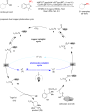
Scheme 61: Decarboxylative trifluoromethylation of aliphatic carboxylic acids via combined photoredox and copp...

Scheme 62: Palladium-catalyzed Ar–CF3 bond-forming reaction.

Scheme 63: Palladium-catalyzed trifluoromethylation of arenes with diverse heterocyclic directing groups.

Scheme 64: Pd-catalyzed trifluoromethylation of indoles as reported by Liu.

Scheme 65: Pd-catalyzed trifluoromethylation of vinyl triflates and vinyl nonaflates.

Scheme 66: Pd(II)-catalyzed ortho-trifluoromethylation of aromatic C–H bonds.

Scheme 67: Visible-light-induced Pd(OAc)2-catalyzed ortho-trifluoromethylation of acetanilides with CF3SO2Na.

Scheme 68: CuI-catalyzed trifluoromethylation of aryl- and alkenylboronic acids.

Scheme 69: Cu-catalyzed trifluoromethylation of aryl- and vinylboronic acids.

Scheme 70: Copper-catalyzed trifluoromethylation of α,β-unsaturated carboxylic acids.

Scheme 71: Formation of C(sp2)–CF3 bond catalyzed by copper(I) complex.

Scheme 72: Loh’s Cu(I)-catalyzed trifluoromethylation of enamides and electron-deficient alkenes.

Scheme 73: Copper and iron-catalyzed decarboxylative tri- and difluoromethylation.

Scheme 74: Cu-catalyzed trifluoromethylation of hydrazones developed by Bouyssi.

Scheme 75: Cu(I)-catalyzed trifluoromethylation of terminal alkenes.

Scheme 76: Cu/Ag-catalyzed decarboxylative trifluoromethylation of cinnamic acids.

Scheme 77: Copper-catalyzed direct alkenyl C–H trifluoromethylation.

Scheme 78: Copper(I/II)-catalyzed direct trifluoromethylation of styrene derivatives.

Scheme 79: Regioselective trifluoromethylation of pivalamido arenes and heteroarenes.

Scheme 80: Synthesis of trifluoromethylquinones in the presence of copper(I).
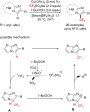
Scheme 81: Oxidative trifluoromethylation of imidazoheterocycles in ionic liquid/water.

Scheme 82: A mild and fast continuous-flow trifluoromethylation of coumarins using a CuI/CF3SO2Na/TBHP system.

Scheme 83: Copper-catalyzed oxidative trifluoromethylation of various 8-aminoquinolines.

Scheme 84: PA-directed copper-catalyzed trifluoromethylation of anilines.

Scheme 85: Trifluoromethylation of potassium vinyltrifluoroborates catalyzed by Fe(II).

Scheme 86: Alkenyl trifluoromethylation catalyzed by Ru(phen)3Cl2 as photocatalyst.

Scheme 87: Ru-catalyzed trifluoromethylation of alkenes by Akita’s group.

Scheme 88: Ir-catalyzed Cvinyl–CF3 bond formation of α,β-unsaturated carboxylic acids.

Scheme 89: Ag(I)-catalyzed denitrative trifluoromethylation of β-nitrostyrenes.

Scheme 90: Photocatalyzed direct trifluoromethylation of aryl and heteroaryl C–H bonds.

Scheme 91: Rhenium (MTO)-catalyzed direct trifluoromethylation of aromatic substrates.

Scheme 92: Trifluoromethylation of unprotected anilines under [Ir(ppy)3] catalyst.

Scheme 93: Oxidative trifluoromethylation of imidazopyridines and imidazoheterocycles.

Scheme 94: Ruthenium-catalyzed trifluoromethylation of (hetero)arenes with trifluoroacetic anhydride.

Scheme 95: Phosphovanadomolybdic acid-catalyzed direct C–H trifluoromethylation.

Scheme 96: Picolinamide-assisted ortho-trifluoromethylation of arylamines.

Scheme 97: A nickel-catalyzed C–H trifluoromethylation of free anilines.

Scheme 98: Cu-mediated trifluoromethylation of terminal alkynes reported by Qing.

Scheme 99: Huang’s C(sp)–H trifluoromethylation using Togni’s reagent.

Scheme 100: Cu-catalyzed methods for trifluoromethylation with Umemoto’s reagent.

Scheme 101: The synthesis of alkynyl-CF3 compounds in the presence of fac-[Ir(ppy)3] under visible-light irradi...

Scheme 102: Pd-catalyzed Heck reaction reported by Reutrakul.

Scheme 103: Difluoromethylation of enamides and ene-carbamates.

Scheme 104: Difluoromethylation of α,β-unsaturated carboxylic acids.

Scheme 105: Copper-catalyzed direct C(sp2)–H difluoroacetylation reported by Pannecoucke and co-workers.

Scheme 106: Difluoroalkylation of aldehyde-derived hydrazones with functionalized difluoromethyl bromides.

Scheme 107: Photoredox-catalyzed C–H difluoroalkylation of aldehyde-derived hydrazones.

Scheme 108: Synergistic ruthenium(II)-catalyzed C–H difluoromethylation reported by Ackermann.

Scheme 109: Visible-light photocatalytic decarboxylation of α,β-unsaturated carboxylic acids.

Scheme 110: Synthesis of difluorinated ketones via S-alkyl dithiocarbamates obtained from acyl chlorides and po...

Scheme 111: Synthesis of aryl and heteroaryl difluoromethylated phosphonates.

Scheme 112: Difluoroalkylation of secondary propargyl sulfonates using Cu as the catalyst.

Scheme 113: Ru(II)-mediated para-selective difluoromethylation of anilides and their derivatives.

Scheme 114: Bulky diamine ligand promoted cross-coupling of difluoroalkyl bromides.

Scheme 115: Copper-catalyzed C3–H difluoroacetylation of quinoxalinones.

Scheme 116: Copper(I) chloride-catalyzed trifluoromethylthiolation of enamines, indoles and β-ketoesters.

Scheme 117: Copper-boxmi-catalyzed asymmetric trifluoromethylthiolation of β-ketoesters.

Scheme 118: Direct Cu-catalyzed trifluoromethylthiolation of boronic acids and alkynes.

Scheme 119: Cu-catalyzed synthesis of α-trifluoromethylthio-substituted ketones.

Scheme 120: Trifluoromethylthiolation reactions promoted by diazotriflone and copper.

Scheme 121: Halide activation of N-(trifluoromethylthio)phthalimide.

Scheme 122: The visible light-promoted trifluoromethylthiolation reported by Glorius.

Scheme 123: Synthesis of α-trifluoromethylthioesters via Goossen’s approach.

Scheme 124: Photoinduced trifluoromethylthiolation of diazonium salts.

Scheme 125: Ag-mediated trifluoromethoxylation of aryl stannanes and arylboronic acids.

Scheme 126: Catalytic (hetero)aryl C–H trifluoromethoxylation under visible light.

Scheme 127: Photoinduced C–H-bond trifluromethoxylation of (hetero)arenes.
α-Photooxygenation of chiral aldehydes with singlet oxygen
- Dominika J. Walaszek,
- Magdalena Jawiczuk,
- Jakub Durka,
- Olga Drapała and
- Dorota Gryko
Beilstein J. Org. Chem. 2019, 15, 2076–2084, doi:10.3762/bjoc.15.205
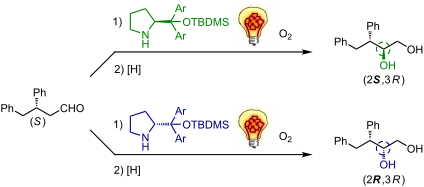
- dichroism (ECD) and TD-DFT methods. Keywords: 1,2-diols; ECD; enamines; organocatalysis; porphyrins; silyl ethers of diarylprolinols; singlet oxygen; Introduction Carbonyl compounds are one of the most important building blocks in organic synthesis. As a consequence, there is a constant need for new
- ) or a chiral auxiliary (i.e., oxazolidinone) into the substrate structure is required for highly stereoselective reactions [20][21][22]. ‘One-pot’ photochemical α,β-functionalization of cinnamaldehyde Over the last few years, photochemical methods for asymmetric functionalisation of carbonyl compounds

Graphical Abstract

Scheme 1: Asymmetric α-photooxygenation of chiral aldehydes.

Scheme 2: α-Photooxygenation of β-substituted aldehydes.

Scheme 3: Synthesis and α-photooxygenation of 3,4-diphenylbutanal (1).

Scheme 4: Stereoselective α-photooxygenation of 3,4-diphenylbutanal (1) with 1O2.

Scheme 5: Schematic representation of the in situ methodology and preferred conformation of diols with Mo2 co...
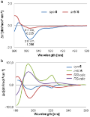
Figure 1: ECD spectra of diols syn-6 and anti’-6 recorded a) with 19 in DMSO and b) in acetonitrile compared ...

Scheme 6: Asymmetric synthesis of 3,4-diphenylbutane-1,2-diol.
Synthesis of 1-azaspiro[4.4]nonan-1-oxyls via intramolecular 1,3-dipolar cycloaddition
- Yulia V. Khoroshunova,
- Denis A. Morozov,
- Andrey I. Taratayko,
- Polina D. Gladkikh,
- Yuri I. Glazachev and
- Igor A. Kirilyuk
Beilstein J. Org. Chem. 2019, 15, 2036–2042, doi:10.3762/bjoc.15.200
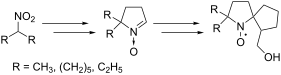
- compound showed a strong absorption band at 1725 cm−1 typical for carbonyl compounds and no absorption in the region 3100–3500 cm−1, suggesting that the hydroxymethyl group was affected in the reaction. The mass spectrum featured the molecular ion [M+] = 196.1335 corresponding to the molecular formula
- C11H18NO2, which matches element analysis data. These results allowed us to assign the structure 15 to this nitroxide. Indeed, oxidation of amines with peracids is known to proceed via oxoammonium cation formation [17][18], and the latter can oxidize alcohols to carbonyl compounds [19]. The close proximity

Graphical Abstract
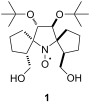
Figure 1: Structure of nitroxide 1.

Scheme 1: The synthesis of aldonitrones 5a–c.

Scheme 2: The principal synthetic scheme for nitroxides 12a–c.

Scheme 3: A possible pathway of ketonitrone 7c self-transformations.

Scheme 4: Oxidation of aminoalcohol 9a.

Scheme 5: The synthesis of alkoxyamines 16a–c.

Scheme 6: The alkoxyamine 18 synthesis.

Scheme 7: A possible mechanism of nitroxide 17 formation.

Scheme 8: Optimisation of the synthesis of nitroxide 1.

Figure 2: Kinetics of the reduction of nitroxides 1 and 12a–c (0.3 mM) with ascorbate (50 mM) in 50 mM phosph...
Metal-free mechanochemical oxidations in Ertalyte® jars
- Andrea Porcheddu,
- Francesco Delogu,
- Lidia De Luca,
- Claudia Fattuoni and
- Evelina Colacino
Beilstein J. Org. Chem. 2019, 15, 1786–1794, doi:10.3762/bjoc.15.172
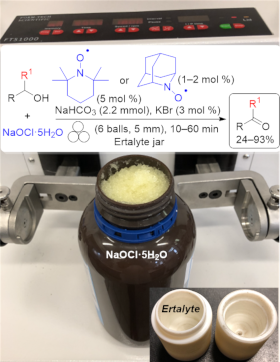
- a mechanochemical process. Keywords: AZADO; Ertalyte®; green chemistry; mechanochemistry; NaOCl·5H2O; selective oxidation; TEMPO; Introduction The conversion of primary and secondary alcohols to the corresponding carbonyl compounds (aldehydes and ketones, respectively) is of such importance in
- to industrial settings. The proposed mechanism for the TEMPO-based oxidative conversion of primary and secondary alcohols to the corresponding carbonyl compounds is described in Scheme 7 and shares similarities with that postulated in other previous studies in solution. In general, NaOCl works as a
- the atom efficiency [4][5]. The discovery of (2,2,6,6-tetramethylpiperidin-1-yl)oxyl, commonly known as TEMPO by Lebedev and Kazarnowskii in 1960 has been hailed as a significant breakthrough in the field of redox reactions, allowing the fast and selective oxidation of alcohols to the related carbonyl
Graphical Abstract

Scheme 1: Oxidation of 3-pheny-1-propanol (1a) with N-chlorosuccinimide (NCS) in the presence of (2,2,6,6-tet...

Scheme 2: Hypothesized pathways for the TEMPO-assisted oxidation of alcohols in a) basic or b) acidic reactio...

Scheme 3: TEMPO-assisted oxidation of 3-pheny-1-propanol (1a) under mechanical activation conditions. aPercen...

Scheme 4: Scope of primary alcohol oxidation under mechanical activation conditions. aAll yields refer to iso...

Scheme 5: Proposed mechanism for the oxidation of benzylic alcohols 6a and 7a under mechanochemical condition...

Scheme 6: Scope of secondary alcohols in the oxidation under mechanical activation conditions. aAll yields re...

Scheme 7: Possible mechanism for the TEMPO-mediated oxidation of primary and secondary alcohols by using NaOC...
Recent advances on the transition-metal-catalyzed synthesis of imidazopyridines: an updated coverage
- Gagandeep Kour Reen,
- Ashok Kumar and
- Pratibha Sharma
Beilstein J. Org. Chem. 2019, 15, 1612–1704, doi:10.3762/bjoc.15.165

Graphical Abstract

Figure 1: Various drugs having IP nucleus.

Figure 2: Participation percentage of various TMs for the syntheses of IPs.

Scheme 1: CuI–NaHSO4·SiO2-catalyzed synthesis of imidazo[1,2-a]pyridines.

Scheme 2: Experimental examination of reaction conditions.

Scheme 3: One-pot tandem reaction for the synthesis of 2-haloimidazopyridines.

Scheme 4: Mechanistic scheme for the synthesis of 2-haloimidazopyridine.

Scheme 5: Copper-MOF-catalyzed three-component reaction (3-CR) for imidazo[1,2-a]pyridines.

Scheme 6: Mechanism for copper-MOF-driven synthesis.

Scheme 7: Heterogeneous synthesis via titania-supported CuCl2.

Scheme 8: Mechanism involving oxidative C–H functionalization.

Scheme 9: Heterogeneous synthesis of IPs.

Scheme 10: One-pot regiospecific synthesis of imidazo[1,2-a]pyridines.

Scheme 11: Vinyl azide as an unprecedented substrate for imidazo[1,2-a]pyridines.

Scheme 12: Radical pathway.

Scheme 13: Cu(I)-catalyzed transannulation approach for imidazo[1,5-a]pyridines.

Scheme 14: Plausible radical pathway for the synthesis of imidazo[1,5-a]pyridines.

Scheme 15: A solvent-free domino reaction for imidazo[1,2-a]pyridines.

Scheme 16: Cu-NPs-mediated synthesis of imidazo[1,2-a]pyridines.

Scheme 17: CuI-catalyzed synthesis of isoxazolylimidazo[1,2-a]pyridines.

Scheme 18: Functionalization of 4-bromo derivative via Sonogashira coupling reaction.

Scheme 19: A plausible reaction pathway.

Scheme 20: Cu(I)-catalyzed intramolecular oxidative C–H amidation reaction.

Scheme 21: One-pot synthetic reaction for imidazo[1,2-a]pyridine.

Scheme 22: Plausible reaction mechanism.

Scheme 23: Cu(OAc)2-promoted synthesis of imidazo[1,2-a]pyridines.

Scheme 24: Mechanism for aminomethylation/cycloisomerization of propiolates with imines.

Scheme 25: Three-component synthesis of imidazo[1,2-a]pyridines.

Figure 3: Scope of pyridin-2(1H)-ones and acetophenones.

Scheme 26: CuO NPS-promoted A3 coupling reaction.

Scheme 27: Cu(II)-catalyzed C–N bond formation reaction.

Scheme 28: Mechanism involving Chan–Lam/Ullmann coupling.

Scheme 29: Synthesis of formyl-substituted imidazo[1,2-a]pyridines.

Scheme 30: A tandem sp3 C–H amination reaction.

Scheme 31: Probable mechanistic approach.

Scheme 32: Dual catalytic system for imidazo[1,2-a]pyridines.

Scheme 33: Tentative mechanism.

Scheme 34: CuO/CuAl2O4/ᴅ-glucose-promoted 3-CCR.

Scheme 35: A tandem CuOx/OMS-2-based synthetic strategy.

Figure 4: Biomimetic catalytic oxidation in the presence of electron-transfer mediators (ETMs).

Scheme 36: Control experiment.

Scheme 37: Copper-catalyzed C(sp3)–H aminatin reaction.

Scheme 38: Reaction of secondary amines.

Scheme 39: Probable mechanistic pathway.

Scheme 40: Coupling reaction of α-azidoketones.

Scheme 41: Probable pathway.

Scheme 42: Probable mechanism with free energy calculations.

Scheme 43: MCR for cyanated IP synthesis.

Scheme 44: Substrate scope for the reaction.

Scheme 45: Reaction mechanism.

Scheme 46: Probable mechanistic pathway for Cu/ZnAl2O4-catalyzed reaction.

Scheme 47: Copper-catalyzed double oxidative C–H amination reaction.

Scheme 48: Application towards different coupling reactions.

Scheme 49: Reaction mechanism.

Scheme 50: Condensation–cyclization approach for the synthesis of 1,3-diarylated imidazo[1,5-a]pyridines.

Scheme 51: Optimized reaction conditions.

Scheme 52: One-pot 2-CR.

Scheme 53: One-pot 3-CR without the isolation of chalcone.

Scheme 54: Copper–Pybox-catalyzed cyclization reaction.

Scheme 55: Mechanistic pathway catalyzed by Cu–Pybox complex.

Scheme 56: Cu(II)-promoted C(sp3)-H amination reaction.

Scheme 57: Wider substrate applicability for the reaction.

Scheme 58: Plausible reaction mechanism.

Scheme 59: CuI assisted C–N cross-coupling reaction.

Scheme 60: Probable reaction mechanism involving sp3 C–H amination.

Scheme 61: One-pot MCR-catalyzed by CoFe2O4/CNT-Cu.

Scheme 62: Mechanistic pathway.

Scheme 63: Synthetic scheme for 3-nitroimidazo[1,2-a]pyridines.

Scheme 64: Plausible mechanism for CuBr-catalyzed reaction.

Scheme 65: Regioselective synthesis of halo-substituted imidazo[1,2-a]pyridines.

Scheme 66: Synthesis of 2-phenylimidazo[1,2-a]pyridines.

Scheme 67: Synthesis of diarylated compounds.

Scheme 68: CuBr2-mediated one-pot two-component oxidative coupling reaction.

Scheme 69: Decarboxylative cyclization route to synthesize 1,3-diarylimidazo[1,5-a]pyridines.

Scheme 70: Mechanistic pathway.

Scheme 71: C–H functionalization reaction of enamines to produce diversified heterocycles.

Scheme 72: A plausible mechanism.

Scheme 73: CuI-promoted aerobic oxidative cyclization reaction of ketoxime acetates and pyridines.

Scheme 74: CuI-catalyzed pathway for the formation of imidazo[1,2-a]pyridine.

Scheme 75: Mechanistic pathway.

Scheme 76: Mechanistic rationale for the synthesis of products.

Scheme 77: Copper-catalyzed synthesis of vinyloxy-IP.

Scheme 78: Regioselective product formation with propiolates.

Scheme 79: Proposed mechanism for vinyloxy-IP formation.

Scheme 80: Regioselective synthesis of 3-hetero-substituted imidazo[1,2-a]pyridines with different reaction su...

Scheme 81: Mechanistic pathway.

Scheme 82: CuI-mediated synthesis of 3-formylimidazo[1,2-a]pyridines.

Scheme 83: Radical pathway for 3-formylated IP synthesis.

Scheme 84: Pd-catalyzed urea-cyclization reaction for IPs.

Scheme 85: Pd-catalyzed one-pot-tandem amination and intramolecular amidation reaction.

Figure 5: Scope of aniline nucleophiles.

Scheme 86: Pd–Cu-catalyzed Sonogashira coupling reaction.

Scheme 87: One-pot amide coupling reaction for the synthesis of imidazo[4,5-b]pyridines.

Scheme 88: Urea cyclization reaction for the synthesis of two series of pyridines.

Scheme 89: Amidation reaction for the synthesis of imidazo[4,5-b]pyridines.

Figure 6: Amide scope.

Scheme 90: Pd NPs-catalyzed 3-component reaction for the synthesis of 2,3-diarylated IPs.

Scheme 91: Plausible mechanistic pathway for Pd NPs-catalyzed MCR.

Scheme 92: Synthesis of chromenoannulated imidazo[1,2-a]pyridines.

Scheme 93: Mechanism for the synthesis of chromeno-annulated IPs.

Scheme 94: Zinc oxide NRs-catalyzed synthesis of imidazo[1,2-a]azines/diazines.

Scheme 95: Zinc oxide-catalyzed isocyanide based GBB reaction.

Scheme 96: Reaction pathway for ZnO-catalyzed GBB reaction.

Scheme 97: Mechanistic pathway.

Scheme 98: ZnO NRs-catalyzed MCR for the synthesis of imidazo[1,2-a]azines.

Scheme 99: Ugi type GBB three-component reaction.

Scheme 100: Magnetic NPs-catalyzed synthesis of imidazo[1,2-a]pyridines.

Scheme 101: Regioselective synthesis of 2-alkoxyimidazo[1,2-a]pyridines catalyzed by Fe-SBA-15.

Scheme 102: Plausible mechanistic pathway for the synthesis of 2-alkoxyimidazopyridine.

Scheme 103: Iron-catalyzed synthetic approach.

Scheme 104: Iron-catalyzed aminooxygenation reaction.

Scheme 105: Mechanistic pathway.

Scheme 106: Rh(III)-catalyzed double C–H activation of 2-substituted imidazoles and alkynes.

Scheme 107: Plausible reaction mechanism.

Scheme 108: Rh(III)-catalyzed non-aromatic C(sp2)–H bond activation–functionalization for the synthesis of imid...

Scheme 109: Reactivity and selectivity of different substrates.

Scheme 110: Rh-catalyzed direct C–H alkynylation by Li et al.

Scheme 111: Suggested radical mechanism.

Scheme 112: Scandium(III)triflate-catalyzed one-pot reaction and its mechanism for the synthesis of benzimidazo...

Scheme 113: RuCl3-assisted Ugi-type Groebke–Blackburn condensation reaction.

Scheme 114: C-3 aroylation via Ru-catalyzed two-component reaction.

Scheme 115: Regioselective synthetic mechanism.

Scheme 116: La(III)-catalyzed one-pot GBB reaction.

Scheme 117: Mechanistic approach for the synthesis of imidazo[1,2-a]pyridines.

Scheme 118: Synthesis of imidazo[1,2-a]pyridine using LaMnO3 NPs under neat conditions.

Scheme 119: Mechanistic approach.

Scheme 120: One-pot 3-CR for regioselective synthesis of 2-alkoxy-3-arylimidazo[1,2-a]pyridines.

Scheme 121: Formation of two possible products under optimization of the catalysts.

Scheme 122: Mechanistic strategy for NiFe2O4-catalyzed reaction.

Scheme 123: Two-component reaction for synthesizing imidazodipyridiniums.

Scheme 124: Mechanistic scheme for the synthesis of imidazodipyridiniums.

Scheme 125: CuI-catalyzed arylation of imidazo[1,2-a]pyridines.

Scheme 126: Mechanism for arylation reaction.

Scheme 127: Cupric acetate-catalyzed double carbonylation approach.

Scheme 128: Radical mechanism for double carbonylation of IP.

Scheme 129: C–S bond formation reaction catalyzed by cupric acetate.

Scheme 130: Cupric acetate-catalyzed C-3 formylation approach.

Scheme 131: Control experiments for signifying the role of DMSO and oxygen.

Scheme 132: Mechanism pathway.

Scheme 133: Copper bromide-catalyzed CDC reaction.

Scheme 134: Extension of the substrate scope.

Scheme 135: Plausible radical pathway.

Scheme 136: Transannulation reaction for the synthesis of imidazo[1,5-a]pyridines.

Scheme 137: Plausible reaction pathway for denitrogenative transannulation.

Scheme 138: Cupric acetate-catalyzed C-3 carbonylation reaction.

Scheme 139: Plausible mechanism for regioselective C-3 carbonylation.

Scheme 140: Alkynylation reaction at C-2 of 3H-imidazo[4,5-b]pyridines.

Scheme 141: Two-way mechanism for C-2 alkynylation of 3H-imidazo[4,5-b]pyridines.

Scheme 142: Palladium-catalyzed SCCR approach.

Scheme 143: Palladium-catalyzed Suzuki coupling reaction.

Scheme 144: Reaction mechanism.

Scheme 145: A phosphine free palladium-catalyzed synthesis of C-3 arylated imidazopyridines.

Scheme 146: Palladium-mediated Buchwald–Hartwig cross-coupling reaction.

Figure 7: Structure of the ligands optimized.

Scheme 147: Palladium acetate-catalyzed direct arylation of imidazo[1,2-a]pyridines.

Scheme 148: Palladium acetate-catalyzed mechanistic pathway.

Scheme 149: Palladium acetate-catalyzed regioselective arylation reported by Liu and Zhan.

Scheme 150: Mechanism for selective C-3 arylation of IP.

Scheme 151: Pd(II)-catalyzed alkenylation reaction with styrenes.

Scheme 152: Pd(II)-catalyzed alkenylation reaction with acrylates.

Scheme 153: A two way mechanism.

Scheme 154: Double C–H activation reaction catalyzed by Pd(OAc)2.

Scheme 155: Probable mechanism.

Scheme 156: Palladium-catalyzed decarboxylative coupling.

Scheme 157: Mechanistic cycle for decarboxylative arylation reaction.

Scheme 158: Ligand-free approach for arylation of imidazo[1,2-a]pyridine-3-carboxylic acids.

Scheme 159: Mechanism for ligandless arylation reaction.

Scheme 160: NHC-Pd(II) complex assisted arylation reaction.

Scheme 161: C-3 arylation of imidazo[1,2-a]pyridines with aryl bromides catalyzed by Pd(OAc)2.

Scheme 162: Pd(II)-catalyzed C-3 arylations with aryl tosylates and mesylates.

Scheme 163: CDC reaction for the synthesis of imidazo[1,2-a]pyridines.

Scheme 164: Plausible reaction mechanism for Pd(OAc)2-catalyzed synthesis of imidazo[1,2-a]pyridines.

Scheme 165: Pd-catalyzed C–H amination reaction.

Scheme 166: Mechanism for C–H amination reaction.

Scheme 167: One-pot synthesis for 3,6-di- or 2,3,6-tri(hetero)arylimidazo[1,2-a]pyridines.

Scheme 168: C–H/C–H cross-coupling reaction of IPs and azoles catalyzed by Pd(II).

Scheme 169: Mechanistic cycle.

Scheme 170: Rh-catalyzed C–H arylation reaction.

Scheme 171: Mechanistic pathway for C–H arylation of imidazo[1,2-a]pyridine.

Scheme 172: Rh(III)-catalyzed double C–H activation of 2-phenylimidazo[1,2-a]pyridines and alkynes.

Scheme 173: Rh(III)-catalyzed mechanistic pathway.

Scheme 174: Rh(III)-mediated oxidative coupling reaction.

Scheme 175: Reactions showing functionalization of the product obtained by the group of Kotla.

Scheme 176: Mechanism for Rh(III)-catalyzed oxidative coupling reaction.

Scheme 177: Rh(III)-catalyzed C–H activation reaction.

Scheme 178: Mechanistic cycle.

Scheme 179: Annulation reactions of 2-arylimidazo[1,2-a]pyridines and alkynes.

Scheme 180: Two-way reaction mechanism for annulations reaction.

Scheme 181: [RuCl2(p-cymene)]2-catalyzed C–C bond formation reaction.

Scheme 182: Reported reaction mechanism.

Scheme 183: Fe(III) catalyzed C-3 formylation approach.

Scheme 184: SET mechanism-catalyzed by Fe(III).

Scheme 185: Ni(dpp)Cl2-catalyzed KTC coupling.

Scheme 186: Pd-catalyzed SM coupling.

Scheme 187: Vanadium-catalyzed coupling of IP and NMO.

Scheme 188: Mechanistic cycle.

Scheme 189: Selective C3/C5–H bond functionalizations by mono and bimetallic systems.

Scheme 190: rGO-Ni@Pd-catalyzed C–H bond arylation of imidazo[1,2-a]pyridine.

Scheme 191: Mechanistic pathway for heterogeneously catalyzed arylation reaction.

Scheme 192: Zinc triflate-catalyzed coupling reaction of substituted propargyl alcohols.
Enantioselective Diels–Alder reaction of anthracene by chiral tritylium catalysis
- Qichao Zhang,
- Jian Lv and
- Sanzhong Luo
Beilstein J. Org. Chem. 2019, 15, 1304–1312, doi:10.3762/bjoc.15.129
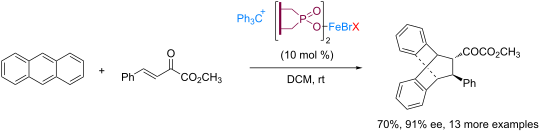
- , could promote the Diels–Alder reaction with anthracenes and various unsaturated carbonyl compounds under mild conditions [13]. The use of latent carbocation catalysis with TP was examined in order to achieve enantioselective control. To our delight, TP catalyzed the asymmetric reaction affording

Graphical Abstract

Scheme 1: Asymmetric carbocation catalysis.

Scheme 2: Synthesis of new carbocation catalysts with weakly coordinating metal-based phosphate anion.

Figure 1: Dissociation of latent carbocation by the use of Lewis acids. a) UV–vis absorption spectra of TP (0...

Scheme 3: a) The reaction with 9,10-dimethylanthracene (3b). b) Gram-scale reaction of 3a and 4k, and transfo...
Mechanochemical amorphization of chitin: impact of apparatus material on performance and contamination
- Thomas Di Nardo and
- Audrey Moores
Beilstein J. Org. Chem. 2019, 15, 1217–1225, doi:10.3762/bjoc.15.119
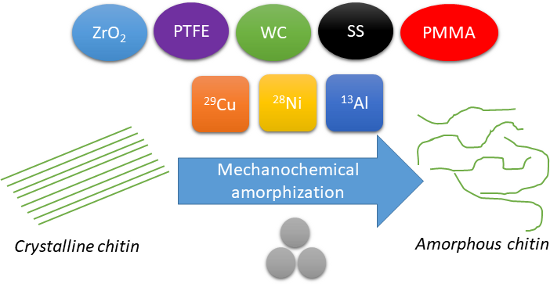
- stainless steel ones, since the latter caused the reactive mixture to adhere to the jars, which was not the case of the former. In another example, for the metal-free transfer hydrogenation of carbonyl compounds, PTFE was used instead of steel to eliminate the possibility of catalysis from the milling media

Graphical Abstract

Figure 1: CrI% for chitin samples, before and after milling in a jar with one ball made of SS, ZrO2, Cu, Al, ...

Figure 2: Value of CrI after milling as a function of the Vickers hardness values of the media (Jar and ball)...

Figure 3: Crystallinity index (%) after milling as a function of frequency. ZrO2 and SS jars are compared, bo...

Figure 4: Crystallinity index (%) of chitin milled with 9.5 mm balls of PTFE, ZrO2 and SS each used in jars o...

Figure 5: Correlation between the ball mass (orange line) or kinetic energy (blue line) with the crystallinit...

Figure 6: Metal contamination of milled chitin determined by ICP–OES, as a function of the milling medium. Th...
Novel (2-amino-4-arylimidazolyl)propanoic acids and pyrrolo[1,2-c]imidazoles via the domino reactions of 2-amino-4-arylimidazoles with carbonyl and methylene active compounds
- Victoria V. Lipson,
- Tetiana L. Pavlovska,
- Nataliya V. Svetlichnaya,
- Anna A. Poryvai,
- Nikolay Yu. Gorobets,
- Erik V. Van der Eycken,
- Irina S. Konovalova,
- Svetlana V. Shiskina,
- Alexander V. Borisov,
- Vladimir I. Musatov and
- Alexander V. Mazepa
Beilstein J. Org. Chem. 2019, 15, 1032–1045, doi:10.3762/bjoc.15.101
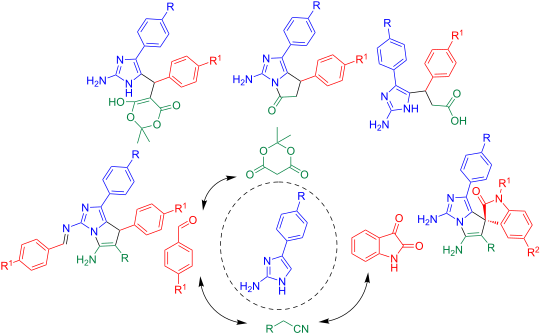
- -bielectrophiles or their synthetic precursors in the case of three-component reactions between these amines, carbonyl compounds and CH acids. Previously, an unusual direction of the three-component reaction between 2-aminoimidazoles, aldehydes and 5,5-dimethyl-1,3-cyclohexanedione has led to the formation of the

Graphical Abstract

Figure 1: 2-Aminoimidazole alkaloids from marine sponges.

Figure 2: The Knoevenagel–Michael adduct [24] and expected products.

Scheme 1: The three component condensation of imidazo[1,2-a]pyridine, aldehydes and Meldrum’s acid described ...

Figure 3: Molecular structure of 1-([1,1'-biphenyl]-4-yl)-5-oxo-7-phenyl-6,7-dihydro-5H-pyrrolo[1,2-c]imidazo...

Scheme 2: Two forms of cation 9i.

Figure 4: Molecular structure of 3-(2-amino-4-phenyl-1H-imidazol-5-yl)-3-(p-tolyl)propanoic acid 11b accordin...

Scheme 3: Three forms of the compound 11b in the crystal phase.

Scheme 4: Synthesis of the mixture of compounds 13 and 14.

Figure 5: Molecular structure of aminoimidazo[1,2-c]pyrrole 16a according to X-ray diffraction data. Thermal ...

Scheme 5: Resonance structures of 16a.

Figure 6: 3,3’-Spirooxindole alkaloids.

Figure 7: Molecular structure of aminoimidazo[1,2-c]pyrrole 19a according to X-ray diffraction data. Thermal ...

Scheme 6: Resonance structures of 19a.
Catalytic asymmetric oxo-Diels–Alder reactions with chiral atropisomeric biphenyl diols
- Chi-Tung Yeung,
- Wesley Ting Kwok Chan,
- Wai-Sum Lo,
- Ga-Lai Law and
- Wing-Tak Wong
Beilstein J. Org. Chem. 2019, 15, 955–962, doi:10.3762/bjoc.15.92
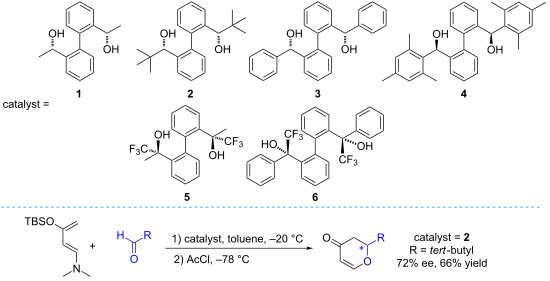
- alkene); it is called a hetero-Diels–Alder (HDA) reaction when one or more heteroatoms (most often oxygen or nitrogen) are present among the reactants, such as the use of carbonyl compounds or imines as dienophiles [1][2][3][4][5]. An asymmetric HDA reaction is capable of introducing up to four

Graphical Abstract

Scheme 1: Chiral biphenyl diol organocatalysts 1–6.

Scheme 2: Synthesis of 3.

Figure 1: (a) Single crystal X-ray structure of 3: showing intra- and intermolecular hydrogen bonds (green da...

Scheme 3: Synthesis of 4.

Scheme 4: Synthesis of 6.

Figure 2: X-ray crystal structure of (P)-(S,S)-6 at two different orientations to show (a) P atropselectiviti...
The LANCA three-component reaction to highly substituted β-ketoenamides – versatile intermediates for the synthesis of functionalized pyridine, pyrimidine, oxazole and quinoxaline derivatives
- Tilman Lechel,
- Roopender Kumar,
- Mrinal K. Bera,
- Reinhold Zimmer and
- Hans-Ulrich Reissig
Beilstein J. Org. Chem. 2019, 15, 655–678, doi:10.3762/bjoc.15.61
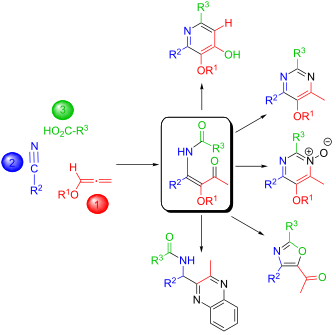
- obtained β-ketoenamides are alkenes with a remarkable assembly of functional groups: they are enamides, enol ethers and α,β-unsaturated carbonyl compounds at the same time. In addition, their methyl ketone subunit is required for some of the subsequent transformations, e.g., the synthesis of pyridin-4-ols

Graphical Abstract

Scheme 1: Discovery of the LANCA three-component reaction. The reaction of pivalonitrile (1) with lithiated m...

Scheme 2: Proposed mechanism of the LANCA three-component reaction to β-ketoenamides KE and pyridin-4-ol deri...

Scheme 3: One-pot preparation of pyridin-4-ols PY and their subsequent transformations to highly substituted ...

Scheme 4: Synthesis of β-ketoenamides KE by the LANCA three-component reaction of alkoxyallenes, nitriles and...

Scheme 5: β-Ketoenamides KE36–43 derived from enantiopure components.

Scheme 6: Bis-β-ketoenamides KE44–46 derived from aromatic dicarboxylic acids.

Scheme 7: Conversion of alkyl propargyl ethers E into aryl-substituted β-ketoenamides KEAr and selected produ...

Scheme 8: Condensation of LANCA-derived β-ketoenamides KE with ammonium salts to give 5-alkoxy-substituted py...

Scheme 9: Synthesis of PM31–35 from β-ketoenamides KE37, KE38, KE40, KE41 and KE78 obtained by method A (NH4O...

Scheme 10: Synthesis of bis-pyrimidine derivatives PM36, PM39 and PM40 from β-ketoenamides KE44–46 by method A...

Scheme 11: Functionalization of pyrimidine derivatives PM through selenium dioxide oxidations of PM5, PM9, PM15...

Scheme 12: Conversion of 2-vinyl-substituted pyrimidine PM7 into aldehyde PM50; (NMO = N-methylmorpholine N-ox...

Scheme 13: Deprotection of 5-alkoxy-substituted pyrimidines PM2, PM20 and PM29 and conversion into nonaflates ...

Scheme 14: Palladium-catalyzed coupling reactions of PM54 and PM12 giving rise to new pyrimidine derivatives P...

Scheme 15: Synthesis of pyrimidyl-substituted pyridyl nonaflate PM60.

Scheme 16: Condensation of LANCA-derived β-ketoenamides KE with hydroxylamine hydrochloride leading to pyrimid...

Scheme 17: Reactions of β-ketoenamides KE15 and KE7 with hydroxylamine hydrochloride leading to pyrimidine N-o...

Scheme 18: Structures of pyrimidine N-oxides PO30–33 derived from β-ketoenamides KE43, KE45, KE78 and KE80.
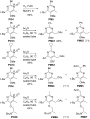
Scheme 19: Reduction of PO4 to PM5 and Boekelheide rearrangements of PO13, PO14, PO4 and PO30 to 4-acetoxymeth...

Scheme 20: Deprotection of 4-acetoxymethyl-substituted pyrimidine derivatives PM61 and PM63, oxidations to for...

Scheme 21: Synthesis of pyrimidinyl-substituted alkyne PM74 and conversion into furopyrimidine PM75 and Sonoga...

Scheme 22: Trifluoroacetic acid-promoted conversion of LANCA-derived β-ketoenamides KE into oxazoles OX and 1,...

Scheme 23: Conversion of β-ketoenamide KE79 into oxazole OX16 and transformation into 5-styryl-substituted oxa...

Scheme 24: Mechanisms of the formation of 1,2-diketones DK and of acetyl-substituted oxazole derivatives OX.

Scheme 25: Hydrogenolyses of benzyloxy-substituted β-ketoenamides KE52 and KE54 to 1,2-diketone DK14 and to di...

Scheme 26: Conversions of 2,4-dicyclopropyl-substituted oxazole OX7 into oxazole derivatives OX18–20 (PPA = po...

Scheme 27: Syntheses of vinyl and ethynyl-substituted oxazole derivatives OX21 and OX23 and their palladium-ca...

Scheme 28: Synthesis of C3-symmetric oxazole derivative OX28 and the STM current image of its 1-phenyloctane s...

Scheme 29: Condensation of 1,2-diketones DK with o-phenylenediamine to quinoxalines QU1–7 (CAN = cerium ammoni...

Scheme 30: The LANCA three-component reaction leading to β-ketoenamides KE and the structure of functionalized...
Asymmetric synthesis of a high added value chiral amine using immobilized ω-transaminases
- Antonella Petri,
- Valeria Colonna and
- Oreste Piccolo
Beilstein J. Org. Chem. 2019, 15, 60–66, doi:10.3762/bjoc.15.6
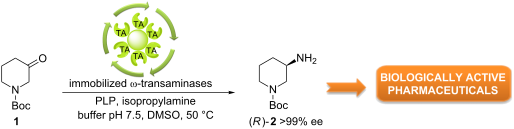
- carbonyl compounds. In a kinetic resolution, a maximum yield of 50% of the product can be obtained. Moreover, high quantities of the co-product might complicate the product separation and the recovery of the chiral amine. Thus, the asymmetric synthesis is generally preferable because a theoretically 100

Graphical Abstract

Scheme 1: Transamination reaction of 1-Boc-3-piperidone (1).

Figure 1: Reuse of ATA-025-IMB in five consecutive cycles in the transamination reaction of 1 in batch system...

Figure 2: Reuse of ATA-025-IMB IMB in five consecutive cycles in the transamination reaction of 1 in a flow s...
Mechanistic studies of an L-proline-catalyzed pyridazine formation involving a Diels–Alder reaction with inverse electron demand
- Anne Schnell,
- J. Alexander Willms,
- S. Nozinovic and
- Marianne Engeser
Beilstein J. Org. Chem. 2019, 15, 30–43, doi:10.3762/bjoc.15.3
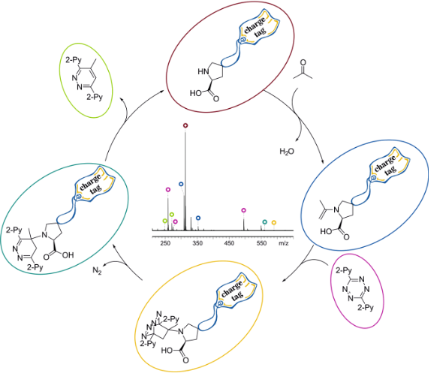
- between ketones and aryl-substituted 1,2,4,5-tetrazines which leads to functionalized pyridazines. They also postulated a mechanism (Scheme 1) for the reaction [51]. Based on the knowledge that secondary amines catalyze the formation of enamines from ketones and other carbonyl compounds [33], an initial

Graphical Abstract

Figure 1: Charge-tagged L-proline-derived catalyst 1∙Cl [18].

Scheme 1: Putative catalytic cycle [51] for the L-proline-catalyzed Diels–Alder reaction with inverse electron de...

Scheme 2: Synthesis of the charge-tagged tetrazine 4∙Br as a reactant for the proline-catalyzed Diels–Alder r...

Scheme 3: Reaction R1: L-proline-catalyzed reaction between 2 and acetone.

Figure 2: NMR monitoring of reaction R1 in deuterated DMSO (concentration of tetrazine 0.005 mmol/mL).

Scheme 4: Equilibrium of oxazolidinone and enamine formation.

Figure 3: a) ESI mass spectrum of reaction R1 after 26 min. b) ESIMS monitoring of reaction R1. To better vis...

Figure 4: ESI mass spectrum of reaction R1 with preformed I1 8 minutes after adding substrate 2.

Scheme 5: Reaction R2: L-proline-catalyzed reaction between charge-tagged substrate 4∙Br and acetone. The reg...

Figure 5: ESI mass spectrum of reaction R2 using a continuous-flow setup with a calculated reaction time of 8...

Figure 6: a) Reaction R2 after two hours (syringe setup). b) ESIMS monitoring of reaction R2. Signal intensit...

Scheme 6: Reaction R3: substrate 2, acetone and charge-tagged catalyst 1∙Cl.

Figure 7: ESI mass spectrum of reaction R3 at 60 °C after 1.5 h.
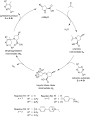
Scheme 7: General catalytic cycle for reactions R1–R3.

Figure 8: ESIMS monitoring of reaction R3. The plotted intensity values for each molecule are a sum of all co...

Figure 9: Isomeric forms in equilibrium: enamine [I3a]+, oxazolidinone [I3b]+ and iminium [I3c]+.

Figure 10: ESI(+) CID spectrum of mass-selected [I3]+ (m/z 353); collision energy voltage 1 V.

Figure 11: ESI(+) CID spectrum of mass selected [II3]+ (m/z 589); collision energy voltage 5 V.

Figure 12: ESI(+) CID spectrum of mass selected [III3]+ (m/z 561); collision energy voltage 10 V.
A convenient and practical synthesis of β-diketones bearing linear perfluorinated alkyl groups and a 2-thienyl moiety
- Ilya V. Taydakov,
- Yuliya M. Kreshchenova and
- Ekaterina P. Dolotova
Beilstein J. Org. Chem. 2018, 14, 3106–3111, doi:10.3762/bjoc.14.290
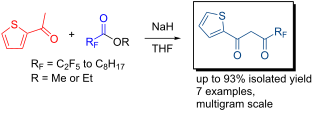
- commercial batches of NaOMe or NaOEt, along with samples freshly prepared in the laboratory. In all the experiments, anhydrous Et2O was used as the solvent and the initial concentration of carbonyl compounds was 0.2 mol/L. Methyl heptafluorobutanoate (2) was chosen as the ester because the corresponding β
- course of the reaction but significantly facilitates the purification process. The best results were obtained if THF solution of carbonyl compounds was slowly added dropwise to a suspension of NaH in THF, while the temperature was maintained below +5 °C. Upon completion of the condensation, the reaction

Graphical Abstract

Scheme 1: Synthesis of Htta.

Figure 1: Known thiophene-based perfluorinated β-diketones.

Scheme 2: Preparation of 1-(2-thienyl)butane-1,3-dione (5).

Scheme 3: Preparation and cleavage of copper chelates of β-diketones.

Scheme 4: Keto-enol equilibrium of β-diketones.
Nucleofugal behavior of a β-shielded α-cyanovinyl carbanion
- Rudolf Knorr and
- Barbara Schmidt
Beilstein J. Org. Chem. 2018, 14, 3018–3024, doi:10.3762/bjoc.14.281
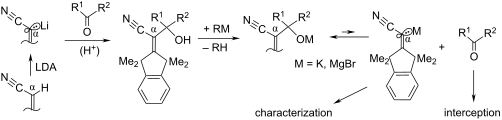
- -tetramethylindan-2-ylidene)acetonitriles added reversibly to three small aldehydes and two bulky ketones at room temperature. Experimental conditions were determined for transfer of the nucleofugal title carbanion unit between different carbonyl compounds. These readily occurring retro-additions via C–C(O) bond
- trapped by proton sources such as DMSO or unconsumed 7 to produce 1. As a consequence, the general procedure (GP) of adding carbonyl compounds to deprotonated 1 commends to use an acidic work-up and a strict exclusion of bases that are stronger than diluted aqueous NaHCO3. Benzaldehyde (5) and
- . Alternatively, carbonyl additions to 2Li might be generally retarded (relative to protonations) on account of the clustered [4] ground state structure of 2Li in solution. Electrophilic cations (Li+ or K+) are not necessary (albeit perhaps helpful) for the addition of the carbanion unit of 2Li or 2K to carbonyl

Graphical Abstract

Scheme 1: The nucleofugal carbanion unit C escapes from the alkoxides A1M1 or A1M2 (M = metal), generating th...
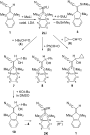
Scheme 2: Preparation of β-shielded α-lithioacrylonitrile 2Li and its reaction with aldehydes 4–6 to adducts 7...
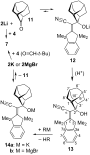
Scheme 3: Reversible formation of the adduct 13 of adamantan-2-one (11).
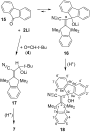
Scheme 4: Preparation and cleavage of the adduct 18 of fluoren-9-one (15).
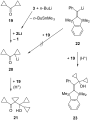
Scheme 5: Proton transfer from dicyclopropyl ketone (19) to 2Li.

Scheme 6: Metal-free release of the carbanion unit in 25 and its seizure by t-BuCH=O (→ 7); Bu = n-butyl.
An overview on recent advances in the synthesis of sulfonated organic materials, sulfonated silica materials, and sulfonated carbon materials and their catalytic applications in chemical processes
- Hashem Sharghi,
- Pezhman Shiri and
- Mahdi Aberi
Beilstein J. Org. Chem. 2018, 14, 2745–2770, doi:10.3762/bjoc.14.253
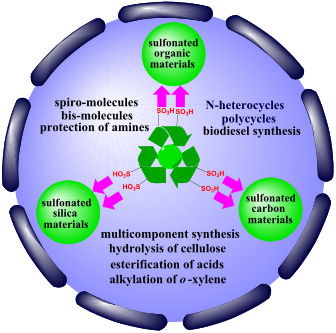
- these catalysts for extensive reactions, including the synthesis of bis(indolyl)methane derivatives, β-amino carbonyl compounds, 14H-dibenzo[a,j]xanthene derivatives, 1,8-dioxodecahydroacridine derivatives, xanthene derivatives, pyrimido[4,5-b]quinoline derivatives, spiro-isatin derivatives, spiro
- and 37 from active carbonyl compounds (e.g., isatins 32, acenaphthoquinone (33), and aldehydes 38), a variety of C–H activated acids (cyclohexane-1,3-dione (20a), 5,5-dimethylcyclohexane-1,3-dione (20b), 2-naphthol (23), ethyl acetoacetate (34a), 4-hydroxycoumarin (34b), triacetic acid lactone (34c

Graphical Abstract

Figure 1: Different types of sulfonated materials as acid catalysts.

Scheme 1: Synthetic route of 3-methyl-1-sulfo-1H-imidazolium metal chloride ILs and their catalytic applicati...

Scheme 2: Synthetic route of 1,3-disulfo-1H-imidazolium transition metal chloride ILs and their catalytic app...

Scheme 3: Synthetic route of 1,3-disulfoimidazolium carboxylate ILs and their catalytic applications in the s...

Scheme 4: Synthetic route of [BiPy](HSO3)2Cl2 and [Dsim]HSO4 ILs and their catalytic applications for the syn...

Scheme 5: The catalytic applications of (C4(DABCO-SO3H)2·4Cl) IL for the synthesis of spiro-isatin derivative...

Scheme 6: The catalytic applications of (C4(DABCO-SO3H)2·4Cl) IL for the synthesis of bis 2-amino-4H-pyran de...

Scheme 7: The synthetic route of N,N-disulfo-1,1,3,3-tetramethylguanidinium carboxylate ILs and their catalyt...

Scheme 8: The catalytic application of 1-methyl-3-sulfo-1H-imidazolium tetrachloroferrate IL in the synthesis...

Scheme 9: The synthetic route of 3-sulfo-1H-imidazolopyrimidinium hydrogen sulfate IL and its catalytic appli...

Scheme 10: The results for the synthesis of bis(indolyl)methanes and di(bis(indolyl)methyl)benzenes in the pre...

Scheme 11: The catalytic applications of 1-(1-sulfoalkyl)-3-methylimidazolium chloride acidic ILs for the hydr...

Scheme 12: The synthetic route of immobilized 1,4-diazabicyclo[2.2.2]octanesulfonic acid chloride on SiO2 and ...

Scheme 13: The catalytic application of a silica-bonded sulfoimidazolium chloride for the synthesis of 12-aryl...

Scheme 14: The synthetic route of the SBA-15-Ph-SO3H and its catalytic applications for the synthesis of 2H-in...

Scheme 15: The synthetic route for heteropolyanion-based ionic liquids immobilized on mesoporous silica SBA-15...

Scheme 16: Some mechanism aspects of SSA catalyst for the protection of amine derivatives.

Scheme 17: The synthetic route for MWCNT-SO3H and its catalytic application for the synthesis of N-substituted...
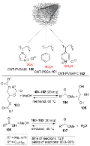
Scheme 18: The sulfonic acid-functionalized polymers (P-SO3H) covalently grafted on multi-walled carbon nanotu...

Scheme 19: The transesterification reaction in the presence of S-MWCNTs.

Scheme 20: The synthetic route for the new hypercrosslinked supermicroporous polymer via the Friedel–Crafts al...

Scheme 21: The synthetic route for a new microporous copolymer via the Friedel–Crafts alkylation reaction of t...

Scheme 22: The synthetic route for sulfonated polynaphthalene and its catalytic application for the amidoalkyl...

Scheme 23: The synthetic route of the acidic carbon material and its catalytic application in the etherificatio...

Scheme 24: The synthetic route of the acidic carbon materials and their catalytic applications for the esterif...

Scheme 25: The sulfonated MWCNTs.

Scheme 26: The sulfonated nanoscaled diamond powder for the dehydration of D-xylose into furfural.

Scheme 27: The synthetic route and catalytic application of the GR-SO3H.



