


Search results
Search for "decomposition" in Full Text gives 826 result(s) in Beilstein Journal of Organic Chemistry. Showing first 200.
Mechanistic investigations of polyaza[7]helicene in photoredox and energy transfer catalysis
Beilstein J. Org. Chem. 2024, 20, 1236–1245, doi:10.3762/bjoc.20.106
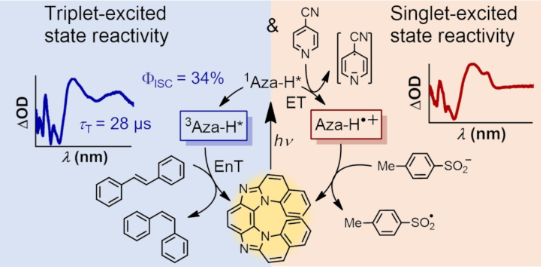
- solutions. However, these studies might be important for explaining reactivity changes when Aza-H is employed in photoreactions requiring or releasing Brønsted acids. During the 3-CR experiment, we observed a decomposition of the catalyst that occurred faster than in the absence of any additives (see
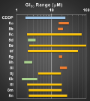
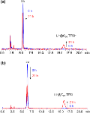
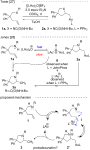
- , Supporting Information File 1) [76]. A reaction course plot in the absence of 4CP and TsNa revealed rapid decomposition of the photocatalyst, presumably in a [2 + 2]-photocycloaddition with the styrene component as observed in mass spectrometry (see Figure S17 and Figure S18 in Supporting Information File 1
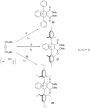
- species in a three-component sulfonylation/arylation reaction, whereas the unexplored triplet state is responsible for the decomposition of the photocatalyst. Photoinduced radical cation formation and thermal regeneration could be unambiguously observed, providing deep mechanistic insights into the




The Ugi4CR as effective tool to access promising anticancer isatin-based α-acetamide carboxamide oxindole hybrids
Beilstein J. Org. Chem. 2024, 20, 1213–1220, doi:10.3762/bjoc.20.104
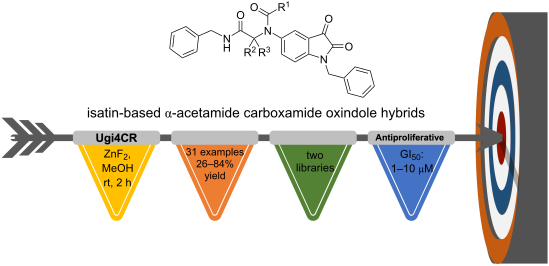
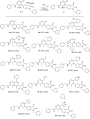
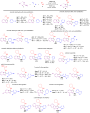
- . Compounds 5ib and 5hb, with N-Boc protected-heterocycle units in the 5-amide position of the oxindole ring (Scheme 2) failed to afford the corresponding 3-deprotected isatin hybrids, since only decomposition byproducts (not identified) were obtained. Antiproliferative activity Considering the potential




Bismuth(III) triflate: an economical and environmentally friendly catalyst for the Nazarov reaction
Beilstein J. Org. Chem. 2024, 20, 1167–1178, doi:10.3762/bjoc.20.99
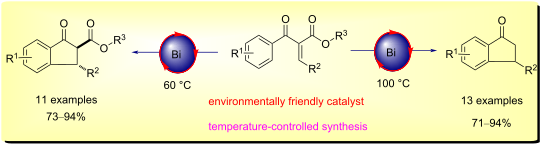
- of the corresponding indanones even though the reaction remained at 60 °C for a longer time (48 h), but the starting materials could be recovered. For substrate 9ah, there was complete decomposition of the starting material, along with the formation of several byproducts. Surprisingly, when using the


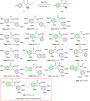
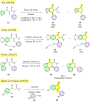


Kinetically stabilized 1,3-diarylisobenzofurans and the possibility of preparing large, persistent isoacenofurans with unusually small HOMO–LUMO gaps
Beilstein J. Org. Chem. 2024, 20, 1099–1110, doi:10.3762/bjoc.20.97
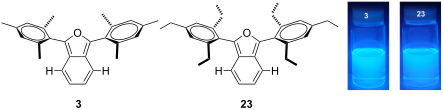
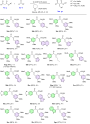
- ’,4’,6’-triethylphenyl substituents in compounds 3 and 23, respectively, provides for enhanced steric congestion at the most reactive 1,3-carbons of the furan ring. Likewise, 3 and 23 are stable indefinitely in the solid state and persist for days in solution phase without significant decomposition






Synthesis of 1,4-azaphosphinine nucleosides and evaluation as inhibitors of human cytidine deaminase and APOBEC3A
Beilstein J. Org. Chem. 2024, 20, 1088–1098, doi:10.3762/bjoc.20.96
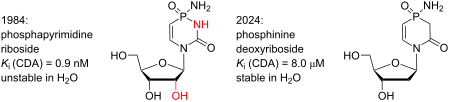
- in H2O. Removal of toluoyl groups was accomplished in aq NH3, providing pure α- and β-nucleoside of Va and Vc, respectively, carrying a negatively charged phosphinic acid group. These compounds were found to be stable in sodium phosphate buffer at pH 7.0 as no decomposition was observed in NMR


Light on the sustainable preparation of aryl-cored dibromides
Beilstein J. Org. Chem. 2024, 20, 1076–1087, doi:10.3762/bjoc.20.95
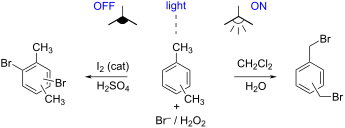
- ) starting when the added moles of H2O2 reached that of HBr. In order to confirm that this phenomenon was not attributable exclusively to the undesired peroxide decomposition described in Equation 4, we repeated the same reaction on p-xylene as in entry 8 of Table 1, but with different H2O2/HBr molar ratios
- . Our data confirmed that using reduced amounts of peroxide (in relation to H2O2/HBr = 2.0) leads to proportionally reduced conversion with remaining unreacted 3 (Supporting Information File 1, Table S1, entries 1, 2 and 3). The reason can be ascribed to the partial physiological peroxide decomposition
- dissolved in aqueous hydrogen peroxide and was gradually added to the reaction mixture, containing the remaining chemicals. The addition time of this aqueous reagent was also shortened to 15 minutes, to counteract the slow decomposition of H2O2 caused by NaBr. This modification ultimately resulted in nearly


Structure–property relationships in dicyanopyrazinoquinoxalines and their hydrogen-bonding-capable dihydropyrazinoquinoxalinedione derivatives
Beilstein J. Org. Chem. 2024, 20, 1037–1052, doi:10.3762/bjoc.20.92
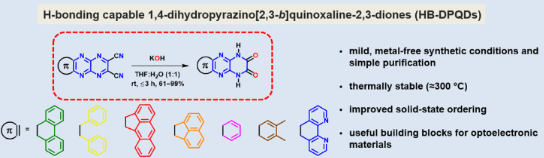
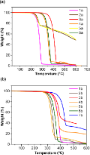
- temperatures of 21 and 7 °C, respectively, from their corresponding DCPQ comparators. To complement the TGA studies, the thermal stability of compound 4b was evaluated through its exposure to air inside a 200 °C oven for one week. Structural evaluation by 2D NMR and mass spectrometry confirmed no decomposition




Auxiliary strategy for the general and practical synthesis of diaryliodonium(III) salts with diverse organocarboxylate counterions
Beilstein J. Org. Chem. 2024, 20, 1020–1028, doi:10.3762/bjoc.20.90
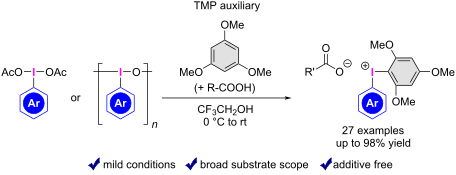
- % yield. It is worth noting that the products yielded by these protocols were easily separated as white amorphous solids by concentration and trituration of the obtained residue with diethyl ether. The color of the products indicates that the reactions proceeded without any signs of decomposition
- , consequently yielding the desired products in high yields. However, the common synthetic methods of diaryliodonium(III) triflates involving a strong oxidizing agent with a strong acid and an electron-rich arene often resulted in black/discolored products, indicating decomposition, poor yields, and lower


Spin and charge interactions between nanographene host and ferrocene
Beilstein J. Org. Chem. 2024, 20, 1011–1019, doi:10.3762/bjoc.20.89
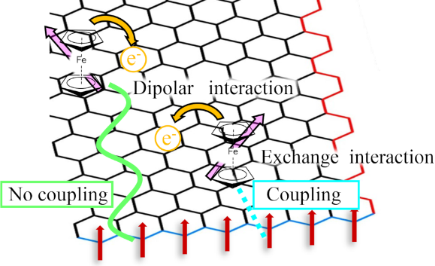
- unpaired spins [14][15] have been introduced to nanographene hosts as magnetic guest molecules so far. However, the decomposition of molecules, the vanishment of guest magnetism, etc., after accommodation by the host material prevent magnetic interactions between the host and guest in these systems. The


Synthesis and properties of 6-alkynyl-5-aryluracils
Beilstein J. Org. Chem. 2024, 20, 898–911, doi:10.3762/bjoc.20.80
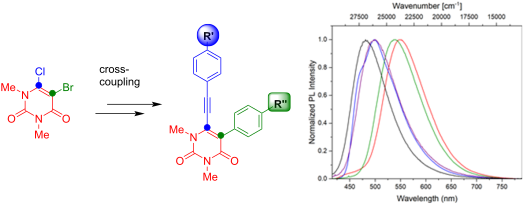
- stronger electron-withdrawing groups, as can be seen in case of product 4d. The yield of 4b was comparatively lower, which may be due to the higher steric hindrance of the used arylacetylene. Product 4f could not be synthesized, due to decomposition during the reaction. Furthermore, no precursor could be
- ring instead of a benzene moiety. This was demonstrated by the introduction of thiophene (5r) and furan (5t) to the uracil structure. The molecules 5n and 5o could not be obtained, due to decomposition during the reaction. The structure of 5a was confirmed by X-ray crystallographic analysis. Crystals




(Bio)isosteres of ortho- and meta-substituted benzenes
Beilstein J. Org. Chem. 2024, 20, 859–890, doi:10.3762/bjoc.20.78
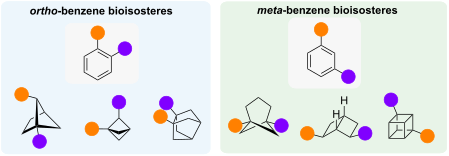
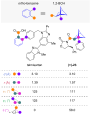
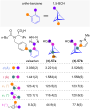
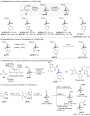
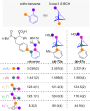
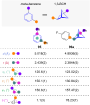
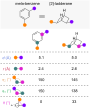
- increased by bioisosteric replacement of ortho-benzene with 1,2-BCHs, the metabolic stability as determined by intrinsic clearance rate in human liver microsomes (Clint) and half-time of metabolic decomposition (t1/2) decreased. Mykhailiuk and co-workers also reported the antifungal activity of fluxapyroxad














Enhanced reactivity of Li+@C60 toward thermal [2 + 2] cycloaddition by encapsulated Li+ Lewis acid
Beilstein J. Org. Chem. 2024, 20, 653–660, doi:10.3762/bjoc.20.58
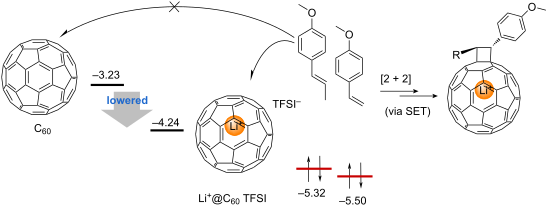
- reasons for the irreversible redox properties after the second reduction process have not been thoroughly investigated, the observed phenomena could potentially be attributed to ring opening or simple decomposition under the conditions. From these results, the LUMO levels of the compounds were estimated




HPW-Catalyzed environmentally benign approach to imidazo[1,2-a]pyridines
Beilstein J. Org. Chem. 2024, 20, 628–637, doi:10.3762/bjoc.20.55
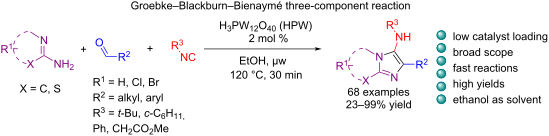
- , probably due to decomposition by the high temperature used in the protocol. Furthermore, the use of the less reactive TosMIC as isocyanide did not furnish the expected product; only the formamide product was isolated from the chromatographic column, which may be due to the lower nucleophilicity of this




Ligand effects, solvent cooperation, and large kinetic solvent deuterium isotope effects in gold(I)-catalyzed intramolecular alkene hydroamination
Beilstein J. Org. Chem. 2024, 20, 479–496, doi:10.3762/bjoc.20.43
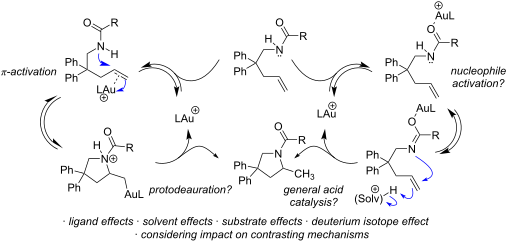
- require geminal substitution or backbone heteroatoms, internal alkenes are often not tolerated, and intermolecular reactions require high temperatures which can lead to significant catalyst decomposition [20]. This is usually addressed by employing bulky or strong donor ligands [21][22]. Novel strategies
- concentration of deuterated species and large solvent KIE’s when performed in pure CH3OH versus CD3OD. Connections between catalyst activity and decomposition were made and a structurally interesting new bisphosphine–gold complex was isolated. Although our results do not provide conclusive evidence for or
- withdrawing than an o-biphenyl, so presumably Lewis acidity is boosted here. Observations on ligand effect and decomposition Ligand effects on rates of hydroamination are amplified with slower reacting substrates and lower amounts of MeOH (higher relative amounts of bulk solvent methylene chloride). With the







Green and sustainable approaches for the Friedel–Crafts reaction between aldehydes and indoles
Beilstein J. Org. Chem. 2024, 20, 379–426, doi:10.3762/bjoc.20.36
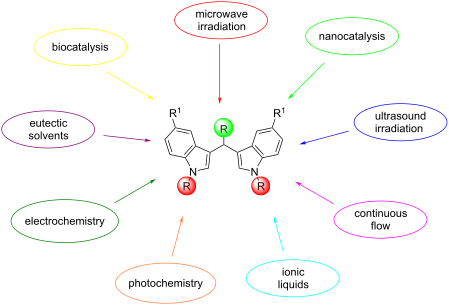
- requires large amounts of capping agents to combat, Pratihar and his research group offered the alternative of iron oxalates for the nanocatalysis of BIMs, which, after thermal decomposition form Fe(ox)-Fe3O4 oxides [108]. Metal oxalates in general are more stable nanoparticles than their oxide




Mechanisms for radical reactions initiating from N-hydroxyphthalimide esters
Beilstein J. Org. Chem. 2024, 20, 346–378, doi:10.3762/bjoc.20.35
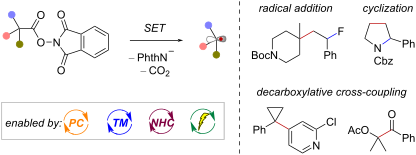
- utility is frequently restricted due to various challenges, such as RAE decomposition and a limited aryl halide scope. In recent years, the Baran lab has made progress in enhancing the practicality and applicability of electrochemically driven decarboxylative couplings involving NHPI esters and aryl
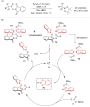
- formation of silver nanoparticles (AgNP) on the cathode's surface [116] (Scheme 35B). The use of this Ag-doped cathode led to slower mass transport and minimized side reactions caused by rapid reduction of RAEs, thereby avoiding substrate decomposition and enhancing reaction yields (Scheme 35B). Furthermore








Nucleophilic functionalization of thianthrenium salts under basic conditions
Beilstein J. Org. Chem. 2024, 20, 257–263, doi:10.3762/bjoc.20.26
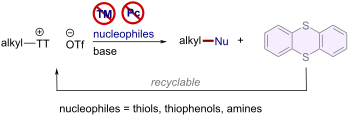
- , alkyl-OTf is prone to decomposition and poses challenges for storage at ambient temperature (for details, see Supporting Information File 1). Conclusion In summary, using the presented operational simple and metal-free method, we have synthesized thioethers and amines from bench stable and readily



Copper-catalyzed multicomponent reaction of β-trifluoromethyl β-diazo esters enabling the synthesis of β-trifluoromethyl N,N-diacyl-β-amino esters
Beilstein J. Org. Chem. 2024, 20, 212–219, doi:10.3762/bjoc.20.21
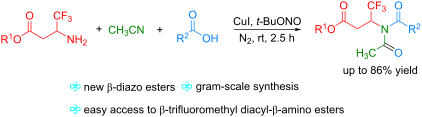
- ). Increasing the reaction time to 3 h also did not lead to any better result mainly due to the decomposition of product 4a (Table 1, entry 14). With the optimized reaction conditions in hand, we next evaluated the substrate scope by using a variety of structurally diverse carboxylic acids 3 to react with β


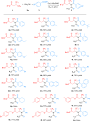


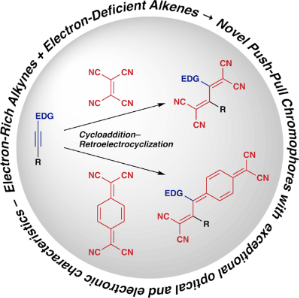
Perspectives on push–pull chromophores derived from click-type [2 + 2] cycloaddition–retroelectrocyclization reactions of electron-rich alkynes and electron-deficient alkenes
Beilstein J. Org. Chem. 2024, 20, 125–154, doi:10.3762/bjoc.20.13


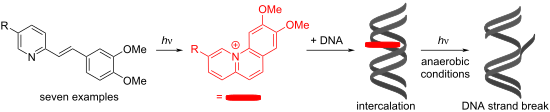
Photoinduced in situ generation of DNA-targeting ligands: DNA-binding and DNA-photodamaging properties of benzo[c]quinolizinium ions
Beilstein J. Org. Chem. 2024, 20, 101–117, doi:10.3762/bjoc.20.11
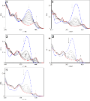
- an exception, the irradiation of the nitro-substituted styrylpyridine derivative 2a in MeCN or H2O led to disappearance of the long-wavelength absorption maximum with no formation of a distinct new band (Figure 2A), which usually indicates photoinduced decomposition. This observation is in agreement




Using the phospha-Michael reaction for making phosphonium phenolate zwitterions
Beilstein J. Org. Chem. 2024, 20, 41–51, doi:10.3762/bjoc.20.6
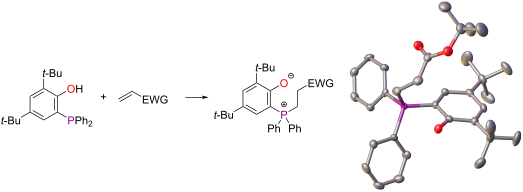
- adduct 2d. Stability studies were conducted in the solid state and in solution. When storing the zwitterion under ambient conditions for a duration of two months, minor decomposition can be observed. The proton NMR gives rise to new signals appearing at 6.81 ppm (dd, J = 14.5, J = 2.2 Hz) and 11.23 ppm
- main decomposition product, giving resonance at 41.4 ppm [42]. Besides, a number of new minor phosphorous species were detected. However, the total decomposition as indicated by 31P NMR can be estimated to be less than 5% (intensity of all phosphorous peaks from decomposition vs the intensity of the
- temperature the observable decomposition after 72 h is very low in both solvents. NMR spectra (1H and 31P) show trace amounts of the phosphine oxide of 1. The total amount of phosphine oxide is somewhat lower in DMSO-d6 when compared to CDCl3. Additionally, in CDCl3 further unknown decomposition products were


1-Butyl-3-methylimidazolium tetrafluoroborate as suitable solvent for BF3: the case of alkyne hydration. Chemistry vs electrochemistry
Beilstein J. Org. Chem. 2023, 19, 1966–1981, doi:10.3762/bjoc.19.147
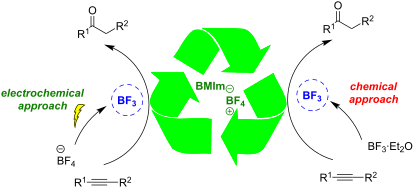
- diethyl ether traces and then analysed by NMR to check for BMIm-F presence, whereas the fluoride ion could originate from IL decomposition in the presence of water or from the evolution of electrogenerated F2. However, the 19F NMR spectrum showed no detectable peak around −122 ppm, reported in the


Aldiminium and 1,2,3-triazolium dithiocarboxylate zwitterions derived from cyclic (alkyl)(amino) and mesoionic carbenes
Beilstein J. Org. Chem. 2023, 19, 1947–1956, doi:10.3762/bjoc.19.145
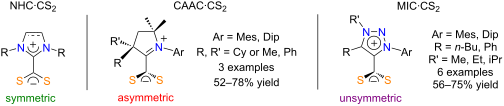
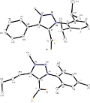
- excess to compensate for the possible formation of sodium O-tert-butyl xanthate [72][73][74]. We reasoned that these conditions should favor a quantitative deprotonation of the starting triazolium salts and the concomitant trapping of the free carbenes by CS2 prior to their potential decomposition
- on 13C NMR spectroscopy (see below). We suspect that deleterious hydrophilic effects caused the subsequent decomposition of the CAAC·CS2 and MIC·CS2 zwitterions when an aqueous work-up was applied. Structural analysis Several analytical techniques were employed to characterize the nine aldiminium and


Studying specificity in protein–glycosaminoglycan recognition with umbrella sampling
Beilstein J. Org. Chem. 2023, 19, 1933–1946, doi:10.3762/bjoc.19.144
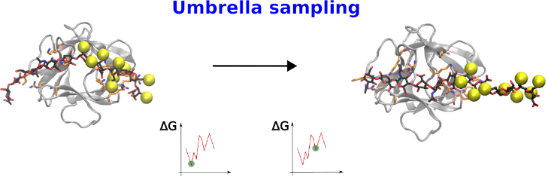
- growth factor, which when pulled back into the binding site led to low binding energies but a drastically different pose (partially perpendicular) of the ligand. Energy contributions of sulfated and unsulfated parts of the GAG were investigated from per residue decomposition of MM/GBSA analysis (Table 2
- energies obtained from MM/GBSA analysis and RMSD values of the ligand for all frames of the merged MD trajectories. Energy contributions in kcal/mol of the sulfated and unsulfated parts of GAGs obtained from MM/GBSA per residue decomposition. Pearson correlation coefficients obtained for all frames of the




Aromatic systems with two and three pyridine-2,6-dicarbazolyl-3,5-dicarbonitrile fragments as electron-transporting organic semiconductors exhibiting long-lived emissions
Beilstein J. Org. Chem. 2023, 19, 1867–1880, doi:10.3762/bjoc.19.139
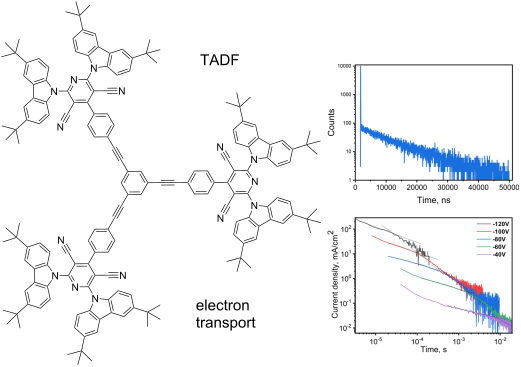
- under a nitrogen atmosphere. TGA allows us to observe the weight changes of the samples as a function of temperature, providing valuable insights into processes such as decomposition, volatilization, and oxidation. In the case of DSC measurements, the samples were heated at a rate of 10 °C/min in a





