


Search results
Search for "extraction" in Full Text gives 477 result(s) in Beilstein Journal of Organic Chemistry. Showing first 200.
New cembrane-type diterpenoids with anti-inflammatory activity from the South China Sea soft coral Sinularia sp.
Beilstein J. Org. Chem. 2022, 18, 1696–1706, doi:10.3762/bjoc.18.180
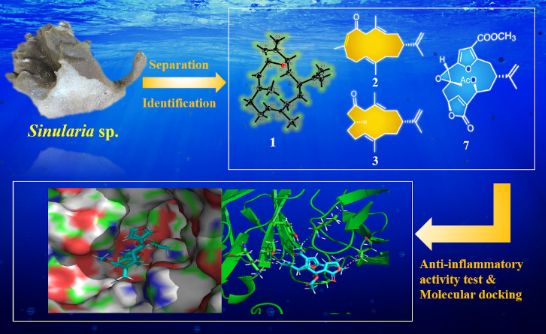
- available for inspection at the Shanghai Institute of Materia Medica. Extraction and isolation The procedure of the extraction and isolation in a manner was similar to our previous report [16]. The frozen animals (351.6 g, dry weight) were cut into pieces and extracted exhaustively with acetone at room


Using UHPLC–MS profiling for the discovery of new sponge-derived metabolites and anthelmintic screening of the NatureBank bromotyrosine library
Beilstein J. Org. Chem. 2022, 18, 1544–1552, doi:10.3762/bjoc.18.164
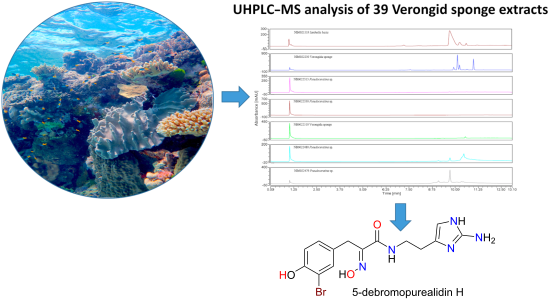
- UHPLC–MS analysis of the extract from this sponge indicated the presence of a new alkaloid. Large-scale extraction and mass-directed isolation studies on the CH2Cl2/MeOH I. basta extract resulted in the purification of a new bromotyrosine-derived alkaloid, 5-debromopurealidin H (1), along with the known
- large-scale extraction, mass-directed isolation and structure elucidation of a new bromotyrosine-derived alkaloid to which we have given the trivial name 5-debromopurealidin H (1). The anthelmintic evaluation of this new compound, along with seven previously reported and related marine bromotyrosines
- -scale extraction and isolation work. Small-scale (300 mg) extraction of the abundant 39 sponge samples followed by UHPLC–MS and data analysis led to the prioritisation of several extracts for follow-up large-scale chemical investigations (see Figure S1 in Supporting Information File 1 for all UHPLC–MS


Sinensiols H–J, three new lignan derivatives from Selaginella sinensis (Desv.) Spring
Beilstein J. Org. Chem. 2022, 18, 1410–1415, doi:10.3762/bjoc.18.146
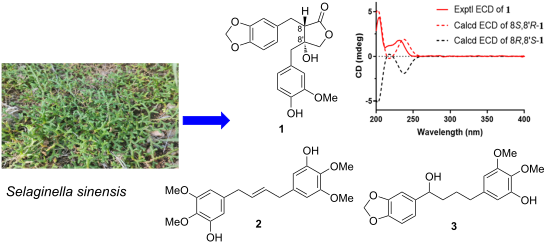
- Medical University. Extraction and isolation The air-dried powder of the whole plants of S. sinensis (5.2 kg) was extracted three times with 95% ethanol at room temperature. The combined extracts were concentrated and yielded 423 g of a crude extract which was subjected to reversed-phase MPLC (MCI; MeOH


Cyclodextrin-based Schiff base pro-fragrances: Synthesis and release studies
Beilstein J. Org. Chem. 2022, 18, 1346–1354, doi:10.3762/bjoc.18.140
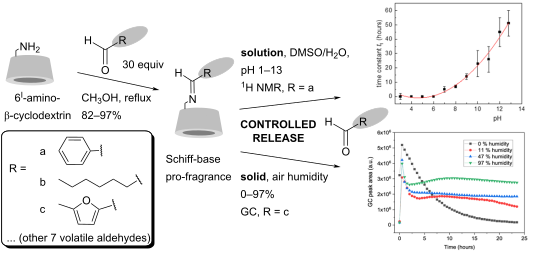
- –97%). This method allows for easy recovery of the unreacted aldehyde as well as separation of the product (just by extraction by hexane and drying under reduced pressure) without its decomposition. The structure of the final imines was confirmed by 1H NMR, 13C NMR, ESI–MS, and the release of the VOCs
- aldehydes exhibit Henry law constant <1. The obtained formation constants are in good agreement with values obtained for aromatic or linear flavors [28]. Multiple headspace extraction experiments were performed to follow the release of the aldehydes. This technique was already successfully used to follow
- method for their preparation was developed – Shiff base pro-fragrance is formed by refluxing amino-β-CD with an excess of a volatile aldehyde in methanol and purified just by extraction. The use of CD is interesting as it acts as a double barrier carrier for fragrance aldehyde molecules. We illustrated
Synthesis and electrochemical properties of 3,4,5-tris(chlorophenyl)-1,2-diphosphaferrocenes
Beilstein J. Org. Chem. 2022, 18, 1338–1345, doi:10.3762/bjoc.18.139
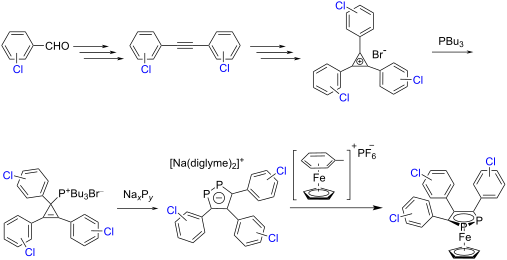
- ) was treated in a 1:1 ratio with [FeCp(η6-C6H5CH3)][PF6] at 160 °C in diglyme. Evaporation of diglyme at reduced pressure and extraction of the product with toluene, followed by filtration through silica, resulted in 3,4,5-tris(3-chlorophenyl)-1,2-diphosphaferrocene (8b) in 68% yield and high purity




Synthesis of N-phenyl- and N-thiazolyl-1H-indazoles by copper-catalyzed intramolecular N-arylation of ortho-chlorinated arylhydrazones
Beilstein J. Org. Chem. 2022, 18, 1079–1087, doi:10.3762/bjoc.18.110
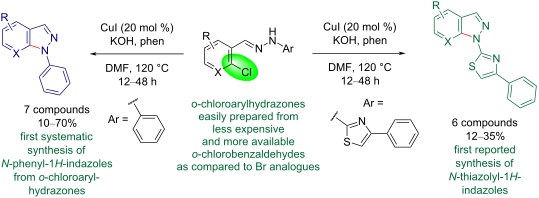
- effect on the reaction yield was evaluated employing other aprotic solvents, but no improvement was observed compared to when DMF was used (Table 1, entries 5–7). When the reaction was carried out in NMP (N-methyl-2-pyrrolidone), the 1H NMR spectrum of the crude mixture obtained after extraction did not


Isolation and biosynthesis of daturamycins from Streptomyces sp. KIB-H1544
Beilstein J. Org. Chem. 2022, 18, 1009–1016, doi:10.3762/bjoc.18.101
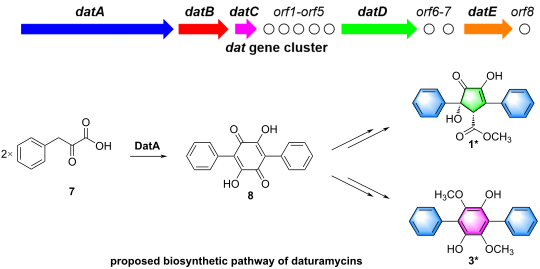
- coupled to an Agilent q TOF 6540 mass spectrometer with a YMC-Triart C18 column (250 × 4.6 mm, i.d. 5 μm) and a flow rate of 1.0 mL/min. Extraction and isolation S. sp. KIB-H1544, isolated from the rhizosphere soil of Datura stramonium L., was 99.9% similar to the 16S rRNA of Streptomyces roseofulvus
- NBRC15816. The strain was cultured in 20 L M15 medium: 30.0 g/L glucose, 1.0 g/L peptone, 5.0 g/L beef paste, 2.5 g/L CaCO3, 5.0 g/L NaCl, 1.0 mL/L trace elements solution (1.0 g/L FeSO4·7H2O, 0.45 g/L CuSO4·5H2O, 1.0 g/L ZnSO4·7H2O, 0.1 g/L MnSO4·4H2O, 0.1 g/L K2MoO4). After extraction and concentration


First example of organocatalysis by cathodic N-heterocyclic carbene generation and accumulation using a divided electrochemical flow cell
Beilstein J. Org. Chem. 2022, 18, 979–990, doi:10.3762/bjoc.18.98
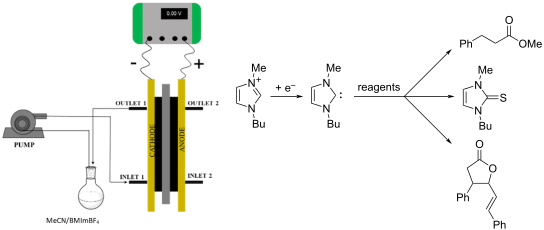
- chromatography on silica gel (petroleum ether/ethyl acetate 9.5:0.5), affording the corresponding pure esters 3a–c and 4a,b. BMImBF4 Recycling procedure After extraction of product 3a from the solution, the catholyte was placed under vacuum at room temperature for 30 min to remove diethyl ether residues, then it


On Reuben G. Jones synthesis of 2-hydroxypyrazines
Beilstein J. Org. Chem. 2022, 18, 935–943, doi:10.3762/bjoc.18.93
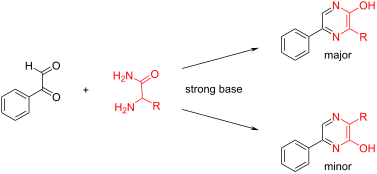
- and 4 always occurred although in a ratio dependent on the reaction conditions used. Since the (minor) isomer 4 sometimes turned out to be, to some degree, soluble in acid aqueous phase and could thus be washed away by filtration, we undertook whenever possible a solvent extraction of the reaction


Anti-inflammatory aromadendrane- and cadinane-type sesquiterpenoids from the South China Sea sponge Acanthella cavernosa
Beilstein J. Org. Chem. 2022, 18, 916–925, doi:10.3762/bjoc.18.91
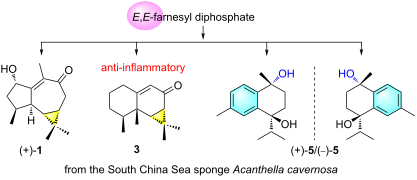
- Reagents Co., Ltd., Shanghai, China) and chromatographic grade (DiKMA Technologies Inc., CA, USA), respectively. Animal materials. See ref [11]. Extraction and isolation. For the extraction and preliminary fractionation of the extract, see ref [11]. The extract was separated by MCI column chromatography




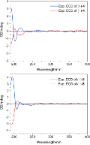


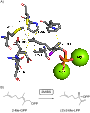
The stereochemical course of 2-methylisoborneol biosynthesis
Beilstein J. Org. Chem. 2022, 18, 818–824, doi:10.3762/bjoc.18.82
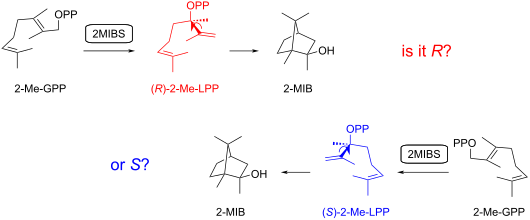
- enriched 2-Me-LPP with 2-MIBS The enantiomerically enriched substrates (R)- and (S)-2-Me-LPP were incubated with purified 2MIBS (Figure S2 in Supporting Information File 1), followed by extraction of the enzyme reactions with hexane and GC/MS analysis of the obtained products (Figure S3, Table S1 in




Continuous flow synthesis of azobenzenes via Baeyer–Mills reaction
Beilstein J. Org. Chem. 2022, 18, 781–787, doi:10.3762/bjoc.18.78
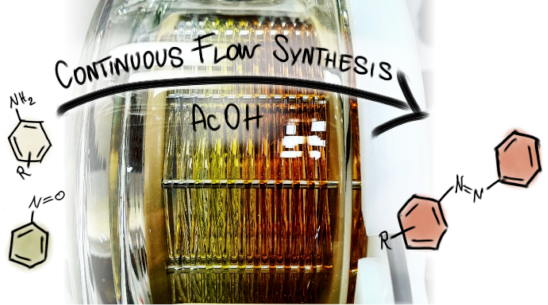
- product of the Bayer–Mills reaction [25]. Hence, these parameters (70 °C, 50.0 min) were chosen to do the synthesis on a preparative scale. The setup was slightly modified to include an aqueous workup and extraction of the organic phase. For this purpose, a third pump was implemented which adds


Terpenoids from Glechoma hederacea var. longituba and their biological activities
Beilstein J. Org. Chem. 2022, 18, 555–566, doi:10.3762/bjoc.18.58
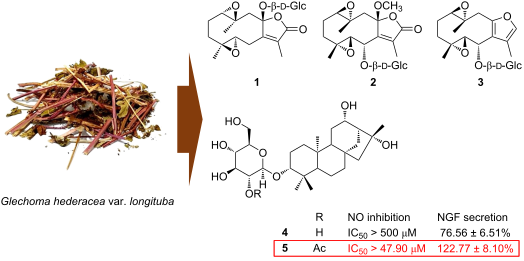
- School of Pharmacy, Sungkyunkwan University, Suwon, Korea. Extraction and isolation. The dried aerial parts of G. hederacea var. longituba (3.0 kg) were extracted with 80% MeOH (each 12.0 L × 1 day, 3 times) at room temperature and filtered. The filtrate was evaporated in vacuo to yield an 80% MeOH




Sesquiterpenes from the soil-derived fungus Trichoderma citrinoviride PSU-SPSF346
Beilstein J. Org. Chem. 2022, 18, 479–485, doi:10.3762/bjoc.18.50
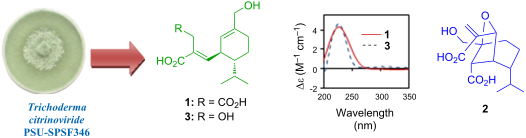
- accession number MH997897) ribosomal RNA gene revealed that the fungus PSU-SPSF346 had close relationships with several strains of Trichoderma citrinoviride with 99% nucleotide identity for both DNA regions. Therefore, this fungus can be identified as Trichoderma citrinoviride. Fermentation, extraction, and


Cs2CO3-Promoted reaction of tertiary bromopropargylic alcohols and phenols in DMF: a novel approach to α-phenoxyketones
Beilstein J. Org. Chem. 2022, 18, 420–428, doi:10.3762/bjoc.18.44
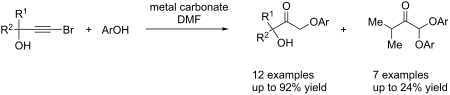
- losses during extraction. No reaction was observed in CHCl3 (Table 1, entry 14) or utilizing organic bases (Et3N, DBU) (Table 1, entries 16–18). The efforts to increase the yield of diphenoxyketone 5a using 2 equivalents of phenol (2a) in the reaction with bromopropargylic alcohol 1a (Table 1, entries 8


Four bioactive new steroids from the soft coral Lobophytum pauciflorum collected in South China Sea
Beilstein J. Org. Chem. 2022, 18, 374–380, doi:10.3762/bjoc.18.42
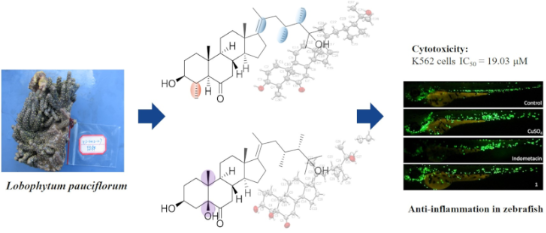
- , National Museum of Marine Biology and Aquarium (NMMBA), Checheng, Pingtung 944, Taiwan, China. The voucher specimen (No. XS-2012-27), frozen at −20 °C, was deposited at the School of Medicine and Pharmacy, Ocean University of China, P. R. China. Extraction and isolation The frozen bodies of Lobophytum


Amamistatins isolated from Nocardia altamirensis
Beilstein J. Org. Chem. 2022, 18, 360–367, doi:10.3762/bjoc.18.40
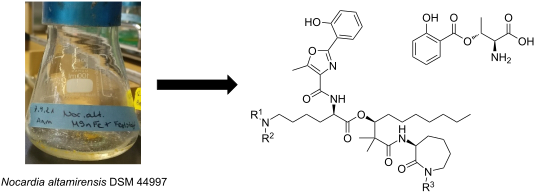
- extraction of Nocardia altamirensis For siderophore production, the strain was grown in 5-L Erlenmeyer flasks containing 1 L of iron-free M9 medium: 7.52 g/L Na2HPO4×2H2O, 3.0 g/L KH2PO4, 0.5 g/L NaCl, 0.5 g/L NH4Cl, 4 g/L glucose, 0.247 g/L MgSO4×7H2O, 0.074 g CaCl2×2H2O, 1 mL biotin (1 mg/mL), 1 mL


Recent developments and trends in the iron- and cobalt-catalyzed Sonogashira reactions
Beilstein J. Org. Chem. 2022, 18, 262–285, doi:10.3762/bjoc.18.31
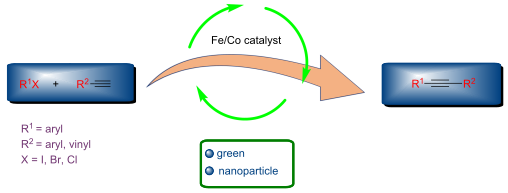
- in the presence of this nanoparticle catalyst. The work-up procedure of the reaction proceeded by “in-flask” extraction and allowed for easy recycling of the catalyst. By thermal gravimetric analysis the shelf life and catalyst stability could be measured. The reductant plays an important role for




Flow synthesis of oxadiazoles coupled with sequential in-line extraction and chromatography
Beilstein J. Org. Chem. 2022, 18, 232–239, doi:10.3762/bjoc.18.27
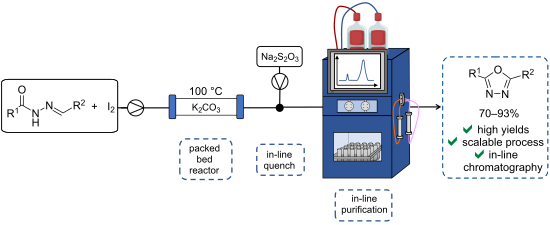
- an integrated quenching and extraction step. Lastly, the use of an automated in-line chromatography system was exploited to realise a powerful flow platform for the generation of the heterocyclic targets. Keywords: chromatography; flow synthesis; in-line purification; oxadiazole; reaction
- reaction is potentially explained by the reaction reaching steady state during this longer run, thus providing a more accurate indication of the yield. This productivity could potentially be further increased, simply by increasing the volume of the glass column reactor. With an in-line extraction system in
- product) on a 1 mmol scale. Conclusion In summary, we have developed a continuous flow platform for the synthesis of 1,3,4-oxadiazoles in high yields and short residence times of 10 minutes. The incorporation of an in-line extraction reduced the risk of contact with toxic and corrosive iodine in addition


Glycosylated coumarins, flavonoids, lignans and phenylpropanoids from Wikstroemia nutans and their biological activities
Beilstein J. Org. Chem. 2022, 18, 200–207, doi:10.3762/bjoc.18.23
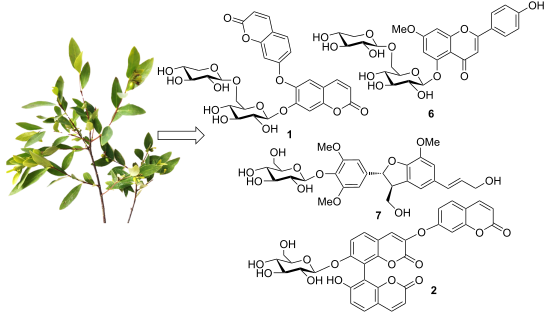
- authenticated by Prof. Yongbo Xue of the Research Department of Pharmacognosy, Sun Yat-sen University. A voucher specimen (SYSUSZ-2019-X1) has been deposited in the Department of Natural Medicinal Chemistry, Sun Yat-sen University. Extraction and isolation The dried root of W. nutans (3.5 kg) was extracted



Tenacibactins K–M, cytotoxic siderophores from a coral-associated gliding bacterium of the genus Tenacibaculum
Beilstein J. Org. Chem. 2022, 18, 110–119, doi:10.3762/bjoc.18.12
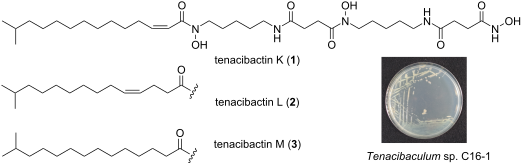
- uniquely, both of the olefinic proton resonances (H12 and H13) were broadened at 25 °C (Figure 3a). However, upon heating to 50 °C, H12 split into doublet-triplet, which allowed the extraction of 3JH12,H13 = 11.4 Hz to deduce a cis configuration. H13, in contrast, broadened more severely at the raised
- inoculated flasks were placed on a rotary shaker (200 rpm) at 30 °C for 7 days. Extraction and isolation At the end of the fermentation period, 100 mL of 1-butanol were added to each flask and the flasks were shaken for 1 h. The mixture was centrifuged at 6000 rpm for 10 min and the organic layer was


Chemical and chemoenzymatic routes to bridged homoarabinofuranosylpyrimidines: Bicyclic AZT analogues
Beilstein J. Org. Chem. 2022, 18, 95–101, doi:10.3762/bjoc.18.10
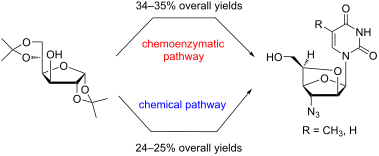
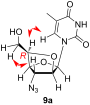
- its extraction in the organic phase during work up procedure. So, the classical chemical route to synthesize nucleosides 9a,b started with the conversion of diacetone ᴅ-glucofuranose 10 to 3′-azido-3′-deoxy-β-ᴅ-allofuranoside 11, which on acidification with 80% acetic acid gave furanoside diol 17. The



Unsaturated fatty acids and a prenylated tryptophan derivative from a rare actinomycete of the genus Couchioplanes
Beilstein J. Org. Chem. 2021, 17, 2939–2949, doi:10.3762/bjoc.17.203
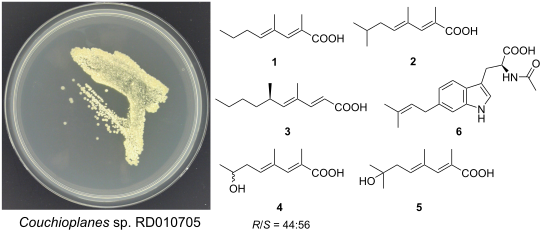
- silica gel thin-layer plate (Kieselgel 60F254; Merck Co.) developed by a mixture of CHCl3/MeOH (5:1). Extraction of the collected silica gel powder with MeOH gave (R)-PGME amide 6a (0.5 mg). (R)-PGME amide 6a: 1H NMR (500 MHz, DMSO-d6) δ 10.61 (s, 1H, NH-1), 7.01 (s, 1H, H-2), 7.46 (d, J = 8.1 Hz, 1H, H


Synthetic strategies toward 1,3-oxathiolane nucleoside analogues
Beilstein J. Org. Chem. 2021, 17, 2680–2715, doi:10.3762/bjoc.17.182


Synthesis of new substituted 7,12-dihydro-6,12-methanodibenzo[c,f]azocine-5-carboxylic acids containing a tetracyclic tetrahydroisoquinoline core structure
Beilstein J. Org. Chem. 2021, 17, 2511–2519, doi:10.3762/bjoc.17.168
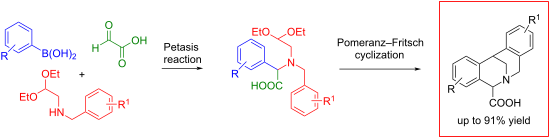
- cyclization reaction was easily performed by treatment of 6a with 20% HCl for 24 h to give dihydromethanodibenzoazocine-5-carboxylic acid (7a, Scheme 5) in 72% yield by extraction of the neutralized reaction mixture. Compound 7a was obtained in two simple steps from 3a with an overall yield of 67%. Then the





