


Search results
Search for "halides" in Full Text gives 526 result(s) in Beilstein Journal of Organic Chemistry. Showing first 200.
Synthesis of aliphatic nitriles from cyclobutanone oxime mediated by sulfuryl fluoride (SO2F2)
Beilstein J. Org. Chem. 2023, 19, 901–908, doi:10.3762/bjoc.19.68
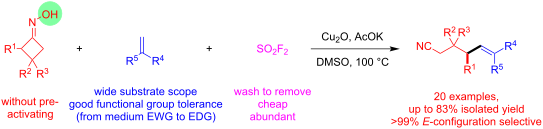
- ) carbon, which leads to side reactions of the alkyl intermediates [14][19][20]. Besides, most of the C(sp2)–C(sp3) reactions employ organic halides or organometallic reagents [21][22][23], which are not environmentally friendly. Recently, based on the activation effect of O-acyloximes on N–O bonds [24][25


Asymmetric tandem conjugate addition and reaction with carbocations on acylimidazole Michael acceptors
Beilstein J. Org. Chem. 2023, 19, 881–888, doi:10.3762/bjoc.19.65

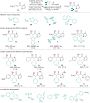
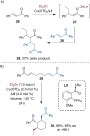
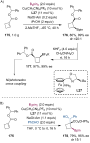
- , imines, other Michael acceptors, or alkyl halides. Our group is developing trapping of metal enolates with stabilized carbocations and could show that magnesium enolates generated from enones [22], unsaturated amides [23], or heterocycles reacted with tropylium, dithiolylium or flavylium cations [24




Pyridine C(sp2)–H bond functionalization under transition-metal and rare earth metal catalysis
Beilstein J. Org. Chem. 2023, 19, 820–863, doi:10.3762/bjoc.19.62
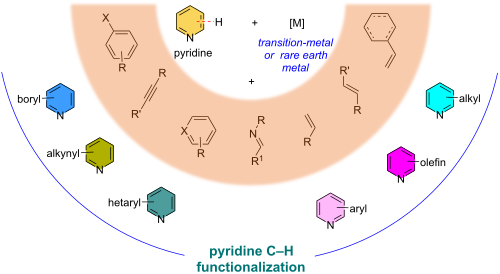
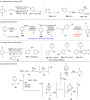
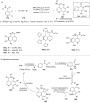
- catalyst using 2-arylpyridines (Scheme 15). Earlier reports described the propenylation took place on the ortho-position of the phenyl ring [76][77], whereas this group achieved the propenylation of the pyridine moiety. The authors screened different allyl halides and Ru complexes as catalysts. With the
- alkenylated product 109 (Scheme 21b). Arylation C-2 Arylation Owing to the remarkable role of aromatic C–H arylation reactions in organic synthesis abundant methods have been reported for aromatic C–H arylations using different arylating coupling partners, such as for instance, aryl halides. In 2014, using
- groups used Pd(OAc)2 as catalyst with 1,10-phenanthroline as ligand. The group of Yu used aryl halides 137 as coupling partner, whereas the group of Tan utilized aryl tosylates 142 as coupling partner (Scheme 26). The Yu group also applied the developed protocol for the synthesis of the drug molecule
















Strategies in the synthesis of dibenzo[b,f]heteropines
Beilstein J. Org. Chem. 2023, 19, 700–718, doi:10.3762/bjoc.19.51

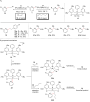
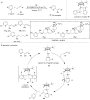
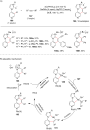
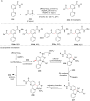
- thioethers from aryl halides and triflates through palladium catalysis [50][51]. Scheme 10 provides a retrosynthesis of amination in the synthesis of dibenzo[b,f]azepine 45 as an example. Arnold et al. [30] reported an excellent method for the convergent synthesis of variable sized dibenzo-fused heterocycles
- . Among these, Heck reaction conditions allowed for the coupling of aryl acrylates 50 to aryl halides 48 and 49, followed by intramolecular Pd-catalysed amination or etherification to give C-10 carboxylates of dibenzo[b,f]azepine 55 and dibenz[b,f]oxepine 54 in good yield (Scheme 11). However, no ring
- , whereafter Buchwald–Hartwig amination afford the various diarylazepines. A three-component one-pot process allowed for a second in situ Buchwald–Hartwig amination of the diarylazepine with aryl or benzyl halides to give the respective N-aryl and N-benzylazepine derivatives 83 and 84 (Scheme 16). 3.2 Mizoroki


Enolates ambushed – asymmetric tandem conjugate addition and subsequent enolate trapping with conventional and less traditional electrophiles
Beilstein J. Org. Chem. 2023, 19, 593–634, doi:10.3762/bjoc.19.44
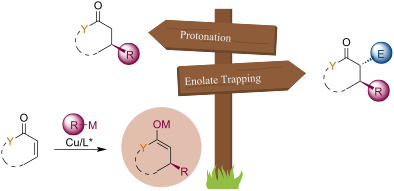
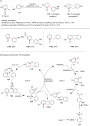
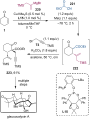
- enolate-trapping tandem sequence using various vinylsilanes 33 (Scheme 8B), allyl halides 35, and benzyl bromide (37) (Scheme 8C) [36]. Although the asymmetric conjugate addition step routinely provided excellent selectivity (93–96% ee), only a moderate to good diastereomeric ratio was achieved








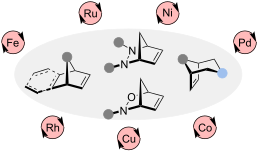
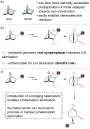
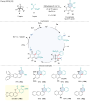
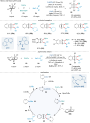
Transition-metal-catalyzed domino reactions of strained bicyclic alkenes
Beilstein J. Org. Chem. 2023, 19, 487–540, doi:10.3762/bjoc.19.38











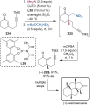
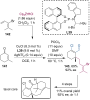
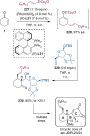
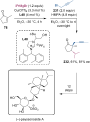
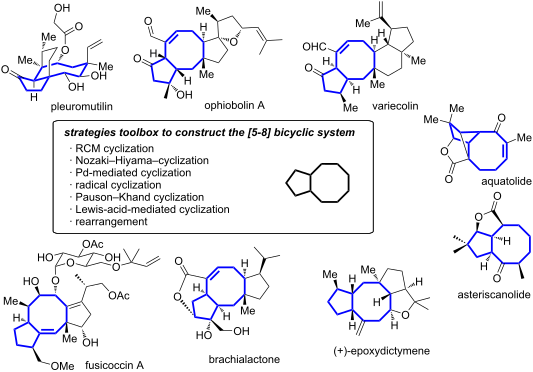
Strategies to access the [5-8] bicyclic core encountered in the sesquiterpene, diterpene and sesterterpene series
Beilstein J. Org. Chem. 2023, 19, 245–281, doi:10.3762/bjoc.19.23
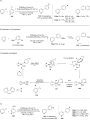
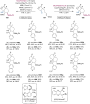
- favoring reactivity with various types of substrates, ranging from halides to carbonyls and alkenes/alkynes. It is comprehensible that this reagent attracted early interest in natural product synthesis and more precisely on medium-sized ring formation. 4.1 SmI2-mediated Barbier-type ring annulation towards


Investigation of cationic ring-opening polymerization of 2-oxazolines in the “green” solvent dihydrolevoglucosenone
Beilstein J. Org. Chem. 2023, 19, 217–230, doi:10.3762/bjoc.19.21
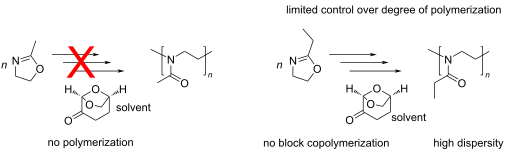
- ] and to a lesser extent, alkyl halides [42][44]. Accordingly, we first investigated the CROP of MeOx in DLG with a targeted degree of polymerization (DP) of 50 and 100 using methyl trifluoromethanesulfonate, also commonly referred to as methyl triflate (MeOTf) at 60 °C, 90 °C, and 120 °C. These first


Total synthesis of insect sex pheromones: recent improvements based on iron-mediated cross-coupling chemistry
Beilstein J. Org. Chem. 2023, 19, 158–166, doi:10.3762/bjoc.19.15
- could afford satisfying coupling yields by a suitable variation of the nature of the leaving group. In 2008, Cahiez reported an iron-catalyzed alkenylation of organomagnesium reagents with enol phosphates as electrophiles, instead of alkenyl halides [19]. In this case, when reactive enol phosphates
- ) as a co-solvent. Nevertheless, capitalizing on these results, Cahiez further developed this iron-catalyzed cross coupling reaction with dienol phosphates as electrophiles, which are thermally more stable than dienyl halides [20]. It was found that when dienol phosphates were used as electrophiles
- allow the use of alkenyl halides as cross-coupling partners in the absence of NMP. A remarkable feature of the alkyl–dienyl cross-coupling reactions displayed in Scheme 4 is the implication of α,ω-difunctionalized Grignard reagents, bearing a magnesium alkoxide moiety at the end of the chain. Magnesium


Revisiting the bromination of 3β-hydroxycholest-5-ene with CBr4/PPh3 and the subsequent azidolysis of the resulting bromide, disparity in stereochemical behavior
Beilstein J. Org. Chem. 2023, 19, 91–99, doi:10.3762/bjoc.19.9
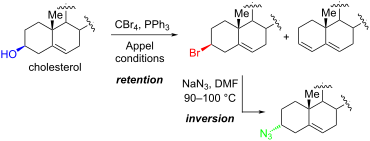
- ·OEt2 [12]. All of those results confirmed the involvement of regio- and stereospecific i-steroid and retro-i-steroid rearrangements. Later, tetrabutylammonium halides were used as cost effective and stable alternatives of TMS-based reagents [15]. Treatment of compound 4 (Scheme 1) with NaN3 in




NaI/PPh3-catalyzed visible-light-mediated decarboxylative radical cascade cyclization of N-arylacrylamides for the efficient synthesis of quaternary oxindoles
Beilstein J. Org. Chem. 2023, 19, 57–65, doi:10.3762/bjoc.19.5
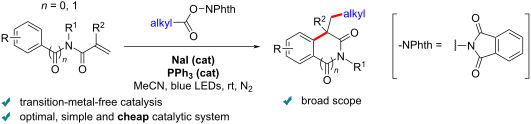
- /cyclization cascades from acrylamides for the synthesis of oxindoles [39][40][41]. The radicals are typically generated from alkyl halides [42][43][44], carboxylic acids [45][46][47], simple alkanes [48], alkylboronic acids [49], isocyanides [50], or other [51][52][53]. In this context, the group of Fu




An alternative C–P cross-coupling route for the synthesis of novel V-shaped aryldiphosphonic acids
Beilstein J. Org. Chem. 2022, 18, 1518–1523, doi:10.3762/bjoc.18.160
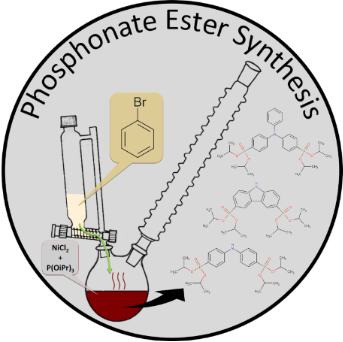
- aryl halides and trialkyl phosphites [23]. Some of the most studied C–P coupling reactions involving aryl substrates are those employing catalysts, which are required in order to lower the energy barrier of the reaction and overcome the poor reactivity between aryl halides and trialkyl phosphites [24


Dissecting Mechanochemistry III
Beilstein J. Org. Chem. 2022, 18, 1454–1456, doi:10.3762/bjoc.18.150
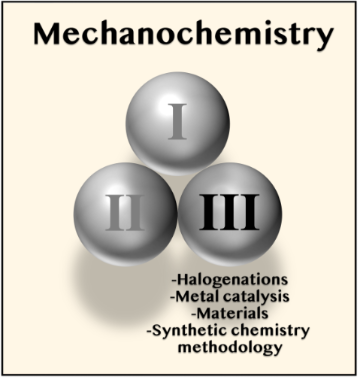
- halides as substrates in multiple reactions. For instance, within this Thematic Issue, the synthetic relevance of aryl halides was evidenced during the development of a protocol for the solid-state palladium-catalyzed borylation reported by Kubota, Ito, and co-workers (Scheme 2) [6]. Moreover, Štrbac and
- . Mechanochemical palladium-catalyzed borylation protocol of aryl halides. 1,2-Debromination of polycyclic imides, followed by in situ trapping of the dienophile by several dienes. Synthesis of g-h-PCN from sodium phosphide and trichloroheptazine mediated by mechanochemistry. Mechanochemical intra- and


Lewis acid-catalyzed Pudovik reaction–phospha-Brook rearrangement sequence to access phosphoric esters
Beilstein J. Org. Chem. 2022, 18, 1188–1194, doi:10.3762/bjoc.18.123
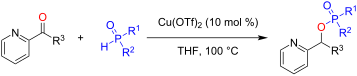
- with highly air-sensitive and hazardous phosphorus halides, with the assistance of a suitable base [19][20][21][22][23][24]. As an alternative pathway, the phospha-Brook rearrangement [25][26][27][28][29][30] represents a green approach to phosphoric esters since it uses α-hydroxyphosphonates, which




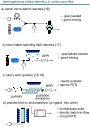
Heterogeneous metallaphotoredox catalysis in a continuous-flow packed-bed reactor
Beilstein J. Org. Chem. 2022, 18, 1123–1130, doi:10.3762/bjoc.18.115
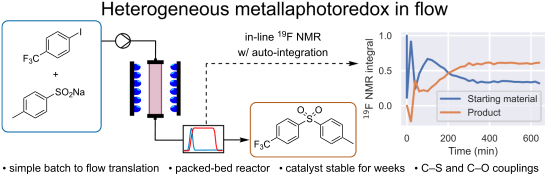
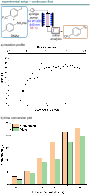
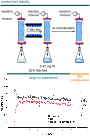
- (catalyst) separation in one step. The use of a packed bed simplifies the translation of optimized batch reaction conditions to continuous flow, as the only components present in the reaction mixture are the substrate and a base. The metallaphotoredox cross-coupling of sulfinates with aryl halides was used
- light-mediated carbon–heteroatom cross-couplings of sodium sulfinates, carboxylic acids and sulphonamides with aryl halides (Figure 2) [28]. Although recyclable, batch reactions are characterized by long reaction times (24 h). Here, we present a detailed investigation of a continuous-flow strategy for





A versatile way for the synthesis of monomethylamines by reduction of N-substituted carbonylimidazoles with the NaBH4/I2 system
Beilstein J. Org. Chem. 2022, 18, 1032–1039, doi:10.3762/bjoc.18.104
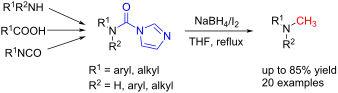
- chemicals, agrochemicals, pharmaceuticals and dyes [1][2][3][4]. Traditional methods for the preparation of N-methylamines involve the direct methylation of amines by using methyl halides [5][6][7], dimethyl sulfate [8], diazomethane [9], methyl triflate [10][11] or dimethyl carbonate [12][13][14][15] as


Automated grindstone chemistry: a simple and facile way for PEG-assisted stoichiometry-controlled halogenation of phenols and anilines using N-halosuccinimides
Beilstein J. Org. Chem. 2022, 18, 999–1008, doi:10.3762/bjoc.18.100
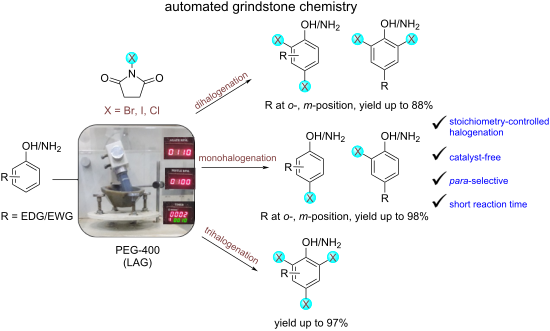
- halides are valuable compounds with potent bioactivities [1][2][3][4][5] (Figure 1) and are utilized as crucial precursors for various metal-catalyzed cross-coupling reactions [6][7][8][9]. They are frequently used as synthetic intermediates in several value-added syntheses of natural products
- requires the use of a solid acid catalyst [52], apart from the use of high-cost, high-end milling equipment which limits to laboratory scale only. Therefore, developing an operationally simple, environmentally benign protocol, potentially useful for the batch-scale synthesis of aryl halides is highly




Synthetic strategies for the preparation of γ-phostams: 1,2-azaphospholidine 2-oxides and 1,2-azaphospholine 2-oxides
Beilstein J. Org. Chem. 2022, 18, 889–915, doi:10.3762/bjoc.18.90
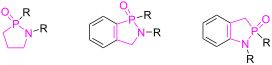
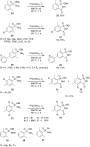
- -dihydrobenzo[d][1,2]azaphosphole 2-oxide (55), which was further alkylated with alkyl halides in the presence of NaH, affording 1-alkyl-2-phenyl-1,3-dihydrobenzo[d][1,2]azaphosphole 2-oxides 56. Alternatively, under heating, methyl 2-aminobenzyl(phenyl)phosphinate (53) underwent a transmethylation from the O
- ]azaphosphole 2-sulfide (59). Sulfide 59 was similarly transformed to 1-alkyl-2-phenyl-1,3-dihydrobenzo[d][1,2]azaphosphole 2-sulfides 60 by treatment with alkyl halides in the presence of NaH. All 1,3-dihydrobenzo[d][1,2]azaphosphole 2-sulfides 60 were converted into the corresponding 1,3-dihydrobenzo[d][1,2
- ], the strategy is the dearomatizing anionic cyclization of diaryl-N-alkyl-N-benzylphosphinamides by treatment with sec-butyllithium followed by reactions with different electrophiles, such as water, alcohols, alkyl halides, aldehydes, etc. They first realized the dearomatizing anionic cyclization of








Cathodic generation of reactive (phenylthio)difluoromethyl species and its reactions: mechanistic aspects and synthetic applications
Beilstein J. Org. Chem. 2022, 18, 872–880, doi:10.3762/bjoc.18.88
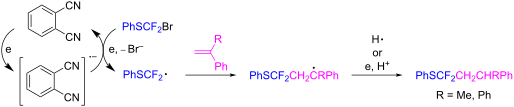
- difluorocarbene adduct 5 was detected by high resolution mass spectrometry in addition to products 2, 3, and 4. As already mentioned, SmI2 is a well-known one-electron reducing reagent, and has been used to generate PhSCF2 radicals and perfluoroalkyl radicals from PhSCF2Br and perfluoroalkyl halides, respectively
- the formation of adduct 4 to some extent (from 0% to 14% yield) as shown in Table 3. Therefore, iPrOH seems to promote the radcal addition rather than reduction although the reason has not been clarified yet. Reaction mechanism Although the cathodic reduction of perfluoroalkyl halides usually involves


Synthesis of novel alkynyl imidazopyridinyl selenides: copper-catalyzed tandem selenation of selenium with 2-arylimidazo[1,2-a]pyridines and terminal alkynes
Beilstein J. Org. Chem. 2022, 18, 863–871, doi:10.3762/bjoc.18.87
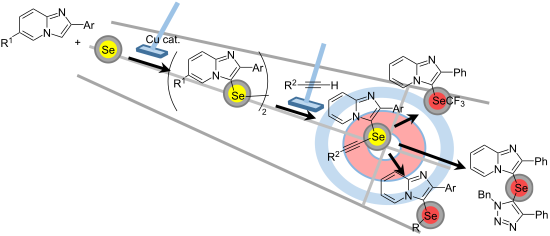
- (RSeSeR) and selanyl halides (RSeX) have been widely used as Se sources in these reactions. However, they have poor commercial availability and require complicated synthetic routes. Therefore, an alternative approach using the commercially available and easy-to-handle Se powder has attracted significant
- powder with imidazopyridine and aryl iodides or alkyl halides in the presence of Na2CO3 (2 equiv) using the NiBr2/2,2-bipyridine system to give aryl or alkyl imidazopyridinyl selenides [24]. In these reactions, aryl iodides, arylboronic acids, and alkyl halides are coupled with Se powder to form diaryl


Palladium-catalyzed solid-state borylation of aryl halides using mechanochemistry
Beilstein J. Org. Chem. 2022, 18, 855–862, doi:10.3762/bjoc.18.86
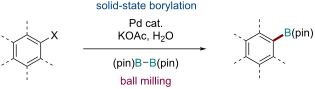
- , Japan 10.3762/bjoc.18.86 Abstract This study describes the solid-state palladium-catalyzed cross-coupling between aryl halides and bis(pinacolato)diboron using ball milling. The reactions were completed within 10 min for most aryl halides to afford a variety of synthetically useful arylboronates in
- organic materials, typically through Suzuki–Miyaura coupling [1][2][3][4][5][6][7]. The palladium-catalyzed boryl substitution of aryl halides with boron reagents, termed Miyaura–Ishiyama borylation, is an efficient method for synthesizing arylboronates with high functional group compatibility [8][9][10
- ][11][12][13][14]. To date, many palladium-based catalytic systems in solution for the borylation of aryl halides have been reported [8][9][10][11][12][13][14]. However, these solution-based reactions usually require long reaction times and significant amounts of dry and degassed organic solvents




An isoxazole strategy for the synthesis of 4-oxo-1,4-dihydropyridine-3-carboxylates
Beilstein J. Org. Chem. 2022, 18, 738–745, doi:10.3762/bjoc.18.74
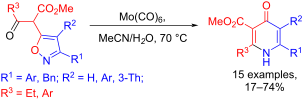
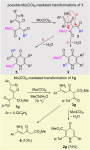
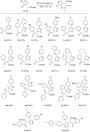
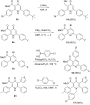
- processes. To evaluate the scope of the disclosed reaction a set of isoxazoles 1 was prepared using approaches shown in the Scheme 3 and Scheme 4. Isoxazoles 11a–f were prepared by cycloaddition of nitrile oxides, generated from N-hydroxyimidoyl chlorides 7a–f, to propargyl halides [29], followed by the




Cs2CO3-Promoted reaction of tertiary bromopropargylic alcohols and phenols in DMF: a novel approach to α-phenoxyketones
Beilstein J. Org. Chem. 2022, 18, 420–428, doi:10.3762/bjoc.18.44
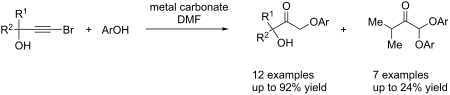
- reductive coupling of acid halides with ketones [36][37] and acetolyses of α-phenoxy-α-diazoketones [38] were also employed. Recently, F. P. Cossío et al. [39] have described a method for the preparation of benzo[b]furans by thermal heating of a dispersion of α-phenoxyketones in Al2O3. We involved the


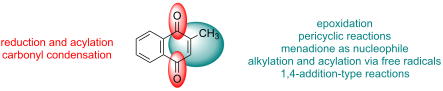
Menadione: a platform and a target to valuable compounds synthesis
Beilstein J. Org. Chem. 2022, 18, 381–419, doi:10.3762/bjoc.18.43


Synthesis of piperidine and pyrrolidine derivatives by electroreductive cyclization of imine with terminal dihaloalkanes in a flow microreactor
Beilstein J. Org. Chem. 2022, 18, 350–359, doi:10.3762/bjoc.18.39
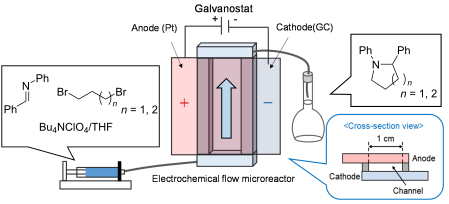
- reduction of organic halides [35][36]; therefore, 1,4-dibromobutane (2a) was more easily reduced than 1 at the Ag cathode, which resulted in the recovery of a large amount of unreacted 1. Linear sweep voltammetry (LSV) experiments revealed that the reduction of 2a occurred at a lower potential than the





