


Search results
Search for "ketone" in Full Text gives 711 result(s) in Beilstein Journal of Organic Chemistry. Showing first 200.
Palladium-catalyzed three-component radical-polar crossover carboamination of 1,3-dienes or allenes with diazo esters and amines
Beilstein J. Org. Chem. 2024, 20, 661–671, doi:10.3762/bjoc.20.59
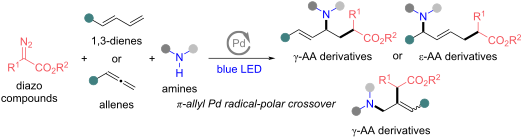
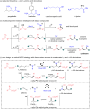
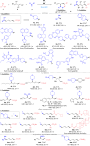
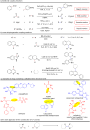
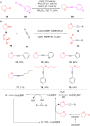
- 7 and 8 were produced in high yields through LiAlH4 conditions or nucleophilic addition of methylmagnesium bromide. Moreover, product 4a could be easily transformed to unsaturated ε-amino amide 9 in total 76% yield. Likewise, Weinreb amide 10 was produced and further transformed into ketone 11 in 84



Isolation and structure determination of a new analog of polycavernosides from marine Okeania sp. cyanobacterium
Beilstein J. Org. Chem. 2024, 20, 645–652, doi:10.3762/bjoc.20.57
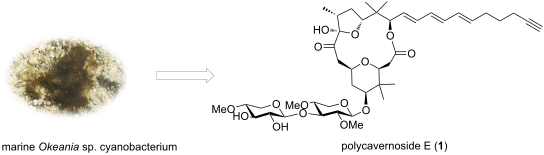
- )/δC 206.9 (C-9) connected C-11 and C-8 through a ketone carbonyl carbon at C-9 and hemiacetal carbon at C-10, revealing the 16-membered macrolide structure of 1. The HMBC, δH 4.27 (H-1’)/δC 85.3 (C-5), revealed that the disaccharide moiety was connected to C-5. Finally, considering the molecular
- compounds 1 and 5 were identical. To reveal the absolute configuration, we recorded the ECD spectrum of 1 (Figure 4) and compared it with those of 2 and 5 reported in previous papers [5][6]. We detected a Cotton effect of negative sign at around 280 nm corresponding to the n–π* transition of a ketone group


Chemical and biosynthetic potential of Penicillium shentong XL-F41
Beilstein J. Org. Chem. 2024, 20, 597–606, doi:10.3762/bjoc.20.52
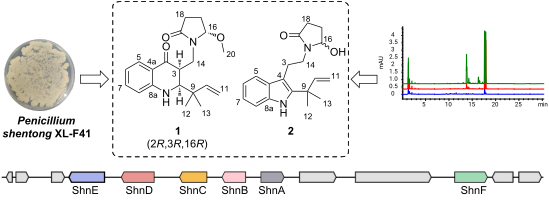
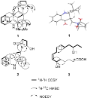
- m/z 341.1862 [M − H]− (calcd for C20H25N2O3, 341.1870). Spectroscopic analysis, including 1H NMR, 13C NMR (Table 1), and DEPT, revealed that compound 1 contains three methyl groups, one of which is oxygenated, four methines, three saturated non-protonated carbons, and two ketone carbonyl carbons (δC
- 335.1719 [M + Na]+ (calcd for C19H24N2O2Na+, 335.1730) and m/z 311.1755 [M − H]− (calcd for C19H23N2O2, 311.1765). Spectroscopic analysis using 1H NMR, 13C NMR, and DEPT (Table 2) indicated that compound 2 comprises two methyl groups, five methines, five saturated non-protonated carbons, and one ketone
- carbonyl carbon (δC 174.6). Its NMR profile is similar to brocaeloid C [24], with the distinction of an added succinimide substructure at N-15, where the ketone carbonyl carbon at C-16 is replaced by a hydroxy carbon. The isoprene group is consistent with that in compound 1. HMBC cross-peaks from H-10 to C




A myo-inositol dehydrogenase involved in aminocyclitol biosynthesis of hygromycin A
Beilstein J. Org. Chem. 2024, 20, 589–596, doi:10.3762/bjoc.20.51
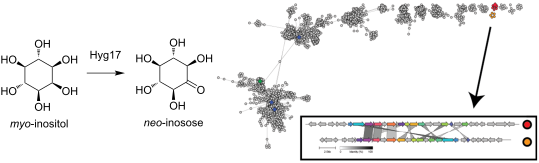
- formation of NADH, we are assuming the formation of a ketone product. However, further experiments are required to verify this assumption and determine which inositol position is being oxidized. When we tested Hyg17 with myo-inositol and NADP, we found no activity, showing that Hyg17 is NAD+-dependent
- Bacillus subtilis, BsIDH, has an optimal pH between 9.5–10 [12][13]. We also compared product formation between reactions with Hyg17 or BsIDH and myo-inositol using thin-layer chromatography (Supporting Information File 1, Figure S3). We found that both enzymes generated a ketone product with identical


Synthesis of 2,2-difluoro-1,3-diketone and 2,2-difluoro-1,3-ketoester derivatives using fluorine gas
Beilstein J. Org. Chem. 2024, 20, 460–469, doi:10.3762/bjoc.20.41
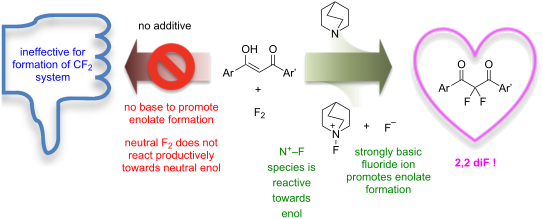
- enolization of the monofluoro-diketone intermediates. In addition, imines and α-diboryl ketone derivatives can also be transformed to 2,2-difluoroketones using an N–F electrophilic fluorinating reagent [18]. Alternatively, building blocks containing CF2 units such as ethyl bromodifluoroacetate and
- 13C{1H} NMR spectra contained signals supporting the presence of ketone (e.g., δC = 185.6 ppm for 5a) and ester (δC = 161.9 ppm for 5a) functionalities. Difluoroketoester products were found to hydrate readily to give gem-diol derivatives during aqueous work-up [39], thus reducing the efficiency of


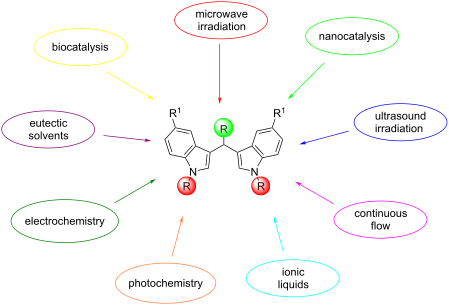
Green and sustainable approaches for the Friedel–Crafts reaction between aldehydes and indoles
Beilstein J. Org. Chem. 2024, 20, 379–426, doi:10.3762/bjoc.20.36
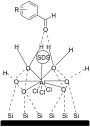
- . The difference between the two mechanistic pathways is the nature of activation of the carbonyl group. Protic acids induce the protonation of the carbonyl group of the aldehyde or ketone, enhancing its electrophilic character. Whereas, Lewis acid catalysts bind to the heteroatom of the carbonyl group




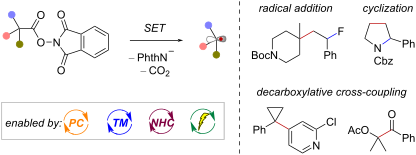
Mechanisms for radical reactions initiating from N-hydroxyphthalimide esters
Beilstein J. Org. Chem. 2024, 20, 346–378, doi:10.3762/bjoc.20.35
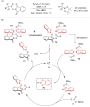
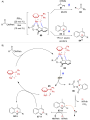
- mechanism discussed in Scheme 7B. Lastly, radical–radical coupling between 64 and 147, accompanied by elimination of the NHC catalyst, yields ketone product 149. In subsequent studies, this NHC-catalyzed radical relay activation mode has been extended to the alkylation of aliphatic aldehydes [107] and to








Synthesis of π-conjugated polycyclic compounds by late-stage extrusion of chalcogen fragments
Beilstein J. Org. Chem. 2024, 20, 287–305, doi:10.3762/bjoc.20.30
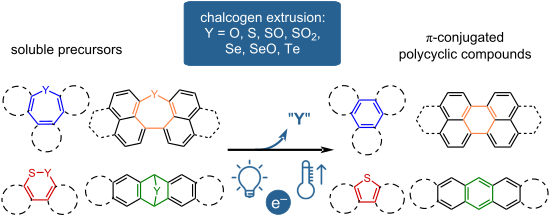
- π-CPCs relies on the extrusion of carbon monoxide (CO) from soluble precursors incorporating bridging ketone fragment(s). In contrast with the thermal activation required in retro-Diels–Alder reactions, photoirradiation of α-diketones triggers a Strating–Zwanenburg decarbonylation leading to the




Additive-controlled chemoselective inter-/intramolecular hydroamination via electrochemical PCET process
Beilstein J. Org. Chem. 2024, 20, 264–271, doi:10.3762/bjoc.20.27
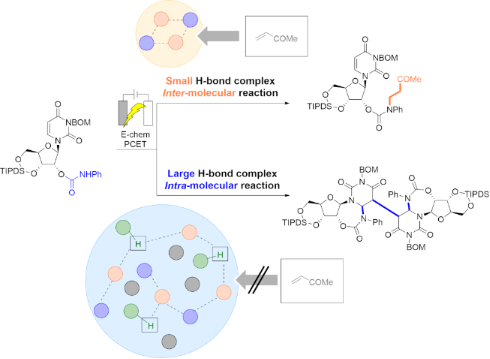
- presence of methyl vinyl ketone (MVK) as a radical acceptor (Table 1). Tetrabutylammonium dibutyl phosphate (phosphate base), which operates as a PCET initiator through hydrogen bond formation with the N–H bond of amide/carbamate [11], was used as an additive. As a result, N-alkylated product 3 was
- electrochemical conditions. Experimental General procedure of anodic oxidation Compound 1 (145 mg, 0.2 mmol), Bu4NPF6 (387 mg, 1 mmol), CH2Cl2 (10 mL), phosphate base (90 mg, 0.2 mmol) and methyl vinyl ketone (32.7 μL, 0.4 mmol) were added to a test tube, which was then subjected to a constant electrical current
- in vacuo and the resulting residue was subjected to 1H NMR spectroscopy or column chromatography. A divided-cell experiment was performed using an H-type cell (4G glass filter). Compound 1 (0.2 mmol), Bu4NPF6 (387 mg, 1 mmol), phosphate base (90 mg, 0.2 mmol), CH2Cl2 (10 mL), and methyl vinyl ketone


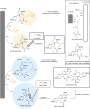
Multi-redox indenofluorene chromophores incorporating dithiafulvene donor and ene/enediyne acceptor units
Beilstein J. Org. Chem. 2024, 20, 59–73, doi:10.3762/bjoc.20.8
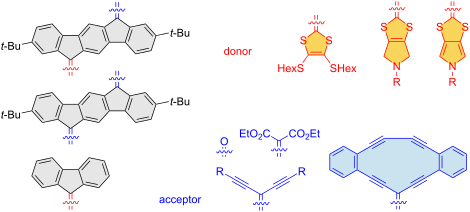
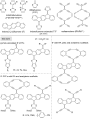
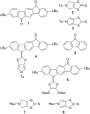
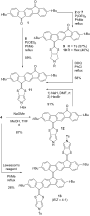
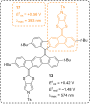
- -annelated IF-DTF 12 by removal of the tosyl (Ts) group under alkaline conditions, followed by nucleophilic substitution to incorporate the hexyl chain on the pyrrole. Furthermore, treatment of the IF-DTF ketone 4 with Lawesson’s reagent (using a recently established protocol [20]) yielded the large dimer 13
- as a mixture of E and Z isomers (ca. 4:1). Further functionalization of the IF-DTF ketone 11 was obtained by Ramirez/Corey–Fuchs dibromo-olefination and Knoevenagel condensation to yield vinylic dibromide 14 and diester 15, respectively, as illustrated in Scheme 2. We noted that the dibromo
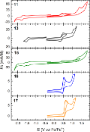
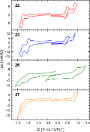
- in Figure 6, and potentials against ferrocene (Fc/Fc+) (obtained from differential pulse voltammetry, see Supporting Information File 1) are summarized in Table 2. Compounds 11 and 15 showed two irreversible first oxidations at +0.34 V and +0.38 V vs Fc/Fc+, showing that replacing the ketone with the





Using the phospha-Michael reaction for making phosphonium phenolate zwitterions
Beilstein J. Org. Chem. 2024, 20, 41–51, doi:10.3762/bjoc.20.6
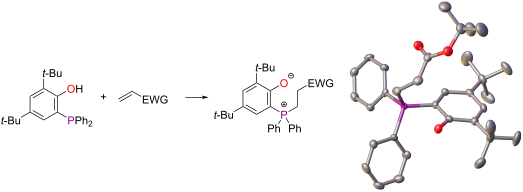
- University of Technology, Stremayrgasse 9, 8010 Graz, Austria 10.3762/bjoc.20.6 Abstract The reactions of 2,4-di-tert-butyl-6-(diphenylphosphino)phenol and various Michael acceptors (acrylonitrile, acrylamide, methyl vinyl ketone, several acrylates, methyl vinyl sulfone) yield the respective phosphonium
- carbanion [13][14]. Also with other Michael acceptors such as methyl vinyl ketone, several acrylates as well as methyl vinyl sulfone the reaction proceeds smoothly under the same reaction conditions (Scheme 1). Conversions of 1 are usually quantitative within 24 h and all phosphonium phenolates can be


1-Butyl-3-methylimidazolium tetrafluoroborate as suitable solvent for BF3: the case of alkyne hydration. Chemistry vs electrochemistry
Beilstein J. Org. Chem. 2023, 19, 1966–1981, doi:10.3762/bjoc.19.147
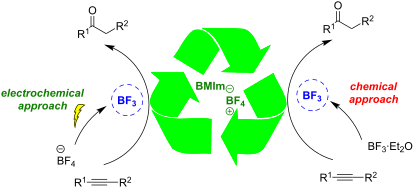
- well-known and useful reaction in organic chemistry, affording carbonyl compounds based on an atom-economical approach. Indeed, the addition of water to the triple bond of a terminal alkyne leads to the formation of the corresponding methyl ketone or aldehyde, in the case of Markovnikov or anti
- diphenylacetylene (1a), affording the corresponding ketones in high yields after 5 h. Otherwise, terminal alkynes generally showed higher reactivity compared to internal ones. For all the studied terminal alkynes, only ketone products (Markovnikov) were obtained, excluding the formation of the anti-Markovnikov ones
- 1f decreased the selectivity with respect to formation of the hydration product 2f, favouring the condensation product 3f (Table 4, entry 6). On the other hand, an ortho methyl group in 1g favoured formation of the ketone 2g, with a good yield, probably due to the steric hindrance of the aldol


Decarboxylative 1,3-dipolar cycloaddition of amino acids for the synthesis of heterocyclic compounds
Beilstein J. Org. Chem. 2023, 19, 1677–1693, doi:10.3762/bjoc.19.123
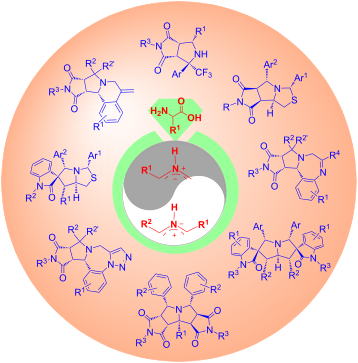
- Ar and CF3 groups can localize the negative charge and also provide steric effects to afford stereoselective cycloaddition products with 3:1 to 6:1 dr. The steric hindrance also prevents products 9 from undergoing a second cycloaddition. The control reactions of methyl ketone or benzaldehydes gave




Sulfur-containing spiroketals from Breynia disticha and evaluations of their anti-inflammatory effect
Beilstein J. Org. Chem. 2023, 19, 1604–1614, doi:10.3762/bjoc.19.117
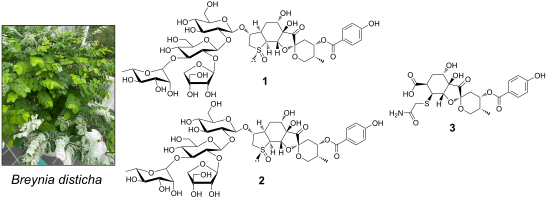
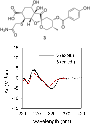
- 1) exhibited signals corresponding to a spiro-carbon at δC 100.6 (C-9) and a ketone carbon at δC 213.3 (C-8). The HMBC correlations of H-10β/C-8, C-9, C-11, C-12; H-11/C-9, C-13; H2-13/C-9; H-16/C-7, C-8; and H3-18/C-11, C-12, C-13 and the connectivity confirmed by DQF-COSY indicated that 3 also



Radical chemistry in polymer science: an overview and recent advances
Beilstein J. Org. Chem. 2023, 19, 1580–1603, doi:10.3762/bjoc.19.116
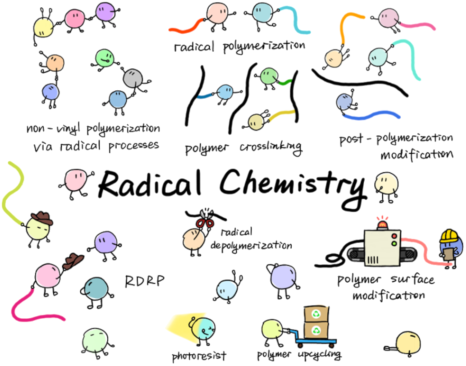
- well-defined polymer brushes from polymer surfaces [170][171]. Photoinduced processes, including photoATRP and PET-RAFT were used [172][173][174][175]. Poly(aryl ether ketone)s such as poly(ether ether ketone), bearing a diaryl ketone moiety resembling that of benzophenone, can generate biradicals upon




Secondary metabolites of Diaporthe cameroonensis, isolated from the Cameroonian medicinal plant Trema guineensis
Beilstein J. Org. Chem. 2023, 19, 1555–1561, doi:10.3762/bjoc.19.112
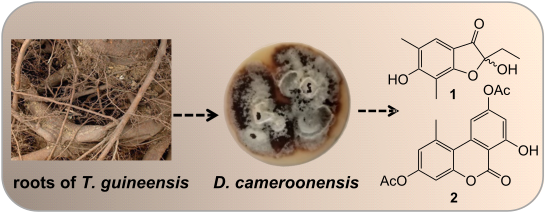
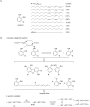
- 196.1 for a ketone group, 169.2 and 165.6 attributed to oxygenated aromatic carbons, and three other signals at δC 109.4, 106.2, and 16.6 (Figure S6 in Supporting Information File 1). On the other hand, each of the two aromatic methyl signals displayed a set of three cross peaks; the first one at δH
- 2.09 with the carbon signals at δC 165.6, 122.0, and 120.3, and the second one at δH 2.02 with the carbon signals at δC 169.2, 165.6, and 106.2 (Figure 2). These findings clearly indicated the presence of the 1,3-dimethylbenzene moiety linked to a side chain containing an ethyl group and a ketone group
- and 28.8. Hence, these key correlations permitted to assign the attachment of the hemiketal carbon (δC 106.1) to the ketone group and the benzene ring. Based on the above evidence, the structure of 1 was assigned with a trivial name of 5,7-dimethylpseudopithonone (Figure 1). Pseudopithonone was


N-Sulfenylsuccinimide/phthalimide: an alternative sulfenylating reagent in organic transformations
Beilstein J. Org. Chem. 2023, 19, 1471–1502, doi:10.3762/bjoc.19.106
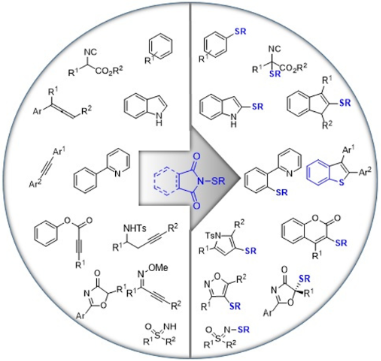
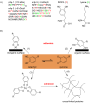
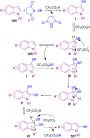
- reductive elimination to yield ketone 78. In the acylthiolation cycle, the azaphilic ZnCl2 activated NTSE 1’’’ via N–Zn coordination to facilitate the leaving ability of succinimide. Then, nucleophilic substitution of arylmagnesium bromide 75 to intermediate IV provided thioester 79. In 2022, Gao and co




Cyclization of 1-aryl-4,4,4-trichlorobut-2-en-1-ones into 3-trichloromethylindan-1-ones in triflic acid
Beilstein J. Org. Chem. 2023, 19, 1460–1470, doi:10.3762/bjoc.19.105
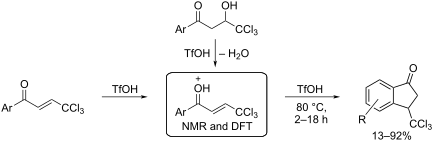
- by X-ray analysis (see Supporting Information File 1). Both, hydroxy ketone 1 and the corresponding enone 2, can be converted into the same indanone 3 in comparable yields; see pairs of reactions for 1a and 2a (indanone 3a), 1d and 2d (indanone 3d), 1i and 3i (indanone 3i), and 1n and 3n (indanone 3n
- -rich enones 2o,t,u, bearing electron-donating substituents in the aromatic rings, afford complex mixtures of oligomeric materials. The cyclization of hydroxy ketone 1k into indanone 3k is accompanied by demethylation of one of the methoxy groups (Scheme 6). The positions of hydroxy and methoxy groups
- delocalization of the positive charge from the carbonyl group to the aromatic ring. It should be mentioned that cation Bm was generated by two ways in TfOH: either directly by protonation of enone 2m or from hydroxy ketone 1m. The latter was found to undergo fast dehydration into enone 2m in TfOH at room


Application of N-heterocyclic carbene–Cu(I) complexes as catalysts in organic synthesis: a review
Beilstein J. Org. Chem. 2023, 19, 1408–1442, doi:10.3762/bjoc.19.102
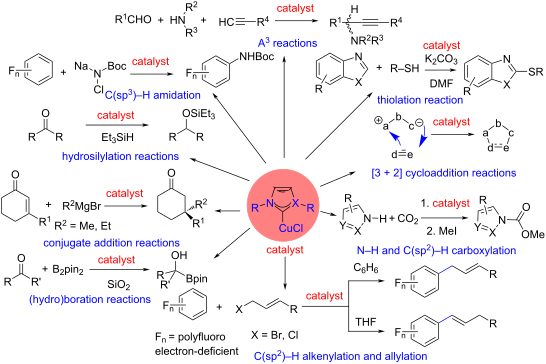
- and the use of a ketone was necessary to induce C–H functionalization selectivity in preference to C=C functionalization. The products were obtained in moderate to high yields (Scheme 67). 2.6 N–H and C(sp2)–H carboxylation The application of the [(IPr)CuOH] complex as catalyst for the N–H/C(sp2)–H






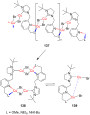


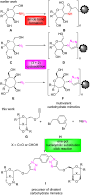
One-pot nucleophilic substitution–double click reactions of biazides leading to functionalized bis(1,2,3-triazole) derivatives
Beilstein J. Org. Chem. 2023, 19, 1399–1407, doi:10.3762/bjoc.19.101
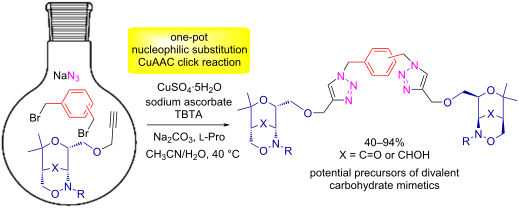
- the alkynyl-substituted 1,2-oxazin-4-ol derivative 19 which is smoothly available from the corresponding ketone 6 by highly stereoselective reduction with sodium borohydride [53]. Starting from 1,3- (8) or 1,4-bis(bromomethyl)benzene (16), respectively, the approved conditions in the presence of TBTA



Visible-light-induced nickel-catalyzed α-hydroxytrifluoroethylation of alkyl carboxylic acids: Access to trifluoromethyl alkyl acyloins
Beilstein J. Org. Chem. 2023, 19, 1372–1378, doi:10.3762/bjoc.19.98
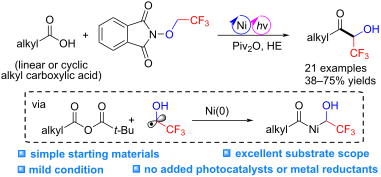
- elegant strategies on direct conversion of in situ-activated carboxylic acids for ketone synthesis [27][35][38], we chose dimethyl dicarbonate (DMDC, A1) as the activating reagent. To our delight, the reaction of 1a and 2 in the presence of NiBr2(dtbbpy) (10 mol %), Hantzsch ester (HE) and A1 in DMAc


Synthesis of ether lipids: natural compounds and analogues
Beilstein J. Org. Chem. 2023, 19, 1299–1369, doi:10.3762/bjoc.19.96
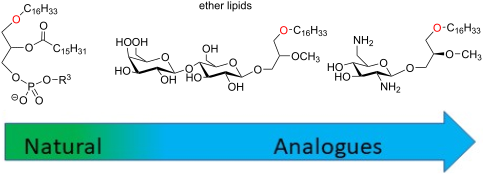
- phosphate moiety was introduced via the use of bromoethyl dichlorophosphate 11.4 to produce 11.5. The reduction of the ketone with NaBH4 produced 11.6, and then the incorporation of the trimethylammonium group produced deoxy-lyso-PAF 11.7. Finally, the acetylation of the secondary alcohol produced racemic
- bio-imaging purposes [144]. In 1995, Mauleón et al. [145], extended this study by reporting the incorporation of a phenyl group in ω-position or by adding an alkyl group, a ketone or an alcohol function as illustrated in Figure 33. The idea of






Non-noble metal-catalyzed cross-dehydrogenation coupling (CDC) involving ether α-C(sp3)–H to construct C–C bonds
Beilstein J. Org. Chem. 2023, 19, 1259–1288, doi:10.3762/bjoc.19.94
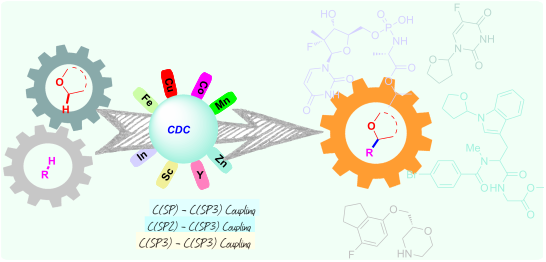
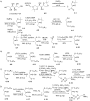
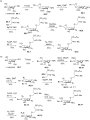
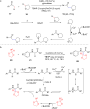
- extract a hydrogen from the ether C (sp3)–H bond to form radicals. Subsequently, a single electron transfer (SET) leads to the oxonium species. Then, the enamine generated in situ from methyl aryl ketone and pyrrolidine undergoes a nucleophilic reaction with the oxonium species followed by hydrolysis to
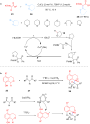
- ketones 94 with ethers [81]. Contrary to what was obtained for the alkylation of coumarin at the carbonyl α-position, vinyl ketone undergoes Michael addition and ether addition at the β-position of the carbonyl (Scheme 20). The reaction delivered various alkylation products in good to excellent yields










Metal catalyst-free N-allylation/alkylation of imidazole and benzimidazole with Morita–Baylis–Hillman (MBH) alcohols and acetates
Beilstein J. Org. Chem. 2023, 19, 1251–1258, doi:10.3762/bjoc.19.93
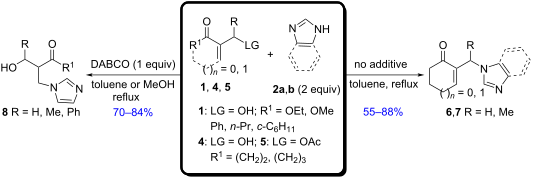
- ketone-derived alcohols such as 1d (EWG = COPh, R = H), 1e (EWG = COn-Pr, R = H), 1f (EWG = COc-C6H11, R = H) [42], and imidazole under the established reaction conditions and we have observed that the conversion was complete but was not clean. However, in methanol at reflux a clean reaction took place


Enabling artificial photosynthesis systems with molecular recycling: A review of photo- and electrochemical methods for regenerating organic sacrificial electron donors
Beilstein J. Org. Chem. 2023, 19, 1198–1215, doi:10.3762/bjoc.19.88
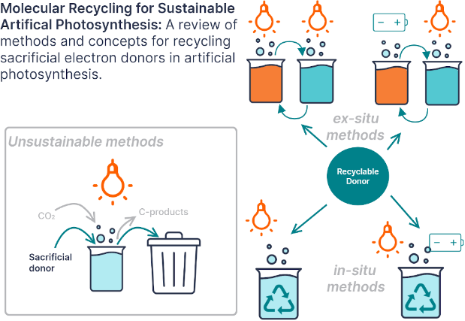
- oxidation noted that the corresponding dimethyl amine – p-benzaldehyde oxidized at 0.79 V vs Fc/Fc+ and underwent a slow re-reduction [73]. Similar compounds, ketone derivatives rather than aldehyde, were developed with more negative potentials as anolytes for aqueous and non-aqueous RFBs by Sanford and co





