Search results
Search for "reaction mechanisms" in Full Text gives 138 result(s) in Beilstein Journal of Organic Chemistry.
Cp2TiCl/D2O/Mn, a formidable reagent for the deuteration of organic compounds
Beilstein J. Org. Chem. 2016, 12, 1585–1589, doi:10.3762/bjoc.12.154
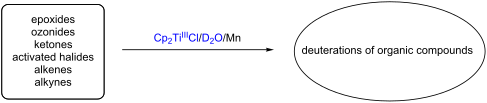
- multiple applications of the deuterated compound such as the enhancement of the metabolic stability of pharmaceutical drugs, the use of internal standards for mass spectrometry, the elucidation of biosynthetic pathways, and the study of reaction mechanisms and selectivity control reactions. In an effort to


One-pot synthesis of 4′-alkyl-4-cyanobiaryls on the basis of the terephthalonitrile dianion and neutral aromatic nitrile cross-coupling
Beilstein J. Org. Chem. 2016, 12, 1577–1584, doi:10.3762/bjoc.12.153

- mechanisms within cross-coupling: heterolytic addition of dianion 12− (SNH) to nitrile 2, and/or electron transfer from 12− to 2 followed by recombination or relaxation in the primary pair of radical anions 1·− and 2·− (Scheme 2). These probable reaction mechanisms were studied in [23][24] and are beyond


Biosynthesis of oxygen and nitrogen-containing heterocycles in polyketides
Beilstein J. Org. Chem. 2016, 12, 1512–1550, doi:10.3762/bjoc.12.148
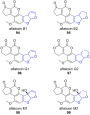
- any cofactors, in spite of its flavin adenine dinucleotide (FAD) binding site [98][99]. The reaction mechanisms and biosynthetic enzymes involved in the rearrangement of versicolorin B (106) to demethylsterigmatocystin (107) have also been discussed controversely. Up to four genes (aflM, aflN, aflX




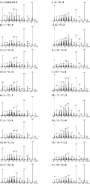
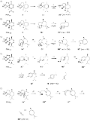
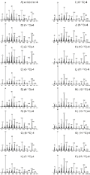
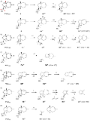
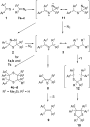
The EIMS fragmentation mechanisms of the sesquiterpenes corvol ethers A and B, epi-cubebol and isodauc-8-en-11-ol
Beilstein J. Org. Chem. 2016, 12, 1380–1394, doi:10.3762/bjoc.12.132
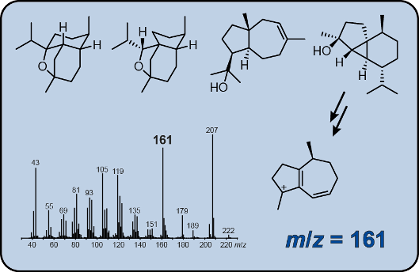
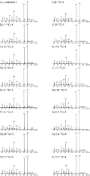
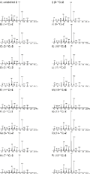
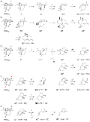
- EIMS fragmentation mechanisms of the two sesquiterpene ethers corvol ethers A and B, and the sesquiterpene alcohols epi-cubebol and isodauc-8-en-11-ol. Keywords: bacteria; isotopic labelling; mass spectrometry; reaction mechanisms; terpenes; Introduction Gas chromatography coupled to electron impact



Strecker degradation of amino acids promoted by a camphor-derived sulfonamide
Beilstein J. Org. Chem. 2016, 12, 732–744, doi:10.3762/bjoc.12.73
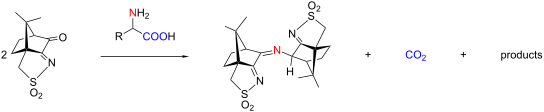
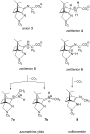
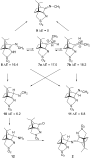
- occurs before the TS in both cases. In contrast to these concerted reaction mechanisms, the decarboxylation of the zwitterions 5 and 6 appears to have a very low or near to zero activation barrier and is likely to dominate the reaction pattern. We therefore looked more closely to the products of the





Diradical reaction mechanisms in [3 + 2]-cycloadditions of hetaryl thioketones with alkyl- or trimethylsilyl-substituted diazomethanes
Beilstein J. Org. Chem. 2016, 12, 716–724, doi:10.3762/bjoc.12.71
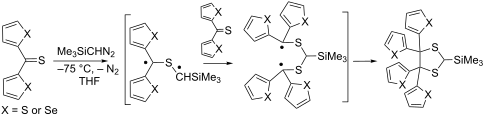
- . Remarkably, in no single case, the ‘head-to-head dimerization’ of aryl/hetaryl and dihetaryl substituted thiocarbonyl ylides was observed. Keywords: [3 + 2]-cycloadditions; diazoalkanes; diradicals; 1,3-dithiolanes; reaction mechanisms; thioketones; Introduction Cycloaddition reactions belong to the most


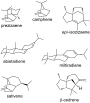
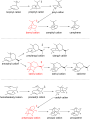
Dynamic behavior of rearranging carbocations – implications for terpene biosynthesis
Beilstein J. Org. Chem. 2016, 12, 377–390, doi:10.3762/bjoc.12.41
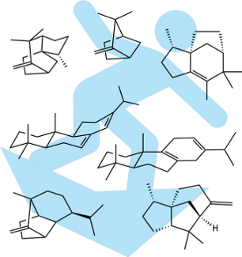
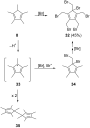
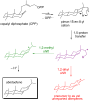
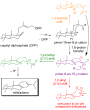
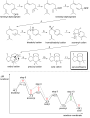
- these aspects of reaction mechanisms. Unique potential energy surface topologies associated with these rearrangements have been discovered in recent years that are not only of fundamental interest, but also provide insight into the way Nature manipulates chemical space to accomplish specific chemical
- available today), this study paved the way for future dynamics studies and correctly predicted that “similar findings will arise for many other reactions … and interpretation of reaction mechanisms ought to consider the effects of dynamics explicitly” [46]. In light of more recent studies (e.g., see below
- product following an ambimodal TSS due to dynamic matching. Right: an intermediate that is rapidly passed through or bypassed as a result of dynamic matching. The tetramethylbromonium ion system [14]. The reaction mechanisms of interest in the PES and dynamics studies of Dupuis and co-workers (R = CH3



Enabling technologies and green processes in cyclodextrin chemistry
Beilstein J. Org. Chem. 2016, 12, 278–294, doi:10.3762/bjoc.12.30
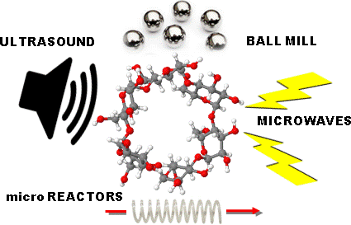
- milling conditions favours SN2 reactions; however it is also true that a solventless environment does not necessarily mean that there is a lack of solution in a liquid phase. Some reaction mixture components can often be liquid, while solvent effects or mixed SN2 and SN1-type reaction mechanisms cannot be




A journey in bioinspired supramolecular chemistry: from molecular tweezers to small molecules that target myotonic dystrophy
Beilstein J. Org. Chem. 2016, 12, 125–138, doi:10.3762/bjoc.12.14
- wonderful mistake that led to my learning an enormous amount of exciting synthetic chemistry. Indeed, in going to Columbia University for graduate school I had every intention of working for Professor Gilbert Stork or W. Clark Still. But Professor Ronald Breslow’s enzyme reaction mechanisms course, my first


Copper-catalysed asymmetric allylic alkylation of alkylzirconocenes to racemic 3,6-dihydro-2H-pyrans
Beilstein J. Org. Chem. 2015, 11, 2435–2443, doi:10.3762/bjoc.11.264
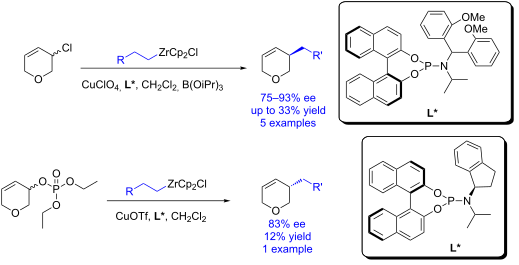
- assistance of a design of experiments statistical approach (83% ee, 12% yield). 1H NMR spectroscopy was used to gain insight into the reaction mechanisms. Keywords: allylic alkylation; asymmetric catalysis; copper; design of experiments; dynamic kinetic asymmetric transformation; heterocycles; Schwartz





Computational study of productive and non-productive cycles in fluoroalkene metathesis
Beilstein J. Org. Chem. 2015, 11, 2150–2157, doi:10.3762/bjoc.11.232
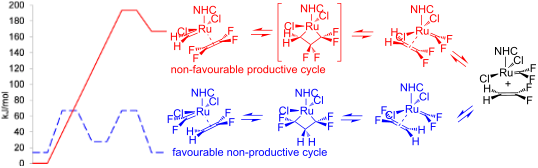
- valuable in the study of reaction mechanisms. In particular, the use of time-efficient DFT methods for the theoretical study of alkene metathesis has been extensively reviewed [9][10][11] and computational results have been found to agree well with recent experimental mechanistic studies based on easily




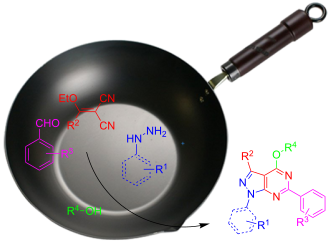
A convenient four-component one-pot strategy toward the synthesis of pyrazolo[3,4-d]pyrimidines
Beilstein J. Org. Chem. 2015, 11, 2125–2131, doi:10.3762/bjoc.11.229
- results in hand, two possible reaction mechanisms were proposed and shown in Scheme 3. 5-Aminopyrazole-4-carbonitrile 6 was obtained from the reaction of hydrazine 1 and methylenemalononitrile 2 through nucleophilic addition, cyclization and aromatization. The nucleophilic attack of the amino group of 6
- pyrazolo[3,4-d]pyrimidines. Synthesis of 5a from different intermediates. Possible reaction mechanisms for the formation of pyrazolo[3,4-d]pyrimidiine. Optimization of the reaction conditionsa. Supporting Information Supporting Information File 544: Experimental section and copies of 1H and 13C NMR


Copper-catalyzed aerobic radical C–C bond cleavage of N–H ketimines
Beilstein J. Org. Chem. 2015, 11, 1933–1943, doi:10.3762/bjoc.11.209

- . Copper-catalyzed aerobic C–C bond cleavage reactions of N–H ketimines. Proposed reaction mechanisms for the formation of 3a, 4a and 5a, and the reaction of hydroperoxide 6. Formation of bromoketone 6e. Electrophilic cyanation of Grignard reagents with pivalonitrile (1f). Electrophilic cyanation with




A novel and widespread class of ketosynthase is responsible for the head-to-head condensation of two acyl moieties in bacterial pyrone biosynthesis
Beilstein J. Org. Chem. 2015, 11, 1412–1417, doi:10.3762/bjoc.11.152
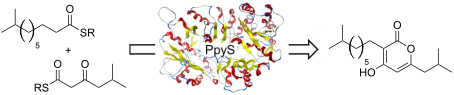
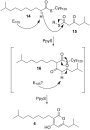
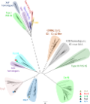
- KS is distinct from PpyS but also its evolutionary relationship, even if they produce a similar class of compound. Thus, the phylogenetic analysis is also useful to distinguish between reaction mechanisms of different KS. In order to prove that the identified PpyS homologues are indeed involved in



Novel carbocationic rearrangements of 1-styrylpropargyl alcohols
Beilstein J. Org. Chem. 2015, 11, 1017–1022, doi:10.3762/bjoc.11.114
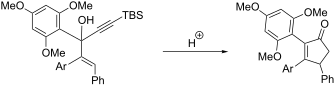
- reaction mechanisms, we explored different reaction conditions starting from alcohol 21 (Table 2). 1,2-Dichloroethane and dichloromethane (entries 1 and 2, Table 2) gave better yields (27–31% for 22 and 10–16% for 23) compared to THF (entry 3, Table 2). In an effort to understand the role of Re2O7, the


Switching the reaction pathways of electrochemically generated β-haloalkoxysulfonium ions – synthesis of halohydrins and epoxides
Beilstein J. Org. Chem. 2015, 11, 242–248, doi:10.3762/bjoc.11.27

- halohydrins and epoxides from alkenes. The method is also useful for synthesizing 18O-labeled epoxides. Synthesis of halohydrins and epoxides through β-haloalkoxysulfonium ions generated by the reaction of alkenes with DMSO-stabilized halogen cations. Proposed reaction mechanisms for the syntheses of


A new charge-tagged proline-based organocatalyst for mechanistic studies using electrospray mass spectrometry
Beilstein J. Org. Chem. 2014, 10, 2027–2037, doi:10.3762/bjoc.10.211
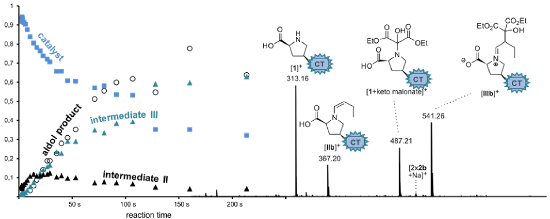
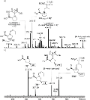
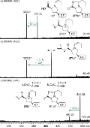
- for an extremely broad variety of substances [2], but has also been recognized as a valuable tool for studying reaction mechanisms by transferring species of a reacting solution directly into the gas phase of a mass spectrometer [3][4][5][6][7]. The technique allows glimpses into the reacting solution



Theoretical studies on the intramolecular cyclization of 2,4,6-t-Bu3C6H2P=C: and effects of conjugation between the P=C and aromatic moieties
Beilstein J. Org. Chem. 2014, 10, 1032–1036, doi:10.3762/bjoc.10.103
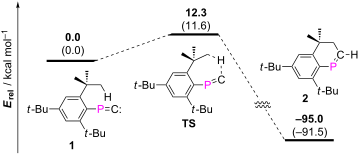
- phosphanylidenecarbenoid (Scheme 1) [11][12][13]. The phosphorus version of FBW rearrangement showed considerable stereospecificity in affording phosphaalkyne, which could be explicable by plausible reaction mechanisms including formation of the phosphavinyl anion intermediate without generation of phosphanylidenecarbene


On the mechanism of photocatalytic reactions with eosin Y
Beilstein J. Org. Chem. 2014, 10, 981–989, doi:10.3762/bjoc.10.97
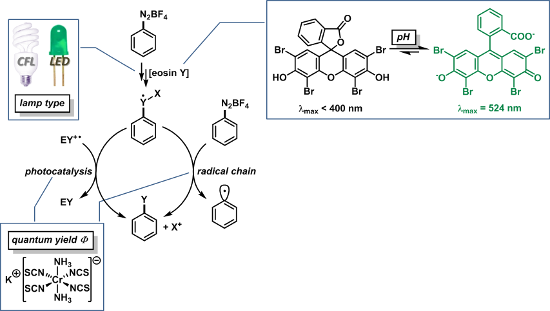
- experimentally not (easily) available. However, it is likely that their potential is greater than 0 V in many cases which makes the radical species III a sufficiently strong reductant for arenediazonium salts of type I. After all, the unambiguous determination of the underlying reaction mechanisms is not


Metal and metal-free photocatalysts: mechanistic approach and application as photoinitiators of photopolymerization
Beilstein J. Org. Chem. 2014, 10, 863–876, doi:10.3762/bjoc.10.83
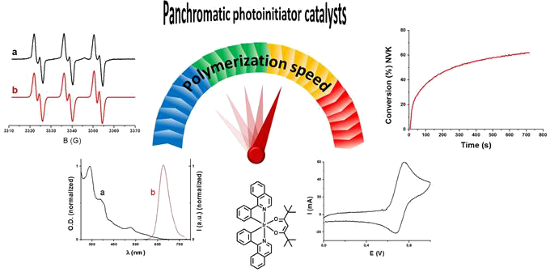
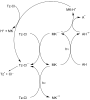
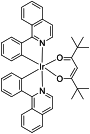
- for the NVK double bond in the course of the polymerization. (A) Photopolymerization profile of TMPTA; initiating systems: (1) Ir(piq)2(tmd)/MDEA (1%/2%) and (2) Ir(piq)2(tmd)/MDEA/R-Br (1%/2%/3%); laser diode at 532 nm; in laminate. Examples of photoinitiating systems. Reaction mechanisms for the
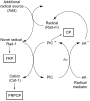
- three-component system PIC/eA/E-Z. Reaction mechanisms for the two-component system PIC/eA. Reaction mechanisms for the system PIC/eA/add. Reaction mechanisms for the system PIC/eD/B-Y. Reaction mechanisms for the system Ru(bpy)32+/Ph2I+/R3SiH. Reaction mechanisms for the Ru(ligand)32+/Ph3S+/R3SiH
- system. Reaction mechanisms for the Ru(ligand)32+/Ph2I+/NVK system upon visible lights. Reaction mechanisms for the violanthrone/Ph2I+/TTMSS (R3SiH) system upon red lights. Reaction mechanisms for the Tr-AD/R-Br/MDEA system upon visible lights. The photoredox catalysis for controlled polymerization






Direct and indirect single electron transfer (SET)-photochemical approaches for the preparation of novel phthalimide and naphthalimide-based lariat-type crown ethers
Beilstein J. Org. Chem. 2014, 10, 514–527, doi:10.3762/bjoc.10.47
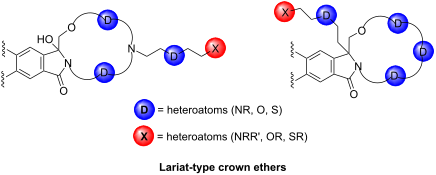
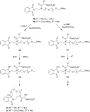
- ., phthalimides and naphthalimides), have been developed for the synthesis of novel lariat-type crown ethers. Parallel investigations on the reaction mechanisms have provided a useful guideline for predicting the chemo- and regioselectivties and efficiencies of these excited state reactions. These observations




Gold(I)-catalyzed enantioselective cycloaddition reactions
Beilstein J. Org. Chem. 2013, 9, 2250–2264, doi:10.3762/bjoc.9.264
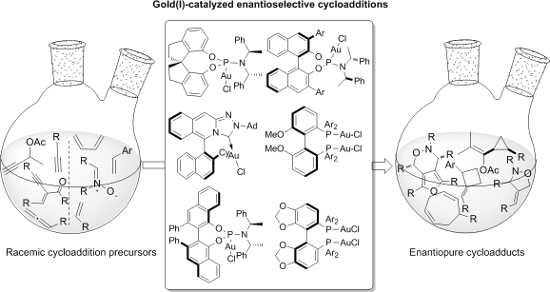
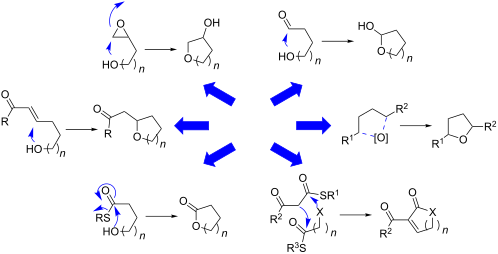
- area of cycloaddition reactions, which are of particular interest due to their potential for the rapid construction of optically active cyclic products. In this article we will summarize some of the most remarkable examples, emphasizing reaction mechanisms and key intermediates involved in the


Damage of polyesters by the atmospheric free radical oxidant NO3•: a product study involving model systems
Beilstein J. Org. Chem. 2013, 9, 1907–1916, doi:10.3762/bjoc.9.225

- well as products of these reactions are potentially capable of promoting further degradation processes in polyesters under environmental conditions. Keywords: environmental oxidants; free radicals; nitrate radicals; polyester degradation; product studies; reaction mechanisms; Introduction Polymers


The application of a monolithic triphenylphosphine reagent for conducting Ramirez gem-dibromoolefination reactions in flow
Beilstein J. Org. Chem. 2013, 9, 1781–1790, doi:10.3762/bjoc.9.207
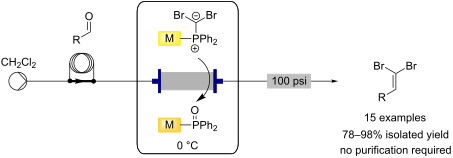
- be potential intermediates in the Appel reaction [58][59] and consequently we also wished to investigate the interplay between the two reaction mechanisms. Results and Discussion Formation of the triphenylphosphine monolith The triphenylphosphine monoliths for the Ramirez reactions were formed using


The preparation of several 1,2,3,4,5-functionalized cyclopentane derivatives
Beilstein J. Org. Chem. 2013, 9, 1705–1712, doi:10.3762/bjoc.9.195
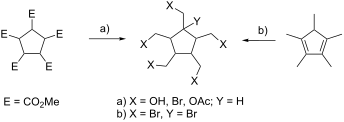
- acetylenedicarboxylate (22) with dimethyl malonate (23) under the catalytic influence of pyridinium acetate, the fully substituted cycloheptadienes 24 and 25 (Scheme 5) were produced; both authors also proposed reaction mechanisms for this complex transformation that can be considered as reasonable even today; for the