


Search results
Search for "CO2" in Full Text gives 332 result(s) in Beilstein Journal of Organic Chemistry. Showing first 200.
Preparation of anthracene-based tetraperimidine hexafluorophosphate and selective recognition of chromium(III) ions
Beilstein J. Org. Chem. 2019, 15, 2847–2855, doi:10.3762/bjoc.15.278
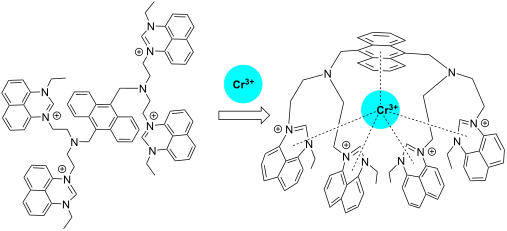
- temperature. In its free form, three emission bands at 402, 423, and 447 nm were observed at c = 5.0⋅10−6 M, which were ascribed to the emission of anthracene (Figure 2). When adding 30 equiv of K+, Na+, Li+, Ag+, NH4+, Zn2+, Cd2+, Ca2+, Ni2+, Pb2+, Cu2+, Co2+, Al3+, Hg+, Hg2+, Rh3+, Ir3+, Cr2+, Ga3+, Ru3
- +, Na+, Li+, Ag+, NH4+, Zn2+, Cd2+, Ca2+, Ni2+, Pb2+, Cu2+, Co2+, Al3+, Hg+, Hg2+, Rh3+, Ir3+, Cr2+, Ga3+, Ru3+, and Fe3+, respectively. The emission intensities of the resulting mixtures were similar to that of a solution containing only 3 and Cr3+. These experimental results show that 3 can capture
- )–N(1): 1.310(5) Å; and C(3)–N(2): 1.315(5) Å. Fluorescence spectra of 3 (c = 5.0⋅10−6 M) upon addition of 30 equiv of salts of K+, Na+, Li+, Ag+, NH4+, Zn2+, Cd2+, Ca2+, Ni2+, Pb2+, Cu2+, Co2+, Al3+, Cr3+, Hg+, Hg2+, Rh3+, Ir3+, Cr2+, Ga3+, Ru3+, and Fe3+, respectively (c = 1.5⋅10−4 M) in CH3CN/DMSO


Chemical tuning of photoswitchable azobenzenes: a photopharmacological case study using nicotinic transmission
Beilstein J. Org. Chem. 2019, 15, 2812–2821, doi:10.3762/bjoc.15.274
- KCl, 1.25 NaH2PO4, 7 MgCl2, 0.5 CaCl2, 26 NaHCO3, 10 glucose, 100 sucrose, 3 sodium pyruvate, 1.3 sodium ascorbate equilibrated with 95% O2/5% CO2 (pH 7.3–7.4). The brain slices were then incubated for 15 min at 33 °C in artificial cerebrospinal fluid (ACSF, mM: 125 NaCl, 2.5 KCl, 1.25 NaH2PO4, 1
- MgCl2, 2 CaCl2, 26 NaHCO3, 10 glucose, 3 sodium pyruvate, 1.3 sodium ascorbate; 95% O2/5% CO2, pH 7.3–7.4) and held at room temperature. Brain slices were then transferred to the recording chamber of a BX-61 microscope (Olympus, PennValley, PA, USA) and superfused with ACSF at room temperature. Medial




Diversity-oriented synthesis of spirothiazolidinediones and their biological evaluation
Beilstein J. Org. Chem. 2019, 15, 2774–2781, doi:10.3762/bjoc.15.269
- under a 5% CO2 atmosphere. Cells were maintained in RPMI 1640 (Jurkat, K562, U937) (Gibco) supplemented with 4 mM glutamine, 10% FBS (Sigma) and 100 units/mL penicillin streptomycin (Sigma). All types of cells were grown in an atmosphere of 5% CO2 at 37 °C. The cells were subcultured at 2–3 days
- dormancy) of drug candidates and toxic compounds. In vitro cytotoxicity was assessed using a standard MTT colorimetric assay in a similar manner as described in [60][61]. HEK293 cells were plated in 96-well microassay culture plates (1 × 10⁴ cells per well) and grown overnight at 37 °C in a 5% CO2


A review of asymmetric synthetic organic electrochemistry and electrocatalysis: concepts, applications, recent developments and future directions
Beilstein J. Org. Chem. 2019, 15, 2710–2746, doi:10.3762/bjoc.15.264
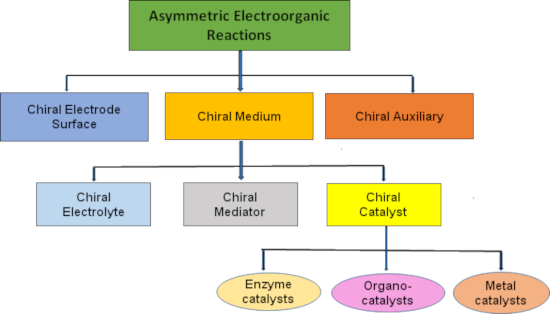
- installation of an oxygen atom on one face, promoting the addition of CO2 from the other face, resulting in enantioenriched carboxylated product 29 after acidification (Scheme 10). The authors described similar results involving the asymmetric electrocarboxylation of other prochiral aromatic ketones in a
- and regenerate the Cu–L* catalyst (Scheme 30). In 2014, Wang and Lu reported a method for asymmetric fixation of CO2 via electrocarboxylation of 82 catalyzed by an electrogenerated chiral [CoI(salen)]− complex [68]. The potentiostatic electrolysis of 82 in an undivided cell in presence of catalytic
- chiral Co(II)-(R,R)salen complex 83 in DMF saturated with CO2 resulted in the formation of 84 in a low yield but with good enantioselectivity (Scheme 31). Very recently, Meggers research group described an application of an asymmetric Lewis acid catalyst using electricity to provide a synthetic route






Plasma membrane imaging with a fluorescent benzothiadiazole derivative
Beilstein J. Org. Chem. 2019, 15, 2644–2654, doi:10.3762/bjoc.15.257
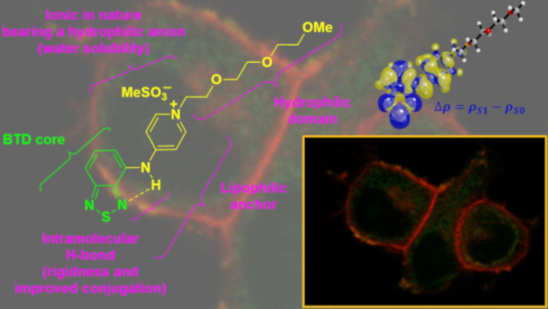
- umbilical vein endothelial cells, HUVEC. The cells were maintained according to ATCC (American type culture collection) recommendations at 37 °C in an atmosphere containing 5% CO2. Cell viability. For cell viability the synthesized compound BTD-4APTEG was tested at two different concentrations, 10 and 100


Formation of alkyne-bridged ferrocenophanes using ring-closing alkyne metathesis on 1,1’-diacetylenic ferrocenes
Beilstein J. Org. Chem. 2019, 15, 2534–2543, doi:10.3762/bjoc.15.246
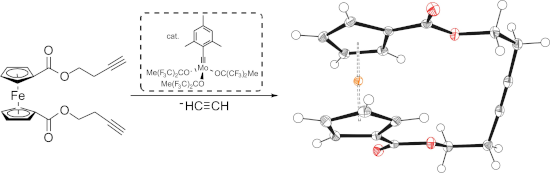
- Celine Bittner Dirk Bockfeld Matthias Tamm Institut für Anorganische und Analytische Chemie, Technische Universität Braunschweig, Hagenring 30, 38102 Braunschweig, Germany 10.3762/bjoc.15.246 Abstract Novel alkyne-bridged ferrocenophanes [fc{CO2(CH2)nC≡}2] (2a: n = 2; 2b: n = 3) were synthesized
- from the corresponding terminal diacetylenic ferrocenes [fc{CO2(CH2)nC≡CH}2] (1a: n = 2; 1b: n = 3) through ring-closing alkyne metathesis (RCAM) utilizing the highly effective molybdenum catalyst [MesC≡Mo{OC(CF3)2CH3}3] (MoF6; Mes = 2,4,6-trimethylphenyl). The metathesis reaction occurs in short time


Recent advances in transition-metal-catalyzed incorporation of fluorine-containing groups
Beilstein J. Org. Chem. 2019, 15, 2213–2270, doi:10.3762/bjoc.15.218
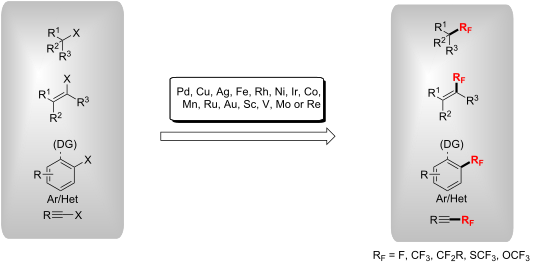
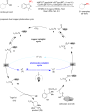
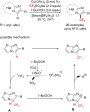
- Cu(II) complex 6, along with reduced Ir(II) photocatalyst 7. The resulting carboxyl radical extrudes CO2 and sequentially recombines to generate Cu(III) species 9. At this stage, SET from 7 to 9 closes the photoredox catalytic cycle and produces an alkylcopper(II) species 10. Under the addition of








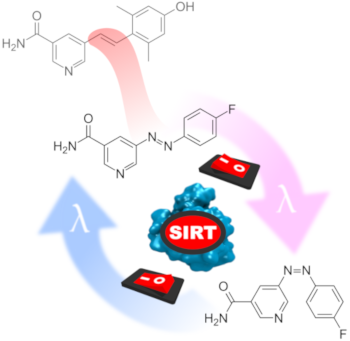
Azologization and repurposing of a hetero-stilbene-based kinase inhibitor: towards the design of photoswitchable sirtuin inhibitors
Beilstein J. Org. Chem. 2019, 15, 2170–2183, doi:10.3762/bjoc.15.214
- -30ADSF for liquid CO2 and two LC-20ADXR for modifier and make-up delivery), an on-line supercritical fluid extraction module (SFE-30A auto extractor equipped with 0.2 mL extraction vessels) for reaction monitoring, an autosampler (SIL-30AC) for purified compounds, a column thermostat (CTO-20AC) equipped


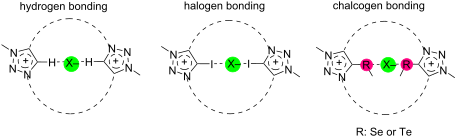
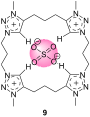
1,2,3-Triazolium macrocycles in supramolecular chemistry
Beilstein J. Org. Chem. 2019, 15, 2142–2155, doi:10.3762/bjoc.15.211
- nanoreactor because there is an acceleration of the dimerization by two orders of magnitude and the turnover of the catalyst was demonstrated. The synthesis of cyclic carbonates from epoxides and CO2 is an efficient method for CO2 fixation. The development of an effective chiral catalyst for the efficient
- kinetic resolution of epoxides with CO2 remains a big challenge. Recently, Ema and co-workers described a chiral binaphthyl strapped Zn(II) porphyrin with triazolium halide units as a bifunctional catalyst for the kinetic resolution of epoxides with CO2 [63]. The condensation of click-reaction-derived




Archangelolide: A sesquiterpene lactone with immunobiological potential from Laserpitium archangelica
Beilstein J. Org. Chem. 2019, 15, 1933–1944, doi:10.3762/bjoc.15.189
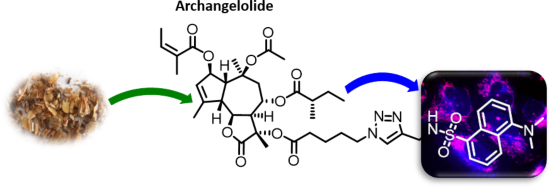
- archangelica Wulfen using supercritical CO2 extraction. We show that dansyl-archangelolide localizes in the endoplasmic reticulum of living cells similarly to trilobolide; localization in mitochondria was also detected. This led us to a more detailed study of the anticancer potential of archangelolide
- [12] was described, we aimed to develop a facile method for the isolation of these SLs from the seeds of Laserpitium archangelica Wulfen using supercritical CO2 extraction (SCE; for advantages of this method, see Supporting Information File 1, section 8). In our experience, any part of the plant may
- supercritical CO2 extraction, which was carried out under pressure of 40 MPa at 40 °C until the extract substances passed from the extracted material (when several subsequent fractions were not adding any addition to the weight to the extract). The obtained yellowish extract (42.5 g) was stored in fridge for a




N-doped carbon dots covalently functionalized with pillar[5]arenes for Fe3+ sensing
Beilstein J. Org. Chem. 2019, 15, 1262–1267, doi:10.3762/bjoc.15.123
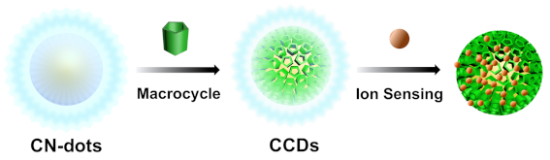
- % (Figure 2c), while the CN-dots solution exhibited stronger emission intensity with 7% QY (Figure 2d). To investigate the application of the as-synthesized fluorescent CCDs in ion sensing, various chlorides of metal ions (Li+, NH4+, Na+, K+, Cu+, Mg2+, Ca2+, Fe2+, Co2+, Ni2+, Cu2+, Zn2+, Cd2+, Sn2+, Hg2


Multicomponent reactions (MCRs): a useful access to the synthesis of benzo-fused γ-lactams
Beilstein J. Org. Chem. 2019, 15, 1065–1085, doi:10.3762/bjoc.15.104
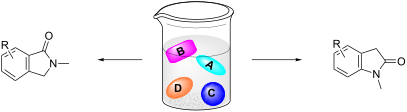
- containing chlorine atoms in the portion coming from isatoic anhydride 56. In all cases, the most likely mechanism is initiated by a nucleophilic attack of amine 2 onto the anhydride carbonyl with opening of the cycle to form carbamic acid derivative 58 and loss of CO2 to give the intermediate 2
- also been prepared in situ and used for a three-component transition-metal-free synthesis of phthalimides 79 induced by fluoride (Scheme 23) [102]. The reaction makes use of 2-(trimethylsilyl)aryl triflates 77, isocyanides 42 and CO2 (78), and takes place in acetonitrile as solvent and without the need
- of the reactive aryne 80 which is first trapped with the nucleophilic isocyanide to form 81 and then with the electrophilic CO2 (78), to furnish an intermediate benzoic acid derivative 82. Intramolecular cyclization would produce the corresponding isobenzofurane 83, which alternatively, could also be






Novel (2-amino-4-arylimidazolyl)propanoic acids and pyrrolo[1,2-c]imidazoles via the domino reactions of 2-amino-4-arylimidazoles with carbonyl and methylene active compounds
Beilstein J. Org. Chem. 2019, 15, 1032–1045, doi:10.3762/bjoc.15.101
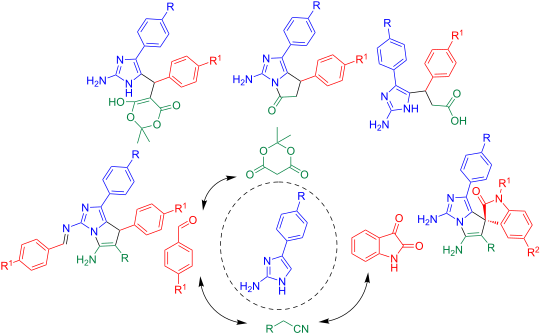
- addition of the catalytic amounts of TFA to the initial three-component mixture (Table 2). The reaction proceeded via 1,3-dioxanedione cycle cleavage followed by elimination of acetone and CO2 to provide novel pyrrolo[1,2-c]imadazol-5-ones trifluoroacetates 9b,c,i precipitated from the reaction mixture


Photochemical generation of the 2,2,6,6-tetramethylpiperidine-1-oxyl (TEMPO) radical from caged nitroxides by near-infrared two-photon irradiation and its cytocidal effect on lung cancer cells
Beilstein J. Org. Chem. 2019, 15, 863–873, doi:10.3762/bjoc.15.84
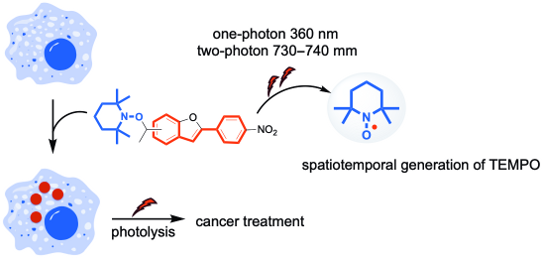
- vitro using lung cancer cells. One hundred thousand Lewis lung carcinoma (LLC) cells were seeded into 24-well plates (medium: DMEM) and incubated overnight at 37 °C under an atmosphere of 95% air and 5% CO2. The medium was replaced with fresh phenol-red free DMEM containing various concentrations of 2a
- carcinoma (LLC) cells were seeded into a 24-well plate (medium: DMEM) and incubated overnight at 37 °C in an atmosphere of 95% air and 5% CO2. The medium was replaced with fresh phenol-red free DMEM containing 100 µg/mL of compound 2a. Four hours after various irradiation time of 360 nm light (0, 10, 30, 60
- Lewis lung carcinoma (LLC) cells were seeded into 24-well plate (medium: DMEM) and incubated overnight at 37 °C in an atmosphere of 95% air and 5% CO2. The medium was replaced with fresh phenol-red free DMEM containing 0 or 100 µg/mL of compound 2a. Thirty minutes after 1 min or no exposure of 360 nm




Coordination chemistry and photoswitching of dinuclear macrocyclic cadmium-, nickel-, and zinc complexes containing azobenzene carboxylato co-ligands
Beilstein J. Org. Chem. 2019, 15, 840–851, doi:10.3762/bjoc.15.81
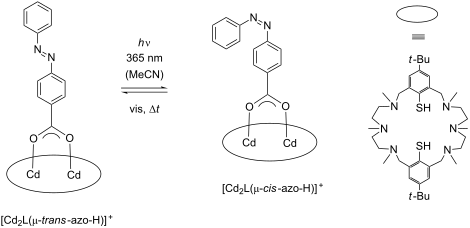
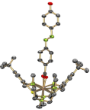
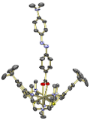
- of mixed ligand complexes of the type [M2L(μ-O2CR)]+ [1], where M is a divalent or trivalent metal ion (M = Mn2+, Fe2+, Co2+, Co3+, Ni2+, Zn2+ and Cd2+) and μ-O2CR is a μ1,3-bridging carboxylato ligand (Figure 1). The encapsulation of a functional carboxylate ion by the bowl-shaped [M2L] fragment can





Polyaminoazide mixtures for the synthesis of pH-responsive calixarene nanosponges
Beilstein J. Org. Chem. 2019, 15, 633–641, doi:10.3762/bjoc.15.59
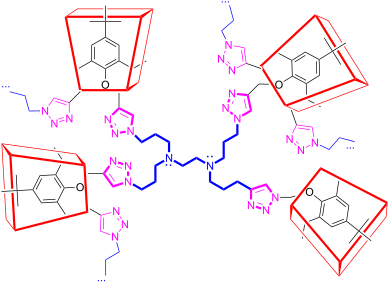
- interesting to notice the presence in the mixture of dioxygenated products, the formation of which might be justified admitting the reaction of a primary amine group with a dibromide 4 unit and a CO2 molecule (likely absorbed from atmosphere) to afford a 1,3-oxazinan-2-one ring according to Scheme 4. The CO2


Back to the future: Why we need enzymology to build a synthetic metabolism of the future
Beilstein J. Org. Chem. 2019, 15, 551–557, doi:10.3762/bjoc.15.49
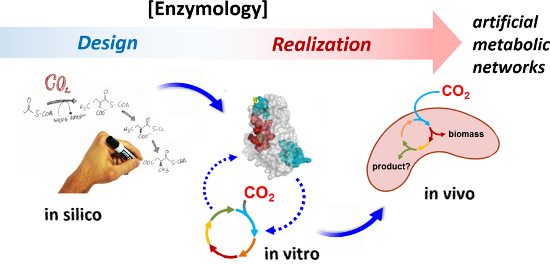
- in respect to production rate and yield. As an example, several novel level 3 and level 4 pathways for the conversion of CO2 into organic acids were developed recently [13][14]. These pathways are predicted to be more efficient than the naturally evolved Calvin cycle of photosynthesis, because they
- require less energy (ATP, redox power and/or photons) and can be supposedly operated at higher catalytic rates compared to natural carbon fixation. Accordingly, the synthetic CO2-fixation cycles should be able to convert more carbon dioxide with less energy in a given time and hence succeed natural
- photosynthesis in volumetric capacity and energetic efficiency. One of these designs, the so-called CETCH cycle (Figure 2a), a synthetic level 4 pathway for the conversion of CO2 into organic acids, was experimentally realized in vitro by combining 17 enzymes (including three engineered ones) from a total of


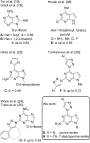
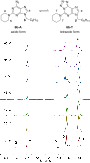
Synthesis and fluorescent properties of N(9)-alkylated 2-amino-6-triazolylpurines and 7-deazapurines
Beilstein J. Org. Chem. 2019, 15, 474–489, doi:10.3762/bjoc.15.41
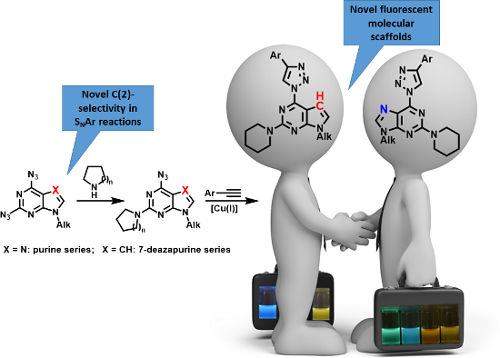
- -7 cells were cultured in RPMI medium supplemented with fetal bovine serum (10%), antibiotic–antimycotic (1.0%). MCF-10A cells were cultured in α-MEM supplemented with FBS (10%), and antibiotic–antimycotic (1.0%). All cells were cultured in an environment equilibrated with 5% CO2 at 37 °C. The cell
- number and viability of the cells were determined by applying the trypan blue exclusion method and Alamar Blue assay, respectively. Following the separated incubation of MCF-7 and MCF-10A cells (7.0 × 10⁴ cells per well) in a culture medium for 24 h at 37 °C containing 5% CO2, each of the culture media




Sigmatropic rearrangements of cyclopropenylcarbinol derivatives. Access to diversely substituted alkylidenecyclopropanes
Beilstein J. Org. Chem. 2019, 15, 333–350, doi:10.3762/bjoc.15.29
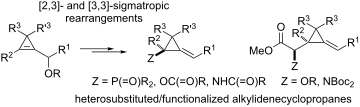
- was a critical issue which was solved by carrying those intermediate compounds directly in the sigmatropic rearrangement. Byproducts arising from the difluorocyclopropenation reaction (CO2, SO2 and Me3SiF) were simply removed by argon sparging of the reaction mixture and the Ireland–Claisen







Olefin metathesis in multiblock copolymer synthesis
Beilstein J. Org. Chem. 2019, 15, 218–235, doi:10.3762/bjoc.15.21

- (cyclohexene carbonate)s was carried out by the β-diiminate (BDI) zinc-catalyzed block copolymerization of functionalized epoxides and CO2 with a norbornenyl-containing initiator (Scheme 5) [68]. The subsequent “grafting through” by ROMP of norbornene resulted in the synthesis of multiblock copolymer brushes




Systematic synthetic study of four diastereomerically distinct limonene-1,2-diols and their corresponding cyclic carbonates
Beilstein J. Org. Chem. 2019, 15, 130–136, doi:10.3762/bjoc.15.13
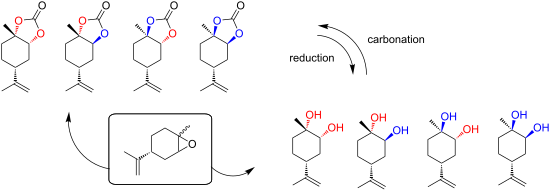
- , syntheses of five-membered cyclic carbonates (5CCs) have been intensively investigated [5][6][7] in terms of utilisation of CO2 and the further reactions to produce functional chemicals such as oxazolizin-2-ones [8] and polyurethanes [9]. For (R)-limonene-derived 5CC (LM5CC), four diastereomers are
- , we report the synthesis of 1a from the trans-isomer of (R)-limonene oxide (LO) and 1d from cis-LO using CO2 and tetrabutylammonium chloride (TBAC) as a catalyst. Both reactions proceeded without any side reactions and produced no unwanted isomers, such as 1c. Though the CO2 pressure employed in our
- previous study was 3 MPa [27], 5 MPa CO2 was applied in the present study to promote a higher consumption of LO. The result showed the isolated yields were improved to 84% yield for 1a and 30% yield for 1d. In our previous report, 1d was reduced by lithium aluminium hydride (LAH) to obtain the


Mechanistic studies of an L-proline-catalyzed pyridazine formation involving a Diels–Alder reaction with inverse electron demand
Beilstein J. Org. Chem. 2019, 15, 30–43, doi:10.3762/bjoc.15.3
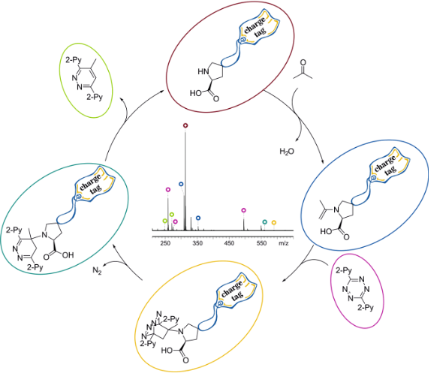
- very easily loses CO2 which causes the signal at m/z 309. This behavior could be confirmed by induced fragmentation experiments (see below). Monitoring the temporal progress of reaction R3 was achieved by taking small samples at regular intervals, diluting and swiftly feeding them into the spectrometer
- oxazolidinone present in large excess. Upon CID of the mass-selected signal for I3 at m/z 353 (Figure 10), only elimination of CO2 was observed. The spectra very much resemble the ones we obtained for ions with the same m/z observed when spraying acetonitrile solutions of 1∙Cl and acetone. These were
- leads back to the ion [I3]+. This ion subsequently loses CO2 as already observed in the CID experiment for [I3]+ (Figure 10). The first pathway thus mimics going back one step in the catalytic cycle. On the other hand, [II3]+ fragments into catalyst 1 by simultaneously cleaving off N2 and the product 3




Repurposing the anticancer drug cisplatin with the aim of developing novel Pseudomonas aeruginosa infection control agents
Beilstein J. Org. Chem. 2018, 14, 3059–3069, doi:10.3762/bjoc.14.284
- macrophages (RAW264.7) were maintained in Dulbecco’s modified Eagle’s medium (DMEM) (Life Technologies), supplemented with 10% fetal bovine serum (FBS) (Gibco), in 75 cm2 cell culture flasks at a density of 1.0 × 10⁶ cells mL−1 at 37 °C, 5% CO2 for 72 h. The 5.0 × 10⁶ macrophages per well were seeded in 24
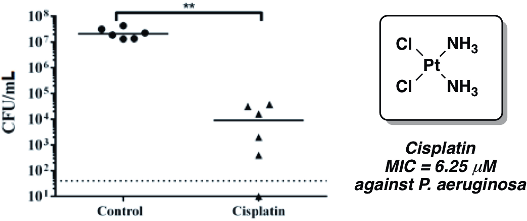
- -well plate (Nunc, Denmark) and grown at 37 °C, 5% CO2 overnight. As previously described [12], macrophages were washed once with PBS and treated with PAO1 in DMEM medium with 0, 3.125, 6.25 and 12.5 µM cisplatin at a multiplicity of infection of 100 bacteria cells: 1 macrophage. As control, the
- macrophages were treated with the T3SS deficient ΔpscJ mutant in DMEM medium. The co-culture was incubated at 37 °C, 5% CO2 for 2 h. The extracellular bacterial cells in DMEM were removed and the infected macrophages were washed 3 times with PBS. Fresh DMEM was added to the infected macrophages and a further




Copper(I)-catalyzed tandem reaction: synthesis of 1,4-disubstituted 1,2,3-triazoles from alkyl diacyl peroxides, azidotrimethylsilane, and alkynes
Beilstein J. Org. Chem. 2018, 14, 2916–2922, doi:10.3762/bjoc.14.270
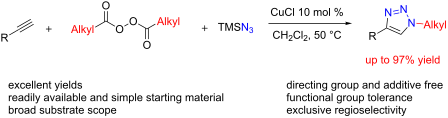
- experimental findings, a possible reaction mechanism is suggested as shown in Scheme 5. In the presence of the Cu(I) catalyst, alkyl diacyl peroxide decomposes into an alkyl radical, CO2, and releases a carboxyl–Cu(II) complex, which undergoes a ligand exchange with azidomethylsilane to form azido–Cu(II




Copolymerization of epoxides with cyclic anhydrides catalyzed by dinuclear cobalt complexes
Beilstein J. Org. Chem. 2018, 14, 2779–2788, doi:10.3762/bjoc.14.255
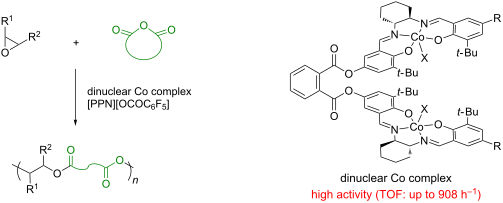
- demonstrate high and/or unique catalytic performances in the epoxide/CA copolymerization [23][32][33][34][35][36][37][38][39]. Recently, we have reported the dinuclear cobalt–salen complexes as catalysts for the copolymerization of epoxides with carbon dioxide (CO2), affording superior catalytic activity
- favorable for a high catalytic activity. Such dependence of the catalytic activity on the absolute configuration contrasts with our previous observation in the epoxide/CO2 copolymerization where the heterochiral (R,R,S,S)-1 showed a much higher catalytic activity than the corresponding homochiral complex (R





