Search results
Search for "decarboxylation" in Full Text gives 252 result(s) in Beilstein Journal of Organic Chemistry. Showing first 200.
Targeting the Pseudomonas quinolone signal quorum sensing system for the discovery of novel anti-infective pathoblockers
Beilstein J. Org. Chem. 2018, 14, 2627–2645, doi:10.3762/bjoc.14.241
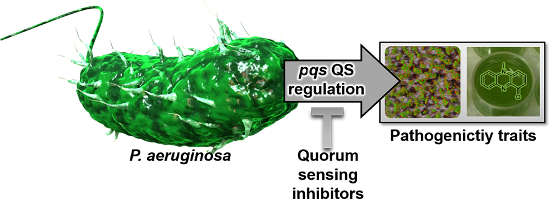
- -aminobenzoylacetyl-CoA (2-ABA-CoA) under decarboxylation [28][29]. In a next step, the pathway-specific thioesterase PqsE generates 2-aminobenzoylacetate (2-ABA) [29]. It has been shown, that also the broad-specificity thioesterase TesB present in P. aeruginosa can catalyse this reaction [29]. The quinolone core is


Microwave-assisted synthesis of biologically relevant steroidal 17-exo-pyrazol-5'-ones from a norpregnene precursor by a side-chain elongation/heterocyclization sequence
Beilstein J. Org. Chem. 2018, 14, 2589–2596, doi:10.3762/bjoc.14.236
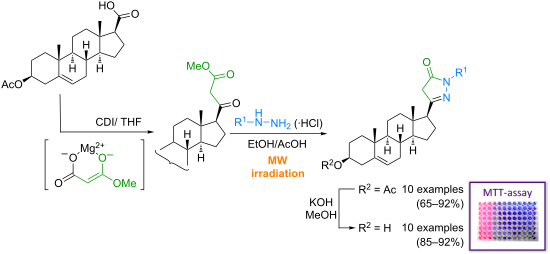
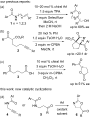
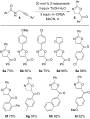
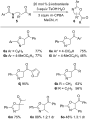
- conditions led to the regioselective formation of 17-exo-heterocycles in good to excellent yields. The suppression of an acid-catalyzed thermal decarboxylation of the β-ketoester and thus a significant improvement in the yield of the desired heterocyclic products could be achieved by the preliminary
- (80 min). However, in addition to 6b (≈50%), the conventional, and even more the MW-promoted transformations led to a considerable amount (20–25%) of pregnenolone acetate (1) as a byproduct. The latter is thought to be produced by an acid-catalyzed thermal decarboxylation of 4 during the relatively
- synthesis of novel steroidal 17-exo-pyrazol-5'-ones from a β-ketoester precursor with arylhydrazine hydrochlorides has been developed. An acid-catalyzed thermal decarboxylation of the starting material as an unwanted side reaction could be avoided by applying a one-pot two-step protocol involving the in


Synthesis of a leopolic acid-inspired tetramic acid with antimicrobial activity against multidrug-resistant bacteria
Beilstein J. Org. Chem. 2018, 14, 2482–2487, doi:10.3762/bjoc.14.224
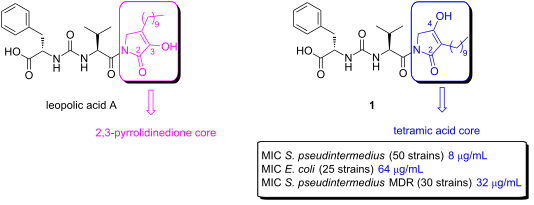
- decarboxylation, we planned to synthesize the alkyl-substituted tetramic core in one single step by Lacey–Dieckmann cyclisation of ethyl 2-(N-(4-methoxybenzyl)dodecanoylamino)acetate (9), although this compound does not contain an active methylene group. Thus, compound 5 was acylated with dodecanoyl chloride to


Microfluidic light-driven synthesis of tetracyclic molecular architectures
Beilstein J. Org. Chem. 2018, 14, 2418–2424, doi:10.3762/bjoc.14.219
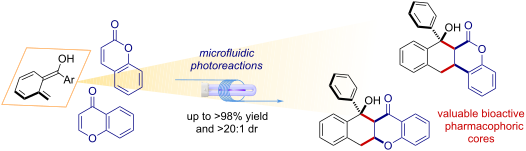
- product 4a. Its treatment with a solution of sodium hydroxide in water promoted a quantitative lactone-opening/decarboxylation cascade sequence, yielding 2,4-dihydronaphthalene 6a in quantitative yield without the need of chromatographic purification. Interestingly, scaffold 6a is a valuable intermediate


Applications of organocatalysed visible-light photoredox reactions for medicinal chemistry
Beilstein J. Org. Chem. 2018, 14, 2035–2064, doi:10.3762/bjoc.14.179
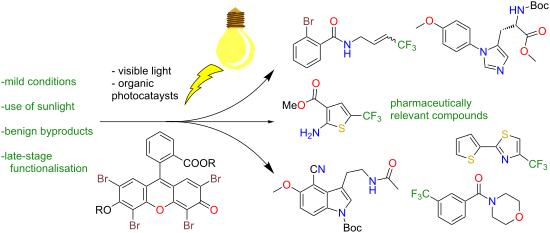
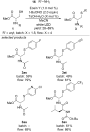
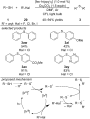
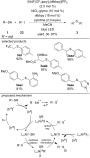
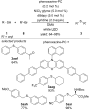
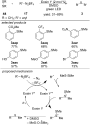
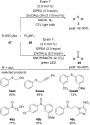
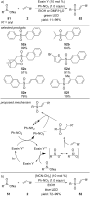
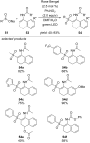
- . Naturally occurring amino acids, e.g., glycine, are often used in medicinal chemistry as linkers, structural components of scaffolds or even as precursors to useful building blocks. Wallentin and co-workers have described a method for the reductive decarboxylation of amino acids, using bis(4-chlorophenyl
- such a mild and selective oxidation. MacMillan and co-workers have recently developed a method for the bioconjugation of peptides by radical decarboxylation of the C-terminus of peptides and subsequent Giese-type addition to Michael acceptors. This is performed under blue light irradiation, using


Synthesis of pyrimido[1,6-a]quinoxalines via intermolecular trapping of thermally generated acyl(quinoxalin-2-yl)ketenes by Schiff bases
Beilstein J. Org. Chem. 2018, 14, 1734–1742, doi:10.3762/bjoc.14.147
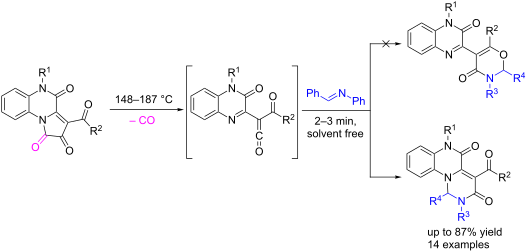
- reaction (Table 1) was not detected. The most likely way of the formation of quinoxalinone 4a is hydration of the ketene with subsequent decarboxylation (Scheme 2); more careful drying the reaction vials and solvents easily reduced the amount of compound 4a. The formation of pyrido[1,2-a]quinoxaline 5a can


[3 + 2]-Cycloaddition reaction of sydnones with alkynes
Beilstein J. Org. Chem. 2018, 14, 1317–1348, doi:10.3762/bjoc.14.113
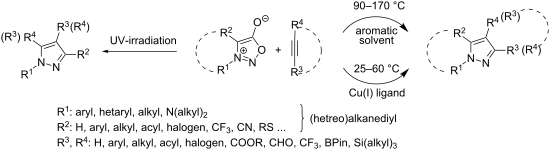
- = COOEt); di-tert-butyl, R3 = COOt-Bu etc.) act as the most common dipolarophiles because of their high reactivity. Moreover, one or both carboxylate groups in position 3 and 4 in the final pyrazole are easily removable using a hydrolysis/decarboxylation protocol [5][16] thus giving pyrazole-4-carboxylic
- decarboxylation [16][95][96]. A novel strategy (Scheme 8) was recently developed by Harrity et al. (see entries 73, 74, 94, 117, 136, 137, 145–150 [32][33][34][82][89][91] in Table 4) who used trimethylsilyl acetylene as a dipolarophile. After regioselective cycloaddition giving 3-trimethylsilylpyrazole (cf. also
- example phenylpropiolic acid (R3: COOH) gives only minor a yield of the cycloaddition/decarboxylation product with 5,6-dihydro-3-hydroxy-4H-pyrrolo[1,2-c][1,2,3]oxadiazol-7-ium [97][98] (Scheme 9). The Table 5 again summarizes all the examples found, including reaction conditions from which we have come


An unusual thionyl chloride-promoted C−C bond formation to obtain 4,4'-bipyrazolones
Beilstein J. Org. Chem. 2018, 14, 1287–1292, doi:10.3762/bjoc.14.110
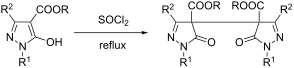
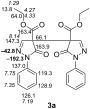
- of 5-hydroxypyrazole-4-carboxylates in refluxing thionyl chloride. The obtained diesters can be transformed into the corresponding 4,4'-bipyrazoles via alkaline hydrolysis and subsequent decarboxylation. Detailed NMR spectroscopic investigations (1H, 13C, 15N) were undertaken with all products
- upon alkaline hydrolysis and subsequent decarboxylation (Scheme 7). According to the NMR spectra, compounds 10 are obviously present as 5-hydroxypyrazoles due to the absence of a proton attached to pyrazole C4. NMR spectroscopic investigation In Supporting Information File 1 the NMR spectroscopic data


Rapid transformation of sulfinate salts into sulfonates promoted by a hypervalent iodine(III) reagent
Beilstein J. Org. Chem. 2018, 14, 1203–1207, doi:10.3762/bjoc.14.101
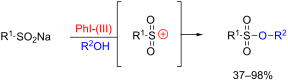
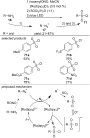
- , decarboxylation, and fragmentation [6][7][8][9][10][11][12][13][14][15][16][17][18][19][20][21][22][23][24][25][26][27]. The sulfonate group is a useful functionality frequently employed as a leaving group in substitution reactions. Production of sulfonates [28] from alcohols generally involves reaction with a


One hundred years of benzotropone chemistry
Beilstein J. Org. Chem. 2018, 14, 1120–1180, doi:10.3762/bjoc.14.98
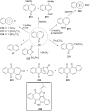
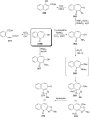
- involves the condensation of o-phthalaldehyde (27) with diethyl 1,3-acetonedicarboxylate (28), followed by hydrolysis and decarboxylation steps [46][47] (Scheme 5). Similar syntheses were made by Cook’s [48] and Föhlisch’s [49] groups. Nevertheless, for performing large-scale synthesis, the cost of 27 make
- structure of 86 was confirmed by the spectroscopic data. The formation of the heptafulvalenes could be explained via an intermolecular [2 + 2] cycloaddition product such as 87 between the carbonyl group of tropones and the ketene C=C double bond of 8-oxoheptafulvene (85) followed by decarboxylation. In a
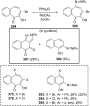
- dehydrogenation using N-bromosuccinimide, and its properties were compared with those of benzotropolone 241A (Scheme 50) [178]. The benzotropolone 174 could also be prepared from diester 301 in a similar way (Scheme 50) [179]. The simultaneous hydrolysis and decarboxylation of benzotropolone-diester 304 to 174








Selective carboxylation of reactive benzylic C–H bonds by a hypervalent iodine(III)/inorganic bromide oxidation system
Beilstein J. Org. Chem. 2018, 14, 1087–1094, doi:10.3762/bjoc.14.94
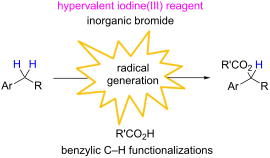
- electrophilic aromatic rings, non-acidic carbonyl groups, and suitable oxygen, nitrogen, and sulfur functionalities. Carbonyloxy radicals derived from typical hypervalent iodine(III) carboxylates by photolysis and other conditions [65][66][67][68] are known to undergo irreversible decarboxylation [69][70
- oxidation forming aryl ketones [52]. Note that the successful coupling of a range of secondary and tertiary carboxylic acids now supports the direct and selective C–H bond activation at the benzyl position by avoiding the formation of carbonyloxy radicals, which are susceptible to decarboxylation. In


Hypervalent iodine(III)-mediated decarboxylative acetoxylation at tertiary and benzylic carbon centers
Beilstein J. Org. Chem. 2018, 14, 1046–1050, doi:10.3762/bjoc.14.92
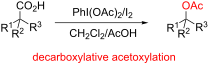
- . Keywords: acetoxylation; carboxylic acids; decarboxylation; hypervalent iodine; iodine; Introduction The decarboxylative functionalization of carboxylic acids and the derivatives thereof is an important transformation in organic synthesis. In recent years, increasing efforts have been devoted to the
- development of decarboxylative transformations [1][2][3][4][5][6][7][8][9][10][11][12][13], especially through radical decarboxylation processes, allowing an easy access to valuable compounds from readily available carboxylic acids. However, despite these advances, the oxidative decarboxylation coupled with C
- most of the starting material was recovered (Table 1, entry 14). This result is consistent with a reaction proceeding via a light-induced radical decarboxylation process [21][25]. We next explored the scope of the decarboxylative acetoxylation reaction (Scheme 2). A variety of carboxylic acids


Volatiles from three genome sequenced fungi from the genus Aspergillus
Beilstein J. Org. Chem. 2018, 14, 900–910, doi:10.3762/bjoc.14.77
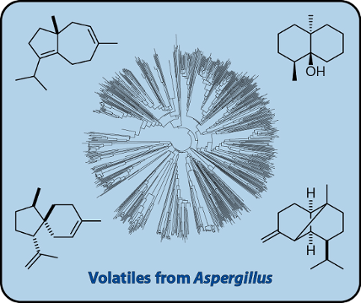
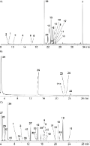
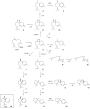
- -methylbutyl acetate (29) and 2-methylbutyl acetate (32). The alcohol portion of these esters likely originates from leucine and isoleucine through transamination to the corresponding α-ketocarboxylic acid, oxidative decarboxylation and reduction. For the pentanoate and heptanoate esters not only the




Progress in copper-catalyzed trifluoromethylation
Beilstein J. Org. Chem. 2018, 14, 155–181, doi:10.3762/bjoc.14.11
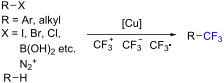
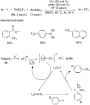
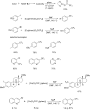
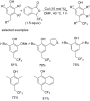
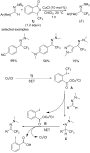
- ). However, it was found that the generation of the trifluoromethyl anion proceeds faster than the subsequent transfer of CF3 to the aromatic halide. Subsequently, the problem was solved by using a slow addition mode that adjusted the rate of decarboxylation step to the rate of the consumption of CF3 in the
- aromatic trifluoromethylation step. The attractive prospect of trifluoroacetate as the trifluoromethyl source for the preparation of trifluoromethylarenes prompted the investigation of the mechanism of this reaction. A mechanistic study indicated that CuCF3 was formed by decarboxylation of the
- as the CF3 source (Scheme 7). High temperature was required to accelerate the rate of the decarboxylation of CF3CO2K and the increased pressure occurred during the process, which brought problems under batch conditions. Buchwald and co-worker deal with it through combining flow chemistry. Under flow










Volatiles from the tropical ascomycete Daldinia clavata (Hypoxylaceae, Xylariales)
Beilstein J. Org. Chem. 2018, 14, 135–147, doi:10.3762/bjoc.14.9
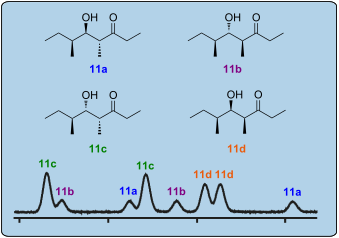
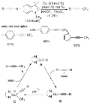
- are already defined. A third extension with malonyl-SCoA and methylation gives rise to intermediate C that can be released, e.g., by a thioesterase to the β-keto acid D, followed by spontaneous decarboxylation to 11a. Two structurally related molecules to 11a have been reported from endophytic








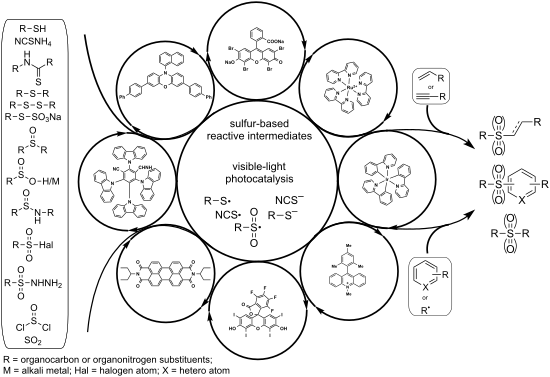
Photocatalytic formation of carbon–sulfur bonds
Beilstein J. Org. Chem. 2018, 14, 54–83, doi:10.3762/bjoc.14.4



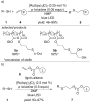

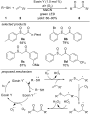
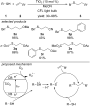


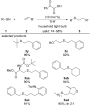





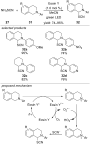


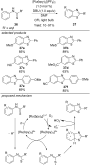
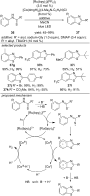


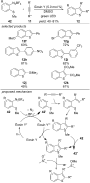






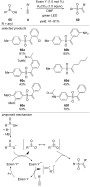

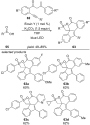

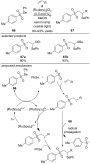

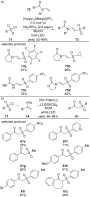

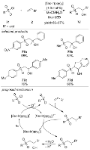
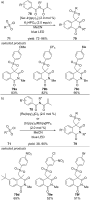
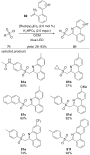


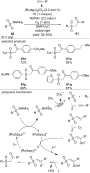


From dipivaloylketene to tetraoxaadamantanes
Beilstein J. Org. Chem. 2018, 14, 1–10, doi:10.3762/bjoc.14.1

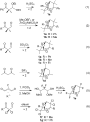
- ]nonadienes (bisdioxines) 4. When arylamines are used as the nucleophiles under neutral conditions, decarboxylation occurs during the formation of bisdioxines 8. However, when water or alcohols are added to 3 under acidic conditions, bisdioxine-carboxylic acids and esters 10 and 11 are obtained. Acid
- in isolable enol intermediates of type 9 [18]. The carboxylate cannot form in the presence of an acid and therefore decarboxylation does not take place (17 → 18 → 10). The mono- and dicarboxylic acids 10 and 11 are stable and do not decarboxylate easily. However, aromatic amines carrying strongly
- decarboxylated tetraoxaadamantane can be obtained. It is noteworthy that, when a free carboxylic acid moiety is present in the bisdioxine, it is invariably lost during the tetraoxaadamantane formation. The decarboxylation is likely to take place in the acrylic acid moieties in the trioxanonadienes during the





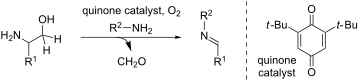
Quinone-catalyzed oxidative deformylation: synthesis of imines from amino alcohols
Beilstein J. Org. Chem. 2017, 13, 2895–2901, doi:10.3762/bjoc.13.282
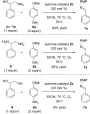
- deformylation of 2-phenylglycinol (1a) to deliver N-PMP imine 7a (Table 1). We selected quinone catalysts (2a−c) that have previously been utilized in amine oxidation reactions [21][32][40][41], and began with reaction conditions similar to those developed for our quinone-catalyzed oxidative decarboxylation



The photodecarboxylative addition of carboxylates to phthalimides as a key-step in the synthesis of biologically active 3-arylmethylene-2,3-dihydro-1H-isoindolin-1-ones
Beilstein J. Org. Chem. 2017, 13, 2833–2841, doi:10.3762/bjoc.13.275
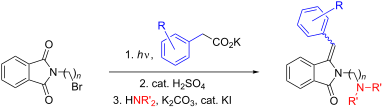
- excess amounts to suppress competing ‘simple’ decarboxylation (-CO2− ↔ -H exchange) reactions to the corresponding toluene derivatives [25]. Following the established protocol and utilizing a 1:1 acetone/water mixture as reaction medium [27][30], irradiations with UVB light (300 ± 30 nm) for 4 hours
- one of the N-ethyl groups of the side chain. The mechanism of the photodecarboxylation is well established (Scheme 7) and involves triplet sensitization by acetone and electron transfer between the phenylacetate and the excited phthalimide [55][56][57]. Subsequent decarboxylation, radical combination


CF3SO2X (X = Na, Cl) as reagents for trifluoromethylation, trifluoromethylsulfenyl-, -sulfinyl- and -sulfonylation. Part 1: Use of CF3SO2Na
Beilstein J. Org. Chem. 2017, 13, 2764–2799, doi:10.3762/bjoc.13.272
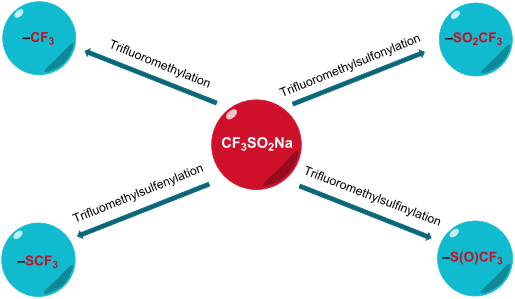
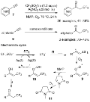
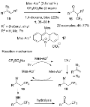
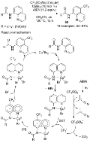
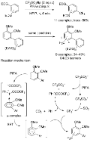
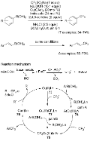
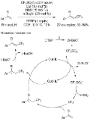
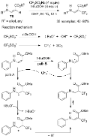
- CF3SO2Na (Scheme 56) [81]. The authors used basically the same protocol as Sanford and Molander but observed that a more diluted reaction medium gave improved reaction yields. Trifluoromethylation of alkenes by decarboxylation: Liu and co-workers were the first to describe the copper-catalysed



















A Brønsted base-promoted diastereoselective dimerization of azlactones
Beilstein J. Org. Chem. 2017, 13, 2663–2670, doi:10.3762/bjoc.13.264
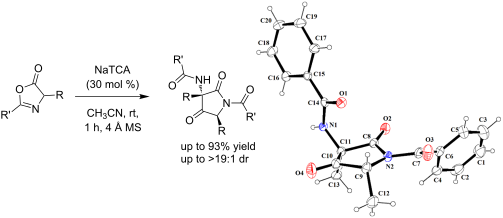
- affording 2a after protonation and thus regenerating the catalyst intermediate 3. 1H NMR analysis using CD3CN showed high levels of HCCl3, which could be form after decarboxylation of the basic species. In an attempt to obtain a better understanding at this dimerization reaction and to give new insights





![[Graphic 5]](/bjoc/content/inline/1860-5397-13-264-i10.svg?max-width=637&scale=1.18182) vs time for the dimerization of azlactone 1a.
vs time for the dimerization of azlactone 1a.

Regioselective decarboxylative addition of malonic acid and its mono(thio)esters to 4-trifluoromethylpyrimidin-2(1H)-ones
Beilstein J. Org. Chem. 2017, 13, 2617–2625, doi:10.3762/bjoc.13.259
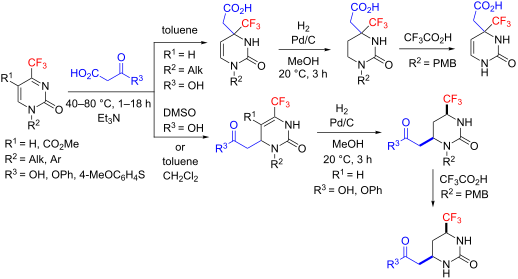
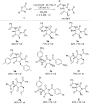
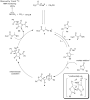
- (thermodynamically controlled) Mannich-type adduct B, followed by rapid irreversible decarboxylation of B into compound 4a. Contrastingly, in a high-polar solvent, the intermediate A is so labile that it undergoes decarboxylation to product 5a rather than rearrangement to B. The proposed reaction mechanism is
- supported by the known effect of solvent polarity on the decarboxylation rate of malonic acid derivatives which was claimed to be faster in polar media [40]. To study the substrate scope of the regioselective additions of malonic acid, we introduced substituted pyrimidones 2b–m in the reaction and performed
- the Michael-type adduct, phenyl 2-(3-methyl-2-oxo-6-trifluoromethyl-1,2,3,4-tetrahydropyrimidin-4-yl)acetate (6a). The presence of DBU caused substantial decarboxylation of starting reagent 1a (Table 3, entry 3). This unwanted process necessitated using of up to 6 equivalents of 1a to reach a

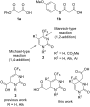


Comparative profiling of well-defined copper reagents and precursors for the trifluoromethylation of aryl iodides
Beilstein J. Org. Chem. 2017, 13, 2297–2303, doi:10.3762/bjoc.13.225
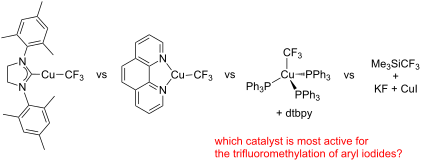
- trifluoromethylation ‘catalysis’ using copper have been observed [4][5][6][7][8][9], but these reactions typically only work for aryl iodides and have a low substrate scope, low turn-over values, and/or involve decarboxylation reactions at high temperatures. Stoichiometric trifluoromethylating agents are therefore


Intramolecular glycosylation
Beilstein J. Org. Chem. 2017, 13, 2028–2048, doi:10.3762/bjoc.13.201
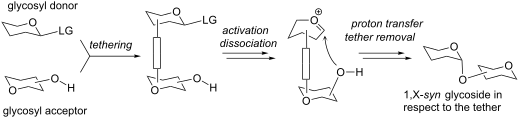
- developed to provide the enhanced facial selectivity for the acceptor attack [38][39][40][41]. Beyond early intramolecular glycosylations achieved via the orthoester rearrangement by Lindberg [42] and Kochetkov [43], as well as the decarboxylation of glycosyl carbonates by Ishido [44], Barresi and Hindsgaul
- glycosylation was based on the 1,2-orthoester rearrangement by Lindberg [42] and Kochetkov [43], as well as the decarboxylation of glycosyl carbonates by Ishido [44]. Intramolecular glycosylations where the glycosyl acceptor was purposefully attached directly to the leaving group of the glycosyl donor have been


Iodoarene-catalyzed cyclizations of N-propargylamides and β-amidoketones: synthesis of 2-oxazolines
Beilstein J. Org. Chem. 2017, 13, 1823–1827, doi:10.3762/bjoc.13.177
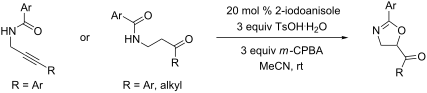
- 2-oxazoline formation through the iodoarene-catalyzed cyclization of β-amidoketones 5. These are readily prepared by alkylation of the corresponding β-ketoester followed by decarboxylation (Scheme 4) [40][41]. The cyclization of β-amidoketones 5 was successful with the same conditions as