Search for "emission" in Full Text gives 483 result(s) in Beilstein Journal of Organic Chemistry. Showing first 200.
Beilstein J. Org. Chem. 2021, 17, 2315–2320, doi:10.3762/bjoc.17.149
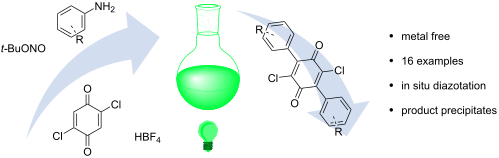
Graphical Abstract
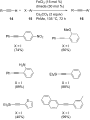
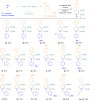
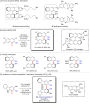
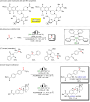
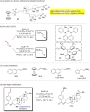
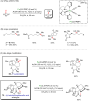
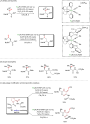
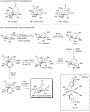
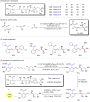
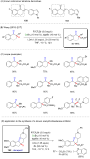
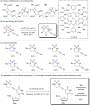
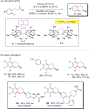
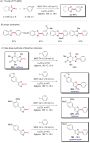
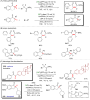
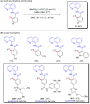
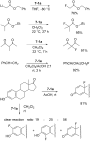
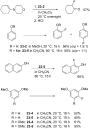
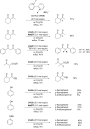
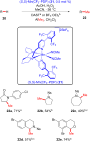
Scheme 1: Reaction scope. Conditions: quinone 1 (0.3 mmol), aniline 4 (1.2 mmol), HBF4 (1.5 mmol), t-BuONO (1...
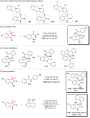
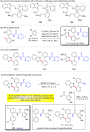
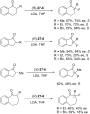
Scheme 2: Synthesis of betulinan A and its analog 5b. Conditions: quinone 3 (0.1 mmol), NaOMe (0.25 mmol) in ...
Beilstein J. Org. Chem. 2021, 17, 2164–2185, doi:10.3762/bjoc.17.139
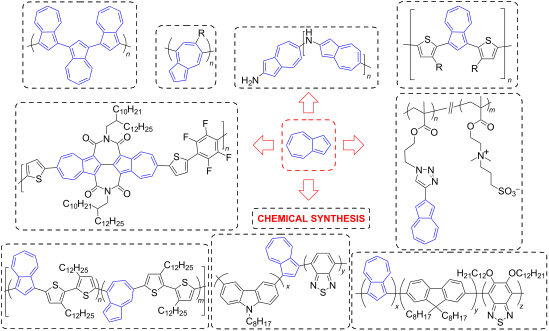
Graphical Abstract
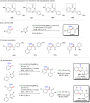
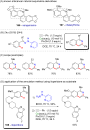
Figure 1: Chemical structure, numbering scheme, and resonance form of azulene.
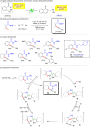
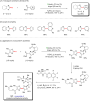
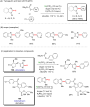
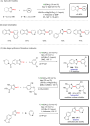
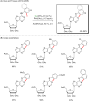
Scheme 1: Synthesis of polyazulene-iodine (PAz-I2) and polyazulene-bromine (PAz-Br2) complexes.
Scheme 2: Synthesis of ‘true polyazulene’ 3 or 3’ by cationic polymerization.
Scheme 3: Synthesis of 1,3-polyazulene 5 by Yamamoto protocol.
Scheme 4: Synthesis of 4,7-dibromo-6-(n-alkyl)azulenes 12–14.
Scheme 5: Synthesis of (A) 4,7-diethynyl-6-(n-dodecyl)azulene (16) and (B) 4,7-polyazulene 17 containing an e...
Scheme 6: Synthesis of directly connected 4,7-polyazulenes 18–20.
Scheme 7: Synthesis of (A) tert-butyl N-(6-bromoazulen-2-yl)carbamate (27), (B) dimeric aminoazulene 29, and ...
Figure 2: Iminium zwitterionic resonance forms of poly[2(6)-aminoazulene] 31.
Scheme 8: Synthesis of poly{1,3-bis[2-(3-alkylthienyl)]azulene} 33–38.
Scheme 9: Synthesis of polymer ruthenium complexes 40–43.
Scheme 10: Synthesis of 4,7-polyazulenes 45 containing a thienyl linker.
Scheme 11: Synthesis of azulene-bithiophene 48 and azulene-benzothiadiazole 52 copolymers. Conditions: (a): (i...
Scheme 12: Synthesis of azulene-benzodithiophene copolymer 54 and azulene-bithiophene copolymer 56.
Scheme 13: Synthesis of (A) 5,5’-bis(trimethylstannyl)-3,3’-didodecyl-2,2’-bithiophene (60) and (B) azulene-bi...
Scheme 14: Synthesis of 1,3-bisborylated azulene 67.
Scheme 15: Synthesis of D–A-type azulene-DPP copolymers 69, 71, and 72. Conditions: (a) Pd(PPh3)4, K2CO3, Aliq...
Scheme 16: Synthesis of the key precursor TBAzDI 79.
Scheme 17: Synthesis of TBAzDI-based polymers 81 and 83. Conditions: (a) P(o-tol)3, Pd2(dba)3, PivOH, Cs2CO3, ...
Scheme 18: Synthesis of (A) 1,3-dibromo-2-arylazulene 92–98 and (B) 2-arylazulene-thiophene copolymers 99–101.
Scheme 19: Synthesis of (A) poly[2,7-(9,9-dialkylfluorenyl)-alt-(1’,3’-azulenyl)] 106–109, (B) 1,3-bis(7-bromo...
Scheme 20: Synthesis of azulene-fluorene copolymers 117–121 containing varying ratios of 1,3- and 4,7-connecte...
Scheme 21: Synthesis of (A) 2,6-dibromoazulene (125), (B) azulene-fluorene copolymer 126, and (C) azulene-fluo...
Scheme 22: Synthesis of 2-arylazulene-fluorene copolymers 131–134.
Scheme 23: Synthesis of azulene-fluorene-benzothiadiazole terpolymers 136–138.
Scheme 24: Synthesis of azulene-carbazole-benzothiadiazole-conjugated polymers 140–144.
Scheme 25: Synthesis of (A) azulene-2-yl methacrylate (146) and (B) the triazole-containing azulene methacryla...
Scheme 26: Synthesis of (A) azulene methacrylate polymer 151 and (B) triazole-containing azulene methacrylate ...
Scheme 27: Synthesis of azulene methyl methacrylate polymers 154, 155 (A and B) and azulene-sulfobetaine metha...
Beilstein J. Org. Chem. 2021, 17, 2067–2076, doi:10.3762/bjoc.17.133
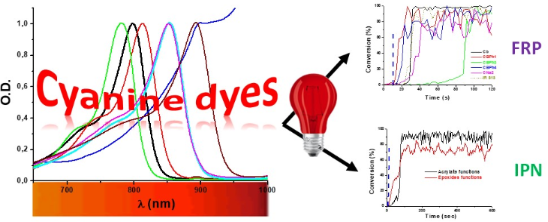
Graphical Abstract
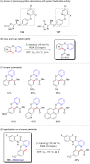
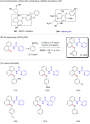
Scheme 1: Investigated NIR dyes.
Scheme 2: Other used chemicals.
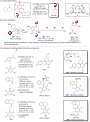
Scheme 3: Synthetic routes to compounds Ca, Cb, and CNa.
Scheme 4: Synthetic routes to CI1, CI3, CI4, and CI6–CI9.
Scheme 5: The metathesis reaction enabling the formation of “soft” salts CBPh1-CBPh4.
Figure 1: Visible–NIR spectra of NIR dyes in ACN. A) (1) CBPh1, (2) CBPh2, (3) CBPh3, (4) CBPh4, (5) Ca, (6) ...
Figure 2: Photopolymerization profiles of PETIA monomer under air (acrylate functions conversion vs irradiati...
Figure 3: Photopolymerization profiles of PETIA monomer under air (acrylate functions conversion vs irradiati...
Scheme 6: Pictures of polymers obtained for a thickness of 1.4 mm, using a NIR dye/iod/amine 0.1:3:2, %w/w/w ...
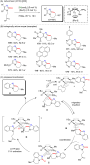
Scheme 7: Proposed mechanism for the photochemical reactivity of NIR dyes in a three-component PIS.
Figure 4: A) Photopolymerization profiles of PETIA/epoxy blend 1:1, w/w under air (acrylate and epoxy functio...
Beilstein J. Org. Chem. 2021, 17, 1849–1938, doi:10.3762/bjoc.17.126
Graphical Abstract
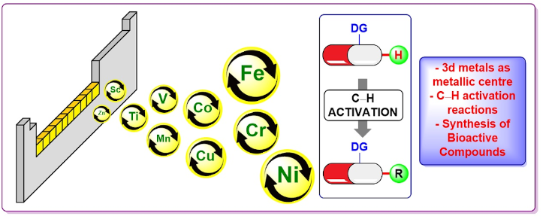
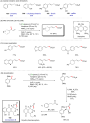
Scheme 1: Schematic overview of transition metals studied in C–H activation processes.
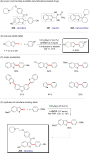
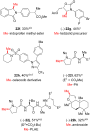
Scheme 2: (A) Known biological activities related to benzimidazole-based compounds; (B and C) an example of a...
Scheme 3: (A) Known biological activities related to quinoline-based compounds; (B and C) an example of a sca...
Scheme 4: (A) Known biological activities related to sulfur-containing compounds; (B and C) an example of a s...
Scheme 5: (A) Known biological activities related to aminoindane derivatives; (B and C) an example of a scand...
Scheme 6: (A) Known biological activities related to norbornane derivatives; (B and C) an example of a scandi...
Scheme 7: (A) Known biological activities related to aniline derivatives; (B and C) an example of a titanium-...
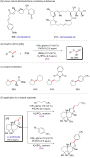
Scheme 8: (A) Known biological activities related to cyclohexylamine derivatives; (B) an example of an intram...
Scheme 9: (A) Known biologically active benzophenone derivatives; (B and C) photocatalytic oxidation of benzy...
Scheme 10: (A) Known bioactive fluorine-containing compounds; (B and C) vanadium-mediated C(sp3)–H fluorinatio...
Scheme 11: (A) Known biologically active Lythraceae alkaloids; (B) synthesis of (±)-decinine (30).
Scheme 12: (A) Synthesis of (R)- and (S)-boehmeriasin (31); (B) synthesis of phenanthroindolizidines by vanadi...
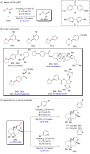
Scheme 13: (A) Known bioactive BINOL derivatives; (B and C) vanadium-mediated oxidative coupling of 2-naphthol...
Scheme 14: (A) Known antiplasmodial imidazopyridazines; (B) practical synthesis of 41.
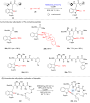
Scheme 15: (A) Gold-catalyzed drug-release mechanism using 2-alkynylbenzamides; (B and C) chromium-mediated al...
Scheme 16: (A) Examples of anti-inflammatory benzaldehyde derivatives; (B and C) chromium-mediated difunctiona...
Scheme 17: (A and B) Manganese-catalyzed chemoselective intramolecular C(sp3)–H amination; (C) late-stage modi...
Scheme 18: (A and B) Manganese-catalyzed C(sp3)–H amination; (C) late-stage modification of a leelamine deriva...
Scheme 19: (A) Known bioactive compounds containing substituted N-heterocycles; (B and C) manganese-catalyzed ...
Scheme 20: (A) Known indoles that present GPR40 full agonist activity; (B and C) manganese-catalyzed C–H alkyl...
Scheme 21: (A) Examples of known biaryl-containing drugs; (B and C) manganese-catalyzed C–H arylation through ...
Scheme 22: (A) Known zidovudine derivatives with potent anti-HIV properties; (B and C) manganese-catalyzed C–H...
Scheme 23: (A and B) Manganese-catalyzed C–H organic photo-electrosynthesis; (C) late-stage modification.
Scheme 24: (A) Example of a known antibacterial silylated dendrimer; (B and C) manganese-catalyzed C–H silylat...
Scheme 25: (A and B) Fe-based small molecule catalyst applied for selective aliphatic C–H oxidations; (C) late...
Scheme 26: (A) Examples of naturally occurring gracilioethers; (B) the first total synthesis of gracilioether ...
Scheme 27: (A and B) Selective aliphatic C–H oxidation of amino acids; (C) late-stage modification of proline-...
Scheme 28: (A) Examples of Illicium sesquiterpenes; (B) first chemical synthesis of (+)-pseudoanisatin (80) in...
Scheme 29: (A and B) Fe-catalyzed deuteration; (C) late-stage modification of pharmaceuticals.
Scheme 30: (A and B) Biomimetic Fe-catalyzed aerobic oxidation of methylarenes to benzaldehydes (PMHS, polymet...
Scheme 31: (A) Known tetrahydroquinolines with potential biological activities; (B and C) redox-selective Fe c...
Scheme 32: (A) Known drugs containing a benzofuran unit; (B and C) Fe/Cu-catalyzed tandem O-arylation to acces...
Scheme 33: (A) Known azaindolines that act as M4 muscarinic acetylcholine receptor agonists; (B and C) intramo...
Scheme 34: (A) Known indolinones with anticholinesterase activity; (B and C) oxidative C(sp3)–H cross coupling...
Scheme 35: (A and B) Cobalt-catalyzed C–H alkenylation of C-3-peptide-containing indoles; (C) derivatization b...
Scheme 36: (A) Cobalt-Cp*-catalyzed C–H methylation of known drugs; (B and C) scope of the o-methylated deriva...
Scheme 37: (A) Known lasalocid A analogues; (B and C) three-component cobalt-catalyzed C–H bond addition; (D) ...
Scheme 38: (A and B) Cobalt-catalyzed C(sp2)–H amidation of thiostrepton.
Scheme 39: (A) Known 4H-benzo[d][1,3]oxazin-4-one derivatives with hypolipidemic activity; (B and C) cobalt-ca...
Scheme 40: (A and B) Cobalt-catalyzed C–H arylation of pyrrole derivatives; (C) application for the synthesis ...
Scheme 41: (A) Known 2-phenoxypyridine derivatives with potent herbicidal activity; (B and C) cobalt-catalyzed...
Scheme 42: (A) Natural cinnamic acid derivatives; (B and C) cobalt-catalyzed C–H carboxylation of terminal alk...
Scheme 43: (A and B) Cobalt-catalyzed C–H borylation; (C) application to the synthesis of flurbiprofen.
Scheme 44: (A) Benzothiazoles known to present anticonvulsant activities; (B and C) cobalt/ruthenium-catalyzed...
Scheme 45: (A and B) Cobalt-catalyzed oxygenation of methylene groups towards ketone synthesis; (C) synthesis ...
Scheme 46: (A) Known anticancer tetralone derivatives; (B and C) cobalt-catalyzed C–H difluoroalkylation of ar...
Scheme 47: (A and B) Cobalt-catalyzed C–H thiolation; (C) application in the synthesis of quetiapine (153).
Scheme 48: (A) Known benzoxazole derivatives with anticancer, antifungal, and antibacterial activities; (B and...
Scheme 49: (A and B) Cobalt-catalyzed C–H carbonylation of naphthylamides; (C) BET inhibitors 158 and 159 tota...
Scheme 50: (A) Known bioactive pyrrolo[1,2-a]quinoxalin-4(5H)-one derivatives; (B and C) cobalt-catalyzed C–H ...
Scheme 51: (A) Known antibacterial cyclic sulfonamides; (B and C) cobalt-catalyzed C–H amination of propargyli...
Scheme 52: (A and B) Cobalt-catalyzed intramolecular 1,5-C(sp3)–H amination; (C) late-stage functionalization ...
Scheme 53: (A and B) Cobalt-catalyzed C–H/C–H cross-coupling between benzamides and oximes; (C) late-state syn...
Scheme 54: (A) Known anticancer natural isoquinoline derivatives; (B and C) cobalt-catalyzed C(sp2)–H annulati...
Scheme 55: (A) Enantioselective intramolecular nickel-catalyzed C–H activation; (B) bioactive obtained motifs;...
Scheme 56: (A and B) Nickel-catalyzed α-C(sp3)–H arylation of ketones; (C) application of the method using kno...
Scheme 57: (A and B) Nickel-catalyzed C(sp3)–H acylation of pyrrolidine derivatives; (C) exploring the use of ...
Scheme 58: (A) Nickel-catalyzed C(sp3)–H arylation of dioxolane; (B) library of products obtained from biologi...
Scheme 59: (A) Intramolecular enantioselective nickel-catalyzed C–H cycloalkylation; (B) product examples, inc...
Scheme 60: (A and B) Nickel-catalyzed C–H deoxy-arylation of azole derivatives; (C) late-stage functionalizati...
Scheme 61: (A and B) Nickel-catalyzed decarbonylative C–H arylation of azole derivatives; (C) application of t...
Scheme 62: (A and B) Another important example of nickel-catalyzed C–H arylation of azole derivatives; (C) app...
Scheme 63: (A and B) Another notable example of a nickel-catalyzed C–H arylation of azole derivatives; (C) lat...
Scheme 64: (A and B) Nickel-based metalorganic framework (MOF-74-Ni)-catalyzed C–H arylation of azole derivati...
Scheme 65: (A) Known commercially available benzothiophene-based drugs; (B and C) nickel-catalyzed C–H arylati...
Scheme 66: (A) Known natural tetrahydrofuran-containing substances; (B and C) nickel-catalyzed photoredox C(sp3...
Scheme 67: (A and B) Another notable example of a nickel-catalyzed photoredox C(sp3)–H alkylation/arylation; (...
Scheme 68: (A) Electrochemical/nickel-catalyzed C–H alkoxylation; (B) achieved scope, including three using na...
Scheme 69: (A) Enantioselective photoredox/nickel catalyzed C(sp3)–H arylation; (B) achieved scope, including ...
Scheme 70: (A) Known commercially available trifluoromethylated drugs; (B and C) nickel-catalyzed C–H trifluor...
Scheme 71: (A and B) Stereoselective nickel-catalyzed C–H difluoroalkylation; (C) late-stage functionalization...
Scheme 72: (A) Cu-mediated ortho-amination of oxalamides; (B) achieved scope, including derivatives obtained f...
Scheme 73: (A) Electro-oxidative copper-mediated amination of 8-aminoquinoline-derived amides; (B) achieved sc...
Scheme 74: (A and B) Cu(I)-mediated C–H amination with oximes; (C) derivatization using telmisartan (241) as s...
Scheme 75: (A and B) Cu-mediated amination of aryl amides using ammonia; (C) late-stage modification of proben...
Scheme 76: (A and B) Synthesis of purine nucleoside analogues using copper-mediated C(sp2)–H activation.
Scheme 77: (A) Copper-mediated annulation of acrylamide; (B) achieved scope, including the synthesis of the co...
Scheme 78: (A) Known bioactive compounds containing a naphthyl aryl ether motif; (B and C) copper-mediated eth...
Scheme 79: (A and B) Cu-mediated alkylation of N-oxide-heteroarenes; (C) late-stage modification.
Scheme 80: (A) Cu-mediated cross-dehydrogenative coupling of polyfluoroarenes and alkanes; (B) scope from know...
Scheme 81: (A) Known anticancer acrylonitrile compounds; (B and C) Copper-mediated cyanation of unactivated al...
Scheme 82: (A) Cu-mediated radiofluorination of 8-aminoquinoline-derived aryl amides; (B) achieved scope, incl...
Scheme 83: (A) Examples of natural β-carbolines; (B and C) an example of a zinc-catalyzed C–H functionalizatio...
Scheme 84: (A) Examples of anticancer α-aminophosphonic acid derivatives; (B and C) an example of a zinc-catal...
Beilstein J. Org. Chem. 2021, 17, 1752–1813, doi:10.3762/bjoc.17.123
Graphical Abstract
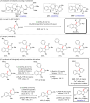
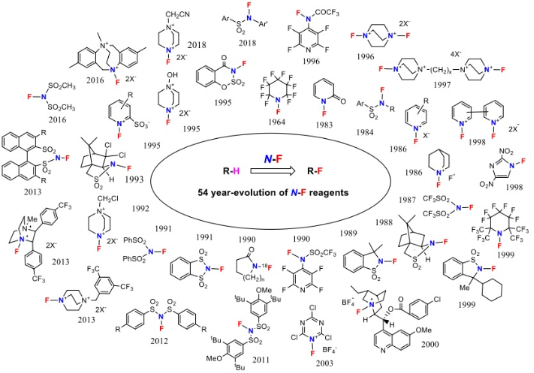
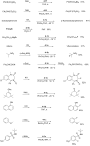
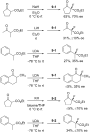
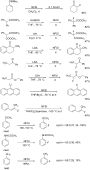
Scheme 1: Fluorination with N-F amine 1-1.
Scheme 2: Preparation of N-F amine 1-1.
Scheme 3: Reactions of N-F amine 1-1.
Scheme 4: Synthesis of N-F perfluoroimides 2-1 and 2-2.
Scheme 5: Synthesis of 1-fluoro-2-pyridone (3-1).
Scheme 6: Fluorination with 1-fluoro-2-pyridone (3-1).
Figure 1: Synthesis of N-F sulfonamides 4-1a–g.
Scheme 7: Fluorination with N-F reagent 4-1b,c,f.
Scheme 8: Fluorination of alkenyllithiums with N-F 4-1h.
Scheme 9: Synthesis of N-fluoropyridinium triflate (5-4a).
Scheme 10: Synthetic methods for N-F-pyridinium salts.
Figure 2: Synthesis of various N-fluoropyridinium salts. Note: athis yield was the one by the improved method...
Scheme 11: Fluorination power order of N-fluoropyridinium salts.
Scheme 12: Fluorinations with N-F salts 5-4.
Scheme 13: Fluorination of Corey lactone 5-7 with N-F-bis(methoxymethyl) salt 5-4l.
Scheme 14: Fluorination with NFPy.
Scheme 15: Synthesis of the N-F reagent, N-fluoroquinuclidinium fluoride (6-1).
Scheme 16: Fluorinations achieved with N-F fluoride 6-1.
Scheme 17: Synthesis of N-F imides 7-1a–g.
Scheme 18: Fluorination with (CF3SO2)2NF, 7-1a.
Scheme 19: Fluorination reactions of various substrates with 7-1a.
Scheme 20: Synthesis of N-F triflate 8-1.
Scheme 21: Synthesis of chiral N-fluoro sultams 9-1 and 9-2.
Scheme 22: Fluorination with chiral N-fluoro sultams 9-1 and 9-2.
Scheme 23: Synthesis of saccharin-derived N-fluorosultam 10-2.
Scheme 24: Fluorination with N-fluorosultam 10-2.
Scheme 25: Synthesis of N-F reagent 11-2.
Scheme 26: Fluorination with N-F reagent 11-2.
Scheme 27: Synthesis and reaction of N-fluorolactams 12-1.
Scheme 28: Synthesis of NFOBS 13-2.
Scheme 29: Fluorination with NFOBS 13-2.
Scheme 30: Synthesis of NFSI (14-2).
Scheme 31: Fluorination with NFSI 14-2.
Scheme 32: Synthesis of N-fluorosaccharin (15-1) and N-fluorophthalimide (15-2).
Scheme 33: Synthesis of N-F salts 16-3.
Scheme 34: Fluorination with N-F salts 16-3.
Figure 3: Monofluorination with Selectfluor (16-3a).
Figure 4: Difluorination with Selectfluor (16-3a).
Scheme 35: Transfer fluorination of Selectfluor (16-3a).
Scheme 36: Fluorination of substrates with Selectfluor (16-3a).
Scheme 37: Synthesis of chiral N-fluoro-sultam 17-2.
Scheme 38: Asymmetric fluorination with chiral 17-2.
Figure 5: Synthesis of Zwitterionic N-fluoropyridinium salts 18-2a–h.
Scheme 39: Fluorinating power order of zwitterionic N-fluoropyridinium salts.
Scheme 40: Fluorination with zwitterionic 18-2.
Scheme 41: Activation of salt 18-2h with TfOH.
Scheme 42: Synthesis of NFTh, 19-2.
Scheme 43: Fluorination with NFTh, 19-2.
Scheme 44: Synthesis of 3-fluorobenzo-1,2,3-oxathiazin-4-one 2,2-dioxide (20-2).
Scheme 45: Fluorination with 20-2.
Scheme 46: Synthesis of N-F amide 21-3.
Scheme 47: Fluorination with N-F amide 21-2.
Scheme 48: Synthesis of N,N’-difluorodiazoniabicyclo[2.2.2]octane salts 22-1.
Scheme 49: One-pot synthesis of N,N’-difluoro-1,4-diazoniabicyclo[2.2.2]octane bistetrafluoroborate salt (22-1d...
Figure 6: Fluorination of anisole with 22-1a, d, e.
Scheme 50: Fluorination with N,N’-diF bisBF4 22-1d.
Scheme 51: Synthesis of bis-N-F reagents 23-1–5.
Scheme 52: Fluorination with 23-2, 4, 5.
Figure 7: Synthesis of N,N’-difluorobipyridinium salts 24-2.
Figure 8: Controlled fluorination of N,N’-diF 24-2.
Scheme 53: Fluorinating power of N,N’-diF salts 24-2 and N-F salt 5-4a.
Scheme 54: Fluorination reactions with SynfluorTM (24-2b).
Scheme 55: Additional fluorination reactions with SynfluorTM (24-2b).
Scheme 56: Synthesis of N-F 25-1.
Scheme 57: Fluorination of polycyclic aromatics with 25-1.
Scheme 58: Synthesis of 26-1 and dimethyl analog 26-2.
Scheme 59: Fluorination with reagents 26-1, 26-2, 1-1, and 26-3.
Scheme 60: Synthesis of N-F reagent 27-2.
Scheme 61: Synthesis of chiral N-F reagents 27-6.
Scheme 62: Synthesis of chiral N-F 27-7–9.
Scheme 63: Asymmetric fluorination with 27-6.
Scheme 64: Synthesis of chiral N-F reagents 28-3.
Scheme 65: Asymmetric fluorination with 28-3.
Scheme 66: Synthesis of chiral N-F reagents 28-7.
Figure 9: Asymmetric fluorination with 28-7.
Scheme 67: In situ formation of N-fluorinated cinchona alkaloids with SelectfluorTM.
Scheme 68: Asymmetric fluorination with N-F alkaloids formed in situ.
Scheme 69: Synthesis of N-fluorocinchona alkaloids with Selectfluor.
Scheme 70: Asymmetric fluorination with 30-1–4.
Scheme 71: Transfer fluorination from various N-F reagents.
Figure 10: Asymmetric fluorination of silyl enol ethers.
Scheme 72: Synthesis of N-fluoro salt 32-2.
Scheme 73: Reactivity of N-fluorotriazinium salt 32-2.
Scheme 74: Synthesis of bulky N-fluorobenzenesulfonimide NFBSI 33-3.
Scheme 75: Comparison of NFSI and NFBSI.
Scheme 76: Synthesis of p-substituted N-fluorobenzenesulfonimides 34-3.
Figure 11: Asymmetric fluorination with 34-3 and a chiral catalyst 34-4.
Scheme 77: 1,4-Fluoroamination with Selecfluor and a chiral catalyst.
Figure 12: Asymmetric fluoroamination with 35-5a, b.
Scheme 78: Synthesis of Selectfluor analogs 35-5a, b.
Scheme 79: Synthesis of chiral dicationic DABCO-based N-F reagents 36-5.
Scheme 80: Asymmetric fluorocyclization with chiral 36-5b.
Scheme 81: Synthesis of chiral 37-2a,b.
Scheme 82: Asymmetric fluorination with chiral 37-2a,b.
Scheme 83: Asymmetric fluorination with chiral 37-2b.
Scheme 84: Reaction of indene with chiral 37-2a,b.
Scheme 85: Synthesis of Me-NFSI, 38-2.
Scheme 86: Fluorination of active methine compounds with Me-NFSI.
Scheme 87: Fluorination of malonates with Me-NFSI.
Scheme 88: Fluorination of keto esters with Me-NFSI.
Scheme 89: Synthesis of N-F 39-3 derived from the ethylene-bridged Tröger’s base.
Scheme 90: Fluorine transfer from N-F 39-3.
Scheme 91: Fluorination with N-F 39-3.
Scheme 92: Synthesis of SelectfluorCN.
Scheme 93: Bistrifluoromethoxylation of alkenes using SelectfluorCN.
Figure 13: Synthesis of NFAS 41-2.
Scheme 94: Radical fluorination with different N-F reagents.
Scheme 95: Radical fluorination of alkenes with NFAS 41-2.
Scheme 96: Radical fluorination of alkenes with NFAS 41-2f.
Scheme 97: Decarboxylative fluorination with NFAS 41-2a,f.
Scheme 98: Fluorine plus detachment (FPD).
Figure 14: FPD values of representative N-F reagents in CH2Cl2 and CH3CN (in parentheses). Adapted with permis...
Scheme 99: N-F homolytic bond dissociation energy (BDE).
Figure 15: BDE values of representative N-F reagents in CH3CN. Adapted with permission from ref. [127]. Copyright 2...
Figure 16: Quantitative reactivity scale for popular N-F reagents. Adapted with permission from ref. [138], publish...
Scheme 100: SET and SN2 mechanisms.
Scheme 101: Radical clock reactions.
Scheme 102: Reaction of potassium enolate of citronellic ester with N-F reagents, 10-1, NFSI, and 8-1.
Scheme 103: Reaction of compound IV with Selectfluor (OTf) and NFSI.
Scheme 104: Reaction of TEMPO with Selecfluor.
Beilstein J. Org. Chem. 2021, 17, 1733–1751, doi:10.3762/bjoc.17.122
Graphical Abstract
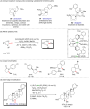
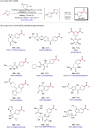
Scheme 1: Mn-catalyzed late-stage fluorination of sclareolide (1) and complex steroid 3.
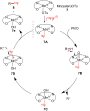
Figure 1: Proposed reaction mechanism of C–H fluorination by a manganese porphyrin catalyst.
Scheme 2: Late-stage radiofluorination of biologically active complex molecules.
Figure 2: Proposed mechanism of C–H radiofluorination.
Scheme 3: Late-stage C–H azidation of bioactive molecules. a1.5 mol % of Mn(TMP)Cl (5) was used. bMethyl acet...
Figure 3: Proposed reaction mechanism of manganese-catalyzed C–H azidation.
Scheme 4: Mn-catalyzed late-stage C–H azidation of bioactive molecules via electrophotocatalysis. a2.5 mol % ...
Figure 4: Proposed reaction mechanism of electrophotocatalytic azidation.
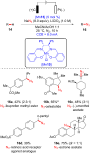
Scheme 5: Manganaelectro-catalyzed late-stage azidation of bioactive molecules.
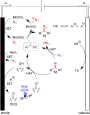
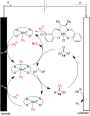
Figure 5: Proposed reaction pathway of manganaelectro-catalyzed late-stage C–H azidation.
Scheme 6: Mn-catalyzed late-stage amination of bioactive molecules. a3 Å MS were used. Protonation with HBF4⋅...
Figure 6: Proposed mechanism of manganese-catalyzed C–H amination.
Scheme 7: Mn-catalyzed C–H methylation of heterocyclic scaffolds commonly found in small-molecule drugs. aDAS...
Scheme 8: Examples of late-stage C–H methylation of bioactive molecules. aDAST activation. bFor insoluble sub...
Scheme 9: A) Mn-catalyzed late-stage C–H alkynylation of peptides. B) Intramolecular late-stage alkynylative ...
Figure 7: Proposed reaction mechanism of Mn(I)-catalyzed C–H alkynylation.
Scheme 10: Late-stage Mn-catalyzed C–H allylation of peptides and bioactive motifs.
Scheme 11: Intramolecular C–H allylative cyclic peptide formation.
Scheme 12: Late-stage C–H glycosylation of tryptophan analogues.
Scheme 13: Late-stage C–H glycosylation of tryptophan-containing peptides.
Scheme 14: Late-stage C–H alkenylation of tryptophan-containing peptides.
Scheme 15: A) Late-stage C–H macrocyclization of tryptophan-containing peptides and B) traceless removal of py...
Beilstein J. Org. Chem. 2021, 17, 1698–1711, doi:10.3762/bjoc.17.118
Graphical Abstract
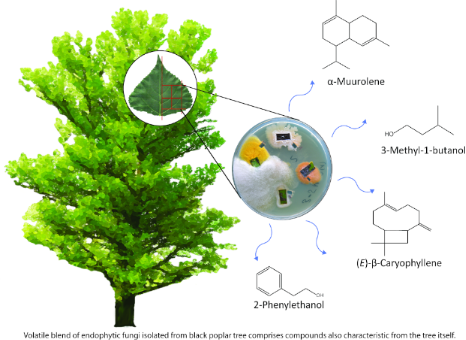
Figure 1: Chemical structures of sesquiterpenes emitted from endophytic fungi (Table 2) isolated from black poplar l...
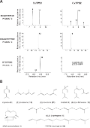
Figure 2: Terpene synthase activity of CxTPS1 and CxTPS2. A) Genes were heterologously expressed in Escherich...
Figure 3: Dendrogram analysis (rooted tree) of CxTPS1 and CxTPS2 (bold) from Cladosporium sp. and characteriz...
Beilstein J. Org. Chem. 2021, 17, 1641–1688, doi:10.3762/bjoc.17.116
Graphical Abstract
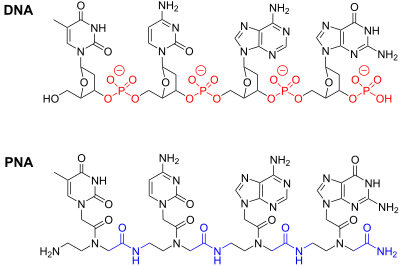
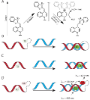
Figure 1: Structure of DNA and PNA.
Figure 2: PNA binding modes: (A) PNA–dsDNA 1:1 triplex; (B) PNA–DNA–PNA strand-invasion triplex; (C) the Hoog...
Figure 3: Structure of P-form PNA–DNA–PNA triplex from reference [41]. (A) view in the major groove and (B) view ...
Figure 4: Structures of backbone-modified PNA.
Figure 5: Structures of PNA having α- and γ-substituted backbones.
Figure 6: Structures of modified nucleobases in PNA to improve Hoogsteen hydrogen bonding to guanine and aden...
Figure 7: Proposed hydrogen bonding schemes for modified PNA nucleobases designed to recognize pyrimidines or...
Figure 8: Modified nucleobases to modulate Watson–Crick base pairing and chemically reactive crosslinking PNA...
Figure 9: Examples of triplets formed by Janus-wedge PNA nucleobases (blue). R1 denotes DNA, RNA, or PNA back...
Figure 10: Examples of fluorescent PNA nucleobases. R1 denotes DNA, RNA, or PNA backbones.
Figure 11: Endosomal entrapment and escape pathways of PNA and PNA conjugates.
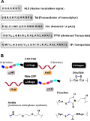
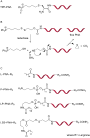
Figure 12: (A) representative cell-penetrating peptides (CPPs), (B) conjugation designs and linker chemistries....
Figure 13: Proposed delivery mode by pHLIP-PNA conjugates (A) the transmembrane section of pHLIP interacting w...
Figure 14: Structures of modified penetratin CPP conjugates with PNA linked through either disulfide (for stud...
Figure 15: Chemical structure of C9–PNA, a stable amphipathic (cyclic-peptide)–PNA conjugate.
Figure 16: Structures of PNA conjugates with a lipophilic triphenylphosphonium cation (TPP–PNA) through (A) th...
Figure 17: Structures of (A) chloesteryl–PNA, (B) cholate–PNA and (C) cholate–PNA(cholate)3.
Figure 18: Structures of PNA–GalNAc conjugates (A) (GalNAc)2K, (B) triantennary (GalNAc)3, and (C) trivalent (...
Figure 19: Vitamin B12–PNA conjugates with different linkages.
Figure 20: Structures of (A) neomycin B, (B) PNA–neamine conjugate, and (C) PNA–neosamine conjugate.
Figure 21: PNA clamp (red) binding to target DNA containing a mixture of sequences (A) PNA binds with higher a...
Figure 22: Rolling circle amplification using PNA openers (red) to invade a dsDNA target forming a P-loop. A p...
Figure 23: Molecular beacons containing generic fluorophores (Fl) and quenchers (Q) recognizing a complementar...
Figure 24: (A) Light-up fluorophores such as thiazole orange display fluorescence enhancement upon binding to ...
Figure 25: Templated fluorogenic detection of oligonucleotides using two PNAs. (A) Templated FRET depends on h...
Figure 26: Lateral flow devices use a streptavidin labeled strip on nitrocellulose paper to anchor a capture P...
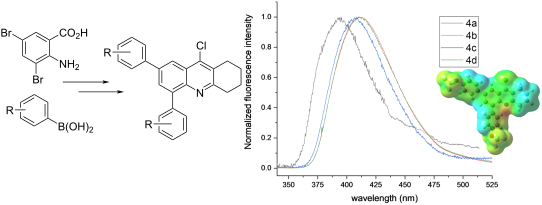
Beilstein J. Org. Chem. 2021, 17, 1629–1640, doi:10.3762/bjoc.17.115
Graphical Abstract
Figure 1: Applications of acridines.
Scheme 1: Synthesis of 2,4-dibromo-9-chloro-5,6,7,8-tetrahydroacridine (2).
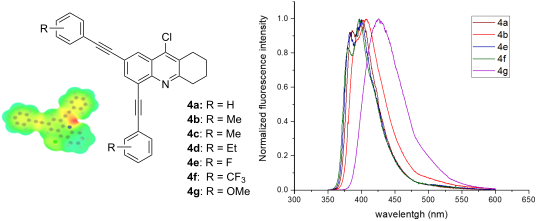
Scheme 2: Synthesis of 2,4-bis(arylethynyl)-9-chloro-5,6,7,8-tetrahydroacridines 4a–g.
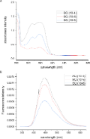
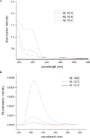
Figure 2: UV–vis absorption spectra of 4a,b and 4e–g in diluted dichloromethane solutions at room temperature...
Figure 3: Emission spectra of 4a,b and 4e–g in diluted dichloromethane solutions at room temperature (c = 1 ×...
Beilstein J. Org. Chem. 2021, 17, 1453–1463, doi:10.3762/bjoc.17.101
Graphical Abstract
Figure 1: Selected examples of compounds containing the γ-carboline core.
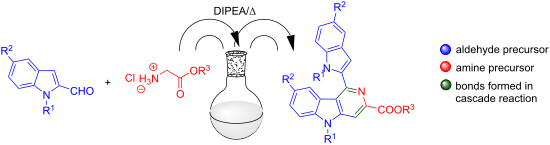
Scheme 1: The synthetic strategy of present work in comparison with previous reports.
Scheme 2: Series of synthesized 1-indolyl-3,5,8-substituted γ-carboline 3aa–ac, 3ba-ea and 1-indolyl-1,2-dihy...
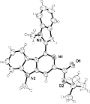
Figure 2: Single-crystal XRD structure of 3ac (CCDC: 1897787).
Scheme 3: Plausible mechanism for the formation of 1,2-dihydro-γ-carboline derivative 3ga and 1-indolyl-3,5,8...
Figure 3: UV–vis absorption (left side) and emission (right side) spectra of 3ac measured in different solven...
Figure 4: Fluorescence decay profile of 3ac in DMSO (left side; λex 360 nm) and 10−5 M solutions of compound ...
Figure 5: Dose–response curves for (A) γ-carbolines 3ac, 3bc, 3ca, 3ga in the breast cancer cell line, MCF7 a...
Figure 6: Dose–response curve of γ-carbolines 3ac, 3bc, 3ca, 3ga in macrophage cell line, RAW264.7.
Figure 7: Laser scanning confocal microscopy studies (λex = 405 nm; collection range = 420–470 nm) for uptake...
Beilstein J. Org. Chem. 2021, 17, 1392–1439, doi:10.3762/bjoc.17.98
Graphical Abstract
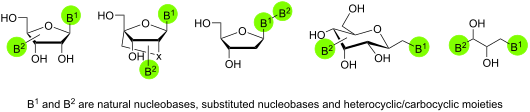
Figure 1: Double-headed nucleosides. B1 and B2 = nucleobases or heterocyclic/carbocyclic moieties; L = linker....
Scheme 1: Synthesis of 2′-(pyrimidin-1-yl)methyl- or 2′-(purin-9-yl)methyl-substituted double-headed nucleosi...
Scheme 2: Synthesis of double-headed nucleoside 7 having two cytosine moieties.
Scheme 3: Synthesis of double-headed nucleoside 2′-deoxy-2′-C-(2-(thymine-1-yl)ethyl)-uridine (11).
Scheme 4: Double-headed nucleosides 14 and 15 obtained by click reaction.
Scheme 5: Synthesis of the double-headed nucleoside 19.
Scheme 6: Synthesis of the double-headed nucleosides 24 and 25.
Scheme 7: Synthesis of double-headed nucleosides 28 and 29.
Scheme 8: Synthesis of double-headed nucleoside 33.
Scheme 9: Synthesis of double-headed nucleoside 37.
Scheme 10: Synthesis of the double-headed nucleoside 1-(5′-O-(4,4′-dimethoxytrityl)-2′-C-((4-(pyren-1-yl)-1,2,...
Scheme 11: Synthesis of triazole-containing double-headed ribonucleosides 46a–c and 50a–e.
Scheme 12: Synthesis of double-headed nucleosides 54a–g.
Scheme 13: Synthesis of double-headed nucleosides 59 and 60.
Scheme 14: Synthesis of the double-headed nucleosides 63 and 64.
Scheme 15: Synthesis of double-headed nucleosides 66a–c.
Scheme 16: Synthesis of benzoxazole-containing double-headed nucleosides 69 and 71 from 5′-amino-5′-deoxynucle...
Scheme 17: Synthesis of 4′-C-((N6-benzoyladenin-9-yl)methyl)thymidine (75) and 4′-C-((thymin-1-yl)methyl)thymi...
Scheme 18: Synthesis of double-headed nucleosides 5′-(adenine-9-yl)-5′-deoxythymidine (79) and 5′-(adenine-9-y...
Scheme 19: Synthesis of double-headed nucleosides 85–87 via reversed nucleosides methodology.
Scheme 20: Double-headed nucleosides 91 and 92 derived from ω-terminal-acetylenic sugar derivatives 90a,b.
Scheme 21: Synthesis of double-headed nucleosides 96a–g.
Scheme 22: Synthesis of double-headed nucleosides 100 and 103.
Scheme 23: Double-headed nucleosides 104 and 105 with a triazole motif.
Scheme 24: Synthesis of the double-headed nucleosides 107 and 108.
Scheme 25: Synthesis of double-headed nucleoside 110 with additional nucleobase in 5′-(S)-C-position joined th...
Scheme 26: Synthesis of double-headed nucleosides 111–113 with additional nucleobases in the 5′-(S)-C-position...
Scheme 27: Synthesis of double-headed nucleoside 114 by click reaction.
Scheme 28: Synthesis of double-headed nucleosides 118 with an additional nucleobase at the 5′-(S)-C-position.
Scheme 29: Synthesis of bicyclic double-headed nucleoside 122.
Scheme 30: Synthesis of double-headed nucleosides 125a–c derived from 2′-amino-LNA.
Scheme 31: Double-headed nucleoside 127 obtained by click reaction.
Scheme 32: Synthesis of double-headed nucleoside 130.
Scheme 33: Double-headed nucleosides 132a–d and 134a–d synthesized by Sonogashira cross coupling reaction.
Scheme 34: Synthesis of double-headed nucleosides 137 and 138 via Suzuki coupling.
Scheme 35: Synthesis of double-headed nucleosides 140 and 141 via Sonogashira cross coupling reaction.
Scheme 36: Synthesis of double-headed nucleoside 143.
Scheme 37: Synthesis of the double-headed nucleoside 146.
Scheme 38: Synthesis of 5-C-alkynyl-functionalized double-headed nucleosides 151a–d.
Scheme 39: Synthesis of 5-C-triazolyl-functionalized double-headed nucleosides 154a, b.
Scheme 40: Synthesis of double-headed nucleosides 157a–c.
Scheme 41: Synthesis of double-headed nucleoside 159, phosphoramidite 160 and the corresponding nucleotide mon...
Scheme 42: Synthesis of double-headed nucleoside 163, phosphoramidite 164 and the corresponding nucleotide mon...
Scheme 43: Synthesis of double-headed nucleoside 167, phosphoramidite 168, and the corresponding nucleotide mo...
Scheme 44: Synthesis of double-headed nucleoside 171, phosphoramidite 172, and the corresponding nucleotide mo...
Scheme 45: Synthesis of double-headed nucleoside 175, phosphoramidite 176, and the corresponding nucleotide mo...
Scheme 46: Synthesis of double-headed nucleoside 178.
Scheme 47: Synthesis of the double-headed nucleosides 181 and 183.
Scheme 48: Alternative synthesis of the double-headed nucleoside 183.
Scheme 49: Synthesis of double-headed nucleoside 188 through thermal [2 + 3] sydnone–alkyne cycloaddition reac...
Scheme 50: Synthesis of the double-headed nucleosides 190 and 191.
Scheme 51: Synthesis of 1-((5S)-2,3,4-tri-O-acetyl-5-(2,6-dichloropurin-9-yl)-β-ᴅ-xylopyranosyl)uracil (195).
Scheme 52: Synthesis of hexopyranosyl double-headed pyrimidine homonucleosides 200a–c.
Figure 2: 3′-C-Ethynyl-β-ᴅ-allopyranonucleoside derivatives 201a–f.
Scheme 53: Synthesis of 3′-C-(1,4-disubstituted-1,2,3-triazolyl)-double-headed pyranonucleosides 203–207.
Scheme 54: Synthesis of 3′-C-(1,4-disubstituted-1,2,3-triazolyl)-double-headed pyranonucleosides 208 and 209.
Scheme 55: Synthesis of 3′-C-(1,4-disubstituted-1,2,3-triazolyl)-double-headed pyranonucleoside 210.
Scheme 56: Synthesis of double-headed acyclic nucleosides (2S,3R)-1,4-bis(thymine-1-yl)butane-2,3-diol (213a) ...
Scheme 57: Synthesis of double-headed acyclic nucleosides (2R,3S)-1,4-bis(thymine-1-yl)butane-2,3-diol (213c) ...
Scheme 58: Synthesis of double-headed acetylated 1,3,4-oxadiazino[6,5-b]indolium-substituted C-nucleosides 218b...
Scheme 59: Synthesis of double-headed acyclic nucleoside 222.
Scheme 60: Synthesis of functionalized 1,2-bis(1,2,4-triazol-3-yl)ethane-1,2-diols 223a–f.
Scheme 61: Synthesis of acyclic double-headed 1,2,4-triazino[5,6-b]indole C-nucleosides 226–231.
Scheme 62: Synthesis of double-headed 1,3,4-thiadiazoline, 1,3,4-oxadiazoline, and 1,2,4-triazoline acyclo C-n...
Scheme 63: Synthesis of double-headed acyclo C-nucleosides 240–242.
Scheme 64: Synthesis of double-headed acyclo C-nucleoside 246.
Scheme 65: Synthesis of acyclo double-headed nucleoside 250.
Scheme 66: Synthesis of acyclo double-headed nucleoside 253.
Scheme 67: Synthesis of acyclo double-headed nucleosides 259a–d.
Scheme 68: Synthesis of acyclo double-headed nucleoside 261.
Beilstein J. Org. Chem. 2021, 17, 1374–1384, doi:10.3762/bjoc.17.96
Graphical Abstract
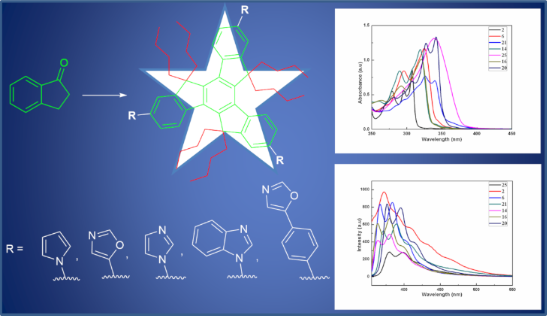
Scheme 1: Retrosynthetic pathways to the pyrrole-based C3-symmetric truxene derivative 6.
Scheme 2: Synthesis of tripyrrolotruxene 6 via cyclotrimerization and RCM as crucial steps.
Scheme 3: Synthesis of star-shaped molecule 6 utilizing the Clauson–Kaas pyrrole strategy.
Scheme 4: Synthesis of truxene derivative 6 involving Ullmann-type cross-coupling reaction.
Scheme 5: Synthesis of imidazole and benzimidazole containing truxene derivatives 14 and 16.
Scheme 6: Construction of truxene-based di- and trioxazole derivatives 21 and 20.
Scheme 7: Synthesis of benzene-bridged rings containing trioxazolotruxene system 25.
Figure 1: Normalized absorption (left); fluorescence spectra (right) of the synthesized truxene derivatives (...
Beilstein J. Org. Chem. 2021, 17, 1323–1334, doi:10.3762/bjoc.17.92
Graphical Abstract
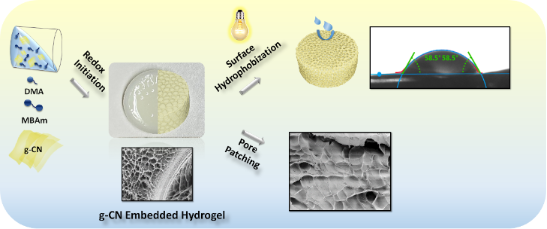
Scheme 1: Schematic overview of g-CN-embedded hydrogel fabrication and its subsequent photoinduced post-modif...
Scheme 2: Hydrophobic hydrogel via photoinduced surface modification over embedded g-CN nanosheets in hydroge...
Figure 1: a) FTIR spectra of freeze-dried HGCM-vTA, HGCM and HG. b) UV spectra of freeze-dried HGCM-vTA, HGCM...
Figure 2: Scanning electron microscopy (SEM) images of a) HGCM and b) HGCM-vTA in combination with their elem...
Figure 3: a) Equilibrium swelling ratios of HG, HGCM, HGCM-vTA at specified time intervals. b) Thermogravimet...
Scheme 3: Overview of pore substructuring via photoinduced free radical polymerization over embedded g-CN nan...
Figure 4: FTIR spectra of freeze-dried HGCM-PAA, HGCM-PAAM, HGCM-PEGMEMA in comparison with HGCM.
Figure 5: Scanning electron microscopy (SEM) images of a) HGCM-PAA, b) HGCM-PAAM, and c) HGCM-PEGMEMA.
Figure 6: a) Thermogravimetric analysis of HGCM, HGCM-PAA, HGCM-PAAM and HGCM-PEGMEMA. b) Equilibrium swellin...
Beilstein J. Org. Chem. 2021, 17, 1313–1322, doi:10.3762/bjoc.17.91
Graphical Abstract
Figure 1: Untargeted comparative metabolomics using AP-SMALDI-HRMS highlighted metabolites involved in Ulva–b...
Figure 2: Identification of significant features associated with axenic or bacterial symbiont-associated alga ...
Figure 3: Visualisation of algae Ulva mutabilis grown under axenic conditions or with bacterial symbionts Ros...
Beilstein J. Org. Chem. 2021, 17, 1001–1040, doi:10.3762/bjoc.17.82
Graphical Abstract
Figure 1: Tautomeric forms of biguanide.
Figure 2: Illustrations of neutral, monoprotonated, and diprotonated structures biguanide.
Figure 3: The main approaches for the synthesis of biguanides. The core structure is obtained via the additio...
Scheme 1: The three main preparations of biguanides from cyanoguanidine.
Scheme 2: Synthesis of butylbiguanide using CuCl2 [16].
Scheme 3: Synthesis of biguanides by the direct fusion of cyanoguanidine and amine hydrochlorides [17,18].
Scheme 4: Synthesis of ethylbiguanide and phenylbiguanide as reported by Smolka and Friedreich [14].
Scheme 5: Synthesis of arylbiguanides through the reaction of cyanoguanidine with anilines in water [19].
Scheme 6: Synthesis of aryl- and alkylbiguanides by adaptations of Cohn’s procedure [20,21].
Scheme 7: Microwave-assisted synthesis of N1-aryl and -dialkylbiguanides [22,23].
Scheme 8: Synthesis of aryl- and alkylbiguanides by trimethylsilyl activation [24,26].
Scheme 9: Synthesis of phenformin analogs by TMSOTf activation [27].
Scheme 10: Synthesis of N1-(1,2,4-triazolyl)biguanides [28].
Scheme 11: Synthesis of 2-guanidinobenzazoles by addition of ortho-substituted anilines to cyanoguanidine [30,32] and...
Scheme 12: Synthesis of 2,4-diaminoquinazolines by the addition of 2-cyanoaniline to cyanoguanidine and from 3...
Scheme 13: Reactions of anthranilic acid and 2-mercaptobenzoic acid with cyanoguanidine [24,36,37].
Scheme 14: Synthesis of disubstituted biguanides with Cu(II) salts [38].
Scheme 15: Synthesis of an N1,N2,N5-trisubstituted biguanide by fusion of an amine hydrochloride and 2-cyano-1...
Scheme 16: Synthesis of N1,N5-disubstituted biguanides by the addition of anilines to cyanoguanidine derivativ...
Scheme 17: Microwave-assisted additions of piperazine and aniline hydrochloride to substituted cyanoguanidines ...
Scheme 18: Synthesis of N1,N5-alkyl-substituted biguanides by TMSOTf activation [27].
Scheme 19: Additions of oxoamines hydrochlorides to dimethylcyanoguanidine [49].
Scheme 20: Unexpected cyclization of pyridylcyanoguanidines under acidic conditions [50].
Scheme 21: Example of industrial synthesis of chlorhexidine [51].
Scheme 22: Synthesis of symmetrical N1,N5-diarylbiguanides from sodium dicyanamide [52,53].
Scheme 23: Synthesis of symmetrical N1,N5-dialkylbiguanides from sodium dicyanamide [54-56].
Scheme 24: Stepwise synthesis of unsymmetrical N1,N5-trisubstituted biguanides from sodium dicyanamide [57].
Scheme 25: Examples for the synthesis of unsymmetrical biguanides [58].
Scheme 26: Examples for the synthesis of an 1,3-diaminobenzoquinazoline derivative by the SEAr cyclization of ...
Scheme 27: Major isomers formed by the SEAr cyclization of symmetric biguanides derived from 2- and 3-aminophe...
Scheme 28: Lewis acid-catalyzed synthesis of 8H-pyrrolo[3,2-g]quinazoline-2,4-diamine [63].
Scheme 29: Synthesis of [1,2,4]oxadiazoles by the addition of hydroxylamine to dicyanamide [49,64].
Scheme 30: Principle of “bisamidine transfer” and analogy between the reactions with N-amidinopyrazole and N-a...
Scheme 31: Representative syntheses of N-amidino-amidinopyrazole hydrochloride [68,69].
Scheme 32: First examples of biguanide syntheses using N-amidino-amidinopyrazole [66].
Scheme 33: Example of “biguanidylation” of a hydrazide substrate [70].
Scheme 34: Example for the synthesis of biguanides using S-methylguanylisothiouronium iodide as “bisamidine tr...
Scheme 35: Synthesis of N-substituted N1-cyano-S-methylisothiourea precursors.
Scheme 36: Addition routes on N1-cyano-S-methylisothioureas.
Scheme 37: Synthesis of an hydroxybiguanidine from N1-cyano-S-methylisothiourea [77].
Scheme 38: Synthesis of an N1,N2,N3,N4,N5-pentaarylbiguanide from the corresponding triarylguanidine and carbo...
Scheme 39: Reactions of N,N,N’,N’-tetramethylguanidine (TMG) with carbodiimides to synthesize hexasubstituted ...
Scheme 40: Microwave-assisted addition of N,N,N’,N’-tetramethylguanidine to carbodiimides [80].
Scheme 41: Synthesis of N1-aryl heptasubstituted biguanides via a one-pot biguanide formation–copper-catalyzed ...
Scheme 42: Formation of 1,2-dihydro-1,3,5-triazine derivatives by the reaction of guanidine with excess carbod...
Scheme 43: Plausible mechanism for the spontaneous cyclization of triguanides [82].
Scheme 44: a) Formation of mono- and disubstituted (iso)melamine derivatives by the reaction of biguanides and...
Scheme 45: Reactions of 2-aminopyrimidine with carbodiimides to synthesize 2-guanidinopyrimidines as “biguanid...
Scheme 46: Non-catalyzed alternatives for the addition of 2-aminopyrimidine derivatives to carbodiimides. A) h...
Scheme 47: Addition of guanidinomagnesium halides to substituted cyanamides [90].
Scheme 48: Microwave-assisted synthesis of [11C]metformin by the reaction of 11C-labelled dimethylcyanamide an...
Scheme 49: Formation of 4-amino-6-dimethylamino[1,3,5]triazin-2-ol through the reaction of Boc-guanidine and d...
Scheme 50: Formation of 1,3,5-triazine derivatives via the addition of guanidines to substituted cyanamides [92].
Scheme 51: Synthesis of biguanide by the reaction of O-alkylisourea and guanidine [93].
Scheme 52: Aromatic nucleophilic substitution of guanidine on 2-O-ethyl-1,3,5-triazine [95].
Scheme 53: Synthesis of N1,N2-disubstituted biguanides by the reaction of guanidine and thioureas in the prese...
Scheme 54: Cyclization reactions involving condensations of guanidine(-like) structures with thioureas [97,98].
Scheme 55: Condensations of guanidine-like structures with thioureas [99,100].
Scheme 56: Condensations of guanidines with S-methylisothioureas [101,102].
Scheme 57: Addition of 2-amino-1,3-diazaaromatics to S-alkylisothioureas [103,104].
Scheme 58: Addition of guanidines to 2-(methylsulfonyl)pyrimidines [105].
Scheme 59: An example of a cyclodesulfurization reaction to a fused 3,5-diamino-1,2,4-triazole [106].
Scheme 60: Ring-opening reactions of 1,3-diaryl-2,4-bis(arylimino)-1,3-diazetidines [107].
Scheme 61: Formation of 3,5-diamino-1,2,4-triazole derivatives via addition of hydrazines to 1,3-diazetidine-2...
Scheme 62: Formation of a biguanide via the addition of aniline to 1,2,4-thiadiazol-3,5-diamines, ring opening...
Figure 4: Substitution pattern of biguanides accessible by synthetic pathways a–h.
Beilstein J. Org. Chem. 2021, 17, 991–1000, doi:10.3762/bjoc.17.81
Graphical Abstract
Figure 1: Structures and numbering of berberine (1a), berberrubine (1b) and 9-O-aryl-substituted berberine de...
Scheme 1: Synthesis of 10-O-arylated berberine derivatives 5a–e.
Scheme 2: Cu2+-catalyzed demethylation of berberrubine (1b).
Figure 2: Temperature dependent emission spectra of derivatives 5a and 5d (c = 10 µM, with 0.25% v/v DMSO) in...
Figure 3: Photometric titration of 5a (A) and 5d (B) (cLigand = 20 μM) with ct DNA (1) in BPE buffer (cNa+ = ...
Figure 4: Fluorimetric titration of 5a (A) and 5d (B, cLigand = 20 μM) with ct DNA (1) in BPE buffer (cNa+ = ...
Figure 5: CD and LD spectra of ct DNA (1 and 2, cDNA = 20 μM; in BPE buffer: 10 mM, pH 7.0; with 5% v/v DMSO)...
Beilstein J. Org. Chem. 2021, 17, 719–729, doi:10.3762/bjoc.17.61
Graphical Abstract
Figure 1: Structures of dibenzosuberenone 1 and pyridazine and pyrrole derivatives.
Figure 2: Structures of s-tetrazines 2a–l.
Scheme 1: Inverse electron-demand Diels–Alder reactions of dibenzosuberenone (1) with tetrazines 2a–l.
Scheme 2: Inverse electron-demand Diels–Alder reactions between dibenzosuberenone 1 and tetrazines 2ka and 2lb...
Scheme 3: Proposed reaction mechanism for the formation of dibenzosuberenone derivatives 3 and 4.
Scheme 4: Proposed mechanism for the formation of 5l.
Scheme 5: Oxidation of dihydropyridazines 3a–f. All reactions were carried in CH2Cl2 at room temperature (4e:...
Scheme 6: Synthesis of pyrrole 10a. a1.34 mmol 4a, Zinc (for 10aa: 6.68 mmol, for 10ab: 13.36 mmol), 10 mL gl...
Scheme 7: Synthesis of pyrrole 10b. a1.21 mmol 4b, 12.10 mmol Zinc, 118 °C, 2 h. b1.13 mmol 10ba, 1.69 mmol K...
Scheme 8: Synthesis of p-quinone methides 13–16. a1.77 mmol 11, 1.77 mmol 2, 5 mL toluene, 80 °C (13a: overni...
Scheme 9: Proposed mechanism for the formation of 13.
Figure 3: UV–vis spectra of 3c–f and 3k in CH3CN at rt (c = 5 μM).
Figure 4: Fluorescence spectra of 3c–f and 3k in CH3CN at rt (c = 5 μM).
Figure 5: Ambient (top) and fluorescence (bottom, under 365 nm UV light) images of 3c–f and 3k in CH3CN.
Beilstein J. Org. Chem. 2021, 17, 671–677, doi:10.3762/bjoc.17.56
Graphical Abstract
Figure 1: Benzonaphthophosphindoles.
Scheme 1: Synthesis of benzo[f]naphtho[2,3-b]phosphoindoles.
Figure 2: Crystal structure of 2: different views.
Figure 3: a) Absorption spectra and b) normalized fluorescence spectra for selected compounds in CHCl3.
Figure 4: The spatial plots of the HOMO−3 to LUMO of compounds 3 and 4. The calculations were performed at th...
Beilstein J. Org. Chem. 2021, 17, 589–621, doi:10.3762/bjoc.17.53
Graphical Abstract
Figure 1: Potential classification of plastic recycling processes. The area covered by the present review is ...
Figure 2: EG produced during glycolytic depolymerisation of PET using DEG + DPG as solvent and titanium(IV) n...
Scheme 1: Simplified representation of the conversion of 1,4-PBD to C16–C44 macrocycles using Ru metathesis c...
Figure 3: Main added-value monomers obtainable by catalytic depolymerisation of PET via chemolytic methods.
Scheme 2: Hydrogenolytic depolymerisation of PET by ruthenium complexes.
Scheme 3: Depolymerisation of PET via catalytic hydrosilylation by Ir(III) pincer complex.
Scheme 4: Catalytic hydrolysis (top) and methanolysis (bottom) reactions of PET.
Scheme 5: Depolymerisation of PET by glycolysis with ethylene glycol.
Figure 4: Glycolysis of PET: evolution of BHET yield over time, with and without zinc acetate catalyst (196 °...
Scheme 6: Potential activated complex for the glycolysis reaction of PET catalysed by metallated ILs and evol...
Scheme 7: One-pot, two-step process for PET repurposing via chemical recycling.
Scheme 8: Synthetic routes to PLA.
Scheme 9: Structures of the zinc molecular catalysts used for PLA-methanolysis in various works. a) See [265], b) ...
Scheme 10: Depolymerisation of PLLA by Zn–N-heterocyclic carbene complex.
Scheme 11: Salalen ligands.
Scheme 12: Catalytic hydrogenolysis of PLA.
Scheme 13: Catalytic hydrosilylation of PLA.
Scheme 14: Hydrogenative depolymerisation of PBT and PCL by molecular Ru catalysts.
Scheme 15: Glycolysis reaction of PCT by diethylene glycol.
Scheme 16: Polymerisation–depolymerisation cycle of 3,4-T6GBL.
Scheme 17: Polymerisation–depolymerisation cycle of 2,3-HDB.
Scheme 18: Hydrogenative depolymerisation of PBPAC by molecular Ru catalysts.
Scheme 19: Catalytic hydrolysis (top), alcoholysis (middle) and aminolysis (bottom) reactions of PBPAC.
Scheme 20: Hydrogenative depolymerisation of PPC (top) and PEC (bottom) by molecular Ru catalysts.
Scheme 21: Polymerisation-depolymerisation cycle of BEP.
Scheme 22: Hydrogenolysis of polyamides using soluble Ru catalysts.
Scheme 23: Catalytic depolymerisation of epoxy resin/carbon fibres composite.
Scheme 24: Depolymerisation of polyethers with metal salt catalysts and acyl chlorides.
Scheme 25: Proposed mechanism for the iron-catalysed depolymerisation reaction of polyethers. Adapted with per...
Beilstein J. Org. Chem. 2021, 17, 519–526, doi:10.3762/bjoc.17.46
Graphical Abstract
Figure 1: TEM micrograph and size distribution graphic for CoNPs@MgO catalyst (scale bar = 20 nm).
Scheme 1: Plausible mechanistic pathway for olefin epoxidation catalyzed by CoNPs/MgO in the presence of t-Bu...
Beilstein J. Org. Chem. 2021, 17, 396–403, doi:10.3762/bjoc.17.35
Graphical Abstract
Scheme 1: Conventional methods for the synthesis of helicenes.
Scheme 2: Brønsted acid-catalyzed cycloaromatization of biaryls bearing an acetal moiety.
Scheme 3: Two strategies for the helicene synthesis via Suzuki–Miyaura coupling/cycloaromatization sequence.
Scheme 4: Synthesis of (a) [5]helicene and (b) [6]helicene.
Scheme 5: Synthesis of helicenes with double helical structures.
Scheme 6: Synthesis of hetero[4]-, [5]-, and [6]helicenes.
Beilstein J. Org. Chem. 2021, 17, 293–318, doi:10.3762/bjoc.17.28
Graphical Abstract
Figure 1: Selected examples of 19F-labelled amino acid analogues used as probes in chemical biology.
Figure 2: (a) Sequences of the antimicrobial peptide MSI-78 and pFtBSer-containing analogs and cartoon repres...
Figure 3: (a) Chemical structures of a selection of trifluoromethyl tags. (b) Comparative analysis showing th...
Figure 4: (a) First bromodomain of Brd4 with all three tryptophan residues displayed in blue and labelled by ...
Figure 5: (a) Enzymatic hydroxylation of GBBNF in the presence of hBBOX (b) 19F NMR spectra showing the conve...
Figure 6: (a) In-cell enzymatic hydrolysis of the fluorinated anandamide analogue ARN1203 catalyzed by hFAAH....
Figure 7: (a) X-ray crystal structure of CAM highlighting the location the phenylalanine residues replaced by...
Figure 8: 19F PREs of 4-F, 5-F, 6-F, 7-FTrp49 containing MTSL-modified S52CCV-N. The 19F NMR resonances of ox...
Figure 9: 19F NMR as a direct probe of Ud NS1A ED homodimerization. Schematic representation showing the loca...
Figure 10: (a) Representative spectrum of a 182 μM sample of Aβ1-40-tfM35 at varying times indicating the majo...
Figure 11: Illustration of the conformational switch induced by SDS in 4-tfmF-labelled α-Syn. Also shown are t...
Figure 12: (a) Structural models of the Myc‐Max (left), Myc‐Max‐DNA (middle) and Myc‐Max‐BRCA1 complexes (righ...
Figure 13: (a) Side (left) and bottom (right) views of the pentameric apo ELIC X-ray structure (PDB ID: 3RQU) ...
Figure 14: (a) General structure of a selection of recently developed 19F-labelled nucleotides for their use a...
Figure 15: Monitoring biotransformation of the fluorinated pesticide cyhalothrin by the fungus C. elegans. The...
Figure 16: Following the biodegradation of emerging fluorinated pollutants by 19F NMR. The spectra are from cu...
Figure 17: Discovery of new fluorinated natural products by 19F NMR. The spectrum is of the culture supernatan...
Figure 18: Application of 19F NMR to investigate the biosynthesis of nucleocidin. The spectra are from culture...
Figure 19: Detection of new fluorofengycins (indicated by arrows) in culture supernatants of Bacillus sp. CS93...
Figure 20: Measurement of β-galactosidase activity in MCF7 cancer cells expressing lacZ using 19F NMR. The deg...
Figure 21: Detection of ions using 19F NMR. (a) Structure of TF-BAPTA and its 19F iCEST spectra in the presenc...
Figure 22: (a) The ONOO−-mediated decarbonylation of 5-fluoroisatin and 6-fluoroisatin. The selectivity of (b)...
Beilstein J. Org. Chem. 2021, 17, 210–223, doi:10.3762/bjoc.17.21
Graphical Abstract
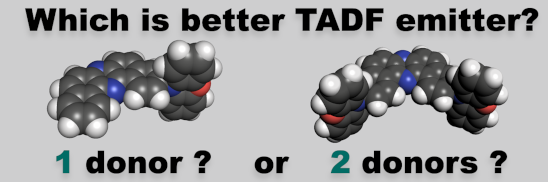
Figure 1: Molecular structures of emitters discussed in this work.
Figure 2: a) Calculated HOMO, LUMO, S1 and T1 energies, as well as HOMO and LUMO topologies of PhCF3, PhOCF3, ...
Figure 3: Calculated HOMO, LUMO, S1 and T1 energies, as well as HOMO and LUMO topologies of 2CzCF3, 2CzOCF3, ...
Figure 4: Calculated HOMO, LUMO, S1 and T1 energies, as well as HOMO and LUMO topologies of 2CzBN, 2CzTRZ, an...
Figure 5: HOMO and LUMO distribution, HONTO and LUNTO of lowest singlet (S1) and triplet excited (T1) states ...
Figure 6: HOMO and LUMO distribution, HONTO and LUNTO of lowest singlet (S1) and triplet excited (T1) states ...
Figure 7: Calculated HOMO, LUMO, S1 and T1 energies, as well as HOMO and LUMO topologies of 5CzCF3, 5CzOCF3, ...
Figure 8: Calculated HOMO, LUMO, S1 and T1 energies, as well as HOMO and LUMO topologies of 5CzBN, 5CzTRZ, an...
Figure 9: HOMO and LUMO distribution, HONTO and LUNTO of lowest singlet (S1) and triplet excited (T1) states ...
Figure 10: HOMO and LUMO distribution, HONTO and LUNTO of lowest singlet (S1) and triplet excited (T1) states ...
Figure 11: HONTOs and LUNTOs of 2CzCF3 in higher excited states (isovalue = 0.02).
Figure 12: HONTOs and LUNTOs of 5CzCF3 in higher excited states (isovalue = 0.02).
Beilstein J. Org. Chem. 2021, 17, 124–131, doi:10.3762/bjoc.17.13
Graphical Abstract
Figure 1: Schematic representation of the modular approach towards halogen-bonded fluorescent liquid crystals....
Figure 2: Representative POM images of NO2-C10 at 94 °C (a) and NO2-C10∙∙∙F4Az at 61.5 °C (b) upon cooling fr...
Figure 3: Comparison of the mesomorphic properties of NO2-Cn, NO2-Cn∙∙∙F4St, and NO2-Cn∙∙∙F4Az (n = 8–11). Th...
Figure 4: Graphical representation of the calculated interaction energies in kJ/mol of the XB-acceptor NO2-C1...
Figure 5: Summary of the thermal behaviour of the azo complexes with decreasing fluorination degree as observ...
Figure 6: POM images of the supramolecular assemblies NO2-C10∙∙∙F3Az (a), NO2-C10∙∙∙F2Az (b) and NO2-C10∙∙∙F2...
Figure 7: Fluorescence studies of NO2-C9∙∙∙F4St. The photographs of the solid components as well as the forme...
Figure 8: Photographs of the assemblies with different alkoxy chain lengths on the NO2-Cn moiety directly aft...
Figure 9: Temperature-dependent fluorescent images of NO2-C9∙∙∙F4St showing the enhancement of emission upon ...
Beilstein J. Org. Chem. 2021, 17, 42–51, doi:10.3762/bjoc.17.5
Graphical Abstract
Figure 1: Chemical structure of compound 1 and UV–vis spectra in an aggregating aqueous medium and in the dis...
Figure 2: Transmission electron microscopy (TEM) images (left, zoomed-out and zoomed-in; 1 × 10⁻⁴ M solutions...
Figure 3: Cryo-TEM images of a 1 × 10⁻⁴ M solution of 1 (5% THF) and the corresponding molecular model as wel...
Figure 4: Cryo-TEM images of 1 × 10⁻⁴ M compound 1 in THF/water solutions after one minute of aging. A) 5% TH...
Figure 5: Transient kinetics at different laser powers probed at 755 nm (1 × 10⁻⁴ M solution at pH 10): A) 5%...