


Search results
Search for "redox" in Full Text gives 466 result(s) in Beilstein Journal of Organic Chemistry. Showing first 200.
Group 13 exchange and transborylation in catalysis
Beilstein J. Org. Chem. 2023, 19, 325–348, doi:10.3762/bjoc.19.28
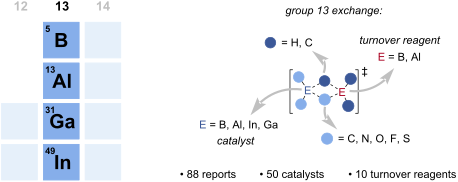
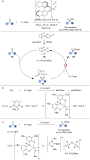
- for catalysis, due to the generally higher abundance and lower toxicity of these elements. Group 13 elements have a rich catalogue of stoichiometric addition reactions to unsaturated bonds but cannot undergo the redox chemistry which underpins transition-metal catalysis. Group 13 exchange reactions
- transfer one or more groups from one group 13 element to another, through σ-bond metathesis; where boron is both of the group 13 elements, this is termed transborylation. These redox-neutral processes are increasingly being used to render traditionally stoichiometric group 13-mediated processes catalytic
- by σ-bond metathesis, a redox neutral process (Scheme 1). Stoichiometric group 13 exchange reactions are key to the synthesis of group 13 reagents including in organoboron chemistry [11][12][13][14][15][16][17][18][19][20][21][22][23][24][25][26][27][28], and more recently with aluminium [29][30][31










NaI/PPh3-catalyzed visible-light-mediated decarboxylative radical cascade cyclization of N-arylacrylamides for the efficient synthesis of quaternary oxindoles
Beilstein J. Org. Chem. 2023, 19, 57–65, doi:10.3762/bjoc.19.5
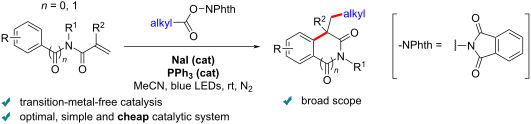
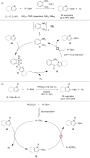
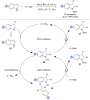
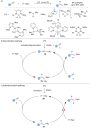
- Dan Liu Yue Zhao Frederic W. Patureau Institute of Organic Chemistry, RWTH Aachen University, Landoltweg 1, 52074 Aachen, Germany 10.3762/bjoc.19.5 Abstract A practical NaI/PPh3-catalyzed decarboxylative radical cascade cyclization of N-arylacrylamides with redox-active esters is described, which
- advantage of circumventing the need for external redox additives and/or noble metals, using readily available and cost-effective NaI and PPh3 under mild reaction conditions. In a broader context, phosphine organocatalysis is probably still underappreciated in organic synthesis, and could lead to important
- Discussion Key elements of reaction optimization are summarized in Table 1. With NaI (20 mol %) and PPh3 (20 mol %), acrylamide 1a and redox-active ester 2a were used as model substrates to react for 36 h in acetonitrile (MeCN) under blue LEDs irradiation and N2 atmosphere, delivering the desired oxindole




Combining the best of both worlds: radical-based divergent total synthesis
Beilstein J. Org. Chem. 2023, 19, 1–26, doi:10.3762/bjoc.19.1
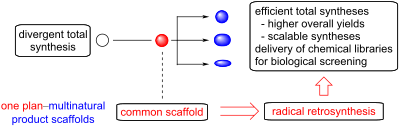
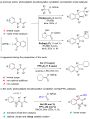
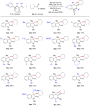
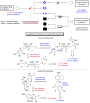
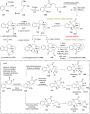
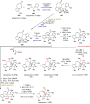
- nickel-mediated decarboxylative Giese reactions and decarboxylative radical zinc-mediated cross-coupling reactions of redox-active esters, established from previous works of the group [27][28], for the key C–C bonds of the diverse congeners. To this end, a hypothetical intermediate 3 was envisioned for
- polyene 14 (prepared in two steps) in multigram quantities [23]. The reaction employed a divided cell with substoichiometric amounts of magnesium(II) acetate (0.5 equiv) and catalytic copper(II) 3,5-diisopropylsalicylate (0.02 equiv) to allow the redox radical cyclization of polyene in 42% yield. A Tsuji
- A (52) as the radical cross-coupling employing redox-active esters of carboxylic acid 46 proved unsuccessful. The coupling was followed by an acid-catalyzed cyclization to yield the pyrone core of the natural products. The divergent plan described provided various meroterpenoids in 7–12 steps






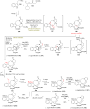


Total synthesis of grayanane natural products
Beilstein J. Org. Chem. 2022, 18, 1707–1719, doi:10.3762/bjoc.18.181
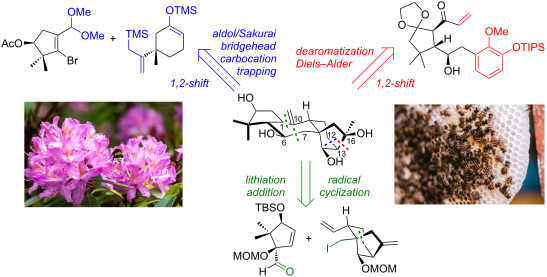
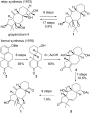
- cyclization based on a bridgehead tertiary carbocation intermediate forging the B ring; iii) redox manipulations and a 1,2-migration as final steps. The synthesis started from (S)-ketone 44 which was prepared via asymmetric CBS reduction of diketone 26 (Scheme 7). Firstly, this (S)-ketone 44 was transformed




Redox-active molecules as organocatalysts for selective oxidative transformations – an unperceived organocatalysis field
Beilstein J. Org. Chem. 2022, 18, 1672–1695, doi:10.3762/bjoc.18.179
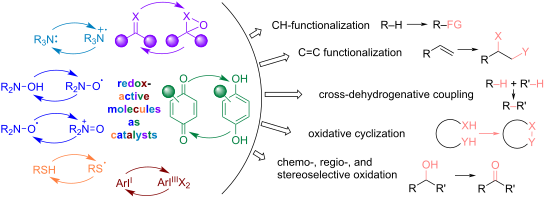
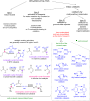
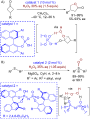
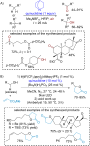
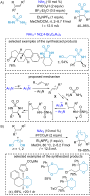
- organic chemistry. It allows chemists to avoid the use of precious and (or) toxic metals by taking advantage of the catalytic activity of small and synthetically available molecules. Today, the term organocatalysis is mainly associated with redox-neutral asymmetric catalysis of C–C bond-forming processes
- oxidative, catalyzed by redox-active organic molecules in the ground state (without light excitation). Unfortunately, many of such processes are not associated in the literature with the organocatalysis field and thus many achievements are not fully consolidated and systematized. The present article is
- aimed at overviewing the current state-of-art and perspectives of oxidative organocatalysis by redox-active molecules with the emphasis on challenging chemo-, regio- and stereoselective CH-functionalization processes. The catalytic systems based on N-oxyl radicals, amines, thiols, oxaziridines, ketone









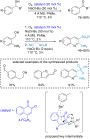


Molecular and macromolecular electrochemistry: synthesis, mechanism, and redox properties
Beilstein J. Org. Chem. 2022, 18, 1505–1506, doi:10.3762/bjoc.18.158

- /bjoc.18.158 Keywords: electron transfer; electrosynthesis; organic electrochemistry; redox-active materials; Electrochemistry is now a powerful tool in organic chemistry not only for analyzing the electron transfer behavior of organic molecules and macromolecules, but also for driving organic
- so on, it has a high affinity to informatics approaches, e.g., machine learning, which is expected to become an increasingly important tool in the future. Progress in the design of organic molecules and polymers and the understanding of the redox behavior of these compounds has led to the development
- of organic electrochemistry for energy material applications. Organic semiconductor design for electron or hole transport is important for transistor and solar cell applications, and redox-active (but stable) organic and polymeric materials are promising for secondary batteries and redox flow
Comparison of crystal structure and DFT calculations of triferrocenyl trithiophosphite’s conformance
Beilstein J. Org. Chem. 2022, 18, 1499–1504, doi:10.3762/bjoc.18.157
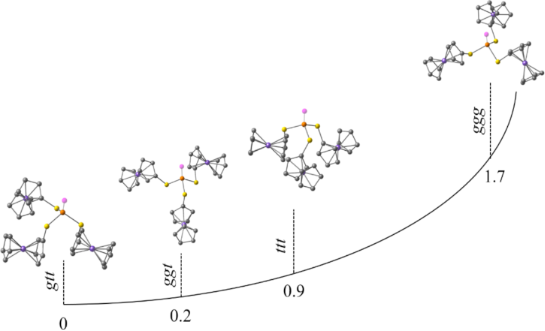
- properties. Such switchable systems with conjugated organic fragments containing an FeII/FeIII system were used in organic electronics as molecular switches, optoelectronic materials and in biochemistry as photonic or redox devices [6]. A promising approach is the coordination self-assembly of multiferrocene


Microelectrode arrays, electrosynthesis, and the optimization of signaling on an inert, stable surface
Beilstein J. Org. Chem. 2022, 18, 1488–1498, doi:10.3762/bjoc.18.156
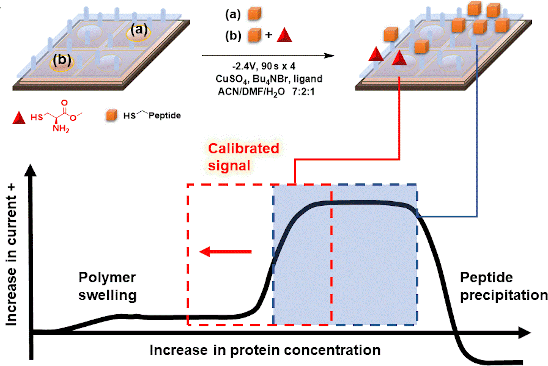
- associated electrodes resulting in a change in the ability of the electrode to either oxidize or reduce the group. This causes a change in the current measured for the redox reaction [14]. Alternatively, the binding event can be detected with an indirect, impedance-based method. This method works by
- inserting a functionalized electrode into a solution containing a redox mediator. The mediator is oxidized at the electrodes in the array and reduced at a remote counter electrode. This results in a current that can be measured at each electrode in the array. The protein target is then added to the solution
- functionalized electrode into a solution containing a redox mediator and then monitoring the current associated with a redox mediator. The method is different relevant to the traditional methods lacking the polymer surface in that the current is dependent on changes to the polymer coating; a situation that can


Naphthalimide-phenothiazine dyads: effect of conformational flexibility and matching of the energy of the charge-transfer state and the localized triplet excited state on the thermally activated delayed fluorescence
Beilstein J. Org. Chem. 2022, 18, 1435–1453, doi:10.3762/bjoc.18.149
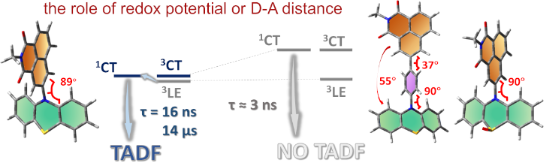
- NI-PTZ dyads, and the synthesis route is mentioned in the following section of molecular design and structural confirmation. These dyads are different from the previously reported dyads by the substitution position, and the number of PTZ moieties attached on the NI unit, as well as the redox
- originating from the peri-H atoms on the two chromophores. We also tuned the redox potentials by oxidation of the electron donor PTZ (NI-PTZ-O). Thus, the energy of CT states and the matching with their 3LE counterpart can be altered. We underline that the approach of oxidation of the PTZ unit, which has
- redshift of the CT absorption band (centered at 405 nm) as compared to that of 3-phenyl NI [43]. These results show that our methods for tuning the electronic coupling between the donor and acceptor groups by alternation of the redox potentials of the donor (or acceptor), variation of the distance between
Synthesis and electrochemical properties of 3,4,5-tris(chlorophenyl)-1,2-diphosphaferrocenes
Beilstein J. Org. Chem. 2022, 18, 1338–1345, doi:10.3762/bjoc.18.139
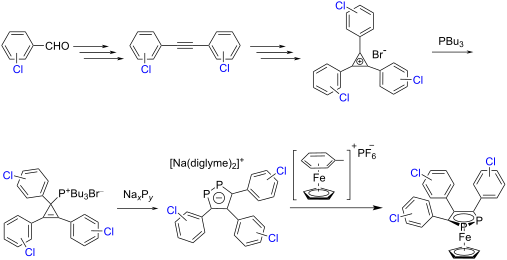
- )phosphonium bromides 6. Synthesis of 3,4,5-tris(chlorophenyl)-1,2-diphosphacyclopentadienides 7 and 3,4,5-tris(chlorophenyl)-1,2-diphosphaferrocenes 8. Electrochemical data for the redox properties of 3,4,5-triaryl-1,2-diphosphaferrocenes 8b and 8c. Supporting Information Supporting Information File 290




A one-pot electrochemical synthesis of 2-aminothiazoles from active methylene ketones and thioureas mediated by NH4I
Beilstein J. Org. Chem. 2022, 18, 1249–1255, doi:10.3762/bjoc.18.130
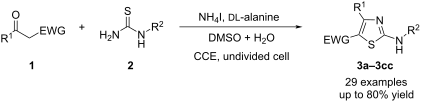
- and Life, Beijing University of Technology, Beijing 100124, China 10.3762/bjoc.18.130 Abstract The electrochemical preparation of 2-aminothiazoles has been achieved by the reaction of active methylene ketones with thioureas assisted by ᴅʟ-alanine using NH4I as a redox mediator. The electrochemical




Polymer and small molecule mechanochemistry: closer than ever
Beilstein J. Org. Chem. 2022, 18, 1225–1235, doi:10.3762/bjoc.18.128
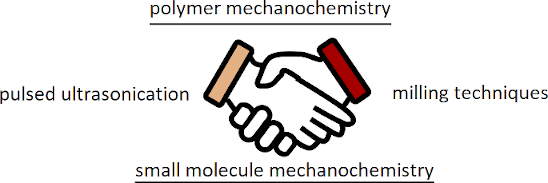
- polymerizations [57][58][59], arylations and borylations [60], trifluoromethylations [61], as well as dehydrogenative couplings and cycloadditions [62], among others [63][64] in which mechanically polarized piezoelectric materials triggered redox chemistry. Alternative strategies to transduce mechanical force to
- effective to mechanically polarize redox active mechanophores such as piezoelectric materials, for which the activation in solid state by ball milling is becoming more frequent. Therefore, despite the apparent differences between both methodological approaches, which is partially attributed to the ability


Derivatives of benzo-1,4-thiazine-3-carboxylic acid and the corresponding amino acid conjugates
Beilstein J. Org. Chem. 2022, 18, 1195–1202, doi:10.3762/bjoc.18.124
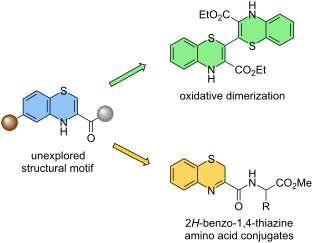
- transform into a green-blue chromophore in the presence of peroxides or redox-active metal ions under acidic conditions, creating a potential detection method for such entities [29]. Additionally, the same structure was used for the preparation of a benzo-1,4-thiazine-based cyanine chromophore, which showed
Reductive opening of a cyclopropane ring in the Ni(II) coordination environment: a route to functionalized dehydroalanine and cysteine derivatives
Beilstein J. Org. Chem. 2022, 18, 1166–1176, doi:10.3762/bjoc.18.121
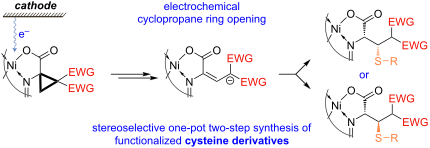
- construction of complex multifunctional molecules [3][4][5][6][7][8]. Recently, we elaborated a versatile electrochemical approach for the stereoselective functionalization of a side chain of amino acids involved in the Ni(II) chiral coordination environment [9][10][11][12][13][14][15]. A combination of redox
- -activity and chirality provided by the Ni–Schiff base template, supported with the protection from redox-destruction of the amino acid skeleton, makes the suggested approach a convenient route to various types of non-proteinogenic amino acids [9][10][12][13]. Recently, several practical approaches to α,α
- moiety may be expected to be more prone to the ring opening, and the irreversibility of the cathodic redox process observed in the voltammograms (Epc = −1.60 V vs Ag/AgCl, KCl(sat.) for 3 and Epc = −1.50 V for 4; Figure 1) supported the suggestion. In the reverse anodic scan, a new oxidation peak (A in



Electro-conversion of cumene into acetophenone using boron-doped diamond electrodes
Beilstein J. Org. Chem. 2022, 18, 1154–1158, doi:10.3762/bjoc.18.119

- /or cathode. Boron-doped diamond (BDD) is a relatively new electrode material [15][16] and shows a wide potential window, which can be applied to the transformation of compounds with high redox potentials. Therefore, BDD electrodes would enable a straightforward oxidation reaction of aromatic alkyls


Enzymes in biosynthesis
Beilstein J. Org. Chem. 2022, 18, 1131–1132, doi:10.3762/bjoc.18.116
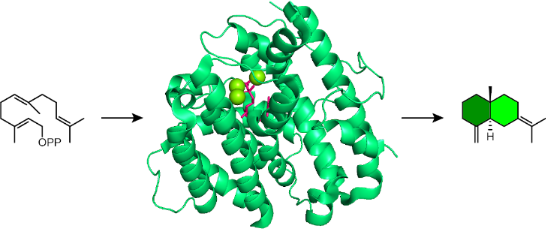
- , requiring a sophisticated enzymology [4]. Recent developments show us that there is still much more to discover, e.g., altemicidin was shown to be enzymatically constructed from NAD+ and SAM that usually serve as enzyme cosubstrates in redox transformations and methylations but are rarely used to construct

A Streptomyces P450 enzyme dimerizes isoflavones from plants
Beilstein J. Org. Chem. 2022, 18, 1107–1115, doi:10.3762/bjoc.18.113
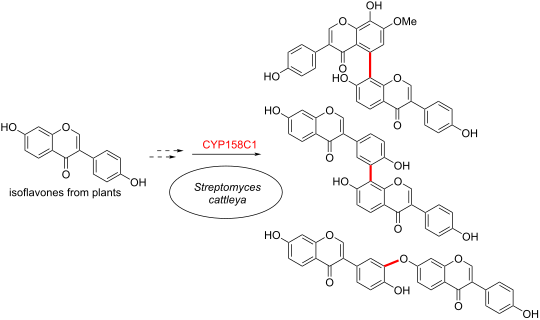
- trace amount of 3 was detected by HRMS analysis (Figure S8, Supporting Information File 1). Redox partners might be responsible for the different regioselectivity between in vivo and in vitro reactions, as it has been reported that different reductases would lead to different diastereomeric dimers of


Radical cation Diels–Alder reactions of arylidene cycloalkanes
Beilstein J. Org. Chem. 2022, 18, 1100–1106, doi:10.3762/bjoc.18.112
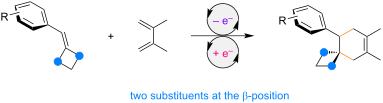
- , single-electron oxidation of an electron-rich dienophile generates its radical cation which is then trapped by the diene (Figure 1). Since the forming cyclohexene remains in the radical cation state as well, one electron reduction is required to complete the net redox neutral transformation. Therefore, a


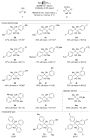
Electrochemical formal homocoupling of sec-alcohols
Beilstein J. Org. Chem. 2022, 18, 1062–1069, doi:10.3762/bjoc.18.108
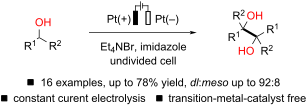
- ]. Electroorganic chemistry has been recognized as an environmentally benign and powerful strategy to promote redox reactions using electricity as a traceless oxidant or reductant [24][25][26][27][28]. Electrochemical pinacol coupling would be a promising alternative to avoid the use of low-valent metal reductants




Synthesis, optical and electrochemical properties of (D–π)2-type and (D–π)2Ph-type fluorescent dyes
Beilstein J. Org. Chem. 2022, 18, 1047–1054, doi:10.3762/bjoc.18.106
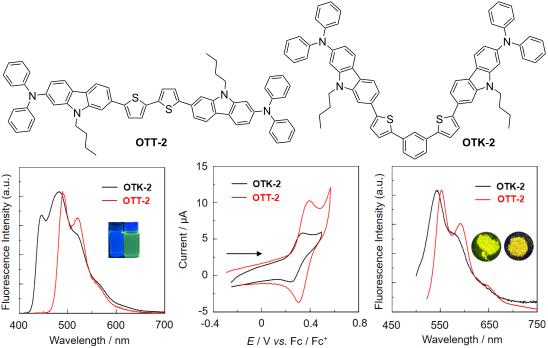
- band, but also intense fluorescence emission both in solution and the solid state. Keywords: (D–π)2 structure; fluorescence; fluorescent dyes; photoabsorption; redox properties; Introduction The design and development of a new type of organic fluorescent dyes have been of considerable scientific and


Electrochemical vicinal oxyazidation of α-arylvinyl acetates
Beilstein J. Org. Chem. 2022, 18, 1026–1031, doi:10.3762/bjoc.18.103
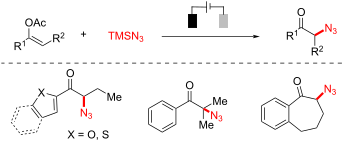
- have reported a manganese dioxide-catalyzed radical azidation of enol acetates to afford the corresponding azidoketones using dioxygen as the oxidant (Scheme 1A) [14]. The adoption of electrosynthesis in green and sustainable redox transformations has been experiencing a dynamic renaissance [15][16][17




Isolation and biosynthesis of daturamycins from Streptomyces sp. KIB-H1544
Beilstein J. Org. Chem. 2022, 18, 1009–1016, doi:10.3762/bjoc.18.101
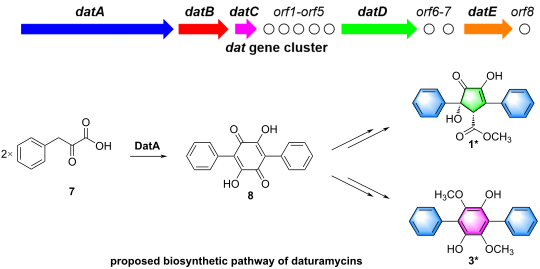
- . Diarylcyclopentenones, characteristic constituents of mushrooms [23], were rarely discovered in Streptomyces species. These components exhibit redox activity and are involved in reducing ferric (Fe3+) in the Fenton-based biological decomposition of lignocellulose [24][25]. The biosynthetic pathway of p-terphenyl was


First example of organocatalysis by cathodic N-heterocyclic carbene generation and accumulation using a divided electrochemical flow cell
Beilstein J. Org. Chem. 2022, 18, 979–990, doi:10.3762/bjoc.18.98
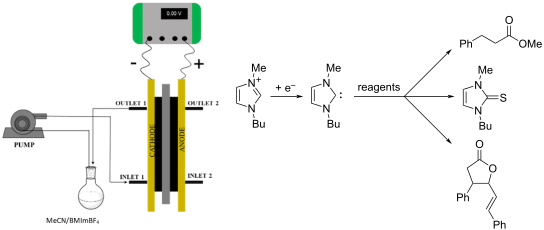
- replaces toxic chemical redox reagents and dangerous procedures [22][23][24][25]. At present, electrosynthesis in batch is more widely used and reported in literature, but some disadvantages can be encountered: the need for high concentrations of supporting electrolyte, poor performance for synthesis such
- improved by 10%, but the yield of 2b increased only 2% (Table 2, entry 3). However, in these experiments methyl ester 3a was isolated (24% yield) as byproduct derived from methanol, which passed through the membrane, reacting with the Breslow intermediate through a redox neutral process (Scheme 5) [19]. We
- with the isopropyl alcohol the formation of the ester was only 37%, probably due to steric hindrance. In two cases (Table 3, entries 1 and 2) oxidation byproducts (esters 4a and 4b) were obtained, where the olefinic double bond is preserved. In contrast to the internal redox reactions of cinnamaldehyde


Electrochemical and spectroscopic properties of twisted dibenzo[g,p]chrysene derivatives
Beilstein J. Org. Chem. 2022, 18, 963–971, doi:10.3762/bjoc.18.96
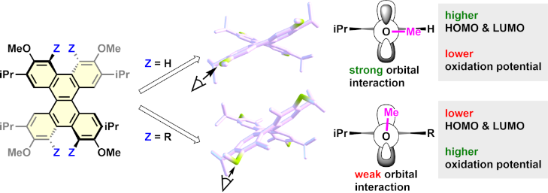
- voltammogram of DBC-H exhibited a reversible, two-step, two-electron redox process, with Eox1 and Eox2 values of 0.34 V and 0.72 V, respectively (Figure 2a). The value of Eox1 is 0.06 V lower than that of MeO-DBC-1 which does not contain isopropyl groups. This is in contrast to MeO-DBC-3, in which four MeO
- DBC-SMe showed a reversible two-electron redox process, with Eox1 and Eox2 values of 0.41 V and 0.88 V, respectively (Figure 2c) [53]. It is interesting to note that DBC-SMe exhibited a higher oxidation potential than DBC-H despite the electron-donating nature due to mesomeric effects based on lone
- pairs of sulfur atoms. In the CV of DBC-Br, a one-electron redox was observed as a reversible process, but a second redox process was not observed (Figure 2d). On the other hand, both the first and second oxidation processes were observed in the SWV of DBC-Br (Eox1 and Eox2 are 0.79 V and 1.15 V


Introducing a new 7-ring fused diindenone-dithieno[3,2-b:2',3'-d]thiophene unit as a promising component for organic semiconductor materials
Beilstein J. Org. Chem. 2022, 18, 944–955, doi:10.3762/bjoc.18.94
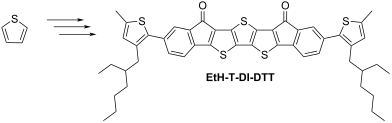
- compound, EtH-T-DI-DTT, consisting of seven, fused ring systems, with an electron-rich central DTT core, flanked by electron-withdrawing keto groups. Absorption studies in solution and in the solid state show strong aggregation of the molecules in films. EtH-T-DI-DTT shows excellent redox stability with





