Search results
Search for "carbamate" in Full Text gives 206 result(s) in Beilstein Journal of Organic Chemistry. Showing first 200.
Formal synthesis of (−)-agelastatin A: an iron(II)-mediated cyclization strategy
Beilstein J. Org. Chem. 2013, 9, 860–865, doi:10.3762/bjoc.9.99
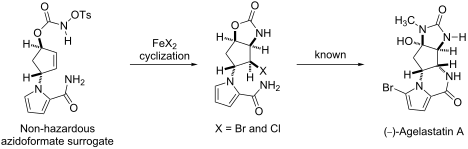
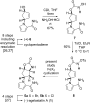
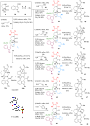
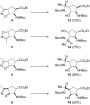
- -hydroxycarbamate 7 in 67% yield [36]. Thereafter, N-hydroxycarbamate 7 was reacted with TsCl and triethylamine in THF to furnish N-tosyloxycarbamate 8 in 92% yield. With this carbamate 8, we examined the iron(II)-mediated cyclization under various conditions (Table 1). The application of FeBr2 (0.5 equiv)/Bu4NBr
- (1.5 equiv) in EtOH effected cyclization, but the yield of 5a was poor due to the concomitant formation of carbamate 9 (39%) and enone 10 (30%) (Table 1, entry 1). This was in marked contrast to the observation that the same reagent system, i.e., FeBr2 (0.5 equiv)/Bu4NBr (1.2 equiv), allowed the
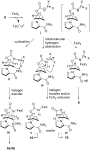
- provided evidence that these byproducts were generated by the intramolecular cyclization of enone 10 with TMSCl in EtOH, suggesting that the FeCl2/TMSCl system also gave enone 10 in ca. 30% yield [37]. The present study on the aminohalogenation reaction of carbamate 8 has inspired mechanistic insights that





Gold-catalyzed oxycyclization of allenic carbamates: expeditious synthesis of 1,3-oxazin-2-ones
Beilstein J. Org. Chem. 2013, 9, 818–826, doi:10.3762/bjoc.9.93
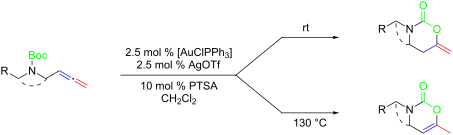
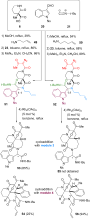
- ][53][54][55], we decided to examine the gold-catalyzed cyclization of N-Boc-allenes with the aim of establishing a protocol for the synthesis of 1,3-oxazin-2-one derivatives in which the carbamate group should serve as the source of CO2. Results and Discussion To explore the effects of various
- by treatment with paraformaldehyde in the presence of diisopropylamine and copper(I) bromide (Crabbé reaction) [59][60]. We employed three different gold salts in our initial screening of catalysts for the model system, allenic carbamate 2a. Initially, the use of AuCl3 and AuCl were tested, but both
- failed to catalyze the reaction. Fortunately, we found that [AuClPPh3]/AgOTf was an excellent catalyst for our purpose. To our delight, the reaction of allenic carbamate 2a at room temperature afforded 3-benzyl-6-methylene-1,3-oxazinan-2-one (3a) bearing an exocyclic double bond as the sole product



Intramolecular carbonickelation of alkenes
Beilstein J. Org. Chem. 2013, 9, 710–716, doi:10.3762/bjoc.9.81
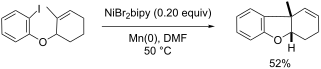
- gives the same good yield added to an attractive (2c + 2c’)/3c ratio of 87/13 (Table 1, entry 3). Formation of the 3-methylindoline 3 is therefore disfavored when a mesyl protecting group is used instead of a carbamate. When this reaction is run with stoichiometric amounts of nickel, the reductive


Carbolithiation of N-alkenyl ureas and N-alkenyl carbamates
Beilstein J. Org. Chem. 2013, 9, 628–632, doi:10.3762/bjoc.9.70

- products that may be deprotected in situ to provide a new connective route to hindered amines. Keywords: carbamate; carbolithiation; carbometallation; organolithium; stereospecificity; styrene; urea; Introduction Enamines and N-acyl enamines are in general nucleophiles, reacting with electrophiles at the
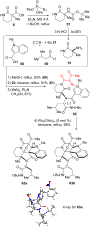
- manipulated carbamate products bearing a standard Boc protecting group, providing they too could be carbolithiated and trapped without rearrangement. Related carbamates are reactive towards carbolithiation–rearrangement reactions [6]. Thus, Boc-protected carbamates 9–11 were synthesised by acylation of the
- imines 7 and 8 with di-tert-butyl dicarbonate or with (−)-menthylchloroformate (Scheme 4). The N-alkenylcarbamates 10 and 11 were formed exclusively as their E isomers, and the X-ray crystal structure of E-10 is shown in Figure 2. Vinyl carbamate 9 was treated with primary, secondary or tertiary


End-labeled amino terminated monotelechelic glycopolymers generated by ROMP and Cu(I)-catalyzed azide–alkyne cycloaddition
Beilstein J. Org. Chem. 2013, 9, 608–612, doi:10.3762/bjoc.9.66
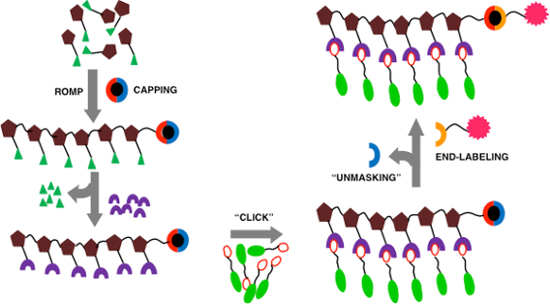
- used to terminate polymers prepared by ring-opening metathesis polymerization of norbornenes bearing an activated ester. The terminating agent is a cis-butene derivative bearing a Teoc (2-trimethylsilylethyl carbamate) protected primary amine. Post-polymerization modification of the polymer was
- reaction as well as subsequent polymer modifications, and that can also be removed under mild conditions for the subsequent functionalization of an amine-terminated polymer. We report here the development of the terminating agent 3, which caps a ROMP-derived polymer with a 2-trimethylsilylethyl carbamate


Some aspects of radical chemistry in the assembly of complex molecular architectures
Beilstein J. Org. Chem. 2013, 9, 557–576, doi:10.3762/bjoc.9.61

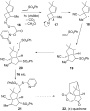
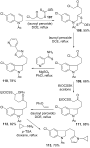
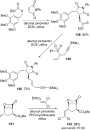
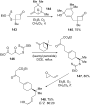
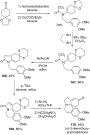
- bond with the correct stereochemistry and the introduction of the pendant isopropyl group present in the target. The intermediate cyclic carbamate 2 is not isolated but cleaved into aminoalcohol 3 to simplify purification. The conversion of aminoalcohol 3 into (–)-dendrobine (4), hinges on the use of













Regio- and stereoselective carbometallation reactions of N-alkynylamides and sulfonamides
Beilstein J. Org. Chem. 2013, 9, 526–532, doi:10.3762/bjoc.9.57

- organometallic species (i.e., copper) with a polar functional group in the vicinity of the reactive center should be able to reverse the regioselectivity of the carbometallation, as we have shown for the carbocupration of ethynyl carbamate (XR = OCONR2, Path C, Scheme 1) [24]. Herein we describe our results for
- the carbocupration of an N-alkynylsulfonamide could be easily achieved, we were interested to see whether such a carbocupration reaction could be extended to ynamide 4 bearing an acyclic carbamate moiety. We were pleased to find that this reaction could also be performed on N-alkynylcarbamate 4 with
- carbamate moiety. Molecular structure of 9f (hydrogen atoms except of H9 and H10 are omitted for clarity). Possible regioisomers obtained in the carbocupration reaction of α-heterosubstituted acetylenes 1. Regioselective carbometallation of N-alkynylsulfonamide 2. Regioselective carbometallation of ynamide


Efficient synthesis of β’-amino-α,β-unsaturated ketones
Beilstein J. Org. Chem. 2013, 9, 486–495, doi:10.3762/bjoc.9.52

- reaction of chiral imines with enolates derived from Weinreb amides [13][14]. In previous work on the asymmetric synthesis of 2,6-disubstituted piperidines by C–N bond formation, we demonstrated that intramolecular aza-Michael ”type” cyclisation [15] using a β'-carbamate-α,β-unsaturated ketone
- preparation of chiral 2,6-disubstituted piperidines, we wish to report here a facile synthetic route to various β’-carbamate-α,β-unsaturated ketones in good overall yields and good enantioselectivities. Results and Discussion In a preliminary approach, preparation of β-amino ketones was envisaged through a
- ester moiety to a Weinreb amide [18] followed by changing the nitrogen protecting group to a carbamate furnished the key intermediate 6, which could be further alkylated with Grignard reagents to give β’-amino protected α,β-enone 1 in good overall yield and high enantiomeric excess. As Grignard reagents


Recent advances in transition-metal-catalyzed intermolecular carbomagnesiation and carbozincation
Beilstein J. Org. Chem. 2013, 9, 278–302, doi:10.3762/bjoc.9.34
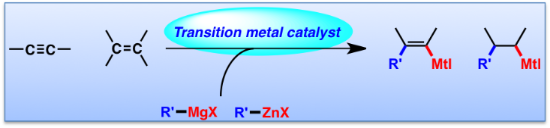
- alkynes generally gives the vicinal product 2D (copper locates at the β-position to the O or N) (Scheme 13, path A) [14][70][71][72][73]. On the other hand, the reversed regioselectivity was observed in the carbocupration of O-alkynyl carbamate and N-alkynyl carbamate, in which carbonyl groups worked as a


The diketopiperazine-fused tetrahydro-β-carboline scaffold as a model peptidomimetic with an unusual α-turn secondary structure
Beilstein J. Org. Chem. 2013, 9, 147–154, doi:10.3762/bjoc.9.17
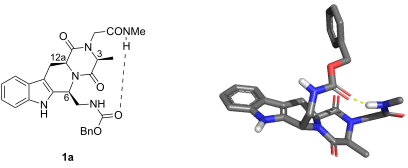
- +] calcd for C28H30N4O6, 518.2165; found, 518.2178. Benzyl (((3S,6S,12aS)-3-methyl-2-(2-(methylamino)-2-oxoethyl)-1,4-dioxo-1,2,3,4,6,7,12,12a-octahydropyrazino[1',2':1,6]pyrido[3,4-b]indol-6-yl)methyl)carbamate (1a): Compound 6 (165 mg, 0.32 mmol, 518 g/mol) was dissolved in EtOH (3 mL). Aqueous LiOH (0.5


An improved synthesis of a fluorophosphonate–polyethylene glycol–biotin probe and its use against competitive substrates
Beilstein J. Org. Chem. 2013, 9, 89–96, doi:10.3762/bjoc.9.12
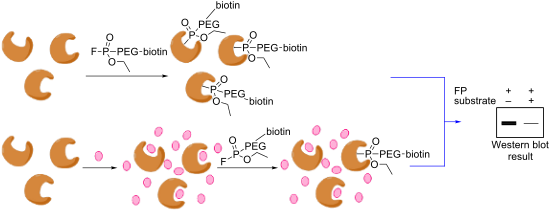
- by a different procedure [17]; MS m/z: 456.1 [M + H]+. 2-(2-(2-(2-(Diethoxyphosphoryl)ethoxy)ethoxy)ethoxy)ethyl (5-(5-((3aS,4S,6aR)-2-oxohexahydro-1H-thieno[3,4-d]imidazol-4-yl)pentanamido)pentyl)carbamate (8): A solution of in situ synthesized 5-(biotinamido)pentaneamine, trifluoroacetic acid salt
- [M + H]+. 2-(2-(2-(2-(Ethoxy(hydroxy)phosphoryl)ethoxy)ethoxy)ethoxy)ethyl (5-(5-((3aS,4S,6aR)-2-oxohexahydro-1H-thieno[3,4-d]imidazol-4-yl)pentanamido)pentyl)carbamate (9): A mixture of lithium azide (200 mg, 4.1 mmol), diethyl phosphonate polyether carbamate 8 (150 mg, 0.22 mmol), and 2 mL of DMF
- ,6aR)-2-oxohexahydro-1H-thieno[3,4-d]imidazol-4-yl)pentanamido)pentyl)carbamate (FP–PEG–biotin; 1): To a solution of monoethyl phosphonate polyether carbamate 9 (46 mg, 0.072 mmol) in 1 mL of anhydrous dichloromethane at −42 °C was added (diethylamino)sulfur trifluoride (DAST; 26.4 μL, 0.022 mmol). The


A chemist and biologist talk to each other about caged neurotransmitters
Beilstein J. Org. Chem. 2013, 9, 64–73, doi:10.3762/bjoc.9.8
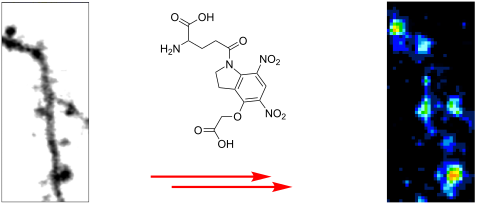
- expense of another property, such as the rate of release [7]. For example, GABA caged directly as an ester with coumarin chromophores is photoreleased quickly, but is quite unstable in (frozen) solution [60]. However, when caged via a carbamate, its release is orders of magnitude slower, but the compounds


Intramolecular carbolithiation of N-allyl-ynamides: an efficient entry to 1,4-dihydropyridines and pyridines – application to a formal synthesis of sarizotan
Beilstein J. Org. Chem. 2012, 8, 2214–2222, doi:10.3762/bjoc.8.250
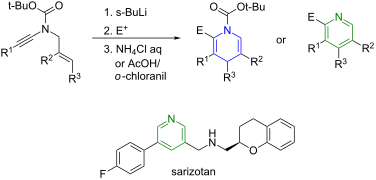
- phthalimide in DMF at 90 °C, affording the corresponding N-allylphthalimide. Deprotection of the phthalimide by hydrazinolysis followed by protection of the resulting primary amine as a tert-butyl-carbamate gave the Boc-protected amine 13 required for the synthesis of the substrate of the anionic cyclization




Acylsulfonamide safety-catch linker: promise and limitations for solid–phase oligosaccharide synthesis
Beilstein J. Org. Chem. 2012, 8, 2067–2071, doi:10.3762/bjoc.8.232
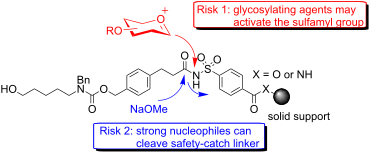
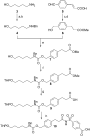
- the presence of NEt3 afforded a crude carbonate, which was smoothly reacted with amine 4 to provide carbamate 7 with 85% yield. Carbamate 7 was converted to the free acid 9 by simple protection to form THP ether 8 followed by saponification. Finally, coupling acid 9 with 4-sulfamoylbenzoic acid [15




The Amadori rearrangement as glycoconjugation method: Synthesis of non-natural C-glycosyl type glycoconjugates
Beilstein J. Org. Chem. 2012, 8, 1619–1629, doi:10.3762/bjoc.8.185

- products featuring a secondary amine at position C-1, compounds 24 and 25, were further reacted with triphosgene [25]. In this reaction, the anomeric hydroxy group and the amine at position C-1 formed a cyclic carbamate, thereby stabilising the hemiacetal at the anomeric position. Compounds 24 (a and b
- yield of 70%. No β-anomer formation could be observed from NMR analysis. Treatment of compound 29 with triphosgene and sodium carbonate in 1,4-dioxane and H2O gave 1-N-(hydroxyhexyl)amino-α-D-manno-1-N,2-O-carbamate 30 in 75% yield. With 6-aminohexanoic acid hydrochloride, the Amadori rearrangement
- , employing triethylamine for liberation of the free amine from the hydrochloride, gave a 90% yield of the α-anomer 31. Its treatment with triphosgene provided 1-N-2-O-cyclic carbamate 32 in 50% yield. 3-Acetamido-3-deoxy-D-gluco-D-ido/D-gulo-heptopyranose 22 (a and b) gave under Amadori rearrangement


Synthesis of trifunctional cyclo-β-tripeptide templates
Beilstein J. Org. Chem. 2012, 8, 1576–1583, doi:10.3762/bjoc.8.180
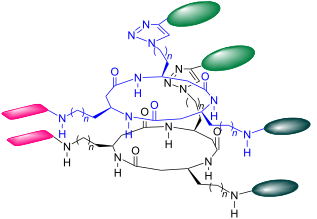
- . Residual solvent proton signals were used as an internal standard. Synthesis of compounds (S)-tert-Butyl(7-azido-1-diazo-2-oxoheptan-3-yl)carbamate. (S)-6-Azido-2-(tert-butoxycarbonylamino)hexanoic acid (7.38 g, 27.1 mmol, 1.00 equiv) was dissolved in dry THF (108 mL) under an argon atmosphere. The
- -oxoheptan-3-yl carbamate (2.67 g, 9.00 mmol, 1.00 equiv) in THF/H2O 9:1 (45.0 mL) under exclusion of light at −15 °C. The reaction solution was warmed to room temperature after 30 min and stirred for a further 12 h until completion. The solvent was removed under reduced pressure. The residue was dissolved


N-Heterocyclic carbene-catalyzed direct cross-aza-benzoin reaction: Efficient synthesis of α-amino-β-keto esters
Beilstein J. Org. Chem. 2012, 8, 1499–1504, doi:10.3762/bjoc.8.169
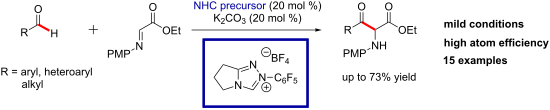
- , carbamate, and phenyl groups, were converted into the corresponding products 5l–o in good yields. The α-branched aldehyde, however, failed to give the desired product 5p, presumably due to the increased steric hindrance along with the inherently low electrophilicity. In order to elucidate the reaction


Parallel and four-step synthesis of natural-product-inspired scaffolds through modular assembly and divergent cyclization
Beilstein J. Org. Chem. 2012, 8, 930–940, doi:10.3762/bjoc.8.105
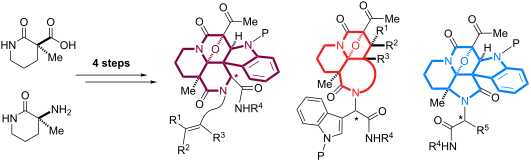
- piperidine-based manifold 15 bearing an amino group in order to produce variations of branched precursors leading to distinct scaffolds (Scheme 5). The manifold 15 was readily prepared through Curtius rearrangement of 6 and subsequent removal of the resulting carbamate group. Ugi four-component condensation



Electrochemical generation of 2,3-oxazolidinone glycosyl triflates as an intermediate for stereoselective glycosylation
Beilstein J. Org. Chem. 2012, 8, 456–460, doi:10.3762/bjoc.8.52
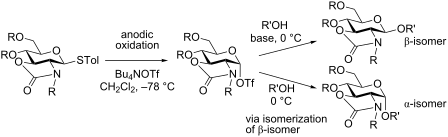
- prepared by protecting the 2-amino group with phthaloyl or carbamate groups [6]. On the other hand, 1,2-cis glycosidic linkages are still difficult to make with perfect stereoselectivity. Although 2-azido-substituted glycosyl donors are commonly used for the preparation of 1,2-cis glycosidic linkages of
- often observed for pyranosides with a 2,3-trans carbamate group, under acidic conditions. The yield of disaccharide 8 was improved by raising the temperature to 0 °C after the completion of electrolysis at −78 °C (Table 3, entry 5). The fact that disaccharide 8 was obtained in higher yields (59% to 78
- %) and that only a trace amount of α-isomer 9 (4%) was obtained strongly suggests that the isomerization of thioglycoside donor 1a occurs during the electrolysis at 0 °C. It is noteworthy that the α- and β-glycosides could be selectively prepared from the same glycosyl donor with a 2,3-trans carbamate


Double N-arylation reaction of polyhalogenated 4,4’-bipyridines. Expedious synthesis of functionalized 2,7-diazacarbazoles
Beilstein J. Org. Chem. 2012, 8, 253–258, doi:10.3762/bjoc.8.26
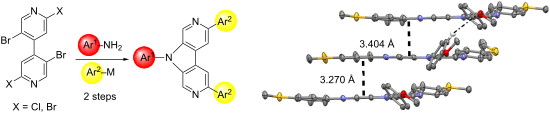
- obtained in this reaction (Table 1, entries 1–6). Aniline 6g bearing an electron withdrawing trifluoromethyl group led to a low yield of 3g (Table 1, entry 7) whereas no cyclized product was observed with other electron-deficient anilines 6h–j and carbamate 7 (Figure 1). Other methods to react 7 with


Carbamate derivatives and sesquiterpenoids from the South China Sea gorgonian Melitodes squamata
Beilstein J. Org. Chem. 2012, 8, 170–176, doi:10.3762/bjoc.8.18
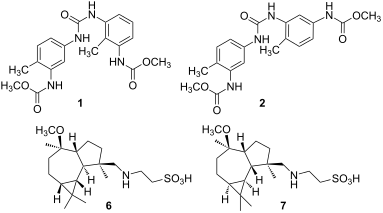
- Road, Guangzhou 510301 Guangdong, China Hainan Key Laboratory of Tropical Marine Biology and Technology, South China Sea Institute of Oceanology, The Chinese Academy of Sciences, 164 Xingangxi Road, Guangzhou 510301, China 10.3762/bjoc.8.18 Abstract Five carbamate derivatives, obtucarbamates C and D
- rarely found in marine natural compounds, and 7 showed moderate antibacterial activity. The possible biosynthesis routes of 1–5 were conjectured. Keywords: carbamate; gorgonian; Melitodes squamata; sesquiterpenoid; Introduction Gorgonians are recognized to mainly produce acetogenins, sesquiterpenoids
- the chemical constituents of the South China Sea gorgonian M. squamata, which led to the obtainment of five carbamate derivatives, obtucarbamates C and D (1, 2), ((carbonylbis(azanediyl))bis(2-methyl-5,1-phenylene))dicarbamate (3) [5], obtucarbamate A (4) [6], obtucarbamate B (5) [6], and four


Synthesis of highly functionalized β-aminocyclopentanecarboxylate stereoisomers by reductive ring opening reaction of isoxazolines
Beilstein J. Org. Chem. 2012, 8, 100–106, doi:10.3762/bjoc.8.10
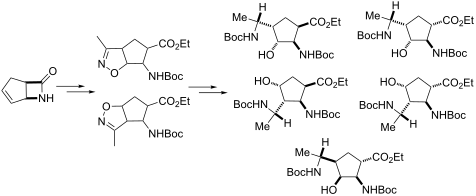
- carbamate side (cis to –NHBoc) of the cyclopentane skeleton. This was confirmed by X-ray analysis of 12. In order to increase the number of multifunctionalized amino ester stereoisomers, we next examined the reductions of isoxazoline-fused cispentacin and transpentacin stereoisomers (3–6) [49]. Reactions
- concentrated under reduced pressure. The residue was purified by column chromatography on silica gel (n-hexane/EtOAc), giving the corresponding reduced product. tert-Butyl (3aR*,4R*,5R*,6aR*)-[5-(hydroxymethyl)-3-methyl-4,5,6,6a-tetrahydro-3aH-cyclopenta[d]isoxazol-4-yl]carbamate (8): Light-yellow oil; yield
- *,6aR*)-[5-(hydroxymethyl)-3-methylhexahydro-2H-cyclopenta[d]isoxazol-4-yl]carbamate (9): Colorless oil; yield 12% (31 mg); Rf 0.29 (n-hexane/EtOAc); IR (KBr) ν/cm–1: 3460, 3331, 2978, 1683, 1531, 1174; 1H NMR (400 MHz, CDCl3) δ 0.98–1.05 (m, 3H, CH3), 1.36 (s, 9H, CH3), 1.55–1.75 (m, 2H, CH2), 2.22


Planar-bilayer activities of linear oligoester bolaamphiphiles
Beilstein J. Org. Chem. 2011, 7, 1562–1569, doi:10.3762/bjoc.7.184
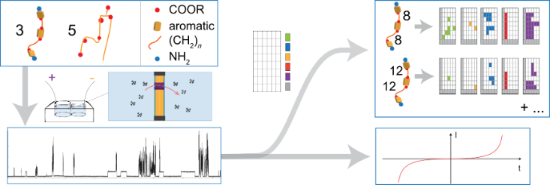
- -bromoalcohols prepared by mono-brominating the corresponding diols as described [16]. This gave the bis-bromides, which were subsequently displaced by the protected carboxylate anion of BOC-protected aniline 14 to give precursors 15, 16 and 17. Deprotection of the carbamate protecting groups under various



Carbamate-directed benzylic lithiation for the diastereo- and enantioselective synthesis of diaryl ether atropisomers
Beilstein J. Org. Chem. 2011, 7, 1327–1333, doi:10.3762/bjoc.7.156
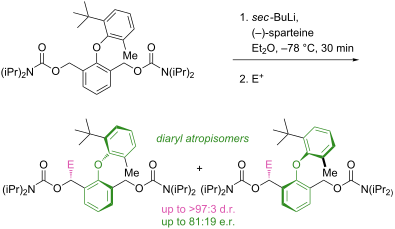
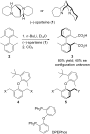
- diaryl ether. Benzylic metallation of a diaryl ether α to a carbamate. Diastereo- and enantioselective synthesis of atropisomeric ethers by benzylic lithiation. Atroposelective stannylation. Stereospecific tin–lithium exchange/quench reactions. Proposed stereochemical pathway. Yields and selectivities in



Amine-linked diglycosides: Synthesis facilitated by the enhanced reactivity of allylic electrophiles, and glycosidase inhibition assays
Beilstein J. Org. Chem. 2011, 7, 1115–1123, doi:10.3762/bjoc.7.128
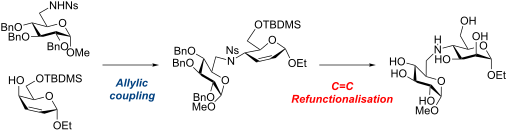
- , with m/z 734, consistent with the expected coupling products, i.e., the allylic amines. The fourth product had m/z 800, consistent with the carbamate structure 27. The determination of the regiochemistry of the unsaturated ring in 24 was complicated by long-range 1H–1H couplings and correlations in the