Search results
Search for "conformations" in Full Text gives 404 result(s) in Beilstein Journal of Organic Chemistry. Showing first 200.
Strong hyperconjugative interactions limit solvent and substituent influence on conformational equilibrium: the case of cis-2-halocyclohexylamines
Beilstein J. Org. Chem. 2019, 15, 818–829, doi:10.3762/bjoc.15.79
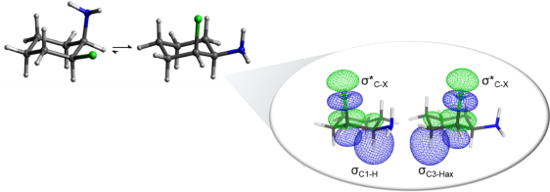
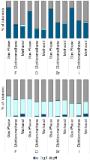
- most stable rotamer in each conformation (see Supporting Information File 2 for full numerical data). In the PCA (Figure 6), two principal components described 94% of the results. The PC1 is able to differentiate the variables according to the halogens, while the PC2 distinguish the two conformations
- ae. Then, considering all the interactions existent in both conformations, the ones involving the LPX are important for both conformers. However, what differs them are the interactions with the highest weight for ea. It is worth mentioning that the variables corresponding to the N–H bonds and LPN has
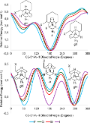
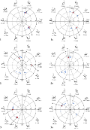
- RStudio, version 1.0.153 [45]. Conformations of cis-2-halocyclohexylamines, where X = F, Cl, Br and I. Variable-temperature 1H NMR spectra (500.13 MHz) for cis-2-chlorocyclohexylamine in dichloromethane-d2. Potential energy surfaces (PESs) for cis-2-halocyclohexylamines for the C2–C1–N–H dihedral angle




A diastereoselective approach to axially chiral biaryls via electrochemically enabled cyclization cascade
Beilstein J. Org. Chem. 2019, 15, 795–800, doi:10.3762/bjoc.15.76
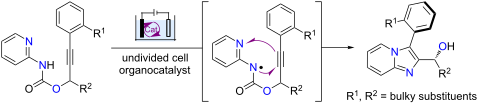
- –Hammett scenario (Scheme 4) [42]. Specifically, the equilibrium of the conformations IV and IV′ is much faster than their respectively cyclizations to give V and V′. Since TS2 is relatively lower in energy than TS3, V is formed as the major product. Conclusion In summary, we have developed a




Stereochemical investigations on the biosynthesis of achiral (Z)-γ-bisabolene in Cryptosporangium arvum
Beilstein J. Org. Chem. 2019, 15, 789–794, doi:10.3762/bjoc.15.75
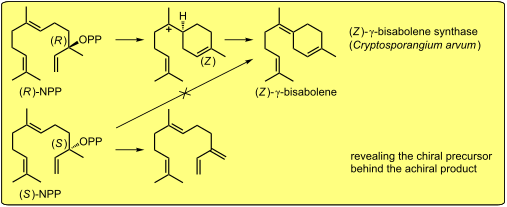
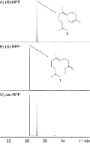
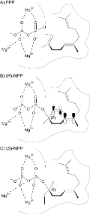
- enantiomers by BbS, different NPP conformations inside the chiral environment of the active site in BbS have to be assumed (Figure 4B + 4C). The architecture of the active site may stay the same in both cases, so a fixed OPP moiety with binding by the trinuclear Mg2+ cluster and a comparable folding of the



Homo- and hetero-difunctionalized β-cyclodextrins: Short direct synthesis in gram scale and analysis of regiochemistry
Beilstein J. Org. Chem. 2019, 15, 710–720, doi:10.3762/bjoc.15.66
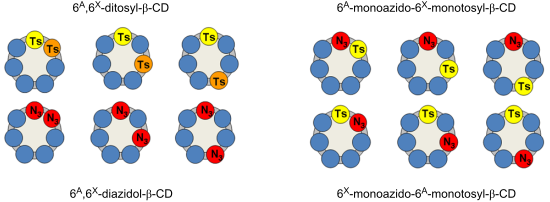
- staggered conformations about the C5–C6 bond are generally of gt type, except for one case, the gg-oriented H6,6’A-tosyl group in 6A,6D-ditosyl-β-CD. This implies that the group is rotated completely outside its cavity, whereas in all other ditosyl derivatives positioning of the tosyl group partially over


Influence of per-O-sulfation upon the conformational behaviour of common furanosides
Beilstein J. Org. Chem. 2019, 15, 685–694, doi:10.3762/bjoc.15.63
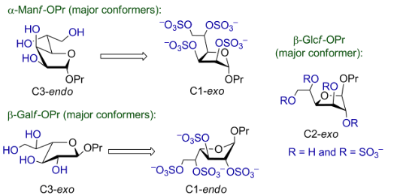
- of sulfates. Keywords: ab initio calculations; conformational analysis; furanosides; NMR; sulfation; Introduction Changes in the conformations of monosaccharides expectedly accompany their modification with different functional groups. Thus, spatial repulsion of silyl groups results in inversion or
- constants significantly differ for non-sulfated and per-O-sulfated furanosides which allows for a conclusion that their conformations are changed after the sulfation. To rationalize these changes, we undertook theoretical conformational analysis of monosaccharides 1–3 and 1s–3s. Conformational analysis of
- -energy conformers which differed from each other by less than 2 kcal/mol. The other conformations found had considerably higher energies. For non-sulfated structures 1–3 sometimes high-energy conformations were obtained with the same puckering state of the furanoside ring (see Tables in Supporting




Conformational signature of Ishikawa´s reagent using NMR information from diastereotopic fluorines
Beilstein J. Org. Chem. 2019, 15, 506–512, doi:10.3762/bjoc.15.44
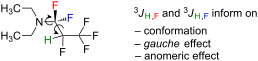
- with the dihedral angle between coupled nuclei [7]. According to this relationship, the SSCC between antiperiplanar nuclei is larger than that observed between gauche nuclei. One-bond SSCCs (1J) can also provide relevant information on the conformations of a molecule. For example, the Perlin effect
- would then be worth to evaluate. It is worth mentioning, however, that the relative and interchangeable orientation of the atoms in a molecule (conformations) is dependent on the medium; while only intramolecular interactions drive the conformational stability of a molecule in the vacuum, the solvent
- polarity plays a significant role in the condensed phase. Thus, it is appropriate to study the conformations of Ishikawa´s reagent in different media, of low and high polarity. This is a challenging task, since the conformational analysis of flexible acyclic organic compounds using NMR SSCCs is more


Systematic synthetic study of four diastereomerically distinct limonene-1,2-diols and their corresponding cyclic carbonates
Beilstein J. Org. Chem. 2019, 15, 130–136, doi:10.3762/bjoc.15.13
- accompanied by side reactions. Although the starting material 2b was completely consumed, two major products were detected by thin-layer chromatography. After purification, the desired 1b was obtained in a relatively low yield of 24%. Two conformations (A and B in Scheme 4) are possible for the intermediate
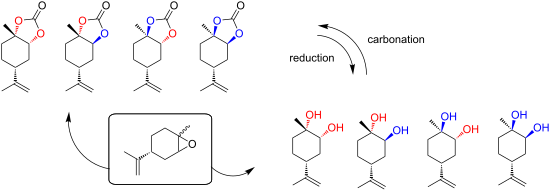
- diastereomers as byproducts except for the reaction of trans-LO with water (Scheme 3, conditions (d)). The reduction under conditions (b) and carbonation under conditions (a) and (c) retain the diastereomeric conformations around the epoxy, 5CC and diol moieties. In all the reactions, the yields for the
- of 2a and 2b were also subjected to 1,1-ADEQUATE (adequate double quantum transfer experiment) analysis. Structures of four LMdiols and four LM5CCs Plausible conformations for the LM5CCs and LMdiols in CDCl3 are proposed in Figure 5. In Figure 3, large coupling constants (J > ca. 10 Hz) for the


Adhesion, forces and the stability of interfaces
Beilstein J. Org. Chem. 2019, 15, 106–129, doi:10.3762/bjoc.15.12


Synthesis, biophysical properties, and RNase H activity of 6’-difluoro[4.3.0]bicyclo-DNA
Beilstein J. Org. Chem. 2019, 15, 79–88, doi:10.3762/bjoc.15.9
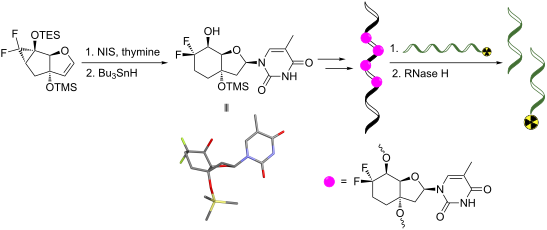
- ]. The β-orientation of the fluorine substituent in F-ANA leads to a gauche interaction between O4’–C1’–C2’–F2’ favouring the C2’-endo/O4’-endo conformations of the sugar in solution [16][17]. These DNA-like sugar conformations cause that F–ANA is among the few modifications which can trigger the
- obtained crystal structure of derivative 6 (Table S1, Supporting Information File 1). The reason for that can be attributed to the different conformations of the six-membered rings in these two structures. Apart from that, the two structures were very similar. Synthesis of the modified oligonucleotides and
- intensities were changed, too. Furthermore, the intensity of the 210 nm peak was reduced. RNase H cleavage assay The most important requirement for an antisense oligonucleotide to induce RNase H activity lies in its DNA-like sugar conformations [49]. This is generally fulfilled by the 6’-diF-bc4,3-DNA as well


6’-Fluoro[4.3.0]bicyclo nucleic acid: synthesis, biophysical properties and molecular dynamics simulations
Beilstein J. Org. Chem. 2018, 14, 3088–3097, doi:10.3762/bjoc.14.288
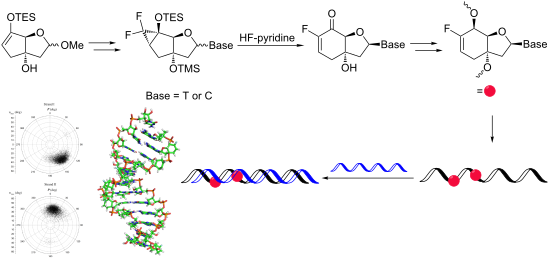
- Information File 1) was in the same range (C1’-exo, C2’-endo) as described above for the hybrid duplexes. The backbone torsion angles of the homo-duplex exhibited identical conformations in both strands (Figure S4, Supporting Information File 1). Some variations in the torsion angle ζ (−sc to +ac) and the


Unnatural α-amino ethyl esters from diethyl malonate or ethyl β-bromo-α-hydroxyiminocarboxylate
Beilstein J. Org. Chem. 2018, 14, 2853–2860, doi:10.3762/bjoc.14.264
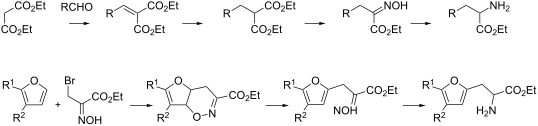
- explanation for these average yields could be the occurrence upon the base reaction with compound 47 of cis and trans conformations of the nitrosoacrylate. The cis one would be susceptible to undergo an immediate [2 + 4] cycloaddition with the furan whereas the trans form would not, and since the


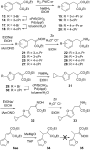

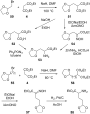
Synthesis of 3-aminocoumarin-N-benzylpyridinium conjugates with nanomolar inhibitory activity against acetylcholinesterase
Beilstein J. Org. Chem. 2018, 14, 2545–2552, doi:10.3762/bjoc.14.231
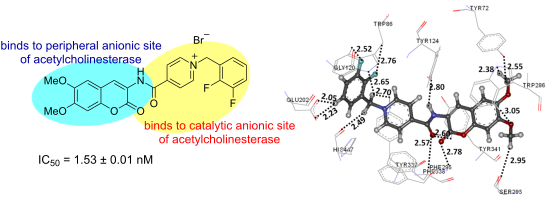
- suitable method for the binding mode of compounds in the rhAChE binding site. The docked conformations of donepezil and the synthesized compounds are shown in Figure 2. All docked compounds were located similar to donepezil in the binding pocket. The benzylpyridinium moiety was bound close to the CT and
- interaction to Trp86 in the CAS. Their conformations were slightly shifted up from Trp86 to form stronger a H-bond interaction between the 2-fluoro-substituent and a hydrogen atom of the β-carbon, thereby causing the slight shift of the remaining parts of the structures. For instance, the methoxy group of the
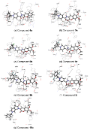
- -substituents, compound 9a does not form a H-bond interaction to Trp86, which explains the lower activity of compound 9a compared with compound 9h. For compounds 4a (Figure 3a) and 10a (Figure 3g), the docked conformations were partially different from the other compounds. In the case of 4a, having no methoxy



Calixazulenes: azulene-based calixarene analogues – an overview and recent supramolecular complexation studies
Beilstein J. Org. Chem. 2018, 14, 2488–2494, doi:10.3762/bjoc.14.225
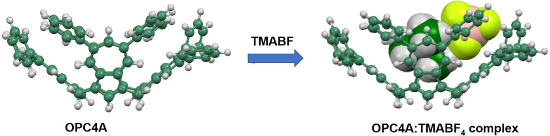
- determinations were made on the possible major conformations, based upon those previously defined in reference [20]. Three distinct conformations (saddle, cone and 1,2-alternate) shown in Figure 2, were generated. Significantly, whereas for 3 which was based upon its X-ray structure, a partial cone conformer
- columnar arrays [17]. In this type of array the host molecules which are in 1,3-alternate conformations align in a “head-to-tail” fashion with the C60 molecules able to be accommodated within the opposite clefts. Furthermore, within such an arrangement, in addition to the “face-to-face” π–π interactions
- for the three different conformations of 5. Supporting Information Supporting Information File 355: Experimental determination of binding constants and DFT calculations. Supporting Information File 356: MOL files. Acknowledgements This project was supported by King Saud University, Deanship of


Synthesis of eunicellane-type bicycles embedding a 1,3-cyclohexadiene moiety
Beilstein J. Org. Chem. 2018, 14, 2461–2467, doi:10.3762/bjoc.14.222
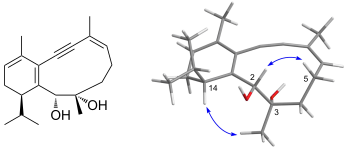
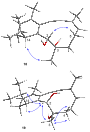
- , those conformations are within 10 kJ/mol range of each other. However, only one of those conformations shows the required short distance between 14-H and 3-CH3, making the configuration (2R,3S,14R) probable for diastereomer 18. In the preferred conformation of 18, all non-sp3-hybridized carbon atoms of
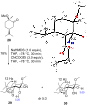
- -containing 8 adopts two distinct major conformations in CDCl3, whereas diastereomeric diols 18 and 19 prefer only one, which were elucidated by NOESY spectroscopy. In upcoming studies we will address the synthesis of systems that contain a cyclohexene ring keeping the sp2–sp2 bridge of the product from the
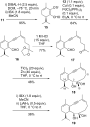
- benzene partial structure. Preferred conformations of diastereomeric diols 18 and 19 including decisive NOESY correlations. Access to ketoester 14 that did not cyclize to the ethyl vinyl ether under McMurry conditions. Synthesis of the 1,3-cyclohexadiene-containing eunicellane-type [8.4.0]bicycle 18 by





Nucleoside macrocycles formed by intramolecular click reaction: efficient cyclization of pyrimidine nucleosides decorated with 5'-azido residues and 5-octadiynyl side chains
Beilstein J. Org. Chem. 2018, 14, 2404–2410, doi:10.3762/bjoc.14.217
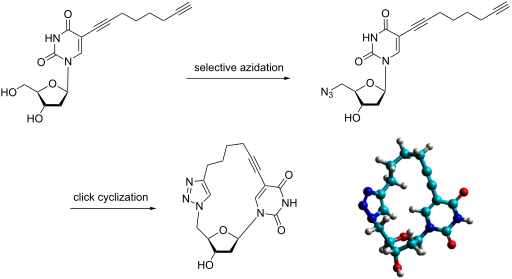
- conformations of the 5’-azido compounds 7 and 2 as well as dC macrocycle 4 were investigated in solution. To this end, high resolution spectra (600 MHz NMR) were measured in DMSO-d6 and the population of S vs N conformers (Supporting Information File 1, Table S2) were calculated using the program PSEUROT


Tetrathiafulvalene – a redox-switchable building block to control motion in mechanically interlocked molecules
Beilstein J. Org. Chem. 2018, 14, 2163–2185, doi:10.3762/bjoc.14.190
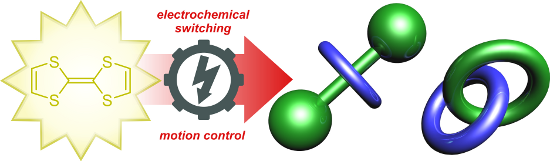
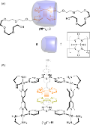
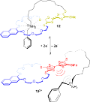
- arrangement. Starting from the pre-assembled catenane, the axle molecule is threaded through the wheel and end-capped by a copper-catalyzed click reaction. A variety of different spectroscopic and electrochemical methods was applied to reveal the switching behavior of 24 and its stable co-conformations in
- motion, a circumrotation and a translational motion, must occur. The equilibrium between these two co-conformations of 242(●+) was determined to be approximately 1:1. Further oxidation drives the equilibrium completely to the side of the co-conformation in which both dihydroxynaphthalene units are
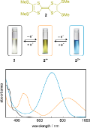
- ′-bipyridinium radical cation which forms a purple trisradical complex with the doubly reduced cyclobis(paraquat-p-phenylene). Electrochemical and several spectroscopic techniques showed that, overall, six stable oxidation states – each of them with a unique color – and three co-conformations are accessible in











Calix[6]arene-based atropoisomeric pseudo[2]rotaxanes
Beilstein J. Org. Chem. 2018, 14, 2112–2124, doi:10.3762/bjoc.14.186
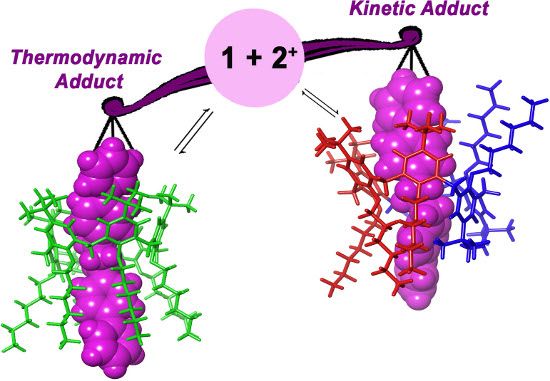
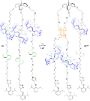
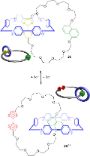
- different conformations adopted by the wheel are reported here. Upon threading hexahexyloxycalix[6]arene 1 with ammonium axles 2+ or 3+, bearing biphenyl or trifluoromethylbenzyl moieties, respectively, two atropoisomeric pseudorotaxanes were formed in which the calix[6]-wheel 1 adopts the 1,2,3-alternate
- and cone conformations. The interconversion between them cannot be obtained by simple rotation around the ArCH2Ar bonds of the calixarene wheel, which is blocked by the presence of the axle inside its cavity. Therefore, it can only be obtained through a mechanism of de-threading/re-threading of the
- catalysis [24]. The widespread use of the calixarene derivatives is due to their convenient synthesis and to their chemical and conformational versatility [25]. In fact, calixarene macrocycles present a conformational isomerism that in the case of calix[6]arenes gives rise to eight discrete conformations


![[Graphic 2]](/bjoc/content/inline/1860-5397-14-186-i3.svg?max-width=637&scale=1.18182) 1cone and 2+
1cone and 2+


A pyridinium/anilinium [2]catenane that operates as an acid–base driven optical switch
Beilstein J. Org. Chem. 2018, 14, 1908–1916, doi:10.3762/bjoc.14.165
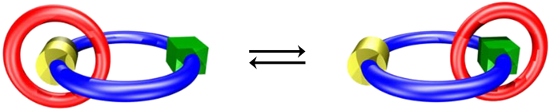
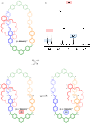
- sites and these two possible co-conformations are designated A and B in Figure 4a. The ethylene protons at the core of the bis(pyridinium)ethane motif, labelled s and t in A and s’ and t’ in B are clearly distinguishable and show that there is a 4:1 ratio of A:B indicating that the smaller DB24C8 ring
- crown resides solely on the bis(pyridinium)ethane site for [8DB24C8]6+ but, when the [2]catenane does not absorb in the UV–visible region yielding a colorless solution this means the crown ether must be shuttling (i.e., circumrotating) back and forth between the two co-conformations, A and B, of [8
- + can be protonated to yield [8-HDB24C8]7+ in two different co-conformations A and B. b) The partial 1H NMR spectrum (500 MHz, 298 K, CD3CN) of [8-HDB24C8]7+ shows key resonances for both co-conformations A (red) and B (blue). See Scheme 1 for labelling; atoms of co-conformer B are labelled with a prime


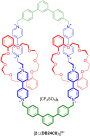

![[Graphic 3]](/bjoc/content/inline/1860-5397-14-165-i4.svg?max-width=637&scale=0.827274) DB24C8]6+ containing benzylanilinium and bis(pyridinium)ethane...
DB24C8]6+ containing benzylanilinium and bis(pyridinium)ethane...


Diazirine-functionalized mannosides for photoaffinity labeling: trouble with FimH
Beilstein J. Org. Chem. 2018, 14, 1890–1900, doi:10.3762/bjoc.14.163
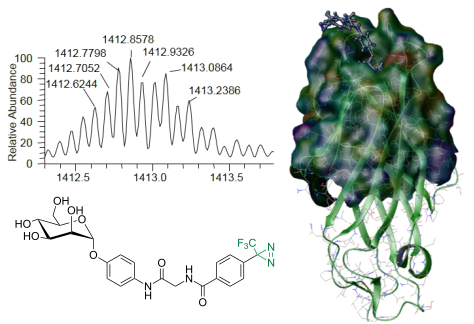
- carbohydrate binding site. They are flexible and can be more distant to one another (“open gate”) or closer together (“closed gate”) [20]. Both conformations were considered for the docking studies. For each docked conformation, a scoring value is obtained that correlates with the affinity of the ligand to the
- carbohydrate binding site. A more negative value predicts better binding. Scores obtained for mannosides 3 and 4 suggest a high affinity for FimH, surpassing that of pNPMan 1 for both protein conformations tested (Table 1). (Diazirines cannot be tested in bacterial adhesion–inhibition assays due to their light




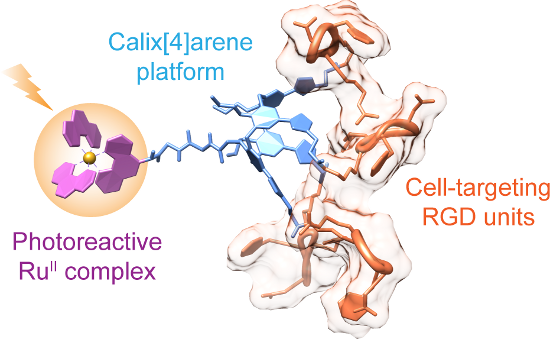
Synthesis and photophysical studies of a multivalent photoreactive RuII-calix[4]arene complex bearing RGD-containing cyclopentapeptides
Beilstein J. Org. Chem. 2018, 14, 1758–1768, doi:10.3762/bjoc.14.150
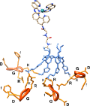
- of a neighboring ‘arm’; (ii) H-bonds between arginine terminal N–H and C=O of the peptide bond of phenylalanine of an adjacent cyclic pentapeptide (see Supporting Information File 1), yielding adjacent cyclic pentapeptides in close proximity for a large set of conformations. This separation between
- this large molecule, the conformations reported here represent relaxed geometries showing possible intermolecular contacts between the cyclic pentapeptides. The analysis and visualization of MD simulations were carried out using DS BIOVIA and Chimera [84] software. Targeted multivalent phototherapeutic





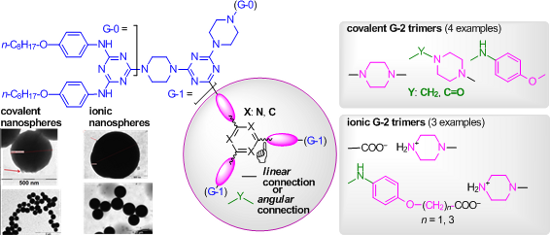
Design, synthesis and structure of novel G-2 melamine-based dendrimers incorporating 4-(n-octyloxy)aniline as a peripheral unit
Beilstein J. Org. Chem. 2018, 14, 1704–1722, doi:10.3762/bjoc.14.145
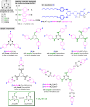
- (IEFPCM) and considering DMSO (ε = 46.826) as the solvent environment; the total electronic energies of the anti–anti conformations were taken as the reference value.
Free energies of solvation (ΔG) of compounds 2a, 3, D-Cl and D-N
NH were calculated at the M06-2X/def2-TZVP level of theory (solvent




Natural and redesigned wasp venom peptides with selective antitumoral activity
Beilstein J. Org. Chem. 2018, 14, 1693–1703, doi:10.3762/bjoc.14.144
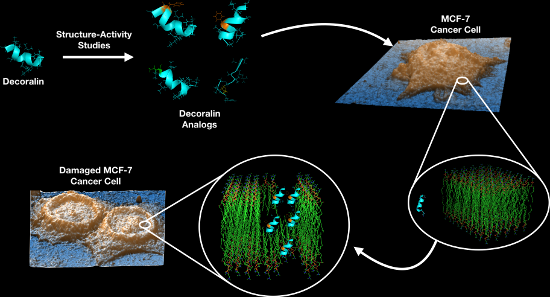
- electrostatic interactions, after which they tend to adopt helical conformations, which causes cell membrane permeabilization or even membrane disruption that may lead to necrosis [33]. These peptides may also be internalized into the cell, leading to the disruption of the mitochondrial membrane and causing


The phenyl vinyl ether–methanol complex: a model system for quantum chemistry benchmarking
Beilstein J. Org. Chem. 2018, 14, 1642–1654, doi:10.3762/bjoc.14.140
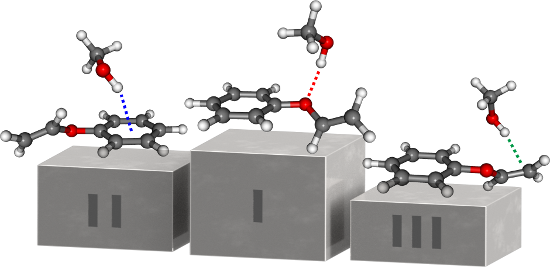
- linearity of the technique and the comparable IR absorption cross section of all predicted dimer conformations (cf. Table 1 and Table S1, Supporting Information File 1): the global minimum structure and any other, higher lying isomers which are initially formed and impeded from relaxation to the global


A conformationally adaptive macrocycle: conformational complexity and host–guest chemistry of zorb[4]arene
Beilstein J. Org. Chem. 2018, 14, 1570–1577, doi:10.3762/bjoc.14.134
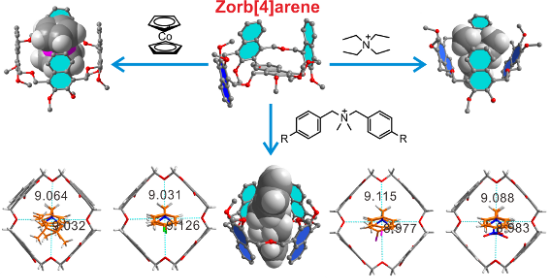
- binding behavior of ZB4 and lays the basis for the construction of stimuli-responsive materials with ZB4 as a major component. Keywords: conformations; host–guest chemistry; macrocycles; supramolecular chemistry; zorb[4]arene; Introduction Macrocyclic receptors are the principal workhorses used in
- solutions and the different conformations in the solid state may result from the packing of the different lower-rim alkyl groups. For the conformers with cavities (Scheme 1b), three out of the four have been predominantly selected by three different guests. For example, guests 2+ and 3+ induced conformers
- IV and III, respectively, to achieve optimal binding [37]. This has been unambiguously confirmed by X-ray single crystallography (Figure 1b and 1c). Guest 10+ is a strong binder and its induction on the conformations of ZB4 was further analyzed. The guest exchange in solution of 10+@ZB4 is fast


Phosphoramidite building blocks with protected nitroxides for the synthesis of spin-labeled DNA and RNA
Beilstein J. Org. Chem. 2018, 14, 1563–1569, doi:10.3762/bjoc.14.133
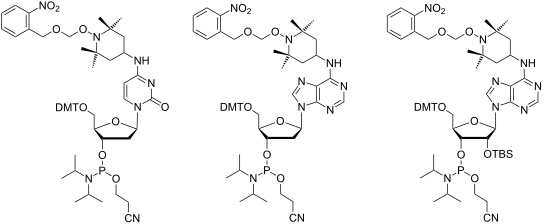
- ; Introduction EPR spectroscopy is well established to study the structure and dynamics of nucleic acids [1][2][3][4][5][6][7][8]. Although the information attainable by EPR is less detailed when compared to NMR, it is often complementary. While local conformations are normally obtained from NMR data, EPR can