


Search results
Search for "diastereoselectivity" in Full Text gives 403 result(s) in Beilstein Journal of Organic Chemistry. Showing first 200.
Indium-mediated C-allylation of melibiose
Beilstein J. Org. Chem. 2019, 15, 2458–2464, doi:10.3762/bjoc.15.238
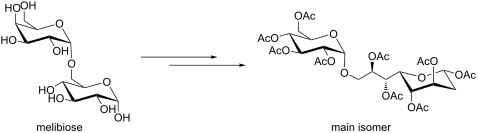
- concerning their effects on the conversion rate as well as the diastereoselectivity (Table 1). Concerning the metal species, it is known that indium provides several advantages compared to other allylation-mediating metals such as tin, as it allows the reaction to proceed under very mild conditions without
- -syn. However, the main species, 5-anti-β was obtained in 60% from this mixture (Figure 2). Conclusion For the first time, an indium-mediated allylation reaction was employed with a disaccharide, melibiose (Galpα1-6Glc, 1), as substrate, achieving good diastereoselectivity and excellent yields. Best


Application of chiral 2-isoxazoline for the synthesis of syn-1,3-diol analogs
Beilstein J. Org. Chem. 2019, 15, 1840–1847, doi:10.3762/bjoc.15.179
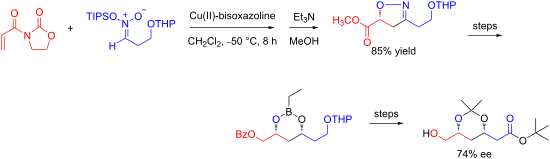
- diastereoselectivity (syn:anti >99:1) during the reduction. To unambiguously determine the diastereomeric ratio, the anti-1,3-diol corresponding to 10 was prepared from 7 by RuCl3–PPh3-catalyzed hydrogenation [63][64]. However, the two diastereomers had identical proton NMR spectra. The terminal hydroxy group of 10


N-(1-Phenylethyl)aziridine-2-carboxylate esters in the synthesis of biologically relevant compounds
Beilstein J. Org. Chem. 2019, 15, 1722–1757, doi:10.3762/bjoc.15.168

- diastereoselectivity of the addition of phenyllithium to the aldehyde (2S,1'R)-6 exceeded 80% and the major aziridine alcohol (2S,1'S,1''R)-28 could be separated chromatographically [29]. When (2S,1'S,1''R)-28 was hydrogenated in the presence of Boc2O N-protected (−)-norpseudoephedrine (1S,2S)-(+)-29 was obtained. To
- mixture of diastereoisomeric alcohols (2S,1'R,1''R)-78 and (2S,1'S,1''R)-78 with low (up to 33%) diastereoselectivity readily separable chromatographically. The sphingolipid analogue SG-14 (2S,3S)-84 was obtained from (2S,1'S,1''R)-78 as already described (Scheme 21) and was found to inhibit hSphK2 with
- secured in the starting aldehyde introduction of the two others required cis-dihydroxylation of the Z-alkene 111. The highest diastereoselectivity (99:1) was observed at −10 °C providing the aziridine diol (2S,1'S,2'R,1''R)-112 as a major diastereoisomer. The regioselective aziridine ring opening combined


Enantioselective PCCP Brønsted acid-catalyzed aza-Piancatelli rearrangement
Beilstein J. Org. Chem. 2019, 15, 1569–1574, doi:10.3762/bjoc.15.160
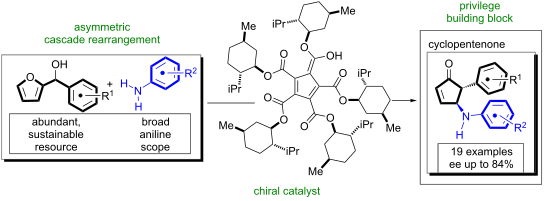
- a trans relationship between the C4 and C5 substituents [13][14][15]. It is believed that the 4π conrotatory electrocyclization step that converts the pentadienyl cation 5 into the corresponding cyclopentenone adduct 6 is responsible for controlling the relative diastereoselectivity in this cascade


Synthesis of non-racemic 4-nitro-2-sulfonylbutan-1-ones via Ni(II)-catalyzed asymmetric Michael reaction of β-ketosulfones
Beilstein J. Org. Chem. 2019, 15, 1289–1297, doi:10.3762/bjoc.15.127
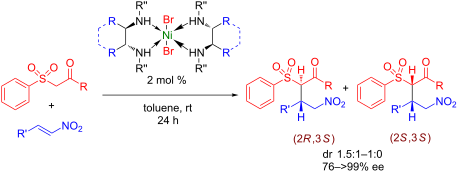
- catalytic Michael reaction itself was carried out with high diastereoselectivity, but the Michael adducts may epimerize at the C-2 position at a significant rate. Conditions for the preparation of individual diastereomers were found. Keywords: asymmetric catalysis; chiral diamine ligands; ketosulfones
- that the reaction of β-keto phosphonates with nitroalkenes in the presence of Ni(II) complexes with chiral vicinal diamines was carried out not only with excellent enantioselectivity, but also diastereoselectivity [55]. Moreover, β-keto sulfoxides react with nitroalkenes under catalysis by Ni(II
- -ketosulfone 5a was carried out with moderate to high enantioselectivity but low diastereoselectivity and led to the formation of two diastereomers (2R,3S)-8a and (2S,3S)-9a. Since we did not succeed in growing a crystal that was suitable for X-ray determination of the absolute configuration of 8а, we defined




Steroid diversification by multicomponent reactions
Beilstein J. Org. Chem. 2019, 15, 1236–1256, doi:10.3762/bjoc.15.121
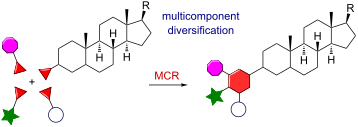
- , the authors found a high diastereoselectivity in the Ugi-4CR conducted with a carbonyl linked at C-17, a sterically crowed position very close to the axial methyl group placed of C-13. This step was implemented as part of the synthetic route toward steroidal 2,5-diketopiperazine 6, based on a strategy
- carbonyl is far away from the rigid chiral steroid, the Ugi reaction shows no significant diastereoselectivity, while the carbonyl component directly linked to the bulky steroidal nucleus – especially in α-position of a stereocenter – provides a very good diastereocontrol in the MCR. Dar et al. [18
- displaying biological activities such as antimicrobial, antiviral and anti-inflammatory, among others. Scheme 3 exemplifies the reaction of cholestan-6-one 7 with 2-aminopyridine and phenyl isocyanide to afford the heterocycle–steroid hybrid 8 in good yield and diastereoselectivity, whereas different


Ugi reaction-derived prolyl peptide catalysts grafted on the renewable polymer polyfurfuryl alcohol for applications in heterogeneous enamine catalysis
Beilstein J. Org. Chem. 2019, 15, 1210–1216, doi:10.3762/bjoc.15.118
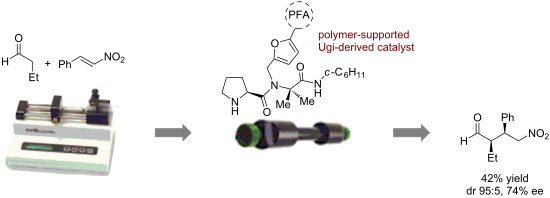
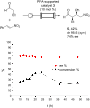
- polyfurfuryl alcohol-supported catalysts for applications in heterogeneous enamine catalysis. The utilization of the polymer-supported catalysts in both batch and continuous-flow organocatalytic procedures proved moderate catalytic efficacy and enantioselectivity, but excellent diastereoselectivity in the
- amine and the enantio- and diastereoselectivity of the catalytic process. In this case, furfuryl derivatives – used either as amine or isocyanide component – were ligated [16] to the peptide skeleton aimed at assessing whether the position of the polymerizable handle was important for the
- ) due to the lack of the catalytic pyrrolidine moiety. On the other hand, PFA-supported catalysts 3 and 4 gave moderate to good yields depending on the solvent used. In general, polymeric catalyst 3 provided a better yield, enantio- and diastereoselectivity in the Michael adduct than 4 in all tested


Alkylation of lithiated dimethyl tartrate acetonide with unactivated alkyl halides and application to an asymmetric synthesis of the 2,8-dioxabicyclo[3.2.1]octane core of squalestatins/zaragozic acids
Beilstein J. Org. Chem. 2019, 15, 1194–1202, doi:10.3762/bjoc.15.116
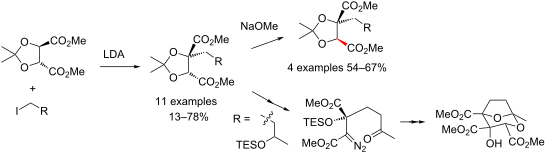
- alkylating agent, which leads to the improved diastereoselectivity [43]. The trans stereochemistry assignment for the dialkylated products 34 follow from the observed equivalence of the acetonide methyl groups in all their proton and carbon NMR spectra. In Seebach's original studies, which established


Multicomponent reactions (MCRs): a useful access to the synthesis of benzo-fused γ-lactams
Beilstein J. Org. Chem. 2019, 15, 1065–1085, doi:10.3762/bjoc.15.104
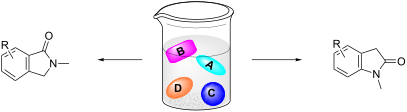
- chiral amines, very low diastereoselectivity was obtained, probably due to the harsh reaction conditions employed. In addition to carbonyl and carboxyl derivatives, pyridine was also used successfully as an electron-withdrawing group (EWG) in the Michael acceptor 105. A simple control experiment allowed






Stereo- and regioselective hydroboration of 1-exo-methylene pyranoses: discovery of aryltriazolylmethyl C-galactopyranosides as selective galectin-1 inhibitors
Beilstein J. Org. Chem. 2019, 15, 1046–1060, doi:10.3762/bjoc.15.102
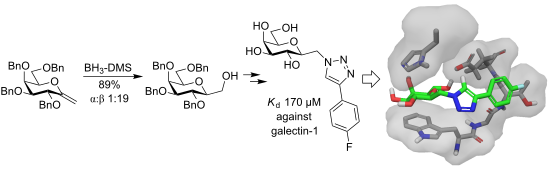
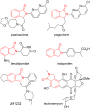
- dichloromethane (3 × 150 mL) after which the organic phases were pooled, dried with anhydrous sodium sulfate, filtered, and evaporated. The crude was purified with column chromatography (heptane/ethyl acetate 1:1) to give 3 (3.38 g, 89%) as a clear, viscous oil. The diastereoselectivity was determined to be α:β 1
- , 78%) as a clear, viscous oil. The diastereoselectivity was determined to be α:β 1:99 by HPLC, using the same protocol as is used for purity determinations. The stereochemistry of the β diastereomer, the only one isolated, was assigned using NOESY. [α]D20 −37 (c 0.1, CH3CN); 1H NMR (400 MHz, CDCl3) δ
- mg of 7 α/β-mixture as clear and viscous oils. The diastereoselectivity was determined to be α:β 1:2.3 by HPLC using the same protocol as is used for purity determinations. The stereochemistry was assigned using NOESY. Data for α-7: [α]D20 52 (c 0.2, CH3CN); 1H NMR (400 MHz, acetone-d6) δ 7.44–7.24



Catalytic asymmetric oxo-Diels–Alder reactions with chiral atropisomeric biphenyl diols
Beilstein J. Org. Chem. 2019, 15, 955–962, doi:10.3762/bjoc.15.92
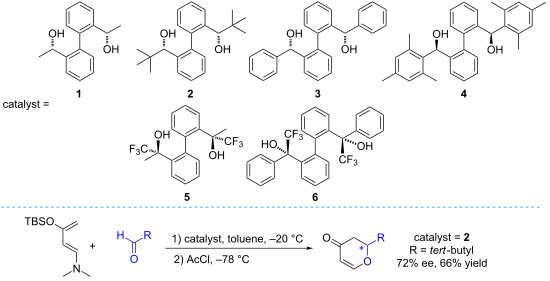
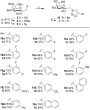
- Information File 1). Homo-coupling of (S)-b with Ni(COD)2 was achieved with very high diastereoselectivity and only a single atropisomer was formed. The X-ray crystal structure showed that it is (M)-(S,S)-3 (Figure 1). This high atropstereoselectivity is believed to be due to the energetically unfavorable


An efficient synthesis of the guaiane sesquiterpene (−)-isoguaiene by domino metathesis
Beilstein J. Org. Chem. 2019, 15, 858–862, doi:10.3762/bjoc.15.83
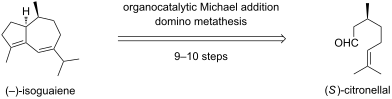
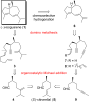
- olefin 14 delivered aldehyde 4 with considerably higher efficiency compared to the known six-step preparation of ent-4 from (−)-menthone [21]. Asymmetric Michael addition [7][8][10] of aldehyde 4 to methyl vinyl ketone (15) proceeded with high catalyst-controlled diastereoselectivity (dr = 23:1) to yield




A diastereoselective approach to axially chiral biaryls via electrochemically enabled cyclization cascade
Beilstein J. Org. Chem. 2019, 15, 795–800, doi:10.3762/bjoc.15.76
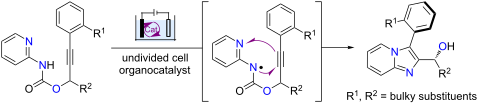
- imidazopyridine-containing biaryls via central-to-axial chirality transfer (Scheme 1). Results and Discussion The substituents on the phenyl ring (R1) and at the propargylic position (R2) of carbamate 2 were varied to study their effects on the diastereoselectivity (Table 1). The electrolysis was conducted under
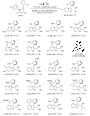
- imidazopyridine-based biaryl 3a in 68% yield with good diastereoselectivity (14:1 dr). Replacing the t-Bu group at the propargylic position with iPr (Table 1, entry 2) or on the phenyl ring with Ph (Table 1, entry 3) or OiPr (Table 1, entry 4) all resulted in low diastereoselectivity (2:1 to 3:1). The scope of
- tolerated albeit with reduced diastereoselectivity. The t-Bu group on the phenyl ring and at the propargylic position could be replaced with other bulky tertiary substituents to afford a range of functionalized biaryl products (3p–w). The electrochemical conditions were compatible with several functional




Diastereo- and enantioselective preparation of cyclopropanol derivatives
Beilstein J. Org. Chem. 2019, 15, 752–760, doi:10.3762/bjoc.15.71
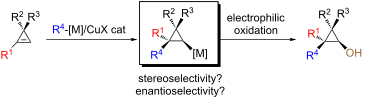
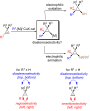
- achieve good diastereoselectivity during the carbometalation reaction, few conditions needed to be fulfilled in the design of the starting cyclopropenyl ring (Figure 1): The presence of a coordinating group (such as an oxygen) at the C3 position is crucial for the selective facial addition of the incoming
- different types of cyclopropene precursors. We concentrated our efforts on the reaction of diversely substituted 3-methyl-3-arylcyclopropenes 6. In this case, as there is no coordinating functionality to dictate the facial selectivity, the control of the diastereoselectivity may be more challenging




A chemoenzymatic synthesis of ceramide trafficking inhibitor HPA-12
Beilstein J. Org. Chem. 2019, 15, 490–496, doi:10.3762/bjoc.15.42
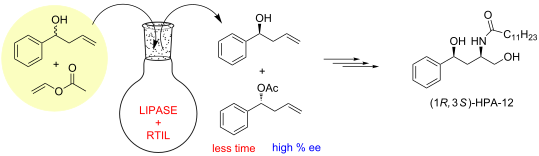
- -alcohol [53]. However, unlike in our case, the reaction proceeded with poor diastereoselectivity irrespective of the dihydroxylating agent used. To confirm the 1,3-anti diol stereochemistry of 7a, it was debenzylated using DDQ/CH2Cl2–H2O to furnish the trihydroxy compound 7a'. The 1H and 13C NMR spectra


Tandem copper and photoredox catalysis in photocatalytic alkene difunctionalization reactions
Beilstein J. Org. Chem. 2019, 15, 351–356, doi:10.3762/bjoc.15.30
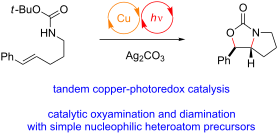
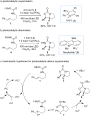
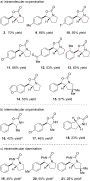
- ]. Subsequent oxidation of radical 7 by Cu(II) affords a formally cationic intermediate that is trapped by the carbamoyl oxygen to afford oxonium 8. The loss of the tert-butyl cation provides the oxyamination product 2, which can be isolated in good yields with excellent diastereoselectivity. Turnover of the

Sigmatropic rearrangements of cyclopropenylcarbinol derivatives. Access to diversely substituted alkylidenecyclopropanes
Beilstein J. Org. Chem. 2019, 15, 333–350, doi:10.3762/bjoc.15.29
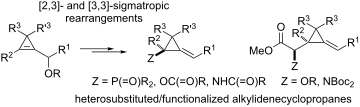
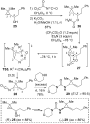
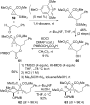
- -position of the aromatic group at C3 significantly affected the diasteomeric ratio with an increase observed with the mesomeric donor methoxy group in favor of diastereomer 7b (7b/7’b = 78:22) compared to 7a/7’a, and a drop of diastereoselectivity when a fluorine atom (7c/7’c = 60:40) or a hydrogen atom
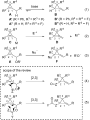
- diastereoselectivity. However, the sigmatropic rearrangement of the highly hindered di(tert-butyl)phosphinite 6j and tetra(isopropyl) phosphorodiamidite 6k did not occur (Scheme 7) [37]. The mechanism proposed by Rubin et al. involves a reversible addition of the Lewis base (DBU) on the cyclopropene double bond at C2
- activation barriers of the reactions leading to 8 and 8’, regardless of the aromatic substituent. Since 8 and 8’ were in rapid equilibrium with phosphinite 6, the diastereoselectivity should depend on the relative stabilities of the transition states TS1 and TS’1. An electron-donating group at the para







Synthesis of 1,2-divinylcyclopropanes by metal-catalyzed cyclopropanation of 1,3-dienes with cyclopropenes as vinyl carbene precursors
Beilstein J. Org. Chem. 2019, 15, 285–290, doi:10.3762/bjoc.15.25

- proceeded in reasonable yields while the diastereoselectivity strongly depends on the structure of the diene. An example of an intramolecular process as well as the use of furan and 1,4-cyclohexadiene as dienes are also reported. Keywords: cyclopropanation; cyclopropenes; dienes; divinylcyclopropanes




Synthesis of nonracemic hydroxyglutamic acids
Beilstein J. Org. Chem. 2019, 15, 236–255, doi:10.3762/bjoc.15.22
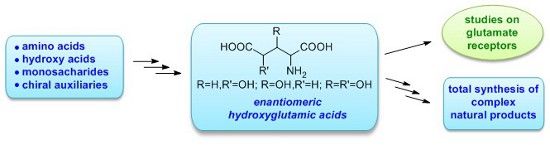
- carbonyl group. Thus, when compound 40 prepared using readily available (S)-(+)-ketopinic acid was reacted with phenylselenyl chloride in methanol the adduct 41 was formed with high diastereoselectivity (de 96%) and was later separated chromatographically. Further transformations into dimethyl ester of (2S
- electrophilic hydroxylation at C4 When the lithium enolate of dimethyl N-Cbz-L-glutamate 63 was treated with Davis oxaziridine, an inseparable 9:1 mixture of diastereoisomers was formed with (2S,4S)-64 predominating (Scheme 16) [74]. For sodium and potassium enolates diastereoselectivity of the hydroxylation


Gold-catalyzed ethylene cyclopropanation
Beilstein J. Org. Chem. 2019, 15, 67–71, doi:10.3762/bjoc.15.7
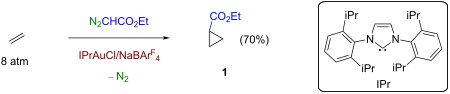
- exquisite control of chemo-, enantio- and/or diastereoselectivity being achieved [1][2]. Previous developments have involved a large number of C=C-containing substrates but, to date, the methodology has not been yet employed with the simplest olefin, ethylene, for synthetic purposes [3]. Since diazo


Ruthenium-based olefin metathesis catalysts with monodentate unsymmetrical NHC ligands
Beilstein J. Org. Chem. 2018, 14, 3122–3149, doi:10.3762/bjoc.14.292
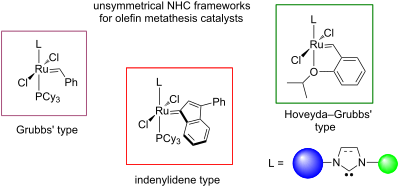
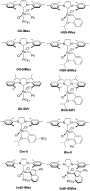
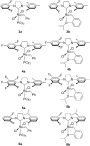
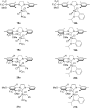
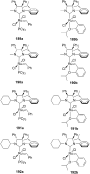
- improve E/Z selectivity in CM reactions and diastereoselectivity in RCM reactions altering the environment of key metathesis intermediates. Complexes 24 and 25 were found to exist in solution as a single rotational isomer having the benzylidene moiety located under the mesityl group, and for complexes 24b











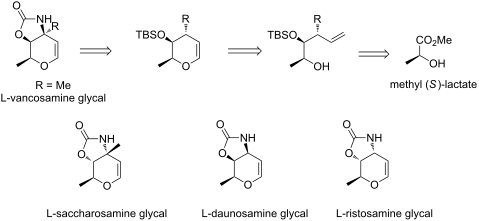
Stereodivergent approach in the protected glycal synthesis of L-vancosamine, L-saccharosamine, L-daunosamine and L-ristosamine involving a ring-closing metathesis step
Beilstein J. Org. Chem. 2018, 14, 2949–2955, doi:10.3762/bjoc.14.274
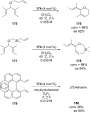
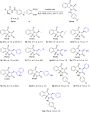
- ) [35]. Indeed, the reaction of achiral pinacol (Z)-crotylboronate with 5 under neat conditions at room temperature gave a good level of diastereoselectivity for the hitherto unreported 3,4-syn-2,3-anti product 12b [36][37][38][39]. The syn relationship between C3 and C4 is controlled by the (Z


Green synthesis of new chiral 1-(arylamino)imidazo[2,1-a]isoindole-2,5-diones from the corresponding α-amino acid arylhydrazides in aqueous medium
Beilstein J. Org. Chem. 2018, 14, 2923–2930, doi:10.3762/bjoc.14.271
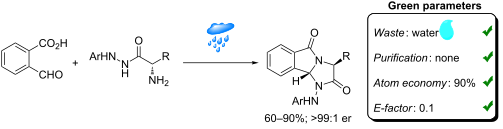
- state becomes unlikely and then the selectivity is important. Our model is in agreement with the diasteroisomeric ratio results. In fact, a total diastereoselectivity was observed, including 5d (R = Ph) since an epimerization of the initial asymmetric center was observed, therefore racemic trans-isomers
- observed with a total trans-diastereoselectivity controlled by intramolecular hydrogen bonds. Chemical structures of analogues. NOEs correlation showing the stereochemistry of the compound 5a. X-ray crystal structure of 5f shown at the 30% probability level. Strategy for the formation of 1-(arylamino)-1H




Synthesis of α-D-GalpN3-(1-3)-D-GalpN3: α- and 3-O-selectivity using 3,4-diol acceptors
Beilstein J. Org. Chem. 2018, 14, 2805–2811, doi:10.3762/bjoc.14.258
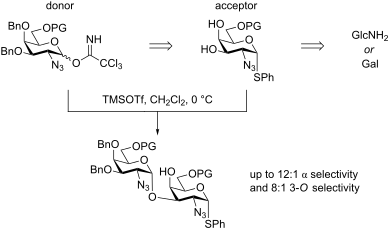
- acceptors and donors are made from common building blocks, limiting protective manipulations, and in this context, unavoidable side reactions. Keywords: diastereoselectivity; glycosylation; regioselectivity; Introduction The disaccharide α-D-GalpNAc-(1-3)-β-D-GalpNAc is a widespread motif in glycobiology


Synthesis of cis-hydrindan-2,4-diones bearing an all-carbon quaternary center by a Danheiser annulation
Beilstein J. Org. Chem. 2018, 14, 2597–2601, doi:10.3762/bjoc.14.237

- stereoselectivity of the ring-formation step can be explained by the suprafacial addition of the allene to the double bond of the α,β-unsaturated compound 4, the diastereoselectivity being sterically controlled by the methyl group on the β-face. The transformation of the vinylsilane moiety in 5 into the





