Search results
Search for "molecular structure" in Full Text gives 395 result(s) in Beilstein Journal of Organic Chemistry. Showing first 200.
Identification of optimal fluorescent probes for G-quadruplex nucleic acids through systematic exploration of mono- and distyryl dye libraries
Beilstein J. Org. Chem. 2019, 15, 1872–1889, doi:10.3762/bjoc.15.183
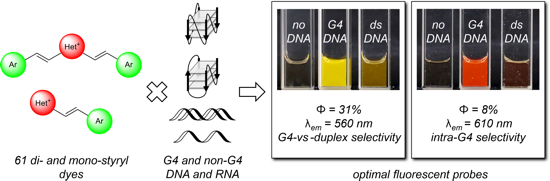
- common feature of mono- and distyryl dyes, including long-known mono-styryl dyes used as mitochondrial probes or protein stains. However, the magnitude of the G4-induced “light-up” effect varies drastically, as a function of both the molecular structure of the dyes and the nature or topology of G4
- to the molecular structure of dyes, it may be concluded that lipophilic substituents (1c, 1d, 1ð, 1y, 1Þ) and/or π-expanded heterocyclic cores (9a, 10a, 12a, 14p) promote the dye aggregation, but the nature of the resulting aggregate (H vs J) is unpredictable. Conversely, small or hydrophilic
- solvents (MeOH, DMSO) and in aqueous buffer, as assessed by visual inspection of the respective solutions. In non-aggregating conditions, the influence of the molecular structure of the dyes on their absorption bands can be clearly observed. Thus, when Ar contains poor electron-donating substituents (1g–1j







Cyclobutane dication, (CH2)42+: a model for a two-electron four-center (2e-4c) Woodward–Hoffmann frozen transition state
Beilstein J. Org. Chem. 2019, 15, 1475–1479, doi:10.3762/bjoc.15.148
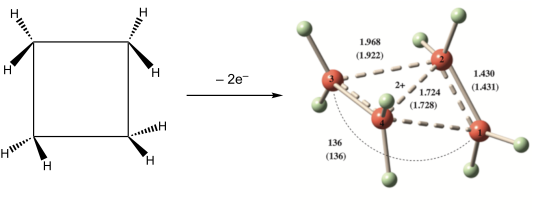
- . This type of bonding could occur in rigid frameworks such as in 1,3-dehydro-5,7-adamantanediyl dication (iii) [7] and pagodane dication (iv) [8]. The question is can a 2e-4c bond exist in a molecular structure involving four atoms without any rigid frameworks such as in the diprotonated hydrogen (H42


One-pot activation–alkynylation–cyclization synthesis of 1,5-diacyl-5-hydroxypyrazolines in a consecutive three-component fashion
Beilstein J. Org. Chem. 2019, 15, 1360–1370, doi:10.3762/bjoc.15.136
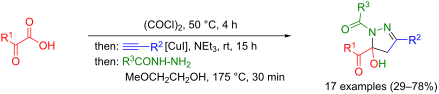
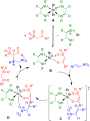
- intermediate 5a could be a 1,5-diacylpyrazole. However, upon performing the terminal cyclization step starting from 1,4-diphenylbut-3-yne-1,2-dione (3a) and Boc-hydrazine (4a) under identical conditions 1-Boc-5-benzoyl-5-hydroxypyrazoline was isolated in 83% yield (Scheme 3). The molecular structure was


Formation of an unexpected 3,3-diphenyl-3H-indazole through a facile intramolecular [2 + 3] cycloaddition of the diazo intermediate
Beilstein J. Org. Chem. 2019, 15, 1347–1354, doi:10.3762/bjoc.15.134
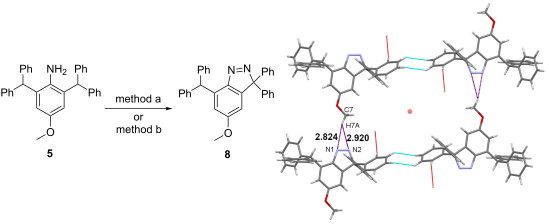
- (H···H = 2.48 Å) there is also a linear C6D–H6D···H6D–C6D close contact (H···H = 2.37 Å) around a further inversion centre. These two motifs alternate along the a axis to produce infinite hydrocarbon tapes with inversion centres separated by a/2 (Figure 6). The molecular structure of 8 precludes


Synthesis of non-racemic 4-nitro-2-sulfonylbutan-1-ones via Ni(II)-catalyzed asymmetric Michael reaction of β-ketosulfones
Beilstein J. Org. Chem. 2019, 15, 1289–1297, doi:10.3762/bjoc.15.127
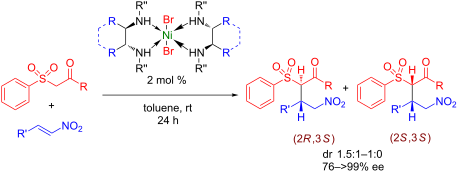
- suitable for X-ray analysis were obtained for compound 8d (which is formed as an individual diastereomer). This made it possible to determine its absolute (2R,3S)-configuration, as well as to assign the absolute configuration for the other compounds obtained. The molecular structure of compound 8d is shown




Doebner-type pyrazolopyridine carboxylic acids in an Ugi four-component reaction
Beilstein J. Org. Chem. 2019, 15, 1281–1288, doi:10.3762/bjoc.15.126
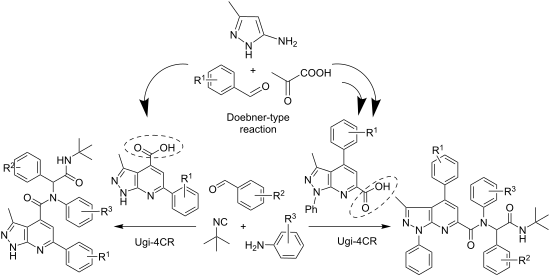
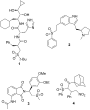
- 70 °C) and a small focused library of 23 Ugi products was created. The target compounds containing two pharmacophore pyrazolopyridine and peptidomimetic moieties were screened for their antibacterial activity and demonstrated weak antibacterial effect. Molecular structure of N-(2-(tert-butylamino)-1


Insertion of [1.1.1]propellane into aromatic disulfides
Beilstein J. Org. Chem. 2019, 15, 1172–1180, doi:10.3762/bjoc.15.114
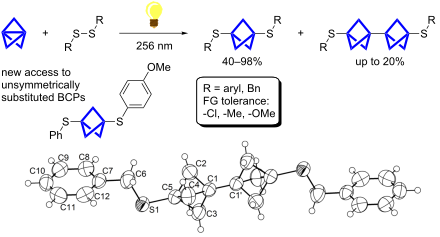
- peroxide, DTBP) led to increased amounts of insoluble polymer. Molecular structure of 6a (displacement parameters are drawn at 50% probability level), distance C1–C3 1.844(3) Å. NMR spectra of pure 6a (green) and 6d (red) and the obtained mixture with the new compound 15 (blue). Summary of the most recent


Novel (2-amino-4-arylimidazolyl)propanoic acids and pyrrolo[1,2-c]imidazoles via the domino reactions of 2-amino-4-arylimidazoles with carbonyl and methylene active compounds
Beilstein J. Org. Chem. 2019, 15, 1032–1045, doi:10.3762/bjoc.15.101
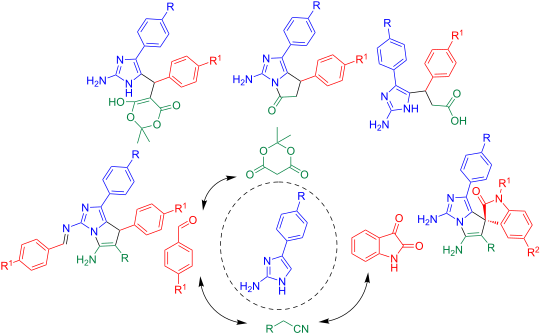
- structure of 1-([1,1'-biphenyl]-4-yl)-5-oxo-7-phenyl-6,7-dihydro-5H-pyrrolo[1,2-c]imidazol-3-aminium 2,2,2-trifluoroacetate 9i according to X-ray diffraction data. Thermal ellipsoids of atoms are shown at 50% probability level. Molecular structure of 3-(2-amino-4-phenyl-1H-imidazol-5-yl)-3-(p-tolyl
- )propanoic acid 11b according to X-ray diffraction data. Thermal ellipsoids of atoms are shown at 50% probability level. Molecular structure of aminoimidazo[1,2-c]pyrrole 16a according to X-ray diffraction data. Thermal ellipsoids of atoms are shown at 50% probability level. 3,3’-Spirooxindole alkaloids
- . Molecular structure of aminoimidazo[1,2-c]pyrrole 19a according to X-ray diffraction data. Thermal ellipsoids of atoms are shown at 50% probability level. The three component condensation of imidazo[1,2-a]pyridine, aldehydes and Meldrum’s acid described by Gerencsér at al. [31]. Two forms of cation 9i


Fabrication, characterization and adsorption properties of cucurbit[7]uril-functionalized polycaprolactone electrospun nanofibrous membranes
Beilstein J. Org. Chem. 2019, 15, 992–999, doi:10.3762/bjoc.15.97
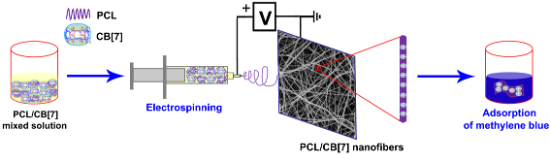
- present in the molecular structure. Combined with merits of host molecules and electrospun nanofibers, the supramolecular host functionalized nanofibers have been widely reported in recent years as efficient molecular filters and absorbent for the removal of hazardous chemicals or polluting substances. A


Diaminoterephthalate–α-lipoic acid conjugates with fluorinated residues
Beilstein J. Org. Chem. 2019, 15, 981–991, doi:10.3762/bjoc.15.96
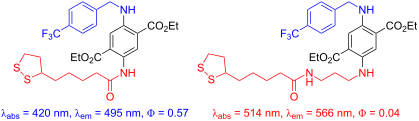
- ), which is expected from the molecular structure of compounds 3 and 7, may be caused by residual adsorbed water that also causes an O 1s component at 533.0–533.5 eV [57][58]. The main doublet in the S 2p spectra of both monolayers at 161.8 eV corresponds to sulfur bound to gold [59]. Although, S 2p


An anomalous addition of chlorosulfonyl isocyanate to a carbonyl group: the synthesis of ((3aS,7aR,E)-2-ethyl-3-oxo-2,3,3a,4,7,7a-hexahydro-1H-isoindol-1-ylidene)sulfamoyl chloride
Beilstein J. Org. Chem. 2019, 15, 931–936, doi:10.3762/bjoc.15.89
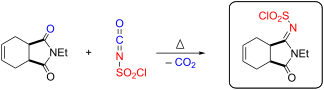
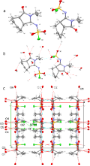
- for C10H13ClN2O3S, 276.7350; found, 277.0434. The dipolar intermediate formed in the reaction of CSI with olefins. (a) Molecular structure of racemic molecule 10 (asymmetric unit). Thermal ellipsoids are drawn at the 30% probability level. (b) Geometric parameter with H-bonded geometry. Hydrogen bonds




Coordination chemistry and photoswitching of dinuclear macrocyclic cadmium-, nickel-, and zinc complexes containing azobenzene carboxylato co-ligands
Beilstein J. Org. Chem. 2019, 15, 840–851, doi:10.3762/bjoc.15.81
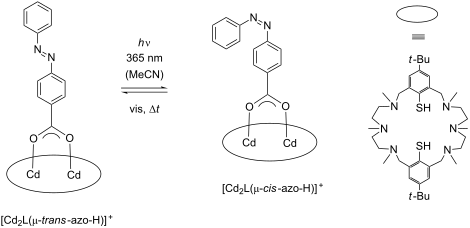
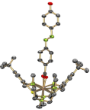
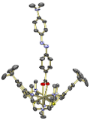
- ·8EtOH (7·8EtOH). Only one orientation of the disordered azo-carboxylato co-ligand is displayed. Hydrogen atoms omitted for clarity. Thermal ellipsoids are drawn at the 50% probability level. Left: ORTEP representation of the molecular structure of the [Cd2L(μ-azo-CO2Me)]+ cation in crystals of 8·MeCN





Catalyst-free assembly of giant tris(heteroaryl)methanes: synthesis of novel pharmacophoric triads and model sterically crowded tris(heteroaryl/aryl)methyl cation salts
Beilstein J. Org. Chem. 2019, 15, 642–654, doi:10.3762/bjoc.15.60
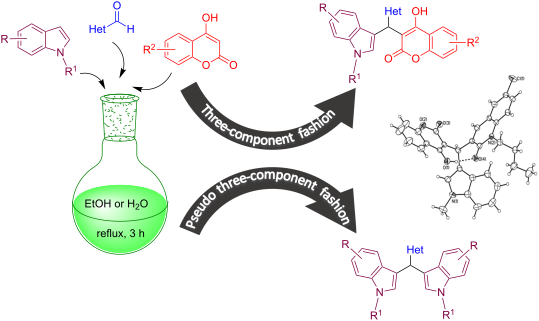
- reactions could also be carried out in water (at circa 80 °C) but with chemoselectivity favoring (Ar1Ar1Ar2)CH over (Ar1Ar2Ar3)CH. The molecular structure of a representative (Ar1Ar2Ar3)CH triad was confirmed by X-ray analysis. Model tris(heteroaryl/aryl)methylium salts were generated by reaction with DDQ


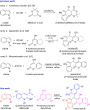


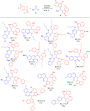

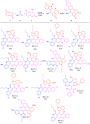


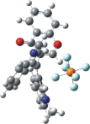

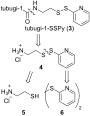
Synthesis of a tubugi-1-toxin conjugate by a modulizable disulfide linker system with a neuropeptide Y analogue showing selectivity for hY1R-overexpressing tumor cells
Beilstein J. Org. Chem. 2019, 15, 96–105, doi:10.3762/bjoc.15.11
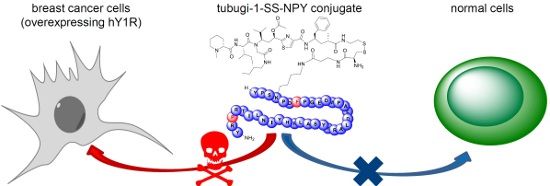
- targeting of the conjugate towards a specific molecular structure that has been identified to be characteristic for a diseased state of cells and tissues. Particularly G protein-coupled receptors (GPCRs) that are endogenously activated by agonistic peptide or protein ligands can be suitable target




N-Arylphenothiazines as strong donors for photoredox catalysis – pushing the frontiers of nucleophilic addition of alcohols to alkenes
Beilstein J. Org. Chem. 2019, 15, 52–59, doi:10.3762/bjoc.15.5
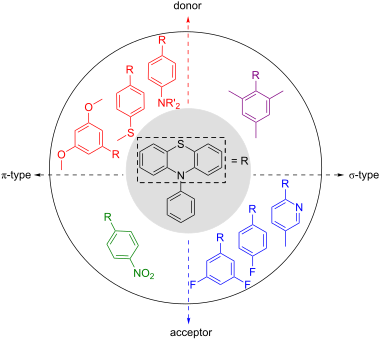
- reduction potential interestingly is higher than in the parent compound 1 although there are electron-donating alkyl groups present in the molecular structure. This can be explained by a twist of the arene moieties due to steric bulk causing an interruption of the delocalization. The electron transfer is


1,8-Bis(dimethylamino)naphthyl-2-ketimines: Inside vs outside protonation
Beilstein J. Org. Chem. 2018, 14, 2940–2948, doi:10.3762/bjoc.14.273
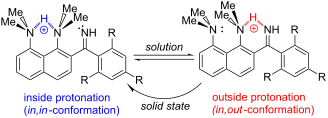
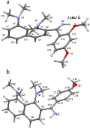
- case, we were able to experimentally observe the simultaneous out-inversion and protonation of the 1-NMe2 group for the first time. C=NH Signal regions of temperature-depending 1H NMR spectra for compounds 4a–7a, acetone-d6. Molecular structure of imines 6a (a) and 4a (b). The H···O distance for 6a is
- ΔE = Eb’ – Eb (kcal/mol) for different sites of protonation of the studied imines (B3LYP/6-311+G(d,p)). Molecular structure of protonated imines 4a·HClO4 (a) and 6b·EtOH (b). C=NH2+ Signal regions of temperature-depending spectra for compounds 4c–7c, acetone-d6. Molecular structure of dication 6с




Oxidative and reductive cyclization in stiff dithienylethenes
Beilstein J. Org. Chem. 2018, 14, 2812–2821, doi:10.3762/bjoc.14.259
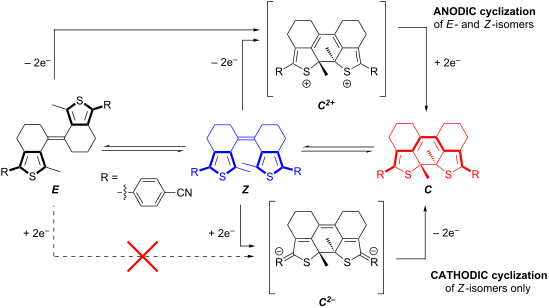
- [5][6][7][8][9][10][11][12][13] or cycloreversion [14][15][16][17][18][19][20][21] can be observed, while correlation of both reaction modes to the molecular structure is still under discussion [22][23][24][25][26]. There are only few reports about reductive isomerization, each involving the ionic


Molecular iodine-catalyzed one-pot multicomponent synthesis of 5-amino-4-(arylselanyl)-1H-pyrazoles
Beilstein J. Org. Chem. 2018, 14, 2789–2798, doi:10.3762/bjoc.14.256
- copper salt. To confirm the structure of 6, its molecular structure was also analyzed by single-crystal X-ray diffraction (CCDC: 1853770). The molecular structure is demonstrated in Figure 1. Conclusion A variety of 4-(arylselanyl)-1H-pyrazol-5-amines was prepared in a one-pot multicomponent procedure
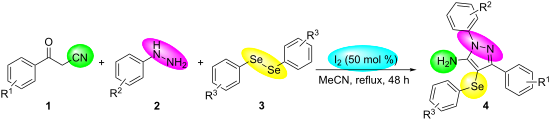
- . Molecular structure of compound 6. The hydrogen atoms are omitted for clarity [27]. Synthesis of selanyl-pyrazoles and their derivatives previously described. Multicomponent reaction proposed in this work. Direct selanylation reaction of 5-amino-pyrazole 5a with diphenyl diselenide (3a) under the optimized


Transition metal-free oxidative and deoxygenative C–H/C–Li cross-couplings of 2H-imidazole 1-oxides with carboranyl lithium as an efficient synthetic approach to azaheterocyclic carboranes
Beilstein J. Org. Chem. 2018, 14, 2618–2626, doi:10.3762/bjoc.14.240

- -(4-bromophenyl)-2-ethyl-2-methyl-1-oxido-2H-imidazol-5-yl)-1,2-dicarba-closo-dodecaborane (5d) in CDCl3 at 295 K. Fragment of the 2D 1H–13C{1H} HSQC (a) and HMBC (b) spectra of imidazolyl carborane 5d in CDCl3 at 295 K (the whole spectra are shown in Supporting Information File 1). Molecular
- structure of 5d. Selected bond distances (Å) and angles (deg) for molecule 1: C(3)–C(14), 1.665; C(3)–C(5), 1.491; C(5)–N(1), 1.338; C(5)–C(4), 1.472; Br(1)–C(9), 1.910; O(1)–N(1), 1.281; N(3)–C(4), 1.30; N(3)–C(2), 1.45; C(2)–C(1), 1.54; C(2)–C(12), 1.53; C(6)–C(4), 1.499; C(4)–N(3)–C(2), 108.2; O(1)–N(1


Efficient catalytic alkyne metathesis with a fluoroalkoxy-supported ditungsten(III) complex
Beilstein J. Org. Chem. 2018, 14, 2425–2434, doi:10.3762/bjoc.14.220
- molecular structure of this complex was established by X-ray diffraction analysis. The ORTEP diagram is shown in Figure 2, and selected bond lengths and angles are displayed in Table 1. The tungsten–tungsten triple bond of 2.3452(2) Å falls in the range of previously reported bond lengths of this type [69
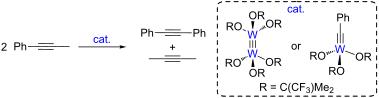
- applications of alkyne metathesis since this protocol represents a convenient approach to alkyne metathesis catalysts in two steps starting from WCl4. Selected homogeneous catalysts for alkyne metathesis. Molecular structure of W2F3·NHMe2 with thermal displacement parameters drawn at 50% probability. Hydrogen
- atoms are omitted for clarity. Molecular structure of WPhF3 with thermal displacement parameters drawn at 50% probability. Hydrogen atoms and minor components of the disordered OC(CF3)Me2 groups are omitted for clarity. Conversion versus time diagram for the self-metathesis of 1-phenyl-1-propyne


Determining the predominant tautomeric structure of iodine-based group-transfer reagents by 17O NMR spectroscopy
Beilstein J. Org. Chem. 2018, 14, 2289–2294, doi:10.3762/bjoc.14.203
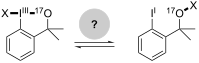
- represent 4c in solution. Does the compound resemble the molecular structure obtained in the solid state with oxygen still coordinated to iodine or would a free alcohol be a more accurate representation? In order to generate 4c, reagent 4a was treated with five equivalents of trifluoroacetic acid (TFA) and



Novel photochemical reactions of carbocyclic diazodiketones without elimination of nitrogen – a suitable way to N-hydrazonation of C–H-bonds
Beilstein J. Org. Chem. 2018, 14, 2250–2258, doi:10.3762/bjoc.14.200
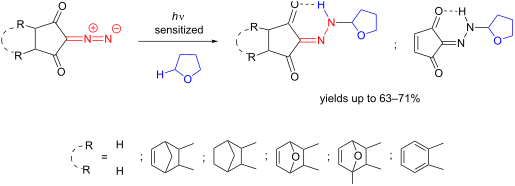
- (Supporting Information File 1, Figure S1). As it is evident from these data, the tricyclic diazodiketones 1b–e all have endo-configuration of the molecular structure. Analysis of the UV spectra of diazodiketones 1 shows that they have four absorption bands: two intense ones at 216–222 and 248–250 nm, and two
- tetrahydrofuran used in the project. Molecular structure of hydrazone 2b as determined by X-ray analysis data (Olex2 plot with 50% probability level of ellipsoids). Photochemical cycloelimination of furans from hydrazones 2d,e. Different pathways of diazodiketones 1 light-induced reactions in the singlet


Tetrathiafulvalene – a redox-switchable building block to control motion in mechanically interlocked molecules
Beilstein J. Org. Chem. 2018, 14, 2163–2185, doi:10.3762/bjoc.14.190
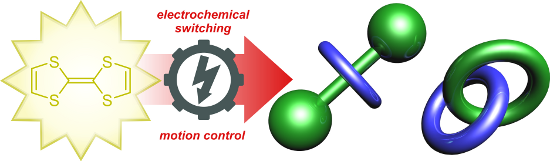
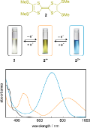
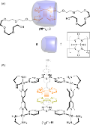
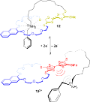
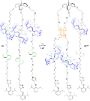
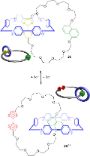
- states of 19. Schematic representation of a molecular electronic memory based on a bistable TTF-based rotaxane. (a) Molecular structure of the amphiphilic [2]rotaxane 20. (b) Structure of the crossbar device. (c) Switching mechanism of rotaxane 20 in a junction. Schematic representation of bending motion











Synthesis of 1,4-imino-L-lyxitols modified at C-5 and their evaluation as inhibitors of GH38 α-mannosidases
Beilstein J. Org. Chem. 2018, 14, 2156–2162, doi:10.3762/bjoc.14.189
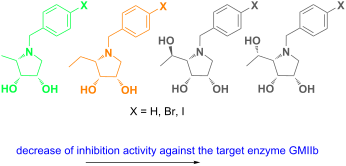
- , further improvement of their potency against the target enzyme is needed. This could be achieved by introducing of different interacting group(s) at the aromatic unit that would ensure stronger interaction with the target enzyme. Structures of GMIIb inhibitors. Molecular structure (OLEX2 drawing with


Hypervalent iodine compounds for anti-Markovnikov-type iodo-oxyimidation of vinylarenes
Beilstein J. Org. Chem. 2018, 14, 2146–2155, doi:10.3762/bjoc.14.188
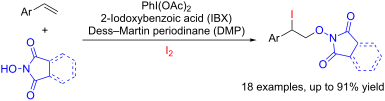
- . bDMP (0.15 mmol) was used instead of PhI(OAc)2, reaction time 30 min. Molecular structure of 3ca. Atoms are presented as anisotropic displacement parameters (ADP) ellipsoids (50% probability). For clarity, only one set of positions of the disordered ethylene bridge and Ph groups is shown. CV curves of