


Search results
Search for "nucleophilic substitution" in Full Text gives 361 result(s) in Beilstein Journal of Organic Chemistry. Showing first 200.
Visible-light-induced addition of carboxymethanide to styrene from monochloroacetic acid
Beilstein J. Org. Chem. 2020, 16, 398–408, doi:10.3762/bjoc.16.38
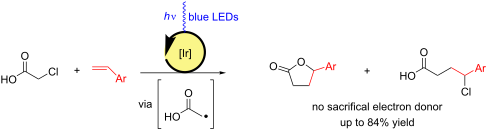
- material for the synthesis of relevant groups of compounds, many of these synthetic procedures are based on nucleophilic substitution of the carbon chlorine bond. Oxidative or reductive activation of monochloroacetic acid results in radical intermediates, leading to reactivity different from the
- traditional reactivity of this compound. Here, we investigated the possibility of applying monochloroacetic acid as a substrate for photoredox catalysis with styrene to directly produce γ-phenyl-γ-butyrolactone. Instead of using nucleophilic substitution, we cleaved the carbon chlorine bond by single-electron
- glycine and diethyl malonate, are based on nucleophilic substitution of the chlorine [6][7][8][9][10]. In an attempt to find new synthetic applications of monochloroacetic acid we turned our attention to photoredox catalysis. We were inspired by the rebirth of visible light photoredox catalysis, induced


Architecture and synthesis of P,N-heterocyclic phosphine ligands
Beilstein J. Org. Chem. 2020, 16, 362–383, doi:10.3762/bjoc.16.35
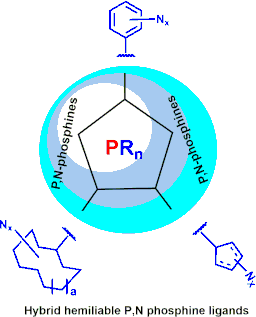
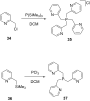
- Preparation of N-heterocyclic phosphines via P–C bond formation Nucleophilic substitution of halogens There are different methods that have been reported for the construction of the P–C bonds. Two approaches are possible using halogenated precursors. The first one is the organometal-halogen-phosphine route
- nucleophiles compared to organometallic or metal phosphides generated through metalation processes. Hayashi et al. [66] used tris(trimethylsilyl)phosphine to control the nucleophilic substitution in the preparation of P,N-(phosphino)triazine ligands (Scheme 5). It was shown that the use of other nucleophiles
- and/or alkoxy derivatives 29–31. Selectively varying the molar ratio of the silylphosphine nucleophile and the starting reagent 25 resulted in the corresponding bis- and tris(diphenylphosphine)triazine motifs 27 and 28. A subsequent nucleophilic substitution reaction of 27 gave compounds 32 and 33




[1,3]/[1,4]-Sulfur atom migration in β-hydroxyalkylphosphine sulfides
Beilstein J. Org. Chem. 2020, 16, 88–105, doi:10.3762/bjoc.16.11
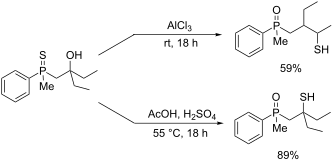
- formed dication V underwent an intramolecular nucleophilic substitution through transition state VI, which proceeded with a small activation barrier, leading to the cyclic intermediate VII and further to the rearranged product 54. The tentative mechanism discussed above does not explain the formation of


A green, economical synthesis of β-ketonitriles and trifunctionalized building blocks from esters and lactones
Beilstein J. Org. Chem. 2019, 15, 2930–2935, doi:10.3762/bjoc.15.287
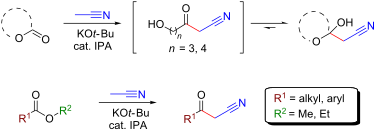
- solvent is effectively lowered by adding a small amount of polar, protic IPA and this facilitates acetonitrile deprotonation. Alternatively, the addition of a crown ether is also known to enhance nucleophilic substitution reaction rates, but in this case through the suppression of ion-pairing [16]. We


A review of asymmetric synthetic organic electrochemistry and electrocatalysis: concepts, applications, recent developments and future directions
Beilstein J. Org. Chem. 2019, 15, 2710–2746, doi:10.3762/bjoc.15.264
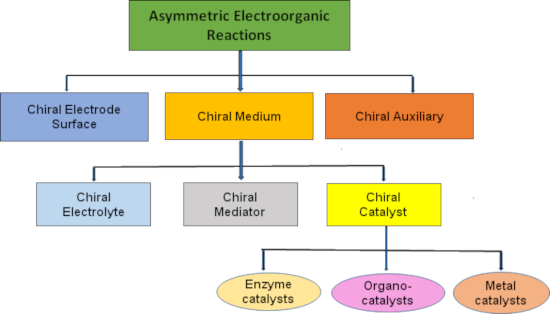
- . Further nucleophilic substitution of 174 with allyltrimethylsilane in the presence of a Lewis acid afforded α-alkylated products 175. The highest de was obtained in the case of 175d. The deprotection of 175 with LAH enabled access to α-alkylated pyrrolidines 176 with the release of 177 (Scheme 56). In






Safe and highly efficient adaptation of potentially explosive azide chemistry involved in the synthesis of Tamiflu using continuous-flow technology
Beilstein J. Org. Chem. 2019, 15, 2577–2589, doi:10.3762/bjoc.15.251
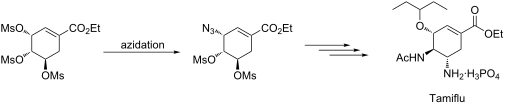
- suitable azidating agent undergoes a highly regio- and stereoselective nucleophilic substitution of allylic O-mesylate at the C-3 position affording azide compound 5 (Scheme 3). Nie and co-workers [19] reported the treatment of mesyl shikimate 4 with NaN3 (4 equiv) in aqueous acetone (Me2CO/H2O 5:1) at 0


Synthesis of novel sulfide-based cyclic peptidomimetic analogues to solonamides
Beilstein J. Org. Chem. 2019, 15, 2544–2551, doi:10.3762/bjoc.15.247
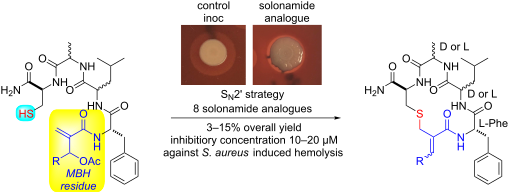
- structurally related to these natural peptidomimetics has been used as a promising strategy for the attenuation of bacterial virulence in strains of S. aureus [12][13][14][15]. Herein, we report the synthesis of new sulfide-based cyclic peptidomimetics through the allylic nucleophilic substitution (SN2’) of


A toolbox of molecular photoswitches to modulate the CXCR3 chemokine receptor with light
Beilstein J. Org. Chem. 2019, 15, 2509–2523, doi:10.3762/bjoc.15.244
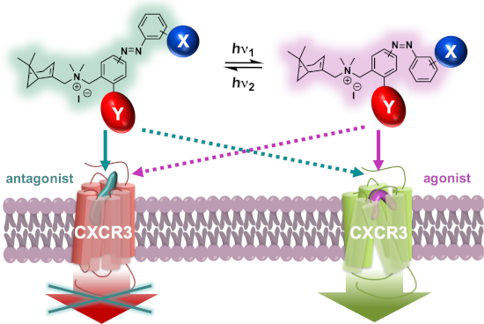
- advanced intermediate 28b (Scheme 3), which was subjected to an aromatic nucleophilic substitution with potassium phthalimide prepared in situ from 29 and K2CO3. Presumably due to the alkaline medium, the phthalimide ring was partially opened as detected by HPLC–MS. Upon attempted re-closing under reflux



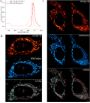
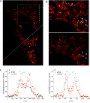
Synthesis of a dihalogenated pyridinyl silicon rhodamine for mitochondrial imaging by a halogen dance rearrangement
Beilstein J. Org. Chem. 2019, 15, 2333–2343, doi:10.3762/bjoc.15.226
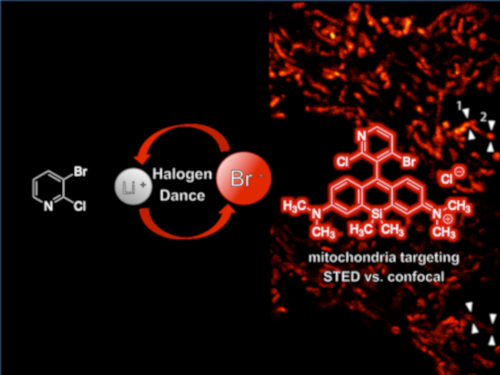
- at the bromine via a nucleophilic substitution, we explored also if the ester analogue tert-butyl 5-bromo-6-chloronicotinate could undergo a HD reaction with subsequent xanthone addition. The reaction did not lead to any product, neither with n-BuLi nor with t-BuLi. However, it is noteworthy that no



Fluorescent phosphorus dendrimers excited by two photons: synthesis, two-photon absorption properties and biological uses
Beilstein J. Org. Chem. 2019, 15, 2287–2303, doi:10.3762/bjoc.15.221
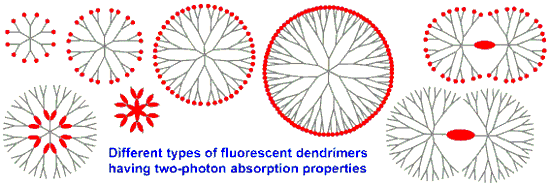
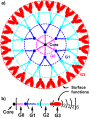
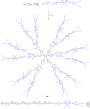
- N3P3Cl6 [33], the first step is the nucleophilic substitution with 4-hydroxybenzaldehyde in basic conditions. The second step comprises the condensation reaction of the aldehyde terminal functions with the phosphorhydrazide H2NNMeP(S)Cl2. This reaction affords the first generation (G1) dendrimer, having








1,2,3-Triazolium macrocycles in supramolecular chemistry
Beilstein J. Org. Chem. 2019, 15, 2142–2155, doi:10.3762/bjoc.15.211
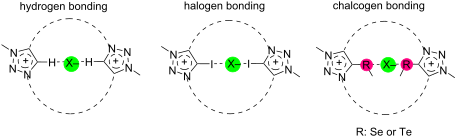
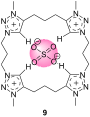
- -position of the triazoles (triazolium), and nucleophilic substitution of halogen can be used to introduce chalcogens (Se, Te). Thus, the corresponding triazolium macrocycles can take advantage respectively of halogen and chalcogen bonding as part of the molecular recognition (vide infra). In this review




Synthesis and properties of sulfur-functionalized triarylmethylium, acridinium and triangulenium dyes
Beilstein J. Org. Chem. 2019, 15, 2133–2141, doi:10.3762/bjoc.15.210
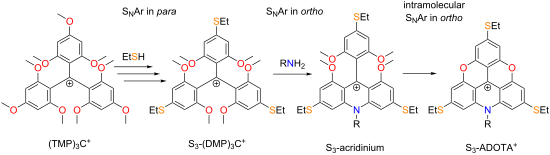
- functionalities were synthesized and their optical properties were studied. The sulfur functionalities were introduced by aromatic nucleophilic substitution of methoxy groups in triarylmethylium cations with ethanethiol followed by partial or full ring closure of the ortho positions with nitrogen or oxygen
- of the ethylthiol substituents. For the triangulenium derivatives significant fluorescence was observed (Φf = 0.1 to Φf = 0.3). Keywords: acridinium dyes; aromatic nucleophilic substitution; fluorescent dyes; sulfur-functionalized dyes; triangulenium dyes; triarylmethylium; Introduction The design
- -substituted triarylmethylium salts as simple precursors allowing both introduction of dialkylamino donor groups and formation of the heterocyclic triangulenium ring systems. These characteristic types of aromatic nucleophilic substitution (SNAr) reactions are exemplified by the synthesis of A3-ADOTA+ (Figure


Recent advances on the transition-metal-catalyzed synthesis of imidazopyridines: an updated coverage
Beilstein J. Org. Chem. 2019, 15, 1612–1704, doi:10.3762/bjoc.15.165
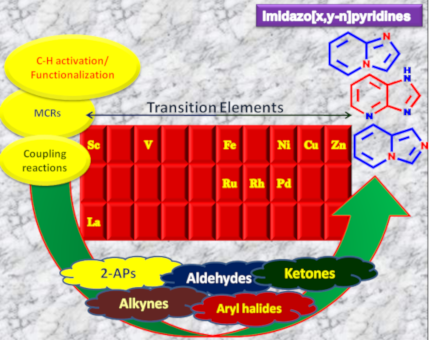
- ) [119]. In this reaction, iodine promoted the formation of iodo-intermediate 98 with a carbonyl compound that underwent nucleophilic substitution with 2-AP 3. CuO played multiple roles in this reaction. Firstly it acts as an oxidizing agent to convert molecular iodine to the reactive iodonium ion (I


Synthesis of 9-O-arylated berberines via copper-catalyzed CAr–O coupling reactions
Beilstein J. Org. Chem. 2019, 15, 1575–1580, doi:10.3762/bjoc.15.161
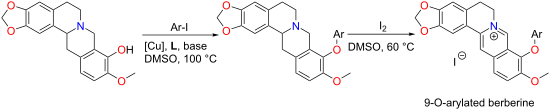
- temperature, during which 9-O-methyl cleavage occurs. The resulting berberrubine (BBRB) then acts as a good precursor to 9-O-substituted derivatives through nucleophilic substitution reactions with alkyl halides (Scheme 1). By this route, not only long-chain alkyl substituents were installed, but also more


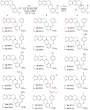

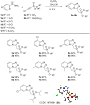
Synthesis of ([1,2,4]triazolo[4,3-a]pyridin-3-ylmethyl)phosphonates and their benzo derivatives via 5-exo-dig cyclization
Beilstein J. Org. Chem. 2019, 15, 1563–1568, doi:10.3762/bjoc.15.159
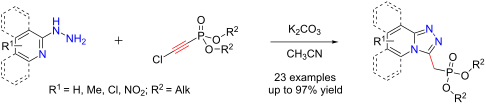
- ; Introduction Due to the high polarization of the push–pull triple bond, haloacetylenes show high reactivity in nucleophilic substitution reactions. Our systematic studies of the reactions of chloroethynylphosphonates with various nucleophilic reagents have recently revealed a new direction of this reaction
- nucleophilic substitution of chlorine in the chloroethynylphosphonate to form ynamine intermediate A, isomerization of which provides ketenimine B. Further formation of the imine tautomer C enables an intramolecular 5-exo-dig cyclization to furnish the title [1,2,4]triazolo[4,3-a]pyridines (Scheme 6




Multicomponent reactions (MCRs): a useful access to the synthesis of benzo-fused γ-lactams
Beilstein J. Org. Chem. 2019, 15, 1065–1085, doi:10.3762/bjoc.15.104
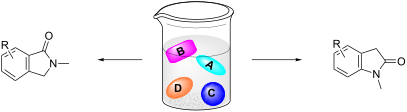
- similar way to that described in Scheme 3. In this case, the coupled alkyne moiety is again activated by Cu(I) and then base-promoted cyclization occurs. A new copper complex formation with the alkene analogue to 13 (see Scheme 3) facilitates the aromatic nucleophilic substitution by indole or pyrrole






Stereo- and regioselective hydroboration of 1-exo-methylene pyranoses: discovery of aryltriazolylmethyl C-galactopyranosides as selective galectin-1 inhibitors
Beilstein J. Org. Chem. 2019, 15, 1046–1060, doi:10.3762/bjoc.15.102
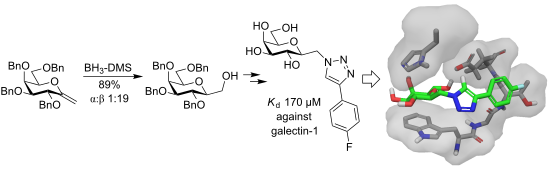
- mesyl chloride in pyridine at 0 °C to give 2-deoxy-1-mesylgalactoheptulose 8 (91%), followed by a nucleophilic substitution reaction with sodium azide in dimethylformamide to give the azide 9 in good yield (90%) [26]. The azide 9 was reacted with a panel of substituted ethynyl arenes to give



Azologization of serotonin 5-HT3 receptor antagonists
Beilstein J. Org. Chem. 2019, 15, 780–788, doi:10.3762/bjoc.15.74
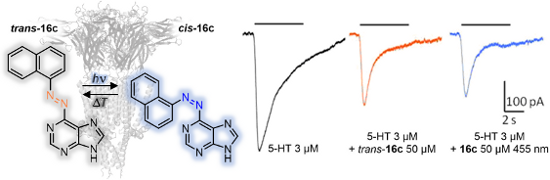
- . Scheme 5 reflects the synthesis of the azo-extended thiomethylpurine 23 starting with the synthesis of hydroxymethylazobenzene 19 [72] in a Baeyer [62]–Mills [63] reaction and subsequent nucleophilic substitution using cyanuric chloride (20) [73] providing chloromethyl azobenzene 21. The introduction of
- photochromic derivatives with varying electronic and thus photochromic properties. The respective arylamines 13a–c were converted into their corresponding hydrazines 14a–c via diazonium-salt formation using sodium nitrite and subsequent reduction using tin(II) chloride [70]. The following nucleophilic
- substitution at a chloro-substituted purine (15a,b) or thienopyrimidine (15c), respectively, and subsequent oxidation of the hydrazine moiety afforded the corresponding azobenzene derivatives 16a–d [71]. Synthesis of azobenzene-extended thiopurine derivatives To further tune the photochromism and compare the


Homo- and hetero-difunctionalized β-cyclodextrins: Short direct synthesis in gram scale and analysis of regiochemistry
Beilstein J. Org. Chem. 2019, 15, 710–720, doi:10.3762/bjoc.15.66
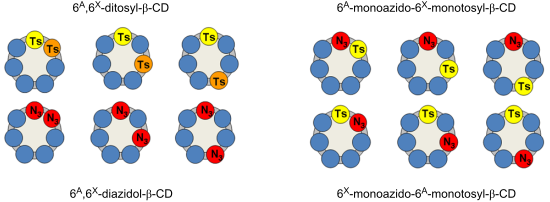
- developed by Fujita et al. by introducing customized capping reagents for β-CD [10]. Tabushi and co-workers developed a series of capping agents providing 6A,6B-, 6A,6C-, or 6A,6D-selectivity on β-CD (Scheme 1) [11][12]. The cap could be subsequently removed by a suitable nucleophilic substitution to afford


Study on the regioselectivity of the N-ethylation reaction of N-benzyl-4-oxo-1,4-dihydroquinoline-3-carboxamide
Beilstein J. Org. Chem. 2019, 15, 388–400, doi:10.3762/bjoc.15.35
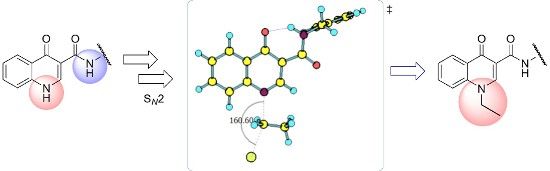
- -4-oxoquinoline derivative, the aliphatic nucleophilic substitution reaction can be employed, in which the 4-oxoquinoline nucleus acts as an azanucleophile, reacting with different alkyl halides. This reaction leads to products with high yields, and no byproducts are isolated. In this paper we
- and Discussion Synthesis Intermediate 6 was synthesized through the Gould–Jacobs method [24][25][26] and was first subjected to the carbonyl nucleophilic substitution reaction with benzylamine, according to a procedure already described in the literature [15][16]. The isolated carboxamide 5 was then
- verification is, for example, justified by the analysis of the electronic effects, as shown in the Scheme 5. Precisely because it is more unstable, the carboxamide conjugate base is a more reactive nucleophile and, therefore, associated with a lower energy barrier for the nucleophilic substitution reaction


Metal-free C–H mercaptalization of benzothiazoles and benzoxazoles using 1,3-propanedithiol as thiol source
Beilstein J. Org. Chem. 2019, 15, 279–284, doi:10.3762/bjoc.15.24

- activity against Candida albicans and Candida tropicalis [8] and 2-mercapto-1,3-benzothiol and its derivatives exhibit inhibitory effects against thyroid peroxidase [9]. (Hetero)aryl thiols are often prepared from the corresponding halides through direct nucleophilic substitution [10][11][12] or metal
- three-component reaction of o-iodoanilines and K2S in DMSO [20]. Another way to prepare 2-mercaptobenzothiazoles and 2-mercaptobenzoxazoles is the nucleophilic substitution of 2-halo-substituted benzothiazoles and benzoxazoles with sulfur-containing reagents including sodium thiosulfate [21], thiourea
- coupling product 6 [40]. As our previous work shows [23], (hetero)arylthioalkylthiols are easily converted to the corresponding (hetero)arylthiols in the presence of KOH and DMSO through an intramolecular nucleophilic substitution. Conclusion In this work, we developed a facile protocol for the direct


Silanediol versus chlorosilanol: hydrolyses and hydrogen-bonding catalyses with fenchole-based silanes
Beilstein J. Org. Chem. 2019, 15, 167–186, doi:10.3762/bjoc.15.17
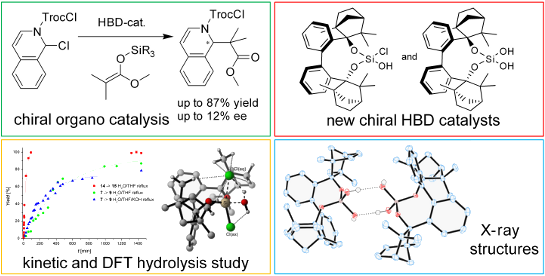
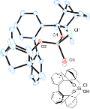
- Nucleophilic substitution at silicon is already discussed with SN2 mechanism, following a backside attack opposite of the leaving group, as well as a front side attack near the leaving group [62][63][64][65][66][67][68]. A backside attack at the silicon in dichlorosilane 7 and monochlorosilanol 8 is blocked by
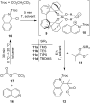
- . TIPS: triisopropylsilane. TBDMS: tert-butyldimethylsilane). Hydrogen-bond-catalyzed nucleophilic substitution of 18 with BIFOXSi(OH)2 (9) and nucleophile silyl ketene acetals 11. 18 and 9 form an activated electrophile ion pair complex which yields C–C coupling product 19 (Table 10). Nucleophilic
- substitution of 20 with BIFOXSi(OH)2 (9) and nucleophile silyl ketene acetals 11, 20 and 9 form an activated electrophile ion pair complex which yields C–C coupling product 22 (Table 11). Hydrolysis of BIFOXSiCl2 (7) to BIFOXSi(OH)2 (9) (Scheme 3) in different solvent mixtures, with or without KOH at different








Synthesis of mono-functionalized S-diazocines via intramolecular Baeyer–Mills reactions
Beilstein J. Org. Chem. 2018, 14, 2799–2804, doi:10.3762/bjoc.14.257

- precursors for the incorporation in photopharmacophores using cross-coupling, peptide coupling or further functionalization methods such as nucleophilic substitution reaction of the benzyl alcohol 5. The yield determining steps prior to the Baeyer–Mills reaction are the formation of the hydroxylamine with


Transition metal-free oxidative and deoxygenative C–H/C–Li cross-couplings of 2H-imidazole 1-oxides with carboranyl lithium as an efficient synthetic approach to azaheterocyclic carboranes
Beilstein J. Org. Chem. 2018, 14, 2618–2626, doi:10.3762/bjoc.14.240

- 10.3762/bjoc.14.240 Abstract The direct C–H functionalization methodology has first been applied to perform transition metal-free C–H/C–Li cross-couplings of 2H-imidazole 1-oxides with carboranyllithium. This atom- and step-economical approach, based on one-pot reactions of nucleophilic substitution of
- 1-oxide; nucleophilic substitution of hydrogen (SNH); Introduction Dicarbadodecaboranes (carboranes) are known to be 3D polyhedral clusters with a special type of structural organization, relative thermal and chemical stabilities, as well as unique physicochemical properties [1][2][3]. The
- substrates [39][40][41][42], which can be carried out by using SNH reactions (nucleophilic substitution of hydrogen) [43][44][45][46][47][48]. The SNH methodology corresponds to the basic principles of green chemistry [49][50][51][52][53], and it is now considered to be one of the most valuable approaches to


Synthesis of a water-soluble 2,2′-biphen[4]arene and its efficient complexation and sensitive fluorescence enhancement towards palmatine and berberine
Beilstein J. Org. Chem. 2018, 14, 2236–2241, doi:10.3762/bjoc.14.198
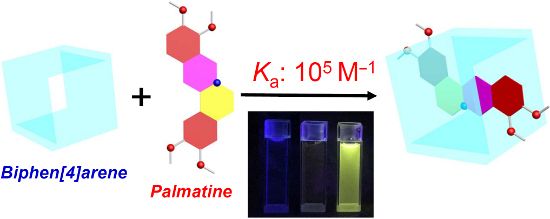
- reaction sites was quantitatively prepared by the deprotection of 2,2’-OEtBP4 using excess BBr3. The nucleophilic substitution reaction of 2,2’-OHBP4 and ethyl bromoacetate, K2CO3 as the base, afforded 2,2’-COOEtBP4 in 88% yield. The hydrolysis of 2,2’-COOEtBP4 in NaOH solution and then acidification with





