Search results
Search for "reaction mechanism" in Full Text gives 585 result(s) in Beilstein Journal of Organic Chemistry. Showing first 200.
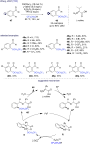
Photocatalytic sequential C–H functionalization expediting acetoxymalonylation of imidazo heterocycles
Beilstein J. Org. Chem. 2023, 19, 666–673, doi:10.3762/bjoc.19.48
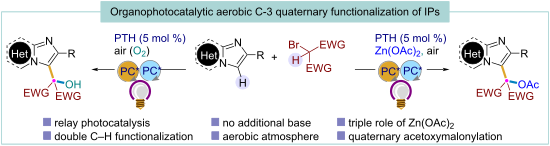
- reaction mechanism. Reaction optimization.a Supporting Information Supporting Information File 110: Experimental section and characterization of synthesized compounds. Funding Financial support from SERB (CRG/2021/004140), India, is gratefully acknowledged. D.S and S.P thank IIT(ISM) and CSIR, New Delhi




C3-Alkylation of furfural derivatives by continuous flow homogeneous catalysis
Beilstein J. Org. Chem. 2023, 19, 582–592, doi:10.3762/bjoc.19.43
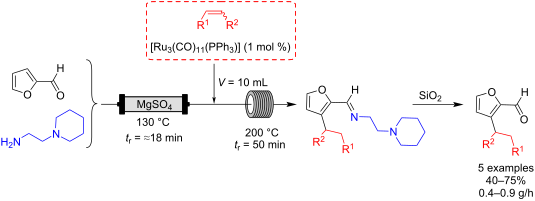
- furfural derivatives by C–H activation, a) in batch: previous works, and b) in continuous flow: this work. C3-alkylation of bidentate imine 1 performed in batch. Optimization of the heating for the alkylation reaction on the homemade pulsed-flow setup. Proposed reaction mechanism for the alkylation


Direct C2–H alkylation of indoles driven by the photochemical activity of halogen-bonded complexes
Beilstein J. Org. Chem. 2023, 19, 575–581, doi:10.3762/bjoc.19.42
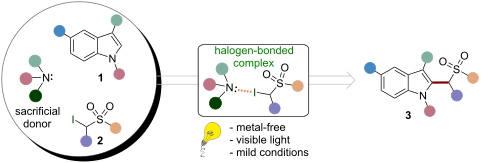
- desired product 3a in low chemical yield (entry 15, Table 1). On the other hand, 3a was obtained in moderate yield (60%) using methanol as solvent (entry 16, Table 1). To shed light on the reaction mechanism, the formation of an EDA complex between the α-iodosulfone 2a and DABCO was investigated using
- absorption spectra recorded in acetonitrile in 1 cm path quartz cuvettes. [DABCO]: 0.5 M; [2a]: 0.5 M. 1H NMR titration of DABCO in a solution of 2a in ACN-d3 to detect their halogen-bonding association through the shift of the signal of Hα. Proposed reaction mechanism for the photochemical alkylation of 1a


Access to cyclopropanes with geminal trifluoromethyl and difluoromethylphosphonate groups
Beilstein J. Org. Chem. 2023, 19, 541–549, doi:10.3762/bjoc.19.39
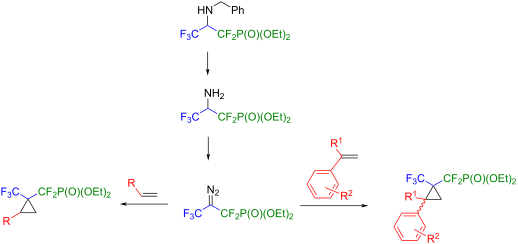
- confirm the lack of selectivity during the cyclopropanation process with terminal alkenes, the reaction mechanism between the diazo reagent 5 and styrene as a model substrate in the presence of CuI catalyst was investigated by density functional theory (DFT) calculations (Table 2). In the first step, CuI

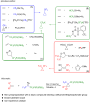


Transition-metal-catalyzed domino reactions of strained bicyclic alkenes
Beilstein J. Org. Chem. 2023, 19, 487–540, doi:10.3762/bjoc.19.38
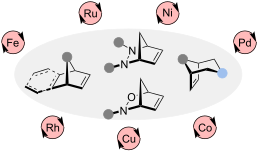
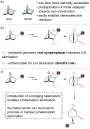
- salicylaldehydes with EWGs failed to react. The authors hypothesized the reaction mechanism begins with the association of the Rh(III) catalyst with the hydroxy group of salicylaldehyde (151a) resulting in a selective cleavage of the aldehyde C–H bond producing the rhodocycle 153 which side-on coordinates with the









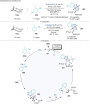


Transition-metal-catalyzed C–H bond activation as a sustainable strategy for the synthesis of fluorinated molecules: an overview
Beilstein J. Org. Chem. 2023, 19, 448–473, doi:10.3762/bjoc.19.35
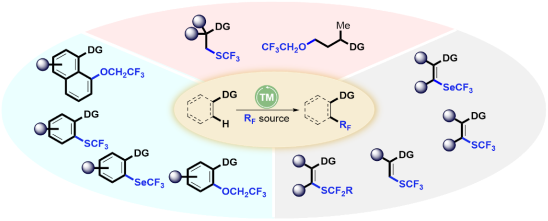
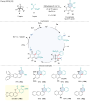
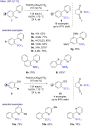
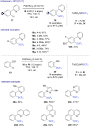
- , respectively). Regarding the reaction mechanism, the active Co(III) complex G was obtained from the dimeric catalyst [Cp*CoI2]2 in the presence AgSCF3 and/or NaOPiv·H2O. Then, the reversible formation of the metallacycle H occurs, which after a ligand exchange in the presence of AgSCF3 leads to the formation








Group 13 exchange and transborylation in catalysis
Beilstein J. Org. Chem. 2023, 19, 325–348, doi:10.3762/bjoc.19.28
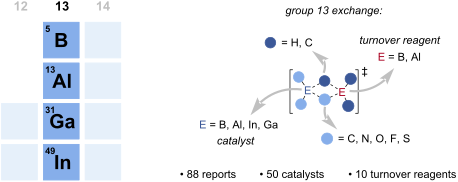
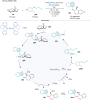
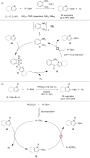
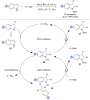
- ]. Through a series of single-turnover experiments a reaction mechanism was proposed where H-B-9-BBN catalysed the dehydrocoupling of carboxylic acids 47 with HBpin through B‒O/B‒H transborylation, to give the acyloxy boronic ester 49. This underwent direct defluoronative carboxylation with the alkyl
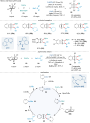
- -catalysed hydroboration of unsaturated compounds and the general reaction mechanism. a) Gallium-catalysed asymmetric hydroboration of ketones and the proposed mechanism. b) Gallium-catalysed hydroboration of CO2. c) Gallium-catalysed hydroboration of ketones and imines. Gallium(I)-catalysed allylation










An accelerated Rauhut–Currier dimerization enabled the synthesis of (±)-incarvilleatone and anticancer studies
Beilstein J. Org. Chem. 2023, 19, 204–211, doi:10.3762/bjoc.19.19
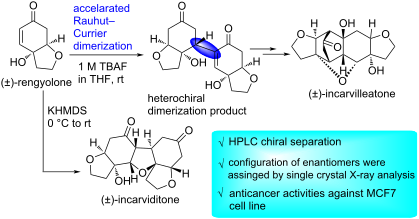
- dimerized product (±)-4. Proposed reaction mechanism for the formation of compound (±)-4 under TBAF-mediated Rauhut–Currier reaction. Synthesis of (±)-incarvilleatone (1) from RC dimerized product (±)-4. Separation of rac-incarvilleatone (1) and determination of absolute configurations of both the


Catalytic aza-Nazarov cyclization reactions to access α-methylene-γ-lactam heterocycles
Beilstein J. Org. Chem. 2023, 19, 66–77, doi:10.3762/bjoc.19.6

- analysis of lactam 19l. In order to shed light on the details of the reaction mechanism, we have performed carefully designed mechanistic studies which consist of experiments on the effect of β-silicon stabilization, the alkene geometry of the α,β-unsaturated acyl chloride reactants, and adventitious water
- and control experiments provided valuable insights on the reaction mechanism including the importance of the β-silicon effect and the alkene geometry of the α,β-unsaturated acyl chloride reactants on reactivity, different potential modes of cyclization, and the effect of adventitious water on the aza


NaI/PPh3-catalyzed visible-light-mediated decarboxylative radical cascade cyclization of N-arylacrylamides for the efficient synthesis of quaternary oxindoles
Beilstein J. Org. Chem. 2023, 19, 57–65, doi:10.3762/bjoc.19.5
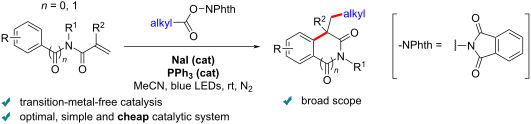
- oxindole 3ap in 63% yield. In order to gain insight into the reaction mechanism, some control experiments were further performed. When a radical scavenger such as 2,2,6,6-tetramethyl-1-piperidinyloxyl (TEMPO) was added to the catalytic system under standard conditions, the reaction was fully inhibited, and


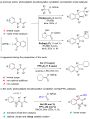
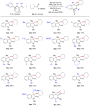


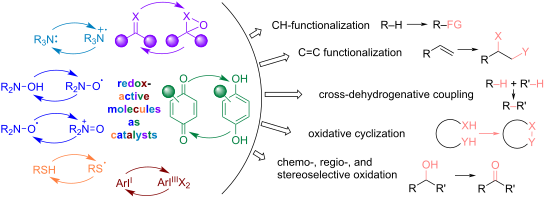
Redox-active molecules as organocatalysts for selective oxidative transformations – an unperceived organocatalysis field
Beilstein J. Org. Chem. 2022, 18, 1672–1695, doi:10.3762/bjoc.18.179
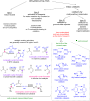
- -diamines [111] (Scheme 21A). The proposed reaction mechanism suggests the generation of a triarylamine radical cation, which oxidizes the vinylarene by a SET mechanism. The resultant vinylarene cation radical X is attacked by the sulfamide nucleophile with Y formation. The second oxidative SET leads to the



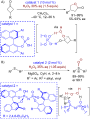


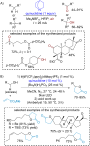


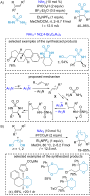


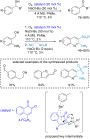


Navigating and expanding the roadmap of natural product genome mining tools
Beilstein J. Org. Chem. 2022, 18, 1656–1671, doi:10.3762/bjoc.18.178
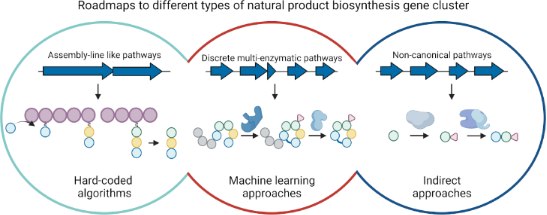
- secondary metabolite biosynthetic enzymes are distant paralogs of enzymes involved in primary metabolism [63][71]. These NP biosynthetic enzymes are hypothesized to have undergone significant sequence and selectivity changes while still operating based on the same reaction mechanism (e.g., fatty acid


Rhodium-catalyzed intramolecular reductive aldol-type cyclization: Application for the synthesis of a chiral necic acid lactone
Beilstein J. Org. Chem. 2022, 18, 1642–1648, doi:10.3762/bjoc.18.176
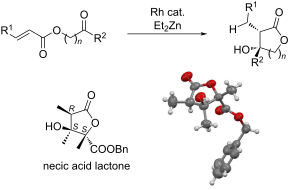
- . Mechanistic investigation of the intramolecular cyclization The reaction mechanism of the intramolecular cyclization can only be speculative at this stage. We have already reported the generation of a rhodium hydride (Rh–H) complex from RhCl(PPh3)3 and Et2Zn, in which the reaction with tert-butyl acrylate


One-pot double annulations to confer diastereoselective spirooxindolepyrrolothiazoles
Beilstein J. Org. Chem. 2022, 18, 1607–1616, doi:10.3762/bjoc.18.171
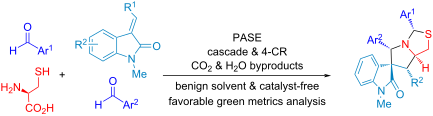
- different R1 was employed for the synthesis to give 7f with COMe in a trace amount and no product 7g with a Ph group. The following reactions with aliphatic aldehydes gave 7h and 7i as complex mixtures [54][55][56][57][58][59][71]. The reaction mechanism of the double annulations for sequential N,S


Functionalization of imidazole N-oxide: a recent discovery in organic transformations
Beilstein J. Org. Chem. 2022, 18, 1575–1588, doi:10.3762/bjoc.18.168
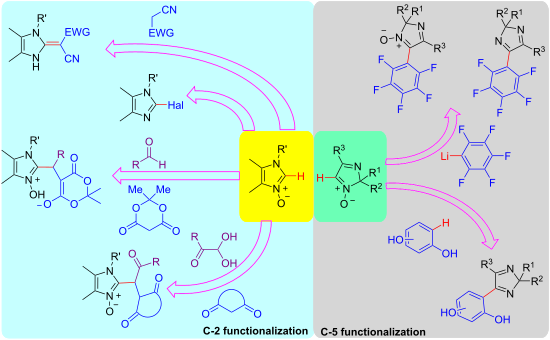
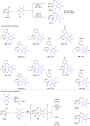
- electrophilicity in case of electron-withdrawing groups. Imidazole N-oxides bearing naphthyl (23g) and n-butyl (23f) groups at the N-1 position also afforded the desired products in 93% and 95% yields, respectively. Notably, no product was isolated in case of glyoxal monoxime. The plausible reaction mechanism
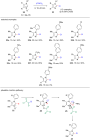
- products. Interestingly, unstable enones formed from the CH-acids like 4-hydroxy-6-methylpyrone and 4-hydroxycoumarin also successfully gave the desired products 35p and 35q under the standard conditions. The proposed reaction mechanism proceeded through the same pathway as outlined in Scheme 5. The







Simple synthesis of multi-halogenated alkenes from 2-bromo-2-chloro-1,1,1-trifluoroethane (halothane)
Beilstein J. Org. Chem. 2022, 18, 1567–1574, doi:10.3762/bjoc.18.167
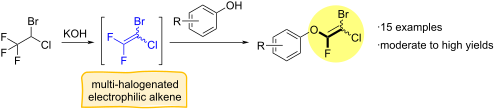
- 2n was 32% (Table 2, entry 13). In the case of aminophenol (3o), nucleophilic addition occurred predominantly at the phenoxide position and the product was obtained in moderate yield (Table 2, entry 14). An aryl iodide also participated in the reaction (Table 2, entry 15). We propose the reaction
- mechanism shown in Scheme 2 [15][26]. In the reaction medium, 3 is deprotonated by KOH to generate phenoxide ion 4, which acts as a base and as a nucleophile. Removal of an acidic hydrogen from halothane provides 5, which is a key intermediate in the reaction. Intermediate 5 is sufficiently electrophilic to


A facile approach to spiro[dihydrofuran-2,3'-oxindoles] via formal [4 + 1] annulation reaction of fused 1H-pyrrole-2,3-diones with diazooxindoles
Beilstein J. Org. Chem. 2022, 18, 1532–1538, doi:10.3762/bjoc.18.162
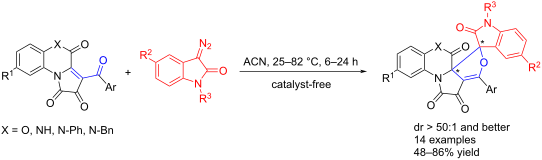
- mechanism of formal [4 + 1] cycloaddition of FPDs 1 with diazooxindoles 2 (negative charge delocalization is colored in blue); B) plausible base-promoted reaction mechanism of FPD 1i and 3-bromooxindole (4, negative charge delocalization is colored blue). Reaction of FPD 1a and diazooxindole 2a in different


Molecular and macromolecular electrochemistry: synthesis, mechanism, and redox properties
Beilstein J. Org. Chem. 2022, 18, 1505–1506, doi:10.3762/bjoc.18.158

- of organic molecules and the estimation of subsequent reactions, resulting in a much better understanding of the reaction mechanism. Furthermore, because organic electrosynthesis requires the setting of many complex parameters, such as applied potential, current density, electrolyte, temperature, and
Mechanochemical synthesis of unsymmetrical salens for the preparation of Co–salen complexes and their evaluation as catalysts for the synthesis of α-aryloxy alcohols via asymmetric phenolic kinetic resolution of terminal epoxides
Beilstein J. Org. Chem. 2022, 18, 1416–1423, doi:10.3762/bjoc.18.147
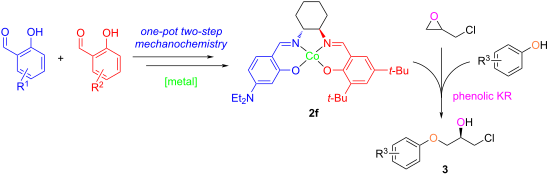
- the asymmetric ring opening of epichlorohydrin with different phenols in the presence of 2f (0.5 mol %), resulting in good yields and high ee (up to 99%). Further application of chiral Co–salen complexes and their reaction mechanism will be addressed in the due course. Representative asymmetric Co


Make or break: the thermodynamic equilibrium of polyphosphate kinase-catalysed reactions
Beilstein J. Org. Chem. 2022, 18, 1278–1288, doi:10.3762/bjoc.18.134
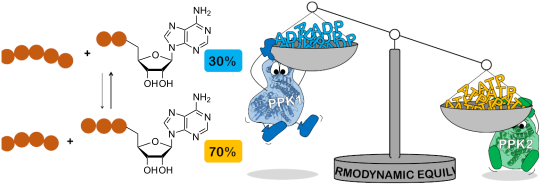
- relevant, as the ATP produced will be directly used by the main reaction. In future, it will be interesting to investigate the detailed reaction mechanism including the effects of the polyP chain length and counter ions as well as to study the thermodynamic activity of the enzymes. Especially in reaction


Ferrocenoyl-adenines: substituent effects on regioselective acylation
Beilstein J. Org. Chem. 2022, 18, 1270–1277, doi:10.3762/bjoc.18.133
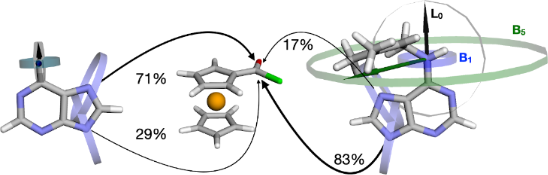
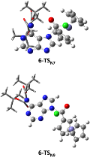
- /bjoc.18.133 Abstract A series of N6-substituted adenine–ferrocene conjugates was prepared and the reaction mechanism underlying the synthesis was explored. The SN2-like reaction between ferrocenoyl chloride and adenine anions is a regioselective process in which the product ratio (N7/N9-ferrocenoyl



A one-pot electrochemical synthesis of 2-aminothiazoles from active methylene ketones and thioureas mediated by NH4I
Beilstein J. Org. Chem. 2022, 18, 1249–1255, doi:10.3762/bjoc.18.130
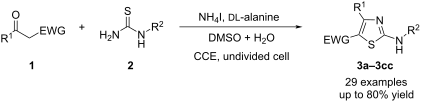
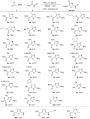
- . To demonstrate the practicability of the reaction, a scale-up reaction of ethyl acetoacetate (1a, 28 mmol, 3.64 g) and thiourea (2a,14 mmol, 1.05 g) was carried out under the optimized conditions to give 3a in 50% yield (Scheme 3). In order to better understand the iodide-mediated reaction mechanism




Lewis acid-catalyzed Pudovik reaction–phospha-Brook rearrangement sequence to access phosphoric esters
Beilstein J. Org. Chem. 2022, 18, 1188–1194, doi:10.3762/bjoc.18.123
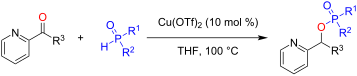
- . Additional experiments were conducted in order to clarify the reaction mechanism. Under standard conditions, only pyridin-2-ylmethyl diphenylphosphinate (3aa) was produced, and the Pudovik adduct (hydroxy(pyridin-2-yl)methyl)diphenylphosphine oxide (4aa) was not detected (Scheme 4a). The control experiment




Electro-conversion of cumene into acetophenone using boron-doped diamond electrodes
Beilstein J. Org. Chem. 2022, 18, 1154–1158, doi:10.3762/bjoc.18.119

- propose a reaction mechanism (Table 2). First, we carried out the electrolysis of 1 in MeCN–MeOH to confirm whether the reaction intermediate is a radical or cationic species (Table 2, entry 1). As a result, methyl cumyl ether, a methoxy adduct to the benzyl position of 1, was obtained as the main product
- Et4NClO4 (0.1 M). Scan rate: 100 mV/s. Proposed reaction mechanism of electro-conversion of cumene (1) into acetophenone (3). Electro-conversion of 1. Control electrolysis experiments of 1a. Supporting Information Supporting Information File 244: Characterization data and 1H NMR spectra of isolated


Experimental and theoretical studies on the synthesis of 1,4,5-trisubstituted pyrrolidine-2,3-diones
Beilstein J. Org. Chem. 2022, 18, 1140–1153, doi:10.3762/bjoc.18.118
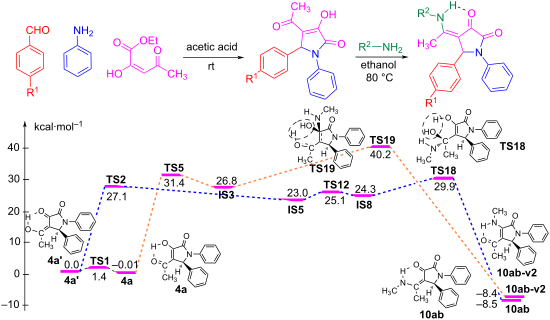
- -Trisubstituted pyrrolidine-2,3-dione derivatives were prepared from the above mentioned 2-pyrrolidinone derivatives and aliphatic amines, which exist in enamine form and are stabilized by an intramolecular hydrogen bond. A possible reaction mechanism between 3-pyrroline-2-one and aliphatic amine (CH3NH2) was
- enamine derivatives. As compared to glacial acetic acid [42], ethanol has showed to be the best solvent for the synthesis of these pyrrolidine-2,3-diones and a dramatic increase in the yield of the desired products was also observed. In addition, understanding of the reaction mechanism at the molecular
- )ethylene-1,5-diphenylpyrrolidine-2,3-dione in the present work. To the best of our knowledge, it is the first time the reaction mechanism between 3-pyrrolin-2-one derivative and methylamine was explained in detail via computational studies. Results and Discussion A model reaction of benzaldehyde (1a