Search results
Search for "alcohol" in Full Text gives 1190 result(s) in Beilstein Journal of Organic Chemistry. Showing first 200.
Five new sesquiterpenoids from agarwood of Aquilaria sinensis
Beilstein J. Org. Chem. 2023, 19, 998–1007, doi:10.3762/bjoc.19.75
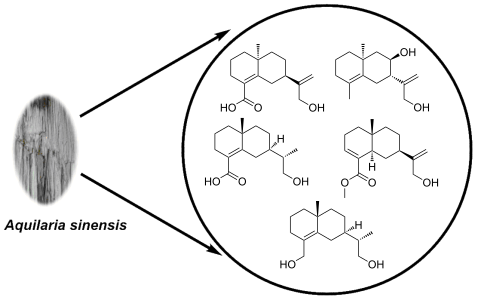
- ) and H-6/C-4 indicates the presence of a carboxyl group at C-4. Finally, the HMBC correlations of H-13/C-7 (δC 43.9), C-11 (δC 154.7), and C-12 (δC 65.0) demonstrate that C-7 is connected with acryl alcohol. Thus, the planar structure of 1 was assigned (Figure 1). However, the ROSEY data cannot provide
- mg) was separated by PTLC (petroleum ether/isopropyl alcohol 10:1) to afford eight fractions (Fr.6.7.9.5.14.1–Fr.6.7.9.5.14.8). Fr.6.7.9.5.14.3 (25.4 mg) was further purified by semi-preparative HPLC on YMC-PACK-ODS-A (aqueous MeCN, 65%) to yield 1 (12.7 mg, tR = 28.1 min, flow rate: 3 mL/min). Fr


Aromatic C–H bond functionalization through organocatalyzed asymmetric intermolecular aza-Friedel–Crafts reaction: a recent update
Beilstein J. Org. Chem. 2023, 19, 956–981, doi:10.3762/bjoc.19.72

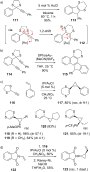
- after recrystallization. Subsequent ozonolysis of the terminal alkene functionality with a follow-up reduction furnished primary alcohol 134 which was transformed into the azide 135. Reduction of the azide 135 was accompanied by debenzylation, was followed by tosylation of the primary amine and exchange
- provided ketone 138 which was reacted with an α-keto ester in an intramolecular 5-endo-trig-cyclization process to afford 139. Treatment of compound 139 with sodium borohydride afforded secondary alcohol 140 which after conversion of the tosyl group into a methyl group gave the final product 141 (Scheme 35




Photoredox catalysis enabling decarboxylative radical cyclization of γ,γ-dimethylallyltryptophan (DMAT) derivatives: formal synthesis of 6,7-secoagroclavine
Beilstein J. Org. Chem. 2023, 19, 918–927, doi:10.3762/bjoc.19.70
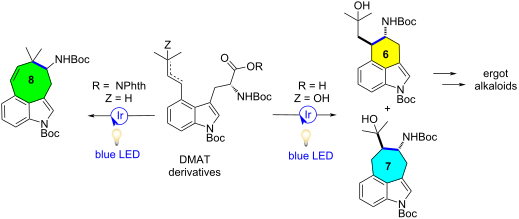
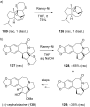
- ]. Although not yet completely clarified, some previous studies on the detailed mode of closure of the C ring in ergot alkaloids from DMAT have been shown to involve, before decarboxylative cyclization, oxidation on the C4-prenyl chain to give the stable rearranged allyl alcohol and/or the relatively unstable
- interconvertible to each other by hydration or dehydration, i.e., a plausible precursor of the allylic alcohol would be the diene, and vice versa [90]. Since both 8 and 10 are easily obtainable from 2 by Mozoroki–Heck coupling with commercially available 2-methyl-3-buten-2-ol, ester hydrolysis (LiOH in THF/H2O
- ), and, finally for 10, dehydration of the tertiary alcohol (mesylation and elimination) (Scheme 3), we decided to test their roles in the photoredox-catalyzed decarboxylative cyclization. With 8 and 10 in hand with the C4-prenyl side-chain already oxidized/functionalized, we recognized that this


Intermediates and shunt products of massiliachelin biosynthesis in Massilia sp. NR 4-1
Beilstein J. Org. Chem. 2023, 19, 909–917, doi:10.3762/bjoc.19.69
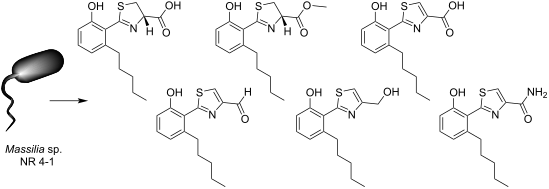
- carbon atoms C-13 and C-14 of the thiazole moiety, the loss of one degree of unsaturation and a loss of 2 Da in mass, it can be deduced that compound 5 possesses an alcohol function. Compound 6 (0.4 mg) was obtained as a brown oil. It possesses a molecular ion at m/z 291.1165 [M + H]+, which suggests a


Cyclodextrins as building blocks for new materials
Beilstein J. Org. Chem. 2023, 19, 889–891, doi:10.3762/bjoc.19.66
- reactivity of their alcohol functions. This allows regioselective chemical modification at either the primary or secondary rim [13]. As a result, these molecular hosts can be specifically linked either covalently or noncovalently to a wide variety of ligands. CDs are a significant part of almost all areas of
Non-peptide compounds from Kronopolites svenhedini (Verhoeff) and their antitumor and iNOS inhibitory activities
Beilstein J. Org. Chem. 2023, 19, 789–799, doi:10.3762/bjoc.19.59
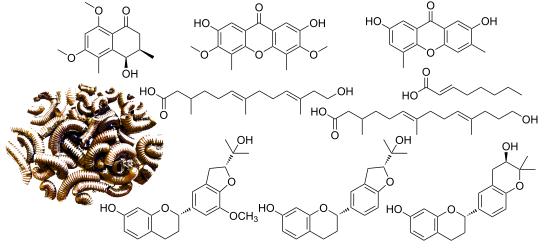
- activity have revealed the presence of antimicrobial peptides [5], defensive alkaloids [6], and defensive long chain alcohol acetates [7]. Historically, in China, numerous records documented the utilization of animals like arthropods for medicinal purposes. Millipedes hereby represent a traditional Chinese


Honeycomb reactor: a promising device for streamlining aerobic oxidation under continuous-flow conditions
Beilstein J. Org. Chem. 2023, 19, 752–763, doi:10.3762/bjoc.19.55
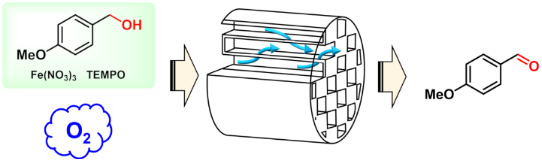
- ozonolysis reactions [33]. Herein, we describe the feasibility of the honeycomb reactor for aerobic oxidation. Results and Discussion Reaction screening for aerobic oxidation under batch conditions To select the representative aerobic oxidation, the reaction conditions to oxidize 4-methoxybenzyl alcohol (1a
- using the standard tube reactor and the honeycomb reactor (Scheme 4 and Table 5). With benzyl alcohol and benzyl alcohols bearing various substituents such as OMe, Me, Br, CF3 and COOMe at the 4-position and OMe at the 2- or 3-position, the reaction was uniformly accelerated using the honeycomb reactor
- aerobic oxidation using the honeycomb reactor. Flow setup for substrate scope and additional screening. Reaction screening for aerobic oxidation of 4-methoxybenzyl alcohol (1a). Reaction optimization for aerobic oxidation of 4-methoxybenzyl alcohol (1a). Evaluation of the reaction rate using various flow


Photocatalytic sequential C–H functionalization expediting acetoxymalonylation of imidazo heterocycles
Beilstein J. Org. Chem. 2023, 19, 666–673, doi:10.3762/bjoc.19.48
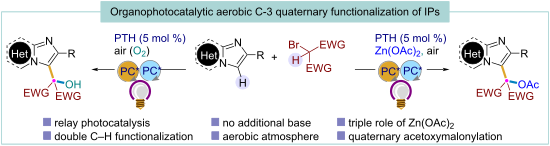
- chemodivergent formation of C-3 ethoxycarbonylmethylated and hydroxyalkylated IPs under visible light using water or alcohol as the source of the oxygenated group under degassed conditions [22]. However, all these photochemical methods require the usage of a substantial amount of base, the preactivation with a




Nucleophile-induced ring contraction in pyrrolo[2,1-c][1,4]benzothiazines: access to pyrrolo[2,1-b][1,3]benzothiazoles
Beilstein J. Org. Chem. 2023, 19, 646–657, doi:10.3762/bjoc.19.46
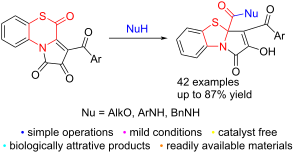
- yields of the corresponding products 3 and the general course of the reaction. However, the structure of the alcohols 2a–c had an effect on the studied reaction. Reactions with isopropyl alcohol 2b required longer reaction times (UPLC–UV–MS monitoring). This phenomenon could be due to the steric factors
- brought in by a bulky isopropyl substituent in alcohol 2b. In addition, in all studied cases we observed that the reaction of APBTTs 1 with alcohols 2 always afforded labile side-products 5 (Scheme 9). Compounds 5 were formed when the nucleophile 2 attacked on the position C3a of the substrates 1. Such a
- , benzylamine, and arylamines 11, while alkylamines are unsuitable for it. Notable, the use of bulky nucleophiles (tert-butyl alcohol (16a), benzyl alcohol (16b), benzhydrol (16c), 2-aminobenzothiazole (16d), HCl) makes it possible to obtain pyrrolobenzothiazoles 17 from compounds 1, but their formation




Enolates ambushed – asymmetric tandem conjugate addition and subsequent enolate trapping with conventional and less traditional electrophiles
Beilstein J. Org. Chem. 2023, 19, 593–634, doi:10.3762/bjoc.19.44
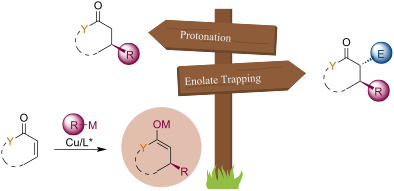
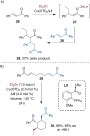
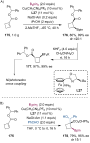
- derivatization is possible through the oxidation of the silyl motif to alcohol or the dehydration of the aldol adduct. Other tandem conjugate addition/enolate-trapping reactions In 2016, Nishiyama and co-workers have studied a three-component coupling reaction of alkynes, enones, and aldehydes via direct
- cyclization (Scheme 51A) [93]. The reaction starts with the coordination of the Rh catalyst to the propargyl alcohol 198. In the presence of a base, the rhodium–alkynyl reagent is generated with the concomitant extrusion of benzophenone. Finally, the alkynylation of the enone is followed by the cyclization








Transition-metal-catalyzed domino reactions of strained bicyclic alkenes
Beilstein J. Org. Chem. 2023, 19, 487–540, doi:10.3762/bjoc.19.38
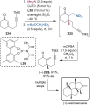
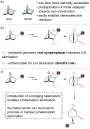
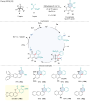
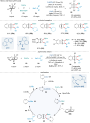
- allylic alcohol isomerization in 137 resulting in the aldehyde 138. This aldehyde, in close proximity to the tertiary alcohol, leads to the production of the hemiacetal 139 which can finally undergo an oxidation producing the final bicyclo[2.2.2]lactone product 136. In 2011, the Radhakrishnan laboratory







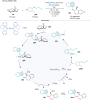


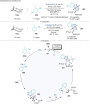


Mechanochemical solid state synthesis of copper(I)/NHC complexes with K3PO4
Beilstein J. Org. Chem. 2023, 19, 440–447, doi:10.3762/bjoc.19.34
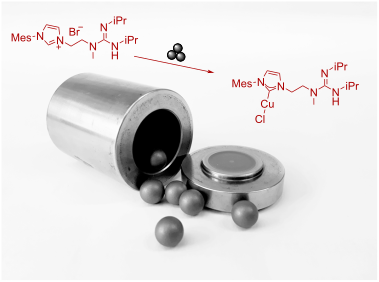
- benzoate (8) lower overall conversion to benzyl alcohol (9) and lower yield was found with 5bm (65% conv. and 53% yield with 5bm, in comparison to 100% conv. and 80% yield with 5ls; Scheme 3a). We hypothesize that the higher amount of CH2Cl2 as part of the prepared complex, which is not a suitable solvent


Asymmetric synthesis of a stereopentade fragment toward latrunculins
Beilstein J. Org. Chem. 2023, 19, 428–433, doi:10.3762/bjoc.19.32
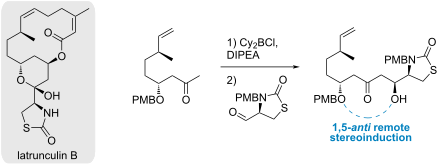
- such latrunculin synthesis and the encountered difficulties thereof. Results and Discussion Our synthesis started from commercially available (+)-β-citronellene (10). The ozonolysis of the trisubstituted double bond followed by a reductive treatment with NaBH4 chemoselectively afforded primary alcohol
- 11 in 78% yield (Scheme 1). Due to easier purification, this alcohol was preferred to the aldehyde in our synthetic route, allowing a key stereoselective Krische allylation [21][22] to be envisaged. Applying reported conditions for this allylation – in presence of allyl acetate (10 equiv), [Ir(COD)Cl
- ]2 (2.5 mol %), (S)-SEGPHOS (5 mol %), 3-nitrobenzoic acid (10 mol %), Cs2CO3 (20 mol %) in THF at 100 °C for 24 hours – we obtained homoallylic alcohol 12 in a good 86% yield, with a diastereomeric ratio (dr) of 93:7 deduced from the NMR analysis of the methyl substituent signals in CD3OD (NMR




Combretastatins D series and analogues: from isolation, synthetic challenges and biological activities
Beilstein J. Org. Chem. 2023, 19, 399–427, doi:10.3762/bjoc.19.31
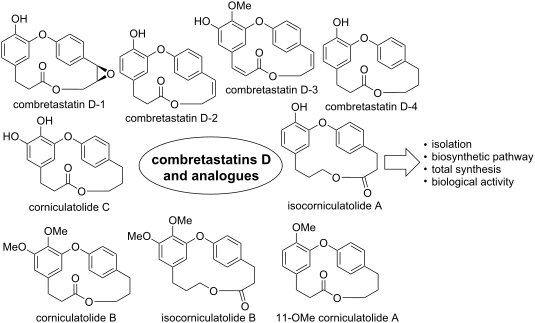
- Cham–Lam reactions [23][24][25][26]. However, it has been described that a Mitsunobu reaction of the seco-acid was particularly prone to an SN1 reaction, once the activated allylic alcohol yields an oxyphosphonium ion intermediate due to the conjugation to electron-rich aromatic ring, requiring some
- carboxylic acid 20, which underwent protection with Troc-Cl and selective reduction in the presence of sodium borohydride to form the alcohol 21. After ester hydrolysis the desired seco-acid 22 was obtained in 82% yield. However, several attempts to achieve the macrolactonization of 22 using PPh3 and DEAD
- coupling reaction. Thus, the olefination reaction of aldehyde 15 with phosphonate 23, followed by the reduction of the obtained ester 24 using DIBAL led to the alcohol 25. The latter was submitted to the reaction with carboxylic acid 26 under Mitsunobu conditions [30], giving the corresponding ester 27 in




Discrimination of β-cyclodextrin/hazelnut (Corylus avellana L.) oil/flavonoid glycoside and flavonolignan ternary complexes by Fourier-transform infrared spectroscopy coupled with principal component analysis
Beilstein J. Org. Chem. 2023, 19, 380–398, doi:10.3762/bjoc.19.30
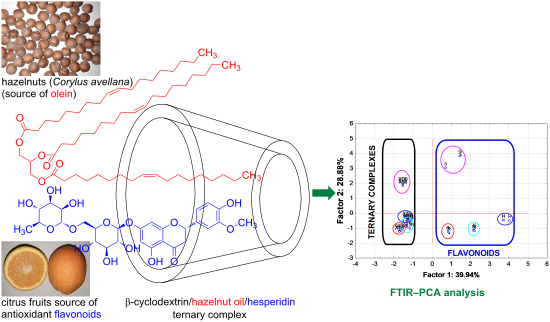
- , cyclosporine A and polyvinyl alcohol, ketoprofen and phospholipids, dihydroartemisinin and lecithin, cefixime and ʟ-arginine, flurbiprofen and naproxen/ketoprofen/ethenzamide [50][51][52][53][54][55][56][57][58][59]. Fourier-transform infrared spectroscopy (FTIR) is a very fast, nondestructive and cheap method
- identification of the variables that have significance for these classifications. FTIR–PCA was successfully applied for the discrimination of raw and thermally processed chicken lipid/β-CD complexes [16]. Moreover, raw and recrystallized β-CD samples (from water and alcohol–water solutions) were successfully
- silymarin) are flavanonol derivatives, having a coniferyl alcohol moiety connected through the hydroxy groups in the 3’ and 4’ positions of the aglycone (Figure 1b). FTIR analysis of these flavonoids revealed stretching and bending vibrations corresponding to OH bonds (phenolic or alcoholic, glycosidic and



Group 13 exchange and transborylation in catalysis
Beilstein J. Org. Chem. 2023, 19, 325–348, doi:10.3762/bjoc.19.28
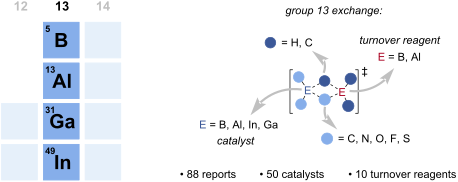
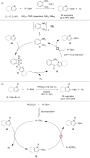
- 66. B‒O/B‒H transborylation with HBpin gave the O-Bpin-protected allylic alcohol 67 and regenerated the borane catalyst (Scheme 15). The only example of a B‒F/B‒H transborylation in catalysis comes from Willcox, Thomas and co-workers in the H-B-9-BBN-catalysed arylation of alkyl fluorides with HBpin
- '-binaphthyl (MTBH2) with LiAlH4 as the catalyst gave good yields of the alcohol (70–80%) after workup, but in low enantioselectivities (1–6% ee). A mechanism was proposed whereby reduction of the ketone 91 by the aluminium hydride 92 was followed by Al‒O/B‒H exchange with HBcat (Scheme 23). Roesky reported
- ) [111]. The reaction was proposed to proceed through the enantioselective reduction of the ketone 95 by gallium hydride 96, followed by Ga‒O/B‒H exchange with HBcat to give an enantioenriched alkoxy catechol borane 98, affording the alcohol after workup (Scheme 24a). The mechanism was later explored in










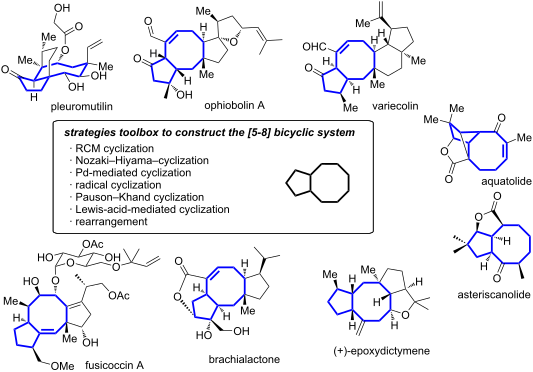
Strategies to access the [5-8] bicyclic core encountered in the sesquiterpene, diterpene and sesterterpene series
Beilstein J. Org. Chem. 2023, 19, 245–281, doi:10.3762/bjoc.19.23
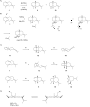
- ). It also appeared that the RCM depended on the substrate core structure and the presence of a protected allylic alcohol prevented the cyclization to take place. Taking these observations into account, the tricyclic [5-8-5] ring system 45 was obtained using the HG-II catalyst in refluxing toluene
- could not obtain the desired tricyclic compound possessing the required eight-membered ring, but instead they recovered the starting material 47, together with a dimeric product or an eleven-membered ring resulting from a RCM and a retro-aldol reaction. Assuming that the allylic alcohol may induce a
- steric hindrance, alcohol 47 was converted into triene 48 upon dehydration, and further engaged in the RCM reaction. In this case, the use of HG-II catalyst proved to be the best choice to achieve cyclooctene ring formation giving rise to intermediate 49, providing entries for further functionalization


Germacrene B – a central intermediate in sesquiterpene biosynthesis
Beilstein J. Org. Chem. 2023, 19, 186–203, doi:10.3762/bjoc.19.18

- is terminated by deprotonation to yield a terpene hydrocarbon or by nucleophilic attack of water to generate a terpene alcohol. For the precursor of sesquiterpenes FPP six initial cyclisation modes are possible (Scheme 1). After ionisation to A either a 1,10-cyclisation to the (E,E)-germacradienyl
- -workers [19], through a sequence of reduction to the alcohol, acetylation and reduction with lithium in ammonia (Scheme 3A) [20], and its structure was unambiguously assigned by X-ray crystallography of a silver nitrate adduct [21]. From natural sources, the compound was first obtained from Humulus
- catalytic hydrogenation to 27, dehydration to a mixture of alkenes (28) and hydrogenation to selinane (29) it was concluded that 11 was a selinane sesquiterpene alcohol (Scheme 9B) [75]. Four years later, based on NMR data Bhattacharyya and co-workers suggested a cis-ring junction for 11 [76], but a






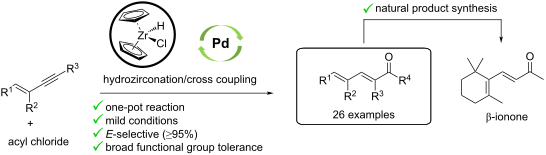
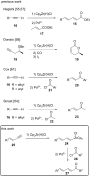
Sequential hydrozirconation/Pd-catalyzed cross coupling of acyl chlorides towards conjugated (2E,4E)-dienones
Beilstein J. Org. Chem. 2023, 19, 176–185, doi:10.3762/bjoc.19.17
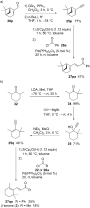
- deprotonated with LDA at −78 °C in THF and subsequently methylated to give 34 in 99%, followed by treatment with alkynyl Grignard reagent to give the tertiary alcohol 35 in 71% yield. Final elimination with MsCl and NEt3 yielded the desired enyne 25q (49%). When terpene enynes 25p and 25q were submitted to the



Identification and determination of the absolute configuration of amorph-4-en-10β-ol, a cadinol-type sesquiterpene from the scent glands of the African reed frog Hyperolius cinnamomeoventris
Beilstein J. Org. Chem. 2023, 19, 167–175, doi:10.3762/bjoc.19.16
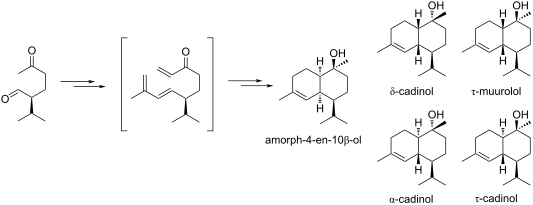
- found as scent constituents of hyperolids, but also in scent-emitting femoral glands of the Mantellinae [7]. Contrary to mantellines, whose scent gland secretions are dominated by macrolides and secondary alcohol derivatives, hyperolid secretions additionally contain sesquiterpenes, such as constituents
- cleanly obtained in 75% yield from triethyl phosphite and 3-chloro-2-methylpropene by addition of NaI [14]. Subsequent reduction of the ester with LiAlH4 and oxidation with IBX gave aldehyde 7 in 95% yield. Grignard addition of vinylmagnesium bromide afforded the alcohol 8, which comprised the desired
- amorph-4-en-10β-ol (14) from a natural source. Alcohol 14 has been isolated before [17][18] or obtained by rearrangement from (+)-α-ylangene [25]. In the latter case the (4S)-stereoisomer of 14 was formed, as the isopropyl group is not affected by the rearrangement (see Figure S3 in the Supporting


Total synthesis of insect sex pheromones: recent improvements based on iron-mediated cross-coupling chemistry
Beilstein J. Org. Chem. 2023, 19, 158–166, doi:10.3762/bjoc.19.15
- and NHCs was also described by Duong for the aryl–aryl cross coupling [29]. Alkoxide salts appear as good alternatives to NMP or phosphate-based additives, since several classic alcohol sources display low toxicities and can also come from renewable resources [30]. In this context, Cahiez and Lefèvre


1,4-Dithianes: attractive C2-building blocks for the synthesis of complex molecular architectures
Beilstein J. Org. Chem. 2023, 19, 115–132, doi:10.3762/bjoc.19.12
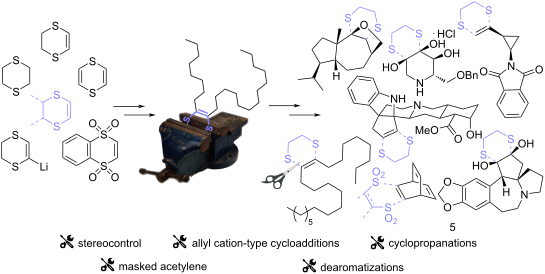
- alcohol 66 can be lithitated and reacted with a range of electrophiles, even without the need for a Lewis acid catalyst, and good levels of stereoinduction can be achieved. The method was used for the synthesis of a range of hexose sugars, as well as iminosugars (viz 66 → 67 → 68), wherein the piperidine
- -fused dihydrodithiin ring is first hydrodesulfurized and then dehydroxylated in a stereospecific and stereoselective manner [62]. The dihydrodithiin building block 66 thus acts as a synthetic equivalent of an allyl alcohol anion and serves as a versatile synthon for de novo carbohydrate synthesis [63
- over (3 + 2) cycloaddition pathways, leading us to investigate the use of the 1,4-dithiane-fused allyl alcohol 90 (and its derived carbocation) in purposeful (3 + 2) cycloadditions. In our studies of the cycloaddition reactivity of dihydrodithiinmethanol 90 [103], we found that single-trans-locked










Synthesis and characterisation of new antimalarial fluorinated triazolopyrazine compounds
Beilstein J. Org. Chem. 2023, 19, 107–114, doi:10.3762/bjoc.19.11
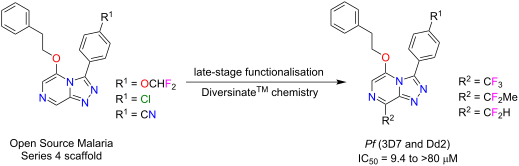
- of an ether linker on the pyrazine ring, with a two methylene unit chain length between the heterocyclic core and benzylic substituent, improved the potency of these compounds [16]. Hence, scaffolds 1–3 were then converted into a series of ether-linked triazolopyrazines with phenethyl alcohol or


Catalytic aza-Nazarov cyclization reactions to access α-methylene-γ-lactam heterocycles
Beilstein J. Org. Chem. 2023, 19, 66–77, doi:10.3762/bjoc.19.6

- -silicon effect. For this purpose, we prepared the known acyl chloride 23 in four steps starting from propargyl alcohol (Scheme 5) [68]. Trimethylsilylation of propargyl alcohol (24, 89% yield) followed by reduction of the alkyne using LiAlH4 afforded the allylic alcohol 26 as a single (E) diastereomer


Combining the best of both worlds: radical-based divergent total synthesis
Beilstein J. Org. Chem. 2023, 19, 1–26, doi:10.3762/bjoc.19.1
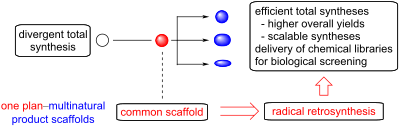
- to competitive oxidation of the C3 alcohol to the respective ketone. Increasing the equivalents of pyrone led to 83% of 54. On the other hand, employment of the same conditions to phenol 55 resulted only in the oxidation of the phenol. A more controlled delivery of electrons was realized by applying
- reduction of the amide using Wilkinson’s catalyst provided diastereoisomeric indole 131. Careful manipulation of the nitrile and alcohol side chains allowed selective cyclizations to the nitrogen atom of the indole core to conclude the total syntheses of 132–134. Samarium diiodide-mediated reductive
- ]. Despite the wide oxidative diversity, classic lignans bearing a C8–C8’ bond can be biosynthetically traced back to coniferyl alcohol (Scheme 18). Commonly, lignans possess important pharmacological properties including antimicrobial, anti-inflammatory, immunosuppressive activities, etc. [105]. At the same