


Search results
Search for "amide" in Full Text gives 996 result(s) in Beilstein Journal of Organic Chemistry. Showing first 200.
Aromatic C–H bond functionalization through organocatalyzed asymmetric intermolecular aza-Friedel–Crafts reaction: a recent update
Beilstein J. Org. Chem. 2023, 19, 956–981, doi:10.3762/bjoc.19.72

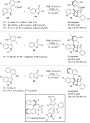
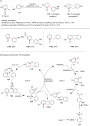
- heteroarene and amide oxygen of 45 forcing the heteroarene to approach from the Si-face of the imine moiety predominantly (see transition state 48) achieving high enantiocontrol for both heterocycles (Scheme 13) [38]. The carbocyclic ring in indoles is less reactive than the heterocyclic ring and hence the




Photoredox catalysis enabling decarboxylative radical cyclization of γ,γ-dimethylallyltryptophan (DMAT) derivatives: formal synthesis of 6,7-secoagroclavine
Beilstein J. Org. Chem. 2023, 19, 918–927, doi:10.3762/bjoc.19.70
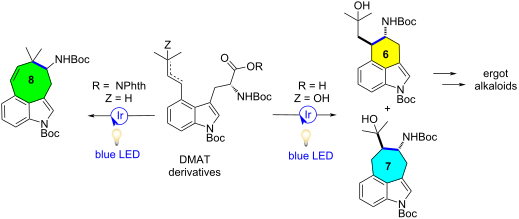
- demonstrated by the formal total synthesis of (±)-6,7-secoagroclavine (Scheme 4) [108][109][110][111][112][113][114]. Towards this end, compound 11 was methylated efficiently and selectively at the secondary amide by treatment with methyl iodide in DMF to afford compound 13. In additional two steps


Intermediates and shunt products of massiliachelin biosynthesis in Massilia sp. NR 4-1
Beilstein J. Org. Chem. 2023, 19, 909–917, doi:10.3762/bjoc.19.69
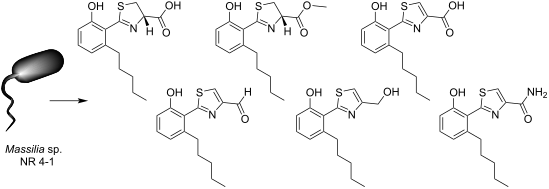
- signal at δH 7.62 ppm characteristic for an amide. In vitro tests were conducted for all compounds to assess their antibacterial activities against three Gram-negative bacteria (Escherichia coli, Agrobacterium tumefaciens and Pseudomonas fluorescens) and one Gram-positive bacterium (Bacillus subtilis


Asymmetric tandem conjugate addition and reaction with carbocations on acylimidazole Michael acceptors
Beilstein J. Org. Chem. 2023, 19, 881–888, doi:10.3762/bjoc.19.65

- its applications in the total syntheses of complex natural products and other molecules of biological relevance [13][14]. Acylimidazoles proved to be versatile building blocks broadly applicable in asymmetric catalysis and organic synthesis. Today, acylimidazoles are used as ester/amide surrogates
- , because of their particular chemical and physical properties [15]. In addition to ester/amide synthesis, enoyl imidazolides were developed as excellent Michael acceptors. Acylimidazoles are unique electrophiles that demonstrate moderate reactivity, relatively high stability, chemical selectivity, and high




Pyridine C(sp2)–H bond functionalization under transition-metal and rare earth metal catalysis
Beilstein J. Org. Chem. 2023, 19, 820–863, doi:10.3762/bjoc.19.62
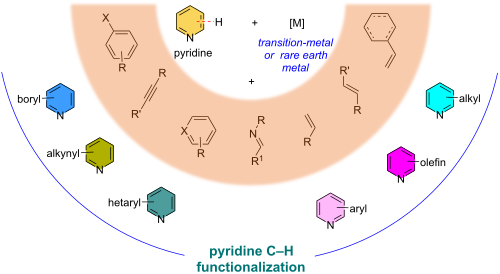
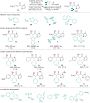
- tricyclic imidazonaphthyridinone derivative having antibacterial properties, with low catalyst loading (0.1 mol %) (Scheme 20b). Later, in 2014, the same authors, using an amide as directing group (DG), developed a protocol for the regioselective C3-alkenylation of pyridines through syn-addition of alkynes
- (0)/PR3-catalyzed C3 or C4-arylation of nicotinic and isonicotinic acids using amide as a directing group (Scheme 27) [97]. This method provides a way for arylated nicotinic acid derivatives which serve as building blocks for biologically important molecules. This was the first report for a directing
- 205 were accessed in moderate to excellent yields and also naphthyridine derivatives (205k and 205l) were synthesized. In the proposed mechanism, the initial deprotonation of HNBn2 by Ln[N(TMS)2]3 provided the lanthanide amide. Activation of the vinyl-substituted pyridin-3-amine 204 by the lanthanide
















Eschenmoser coupling reactions starting from primary thioamides. When do they work and when not?
Beilstein J. Org. Chem. 2023, 19, 808–819, doi:10.3762/bjoc.19.61
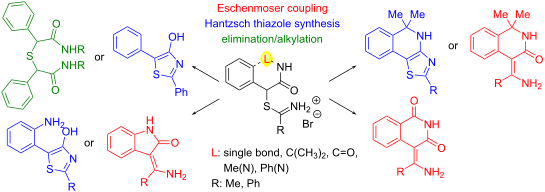
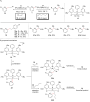
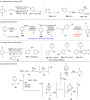
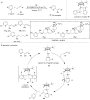
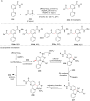
- (Scheme 6). This means that the cleavage of the amide group that evolves aniline (pKa = 4.6) occurred smoothly after the initial thiazole ring closure (through 12a’ in Scheme 6). The addition of a thiophile (trimethyl phosphite) does not turn the reaction toward ECR and only decreases the yield of 13
- , then the Hantzsch cyclization pathway can occur, and the structure of the product depends on the leaving ability of the lactam/amide nitrogen. A good leaving “aniline” group prefers C–N cleavage, whereas the worse leaving “phenethylamine” prefers water elimination. Experimental The starting 1,1


Sulfate radical anion-induced benzylic oxidation of N-(arylsulfonyl)benzylamines to N-arylsulfonylimines
Beilstein J. Org. Chem. 2023, 19, 771–777, doi:10.3762/bjoc.19.57
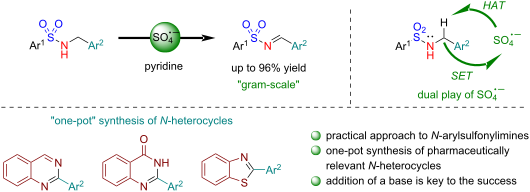
- were used as the substrates in this reaction, N-arylimines were not isolated. Rather, an amide, in some cases, was isolated via oxidation of the benzylic methylene to a carbonyl group [14]. In the quest of a new method for the synthesis of N-arylsulfonylimines, we questioned ourselves whether N


Strategies in the synthesis of dibenzo[b,f]heteropines
Beilstein J. Org. Chem. 2023, 19, 700–718, doi:10.3762/bjoc.19.51

- ) [77][78]. The allyl moiety in 144 allows for facile further functionalization. Amidation of the dihydrodibenzo[b,f]azepine (2a) derivatives with acyl halides 145 allowed for the introduction of variable length amide linkers by Kastrinsky et al. [3] (Scheme 33B). An industrial synthesis of opipramol (5


Enolates ambushed – asymmetric tandem conjugate addition and subsequent enolate trapping with conventional and less traditional electrophiles
Beilstein J. Org. Chem. 2023, 19, 593–634, doi:10.3762/bjoc.19.44
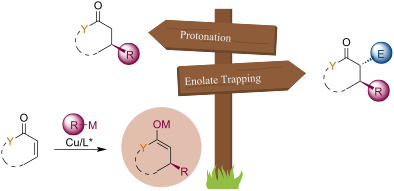
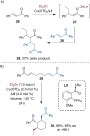
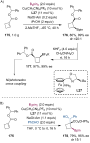
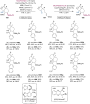
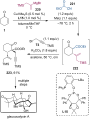
- (phosphite/phosphine-pyridine amide, phosphine-sulfoxide, phosphoramidite, MINBOL, see Figure 1) and they usually showed excellent diastereoselectivity (dr >20:1). The catalytic systems even with low catalyst loadings tolerated both electron-donating and withdrawing groups on the aromatic substituents








A new oxidatively stable ligand for the chiral functionalization of amino acids in Ni(II)–Schiff base complexes
Beilstein J. Org. Chem. 2023, 19, 566–574, doi:10.3762/bjoc.19.41
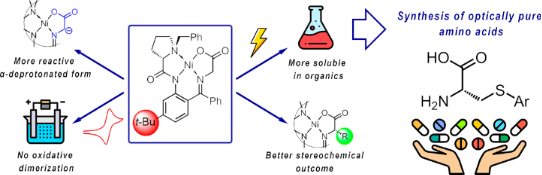
- assuming that the HOMO/LUMO localization is not significantly influenced by the tert-butyl group. Indeed, the HOMO is a combination of the π-orbitals of the substituted phenylene fragment, the p-orbital of the amide nitrogen and the Ni d-orbitals (see Supporting Information File 1). Although the phenylene



Phenanthridine–pyrene conjugates as fluorescent probes for DNA/RNA and an inactive mutant of dipeptidyl peptidase enzyme
Beilstein J. Org. Chem. 2023, 19, 550–565, doi:10.3762/bjoc.19.40
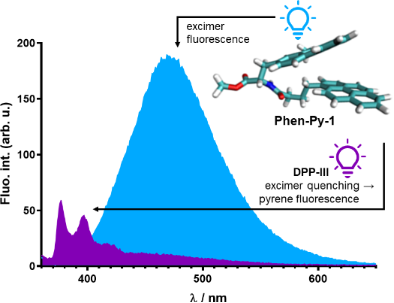
- Synthesis The phenanthridine derivative of the amino acid alanine (Phen-AA) has been prepared according to the procedure described earlier [19]. Phen-AA was deprotected under acidic conditions (TFA–H2O) at room temperature for 20 hours. The amide coupling reaction was performed in anhydrous acetonitrile
- phenanthridinylalanine with the corresponding pyrene-containing carboxylic acid and were linked together by an amide bond. Conjugate Phen-Py-1 possessed a trimethylene chain linker that allowed pronounced flexibility for the positioning of aromatic units. Although more rigid, Phen-Py-2 also enabled intramolecular
- -2 by amide formation; Reagents and conditions: 1. TFA–H2O mixture (9:1, v/v; 2 mL), rt, 20 hours. 2. Anhydrous acetonitrile, HBTU, HOBt, Et3N, rt, 20 hours. Electronic absorption data and quantum yields of Phen-Py-1 and Phen-Py-2 (sodium cacodylate/HCl buffer, Ic = 0.05 mol dm−3, pH 5 or pH 7) and




Transition-metal-catalyzed domino reactions of strained bicyclic alkenes
Beilstein J. Org. Chem. 2023, 19, 487–540, doi:10.3762/bjoc.19.38
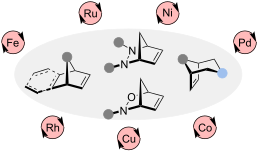
- noted decreasing the steric bulk of the amide moiety of the substrate from isopropyl to ethyl to methyl decreased the enantioselectivity of the reaction. Carbon- and nitrogen-bridging bicyclic alkenes were also identified as competent substrates. In this respect, norbornadiene was found to give the
- reaction (vide infra). The reaction seems to be sensitive to the steric bulk of the amide functionality with n-propyl and isopropylamides having diminished yields. While the scope of anilides was quite extensive, electron-deficient substrates resulted in lowered yields. In 2022, the Jeganmohan group
- transition metals, this reaction proceeded smoothly with a broad range of ester-, ketone-, and amide-stabilized phosphorus ylides. Oxabenzonorbornadienes bearing both EWG and EDG substituents worked well including bridgehead-substituted substrates which only experienced a slight reduction in yield. Similar











Transition-metal-catalyzed C–H bond activation as a sustainable strategy for the synthesis of fluorinated molecules: an overview
Beilstein J. Org. Chem. 2023, 19, 448–473, doi:10.3762/bjoc.19.35
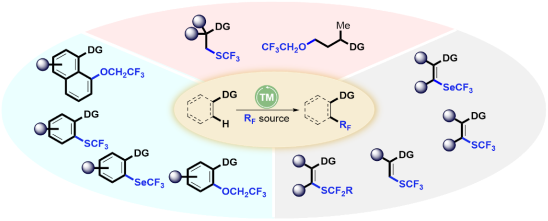
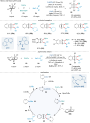
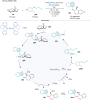
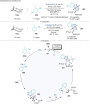
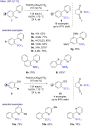
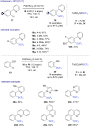
- -promoted trifluoromethylthiolation of benzamide derivatives 1 at the ortho-position by C–H bond activation [114]. Indeed, using a bidentate directing group (amide derived from the 8-aminoquinoline), the mono- and difunctionalized compounds were obtained when Cu(OAc)2 (0.5 equiv) and the toxic and volatile
- aryl residue allowed the monofunctionalization to occur selectively. Also, amide 1g bearing a disubstituted arene was successfully functionalized in 59% yield. Finally, the difunctionalized thiophene derivative 2h was obtained in 56% yield. In 2016, Wang's group developed another methodology for the
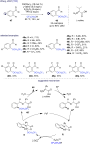
- amide derived from 8-aminoquinoline 13e (Scheme 6, 13 examples, up to 75% yield). In this study, two mechanisms were reported. The first one suggested that a palladacycle C is formed after the irreversible chelation of the 2-phenylpyridine substrate with palladium, which is the rate-determining step








CuAAC-inspired synthesis of 1,2,3-triazole-bridged porphyrin conjugates: an overview
Beilstein J. Org. Chem. 2023, 19, 349–379, doi:10.3762/bjoc.19.29
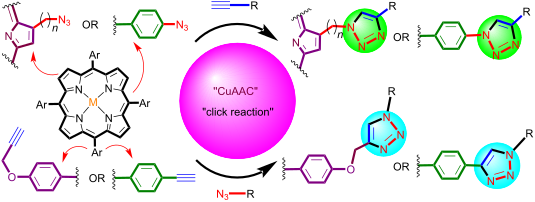
- conjugates 76a,b were synthesized in 80% yield by Ol’shevskaya et al. where a porphyrin unit 74a is covalently linked to 1-azidomethyl-o-carborane 75 [41] (Scheme 15). This boronation of the amide was performed via “click chemistry” in СН2Сl2/Н2О solvent system using Cu(OAc)2·2H2O and sodium ascorbate as the


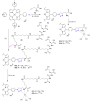


Group 13 exchange and transborylation in catalysis
Beilstein J. Org. Chem. 2023, 19, 325–348, doi:10.3762/bjoc.19.28
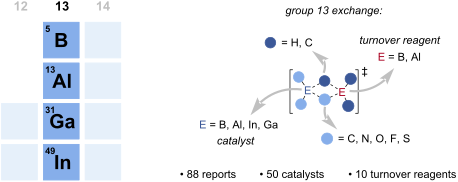
- -coordinated heterocycle 21. Hydride transfer from the BH3-amide 22 to HBpin regenerated the borohydride catalyst 19, and gave a neutral aminoborane 23, which then underwent B‒N/B‒H transborylation with HBpin to give the N‒Bpin dihydropyridine 24 and BH3 (Scheme 6). The mechanism of stoichiometric indole
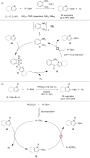
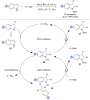
- give the borylated amide 90 and regenerate the aluminium hydride 88 (Scheme 22). This method was also applied to the dehydrocoupling of alcohols and thiols, with this being the only example of an Al‒S/B‒H exchange in catalysis. A number of aluminium hydride species has been used for the catalytic










Continuous flow synthesis of 6-monoamino-6-monodeoxy-β-cyclodextrin
Beilstein J. Org. Chem. 2023, 19, 294–302, doi:10.3762/bjoc.19.25
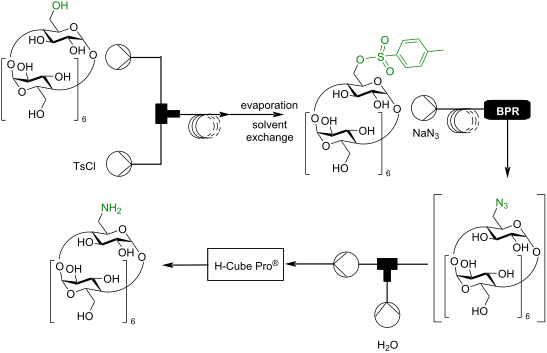
- readily reduced to mono(6-amino-6-deoxy)-CDs (NH2-CDs) opening the way for the preparation of amine, thioureido or amide-linked CD scaffolds [14]. Several other nucleophiles can react with mono-6-O-tosyl-CDs, such as iodide, dithiol, hydroxylamine, alkylamine or polyalkylamine to give iodo- [15], thio


Synthesis, α-mannosidase inhibition studies and molecular modeling of 1,4-imino-ᴅ-lyxitols and their C-5-altered N-arylalkyl derivatives
Beilstein J. Org. Chem. 2023, 19, 282–293, doi:10.3762/bjoc.19.24
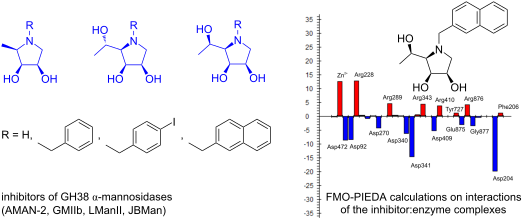
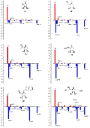
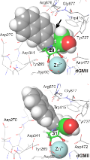
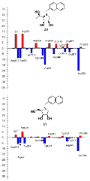
- compounds’ true inhibitory activity and selectivity toward these relevant GH38 enzymes remain unknown [29]. In this regard, another promising strategy seems to be a modification of the pyrrolidine core at the C-1 position. For example, attaching an amide moiety directly to C-1 in pyrrolidines possessing the


An efficient metal-free and catalyst-free C–S/C–O bond-formation strategy: synthesis of pyrazole-conjugated thioamides and amides
Beilstein J. Org. Chem. 2023, 19, 231–244, doi:10.3762/bjoc.19.22
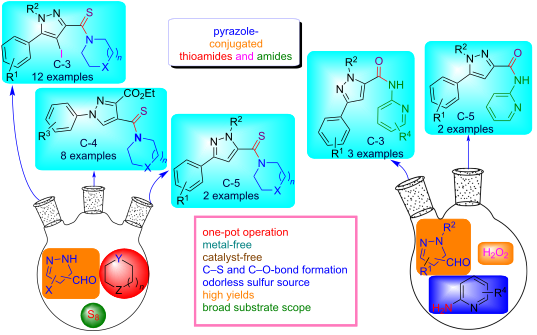
- -tethered thioamide and amide conjugates. The thioamides were generated by employing a three-component reaction of diverse pyrazole C-3/4/5 carbaldehydes, secondary amines, and elemental sulfur in a single synthetic operation. The advantages of this developed protocol refer to the broad substrate scope
- , metal-free and easy to perform reaction conditions. Moreover, the pyrazole C-3/5-linked amide conjugates were also synthesized via an oxidative amination of pyrazole carbaldehydes and 2-aminopyridines using hydrogen peroxide as an oxidant. Keywords: C–S/O bond formation; metal-free; oxidative amidation
- pharmaceutical ingredients [48] such as fenclosic acid, fentiazac, and febuxostate. Similarly, in contemporary chemistry, the amide functionality is one of the most studied functional groups. Specifically, this moiety is vital for the formation of the backbone of structural proteins and enzymes [49]. The amide


Total synthesis of insect sex pheromones: recent improvements based on iron-mediated cross-coupling chemistry
Beilstein J. Org. Chem. 2023, 19, 158–166, doi:10.3762/bjoc.19.15
- combination with a variety of alkenyl chlorides and (hetero)aryl chlorides [18]. Importance of the leaving groups: use of enol phosphates In order to overcome the delicate choice of either NMP or one of its surrogates as a suitable co-solvent, it has also been demonstrated that amide-free catalytic procedures


Preparation of β-cyclodextrin/polysaccharide foams using saponin
Beilstein J. Org. Chem. 2023, 19, 78–88, doi:10.3762/bjoc.19.7
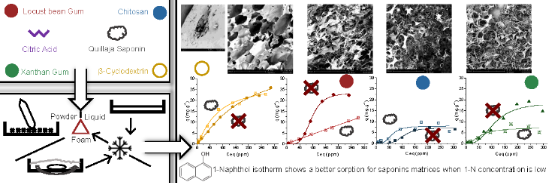
- cyclodextrin/polysaccharide. The 1200 cm−1 band is also more intense when changing that ratio. This difference is also correlated to the C=O band found at 1700 cm−1. In the case of the chitosan matrices, for a high concentration of chitosan, the crosslinking reactions include esterification links, amide



Improving the accuracy of 31P NMR chemical shift calculations by use of scaling methods
Beilstein J. Org. Chem. 2023, 19, 36–56, doi:10.3762/bjoc.19.4
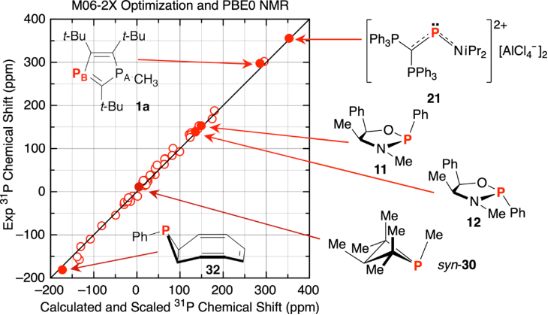
- supported by the amide-like CO infrared stretching frequency of 1654 cm−1. This compound further warrants mention since one might suppose that the carbonyl carbon atom would be found near 170 ppm in the 13C NMR spectrum by analogy to amides, but was instead observed at 228 ppm and confirmed by a calculated




Combining the best of both worlds: radical-based divergent total synthesis
Beilstein J. Org. Chem. 2023, 19, 1–26, doi:10.3762/bjoc.19.1
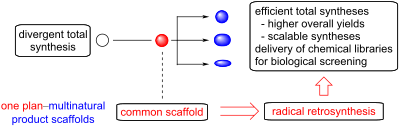
- the final targets. With regard to the mechanism, it is hypothesized that it commences with the formation of a nitrogen-centered radical. The carbon radical 139 is then formed after the aforementioned nitrogen radical attacks the enamide group. The α-amide positioning is theorized to improve
- reduction of the amide using Wilkinson’s catalyst provided diastereoisomeric indole 131. Careful manipulation of the nitrile and alcohol side chains allowed selective cyclizations to the nitrogen atom of the indole core to conclude the total syntheses of 132–134. Samarium diiodide-mediated reductive








Digyalipopeptide A, an antiparasitic cyclic peptide from the Ghanaian Bacillus sp. strain DE2B
Beilstein J. Org. Chem. 2022, 18, 1763–1771, doi:10.3762/bjoc.18.185
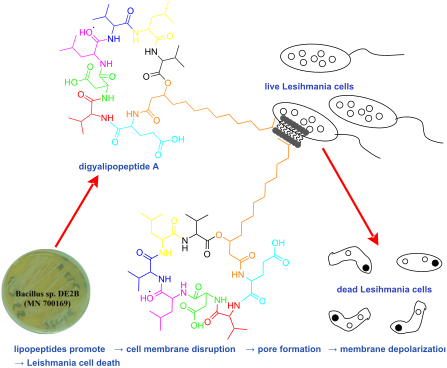
- were characteristic for a –CH2– sandwiched between the carbonyl carbon of an amide and a hydroxylated methine proton δH 5.00 (m, 1H, H-39). Interestingly, this spin system expands to include protons at δH 1.55 (ov., 2H, H-40), 1.21 (ov., 2H, H-41), 1.21 (ov., 2H, H-42), 1.21 (ov., 2H, H-43), 1.21 (ov
- advanced Marfey’s method [16][17][18] involving the complete hydrolysis of compound 1 followed by derivatization of the resultant amino acid residues with N-α-(2,4-dinitro-5-fluorophenyl)-ʟ-alanine amide (ʟ-FDAA). Similar derivatization reactions between ʟ-FDAA and authentic amino acid standards, followed
- examine similar lipopeptide structures previously characterized in the literature that possessed both the fatty acid chain terminating as an isopropyl and adjacent to Glu residue connected by an amide bond. This detailed examination revealed that in the structure of these cyclic lipopeptides, the


Synthesis of (−)-halichonic acid and (−)-halichonic acid B
Beilstein J. Org. Chem. 2022, 18, 1629–1635, doi:10.3762/bjoc.18.174
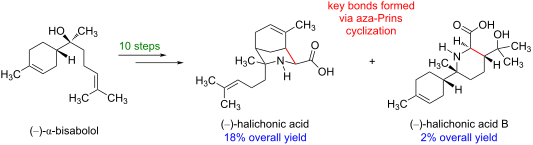
- amine derivatives (e.g., hydrochloride salt, mandelic acid salt, phthalimide, ketopinic acid amide, salicylaldehyde imine, p-toluenesulfonamide, acetamide, etc.), all attempts to separate the resulting isomers (which were oils) were similarly unsuccessful. Seeking an alternative to column chromatography
- anticipated that the amide 5 could be hydrolyzed to give a single enantiomer of amine 4. However, we found that amide 5 was remarkably resistant to hydrolysis, even under forcing conditions. For example, no amide hydrolysis was observed in concentrated aqueous NaOH solution at reflux (with or without an
- , respectively. At this stage, we started to investigate alternative methods to cleave the amide via reduction. Achieving selective C–N-bond cleavage of amides under reductive conditions is still a largely unsolved problem since a C–O-bond cleavage is typically the preferred mode of reactivity, especially when


A new route for the synthesis of 1-deazaguanine and 1-deazahypoxanthine
Beilstein J. Org. Chem. 2022, 18, 1617–1624, doi:10.3762/bjoc.18.172
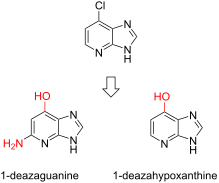
- , glycogen synthase kinase 3 (GSK-3), leucine-rich repeat kinase 2 (LRRK2), tyrosine phosphorylation-regulated kinase-1A (DYRK1A) and CDC2-like kinase 1 (CLK1), and fatty acid amide hydrolase (FAAH) [4]). Similar properties were ascertained for 1-deazapurine derivatives (imidazo[4,5-b]pyridines) and





