


Search results
Search for "analogue" in Full Text gives 617 result(s) in Beilstein Journal of Organic Chemistry. Showing first 200.
Nanangenines: drimane sesquiterpenoids as the dominant metabolite cohort of a novel Australian fungus, Aspergillus nanangensis
Beilstein J. Org. Chem. 2019, 15, 2631–2643, doi:10.3762/bjoc.15.256
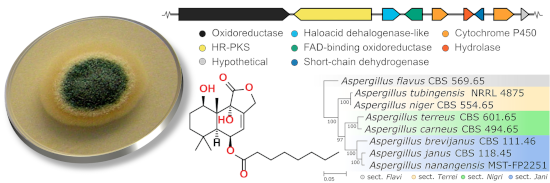
- significant differences being the absence of the 6-OH proton, the presence of additional signals for a C6 acyl chain, and significant deshielding of H-6 from δH 4.30 to 5.47 ppm. Therefore, the structure of 2 was assigned as the 6-O-hexanoyl analogue of 1, as shown in Figure 1. Compound 2 was previously
- File 1) with those for 2 revealed the only significant differences to be the absence of the H-1 and 1-OH protons and the presence of an additional methylene group (H2-1). Therefore, the structure of 4 was assigned to be the 1-deoxy analogue of 2, as shown in Figure 1. Compound 4 was previously reported
- , while HMBC correlations from H-7 to C-12 and from H3-12 to C-9 positioned the methyl on C-8. Therefore, the structure of 8 was assigned as the seco analogue of 2, as shown in Figure 1. The absolute configuration of 8 was assigned to be the same as 2 based on their similar NMR data and optical rotations


AgNTf2-catalyzed formal [3 + 2] cycloaddition of ynamides with unprotected isoxazol-5-amines: efficient access to functionalized 5-amino-1H-pyrrole-3-carboxamide derivatives
Beilstein J. Org. Chem. 2019, 15, 2623–2630, doi:10.3762/bjoc.15.255
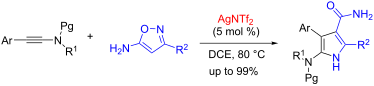
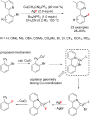
- clinical trials against colon cancer, gall bladder cancer and acute myelogenous leukemia in humans [40] and its 2-aza analogue 3 is also active against human cytomegalovirus (HCMV) and herpes simplex virus type 1 (HSV-1) [41]. To the best of our knowledge, this case of α-imino silver-carbene is not yet


Synthesis of novel sulfide-based cyclic peptidomimetic analogues to solonamides
Beilstein J. Org. Chem. 2019, 15, 2544–2551, doi:10.3762/bjoc.15.247
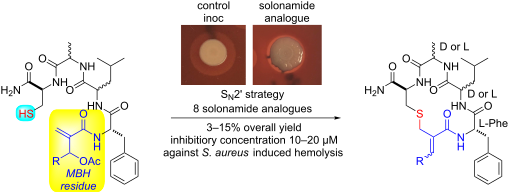
- blood cells (see Supporting Information File 1, assay 3) [43]. Analogue 9e showed better capacity to inhibit the hemolysis than 9g at the same concentration (Figure 3). At concentrations of 10 µM and 200 µM of 9e, the hemolysis production by S. aureus was inhibited by 63% and 84%, respectively. Also, a


Formation of alkyne-bridged ferrocenophanes using ring-closing alkyne metathesis on 1,1’-diacetylenic ferrocenes
Beilstein J. Org. Chem. 2019, 15, 2534–2543, doi:10.3762/bjoc.15.246
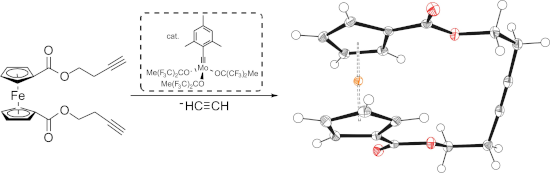
- analogue of the formula [Fe{C5H4COO(CH2)3 C≡}2]2 in a ratio of approximately 4:1. Related NMR spectra can be found in Supporting Information File 1 (Figures S9 and S10). Separation of the monomer 2b could be achieved with column chromatography on silica gel with a yield of 53%. The ring-closed dimer


α,ß-Didehydrosuberoylanilide hydroxamic acid (DDSAHA) as precursor and possible analogue of the anticancer drug SAHA
Beilstein J. Org. Chem. 2019, 15, 2524–2533, doi:10.3762/bjoc.15.245
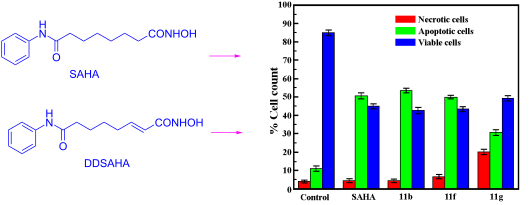
- induce apoptosis, and to induce generation of ROS. Compounds 11b and 11f were arbitrarily chosen, while the shorter chain analogue 11g was selected to compare the effect of chain length, if any. Direct comparison with SAHA was made to quantify the effects shown by these three compounds in each of the
- clearly the truncated analogue 11g is less effective. Loss of cell viability by LDH assay LDH assays quantitatively measures lactate dehydrogenase (LDH) released into the media from damaged cells as a biomarker for cellular cytotoxicity [35][36]. Hence, to further characterize compound-induced HeLa cell


A toolbox of molecular photoswitches to modulate the CXCR3 chemokine receptor with light
Beilstein J. Org. Chem. 2019, 15, 2509–2523, doi:10.3762/bjoc.15.244
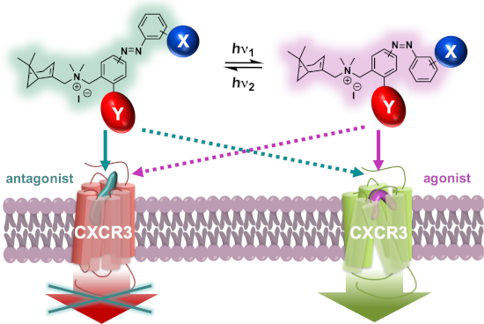
- azobenzene analogue 2a, we explored the substitution pattern of the outer aromatic ring with chlorine atoms in the ortho, meta and para-position (compounds 2b–d, respectively) to also assess the possibility of agonism provided by a halogen bond. Compound 2e, which contains a bromine atom in the ortho
- unit Aiming to improve the position and directionality of the halogen atom, we next designed a subseries with the azo group at the meta-position of the central ring (scaffold 3) instead of at the para-position as in 2a–e. The analogue without halogen substitution (3a) as well as Cl/Br analogues
- oxidation of methyl 3-aminobenzoate (17a) using Oxone® to obtain a crude nitroso product 18a, which was used in a Mills reaction with an iodoaniline (19a–c) at 100 °C to obtain azobenzenes 20g,h in high yields and ortho-analogue 20f in a decreased yield presumably due to steric hindrance. The methyl ester



In search of visible-light photoresponsive peptide nucleic acids (PNAs) for reversible control of DNA hybridization
Beilstein J. Org. Chem. 2019, 15, 2500–2508, doi:10.3762/bjoc.15.243
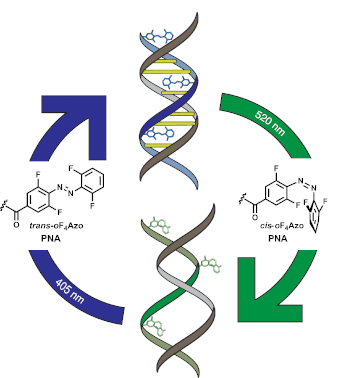
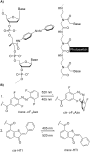
- melting temperatures (TM) by the analysis of the first derivative [50]. TM values are summarized in Table 2. The incorporation of the visible-light responsive azobenzene (PNA 3) stabilized the duplex in comparison with the Aeg(Ac)-modified analogue 5. However, the TM of 3 is 14 °C lower than the one
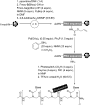
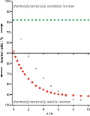
- calculated for the unmodified PNA analogue (20). Unfortunately, no difference between isomers was observed. The potential of the functionality of our compounds could be enhanced by both changing the localization and the number of incorporated photoswitches. To try to maintain the cooperative base pairing, we



Photochromic diarylethene ligands featuring 2-(imidazol-2-yl)pyridine coordination site and their iron(II) complexes
Beilstein J. Org. Chem. 2019, 15, 2428–2437, doi:10.3762/bjoc.15.235
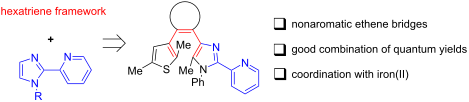
- demonstrated that imidazole as a heteroaryl moiety decreases thermal stability [42]. In particular, a close analogue of 3 with a phenyl instead of a pyridyl group showed a half-live of the ring-closed isomer as low as 7.3 days. In accordance to this data, diarylethene 3 showed a half-life of 8.6 days. However


Effect of ring size on photoisomerization properties of stiff stilbene macrocycles
Beilstein J. Org. Chem. 2019, 15, 2408–2418, doi:10.3762/bjoc.15.233
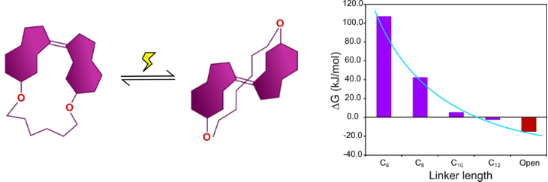
- of 1a–d and of the reference compound 7 calculated using B3LYP. The results show a pronounced effect of linker length on the energy difference between Z- and E-isomers. Ring strain for E and Z-isomers of 1a–d expressed as the Gibbs free energy difference to an acyclic analogue, using an isodesmic




Current understanding and biotechnological application of the bacterial diterpene synthase CotB2
Beilstein J. Org. Chem. 2019, 15, 2355–2368, doi:10.3762/bjoc.15.228
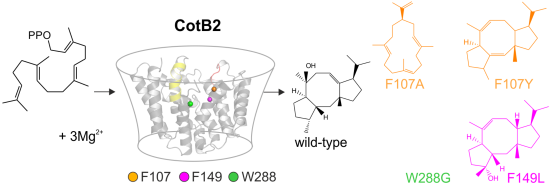
- structure of CotB2wt with bound inert substrate analogue geranylgeranyl thiodiphosphate (GGSDP; CotB2wt·Mg2+B·GGSDP; PDB-ID 5GUE; [36]), resembling the next precatalytic state of CotB2. Surprisingly, there is only Mg2+B bound to the enzyme and not the full set of three Mg2+-ions needed for catalysis. The
- [11]. Structural information on selina-4(15),7(11)-diene synthase (SdS), revealed that upon substrate binding by an induced fit mechanism, R178 changes its side chain conformation thereby approaching and interacting with the diphosphate function of the substrate analogue and forming a salt bridge to


Synthesis of a dihalogenated pyridinyl silicon rhodamine for mitochondrial imaging by a halogen dance rearrangement
Beilstein J. Org. Chem. 2019, 15, 2333–2343, doi:10.3762/bjoc.15.226
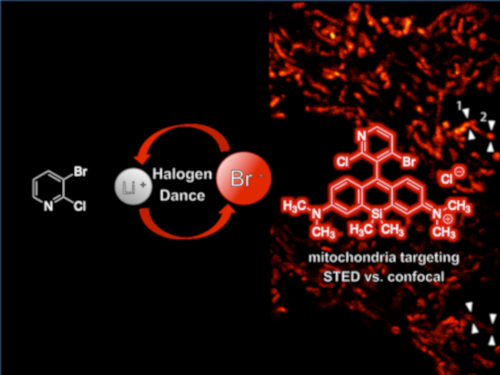
- optical properties for medical and bioimaging. As a compound with intrinsic mitochondria targeting ability, the radiolabelled analogue can be applied in multimodal (PET/OI) imaging of mitochondria for diagnostic and therapeutic use in, e.g., cancer patients. Keywords: halogen-dance reaction
- -fluoroazetidine moiety in 10 (“JF635”) causes a hypsochromic shift without affecting the high quantum yield compared to the azetidine analogue 9 (“JF646”) (Table 1, entry 9 vs 10). Comparing the phenyl substituted rhodamine 2 with its 2’-methyl substituted analogue 3, restricted rotation around the xanthene
- coexistence of 19 and its lithiated analogue. Using high excess of 19 could force the reaction to completeness leading to the dihalogenated pyridinyl silicon rhodamine in 85% yield without any monohalogenated byproduct and no necessity of HPLC purification. Although 15 can be coupled or further functionalized



Functionalization of 4-bromobenzo[c][2,7]naphthyridine via regioselective direct ring metalation. A novel approach to analogues of pyridoacridine alkaloids
Beilstein J. Org. Chem. 2019, 15, 2304–2310, doi:10.3762/bjoc.15.222
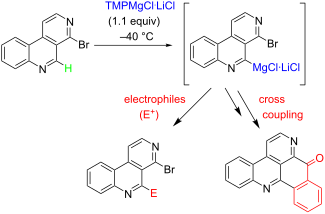
- had utilised for the construction of oxoaporphine alkaloids before [21] failed to give kuanoniamine A (3, Scheme 4). In order to explore alternative cyclization protocols, we performed model reactions with 2-bromophenyl analogue 12c. Neither the reaction with diverse Pd catalysts, nor Oliveira’s Pd
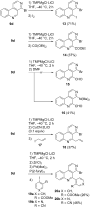
- material could not be recovered, another product 23, which is most likely the debrominated, not cyclized analogue of 20a, was observed in traces. The outcome of this experiment shows that the bromine–magnesium exchange reaction was most likely completed, but the intramolecular trapping of the ester group




Recent advances in transition-metal-catalyzed incorporation of fluorine-containing groups
Beilstein J. Org. Chem. 2019, 15, 2213–2270, doi:10.3762/bjoc.15.218
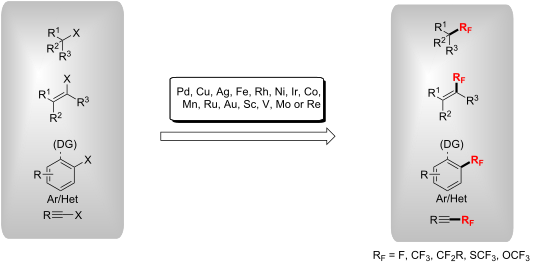
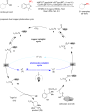
- catalysis (Scheme 61). The method tolerates a myriad of primary, secondary and tertiary carboxylic acids and provides the corresponding CF3 analogue in good to excellent yields. Details of the proposed dual copper–photoredox cycle are shown in Scheme 61. The Ir(III) photocatalyst Ir[dF(CF3)ppy]2(4,4








Harnessing enzyme plasticity for the synthesis of oxygenated sesquiterpenoids
Beilstein J. Org. Chem. 2019, 15, 2184–2190, doi:10.3762/bjoc.15.215
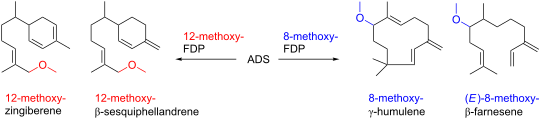
- ]. Mechanistically, isomerisation of 12 to the methoxy-NDP analogue 28 allows for an ADS-catalysed 1,6-cyclisation to the 12-methoxy-bisabolyl cation (29) followed by a [1,3]-hydride shift, which relocates the positive charge on C1 in 30. With FDP and 12-hydroxy-FDP, a subsequent 1,10-ring closure has been proposed


Azologization and repurposing of a hetero-stilbene-based kinase inhibitor: towards the design of photoswitchable sirtuin inhibitors
Beilstein J. Org. Chem. 2019, 15, 2170–2183, doi:10.3762/bjoc.15.214
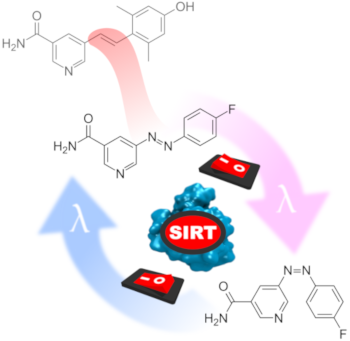
- original stilbenoid structure exerted unfavourable photochemical characteristics it was remodelled to its heteroarylic diazeno analogue. By this intramolecular azologization, the shape of the molecule was left unaltered, whereas the photoswitching ability was improved. As anticipated, the highly analogous
- strength accordingly. Synthesis and photochemistry of photoswitchable diazeno analogue Even though the photochemical properties of ortho methylated azastilbenes like 2f could be improved by preventing photocyclization, they were still unsuitable for the use as photoswitchable sirtuin inhibitors in the
- stilbene motive of selected stilbene 2c by a diazeno group, because photoisomerization of azo dyes was anticipated to proceed fast and reversible by application of UV irradiation and visible light, respectively in this analogue. 5-Diazenylnicotinamide 11 was synthetically accessible in two steps through


1,2,3-Triazolium macrocycles in supramolecular chemistry
Beilstein J. Org. Chem. 2019, 15, 2142–2155, doi:10.3762/bjoc.15.211
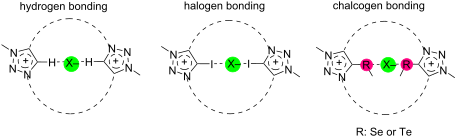
- its bis(imidazolium) analogue. Given that, the highest affinity of this heterophane system was toward acetate (Ka = 5.0 × 10³ M−1) in CD3CN. Although the iodide ion is biologically important because of its indispensable role in thyroid gland function, among all of the reported receptors in the
- macrocycle has been reported by Nakamura and his co-workers containing three 1,2,3-triazolium and carbazole moieties 12 (Figure 10). π–π stacking interactions and the self-association ability of the synthesized macrocycle are increased in comparison with its neutral analogue due to the decreased electron
- density of the triazolium derivative. Rigid macrocycles 12 display selective complexation with I− because of the complementary size of the cavity of the macrocyclic ring and the iodide ion. In addition, the acidity of the inner protons of 12 is higher than the corresponding neutral analogue which also




Synthesis and properties of sulfur-functionalized triarylmethylium, acridinium and triangulenium dyes
Beilstein J. Org. Chem. 2019, 15, 2133–2141, doi:10.3762/bjoc.15.210
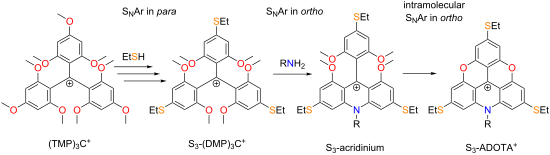
- ] lacking para-substituents and for the para-amino-substituted analogue [17] (step 2 in Figure 1). It was found that the reactivity in SNAr reactions of 1 with primary amines was high and the acridinium compounds 4a,b were obtained in few minutes after the addition of 2 equiv of the corresponding primary
- (Figure 5), with increasing intensity as the number of -SEt groups on the TOTA+ core increases. This behavior resembles the trend observed for the analogue series of amino-substituted TOTA’s (Table 2) [18][31]. In the two low-symmetry derivatives 8 and 9 transitions to the S2 excited states are observed
- less bright fluorophores. Thus, the dialkylamino-substituted analogue of 5a (A3-ADOTA+) has a reported quantum yield as high as 64% in acetonitrile [17], on par with A3-TOTA+ and A2-TOTA+ which display quantum yields from 50–100% depending on the solvent [31]. A similar reduction in fluorescence


Bipolenins K–N: New sesquiterpenoids from the fungal plant pathogen Bipolaris sorokiniana
Beilstein J. Org. Chem. 2019, 15, 2020–2028, doi:10.3762/bjoc.15.198
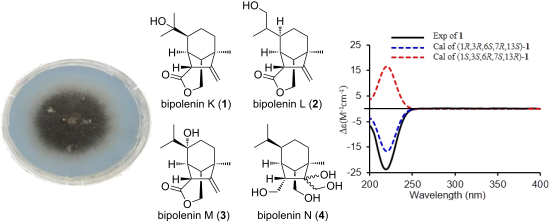
- suggested that 1 was the 9-hydroxy analogue of 5, which was further confirmed by detailed analysis of key 2D NMR correlations (Figure 2). Compound 1 was previously reported in 1970 as a semi-synthetic analogue of 9-hydroxyprehelminthosporol [18], but has not been previously isolated and characterised from a
- difference being the presence of a hydroxymethylene group (δC 65.8; δH 3.58 and 3.44) in place of the methyl group at C-11. Thus, the structure of 2 was assigned as the 11-hydroxy analogue of 5. The absolute configurations of the chiral centres in 2 were established to be the same as for 1 after
- quaternary carbon (δC 74.8) in 3. This suggested that 3 was the 6-hydroxy analogue of 5, which was further confirmed by detailed analysis of key 2D NMR correlations (Figure 2). The absolute configurations of the stereocentres in 3 were established to be identical to 1 and 2 based on the analysis of proton


Archangelolide: A sesquiterpene lactone with immunobiological potential from Laserpitium archangelica
Beilstein J. Org. Chem. 2019, 15, 1933–1944, doi:10.3762/bjoc.15.189
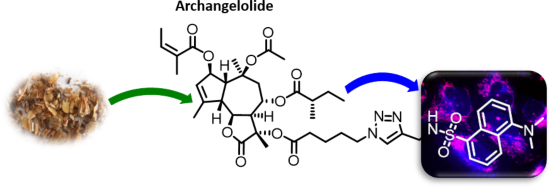
- fluorescent conjugate; sarco/endoplasmic reticulum calcium ATPase; sesquiterpene lactone; trilobolide analogue; Introduction Sesquiterpene lactones (SLs) have been attracting interest already for some time due to the plethora of biological effects they elicit. Various SLs show anticancer, antimicrobial




Functional panchromatic BODIPY dyes with near-infrared absorption: design, synthesis, characterization and use in dye-sensitized solar cells
Beilstein J. Org. Chem. 2019, 15, 1758–1768, doi:10.3762/bjoc.15.169
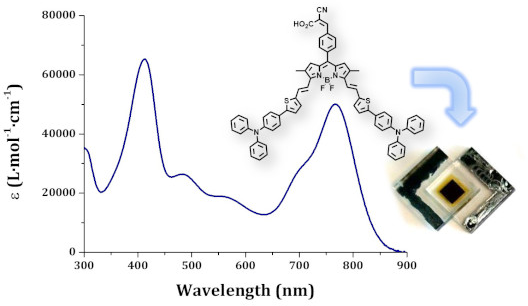
- corresponding dipyrromethenium chloride, which was then converted into its BODIPY analogue 2 through complexation by BF3·OEt2 in basic media. Regioselective introduction of distyryl substituents is achieved via Knoevenagel-type condensation in the presence of piperidine using aldehyde derivatives 3 and 4 whose


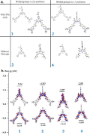


N-(1-Phenylethyl)aziridine-2-carboxylate esters in the synthesis of biologically relevant compounds
Beilstein J. Org. Chem. 2019, 15, 1722–1757, doi:10.3762/bjoc.15.168

- afforded a stable di-N-Boc derivative (3S,3'R)-75 which was transformed into (3S,3'R)-68 in the presence of acids. In search for a sphingolipid analogue synthesis of compounds of general formula (R)-76 was undertaken (Scheme 19) [53]. The aziridine ketone (2S,1'R)-77 obtained from Weinreb amide (2S,1'R)-18
- from the involvement of sphingolipid metabolites in an array of important cell processes. ᴅ-threo-PDMP (1R,2R)-81 is a ceramide analogue identified as an inhibitor of glucosylceramide synthase (GCS) at micromolar concentrations [66][67]. It was efficiently synthesized [68][69] employing the alcohol (2R
- mixture of diastereoisomeric alcohols (2S,1'R,1''R)-78 and (2S,1'S,1''R)-78 with low (up to 33%) diastereoselectivity readily separable chromatographically. The sphingolipid analogue SG-14 (2S,3S)-84 was obtained from (2S,1'S,1''R)-78 as already described (Scheme 21) and was found to inhibit hSphK2 with


Synthesis and conformational preferences of short analogues of antifreeze glycopeptides (AFGP)
Beilstein J. Org. Chem. 2019, 15, 1581–1591, doi:10.3762/bjoc.15.162
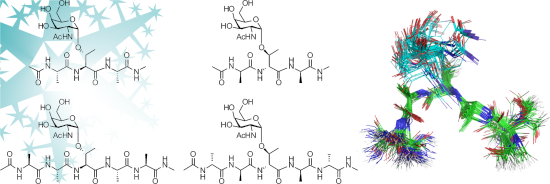
- [18]. The synthesis of the retro-inverso analogue had been envisaged to prove that changing the amino acid configuration from ʟ to ᴅ and reversing of the peptide sequence should place the side chains in a similar manner as for the parent compound. Interestingly, replacing alanine by proline in AFGP
- the temperature coefficient for this amide proton (see Table 1). The value found suggests that the formed hydrogen bond is strong and stable, much stronger than the one found for peptide 3. This could explain the lacking antifreeze activity of the fully ᴅ-configured AFGP analogue. High flexibility of


Different reactivity of phosphorylallenes under the action of Brønsted or Lewis acids: a crucial role of involvement of the P=O group in intra- or intermolecular interactions at the formation of cationic intermediates
Beilstein J. Org. Chem. 2019, 15, 1491–1504, doi:10.3762/bjoc.15.151
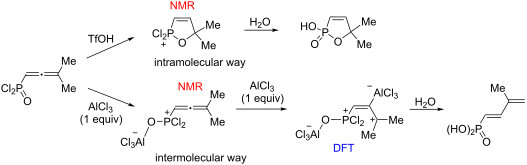
- considered (Scheme 10). The required catalytic amount of such superacid may be formed due to the presence of traces of HCl (byproduct in acetylene–allene rearrangement step) in the reaction mixture. Next, the protonaton of complex 13 occurs, leading to allylic cation 22. As analogue of cation 16 (Scheme 9
- kcal/mol) than that in mechanism B (22→23, 122.0 kcal/mol, Scheme 9). At the same time, formation of allylic cation 22 (mechanism B) is accompanied by positive changes in ΔG (76.9 kcal/mol), whereas its analogue species 16 formed with slightly negative ΔG (−1.6 kcal/mol, Scheme 10). Next, we compared


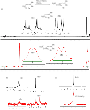


Anomeric sugar boronic acid analogues as potential agents for boron neutron capture therapy
Beilstein J. Org. Chem. 2019, 15, 1355–1359, doi:10.3762/bjoc.15.135
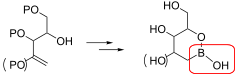
- position. The analogues were obtained by hydroboration of proper open-chain terminal alkenes that, after quenching with water, spontaneously afforded cyclic boronic acids with hemiacetal-like structures. Keywords: antitumor agents; boron neutron capture therapy; boronic acid; hydroboration; sugar analogue
- and biological behavior of novel derivatives containing this functional group at the anomeric position, giving rise to an isostere analogue able to mimic the monosaccharide (see Figure 1). Results and Discussion In the present paper the synthesis of two analogues bearing a boron atom at the anomeric
- protected sugar precursors (Figure 3). The synthesis of the first analogue 8, shown in Scheme 1, started from known compound 1, that is easily obtained from 2,3,5-tri-O-benzyl-ᴅ-arabinose according to a literature procedure [15]. Benzoylation of the free hydroxy group of 1, followed by removal of the silyl


Synthesis of dipolar molecular rotors as linkers for metal-organic frameworks
Beilstein J. Org. Chem. 2019, 15, 1331–1338, doi:10.3762/bjoc.15.132
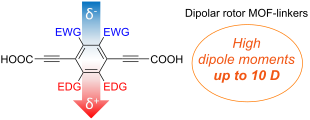
- barriers of the dipolar rotors 1–5. Geometry optimizations (symmetry 1–4: C2v; 5: C2) were performed with B3LYP/aug-cc-pVTZ level of theory and subsequent Mullikan dipole moment analysis (analogue to Müllen et al. [32]). For an appraisal of rotational barriers rotational scans were performed at the PBE





