


Search results
Search for "ethers" in Full Text gives 508 result(s) in Beilstein Journal of Organic Chemistry. Showing first 200.
Thermal stability of N-heterocycle-stabilized iodanes – a systematic investigation
Beilstein J. Org. Chem. 2019, 15, 2311–2318, doi:10.3762/bjoc.15.223
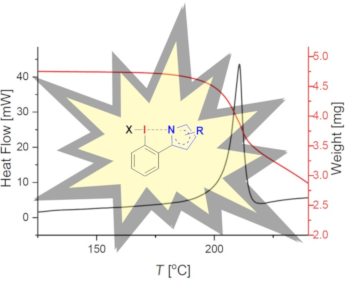
- extensively, the chemical design of the stabilizing donor ligand L2 has not been investigated as intensive. In general, carboxylic acid derivatives, ethers or free alcohols are utilized to stabilize the hypervalent iodine center by an oxygen–iodine bond or through dative oxygen–iodine interactions in (pseudo


Recent advances in transition-metal-catalyzed incorporation of fluorine-containing groups
Beilstein J. Org. Chem. 2019, 15, 2213–2270, doi:10.3762/bjoc.15.218
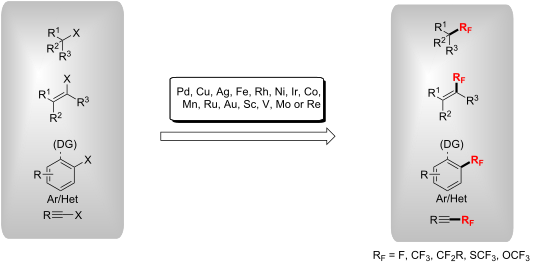
- trifluoromethylation of aryl/heterocyclic chlorides with the CF3 source TESCF3 (TES, triethylsilyl), which proceeded following a classical Pd(0)/Pd(II) catalytic cycle (Scheme 62). Also, the reaction tolerates a variety of functional groups, such as esters, amides, ethers, nitriles, etc., and therefore provides a new






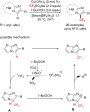


1,2,3-Triazolium macrocycles in supramolecular chemistry
Beilstein J. Org. Chem. 2019, 15, 2142–2155, doi:10.3762/bjoc.15.211
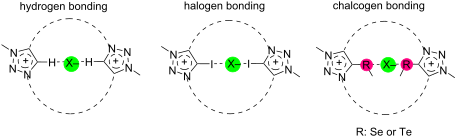
- template-directed self-assembly procedure via an intramolecular “CuAAC click” reaction in the presence of electron-rich bisnaphtho- or bisbenzo-24-crown-8 ethers. Afterwards, the triazole groups in the catenanes were methylated. The resulting triazolium macrocycle containing catenanes 17a (DN24C8) and 17b
- catenane 17b upon addition of base were less noticeable because of a weaker CT band in the case of a dibenzo-fused crown ether. Thus, the authors have proven that the movement of macrocyclic rings within catenanes can be controlled by switching the pH, and the bisnaphtho crown ethers can act either as




Multiple threading of a triple-calix[6]arene host
Beilstein J. Org. Chem. 2019, 15, 2092–2104, doi:10.3762/bjoc.15.207
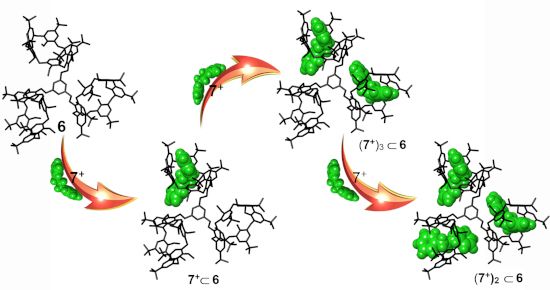
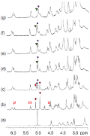
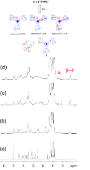
- architectures. Historically, the most common components were dialkylammonium ions, as axles, and crown ethers, cyclodextrins, or cucurbiturils, as wheels [1]. With respect to the possible types of wheels, more recently, we have introduced the through-the-annulus threading of simple calix[6]arene hosts with


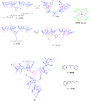


![[Graphic 2]](/bjoc/content/inline/1860-5397-15-207-i6.svg?max-width=637&scale=1.18182) 6, (7+)2
6, (7+)2


α-Photooxygenation of chiral aldehydes with singlet oxygen
Beilstein J. Org. Chem. 2019, 15, 2076–2084, doi:10.3762/bjoc.15.205
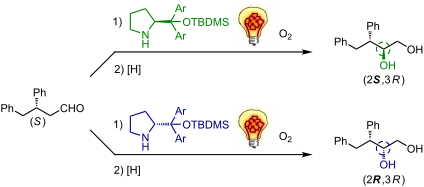
- of diarylprolinol silyl ethers is highly diastereoselective and that the configuration of a newly created stereocenter at the α-position depends predominantly on the catalyst structure. The absolute configuration of chiral 1,2-diols has been unambiguously established based on electronic circular
- dichroism (ECD) and TD-DFT methods. Keywords: 1,2-diols; ECD; enamines; organocatalysis; porphyrins; silyl ethers of diarylprolinols; singlet oxygen; Introduction Carbonyl compounds are one of the most important building blocks in organic synthesis. As a consequence, there is a constant need for new
- separated by column chromatography. Photooxygenation of 3,4-diphenylbutanal (1) with chiral organocatalysts The highly enantioselective synthesis of 3,4-diphenylbutanal (1), according to the procedure developed by Melchiorre, requires the use of noncommercially available sterically bulky silyl ethers [16



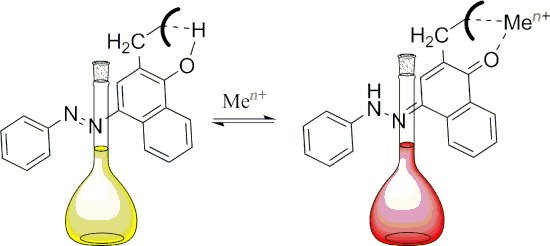
Tautomerism as primary signaling mechanism in metal sensing: the case of amide group
Beilstein J. Org. Chem. 2019, 15, 1898–1906, doi:10.3762/bjoc.15.185
- alkali metal determination is still a challenge. In the case of alkaline earth metal ions, the reagents with reasonable selectivity are still not commonly accepted since they compete with transitional metal ions [4]. The discovery of crown ethers [5] and 3D-based ligands [6] unquestionably helped the





Halide metathesis in overdrive: mechanochemical synthesis of a heterometallic group 1 allyl complex
Beilstein J. Org. Chem. 2019, 15, 1856–1863, doi:10.3762/bjoc.15.181
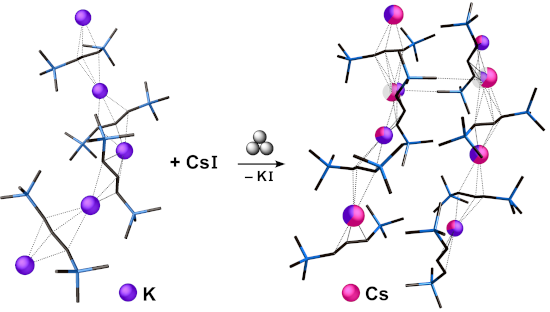
- in general a solvent is not required, in solution environments the formation of products is assisted if the solubility of MX or RnM' is limited, as their precipitation helps shift the equilibrium toward the product side. If ethers are used as solvents, for example, the low solubility of MX can be


Novel macrocycles – and old ones doing new tricks
Beilstein J. Org. Chem. 2019, 15, 1838–1839, doi:10.3762/bjoc.15.178

- 10.3762/bjoc.15.178 Keywords: macrocycles; supramolecular chemistry; Macrocycles [1] are the workhorses in supramolecular chemistry. Many basic supramolecular concepts have been developed through studying crown ethers, cryptands, podands and spherands in the 1970s and 1980s. For these contributions
Vicinal difunctionalization of alkenes by four-component radical cascade reaction of xanthogenates, alkenes, CO, and sulfonyl oxime ethers
Beilstein J. Org. Chem. 2019, 15, 1822–1828, doi:10.3762/bjoc.15.176

- , Institute of Molecular Sciences, UMR-CNRS 5255, 351 cours de la libération, Talence, 33405 Cedex, France 10.3762/bjoc.15.176 Abstract Four-component coupling reactions between xanthogenates, alkenes, CO, and sulfonyl oxime ethers were studied. In the presence of hexabutylditin, working as a propagating
- functionalities, have the potential for further elaboration. Keywords: CO; multicomponent reaction; radicals; sulfonyl oxime ethers; xanthogenates; Introduction Multicomponent reactions constitute a powerful and highly efficient tool in organic synthesis to build up intricate compounds from simple molecules in
- /acceptor type C1 synthons [6][7][8][9][10][11][12][13][14][15]. In this context, sulfonyl oxime ethers are powerful acceptors of type C1 synthon [8][16][17], which terminates the multicomponent reaction by a β-scission of RSO2 radicals [18][19][20]. Recently, one of us reported on a three-component radical


N-(1-Phenylethyl)aziridine-2-carboxylate esters in the synthesis of biologically relevant compounds
Beilstein J. Org. Chem. 2019, 15, 1722–1757, doi:10.3762/bjoc.15.168

- as tert-butyldiphenylsilyl ethers, individually transformed into 2-(3-hydroxypropyl)pyrrolidines by LiAlH4 reduction and deprotected. Diamines PF-00951966 (Scheme 18) belongs to a fluoroquinolone family of antibiotics which is substituted at C7 with a (3R)-3-[(1S)-2-cyano-1-(methylamino)ethyl


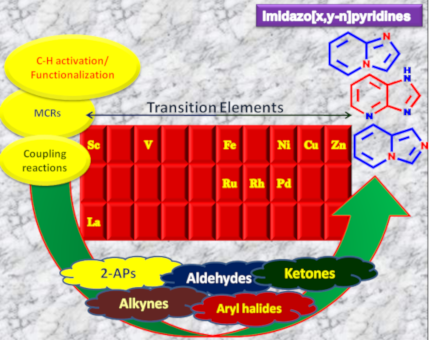
Recent advances on the transition-metal-catalyzed synthesis of imidazopyridines: an updated coverage
Beilstein J. Org. Chem. 2019, 15, 1612–1704, doi:10.3762/bjoc.15.165


Reaction of oxiranes with cyclodextrins under high-energy ball-milling conditions
Beilstein J. Org. Chem. 2019, 15, 1448–1459, doi:10.3762/bjoc.15.145
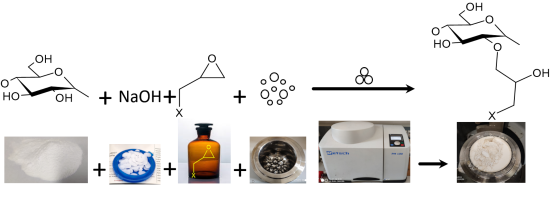
- the silyl ethers. Unlike in the solution reaction, the HEBM isolated reaction products of β-CD were almost completely insoluble in water, while the γ-CD derivative was somehow soluble or solubilised, as seen in the UV–vis spectra. Both the β- and γ-CD derivatives showed high complexation affinity


Fluorine-containing substituents: metabolism of the α,α-difluoroethyl thioether motif
Beilstein J. Org. Chem. 2019, 15, 1441–1447, doi:10.3762/bjoc.15.144
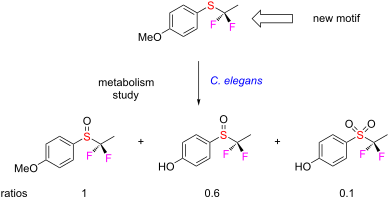
- -difluoroethyl thioether motif to explore further its potential as a substituent for bioactives discovery chemistry. Incubation of two aryl–SCF2CH3 ethers with the model yeast organism Cunninghamella elegans, indicates that the sulfur of the thioether is rapidly converted to the corresponding sulfoxide, and then
- literature [3], substituents which are typically introduced to stop metabolism of aryl rings [4]. Other fluorinated motifs are gaining in importance too, such as aryl–OCF3 and aryl–SCF3 ethers, although these substituents can significantly raise lipophilicity (log P) [5][6]. There are relatively few
- hydrolytic lability of the analogous oxygen ethers. By way of example α,α-difluoroethyl ether 14 [18] was incubated with cultures of C. elegans under the standardised conditions, as illustrated in Scheme 4. 19F NMR of the extract indicated a trace of residual starting material with one major metabolite which


Anomeric sugar boronic acid analogues as potential agents for boron neutron capture therapy
Beilstein J. Org. Chem. 2019, 15, 1355–1359, doi:10.3762/bjoc.15.135
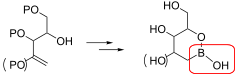
- anomeric boron analogue. Different conditions and reagents were tested for the hydroboration of the enol ethers 5 and 6 (including the use of catecholborane or dibromoborane at low temperature), but complex mixtures containing elimination byproducts were obtained in any condition. We were able to obtain


Host–guest interactions between p-sulfonatocalix[4]arene and p-sulfonatothiacalix[4]arene and group IA, IIA and f-block metal cations: a DFT/SMD study
Beilstein J. Org. Chem. 2019, 15, 1321–1330, doi:10.3762/bjoc.15.131
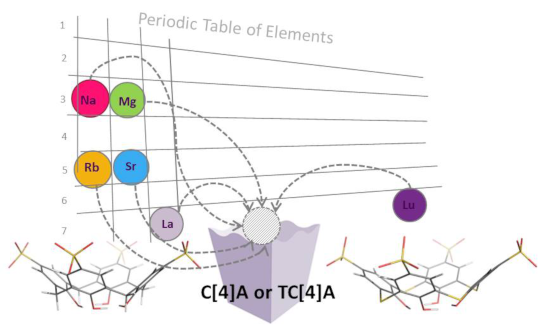
- the well-studied cyclodextrins and crown ethers. Calixarenes are products of phenol–aldehyde condensation, as the aromatic components may derived from phenol, resorcinol, or pyrogallol; the aldehyde most often used for phenol is simple formaldehyde (methanal, HCHO), while larger aldehydes (e.g





Self-assembly behaviors of perylene- and naphthalene-crown macrocycle conjugates in aqueous medium
Beilstein J. Org. Chem. 2019, 15, 1203–1209, doi:10.3762/bjoc.15.117
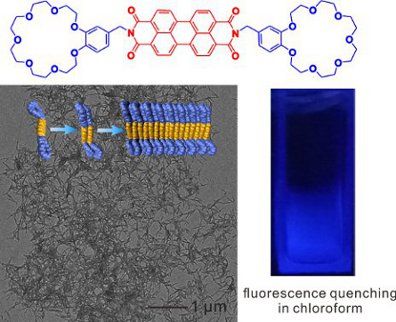
- Materials & Engineering (IBME), Northwestern Polytechnical University, Xi’an, Shaanxi 710072, P. R. China 10.3762/bjoc.15.117 Abstract The synthesis of conjugates of perylene diimide (PDI) and naphthalene diimide (NDI) modified with two benzo-21-crown-7 ethers (B21C7) are herein described. Their self
- macrocyclic hosts, crown ethers, have been widely used as building blocks for supramolecular assemblies in the past two decades [37][38][39][40][41][42][43][44][45][46][47][48][49][50][51][52][53], mainly in the fabrication of crown ether-based threaded or interlocked assemblies in organic solvents [54
- water-soluble crown macrocycle 3 was synthesized according to reported protocols, by using potassium cations as template [86][87]. The primary amine group in 3 offers diverse reaction pathways to design crown ethers appended LMW gelators, dendrimers and polymers [88][89][90][91][92]. In order to


Synthesis of aryl cyclopropyl sulfides through copper-promoted S-cyclopropylation of thiophenols using cyclopropylboronic acid
Beilstein J. Org. Chem. 2019, 15, 1162–1171, doi:10.3762/bjoc.15.113
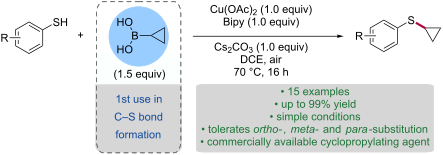
- copper(II) triflate and Hünig's base, rearranges to give the corresponding 2-(arylthio)-3-alkyl-1,3-butadiene 10 [12]. Reacting methyl 2-phenylthiocyclopropyl ketone 11 with silyl enol ethers 12 in the presence of dimethylaluminium chloride leads to the functionalized cyclopentanes 13 via a highly
- -cyclopropylating benzyl mercaptan, an alkylthiol, failed to deliver the desired product. Engle and McAlpine recently reported a very efficient, simple and general protocol for the O-cyclopropylation of phenols using potassium cyclopropyl trifluoroborate (29) that leads to the corresponding aryl cyclopropyl ethers


Electrophilic oligodeoxynucleotide synthesis using dM-Dmoc for amino protection
Beilstein J. Org. Chem. 2019, 15, 1116–1128, doi:10.3762/bjoc.15.108
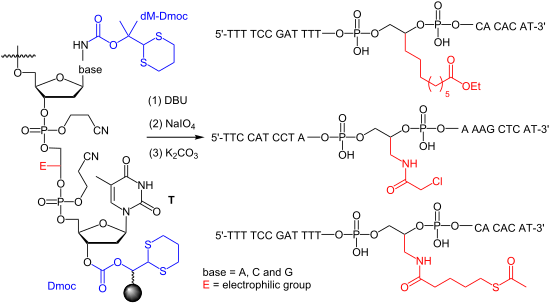
- protected with the 2-cyanoethyl group. These protecting groups and the linker have to be cleaved under strongly basic and nucleophilic conditions. As a result, many sensitive groups including acetal, hemiacetal, vinyl ethers, enol ethers, aldehydes, esters, activated esters, thioesters, aziridines, epoxides




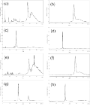

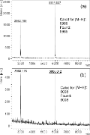

Precious metal-free molecular machines for solar thermal energy storage
Beilstein J. Org. Chem. 2019, 15, 1096–1106, doi:10.3762/bjoc.15.106
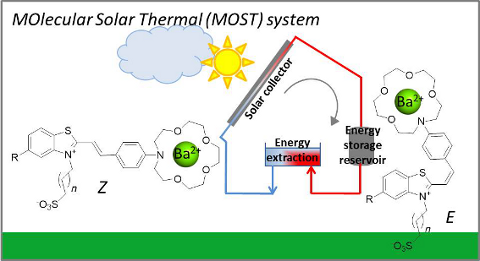
- , their structures predispose to an easy functionalization and low cost synthesis. Another advantage of these dyes is the very low molar absorptivity [16][17] of the higher energy cis isomer, which is a prerequisite for its photostability. The cis isomers of styryl dyes linked to crown ethers have been
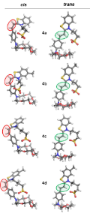
- . This finding is a resemblance to the results from reference [24] where the 5-methoxy-substituted benzothiazole styryl-crown ethers demonstrated higher quantum yields of trans-to-cis photoisomerization. Insight from electronic structure calculations To rationalize the experimental findings, we performed




Multicomponent reactions (MCRs): a useful access to the synthesis of benzo-fused γ-lactams
Beilstein J. Org. Chem. 2019, 15, 1065–1085, doi:10.3762/bjoc.15.104
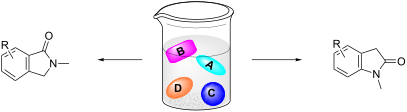
- procedure has been described by Singh and co-workers [85], who used formylbenzoate 29 and preformed enol ethers instead of ketones in a Mukaiyama–Mannich lactamization reaction catalysed by zinc or copper under mild conditions. A large amount of diverse isoindolinones 32 (thirty-four examples) can be built
- in this manner, although, once again, ortho-substituted anilines 2 did not render the cyclic product, as the final lactamization step is probably impeded by sterical reasons. On the other hand, silyl enol ethers of acetone, acetophenone, methyl acetate, 2-hydroxyfuran and cyclohexanone worked well
- , providing isoindolinone 32 with yields ranging from 64 to 85%. A variation of the above approach that makes use of fluorinated silyl ethers 39, has been applied to the synthesis of analogous fluorinated isoindolinones 40 (Scheme 11) [86]. In this case, formylbenzoic acid 33, a variety of aromatic, aliphatic






Stereo- and regioselective hydroboration of 1-exo-methylene pyranoses: discovery of aryltriazolylmethyl C-galactopyranosides as selective galectin-1 inhibitors
Beilstein J. Org. Chem. 2019, 15, 1046–1060, doi:10.3762/bjoc.15.102
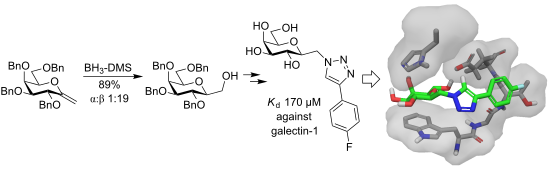
- -terminal CRD), -7, -8C, -8N, -9C, and -9N. Results and Discussion Chemistry The synthesis starts from the known enol ethers 2, 4, and 6 prepared using published methods [25][26]. Hydroborations of enol ethers have been known to give good to excellent regio- and stereoselectivity and are thus a possible
- route to 2-deoxyhepuloses 3, 5 and 7 [27][28][29][30]. The hydroboration of enol ethers 2, 4, and 6 with borane dimethyl sulfide in THF, followed by oxidation using hydrogen peroxide and sodium hydroxide gave 2-deoxygalactoheptulose 3 and 2-deoxymannoheptulose 5 in good yields (89% and 78%) and with



SO2F2-mediated transformation of 2'-hydroxyacetophenones to benzo-oxetes
Beilstein J. Org. Chem. 2019, 15, 976–980, doi:10.3762/bjoc.15.95
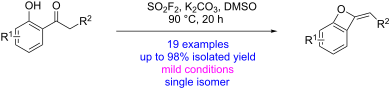
- natural products and biological active molecules [3]. The synthesis and chemistry of oxetanes have been reviewed [1][2][4][5]. In medicinal chemistry, oxetanes have remained neglected units for many years since the first parent structure has been reported by Reboul in 1878 [6]. As strained cyclic ethers
- desirable. However, the intrinsic ring strain in oxetanes makes cyclization a basic challenge, moreover, the kinetics of cyclization to make four-membered ring ethers are considerably slower than those of six, five, and three-membered ring compounds [16]. Therefore, the formation of oxetanes with


Easy, efficient and versatile one-pot synthesis of Janus-type-substituted fullerenols
Beilstein J. Org. Chem. 2019, 15, 901–905, doi:10.3762/bjoc.15.87

- the characterization of Janus-type fullerenol amphiphiles more than one method is needed to perfectly identify the compounds. Polyhydroxylation reaction of the fullerene can lead to a mixture of several oxygen moieties like hydroxy groups, diols, ketones, hemiketals, epoxides and ethers. The general
- structure motive besides hydroxy groups are ethers. This may result from the reaction conditions since it was already shown that the reaction conditions influence the obtained oxygen moieties. The signal at 163 ppm can be assigned to carbon atoms 5 and 6 of the substituent. Carbon atom 2 of the substituent


Diastereo- and enantioselective preparation of cyclopropanol derivatives
Beilstein J. Org. Chem. 2019, 15, 752–760, doi:10.3762/bjoc.15.71
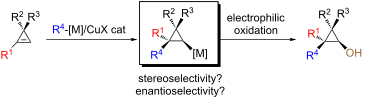
- . Prerequisite for a regio- and diastereoselective carbometalation. Various strategies leading to the formation of cyclopropanols. General approach to the preparation of cyclopropanol and cyclopropylamine derivatives. Preparation of cyclopropenyl methyl ethers 3a–d. Regio- and diastereoselective carbocupration
- of cyclopropenyl methyl ethers 3a,c. Diastereoselective formation of cyclopropanols. Diastereoselective carbometalation/oxidation of nonfunctionalized cyclopropenes 6. Preparation of diastereoisomerically pure and enantioenriched cyclopropanols and cyclopropylamines. Supporting Information




Synthesis of functionalized diazocines for application as building blocks in photo- and mechanoresponsive materials
Beilstein J. Org. Chem. 2019, 15, 727–732, doi:10.3762/bjoc.15.68
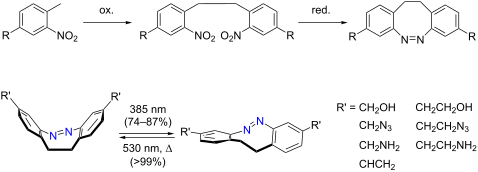
- step the hydroxy groups in 8a and 8b were protected as tert-butyl ethers (Scheme 2) to prevent oxidation in the following oxidative C–C coupling [31]. The tert-butyl ether was chosen as the protecting group because it is stable towards the oxidizing conditions of the C–C coupling reactions and the





