Search results
Search for "heterocyclic compounds" in Full Text gives 266 result(s) in Beilstein Journal of Organic Chemistry. Showing first 200.
2-Hetaryl-1,3-tropolones based on five-membered nitrogen heterocycles: synthesis, structure and properties
Beilstein J. Org. Chem. 2015, 11, 2179–2188, doi:10.3762/bjoc.11.236
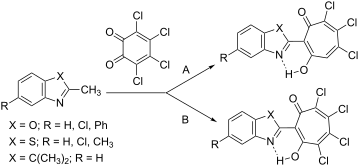
- 3,4,5,6-tetrachloro-1,2-benzoquinone with methylene-active five-membered heterocyclic compounds: 2-methylbenzoxazoles, 2-methylbenzothiazoles and 2,3,3-trimethylindoline. We have previously reported the synthesis of 2-(benzoxazolyl)-1,3-tropolones, 2-(benzothiazolyl)-1,3-tropolone, 2-(benzoxazolyl)-5,6,7
- solution (method B) is similar to that considered previously for the reaction of o-chloranil with 2-methylquinolines [19] which has been studied by means of DFT PBE0/6-311+G** modelling (Scheme 3, Table 1). At the initial stage, the aldol condensation of the methylene-active heterocyclic compounds with o
- activation energy barrier of the limiting step of the formation of 1,3-tropolone derivatives in the reaction of methylene-active five-membered heterocycles with o-chloranil in acetic acid solution strongly depends on the properties of the fragment X in the heterocyclic compounds. The larger the


![[Graphic 3]](/bjoc/content/inline/1860-5397-11-236-i8.png?max-width=637&scale=1.18182) N···H–O equilibrium in solutions of 2-hetaryl-5,6,7-trichloro- and 4,...
N···H–O equilibrium in solutions of 2-hetaryl-5,6,7-trichloro- and 4,...


Investigation on the reactivity of α-azidochalcones with carboxylic acids: Formation of α-amido-1,3-diketones and highly substituted 2-(trifluoromethyl)oxazoles
Beilstein J. Org. Chem. 2015, 11, 2021–2028, doi:10.3762/bjoc.11.219
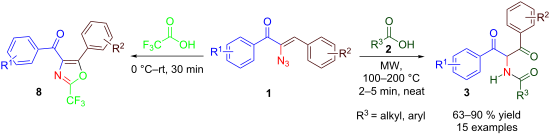
- . The N-(2-keto)amide skeleton is of particular interest, as it serves as a synthetic precursor for various small heterocyclic compounds such as imidazoles, oxazoles and thiazoles [7][8][9]. Azirine, the smallest nitrogen-containing unsaturated three-membered heterocyclic system, is well known as a
- -azirines are impressive intermediates for the synthesis of various substituted heterocyclic compounds [23][24][25]. Nucleophiles can interact with the electrophilic carbon of the strained 2H-azirine rings and due to the ring strain in the three-membered 2H-azirine ring system A1, the electrophilic


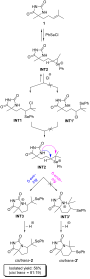
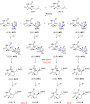
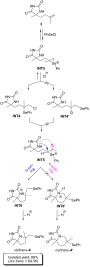
Mechanism, kinetics and selectivity of selenocyclization of 5-alkenylhydantoins: an experimental and computational study
Beilstein J. Org. Chem. 2015, 11, 1865–1875, doi:10.3762/bjoc.11.200
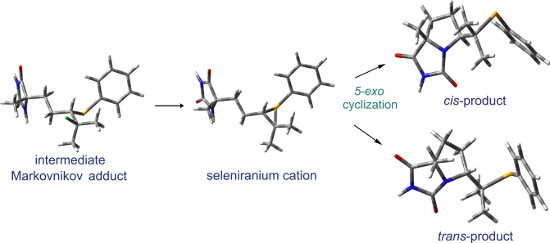
- heterocyclic compounds with cyclic urea core, are widely used as intermediates in industrial production of α-amino acids [1]. They exhibit various biological activities making them attractive candidates for drug discovery [2][3][4][5][6][7][8][9][10][11]. In the most cases, the observed biological activities





Recent applications of ring-rearrangement metathesis in organic synthesis
Beilstein J. Org. Chem. 2015, 11, 1833–1864, doi:10.3762/bjoc.11.199

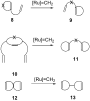
- 24% yield (Scheme 46). Azanorbornene systems 7-Azanorbornene derivatives have been used to generate a wide variety of heterocyclic compounds via the RRM approach [50]. To this end, the azanorbornene derivative 231 was treated with catalyst 2 in the presence of ethylene (24) to produce the heterospiro
- compounds. RRM approach to spiro heterocyclic compounds. RRM approach to regioselective pyrrolizidine system 240. RRM approach to functionalized bicyclic derivatives. RRM approach to tricyclic derivatives 249 and 250. RRM approach to perhydroindoline derivative and spiro system. RRM approach to bicyclic
- approach toward C3-symmetric chiral trimethylsumanene 209. Triquinane synthesis via IMDA reaction and RRM protocol. RRM approach to polycyclic compounds. RRM strategy toward cis-fused bicyclo[3.3.0]carbocycles. RRM protocol towards the synthesis of bicyclic lactone 230. RRM approach to spiro heterocyclic




An efficient synthesis of N-substituted 3-nitrothiophen-2-amines
Beilstein J. Org. Chem. 2015, 11, 1707–1712, doi:10.3762/bjoc.11.185
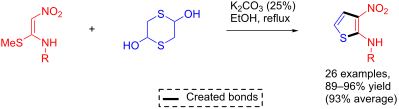
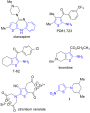
- ; Introduction Thiophenes constitute an important class of heterocyclic compounds, and are embedded in natural [1] and unnatural [2] organic molecules with diverse biological activities. Among them, many 2-aminothiophenes have reached the market or have undergone extensive pharmacological studies. Representative
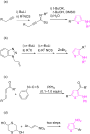
- methylmercaptan and water furnishes the product 3 (Scheme 4). Conclusion In conclusion, we have developed a very efficient synthesis of a synthetically and biologically relevant class of push–pull heterocyclic compounds under mild conditions and starting from simple acyclic substrates and catalysts. Previously



Synthesis and spectroscopic properties of β-triazoloporphyrin–xanthone dyads
Beilstein J. Org. Chem. 2015, 11, 1434–1440, doi:10.3762/bjoc.11.155
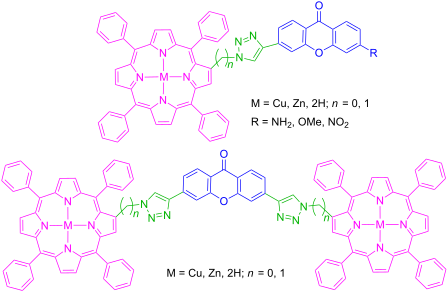
- fluorescence spectra of these porphyrin–xanthone dyads. Keywords: 1,3-dipolar cycloaddition; fluorescence; synthesis; triazoloporphyrin-xanthone dyads; UV–vis spectroscopy; Introduction In the past few decades, porphyrin macrocycles have emerged as a unique class of heterocyclic compounds and as most


Development of variously functionalized nitrile oxides
Beilstein J. Org. Chem. 2015, 11, 1241–1245, doi:10.3762/bjoc.11.138
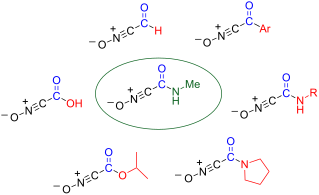
- formyl moieties. Keywords: acylnitrile oxide; amide; formylnitrile oxide; functionalized nitrile oxide; Weinreb amide; Introduction Nitrile oxides are valuable synthetic synthons for the construction of heterocyclic compounds by cycloaddition reactions, which lead to the formation of two bonds in a
- ], nitriles [6], and 1,3-dicarbonyl compounds [7] to afford the corresponding polyfunctionalized heterocyclic compounds, which are not easily obtained by other approaches. Although this protocol is expected to be useful for synthesizing polyfunctionalized compounds, it is limited by the need of a N


On the strong difference in reactivity of acyclic and cyclic diazodiketones with thioketones: experimental results and quantum-chemical interpretation
Beilstein J. Org. Chem. 2015, 11, 504–513, doi:10.3762/bjoc.11.57
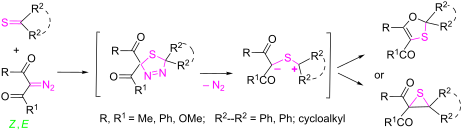
- of a wide variety of nitrogen containing heterocyclic compounds [1][2][3][4][5]. These reactions are generally known for diazoalkanes and 2-diazocarbonyl compounds, whereas similar processes with 2-diazo-1,3-dicarbonyl compounds (DDC) are far less common [6][7][8][9][10], and reported literature data


Further exploration of the heterocyclic diversity accessible from the allylation chemistry of indigo
Beilstein J. Org. Chem. 2015, 11, 481–492, doi:10.3762/bjoc.11.54
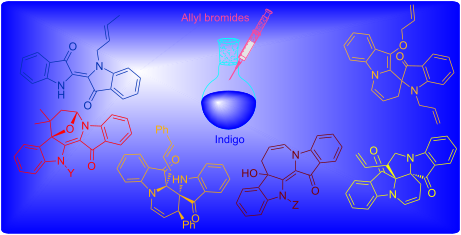
- substituted alkylating agents and through substituted indigos and variations on that skeleton, to greatly contribute to the synthesis of a diverse array of new heterocyclic compounds. Important in this area is a deeper understanding of the mechanisms involved and strategies for the optimisation of regio- and


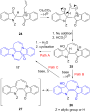


Direct access to pyrido/pyrrolo[2,1-b]quinazolin-9(1H)-ones through silver-mediated intramolecular alkyne hydroamination reactions
Beilstein J. Org. Chem. 2015, 11, 416–424, doi:10.3762/bjoc.11.47
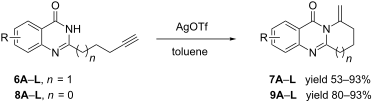
- Road, Shengyang 110016, P. R. China 10.3762/bjoc.11.47 Abstract We report a synthetic methodology for the construction of the fused heterocyclic compounds pyrido[2,1-b]quinazolin-9(1H)-ones and pyrrolo[2,1-b]quinazolin-9(1H)-ones through an AgOTf-catalyzed intramolecular alkyne hydroamination reaction


The reactions of 2-ethoxymethylidene-3-oxo esters and their analogues with 5-aminotetrazole as a way to novel azaheterocycles
Beilstein J. Org. Chem. 2015, 11, 385–391, doi:10.3762/bjoc.11.44
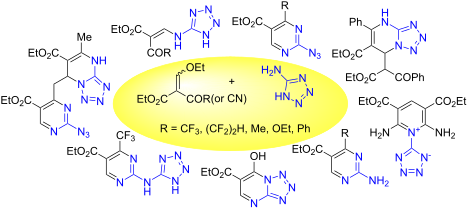
- ; diethyl 2-ethoxymethylidenemalonate; 2-ethoxymethylidene-3-oxo esters; ethyl 2-ethoxymethylidenecyanoacetate; Introduction 2-Ethoxymethylidene-1,3-dicarbonyl compounds are widely recognized as valuable building blocks in designing various open-chain and heterocyclic compounds, including those used in


Electrochemical selenium- and iodonium-initiated cyclisation of hydroxy-functionalised 1,4-dienes
Beilstein J. Org. Chem. 2015, 11, 174–183, doi:10.3762/bjoc.11.18

- summarised in Table 3. The electrochemical iodoalkoxylation of the aryl-substituted 1,4-dienols 2 led to the formation of the tetrahydrofuran derivatives 5 as single regio- and diastereomers. 1,4-Dienols with electron-donating and electron-withdrawing substituents as well as heterocyclic compounds gave the


Synthesis of antibacterial 1,3-diyne-linked peptoids from an Ugi-4CR/Glaser coupling approach
Beilstein J. Org. Chem. 2015, 11, 25–30, doi:10.3762/bjoc.11.4
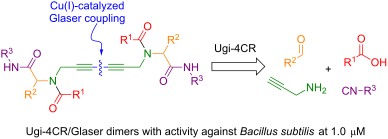
- , this reaction has been used in the synthesis of bioactive peptides and pseudopeptides, e.g., tubulysin mimetics [13], julocrotine derivatives [14], architecturally complex peptoid macrocycles [15][16], building blocks for diversity-oriented synthesis [17], and heterocyclic compounds [18]. Complex


Sequential decarboxylative azide–alkyne cycloaddition and dehydrogenative coupling reactions: one-pot synthesis of polycyclic fused triazoles
Beilstein J. Org. Chem. 2014, 10, 3031–3037, doi:10.3762/bjoc.10.321
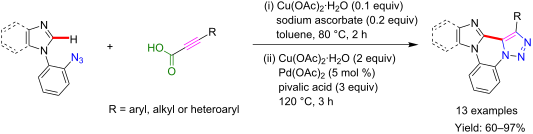
- (90–105 kcal/mol) to form a new, weaker C–M bond (50–80 kcal/mol), followed by generation of a new C–C bond. Generally, transition metal-catalyzed sp2 C–H activation is facilitated by directing groups [10][11][12][13] or heteroatoms in the heterocyclic compounds [14][15][16][17][18]. This methodology


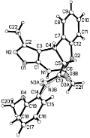
The unexpected influence of aryl substituents in N-aryl-3-oxobutanamides on the behavior of their multicomponent reactions with 5-amino-3-methylisoxazole and salicylaldehyde
Beilstein J. Org. Chem. 2014, 10, 3019–3030, doi:10.3762/bjoc.10.320
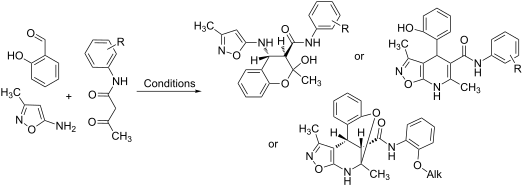
- ; catalysis; chemoselectivity; heterocycle; multicomponent reaction; ultrasonication; salicylaldehyde; Introduction Generally, considerable interest in heterocyclic compounds is due to their key role in biological processes in nature and biological activity. In particular, condensed heterocycles bearing a
- condensations to proceed in various possible directions. The direction control would open pathways for selectively obtaining different classes of heterocyclic compounds [16][17][18][19][20]. Simultaneously, the selectivity will inevitably be dictated by the variation of the reaction conditions [17][18]. Thus


Recent advances in the electrochemical construction of heterocycles
Beilstein J. Org. Chem. 2014, 10, 2858–2873, doi:10.3762/bjoc.10.303
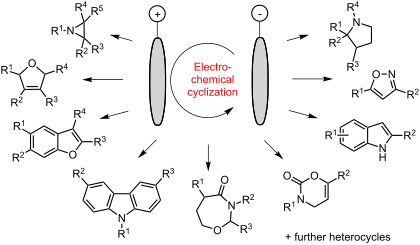
- heterocyclic compounds is steadily growing, heterocyclic chemistry remains in the focus of the synthetic community. Enormous efforts have been made in the last decades in order to render the production of such compounds more selective and efficient. However, most of the conventional methods for the
- products contain at least one heterocyclic unit, the particular importance of heterocyclic compounds becomes clear [2]. Most of the classical methods for heterocycle synthesis are based on the use of acids or bases at elevated temperatures, conditions which are often not compatible with the presence of
- conducted at low temperatures. The electrochemical synthesis of heterocyclic compounds can be considered as a mature discipline. The last comprehensive review dealing with electrochemical heterocycle generation has been published in 1997 by Tabaković [26]. Earlier reviews on different aspects of the




New highlights of the syntheses of pyrrolo[1,2-a]quinoxalin-4-ones
Beilstein J. Org. Chem. 2014, 10, 2377–2387, doi:10.3762/bjoc.10.248
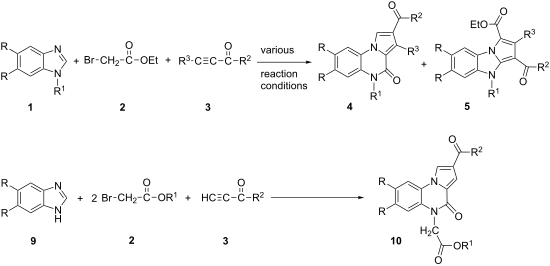
- constituent of several bioactive heterocyclic compounds that demonstrate interesting activity against Mycobacterium tuberculosis [1], anti-HIV [2], anticancer [3], and it modulates the estrogen receptor activity [4]. Synthetic methods towards pyrrolo[1,2-a]quinoxaline derivatives based on pyrroles [5], or
- towards N-bridged heterocyclic compounds [17][18][19][20] prompted us to investigate the one-pot three-component reactions of various substituted benzimidazoles with alkyl bromoacetates and electron-deficient alkynes in presence of an epoxide. Herein, we report a simple one-pot three-component synthetic



Chiral phosphines in nucleophilic organocatalysis
Beilstein J. Org. Chem. 2014, 10, 2089–2121, doi:10.3762/bjoc.10.218
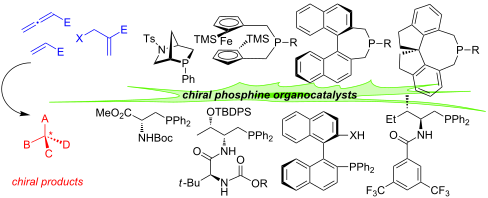
- variety of methods for enantioselective syntheses of structurally diverse acyclic, carbocyclic, and heterocyclic compounds. 2.1 [3 + 2] Annulation of allenes with activated alkenes Nucleophilic phosphine-catalyzed annulations have been established as very useful tools for the syntheses of carbo- and
- substrate scope was, however, very limited. 2.2 [3 + 2] Annulations of allenes with activated imines Phosphine-catalyzed [3 + 2] annulation of allenes with activated imines has emerged as an important tool for the synthesis of functionalized pyrrolines, which are valuable heterocyclic compounds for the
- stereoselectivities (up to 99% ee, up to 99:1 dr) and moderate to excellent yields (42–99%). The piperidine products could be transformed conveniently into biologically important heterocyclic compounds. For example, with this asymmetric [4 + 2] annulation as the key step, using indole-2-carboxaldehyde as the starting


Synthesis of trifluoromethyl-substituted pyrazolo[4,3-c]pyridines – sequential versus multicomponent reaction approach
Beilstein J. Org. Chem. 2014, 10, 1759–1764, doi:10.3762/bjoc.10.183

- substituent, including important drug molecules in different pharmaceutical classes [5]. Keeping in mind the above facts, the synthesis of fluorinated heterocyclic compounds, which can act as building blocks for the construction of biologically active fluorine-containing molecules, is of eminent interest. In


Microwave-assisted Cu(I)-catalyzed, three-component synthesis of 2-(4-((1-phenyl-1H-1,2,3-triazol-4-yl)methoxy)phenyl)-1H-benzo[d]imidazoles
Beilstein J. Org. Chem. 2014, 10, 1413–1420, doi:10.3762/bjoc.10.145

- characterized by an appreciable chemical and biological importance. The synthesis of nitrogen-containing heterocyclic compounds and their derivatives plays an important role in organic chemistry as they frequently exhibit therapeutic and pharmacological properties. They have emerged as an integral backbone of


Synthesis of chiral N-phosphoryl aziridines through enantioselective aziridination of alkenes with phosphoryl azide via Co(II)-based metalloradical catalysis
Beilstein J. Org. Chem. 2014, 10, 1282–1289, doi:10.3762/bjoc.10.129
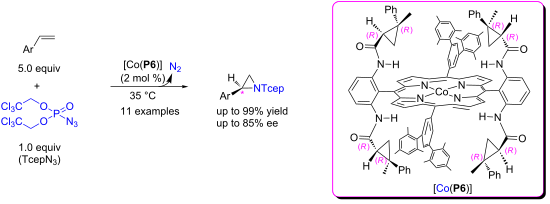
- ; cobalt complex; metalloradical catalysis; organophosphorus; phosphoryl azide; Introduction Aziridines, the smallest three-membered nitrogen-containing heterocycles, are highly valuable heterocyclic compounds that are widely used in organic synthesis and pharmaceuticals [1][2]. As a result, tremendous


Magnesium bis(monoperoxyphthalate) hexahydrate as mild and efficient oxidant for the synthesis of selenones
Beilstein J. Org. Chem. 2014, 10, 1267–1271, doi:10.3762/bjoc.10.127
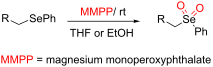
- tolerance. Moreover, the produced selenones could be useful intermediates for the synthesis of different heterocyclic compounds. Keywords: heterocycles; monoperoxyphthalate; oxidation; selenides; selenones; Introduction Organoselenium compounds have received considerable attention in recent times because
- different alkyl phenyl selenides to the corresponding selenones. Since the phenylselenonyl group is an excellent leaving group, selenone 2 readily undergoes SN2 type substitution reactions with common nucleophiles [7][8] as shown in Scheme 2. A wide range of heterocyclic compounds can be obtained by
- intermediates which readily undergo intramolecular SN2 type substitution reactions to afford a range of heterocyclic compounds (Table 2, entries 2–7) and benzeneseleninic acid. Thus, the oxidation of β-hydroxyalkyl phenyl selenide 1e gave, in tetrahydrofuran and in the presence of dipotassium hydrogen phosphate


Synthesis of ethoxy dibenzooxaphosphorin oxides through palladium-catalyzed C(sp2)–H activation/C–O formation
Beilstein J. Org. Chem. 2014, 10, 1220–1227, doi:10.3762/bjoc.10.120
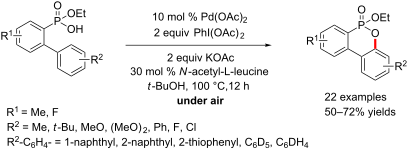
- –heteroatom bond formation via C–H activation has received attention owing to the omnipresence of heterocyclic compounds in nature [8]. Recently, it has been demonstrated that the intramolecular bond formation between a heteroatom and a vicinal unreactive C–H is an efficient method for the synthesis of


Regioselective SN2' Mitsunobu reaction of Morita–Baylis–Hillman alcohols: A facile and stereoselective synthesis of α-alkylidene-β-hydrazino acid derivatives
Beilstein J. Org. Chem. 2014, 10, 990–995, doi:10.3762/bjoc.10.98
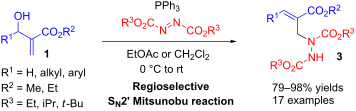
- nitrogen-containing heterocyclic compounds, especially pyrazole derivatives [2][3][4][5][6][7]. Although various methods detailing the synthesis of hydrazines have been established [8], the development of an efficient synthesis of hydrazines with highly structural diversity from simple starting materials
- synthesis of nitrogen-containing heterocyclic compounds. Experimental General information All reactions were carried out in nitrogen atmosphere under anhydrous conditions. Solvents were purified according to standard procedures. Mortia–Baylis–Hillman (MBH) alcohol 1 were prepared according to literature


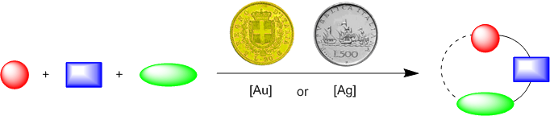
Silver and gold-catalyzed multicomponent reactions
Beilstein J. Org. Chem. 2014, 10, 481–513, doi:10.3762/bjoc.10.46