Search results
Search for "hydride" in Full Text gives 505 result(s) in Beilstein Journal of Organic Chemistry. Showing first 200.
Analysis of sesquiterpene hydrocarbons in grape berry exocarp (Vitis vinifera L.) using in vivo-labeling and comprehensive two-dimensional gas chromatography–mass spectrometry (GC×GC–MS)
Beilstein J. Org. Chem. 2019, 15, 1945–1961, doi:10.3762/bjoc.15.190
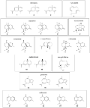
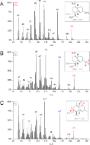
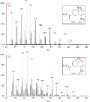
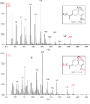
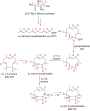
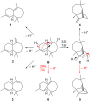
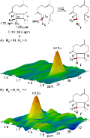
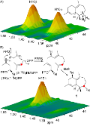
- [5][32]. In 1999 Schmidt et al. were able to show that the enantiomers of germacrene D are formed via two different H-transfer pathways in Solidago canadensis. (S)-(−)-Germacrene D is generated by a cyclization reaction, that includes a 1,3-hydride shift as opposed to the cyclization reaction of (R
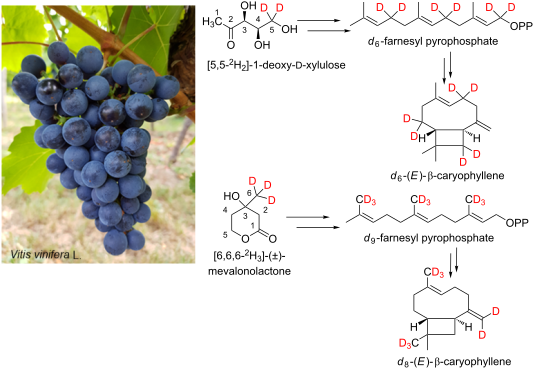
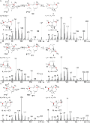
- )-(+)-germacrene D, that includes two consecutive 1,2-hydride shifts [33]. In all terpenes in Scheme 3, TOF–EIMS measurements showed that a deuterium atom is located in the isopropyl group. This can be explained by the assumption that in Vitis vinifera L. all sesquiterpenes are formed via the (S)-germacradienyl
- cyclization takes place only from (S)-(−)-germacrene D, from which the absolute configuration of these substances can be derived. While the detected labeling patterns in our feeding experiments are in full agreement with the 1,3-hydride shift pathway, the cloning and functional characterization of the











Halide metathesis in overdrive: mechanochemical synthesis of a heterometallic group 1 allyl complex
Beilstein J. Org. Chem. 2019, 15, 1856–1863, doi:10.3762/bjoc.15.181
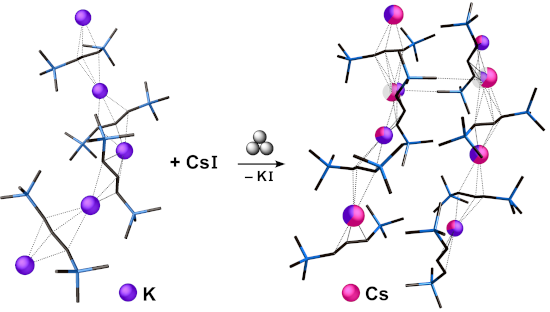
- which alkali metal complexes are known, including those of Li [15], Na [16], K [17][18], and Cs [18]. These have been formed via traditional solvent-based routes, by deprotonation of the substituted propene precursor with a metal alkyl or hydride (Equation 2) or with the metal itself (Equation 3) [18


Complexation of 2,6-helic[6]arene and its derivatives with 1,1′-dimethyl-4,4′-bipyridinium salts and protonated 4,4'-bipyridinium salts: an acid–base controllable complexation
Beilstein J. Org. Chem. 2019, 15, 1795–1804, doi:10.3762/bjoc.15.173
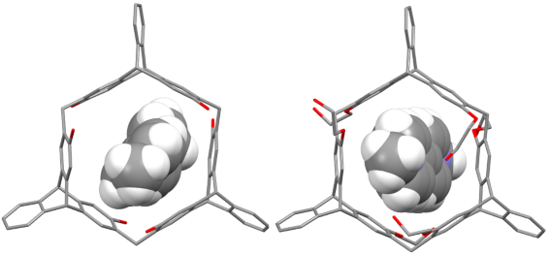
- presence of sodium hydride. Helic[6]arene derivative H5 was synthesized by treatment of H1 with methyl bromoacetate followed by reduction with lithium aluminium hydride (Scheme 1). The guests G1–3 were prepared according to previously reported procedures [37][38][39]. Guest G4 was synthesized through


The cyclopropylcarbinyl route to γ-silyl carbocations
Beilstein J. Org. Chem. 2019, 15, 1769–1780, doi:10.3762/bjoc.15.170
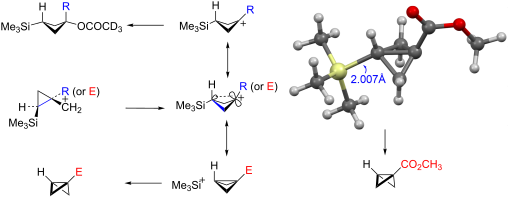
- isomeric mixture of esters 16. Subsequent reduction with lithium aluminum hydride gave a mixture of alcohols 17 and 18, which could be readily separated by silica gel chromatography. The assignment of stereochemistry of these isomers was based on shielding effects in both 1H and 13C NMR spectra. For
- trifluoromethyl-substituted cyclopropylcarbinyl systems were prepared by addition of the carbene derived from the diazoester 56 to vinyltrimethylsilane as shown in Scheme 12. Reduction of the ester mixture 57 with lithium aluminum hydride gave a chromatographically separable mixture of alcohols 58 and 59


Recent advances on the transition-metal-catalyzed synthesis of imidazopyridines: an updated coverage
Beilstein J. Org. Chem. 2019, 15, 1612–1704, doi:10.3762/bjoc.15.165
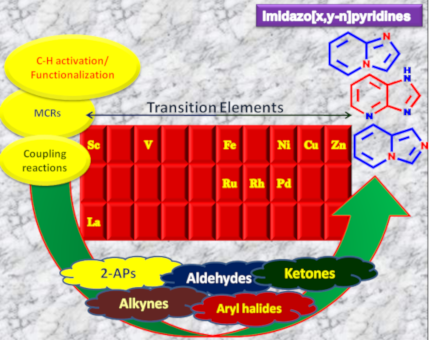
- single-electron transfer (SET) with CuI followed by hydride abstraction/intramolecular nucleophilic addition and loss of a proton forming the desired compound 49 (Scheme 19). Cu(I)-catalyzed intramolecular oxidative C–H amidation of N-pyridylenaminones 61 for the synthesis of imidazo[1,2-a]pyridine


A novel three-component reaction between isocyanides, alcohols or thiols and elemental sulfur: a mild, catalyst-free approach towards O-thiocarbamates and dithiocarbamates
Beilstein J. Org. Chem. 2019, 15, 1523–1533, doi:10.3762/bjoc.15.155
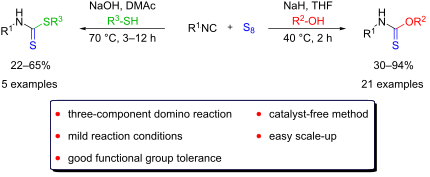
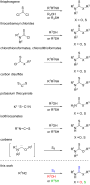
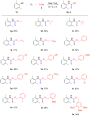
- and HPLC–MS. Based on preliminary experiments in our laboratory, the reaction was performed in tetrahydrofuran (THF) at 40 °C for 1 h using a 1.5 equiv excess of sodium hydride as the base, S8 and the alcohol component (Table 1, entry 1) resulting in the desired thiocarbamate 3a in 58% yield. During




Mechanistic investigations on multiproduct β-himachalene synthase from Cryptosporangium arvum
Beilstein J. Org. Chem. 2019, 15, 1008–1019, doi:10.3762/bjoc.15.99
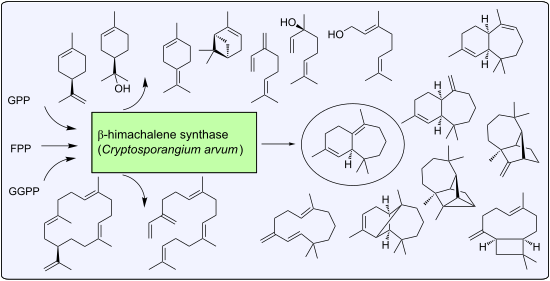
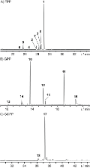
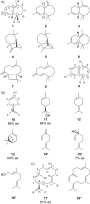
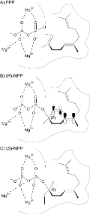
- diphosphate. In-depth mechanistic investigations using isotopically labelled precursors regarding the stereochemical course of both 1,11-cyclisation and 1,3-hydride shift furnished a detailed catalytic model suggesting the molecular basis of the observed low product selectivity. The enzyme’s synthetic
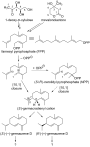
- secondary cation D, which either stabilises by 2,10-ring closure to give the caryophyllenyl cation E that can be deprotonated at the methyl group to yield 9-epi-(E)-β-caryophyllene (7), or D undergoes a 1,3-hydride shift to the allylic cation F. Deprotonation leads to γ-humulene (8), but a 1,6-ring closure
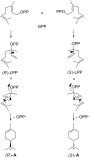
- gives access to B. The second shown option, path B, assumes a 1,6-ring closure of (R)-NPP to the bisabolyl cation G. Proceeding with a 1,2-hydride shift to H, the key step is a 1,6-proton shift to give the tertiary cation I. This idea is derived from a very similar proton transfer starting from the





Heck- and Suzuki-coupling approaches to novel hydroquinone inhibitors of calcium ATPase
Beilstein J. Org. Chem. 2019, 15, 971–975, doi:10.3762/bjoc.15.94
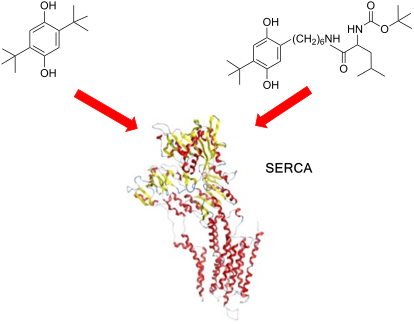
- appended. Unfortunately, reactions of 6 and 8 utilizing catalytic hydrogenation, lithium aluminium hydride by itself as well as with added aluminium chloride or samarium iodide produced only trace amounts of an amine (e.g., 9). When samarium iodide was used as the reagent, the only discernible product (not
- , followed by addition of bromide 5a, potassium phosphate and PdCl2(dppf)2 in DMF at 85 °C for 3.5 h gave the coupled product 10 in 47–63% yields (Scheme 3). In contrast to the case of the Heck coupling products (6 and 8, Scheme 2), nitrile 10 underwent facile reduction with lithium aluminium hydride. The


Catalytic asymmetric oxo-Diels–Alder reactions with chiral atropisomeric biphenyl diols
Beilstein J. Org. Chem. 2019, 15, 955–962, doi:10.3762/bjoc.15.92
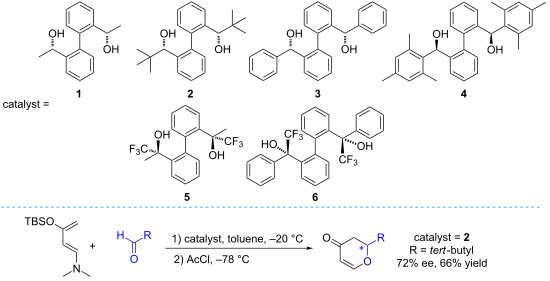
- removing the chiral-resolving menthyl substituent with lithium aluminium hydride (LAH), the enantioselectivity of (R)-d was higher than 99% ee when checked with HPLC (Supporting Information File 1, Figure S3). Catalyst 4 was then obtained by homo-coupling of (R)-d with Ni(PPh3)3Br2/Zn with 37% yield. The


An improved synthesis of adefovir and related analogues
Beilstein J. Org. Chem. 2019, 15, 801–810, doi:10.3762/bjoc.15.77
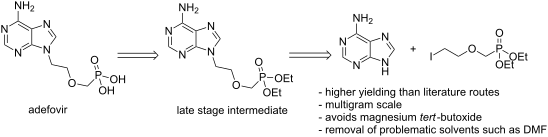
- the poor solubility of 12 in acetonitrile, the compound was successfully converted to iodide 9 via a Finkelstein reaction. Unfortunately, subsequent alkylation of 10 with iodide 9 in the presence of sodium hydride furnished 6 in a poor yield of 21%. Formation of self-alkylation product 13 constituted


Stereochemical investigations on the biosynthesis of achiral (Z)-γ-bisabolene in Cryptosporangium arvum
Beilstein J. Org. Chem. 2019, 15, 789–794, doi:10.3762/bjoc.15.75
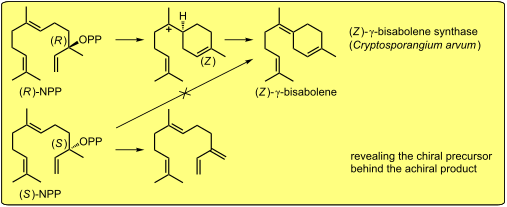
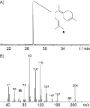
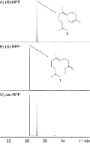
- enzymatic step [1][2][3]. With this approach, nature makes perfect use of the versatile chemistry of carbocations with its hydride or proton shifts and Wagner–Meerwein rearrangements leading to a large variety of possible structures. Among terpenoid natural products, achiral compounds are rarely found, but



An efficient and concise access to 2-amino-4H-benzothiopyran-4-one derivatives
Beilstein J. Org. Chem. 2019, 15, 703–709, doi:10.3762/bjoc.15.65
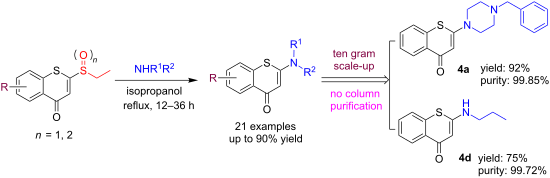
- from 2’-chloroacetophenone as the starting material through treatment with carbon disulfide in the presence of sodium hydride [23], followed by alkylation using iodoethane according to the literature procedures [13][16][17][19]. The oxidation of 1 with 1.2 or 5 equiv of H2O2 yielded ethyl sulfoxide 2


The LANCA three-component reaction to highly substituted β-ketoenamides – versatile intermediates for the synthesis of functionalized pyridine, pyrimidine, oxazole and quinoxaline derivatives
Beilstein J. Org. Chem. 2019, 15, 655–678, doi:10.3762/bjoc.15.61
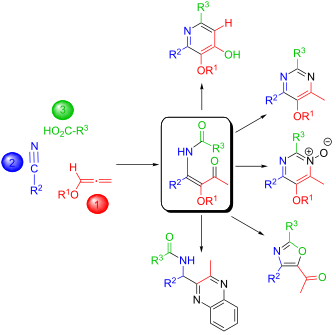
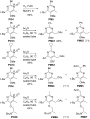
- purified and characterized or, for further transformations, the crude products are directly converted into the corresponding nonaflates by deprotonation with sodium hydride and treatment with 1-nonafluorobutanesulfonyl fluoride (NfF). Scheme 13 shows two examples, PM52 and PM54 that are ready for palladium




Catalyst-free assembly of giant tris(heteroaryl)methanes: synthesis of novel pharmacophoric triads and model sterically crowded tris(heteroaryl/aryl)methyl cation salts
Beilstein J. Org. Chem. 2019, 15, 642–654, doi:10.3762/bjoc.15.60
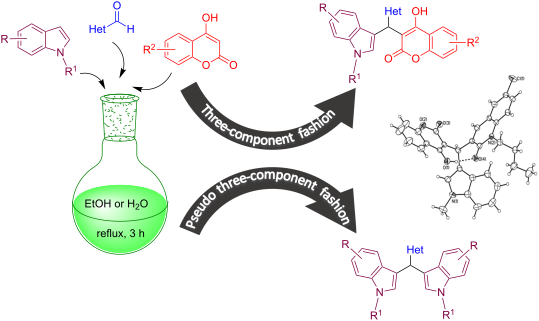
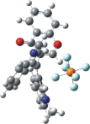
- by hydride abstraction from (Ar1Ar1Ar2)CH are also demonstrated. Results and Discussion At the onset a series of non-commercial N-alkylindoles 1{4–10} and quinoline-/quinolone aldehydes 6{1-7} were prepared (Scheme 3 and Scheme 4). The N-methyl-, N-butyl- and N-benzylindoles 1{4–10} were synthesized
- attempts to cleanly generate the salts by hydride abstraction with trityl-BF4 were unsuccessful [61], presumably due to extreme steric crowding, the reaction with DDQ/HPF6 (Scheme 8) [62][63][64][65] was successful and the methylium-PF6 salts 10{4,4,8} and 10{4,4,11}, respectively, precipitated from DCM as
- despite significant steric crowding. Steric congestion restricts the conjugation of the carbocationic center with the aromatic/heteroaromatic substituents, as evidenced by the bond length shortenings from only 0.052 Å to 0.111 Å observed upon hydride abstraction. The optimized geometries confirm the








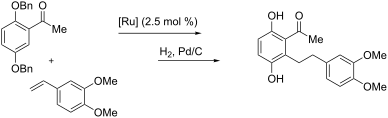
Synthesis of the aglycon of scorzodihydrostilbenes B and D
Beilstein J. Org. Chem. 2019, 15, 610–616, doi:10.3762/bjoc.15.56
- and a connection to a combined nitrogen-vacuum line, charged with sodium hydride (1.6 g; 60% in mineral oil, 40 mmol) and closed with a septum. n-Hexane (20 mL) was injected by syringe and the suspension was stirred for 10 min. Then, stirring was interrupted and the supernatant liquid was removed by


Synthesis and SAR of the antistaphylococcal natural product nematophin from Xenorhabdus nematophila
Beilstein J. Org. Chem. 2019, 15, 535–541, doi:10.3762/bjoc.15.47
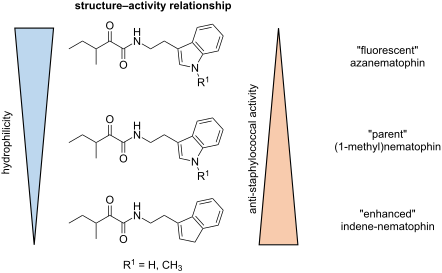
- phthalimides 16 and 23 [29]. These intermediary compounds 16 and 23 also allowed an N-methylation of the azaindole moiety with sodium hydride (NaH) and methyl iodide (MeI) to yield 17 and 24. By ethanolic hydrazinolysis and microwave irradiation the phthalimides (16, 17, 23, and 24) were deprotected yielding


Aqueous olefin metathesis: recent developments and applications
Beilstein J. Org. Chem. 2019, 15, 445–468, doi:10.3762/bjoc.15.39
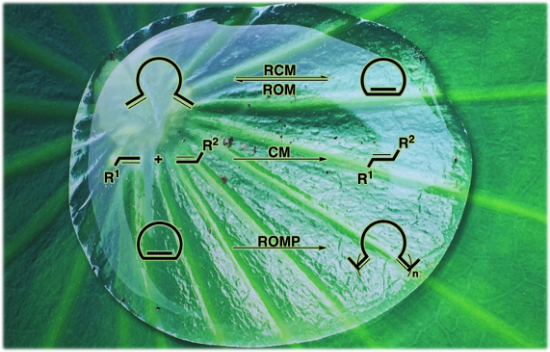
- . Water can lead to the formation of catalytically inactive Ru hydride species. Fürstner et al. isolated these complexes as byproducts during the synthesis of Grubbs second generation-type catalysts with saturated NHC ligands [29]. In this specific case, the formation of the metal hydride complex is
- water is more likely to occur at high temperatures and in the presence of a base. 1H NMR studies revealed that methanol is the source of hydride and this was later confirmed by Grubbs and co-workers [31]. The proposed mechanism for the degradation of G-I occurs via alcohol dehydrogenation followed by
- decarbonylation of the ruthenium hydride 16. In 2015, Cazin and co-workers showed that the detrimental effect of H2O also occurs with the more innovative catalysts Caz-I, Ind-II and HG-II (Table 1) [32]. The authors performed the RCM of the challenging substrate 17 in toluene at 110 °C, reporting excellent yields


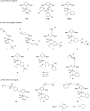


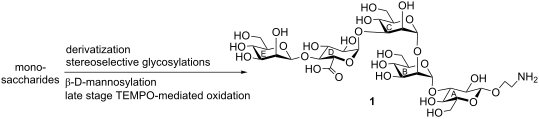
Convergent synthesis of the pentasaccharide repeating unit of the biofilms produced by Klebsiella pneumoniae
Beilstein J. Org. Chem. 2019, 15, 431–436, doi:10.3762/bjoc.15.37
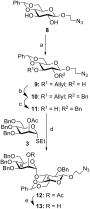
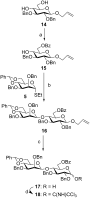
- -4,6-O-benzylidene-β-D-glucopyranoside (9). Compound 9 was treated with benzyl bromide in the presence of sodium hydride [20] to give O-benzylated derivative 10 in 90% yield in two steps, which on de-O-allylation by treatment with palladium chloride [21] furnished 2-azidoethyl 2-O-benzyl-4,6-O



Syntheses and chemical properties of β-nicotinamide riboside and its analogues and derivatives
Beilstein J. Org. Chem. 2019, 15, 401–430, doi:10.3762/bjoc.15.36
- ]. Many of these complexes contain rhodium or iridium coordinated with fully (methyl)substituted cyclopentadienyl ligands and bis-coordinating diamino ligands as shown in Figure 7. The reducing agent may be a formate anion as a source of hydride, triethanolamine as an electron donor in the case of
- photoactivated reduction, or hydrogen gas under atmospheric pressure. Some of these complexes were used in the successful electrochemical regeneration of NAD(P)H [83]. According to the proposed mechanism of the complex-catalyzed reduction [75], reaction of a complex with, for example, formate generates a hydride
- metal complex. The amide functionality in the 3-nicotinamide core plays a crucial role in the subsequent reduction because it coordinates with the metal center of the hydride complex, resulting in a favorable transition state which ensures the transfer of the hydride on the 4-C position of the






Synthesis of C3-symmetric star-shaped molecules containing α-amino acids and dipeptides via Negishi coupling as a key step
Beilstein J. Org. Chem. 2019, 15, 371–377, doi:10.3762/bjoc.15.33
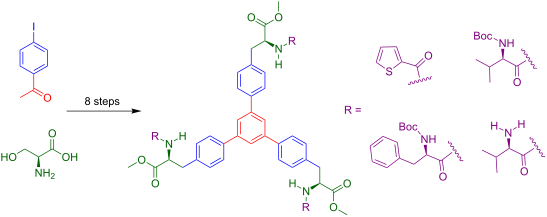
- standard syringe–septum techniques. All purchased solvents (CH2Cl2, THF, acetonitrile, and DMF) were dried over calcium hydride (CaH2) or sodium. Column chromatography was performed by using Acme’s silica gel (100–200 mesh) with an appropriate mixture of ethyl acetate, petroleum ether methanol and


Olefin metathesis in multiblock copolymer synthesis
Beilstein J. Org. Chem. 2019, 15, 218–235, doi:10.3762/bjoc.15.21

- hydrogenation of double bonds, especially for long reaction times. The ability of the Gr2 catalyst to form Ru–hydride complexes in the presence of alcohols is well-known and described in the literature [98][99]. Such complexes promoting C=C bond hydrogenation were detected in the PNB–PCOE(OH)–Gr2 system using




Catalysis of linear alkene metathesis by Grubbs-type ruthenium alkylidene complexes containing hemilabile α,α-diphenyl-(monosubstituted-pyridin-2-yl)methanolato ligands
Beilstein J. Org. Chem. 2019, 15, 194–209, doi:10.3762/bjoc.15.19
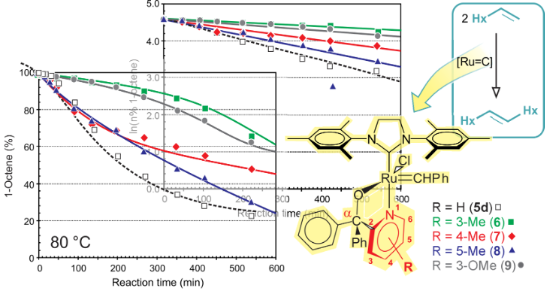
- an increase in IPs) indicates decomposition of the precatalyst to active isomerisation species, probably metal hydride species. In our NMR study no indication of the existence of metal hydride species was found. Conclusion The aim of our research is to control the Ru–N bond strength of the bidentate


Systematic synthetic study of four diastereomerically distinct limonene-1,2-diols and their corresponding cyclic carbonates
Beilstein J. Org. Chem. 2019, 15, 130–136, doi:10.3762/bjoc.15.13
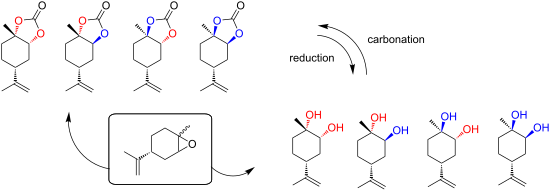
- previous study was 3 MPa [27], 5 MPa CO2 was applied in the present study to promote a higher consumption of LO. The result showed the isolated yields were improved to 84% yield for 1a and 30% yield for 1d. In our previous report, 1d was reduced by lithium aluminium hydride (LAH) to obtain the


Synthesis, biophysical properties, and RNase H activity of 6’-difluoro[4.3.0]bicyclo-DNA
Beilstein J. Org. Chem. 2019, 15, 79–88, doi:10.3762/bjoc.15.9
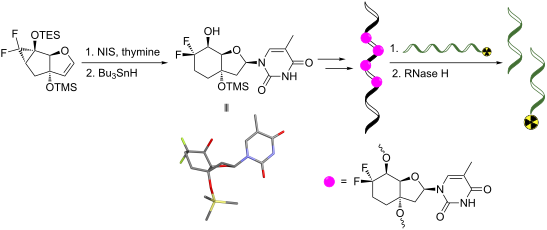
- the presence of persilylated thymine to produce the iodine intermediates 2α/β (Scheme 1, Table 1, entry 1). These instable intermediates were then directly reduced with tributyltin hydride (Bu3SnH) to yield the tricyclic nucleosides 5α/β as main compounds. However, we observed the occurrence of the


Regioselective addition of Grignard reagents to N-acylpyrazinium salts: synthesis of substituted 1,2-dihydropyrazines and Δ5-2-oxopiperazines
Beilstein J. Org. Chem. 2019, 15, 72–78, doi:10.3762/bjoc.15.8

- recently showed that 3-alkoxy-substituted N-acylpyrazinium salts can be selectively reduced by tributyltin hydride to afford 1,2-dihydropyrazines in good to excellent yields [9]. There have been other reports involving the addition of TMS-ketene acetals to pyrazinium salts [10][11][12]. A double
- , Table 1). Changing the solvent to diethyl ether showed no improvement in the yield of 3a but when THF was used, an excellent yield of 87% was produced (entries 4 and 5, Table 1). Based on our previously developed selective tin hydride reduction of monosubstituted pyrazinium salts [9], we expected the