Search results
Search for "hydrolysis" in Full Text gives 945 result(s) in Beilstein Journal of Organic Chemistry. Showing first 200.
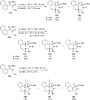
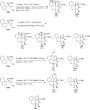
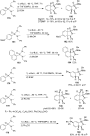
Preparation of an advanced intermediate for the synthesis of leustroducsins and phoslactomycins by heterocycloaddition
Beilstein J. Org. Chem. 2022, 18, 1385–1395, doi:10.3762/bjoc.18.143
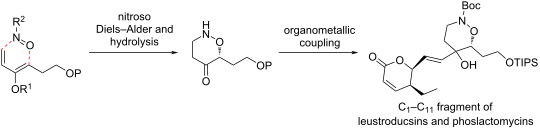
- advantages over the related enol silyl ethers [24][25]: they are more stable towards acidic conditions, their electronic character contributes to high regioselectivity in cycloaddition reactions, and they can be converted to many other functions, including their hydrolysis to ketones [26]. In the other hand
- , we have shown that the Wightman reagent 6, a chiral chloronitroso derivative [27], led to a complete regio- and stereoselective reaction with functionalized dienes (Scheme 1). The chiral auxiliary contributes to both regioselectivity and stereoselectivity. After hydrolysis of the chiral auxiliary and
- studies for the conversion of enol phosphate to the corresponding ketone were accomplished using an unprotected primary alcohol. However, it appeared that hydroxy group protection was necessary: control experiments made on the racemic cycloadduct 8 showed that basic hydrolysis of the enol phosphate led to


Synthesis of C6-modified mannose 1-phosphates and evaluation of derived sugar nucleotides against GDP-mannose dehydrogenase
Beilstein J. Org. Chem. 2022, 18, 1379–1384, doi:10.3762/bjoc.18.142
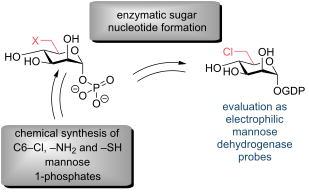
- aldehyde 2 followed by substrate attachment through Cys268 to form thiohemiacetal 3. A second oxidation reveals thioester 4 which, following hydrolysis, releases the product 5. As GMD does not exist in humans, strategies that could prevent its mechanism of action could open a pathway for new and selective


Cyclodextrin-based Schiff base pro-fragrances: Synthesis and release studies
Beilstein J. Org. Chem. 2022, 18, 1346–1354, doi:10.3762/bjoc.18.140
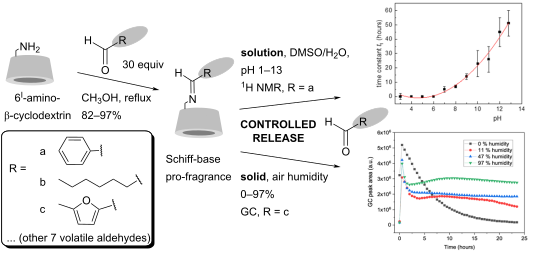
- hydrolysis, oxidation, or light (Figure 1) [18]. Different substrates were used to synthesize pro-fragrances, like polymers [19], ionic liquids [20], rotaxanes [21], or saccharides [22]. To the best of our knowledge, no studies investigate the use of CDs as substrate. Linking the fragrance to CDs could
- ., easy to follow by TLC. But in the end, the reaction progress was monitored by MS due to the fast hydrolysis of the imine even during the chromatography on TLC plates. Methanol was chosen as a solvent because it dissolves the aldehydes well and sufficiently (≈5 mg/mL) amine 1. At first, we studied the
- stability towards hydrolysis. Kinetic studies of the imine hydrolysis by NMR For the kinetic studies of the hydrolysis of imino-CDs, we selected the pro-fragrance 3d made from the most common aldehyde – benzaldehyde. The release of the benzaldehyde (2d) was studied by 1H NMR spectroscopy. Aqueous 0.1 M
Ionic multiresonant thermally activated delayed fluorescence emitters for light emitting electrochemical cells
Beilstein J. Org. Chem. 2022, 18, 1311–1321, doi:10.3762/bjoc.18.136
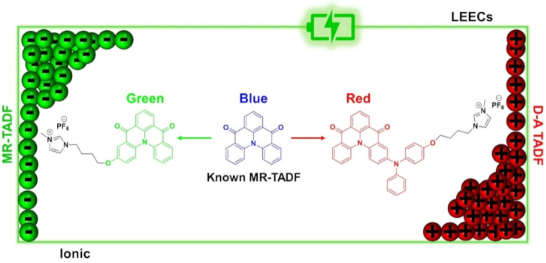
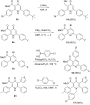
- 23% overall yield. First, hydrolysis of 1, in situ conversion to the acyl chloride and subsequent Lewis acid-promoted Friedel–Crafts acylation reaction produced compound 2 (Scheme 1), where the AlCl3 was also responsible for the demethylation. Compound 2 was then subjected to monoalkylation with 1,4



Make or break: the thermodynamic equilibrium of polyphosphate kinase-catalysed reactions
Beilstein J. Org. Chem. 2022, 18, 1278–1288, doi:10.3762/bjoc.18.134
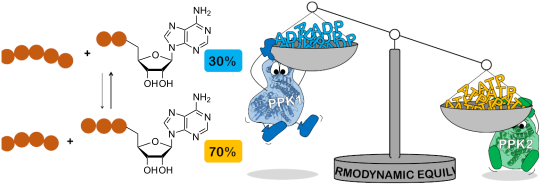
- high energy release when the phosphate group is hydrolysed. With PPKs, this seems slightly different: The hydrolysis energy involving the terminal phosphate group of polyP (ΔRG0 ≈ −30 kJ/mol) and internal phosphate groups (ΔRG0 ≈ −30 to −40 kJ/mol) is comparable to the standard hydrolysis energy of ATP


Modular synthesis of 2-furyl carbinols from 3-benzyldimethylsilylfurfural platforms relying on oxygen-assisted C–Si bond functionalization
Beilstein J. Org. Chem. 2022, 18, 1256–1263, doi:10.3762/bjoc.18.131
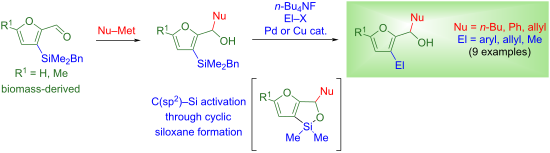
- P(OEt)3 (1.5 equiv) in DMF at room temperature delivered, after hydrolysis, the cross-coupling compound 21 in 68% yield, along with 9% of protodesilylation product 22 (Table 1, entry 1). As indicated by Takeda et al., the amount and source of TBAF proved crucial: use of either 1.2 equiv of TBAF⋅(t


Polymer and small molecule mechanochemistry: closer than ever
Beilstein J. Org. Chem. 2022, 18, 1225–1235, doi:10.3762/bjoc.18.128
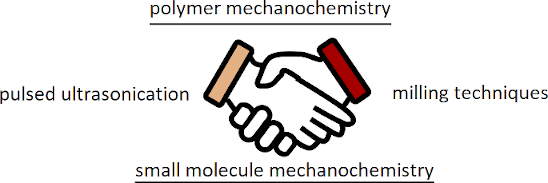
- cellulose and chitin and approximation to the structure of lignin. Tensile forces by ball milling change the conformation of a chitin model compound. This deformation facilitates the subsequent cleavage of glycosidic bonds to produce oxocarbenium ion intermediates for hydrolysis [45]. (a) Representation of


Mechanochemical bottom-up synthesis of phosphorus-linked, heptazine-based carbon nitrides using sodium phosphide
Beilstein J. Org. Chem. 2022, 18, 1203–1209, doi:10.3762/bjoc.18.125
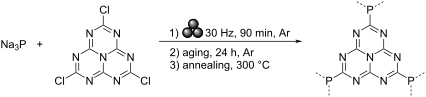
- following milling and aging, can also have occurred. Additionally, the phosphorus 2p signal in g-h-PCN showed the majority of phosphorus exists as a mixture of P=O and P–O species, with a major peak centered at 133.6 eV (69%, Figure 2c). These species are formed by oxidation with air and hydrolysis upon
- =O character from 21% to 18% compared to g-h-PCN and an increase in C–OH character from 35% to 43% suggests mild hydrolysis, likely of terminal trichloroheptazine, during the annealing step at 300 °C, even under a flow of argon gas (Figure 2d). The nitrogen 1s scans show a similar trend, with the


Facile and diastereoselective arylation of the privileged 1,4-dihydroisoquinolin-3(2H)-one scaffold
Beilstein J. Org. Chem. 2022, 18, 1070–1078, doi:10.3762/bjoc.18.109
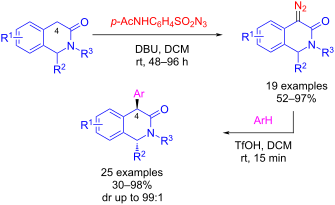
- 16 was obtained and its structure was confirmed by single-crystal X-ray analysis. Presumably, the formation of ester 16 can be justified by the trapping of the carbocation intermediate 17 (vide infra) by the formamide carbonyl oxygen atom followed by hydrolysis of the iminium moiety (Scheme 4


New azodyrecins identified by a genome mining-directed reactivity-based screening
Beilstein J. Org. Chem. 2022, 18, 1017–1025, doi:10.3762/bjoc.18.102
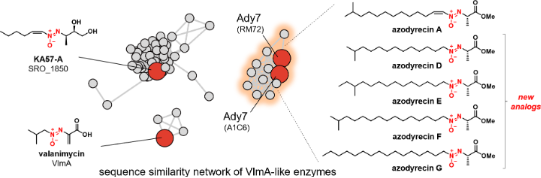
- N2H4, which could be generated upon the acid hydrolysis of azoxy natural products. In the assay, N2H4 is captured by two equivalents of p-dimethylaminobenzaldehyde (DAB) to generate p-dimethylaminobenzaldazine, which can be sensitively detected by HPLC by monitoring the UV absorption at 485 nm (Scheme
- 1). As a result, we observed the generation of N2H4 upon the hydrolysis of solid-culture extracts of both Streptomyces strains (Supporting Information File 1, Figure S1). Therefore, we attempted to isolate the azoxy natural products in an N2H4-detecting assay guided manner. The extracts of
- Streptomyces sp. RM72 were first partitioned by water and ethyl acetate, and then the organic layer was further fractionated by silica gel column chromatography. Fractionation by reversed-phase HPLC yielded ten compounds (1–10) that generate N2H4 upon acid hydrolysis. The combination of 1H and 13C NMR with a




On Reuben G. Jones synthesis of 2-hydroxypyrazines
Beilstein J. Org. Chem. 2022, 18, 935–943, doi:10.3762/bjoc.18.93
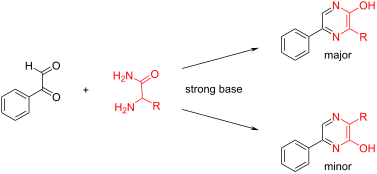
- would be the hydrolysis of the α-aminoamides and the resulting α-amino acids would also be water-soluble. For these reasons, a low temperature as well as a plausibly softer base (i.e., tetraalkylammonium hydroxides) would be key parameters to alleviate the impact of these side reactions. These would


Synthetic strategies for the preparation of γ-phostams: 1,2-azaphospholidine 2-oxides and 1,2-azaphospholine 2-oxides
Beilstein J. Org. Chem. 2022, 18, 889–915, doi:10.3762/bjoc.18.90
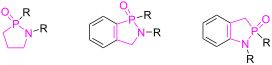
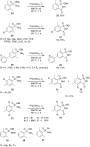
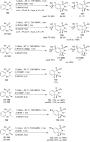
- % yield via the acid-catalyzed addition to the cyano group and subsequent cyclocondensation, hydrolysis, and tautomerization. Alternatively, the reaction of (E)-2-cyano-N'-((4-oxo-4H-chromen-3-yl)methylene)acetohydrazide (220) and phosphorus tribromide in the presence of triethylamine in dioxane followed
- by two step hydrolysis gave the same product 223 in 28% yield. Phosphorus tribromide first reacted with more nucleophilic amide nitrogen atom to form dibromophosphanamine derivative 224 by loss of HBr. The more nucleophilic dibromophosphanamine derivative 224 further underwent a nucleophilic addition
- to the cyano group followed by hydrolysis to give the final product 223 (Scheme 36). The product 223 showed antitumor activity in a biological assay [20]. To develop antioxidants and antitumor agents, the same group synthesized chromene-fused 5-oxo-1,2-azaphospholidine 2-oxide derivatives. The








Synthesis and HDAC inhibitory activity of pyrimidine-based hydroxamic acids
Beilstein J. Org. Chem. 2022, 18, 837–844, doi:10.3762/bjoc.18.84
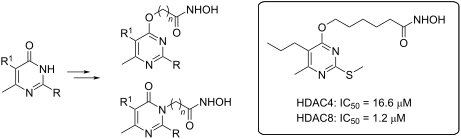
- gave the corresponding (2-substituted pyrimidin-4-yloxy)acetates 6–9. In order to replace the 2-methylsulfonyl group with a hydroxy group, we tested several techniques. It was found that heating compound 5 with water in dimethyl sulfoxide at 100 °C or boiling for 1 h in water led to hydrolysis of both


Synthesis of α-(perfluoroalkylsulfonyl)propiophenones: a new set of reagents for the light-mediated perfluoroalkylation of aromatics
Beilstein J. Org. Chem. 2022, 18, 788–795, doi:10.3762/bjoc.18.79
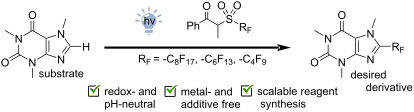
- byproduct was fully characterized by NMR, and the structure was confirmed by SCXRD, we conceived a hydrolysis protocol to break apart the formed enol ether (fully described in section 2.4 of Supporting Information File 1). After brief optimization, we succeeded at recovering the portion of


An isoxazole strategy for the synthesis of 4-oxo-1,4-dihydropyridine-3-carboxylates
Beilstein J. Org. Chem. 2022, 18, 738–745, doi:10.3762/bjoc.18.74
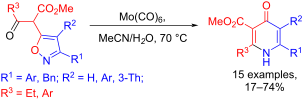
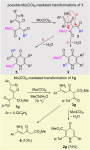
- cyanation of the resulted isoxazoles 8a–f to cyanides 9a–f using Me2C(OH)CN/(Me2N)2C=NH [29], their acid hydrolysis, followed by esterification of the resulting acids 9a–f with diazomethane. 4-Iodoisoxazoles 12a–f, necessary for the preparation of 3,4-disubstituted isoxazoles, were obtained by iodination of




A trustworthy mechanochemical route to isocyanides
Beilstein J. Org. Chem. 2022, 18, 732–737, doi:10.3762/bjoc.18.73
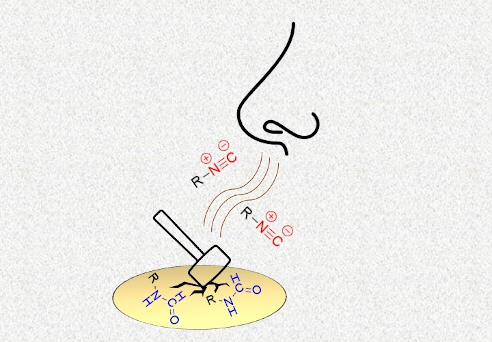
- after 1h (70%, GC–MS analysis). Reducing the amount of sodium carbonate did not provide any advantage. Interestingly, using anhydrous sodium carbonate instead of its hydrated form improved reaction yields, likely due to the hydrolysis of tosyl chloride. With these data in hand, we then opted for


Terpenoids from Glechoma hederacea var. longituba and their biological activities
Beilstein J. Org. Chem. 2022, 18, 555–566, doi:10.3762/bjoc.18.58
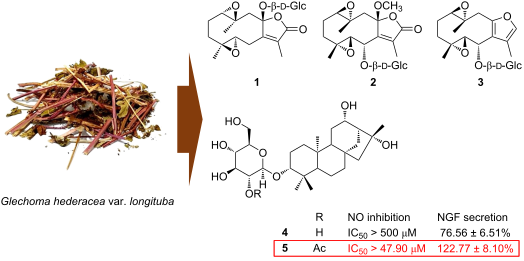
- compounds (1–5) were isolated and characterized from G. hederacea var. longituba (Figure 1). Structures of these compounds were established by 1D and 2D NMR and HRESIMS, comparison of experimental and calculated ECD data, DP4+ analysis, and hydrolysis. Herein, the isolation and structural elucidation of the
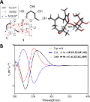
- spectrum of 1S,4S,5R,8S,10R-(1a). Finally, the ᴅ-glucopyranosyl moiety was identified by GC–MS analysis of a chiral derivatization product of the sugar obtained by enzyme hydrolysis of 1 [9][10]. The retention time of glucopyranose (11.3 min) corresponded to that of the standard ᴅ-glucopyranose (11.3 min
- 3C). The experimental ECD spectrum of 2 showed a negative Cotton effect at 233 nm and positive Cotton effects at 217 and 257 nm, which showed a similarity with those of calculated ECD spectrum of 1R,4R,5S,6S,8S,10S-(ent-2a). Enzyme hydrolysis and following sugar identification were performed using




Synthesis of a new water-soluble hexacarboxylated tribenzotriquinacene derivative and its competitive host–guest interaction for drug delivery
Beilstein J. Org. Chem. 2022, 18, 539–548, doi:10.3762/bjoc.18.56
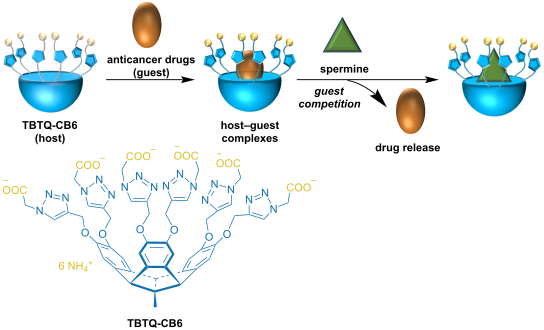
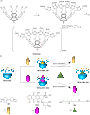
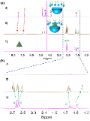
- synthesized starting from the known TBTQ-based hexakis(propargyl ether) 1 [29] (Scheme 1a). Through the CuAAC reaction with ethyl azidoacetate under Cu(I) catalysis, the TBTQ-based hexakis(ethyl acetate) compound 2 was obtained in 73% yield. Subsequent hydrolysis with sodium hydroxide followed by





The asymmetric Henry reaction as synthetic tool for the preparation of the drugs linezolid and rivaroxaban
Beilstein J. Org. Chem. 2022, 18, 438–445, doi:10.3762/bjoc.18.46
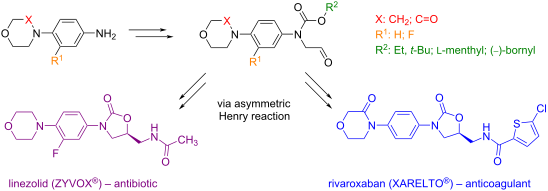
- modified synthetic procedure [14]. Here, it was included the chromatographic purification of the final chloroformates, which led to removing of corresponding alkyl chlorides formed as byproducts. The aldehyde 17 was prepared by a different way, because the acid-catalyzed hydrolysis of its acetal


Menadione: a platform and a target to valuable compounds synthesis
Beilstein J. Org. Chem. 2022, 18, 381–419, doi:10.3762/bjoc.18.43
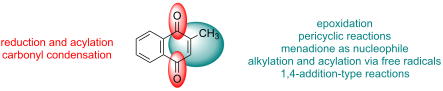
- electrophilic bromination of the corresponding phenol, followed by hydrolysis promoted by H2O2 [66]. Variations in the methods of 2-methylnaphthol (17) oxidation to menadione (10) with H2O2 were made by changing the catalytic systems in order to increase the yield and selectivity. These include the catalysis by


Amamistatins isolated from Nocardia altamirensis
Beilstein J. Org. Chem. 2022, 18, 360–367, doi:10.3762/bjoc.18.40
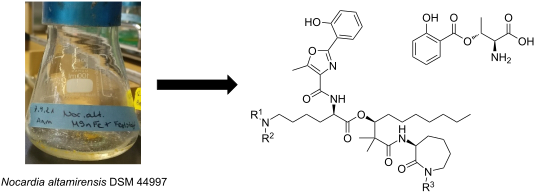
- form a salimethyloxazolinyl-thioester intermediate, which then undergoes a C–N bond opening resulting in an ester formation. Eventually, the thioester undergoes a hydrolysis reaction leading to compound 6. The compounds, which were discovered in this study, are members of the large family of nocobactin


Site-selective reactions mediated by molecular containers
Beilstein J. Org. Chem. 2022, 18, 309–324, doi:10.3762/bjoc.18.35
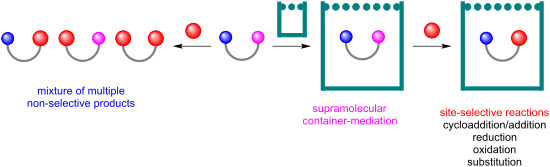
- , azides, halides and alkenes, oxidation of remote C–H bonds and alkenes, and substitution reactions involving ring-opening cyclization of epoxides, nucleophilic substitution of allylic chlorides, and hydrolysis reactions. The product selectivity is interpreted as the consequence of the space shape and
- ester group in turn to the aqueous solution. Addition of base would result in the hydrolysis of one ester group to the corresponding carboxylic acid. Product distributions indicated a two- to four-fold relative decrease in the hydrolysis rate constant of the second ester caused by the confined space in
- the cavitand, which enhanced the selectivity of the monoester product 45. Similarly, the monohydrolysis of α,ω-diisocyanate 46 was achieved using the water-soluble cavitand D (Figure 13b) [77]. The residual isocyanate group was buried deep in the cavity of D and protected from further hydrolysis. The


Unexpected chiral vicinal tetrasubstituted diamines via borylcopper-mediated homocoupling of isatin imines
Beilstein J. Org. Chem. 2022, 18, 303–308, doi:10.3762/bjoc.18.34
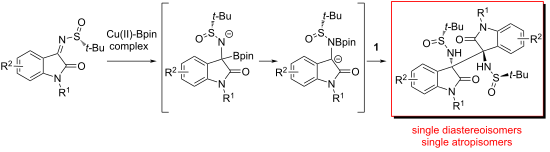
- described by Ellman and co-workers, but the expected α-aminoboronate could not be isolated. Extensive hydrolysis of the starting ketimine occurred, allowing only the recovery of the 1-methyl-isatin precursor. In the light of this initial outcome, we started a detailed screening of reaction conditions (Table
- of water to the minimum necessary to solubilize the copper sulfate. Thus, performing the reaction in toluene/water 100:1, ketimine hydrolysis was almost entirely prevented and the yield of compound 2a raised to 52% (Table 1, entry 6). With regard to the ligand (Table 1, entries 7 and 8), PPh3 behaved


Glycosylated coumarins, flavonoids, lignans and phenylpropanoids from Wikstroemia nutans and their biological activities
Beilstein J. Org. Chem. 2022, 18, 200–207, doi:10.3762/bjoc.18.23
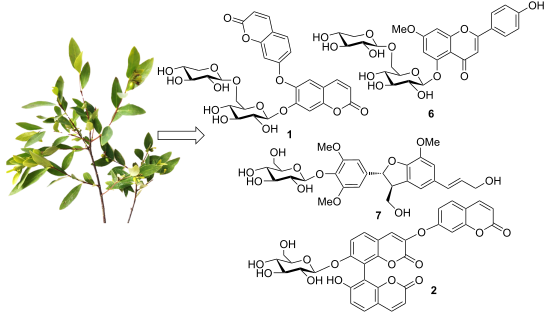
- by a ROESY correlation between H-6'' and H-1'''. Subsequently, an acid hydrolysis of 1 afforded the products including daphnogitin, a ᴅ-glucose, and a ᴅ-xylose. The absolute configurations of glucopyranosyl and xylopyranosyl was further determined by HPLC analysis of the sugar derivatives (Supporting



Ready access to 7,8-dihydroindolo[2,3-d][1]benzazepine-6(5H)-one scaffold and analogues via early-stage Fischer ring-closure reaction
Beilstein J. Org. Chem. 2022, 18, 143–151, doi:10.3762/bjoc.18.15
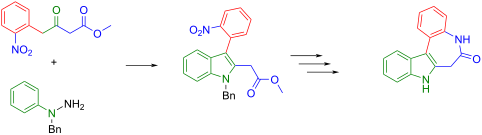
- further reacted with potassium cyanide to yield nitrile 12 [27]. Saponification of the nitrile was performed by exploiting the Pinner reaction with saturated HCl gas in methanol. This led to methyl indol-2-ylacetate (13) in 83% yield [28]. The hydrolysis of ester 13 was performed in the presence of