


Search results
Search for "iodine" in Full Text gives 511 result(s) in Beilstein Journal of Organic Chemistry. Showing first 200.
Activated carbon as catalyst support: precursors, preparation, modification and characterization
Beilstein J. Org. Chem. 2020, 16, 1188–1202, doi:10.3762/bjoc.16.104
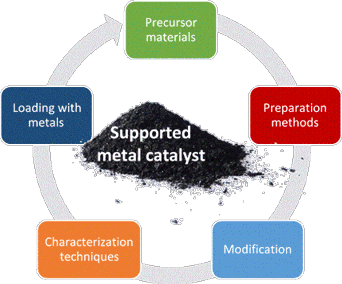
- be produced by salt templating or ultrasonic spray pyrolysis as well as by microwave irradiation. The resulting activated carbon materials are characterized by a variety of techniques such as SEM, FTIR, nitrogen adsorption, Boehm titrations, adsorption of phenol, methylene blue and iodine, TPD, CHNS
- groups and simultaneously increase of basic properties [10]. Phenol, methylene blue and iodine adsorption: Adsorption capacity and amount of pores of activated carbon materials are determined by using different adsorbates (phenol, methylene blue and iodine). The activated carbons are added to defined
- methylene blue or phenol solutions and are shaken for a certain time. The concentration of the adsorbates methylene blue and phenol is spectrophotometrically determined at defined absorbance wavelengths. The iodine number is determined by titration with sodium thiosulfate. Generally, the iodine number


A simple and easy to perform synthetic route to functionalized thienyl bicyclo[3.2.1]octadienes
Beilstein J. Org. Chem. 2020, 16, 1092–1099, doi:10.3762/bjoc.16.96
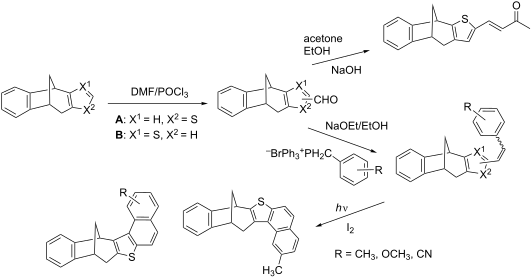
- [3.2.1]octadiene derivatives by irradiating the toluene solution of compound's 3–7 mixture of cis- and trans-isomers in the presence of iodine (Scheme 2 and Scheme 3). The electrocyclization reactions were successfully implemented in most cases and photoproducts 8–11 were obtained in moderate yields. The


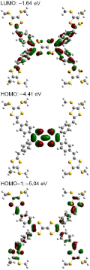
Synthesis and properties of tetrathiafulvalenes bearing 6-aryl-1,4-dithiafulvenes
Beilstein J. Org. Chem. 2020, 16, 974–981, doi:10.3762/bjoc.16.86
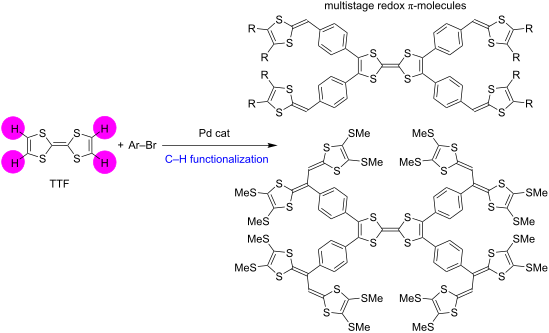
- ion complexes with DDQ or iodine were reported [17][18][19][20][21][22][23][24]. Peripherally thiophene-functionalized TTFs, as potential precursors to conducting polymers, and organic metals were also prepared and characterized [25][26][27][28][29]. To design more tempting molecules, the attachment




Recent applications of porphyrins as photocatalysts in organic synthesis: batch and continuous flow approaches
Beilstein J. Org. Chem. 2020, 16, 917–955, doi:10.3762/bjoc.16.83
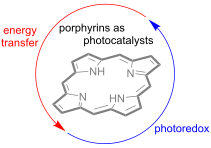
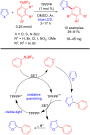
- and HEH act respectively as electron and hydrogen donors. The protocol was efficient for dehalogenations with bromine- and iodine-containing acetophenone derivatives (75–98% yields). However, it was much less efficient with chloro ketones (12–40% yields) and not effective with α-bromo esters and α






Recent advances in Cu-catalyzed C(sp3)–Si and C(sp3)–B bond formation
Beilstein J. Org. Chem. 2020, 16, 691–737, doi:10.3762/bjoc.16.67
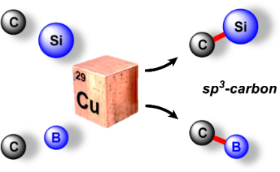
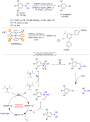
- leading to an electron transfer to the iodine atom, thereby liberating iodide, an alkyl radical, and a radical cation of the Cu complex. Recombination of the latter radicals leads to the formation of the desired silane along with the regeneration of the active Cu species (Scheme 8). This strategy was also


Copper-catalyzed O-alkenylation of phosphonates
Beilstein J. Org. Chem. 2020, 16, 611–615, doi:10.3762/bjoc.16.56

- valuable enol phosphonates in very good yields. Keywords: alkenylation; copper; C(sp2)–O bond formation; hypervalent iodine; phosphonates; Introduction Organophosphorus compounds represent an important class of products with a wide range of applications in biology, agriculture and synthetic organic
- (alkenyl)iodonium salts, which are air- and moisture-stable, nontoxic and easy to prepare compounds, have become efficient reagents for mild and selective arylation and alkenylation reactions in organic synthesis [16][17][18]. In particular, the use of these hypervalent iodine reagents in copper catalysis


Recent advances in photocatalyzed reactions using well-defined copper(I) complexes
Beilstein J. Org. Chem. 2020, 16, 451–481, doi:10.3762/bjoc.16.42
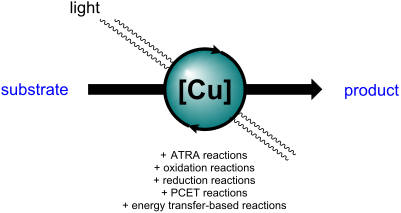
- of the ligand iodide for DAP (path III). Another possibility was the trapping of the radical with the iodine ligand of the [Cu(II)] catalyst (path IV). In 2019, Reiser’s group described a chlorosulfonylation reaction of alkenes and alkynes with [Cu(I)(dap)2]Cl or [Cu(II)(dap)2]Cl2 under visible light
- 2012, Collins and co-workers described a copper-catalyzed photocyclization to synthesize [5]helicene (Scheme 29) [43]. Using the in situ-formed [Cu(I)(dmp)(xantphos)]BF4 (25 mol %) in the presence of iodine and propylene oxide as the oxidant system under visible light irradiation, [5]helicene was
- oxidative quenching. First, the excited [Cu(I)]* species was oxidized in the presence of iodine, furnishing a [Cu(II)] complex. Then, an oxidation of the diarylamine occurred, generating the N-centered radical cation, which undergoes an intramolecular cyclization. A final oxidation of the aryl radical








Room-temperature Pd/Ag direct arylation enabled by a radical pathway
Beilstein J. Org. Chem. 2020, 16, 384–390, doi:10.3762/bjoc.16.36
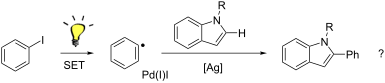
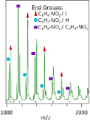
- Scheme 1. The region from 4–4.5 ppm indicates the interior indole repeat units compared with the terminal indole units. MALDI–TOF MS of PIn, indicating octylindole repeat units with three different types of end groups. These include 2-nitrophenyl, iodine, and hydrogen. A high yielding, highly selective




Architecture and synthesis of P,N-heterocyclic phosphine ligands
Beilstein J. Org. Chem. 2020, 16, 362–383, doi:10.3762/bjoc.16.35
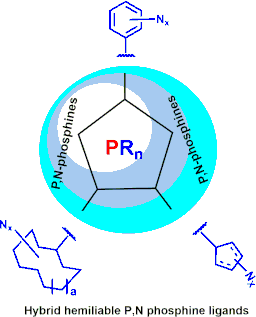
- deprotection then furnished 83b in reasonable yields between 68 and 87%. Bis(diphenylphosphine)-substituted imidazoles were also synthesized by Karthik et al. [87] starting from the diiodoimidazole derivative 84. The lithium chloride mediated magnesium/iodine exchange reaction of 84 followed by the addition of


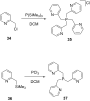


Copper-promoted/copper-catalyzed trifluoromethylselenolation reactions
Beilstein J. Org. Chem. 2020, 16, 305–316, doi:10.3762/bjoc.16.30

- . Mechanistically, the authors proposed that an electron transfer took place between the copper(I) complex and ICF2CO2Et, forming, after iodine transfer, a new carbon-centered radical and a copper(II) complex. The center of the radical then shifted to the terminal carbon atom of the unsaturated compound. The latter


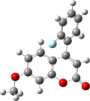
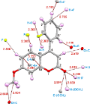
Synthesis of 4-(2-fluorophenyl)-7-methoxycoumarin: experimental and computational evidence for intramolecular and intermolecular C–F···H–C bonds
Beilstein J. Org. Chem. 2020, 16, 190–199, doi:10.3762/bjoc.16.22
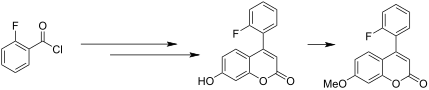
- . Qualitative thin-layer chromatography (TLC, silica gel 60254, aluminum backed) was used to monitor the reactions. Visualization of the TLC plates was achieved using an iodine tank and/or fluorescence on exposure to short wavelength ultraviolet light (254 nm). For purification, column chromatography (silica



Halogen-bonding-induced diverse aggregation of 4,5-diiodo-1,2,3-triazolium salts with different anions
Beilstein J. Org. Chem. 2020, 16, 78–87, doi:10.3762/bjoc.16.10
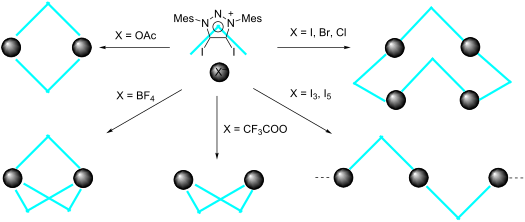
- evaporation of dichloromethane solution. The treatment of 2-I with 2 equivalents iodine or 4 equivalents iodine afforded triazolium polyiodide 2-I.1.5I2 and 2-I.3.5I2, respectively. The single crystals were obtained by slow diffusion of ether into a dichloromethane solution. The crystal X-ray analyses of 2-I
- and 2.68(1) Å. The C–I···O angles are 175.7(3)°, 172.7(3)°, 176.7(3)° and 176.1(3)°. The RXB values are 0.77, 0.74 and 0.75 (Table 1). Triazolium polyiodide 2-I·1.5I2 was made by 2-I with iodine and crystallizes in the monoclinic space group P21/c. The crystal package diagram displays that a bent
- arrangement of XB donors are around the central iodine atom of the I3− anion (Figure 6). 2-I·3.5I2 crystallizes in the monoclinic space group P21/c (Figure 7). There are two I3− and one I2 molecule in 2-I·1.5I2, while two I5− and three I2 molucules can be found in 2-I·3.5I2. The XB interaction with neural




Construction of trisubstituted chromone skeletons carrying electron-withdrawing groups via PhIO-mediated dehydrogenation and its application to the synthesis of frutinone A
Beilstein J. Org. Chem. 2019, 15, 2958–2965, doi:10.3762/bjoc.15.291
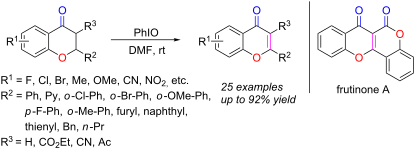
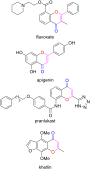
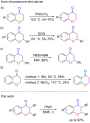
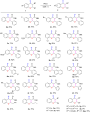
- high reaction temperature, extended reaction time, involvement of transition metal catalysts, and low yield. In these regards, the development of alternative approaches that can realize an efficient synthesis of chromones under mild conditions is desirable. In recent decades, hypervalent iodine
- likely that the enolization is a necessary process for the reaction to occur, as compound 2z could not undergo the transformation under the standard conditions. Then, nucleophilic attack on the iodine center of PhIO [87] by the enol moiety of intermediate A affords the O–I enol form C (via intermediate B
- ), which is subsequently converted to I–C intermediate D via radical migration [88]. The homogeneous cleavage of the C–I bond in D leads to the stable carbon radical E and an iodine radical. Finally, the reaction between E and the iodine radical produces product 2a, with the concomitant release of water



An improved, scalable synthesis of Notum inhibitor LP-922056 using 1-chloro-1,2-benziodoxol-3-one as a superior electrophilic chlorinating agent
Beilstein J. Org. Chem. 2019, 15, 2790–2797, doi:10.3762/bjoc.15.271
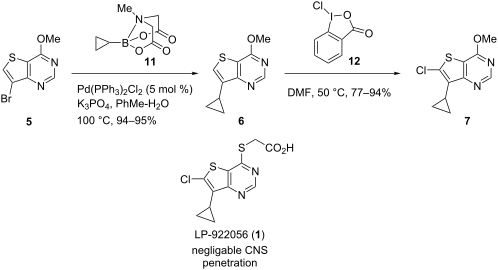
- et al. described the electrophilic chlorination of arenes and heterocycles by 1-chloro-1,2-benziodoxol-3-one (12) [18][19]. The hypervalent iodine(III) reagent 12 is reported to be a mild and effective reagent for the chlorination of nitrogen containing heterocycles which is easy to prepare and is




Iodine-mediated hydration of alkynes on keto-functionalized scaffolds: mechanistic insight and the regiospecific hydration of internal alkynes
Beilstein J. Org. Chem. 2019, 15, 2747–2752, doi:10.3762/bjoc.15.265
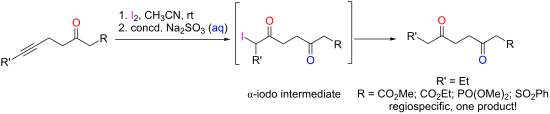
- Zachary Lee Brandon R. Jones Nyochembeng Nkengbeza Michael Phillips Kayla Valentine Alexis Stewart Brandon Sellers Nicholas Shuber Karelle S. Aiken Chemistry & Biochemistry, Georgia Southern University, PO Box 8064, Statesboro, GA 30460, USA 10.3762/bjoc.15.265 Abstract An iodine-mediated
- of the α-iodo intermediate, and methodology studies demonstrate that alkyl-capped, asymmetric, internal alkynes undergo a regiospecific hydration, also via the 5-exo-dig NGP pathway. Keywords: α-iodo intermediate; internal alkyne; iodine-mediated hydration; neighboring group participation
- (II) [7], silver(I) [8], and gold(I)/(III) [9][10][11][12]. While less toxic than mercury, such catalysts are still environmental hazards and tend to be costlier [13][14]. The iodine-mediated hydration described herein is a viable solution to these issues [15][16]. This metal-free method produces


A review of asymmetric synthetic organic electrochemistry and electrocatalysis: concepts, applications, recent developments and future directions
Beilstein J. Org. Chem. 2019, 15, 2710–2746, doi:10.3762/bjoc.15.264
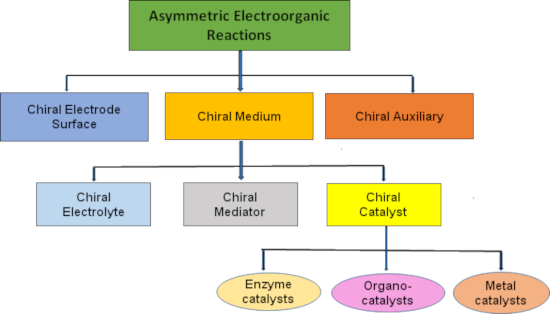
- investigated the asymmetric electrodihydroxylation of olefins 69 in an undivided cell under constant current using potassium osmate as a catalyst in presence of Sharpless ligand and using iodine as the oxidizing mediator (Scheme 27). Two sets of conditions were developed, and they differ in the inorganic bases






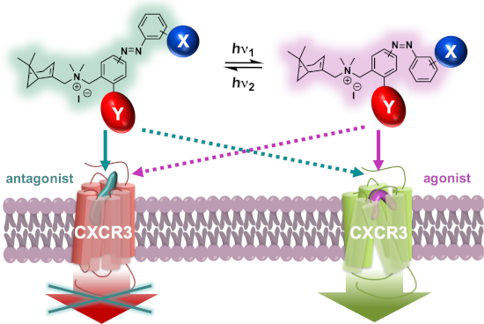
A toolbox of molecular photoswitches to modulate the CXCR3 chemokine receptor with light
Beilstein J. Org. Chem. 2019, 15, 2509–2523, doi:10.3762/bjoc.15.244
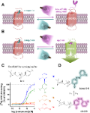
- angle of the biaryl moiety of 1e was speculated to be associated with its agonist activity (vide supra) [24]. The alignment of the cis-isomer of 2a with agonist 1e is very different. The outer aromatic ring of cis-2a goes out of plane and is now occupying the space that is also occupied by the iodine
- comparable to the first series (3b–e) were prepared. Moreover, since the importance of the presence of a halogen in the outer ring was suggested in 2, compounds 3f–h, which include an iodine atom on the ortho, meta and para-positions, respectively, were synthesized. The synthesis of compounds 3a–e was
- overall yields similar to the ones obtained for 2a–e. However, 2-iodonitrosobenzene cannot be accessed through oxidation of the corresponding aniline owing to oxidation sensitivity of the iodine atom. Therefore, an alternative route had to be used to synthesize 3f–h (Scheme 2). The route began with the



Mono- and bithiophene-substituted diarylethene photoswitches with emissive open or closed forms
Beilstein J. Org. Chem. 2019, 15, 2344–2354, doi:10.3762/bjoc.15.227
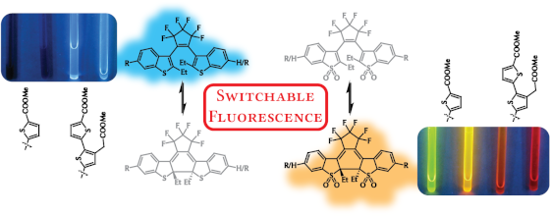
- good yields by treatment of 3 with elemental iodine and periodic acid in aqueous acetic acid with addition of sulfuric acid, and by treatment of 6 with elemental iodine and periodic acid in concentrated sulfuric acid, respectively. The conditions for monoiodination of 6 have been published recently [5
- ]. We observed that the reproducible monoiodination of DAE 3 to form compound 4 was possible under similar conditions and in low yield (14%) by using smaller amounts of periodic acid (0.34 equiv) and iodine (0.68 equiv) than the amounts of these reagents used for diiodination (see Experimental for


Thermal stability of N-heterocycle-stabilized iodanes – a systematic investigation
Beilstein J. Org. Chem. 2019, 15, 2311–2318, doi:10.3762/bjoc.15.223
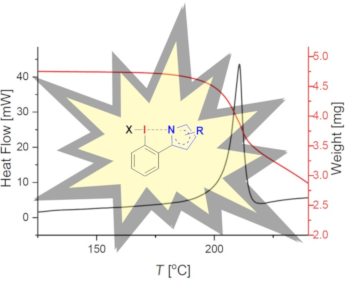
- stability with reactivity in a model oxygenation. Keywords: differential scanning calorimetry; hypervalent iodine; N-heterocycle; stability; thermogravimetry; Introduction Hypervalent iodine compounds, in particular aryl-λ3-iodanes, have found wide spread applications as oxidants and electrophilic group
- transfer reagents in organic synthesis [1][2][3][4][5][6][7][8][9][10][11]. A 3-center 4-electron bond connects the central iodine atom, providing two electrons, with two carbon- or heteroatom ligands L1 and L2, providing one electron each (Figure 1). These ligands can be arranged along the hypervalent
- iodine atom through an open-chained, a pseudocyclic or a cyclic structure. One of the ligands gets either substituted during an iodane-mediated transformation or is directly transferred in an electrophilic group-transfer reaction onto a nucleophilic substrate. The other ligand stabilizes the


Functionalization of 4-bromobenzo[c][2,7]naphthyridine via regioselective direct ring metalation. A novel approach to analogues of pyridoacridine alkaloids
Beilstein J. Org. Chem. 2019, 15, 2304–2310, doi:10.3762/bjoc.15.222
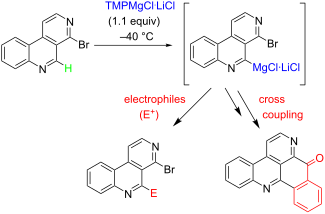
- the iodine quenching product 13), as D2O quenching of metalated arenes obtained with amide bases do not necessarily give complete deuteration. A hydrogen-bonded complex between the metalated species and TMP is postulated to undergo partial H/D exchange reactions with D2O before quenching takes place
- [25]. The reaction of metalated 9d with diverse electrophiles was tested in further studies. Quenching with iodine gave 5-iodo derivative 13 in a good yield of 71%. As the group of Knochel could demonstrate [26] that the closely related substrate 1-chloro-4-iodo-2,7-naphthyridine undergoes consecutive




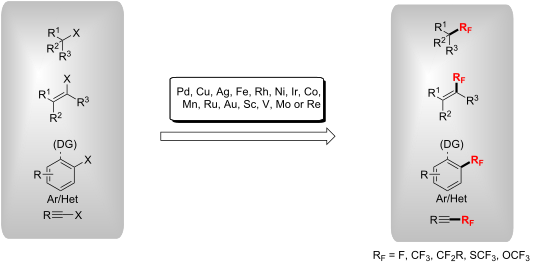
Recent advances in transition-metal-catalyzed incorporation of fluorine-containing groups
Beilstein J. Org. Chem. 2019, 15, 2213–2270, doi:10.3762/bjoc.15.218
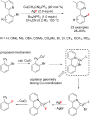
- fluoride source and PhI(OPiv)2 as a hypervalent iodine oxidant (Scheme 8). Very recently, they [44] optimized this transformation and achieved the benzylic C–H radiofluorination with no-carrier-added Ag[18F]F. This method was applied to the radiolabeling of diversely substituted 8-methylquinoline
- ] presented the nucleophilic fluorination of diaryliodonium salts with KF through a Cu(I/III) catalytic cycle mechanism. This procedure preferentially fluorinates the smaller aromatic ligand on iodine(III). Also, the addition of Cu(OTf)2 and 18-crown-6 promoted the fluorination effectively. Finally, excellent








Azologization and repurposing of a hetero-stilbene-based kinase inhibitor: towards the design of photoswitchable sirtuin inhibitors
Beilstein J. Org. Chem. 2019, 15, 2170–2183, doi:10.3762/bjoc.15.214
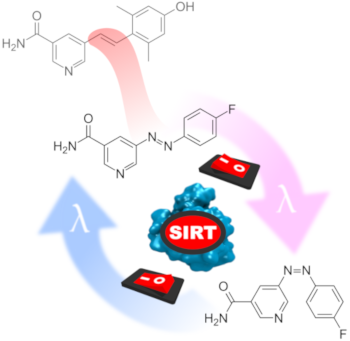
- resemble a fixed (Z)-configuration of the stilbene double bond. Therefore, comparison with 2b could provide information concerning differential biological activity of the two photoisomers. By applying Mallory reaction conditions to a solution of 2b in methanol utilizing oxygen and iodine as oxidants we
- from Acros Organics. Thin-layer chromatography (TLC) was executed on silica gel 60 F254 aluminium plates purchased from Merck. Visualization of the compounds was accomplished by UV-light (254 nm and 366 nm) and by staining with iodine, DNPH/H2SO4 (2 g 2,4-dinitrophenylhydrazine and 5 mL H2SO4 in 50 mL


1,2,3-Triazolium macrocycles in supramolecular chemistry
Beilstein J. Org. Chem. 2019, 15, 2142–2155, doi:10.3762/bjoc.15.211
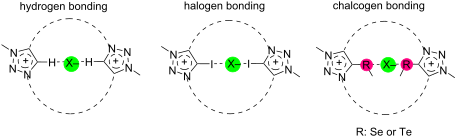
- (iodine, bromine) and chalcogens (selenium and tellurium) [18]. While there are several strategies for the synthesis of triazoles, the Cu(II)-catalyzed azide–alkyne cycloaddition reaction (CuAAC click reaction) is considered as one of the most efficient, simple and mild approaches towards the preparation
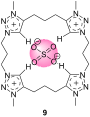
- highly functionalized 1,2,3-triazolium macrocycles under optimized reaction conditions, although cyclizations also have been carried out starting from triazolium building blocks (Figure 2). Using a small variation in the reaction protocols of the click reaction, iodine atoms can be introduced at the 5




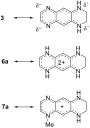
1,2,3,4-Tetrahydro-1,4,5,8-tetraazaanthracene revisited: properties and structural evidence of aromaticity loss
Beilstein J. Org. Chem. 2019, 15, 2059–2068, doi:10.3762/bjoc.15.203
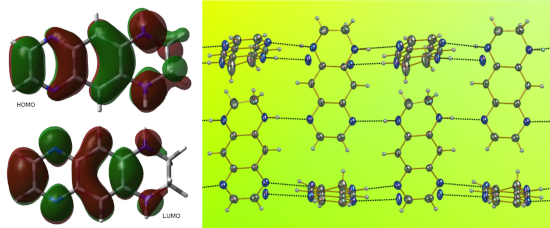
- : infinite chains of the N–H···N=C shortened distances (N(2)···N(3) distance 3.047 Å, (Figure 11). The iodine anions are not involved in the intermolecular interactions. Conclusion Unlike previously described, 1,2,3,4-tetrahydro-1,4,5,8-tetraazaanthracene (3) is a thermally stable compound and can be
- benzene ring are given in red. The ORTEP view of 6a. Torsion angles within the benzene ring are given in red. The ORTEP view of 7a (the iodine counter anion has been omitted for clarity). Torsion angles within the benzene ring are given in red. Normalized absorption spectra of 3 in: toluene (black
- : nitrogen, blue; carbon, grey; iodine, violet. Synthesis of THTTA (3). Protonation, alkylation and acylation of 3. Charge transfer and delocalization within 3 and its diprotonated (6a) and monomethylated (7a) derivatives. Experimental and calculated selected bond lengths (Å). Supporting Information




Fluorinated azobenzenes as supramolecular halogen-bonding building blocks
Beilstein J. Org. Chem. 2019, 15, 2013–2019, doi:10.3762/bjoc.15.197
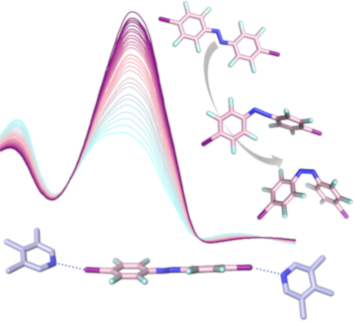
- , Universitätsstraße 1, D-40225 Düsseldorf, Germany 10.3762/bjoc.15.197 Abstract ortho-Fluoroazobenzenes are a remarkable example of bistable photoswitches, addressable by visible light. Symmetrical, highly fluorinated azobenzenes bearing an iodine substituent in para-position were shown to be suitable supramolecular
- significantly strengthened in solution. However, the bathochromic shift of the π→π* band leads to a partial overlap with the n→π* band, making it slightly more difficult to address. The introduction of iodine substituents is furthermore accompanied with a diminishing thermal half-life. A series of three
- calculated the molecular electrostatic potentials of the halogen bond donors A1–3 to visualize their capabilities to form halogen bonded architectures (Figure 1). Looking at the electrostatic surface potentials of the halogen bond donors, one can see that A3 shows a maximum value on the iodine atom that is





