Search results
Search for "mild conditions" in Full Text gives 556 result(s) in Beilstein Journal of Organic Chemistry. Showing first 200.
Synthesis of purines and adenines containing the hexafluoroisopropyl group
Beilstein J. Org. Chem. 2020, 16, 2739–2748, doi:10.3762/bjoc.16.224
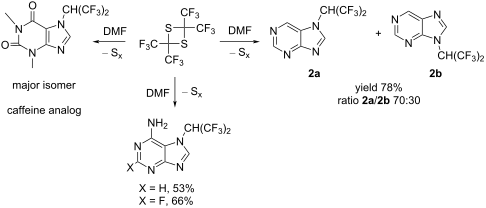
- were prepared by the reaction of 2,2,4,4-tetrakis(trifluoromethyl)-1,3-dithietane (1) with the corresponding substrates, resulting in the selective alkylation of one of the nitrogen atoms of the imidazole ring. The reaction proceeds under mild conditions in a polar solvent, giving the alkylated
- corresponding to the CH(CF3)2 group were significantly broadened. While all attempts to involve guanine in the reaction with 1 failed (DMSO, 25–70 °C, 4 d), the reaction of adenine (5) or 2-fluoroadenine (6) with tetrakis(trifluoromethyl)-1,3-dithietane (1) was found to proceed under mild conditions (DMSO, 25



Asymmetric Mannich reactions of (S)-N-tert-butylsulfinyl-3,3,3-trifluoroacetaldimines with yne nucleophiles
Beilstein J. Org. Chem. 2020, 16, 2671–2678, doi:10.3762/bjoc.16.217
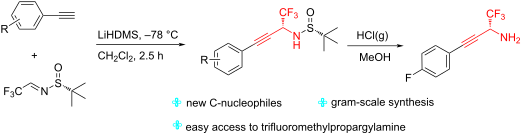
- , only a slight decrease in the yield was observed (84%) along with the same stereochemical outcome. Also, the chiral sulfinyl auxiliary can be easily removed under acidic conditions to give the free amine. Treating 3i with HCl gas in methanol at 0 °C, the tert-butylsulfinyl group was cleaved under mild
- conditions and the target primary amine 4 was obtained with 57% yield. Conclusion In conclusion, we have explored arylethynes as new nucleophiles for the Mannich reactions of (R)-N-tert-butylsulfinyl-3,3,3-trifluoroacetaldimine. Quite unexpectedly, the diastereoselectivity of the reactions were noticeably




Activation of pentafluoropropane isomers at a nanoscopic aluminum chlorofluoride: hydrodefluorination versus dehydrofluorination
Beilstein J. Org. Chem. 2020, 16, 2623–2635, doi:10.3762/bjoc.16.213
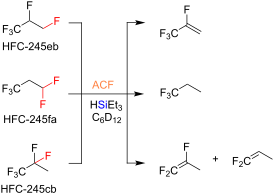
- such as hydrodefluorinations and dehydrofluorinations were observed, followed by hydroarylation and Friedel–Crafts-type reactions under mild conditions. Keywords: aluminum fluoride; C–F bond activation; dehydrofluorination; hydrodefluorination; hydrofluorocarbons; Introduction Hydrofluorocarbons
- for the synthesis of hydrofluoroolefins (HFOs), which have been regarded as the next generation of refrigerants, exhibiting zero ozone depletion potential (ODP) and a negligible GWP [11][12][13]. A considerable amount of studies has been carried out to synthesize HFOs under mild conditions [11][14][15
- activation of C–F bonds under mild conditions, and hence the addition of the silane HSiEt3 as a hydrogen source [27][48][49]. More recently, ACF was shown to efficiently convert the fluoroalkenes HFO-1234yf (1) and HFO-1234ze (4a) in the presence of the hydrogen source HSiEt3 into the hydrodefluorination or


Palladium nanoparticles supported on chitin-based nanomaterials as heterogeneous catalysts for the Heck coupling reaction
Beilstein J. Org. Chem. 2020, 16, 2477–2483, doi:10.3762/bjoc.16.201
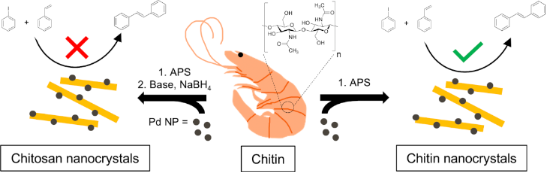
- FTIR and PXRD showed little to no structural change to the biomaterials after metal deposition. Heck coupling results demonstrate the importance of using ChNCs as opposed to ChsNCs in order to control the redox chemistry of Pd, with full product yield in relatively mild conditions using PdNP@ChNC. TEM


Chan–Evans–Lam N1-(het)arylation and N1-alkеnylation of 4-fluoroalkylpyrimidin-2(1H)-ones
Beilstein J. Org. Chem. 2020, 16, 2304–2313, doi:10.3762/bjoc.16.191

- required for the coupling are not tolerated with the highly electrophilic ketimine moiety of 4-trifluoromethylpyrimidin-2(1H)-ones. The CEL reaction was successfully applied in the N-arylation of many heterocyclic systems [35][36][37] including non-fluorinated pyrimidin-2(1H)-ones [38][39] under mild
- conditions. There are a few thorough studies on this reaction with pyrimidine and purine nucleoside bases and their derivatives which are most closely related to fluorine-containing substrates 1 [40][41][42]. However, considering the high sensitivity and capricious nature of CEL reaction, we wish to report


Photosensitized direct C–H fluorination and trifluoromethylation in organic synthesis
Beilstein J. Org. Chem. 2020, 16, 2151–2192, doi:10.3762/bjoc.16.183
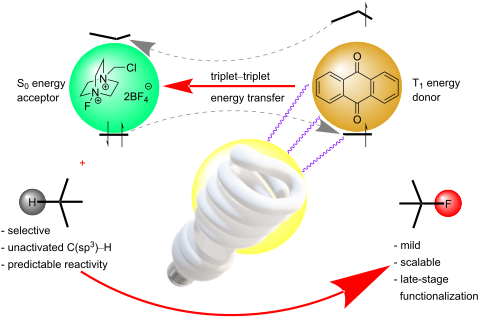
- . One exciting development in C–F bond formation is the use of small-molecule photosensitizers, allowing the reactions i) to proceed under mild conditions, ii) to be user-friendly, iii) to be cost-effective and iv) to be more amenable to scalability than typical photoredox-catalyzed methods. In this
- for inducing different organic transformations under extremely mild conditions without threatening reagents and conditions [83][84][85]. There are three commonly observed and distinct mechanisms of photocatalytic activation [86] in the context of organic synthesis: i) Most reported photocatalytic
- -light irradiation by a household (19 W) compact fluorescent light (CFL) bulb (emitting variable wavelengths in the range of ≈365–625 nm) [195] and under mild conditions. Control reactions revealed that both the PS and light were essential for the reaction to occur. According to their report, benzylic C




Access to highly substituted oxazoles by the reaction of α-azidochalcone with potassium thiocyanate
Beilstein J. Org. Chem. 2020, 16, 2108–2118, doi:10.3762/bjoc.16.178
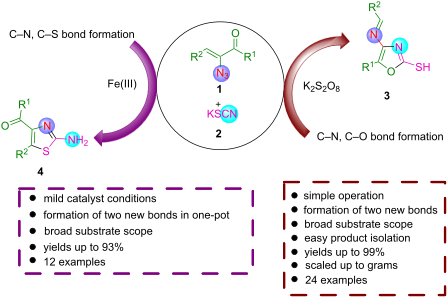
- have reported the TMSOTf-catalyzed synthesis of highly substituted imidazoles from α-azidochalcones under mild conditions [65]. As a sequel, the synthesis of oxazoles with an arylimino substituent has been accomplished in this work. The biologically important arylimino group [66][67][68][69] integrated




Reactions of 3-aryl-1-(trifluoromethyl)prop-2-yn-1-iminium salts with 1,3-dienes and styrenes
Beilstein J. Org. Chem. 2020, 16, 2064–2072, doi:10.3762/bjoc.16.173
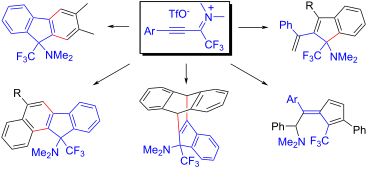
- effect of the iminium activation. The Diels–Alder reaction of alkyne 1a with 2,3-dimethylbutadiene also occurred under very mild conditions and yielded the iminium-substituted 1,4-cyclohexadiene 4-Ch (Scheme 2), which, due to its high sensitivity toward moisture, was not purified but was further


Synthesis of 3(2)-phosphonylated thiazolo[3,2-a]oxopyrimidines
Beilstein J. Org. Chem. 2020, 16, 1947–1954, doi:10.3762/bjoc.16.161
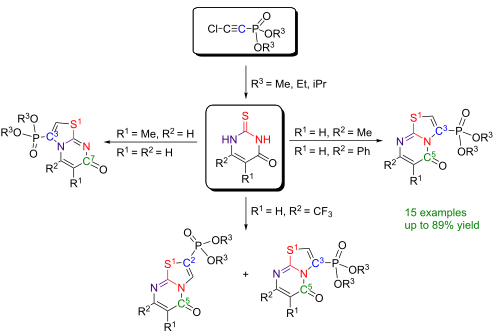
- thiazolo[3,2-a]-5-oxopyrimidines 3a–f in good yields (Scheme 6). Likely, in this case the attack by the N3 atom was more favorable than by the N1 atom due to the steric effect of the substituent in position 6. The reactions proceeded under mild conditions within 3–5 hours. Anhydrous K2CO3 was used as a


Regiodivergent synthesis of functionalized pyrimidines and imidazoles through phenacyl azides in deep eutectic solvents
Beilstein J. Org. Chem. 2020, 16, 1915–1923, doi:10.3762/bjoc.16.158
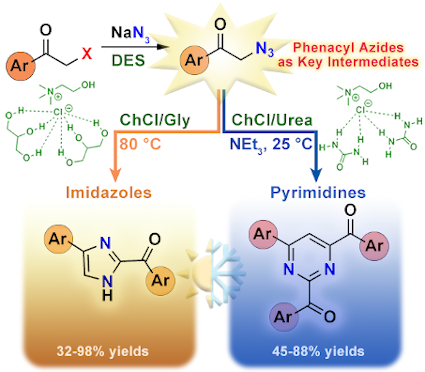
- by dehydration. The two tautomers 3/3' would most probably originate by two competitive pathways (a and b; Scheme 4) via a [1,5]-hydrogen shift [28][29]. Hydrogen-bond catalysis promoted by DES components may be playing an important role in favoring the loss of nitrogen under mild conditions from a


On the hydrolysis of diethyl 2-(perfluorophenyl)malonate
Beilstein J. Org. Chem. 2020, 16, 1863–1868, doi:10.3762/bjoc.16.153
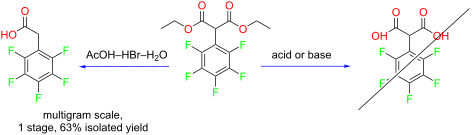
- ) is not suitable for the preparation of 2-(perfluorophenyl)malonic acid (2), due to its thermal instability and strong tendency to decarboxylation. We believed, that di-tert-butyl 2-(perfluorophenyl)malonate or dibenzyl 2-(perfluorophenyl)malonate, which are cleaving under very mild conditions are


One-pot synthesis of oxazolidinones and five-membered cyclic carbonates from epoxides and chlorosulfonyl isocyanate: theoretical evidence for an asynchronous concerted pathway
Beilstein J. Org. Chem. 2020, 16, 1805–1819, doi:10.3762/bjoc.16.148
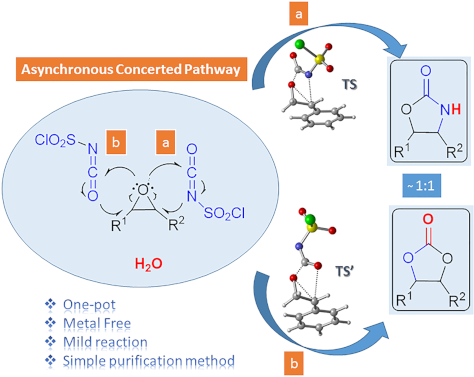
- reaction of CSI with epoxides in different solvents under mild conditions and compared the reaction mechanism with previously proposed mechanisms using theoretical calculations. Keshava Murthy and Dhar [41] postulated a mechanism involving a zwitterionic intermediate. C–O bond cleavage in this unstable and
- shorter reaction times under mild conditions using a simple purification method. Apparently, our protocol describes a reasonable methodology for the conversion of epoxides to protected 1,2-diols and 2-amino alcohols. Attention is drawn on these 1,2-oxygen and/or nitrogen units since they are present in
- . Conclusion In summary, in the first part of the study, we have improved the general synthesis of five-membered cyclic carbonates and oxazolidinones from various epoxides under mild conditions. We also described the synthesis of novel oxazolidinone derivatives 8i and 8j and 1,3-dioxolan-2-ones 9c and 9i


When metal-catalyzed C–H functionalization meets visible-light photocatalysis
Beilstein J. Org. Chem. 2020, 16, 1754–1804, doi:10.3762/bjoc.16.147

- previous functionalization, thus considerably reduce waste generation and a number of synthetic steps. In parallel, transformations involving photoredox catalysis promote radical reactions in the absence of radical initiators. They are conducted under particularly mild conditions while using the visible
- -transfer-type reactions under mild conditions and in the absence of toxic radical precursors [44][45][46]. Considering, on one hand, the fundamentally appealing properties of both, metal-catalyzed C–H functionalization reactions and visible-light-induced photocatalysis, and, on the other hand, their
- combination of photocatalysis and metal-catalyzed C–H activations upholds the desired couplings under, usually, mild conditions and at room temperature, while utilization of non-prefunctionalized coupling partners reduces the waste formation. Last but not least, the use of visible light, one of the most


Tuneable access to indole, indolone, and cinnoline derivatives from a common 1,4-diketone Michael acceptor
Beilstein J. Org. Chem. 2020, 16, 1722–1731, doi:10.3762/bjoc.16.144
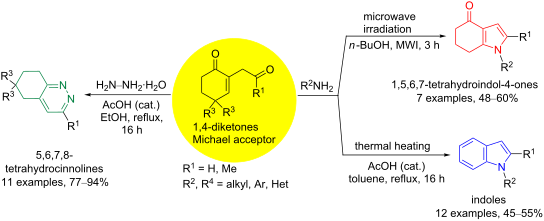
- ; indoles 6, indolones 7, and cinnolines 8, starting from common substrates 1,4-diketones 5 and primary amines. The protocols developed here used mild conditions, were functional-group tolerant, transition-metal-free, proceeded in moderate to good yield, and could therefore easily be used in medicinal




Clickable azide-functionalized bromoarylaldehydes – synthesis and photophysical characterization
Beilstein J. Org. Chem. 2020, 16, 1683–1692, doi:10.3762/bjoc.16.139
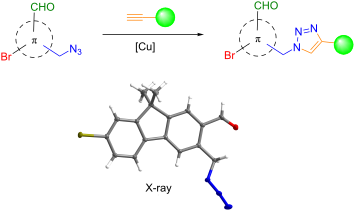
- . Condensation with 2-amino-2-methylpropan-1-ol and oxidation with NBS yielded oxazoline 6 in a good yield. Directed ortho-metalation utilizing TMPMgCl·LiCl under mild conditions and subsequent smooth formylation with DMF afforded benzaldehyde 7 (see Scheme 2). Due to rapid decomposition of 7 under ambient and


Pauson–Khand reaction of fluorinated compounds
Beilstein J. Org. Chem. 2020, 16, 1662–1682, doi:10.3762/bjoc.16.138
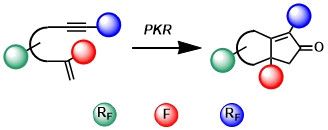
- provides access to cyclopentenones from accessible starting materials under relatively mild conditions. The increasing demand of fine chemicals bearing fluorine atoms at strategic positions, together with the ubiquitous presence of the cyclopentenone ring in added-value compounds, has attracted researchers




Mechanochemical green synthesis of hyper-crosslinked cyclodextrin polymers
Beilstein J. Org. Chem. 2020, 16, 1554–1563, doi:10.3762/bjoc.16.127
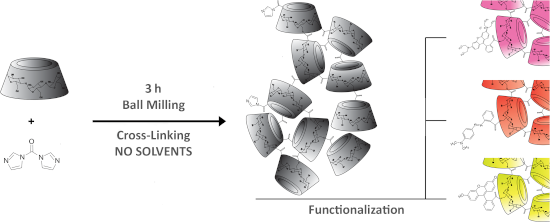
- -CDI 1:8 based on elemental analysis; see Table 1 for details). No appreciable differences in color or in ζ potential were observed. The presence of reactive imidazole was therefore crucial for this type of easy functionalization under mild conditions. The βNS-CDI 1:8 samples after reaction with the




Heterogeneous photocatalysis in flow chemical reactors
Beilstein J. Org. Chem. 2020, 16, 1495–1549, doi:10.3762/bjoc.16.125
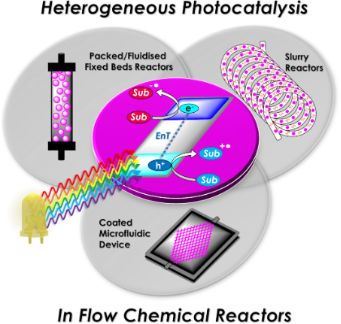
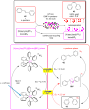
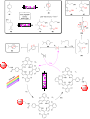
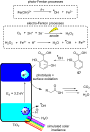
- photon and mass transport. Photocatalysis provides a unique route to carry out complex chemical transformations under mild conditions that are often impossible with “standard” organic synthetic procedures. The earliest report of synthetic photochemistry can be traced back to Trommsdorf in 1834, who










Photocatalyzed syntheses of phenanthrenes and their aza-analogues. A review
Beilstein J. Org. Chem. 2020, 16, 1476–1488, doi:10.3762/bjoc.16.123
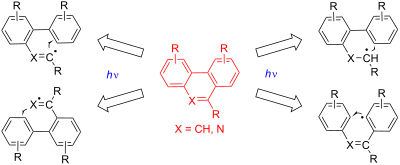
- photocatalyst, have revolutionized the way chemists can arrive to important chemical scaffolds [24][25][26]. Indeed, the photocatalytic approach combines unparalleled mild conditions, due to the use of photons as traceless reagents that leave no residue behind [27][28], with the exploitation of rather
- highly regioselective strategy for the synthesis of a library of polyheteroaromatic compounds under photocatalytic conditions was reported (Scheme 13). The process made use of fac-Ir(ppy)3 (0.3 mol %) as the photoredox catalyst and occurred at room temperature under extremely mild conditions. The
- construction of the phenanthridone core by reaction with diethyl bromomalonate in the presence of fac-Ir(ppy)3. Notably, this process was characterized by mild conditions, operational simplicity, excellent functional group tolerance and offered high yields [86]. By following analogous approaches, the addition


In silico rationalisation of selectivity and reactivity in Pd-catalysed C–H activation reactions
Beilstein J. Org. Chem. 2020, 16, 1465–1475, doi:10.3762/bjoc.16.122
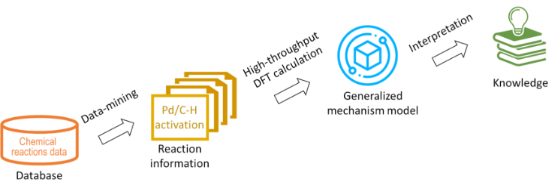
- mild conditions [13]. In particular, reactions involving palladium-catalysed activation of sp2 or sp3 C–H bonds of arenes or alkanes have been extensively investigated due to their wide scope and functional group tolerance [14]. A number of different mechanisms are proposed in the literature


An overview on disulfide-catalyzed and -cocatalyzed photoreactions
Beilstein J. Org. Chem. 2020, 16, 1418–1435, doi:10.3762/bjoc.16.118
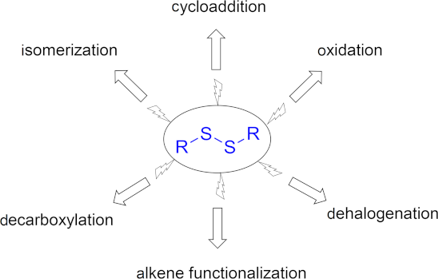
- . Under photoirradiation, organic disulfides can be easily cleaved into free thiyl radicals (RS•) and can reversibly add to unsaturated multiple bonds to catalyze a variety of functionalization reactions under mild conditions. In photoredox catalysis reactions, an excellent electron transfer ability and
- electron-rich aryl disulfides as the photocatalyst and oxygen as the oxidant [16]. At room temperature, bis(4-methoxyphenyl) disulfide was employed as the metal-free photocatalyst under visible-light and 1 bar of O2 to realize the aerobic oxidative cleavage of the C=C bonds. Under these mild conditions
- ]. Conclusion In conclusion, under photoirradiation, organic disulfides can be easily cleaved into free radicals and can reversibly add to unsaturated multiple bonds to catalyze a variety of functionalization reactions under mild conditions. Disulfide-catalyzed oxidations of alkenes and alkynes are highly






A simple and easy to perform synthetic route to functionalized thienyl bicyclo[3.2.1]octadienes
Beilstein J. Org. Chem. 2020, 16, 1092–1099, doi:10.3762/bjoc.16.96
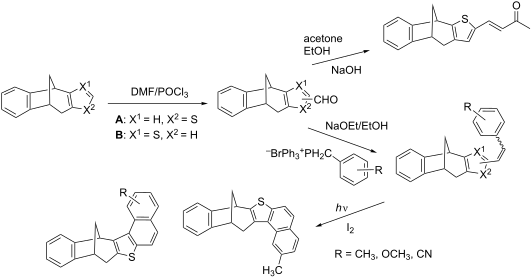
- the bicyclo[3.2.1]octadiene aldehyde 1 and acetone was conducted (Scheme 4). After purification of the reaction mixture the product 12 was obtained. The aim of this experiment was to obtain a system with an extended conjugation of the heteroaromatic moiety under mild conditions, while leaving the


Fluorinated phenylalanines: synthesis and pharmaceutical applications
Beilstein J. Org. Chem. 2020, 16, 1022–1050, doi:10.3762/bjoc.16.91
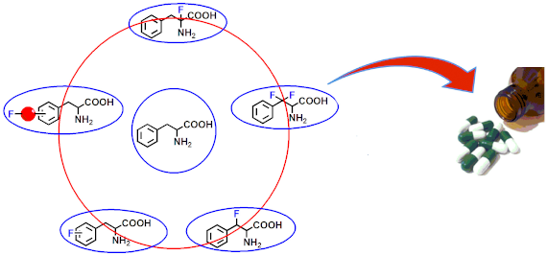
- selective enzymatic hydrolysis of 64 using an acylase under mild conditions (pH 8.0, 40 °C, 4 d, with CoCl2 as co-factor) [51] (Scheme 14). 1.5. Direct radiofluorination of ʟ-phenylalanine The direct radiofluorination of ʟ-phenylalanine (66) with either [18F]F2 or [18F]AcOF in trifluoroacetic acid (TFA


Pd-catalyzed asymmetric Suzuki–Miyaura coupling reactions for the synthesis of chiral biaryl compounds with a large steric substituent at the 2-position
Beilstein J. Org. Chem. 2020, 16, 966–973, doi:10.3762/bjoc.16.85
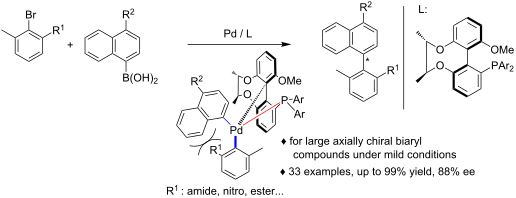
- enantioselectivities (up to 88% ee) under mild conditions. The chiral-bridged biphenyl monophosphine ligands developed by our group exhibit significant superiority to the naphthyl counterpart MOP in both reactivity and enantioselectivity control. The large steric hindrance from π-conjugated ortho-substituents of the
- compounds can be obtained in excellent yields and good enantioselectivities under mild conditions, by using brominated amides and arylboronic acids as substrates, as well as palladium and chiral-bridged biphenyl monophosphine ligands as catalysts. Results and Discussion 2-Bromo-3-methyl-N-phenylbenzamide
- yields (up to 99%) and with good enantioselectivities (up to 88% ee) under mild conditions. The chiral-bridged biphenyl monophosphine ligands developed by our group, especially L7, exhibited significant superiority to the naphthyl counterpart MOP in reactivity and enantioselectivity in the reactions. The


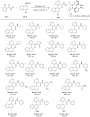


Photocatalytic deaminative benzylation and alkylation of tetrahydroisoquinolines with N-alkylpyrydinium salts
Beilstein J. Org. Chem. 2020, 16, 809–817, doi:10.3762/bjoc.16.74
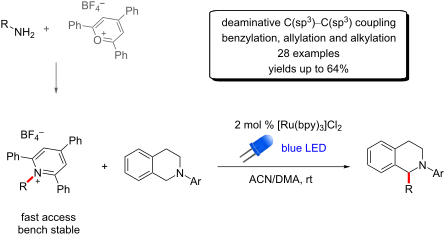
- . Conclusion In summary, we developed a photoredox-catalyzed C(sp³)–H alkylation of N-aryltetrahydroisoquinolines under mild conditions. Easily accessible and bench-stable pyridinium salts were used as precursors for the required alkyl radicals. The transformation gives good to moderate yields using benzyl and